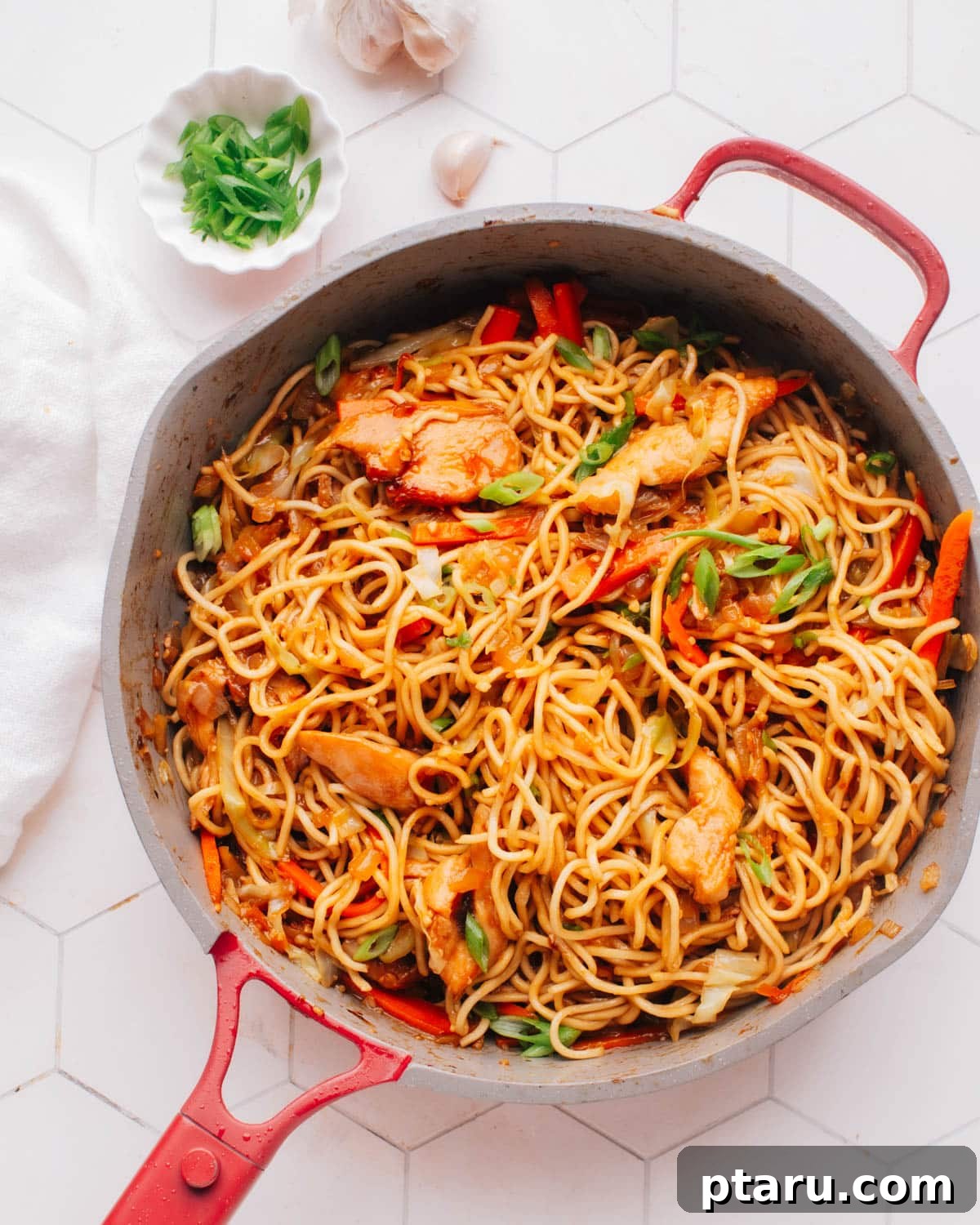
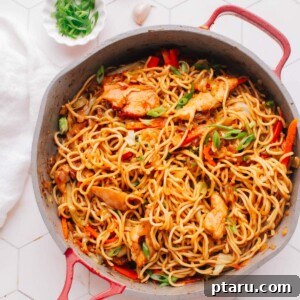
Prepare to delight your taste buds and redefine your weeknight meals! These homemade Chow Mein Noodles are so incredibly savory and bursting with flavor that you’ll be tempted to ditch your takeout menus for good. This comprehensive guide will walk you through crafting truly amazing, restaurant-quality stir-fried noodles right in your own kitchen, effortlessly rivaling your favorite Chinese takeout dishes.
Mastering Homemade Chicken Chow Mein: A Flavorful Journey
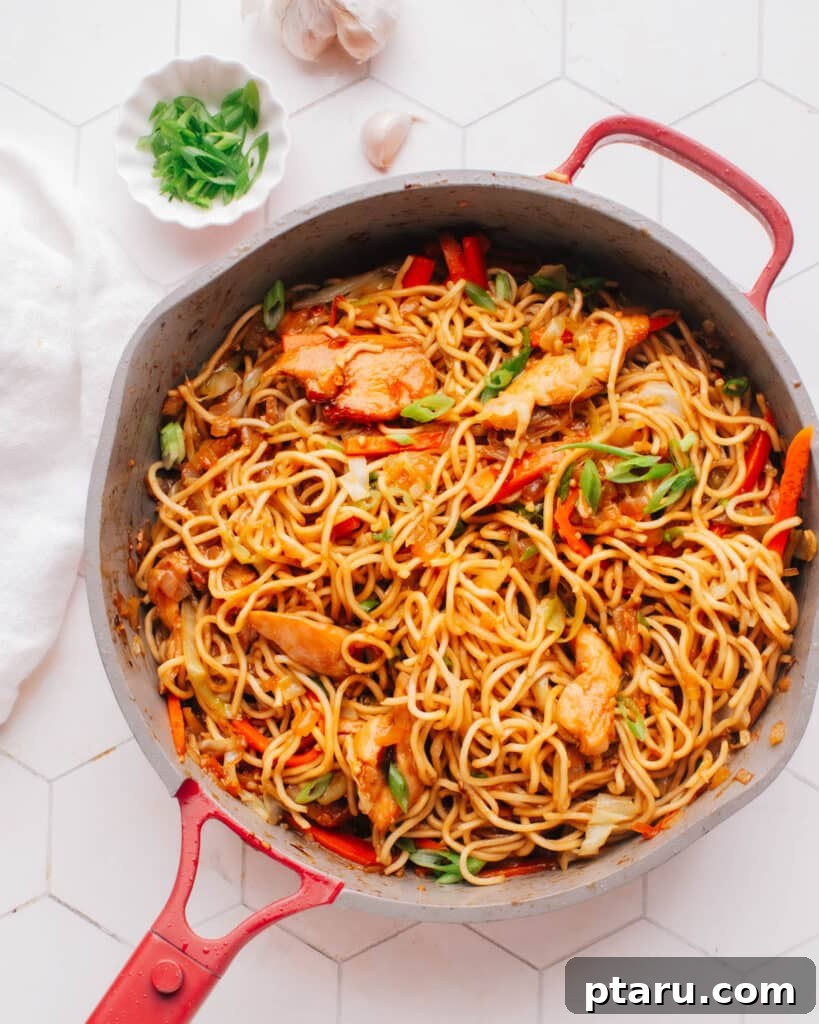
Chicken Chow Mein is a beloved Chinese stir-fry dish, famous for its harmonious blend of thinly sliced, tender chicken, perfectly cooked chow mein noodles, and a colorful array of crisp-tender vegetables. Common additions include onions, cabbage, and carrots, all swiftly cooked over intense heat to preserve their texture and nutrients. The magic truly happens when these ingredients are tossed together in a rich, savory sauce, typically crafted from soy sauce, robust chicken broth, and a selection of aromatic seasonings. The ultimate result is an unbelievably flavorful, texture-rich, and utterly craveable dish that brings the authentic taste of Asia straight to your dining table.
Why Choose Homemade Chow Mein?
While takeout offers convenience, making chow mein at home comes with a plethora of benefits. You gain complete control over the freshness and quality of ingredients, ensuring a healthier meal without excessive oil or MSG. Customization is limitless, allowing you to tailor flavors and vegetables to your family’s preferences or dietary needs. Plus, the satisfaction of creating a restaurant-quality meal from scratch is unparalleled, making it a rewarding culinary adventure.
Essential Ingredients for the Perfect Chow Mein
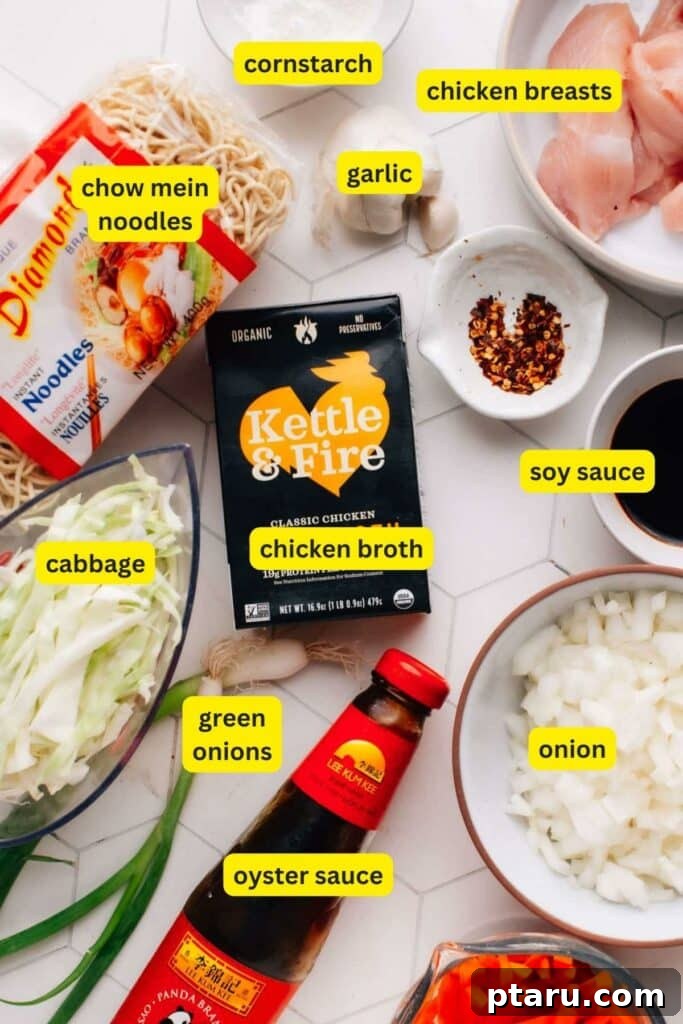
Crafting exceptional chicken chow mein begins with selecting the right ingredients. Each component plays a vital role in achieving that authentic flavor and texture. Here’s a detailed look at what you’ll need:
Core Ingredients for Your Chow Mein Recipe
- Chicken Breasts: Lean and quick-cooking, chicken breasts are ideal for stir-frying as they absorb flavors beautifully and cook through quickly. Slice them thinly for optimal texture and even cooking.
- Soy Sauce: This is the fundamental building block for the savory, umami-rich flavor profile characteristic of chow mein. For an authentic touch and deeper color, consider using a blend of light soy sauce (for saltiness) and dark soy sauce (for color and mild sweetness) if you have both on hand.
- Cornstarch: More than just a thickener, cornstarch is crucial for tenderizing the chicken through a technique known as “velveting.” It creates a protective coating that locks in moisture, resulting in incredibly juicy and succulent meat.
- Chow Mein Noodles: These special wheat and egg noodles boast a unique firm and slightly chewy texture that makes them perfect for stir-frying. You can typically find them at your local Asian market or in the Asian food aisle of most regular grocery stores. Opt for fresh noodles if possible for the best results.
- Vegetable Oil: Essential for high-heat cooking like stir-frying. Oils with a high smoke point, such as vegetable, canola, or peanut oil, are best to prevent burning and ensure proper caramelization.
- Onion, Cabbage, and Carrots: This classic vegetable medley provides a delightful crunch, vibrant color, and sweet-savory notes. Finely chop or julienne them to ensure they cook quickly and evenly.
- Garlic: A staple in Asian cuisine, quickly sautéing minced garlic releases its potent, fragrant aroma, infusing the entire dish with depth and warmth.
- Chicken Broth: This liquid component deepens the overall flavor of the sauce while also helping the vegetables cook to a tender-crisp perfection. It’s important to use regular (not low-sodium) chicken broth, as we aren’t adding extra salt to the dish, and the broth contributes significantly to the seasoning.
- Green Onions (Scallions): These slender, vibrant green stalks, also known as spring onions, are typically added at the very end as a fresh garnish. They provide a final burst of color, a mild oniony bite, and a touch of freshness that brightens the dish.
- Oyster Sauce (Not listed in original bullet but in image/instructions): A key ingredient for the authentic savory and slightly sweet umami flavor of the chow mein sauce.
Customizing Your Chow Mein: Variations and Substitutions
One of the best aspects of stir-fries is their versatility. Feel free to switch things up and make this dish uniquely yours with these creative options:
- Protein Power: While chicken is classic, you can easily substitute it with other proteins like succulent shrimp, thinly sliced beef, tender pork, or even firm tofu for a vegetarian option. Adjust cooking times accordingly.
- Go Gluten-Free: For those with dietary restrictions, simply opt for gluten-free chow mein noodles or rice noodles, and replace regular soy sauce with tamari, which offers a similar depth of flavor without the gluten.
- Veggie Boost: Expand your vegetable horizons! Incorporate or substitute with other delicious options such as crisp celery, crunchy water chestnuts, vibrant snow peas, leafy bok choy, colorful bell peppers, earthy mushrooms, or fresh bean sprouts for an added layer of texture and nutrition.
- Spice It Up: If you crave a little heat, sauté some minced fresh ginger along with the garlic to add a warming, pungent aroma. For a noticeable kick, sprinkle in some white pepper or red pepper flakes during the stir-fry or into the sauce.
- Flavor Enhancers: For an even more authentic and complex flavor profile, consider adding a splash of Chinese cooking wine (Shaoxing wine) to the sauce. A drizzle of toasted sesame oil just before serving will also lend a wonderfully nutty aroma. Finally, a sprinkle of toasted sesame seeds on top adds both visual appeal and a subtle textural contrast.
Chow Mein Noodles: What Makes Them Unique?
Chow mein noodles are not just any noodles; they are a specific type of Chinese egg noodle, primarily made from wheat flour and eggs. What sets them apart is their incredibly firm and slightly chewy texture, which makes them perfectly suited for the rigors of stir-frying. Unlike some other noodle varieties that might turn mushy or break apart under high heat, chow mein noodles maintain their integrity, absorbing the savory sauce while retaining a delightful bite.
These noodles come in various sizes and shapes, but they are most commonly thin and long. You’ll find them available in both fresh and dried forms. While dried varieties are convenient for pantry storage, using fresh egg noodles can truly elevate your homemade chow mein, offering a more tender and authentic texture.
When shopping, look for chow mein noodles in the Asian food aisle of your local supermarket or, even better, at an Asian grocery store where you might find a wider selection, particularly fresh options. Fresh noodles are typically found in the refrigerated section and should be used within a few days of purchase, offering a superior springiness. Dried noodles, on the other hand, boast a longer shelf life and are a great pantry staple for last-minute stir-fry cravings.
How to Make This Easy Chow Mein Recipe: Step-by-Step Directions
Ready to embark on a delicious culinary journey? Your ultimate, restaurant-level chow mein noodles are just a quick stir-fry away! Follow these detailed directions to achieve that coveted takeout-quality goodness. All you need is a reliable wok or a large skillet, a pair of tongs, a pot for boiling the noodles, and a sharp knife for prep.
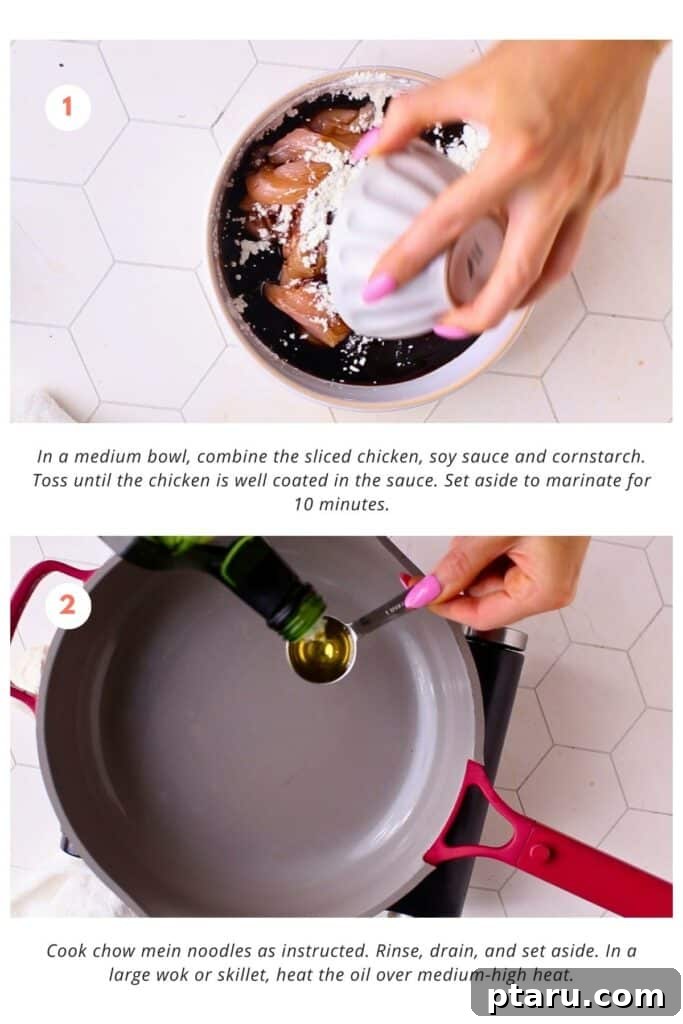
- Marinate the Chicken: In a medium-sized bowl, combine the thinly sliced chicken breasts with the soy sauce and cornstarch. Toss thoroughly until every piece of chicken is well coated. This marination step is crucial for both flavor and tenderness. Set the chicken aside to marinate for at least 10 minutes while you prepare other ingredients.
- Cook the Noodles: Following the package instructions, bring a pot of water to a boil and cook the chow mein noodles. Be careful not to overcook them; aim for an al dente texture, where they are still quite firm, as they will continue to cook later in the wok. Once cooked, drain the noodles, rinse them under cold water to stop the cooking process and prevent sticking, then drain again and set aside.
- Stir-fry the Chicken: Heat the vegetable oil in a large wok or a heavy-bottomed skillet over medium-high heat until shimmering. Using tongs, carefully remove the chicken from its marinade, allowing any excess marinade to drip back into the bowl (you’ll use this later!). Add the marinated chicken to the hot wok and stir-fry until it’s no longer pink and lightly browned. Remove the cooked chicken from the wok and set it aside on a plate.
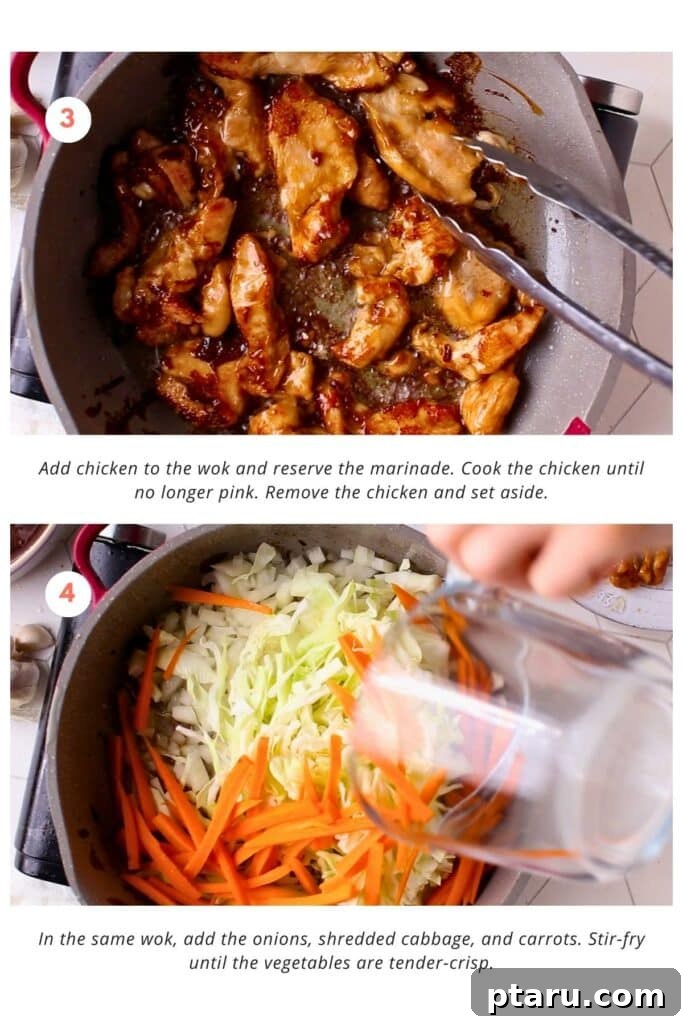
- Sauté the Vegetables: Using the same wok (without cleaning it, as the residual flavors are a bonus), add the finely chopped onions, shredded cabbage, and julienned carrots. Stir-fry these vegetables until they reach a tender-crisp consistency, which usually takes a few minutes. Then, add the minced garlic and continue to sauté for about 30 seconds until it becomes fragrant.
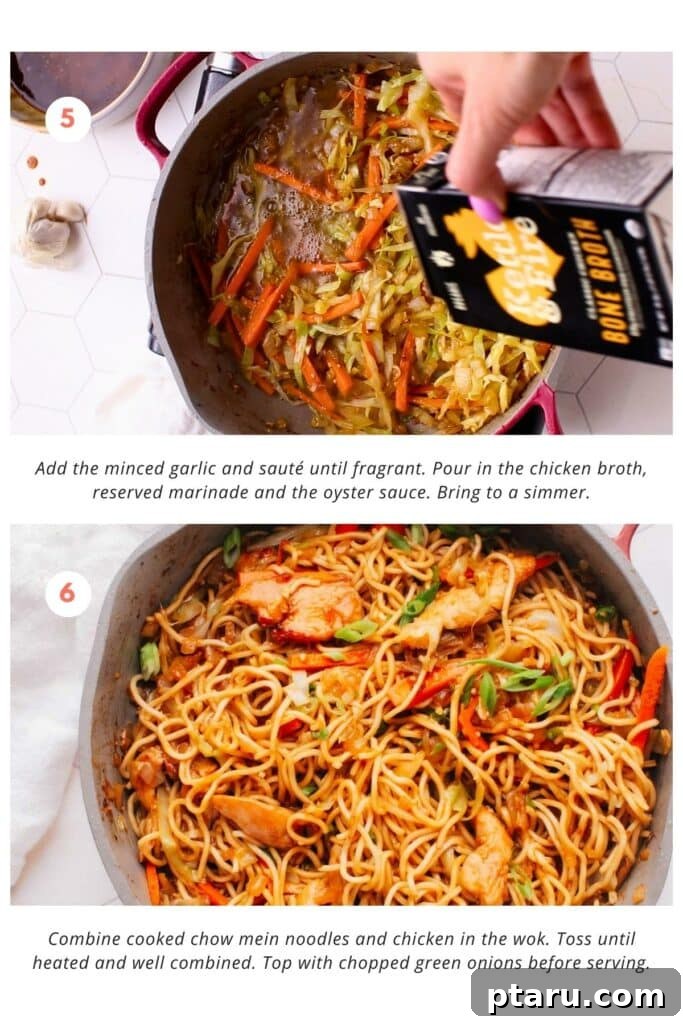
- Prepare the Chow Mein Sauce: Pour the chicken broth, the reserved chicken marinade, and the oyster sauce into the wok with the vegetables. Stir everything together well and bring the mixture to a gentle simmer. Allow it to cook for a minute or two, letting the flavors meld and the sauce slightly thicken.
- Combine and Heat Through: Return the cooked chow mein noodles and the previously stir-fried chicken to the wok. Using tongs or spatulas, toss all the ingredients together vigorously, ensuring the noodles, chicken, and vegetables are thoroughly coated in the savory sauce. Continue to toss and stir-fry for 2-3 minutes, allowing everything to heat through and the flavors to fully integrate.
- Garnish and Serve: Just before serving, sprinkle generously with freshly chopped green onions. The green onions add a final burst of color, a refreshing aroma, and a subtle oniony zest that complements the rich flavors of the chow mein. Serve immediately and enjoy your homemade masterpiece!
Make Ahead and Storage Solutions for Chow Mein
Preparing chow mein in advance or saving leftovers is incredibly convenient. Here are your best options to ensure your delicious meal stays fresh:
- Refrigerate: Cooked chow mein stores exceptionally well in an airtight container in the refrigerator for up to 2-3 days. The flavors often deepen overnight, making for an even more enjoyable meal the next day.
- Freeze: For longer storage, freeze individual portions of chow mein in airtight, freezer-safe containers. When you’re ready to eat, simply reheat in the microwave or toss it in a wok over medium heat until warmed through, adding a splash of water or broth if it seems dry. It’s a perfect solution for quick, pre-portioned meals.
- Meal Prep: To drastically cut down on cooking time during busy weeknights, prepare components in advance. Marinate the chicken the night before, and chop all your vegetables ahead of time. Store them separately in the refrigerator. This “mise en place” approach means your stir-fry will come together in a flash when you’re ready to cook.
5 Common Mistakes to Avoid When Cooking Chow Mein at Home
Achieving perfect homemade chow mein is easier when you’re aware of common pitfalls. Steer clear of these mistakes to ensure your dish is always a success:
- Overcooking the Noodles: This is perhaps the most frequent error. Overcooked chow mein noodles become mushy and lose their desirable chewy texture. The secret is to cook them until they are still quite firm, or “al dente,” as they will continue to soften and cook as they are stir-fried with the other ingredients and sauce. Always follow package directions but err on the side of slightly undercooking.
- Using the Wrong Oil: Not all oils are created equal for stir-frying. Using an oil with a low smoke point will cause it to burn, imparting an unpleasant flavor and potentially releasing harmful compounds. Always opt for oils with a high smoke point, such as vegetable oil, peanut oil, canola oil, or grapeseed oil, which can withstand the high heat necessary for authentic stir-frying.
- Overcrowding the Pan: This mistake can sabotage the texture of your vegetables and meat. Adding too many ingredients to the wok at once dramatically lowers its temperature, preventing proper stir-frying. Instead of a quick sear, your ingredients will steam, resulting in a soggy, less flavorful dish. If necessary, cook your chicken and vegetables in smaller batches to maintain high heat and achieve that perfect tender-crisp texture.
- Ignoring the Marinade: Some home cooks might be tempted to skip marinating the meat, but even a short 10-minute marinade makes a significant difference. Marinating the chicken infuses it with flavor, but more importantly, the cornstarch in the marinade acts as a protective barrier. This “velveting” technique traps juices inside the chicken, preventing them from evaporating during high-heat cooking and ensuring your chicken remains incredibly juicy and tender.
- Chopping as You Go: Stir-frying is a rapid-fire cooking method; once you start, there’s no time to pause for chopping vegetables or measuring sauces. Failing to prepare all your ingredients (this is called “mise en place” in culinary terms) in advance can lead to rushed cooking, unevenly cooked ingredients, or worse, a cold wok that results in a soggy chow mein. Have all your ingredients chopped, measured, and ready beside your wok before you even turn on the heat.
Notes, Pro Tips, and Science-Based Secrets for Perfect Chow Mein
- Embrace High Heat: The cornerstone of great stir-frying is high heat. Cooking on high heat quickly caramelizes ingredients, develops rich flavors, and ensures your vegetables remain crisp rather than becoming soggy.
- Do Not Overcrowd the Wok: As mentioned above, this is critical. If your wok is too full, ingredients will steam instead of stir-fry. Work in batches if necessary, especially when cooking the chicken and main bulk of vegetables, to maintain the high temperature of the wok.
- Fresh Noodles Make a Difference: If you can get your hands on them, fresh chow mein noodles truly take this dish to an unparalleled level. Their superior texture and ability to absorb sauce make for a more authentic and enjoyable experience. Look for them in the refrigerated section of Asian grocery stores or sometimes alongside fresh produce in larger supermarkets.
- The “Cornstarch Trick” (Velveting): There’s a scientific reason why cornstarch is used in Asian cooking. When mixed with meat, it forms a thin, protective barrier around each piece. This shield effectively ‘traps’ the meat’s natural juices inside, significantly reducing moisture loss when exposed to high heat. The result? Incredibly tender, juicy, and flavorful meat every time.
- Achieving Crispy Noodles (Optional): For an exciting textural contrast, you can make crispy chow mein noodles. Instead of simply boiling them and adding them to the stir-fry, you’ll par-boil them and then pan-fry them separately until wonderfully crisp. Details on how to do this are provided below in the notes section of the recipe for those who want to try this advanced technique.
How to Serve This Chicken Chow Mein Recipe
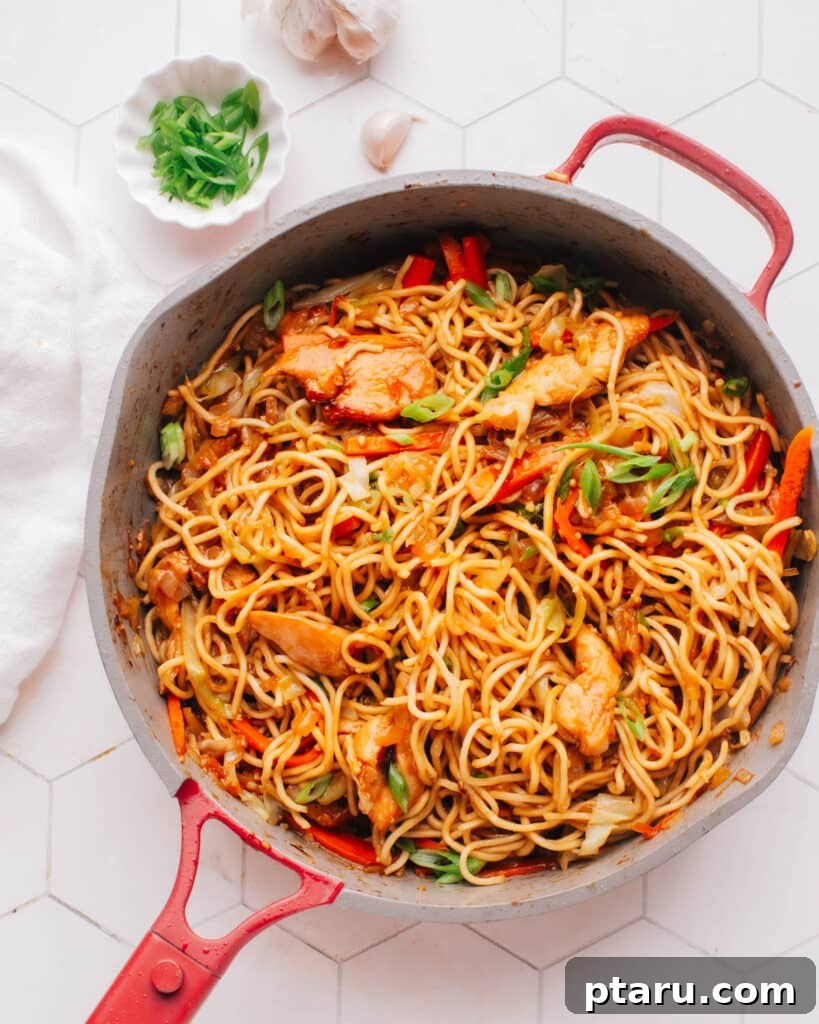
While this chicken chow mein is incredibly satisfying and stands strong as a complete meal on its own, it also pairs wonderfully with other Asian-inspired dishes. For a classic appetizer, serve it alongside crispy spring rolls or a light salad. To create a more balanced and comprehensive meal, consider adding a side of vibrant steamed bok choy with a drizzle of soy sauce, crisp snow peas, or a simple cucumber salad. The noodles are the star, but these accompaniments can elevate your dining experience.
Frequently Asked Questions About Chow Mein
While the texture won’t be identical, you absolutely can use spaghetti or even instant ramen noodles as a substitute in a pinch. Just be sure to cook them al dente and rinse thoroughly after boiling to remove excess starch, which helps prevent sticking and keeps the dish from becoming gummy.
Yes, making a vegetarian chow mein is simple! Omit the chicken entirely and use vegetable broth instead of chicken broth in the sauce. You can also add more vegetables like mushrooms, bell peppers, or bok choy, or incorporate a protein substitute like firm tofu or tempeh, stir-fried until golden.
To add a fiery kick, incorporate red pepper flakes during the stir-fry process with the vegetables, or drizzle a generous dollop of chili oil over the finished dish just before serving. Freshly sliced chilies or a touch of Sriracha can also be mixed into the sauce or served on the side.
While chicken breasts are commonly used for their lean nature and quick cooking, chicken thighs are more forgiving and tend to stay juicier, offering a richer flavor. Ultimately, the choice depends on your personal preference for texture and taste.
The primary difference lies in the preparation and noodle thickness. Chow mein typically uses thinner, stir-fried noodles that are often slightly crisped, resulting in a drier dish with a more textured mouthfeel. Lo mein, on the other hand, features thicker, boiled noodles that are tossed with a heavier, saucier coating, making it a wetter and softer dish.
Next reading: Dive deeper into Asian cuisine with our guide on Pasta vs Noodles (Substitution Tips + Crucial Differences)
More Homemade Asian Takeout Favorites
If you’re a devoted fan of quick, easy, and authentic Chinese and Asian-inspired takeout recipes, you absolutely can’t miss out on these culinary gems. Expand your home cooking repertoire with these delectable dishes:
- Chicken and Broccoli: A simple, flavorful classic that comes together in no time.
- Pad Woon Sen: A delightful Thai glass noodle stir-fry packed with vibrant flavors.
- Gochujang Chicken: Spicy, savory, and wonderfully sticky Korean-inspired chicken.
- Hunan Shrimp: A zesty and spicy shrimp dish that’s incredibly satisfying.
- Thai Basil Pork: An aromatic and savory stir-fry featuring pork, basil, and green beans.
- Chili Oil Ramen: A quick, comforting, and customizable ramen dish with a spicy kick.
- Orange Chicken: The sweet, tangy, and crispy favorite, made healthier at home.
- Honey Garlic Chicken: A universally loved dish with a perfect balance of sweet and savory.
- My Fav Spicy Ramen Recipe: For those who crave intense, fiery flavors in their ramen bowl.
- The Viral Sushi Bake: A trendy and incredibly easy deconstructed sushi experience.
Pin Recipe
Print Recipe
Chow Mein Noodles Recipe
Equipment
-
Measuring Cups and Spoons
-
Knife
-
Tongs
-
Wok Pan or large cast iron skillet
Ingredients
For chicken marinade:
- ¾ lb boneless skinless chicken breasts thinly sliced (2 large breasts)
- 4 tablespoons soy sauce
- 2 tablespoons cornstarch
For noodles:
- 8 ounces chow mein noodles
For vegetables:
- 4 tablespoons vegetable oil
- 1 ½ cups finely-chopped onion (from a 9-10-oz yellow onion)
- 2 cups shredded cabbage
- 2 medium carrots julienned
- 1 ½ tbsp garlic minced
To assemble:
- 1 cup chicken broth
- 2 tbsp oyster sauce
- 4 green onions chopped
Instructions
-
In a medium bowl, combine the thinly sliced chicken, soy sauce, and cornstarch. Toss thoroughly until the chicken is well coated in the sauce, ensuring each piece is covered. Set this mixture aside to marinate for a minimum of 10 minutes.
-
While the chicken marinates, cook the chow mein noodles according to the specific instructions on their package. It’s crucial to stop cooking when the noodles are still quite firm, as they will continue to cook when added to the stir-fry. Immediately after cooking, rinse the noodles under cold water to halt the cooking process and prevent them from sticking together. Drain them thoroughly and set aside.
-
In a large wok or a heavy-bottomed skillet, heat the vegetable oil over medium-high heat until it begins to shimmer. Using tongs, carefully remove the chicken from its marinade, allowing any excess marinade to drip back into the bowl (this reserved marinade will be used later). Add the chicken to the hot wok and stir-fry it until it is no longer pink and is lightly browned on all sides. Once cooked, remove the chicken from the wok and transfer it to a clean plate, setting it aside.
-
Using the same wok, add the finely chopped onions, shredded cabbage, and julienned carrots. Stir-fry these vegetables until they become tender-crisp, typically a few minutes. Next, add the minced garlic to the wok and sauté for about 30 seconds until it becomes fragrant, being careful not to burn it.
-
Pour the chicken broth, the reserved chicken marinade, and the oyster sauce into the wok with the vegetables. Stir all these ingredients together well to combine, then bring the mixture to a gentle simmer. Allow it to simmer for 1-2 minutes, giving the flavors time to meld and the sauce to slightly thicken.
-
Return the cooked chow mein noodles and the stir-fried chicken back into the wok. Using tongs or spatulas, toss all the ingredients together vigorously until the noodles, chicken, and vegetables are thoroughly coated in the savory sauce and everything is well combined. Continue to stir-fry for an additional 2-3 minutes to ensure all components are heated through and the flavors have fully integrated.
-
Just before serving, generously sprinkle the dish with freshly chopped green onions. The green onions add a final burst of fresh flavor, vibrant color, and a pleasant aroma. Serve your homemade chicken chow mein immediately and enjoy!
Notes
- Slightly undercook the noodles when boiling them, then pat them thoroughly dry with paper towels. You can spread them on a baking sheet to dry further.
- Heat several tablespoons of vegetable oil in a Dutch oven or a separate wok until it’s shimmering hot (around 350-375°F or 175-190°C).
- Fry the par-boiled and dried noodles in batches until they turn golden brown and become wonderfully crispy. Make sure to stir them often to ensure even crispiness.
- Proceed with the rest of the recipe as directed, and add these crunchy noodles in step 7, tossing them in with the chicken and vegetables for a delightful textural contrast.
Nutrition Information
Carbohydrates: 57g |
Protein: 30g |
Fat: 17g |
Saturated Fat: 3g |
Polyunsaturated Fat: 8g |
Monounsaturated Fat: 4g |
Trans Fat: 0.1g |
Cholesterol: 56mg |
Sodium: 1712mg |
Potassium: 656mg |
Fiber: 6g |
Sugar: 7g |
Vitamin A: 5278IU |
Vitamin C: 24mg |
Calcium: 63mg |
Iron: 3mg
Nutrition information is automatically calculated and should only be used as an approximation.
Tried this recipe? Leave a comment!
We’d love to hear your thoughts and see your culinary creations.