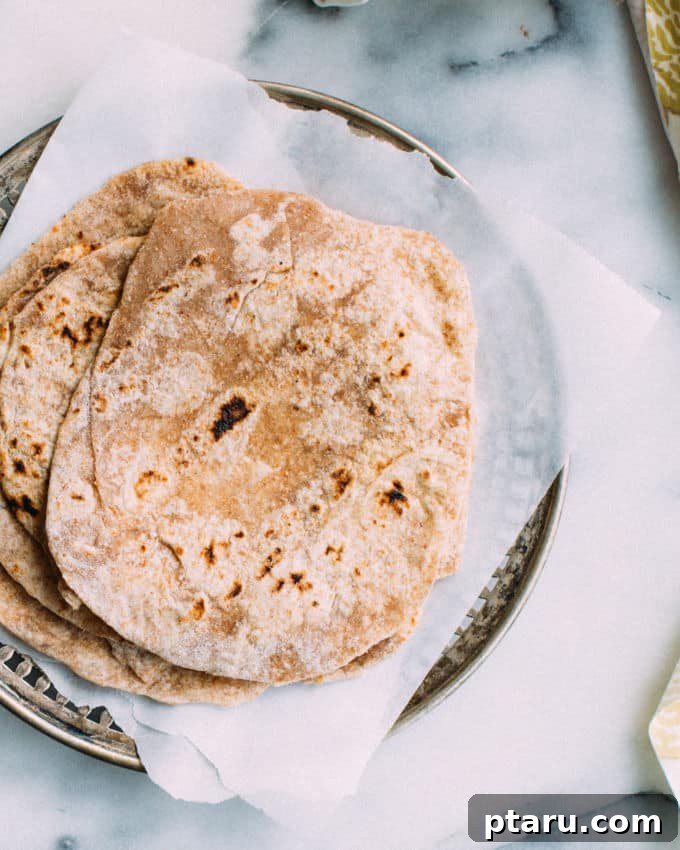
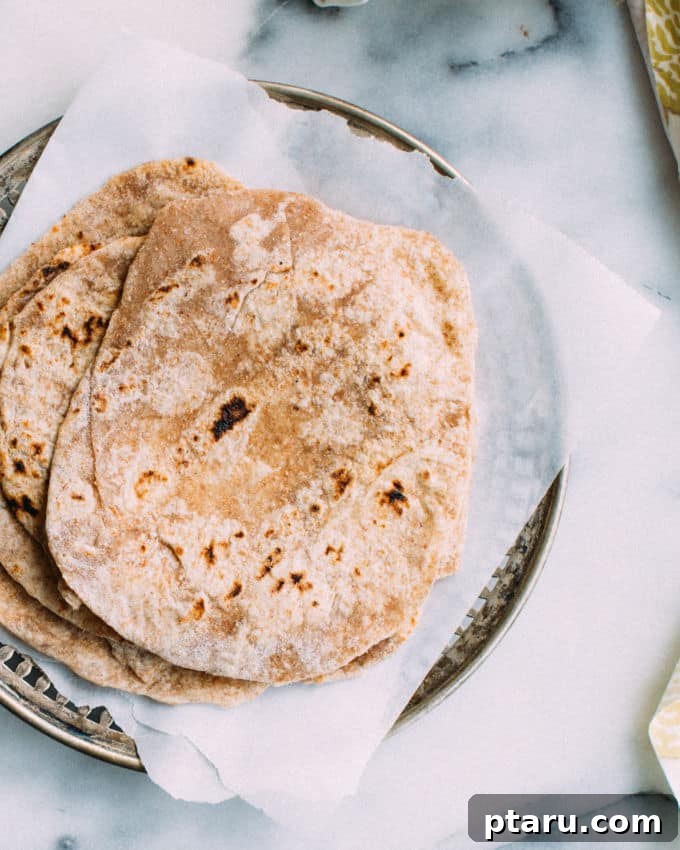
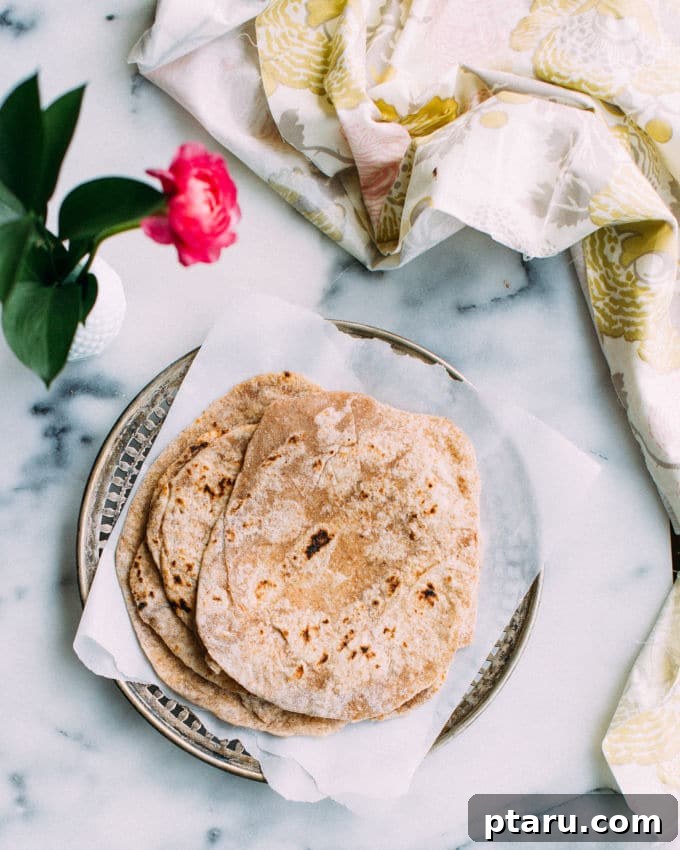
Chapathi (also known as chapati or phulka roti) is more than just a flatbread; it’s a culinary cornerstone in Indian households, a symbol of comfort and a daily essential. For over two decades, I’ve perfected a simple homemade dough recipe that consistently yields incredibly soft, delightful chapathis – a true weekly staple in our home. This guide will share all the secrets to mastering this easy yet rewarding bread.
Homemade Chapathi: The Heart of Indian Meals
In our mixed-heritage family, these soft flatbreads are affectionately called chapati. They share a close resemblance to what you might know as a whole wheat wrap or a flour tortilla in North America, and indeed, I often use them in the same versatile way. However, the superior taste and texture of homemade chapathi truly outshine any store-bought alternative.
Chapathi bread is an integral part of daily life across India, rolled out with practiced ease by millions of mothers and grandmothers, transforming simple ingredients into a nutritious and satisfying accompaniment for countless dishes. Its widespread popularity stems from its ease of preparation and its ability to complement almost any curry, lentil dish (dal), or vegetable preparation (sabzi).
The beauty of this staple lies in its minimal ingredient list: just flour (primarily whole wheat), water, a touch of salt, and a hint of oil. These humble components combine to create a dough that, when handled correctly, transforms into a light, pliable, and incredibly soft bread. Chapathis are traditionally cooked on both sides in a flat griddle known as a tawa (in India), though a heavy-bottomed frying pan or a cast iron pan works perfectly in any kitchen.
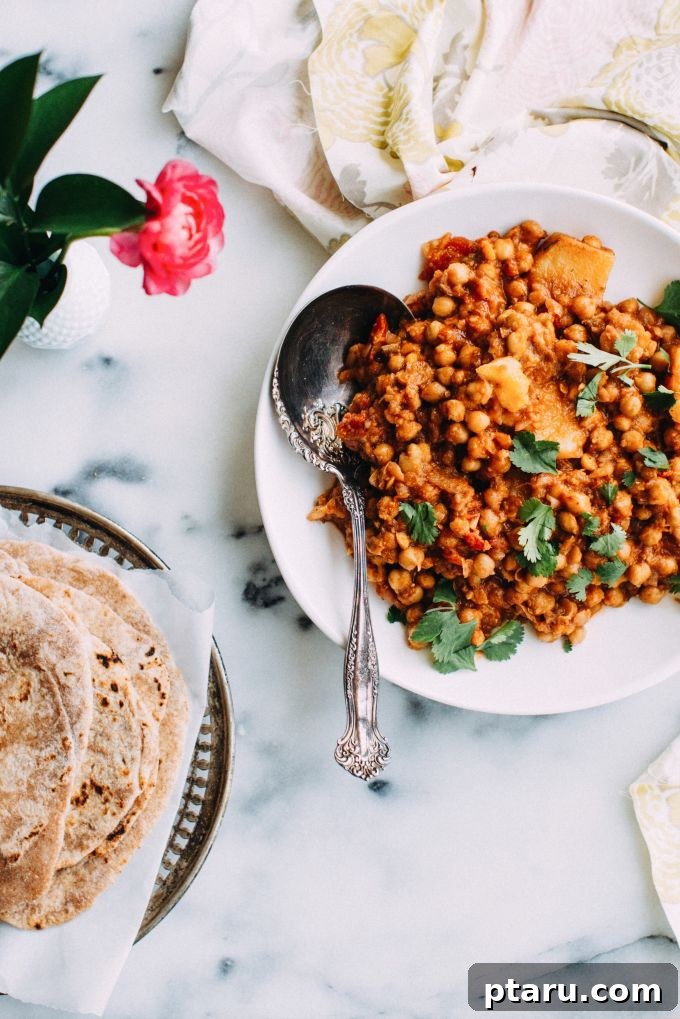
These flatbreads are not only quick and healthy but also incredibly versatile. They are perfect for wrapping up savory leftovers into a portable lunch – imagine a delicious Indian Chickpea Salad tucked inside a fresh chapathi – or for pinching off bites of succulent, richly spiced dishes like Vindaloo pork curry. Their mild flavor makes them an ideal canvas for robust Indian flavors, allowing the main dish to shine while providing a satisfying textural contrast.
This recipe yields a generous batch, typically around two dozen chapathis, making it ideal for meal prep. We always make extra and stash leftovers in the freezer for quick meals throughout the week. Reheating them is a breeze: simply hold them directly over a gas burner flame for a few seconds on each side using tongs. In an instant, they transform into warm, soft, and beautifully flame-kissed flatbreads, ready to enjoy.
How to Make Super Soft Chapathi: The Fundamental Keys
Achieving consistently soft chapathis is the goal of every home cook, and it hinges on understanding two crucial elements during the dough preparation phase. These are the cornerstones of a successful chapathi:
- Dough Hydration and Consistency: Avoid Excess Flour. The first and perhaps most critical key is to resist the temptation to add too much flour to the dough. Many beginners err on the side of a dry, stiff dough, which inevitably leads to tough chapathis. The ideal chapathi dough should be moist and slightly sticky, not dry or crumbly. When kneading, it should cling slightly to the bottom of your mixing bowl but release cleanly from the sides. If your dough feels too sticky, add flour one tablespoon at a time, but always aim for a pliable, slightly tacky texture. This optimal hydration level is essential for the starch to fully absorb moisture, leading to a tender crumb.
- The Power of Resting: Gluten Relaxation is Paramount. This brings us to the second, equally important key: allowing the dough to rest sufficiently. Resting the dough is not merely an optional step; it’s a transformative process. During rest, several beneficial changes occur:
- Hydration Redistribution: The water within the dough has time to evenly distribute, moving from wetter parts to drier parts, ensuring uniform moisture absorption throughout.
- Starch Absorption: The flour’s starch molecules fully hydrate and swell, contributing to a softer texture.
- Gluten Relaxation: Perhaps most importantly, the gluten network, developed during kneading, relaxes. Gluten is what gives dough its elasticity and chewiness. While we need some gluten development for strength and structure, excessive tension makes the dough resistant to rolling and results in tough chapathis. A well-rested dough will roll out effortlessly and smoothly, without springing back excessively, yielding beautifully soft cooked chapathis. Even a short 20-minute rest makes a difference, but for truly exceptional softness and the coveted “puff,” a longer rest is recommended.
By diligently adhering to these two principles – maintaining proper dough hydration and allowing ample resting time – you’ll unlock the secret to consistently making soft, delicious chapathis that are a joy to eat.
Pro Tips and Tricks for Chapathi Perfection
- Pre-Roll for Efficiency: Chapathi cooks remarkably quickly over high heat. To prevent accidentally burning your freshly rolled flatbreads, especially if you’re not yet well-practiced, it’s highly advisable to roll out all your chapathi circles *before* you start the cooking process. This allows you to focus solely on the cooking, ensuring each one receives the perfect amount of time on the tawa.
- Mastering the Puff (Phulka Roti): The magical puff, where the chapathi inflates like a balloon, signifies a perfectly cooked phulka roti. To achieve this, extend your dough’s resting time significantly – 4 hours at room temperature, or even overnight in the refrigerator (bring to room temp before rolling). The extended rest allows the gluten to relax completely and the moisture to distribute optimally. When cooking, place the chapathi on the hot tawa and cook the first side until it loses most of its sheen and shows a few small bubbles. Flip it to the second side for just a couple of seconds (it should still be slightly undercooked), then, using tongs, quickly transfer it directly over a medium-high flame on your stove. The intense, direct heat rapidly turns the trapped moisture within the dough into steam, causing the chapathi to inflate beautifully.
- The Science of the Puff: This puffing phenomenon only works if at least one side of the chapathi is still not fully cooked. If the starch on both outer surfaces has fully set and hardened, the dough won’t be able to stretch anymore, and the steam won’t have the pressure to inflate it. The rapid expansion of steam is key to creating that airy, hollow interior.
- Choosing the Right Flour: While “whole wheat flour” is generally stated, using a fine-ground whole wheat flour often labelled “Atta” (commonly Aashirvaad Atta) will yield the most authentic and softest chapathis. It’s milled specifically for Indian breads, resulting in a very fine, soft texture.
- Uniform Thickness is Key: When rolling, strive for an even thickness throughout the chapathi. Uneven thickness will lead to some parts cooking faster or being chewier than others. Aim for a thickness similar to a thin pizza crust.
- Keep Them Warm and Soft: As each chapathi finishes cooking, stack them on a plate and immediately cover them with a clean kitchen towel. The residual steam trapped under the towel will keep them warm and further soften their texture, preventing them from drying out.
Make Chapathi Ahead of Time & Storage
This recipe’s generous yield means you can easily enjoy fresh chapathis today and have some ready for tomorrow. You have two main options:
- Dough Storage: Prepare the entire dough batch, use what you need, and store the remaining dough in an airtight container in the refrigerator for up to three days. This allows you to roll and cook fresh chapathis as desired. Bring the dough to room temperature for easier rolling.
- Cooked Chapathi Storage & Freezing: Cook all the chapathis at once and freeze any unused portions. For freezing, allow the cooked chapathis to cool completely. Then, place them between sheets of waxed paper or parchment paper to prevent sticking. Alternatively, freeze them in a single layer on a large baking sheet until solid (this flash-freezing technique makes them easy to separate later). Once frozen, transfer them to a large freezer bag, squeezing out as much air as possible, and seal tightly. They can be stored for up to 2-3 months.
- Reheating Frozen Chapathi: Reheat directly from frozen. My preferred method is holding them over a gas burner with tongs for a few seconds per side until warm and pliable. You can also quickly warm them in a hot dry skillet or microwave them briefly (though this method can sometimes lead to a chewier texture).
Here Are Some Other Reader Favorite Indian Recipes You Don’t Want to Miss
- Paneer Butter Masala: A rich and creamy Indian cheese curry that pairs perfectly with soft chapathis.
- Saag Paneer / Spinach Curry: A healthy and flavorful spinach and paneer dish.
- Butter Chicken: The classic, universally loved creamy tomato and chicken curry.
- Chicken 65: A spicy, deep-fried chicken appetizer that can also be served as a main with chapathi.
Other Delicious Flatbread Recipes You’ll Love
- Turkish Bread (Pillowy-soft flatbreads perfect for dipping or sandwiches)
- Roti (Super soft flatbreads that puff up beautifully as they cook, often interchangeable with chapathi)
- Paratha (A flaky, layered flatbread, richer than chapathi, often pan-fried with oil or ghee)
- Butter Naan (This recipe went totally viral on Instagram for its restaurant-quality taste)
- Kheema Naan (The viral naan stuffed with deliciously spiced minced meat)
- Aloo Naan (The viral naan stuffed with savory potato masala, a flavorful meal in itself)
- Fresh Flour Tortillas (An easy recipe to make delicious, soft flour tortillas from scratch for all your Mexican-inspired dishes)
Soft Chapathi
By: Jennifer Pallian BSc, RD
Chapathi (also known as chapati) are a staple Indian flatbread. This simple homemade dough recipe makes super soft chapathi you’ll love.
Prep Time: 30 minutes
Cook Time: 2 minutes per chapathi
Total Time: 32 minutes (excluding resting time)
Servings: 24 chapathis
Ingredients
- 4 cups whole wheat flour (preferably fine-ground Atta)
- 1 cup all-purpose flour (plus more for rolling)
- 2 tsp kosher salt
- ½ cup vegetable oil (like canola or sunflower oil)
- 1 ⅔ cups warm water (approximately, adjust as needed)
Instructions
- In a standing mixer fitted with the dough hook/kneading attachment, combine the whole wheat flour, all-purpose flour, and salt. Stir on low speed. Gradually add the oil, then slowly pour in enough warm water until the dough comes together into a smooth ball. The dough is at the right consistency when it sticks a bit to the bottom of the bowl but releases cleanly from the sides. If it’s too sticky, add a tablespoon of all-purpose flour at a time until it reaches the desired texture. Once the dough forms, reduce mixer speed to low and knead for 10 minutes to develop the gluten.
- Transfer the dough to a lightly oiled bowl, cover it with a clean cloth or plastic wrap, and let it rest at room temperature for at least 20 minutes. For even softer chapathis or for puffing, you can rest it for 4 hours on the counter or overnight (up to three days) in the fridge. If refrigerated, bring the dough back to room temperature before proceeding.
- While the dough rests, preheat a cast iron skillet (tawa) over high heat for at least 5 minutes. Lightly flour a clean work surface. Pinch off pieces of dough, each about the size of a golf ball (roughly 1.5 inches in diameter).
- Using a rolling pin, roll each dough portion into a flat, thin circle, about 6-8 inches in diameter. Generously flour your work surface and the dough as needed to prevent sticking and to achieve perfectly round shapes. Ensure an even thickness for uniform cooking.
- When the skillet is very hot (it should be lightly smoking), carefully place a rolled chapathi onto it. Cook the first side until it loses most of its raw sheen, shows small bubbles on the surface, and possibly develops a few light brown spots (this typically takes 30-90 seconds, depending on your skillet’s heat).
- Flip the chapathi and cook the second side for approximately 15 seconds more. The goal is for them to appear slightly under-done (still retaining a bit of sheen) and remain soft. If you desire the chapathi to puff up, after flipping the first time, cook for just a couple of seconds, then use tongs to move it directly over a medium-high gas flame until it inflates. Return to the pan if needed to finish cooking slightly.
- As each chapathi cooks, immediately transfer it to a plate and cover it with a clean kitchen towel. This traps the steam, keeping them warm and ensuring maximum softness. Continue rolling and cooking the remaining dough.
Notes
- For extra soft chapathi, let your dough rest for 4 hours on the counter (or refrigerate it overnight). The extended rest allows the tough gluten to relax, resulting in a much softer final product. Always bring refrigerated dough back to room temperature before rolling and cooking it.
- Chapathi is cooked quickly over high heat. To avoid burning, especially when learning, it’s best to have all your circles rolled out before you begin cooking. This ensures a smoother, more relaxed cooking process.
- If you would like the chapathi to puff up (Phulka Roti), ensure a longer dough rest (4 hours on the counter or overnight in the fridge). The cooking technique for puffing involves cooking the first side until bubbles appear, flipping for only a couple of seconds, then quickly transferring to a direct medium-high flame until it inflates.
- This intense heat rapidly converts the internal moisture to steam, creating the puff. It’s crucial that at least one side of the chapathi is still slightly undercooked when exposed to the flame; if the starch on both surfaces is fully set, it won’t stretch and inflate.
Nutrition
Nutrition information is an approximation per serving (1 chapathi).
Calories: 95kcal | Carbohydrates: 18g | Protein: 5g | Fat: 1g | Saturated Fat: 0.2g | Polyunsaturated Fat: 0.4g | Monounsaturated Fat: 0.2g | Cholesterol: 2mg | Sodium: 214mg | Potassium: 90mg | Fiber: 3g | Sugar: 0.3g | Vitamin A: 3IU | Calcium: 11mg | Iron: 1mg
Nutrition information is automatically calculated, so should only be used as an approximation.