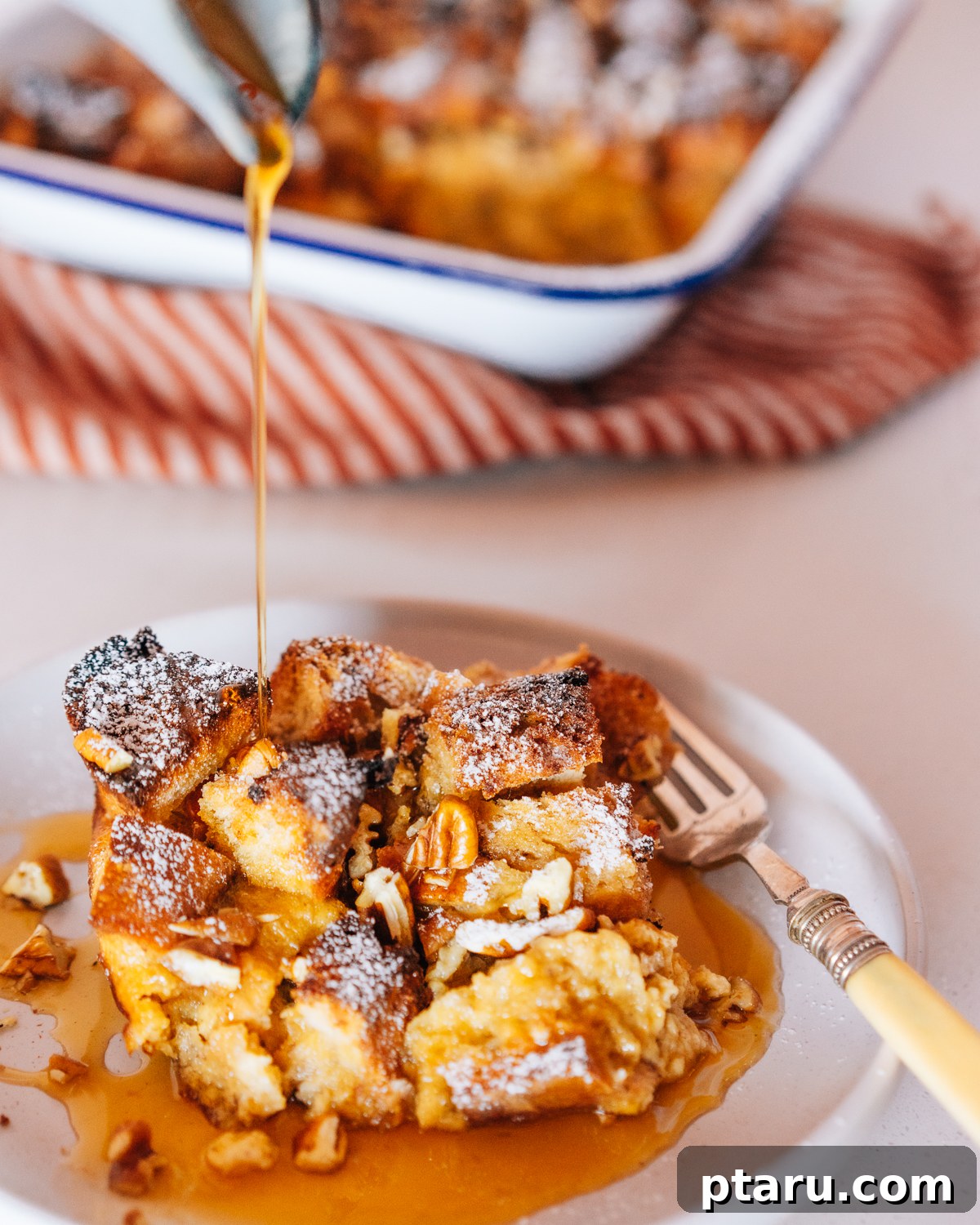
Welcome to the ultimate guide for crafting the most delectable **French Toast Casserole**! If you’re searching for an effortlessly elegant, incredibly delicious, and utterly crowd-pleasing brunch centerpiece, look no further. This recipe requires just a handful of simple ingredients and a mere 10 minutes of active preparation, making it the perfect **make-ahead breakfast** solution for busy mornings or festive holiday gatherings. Imagine waking up to the aroma of warm, sweet French toast baking in the oven, without having to whisk a single egg or soak a slice of bread when your eyes are barely open. That’s the magic of this **overnight French toast casserole**.
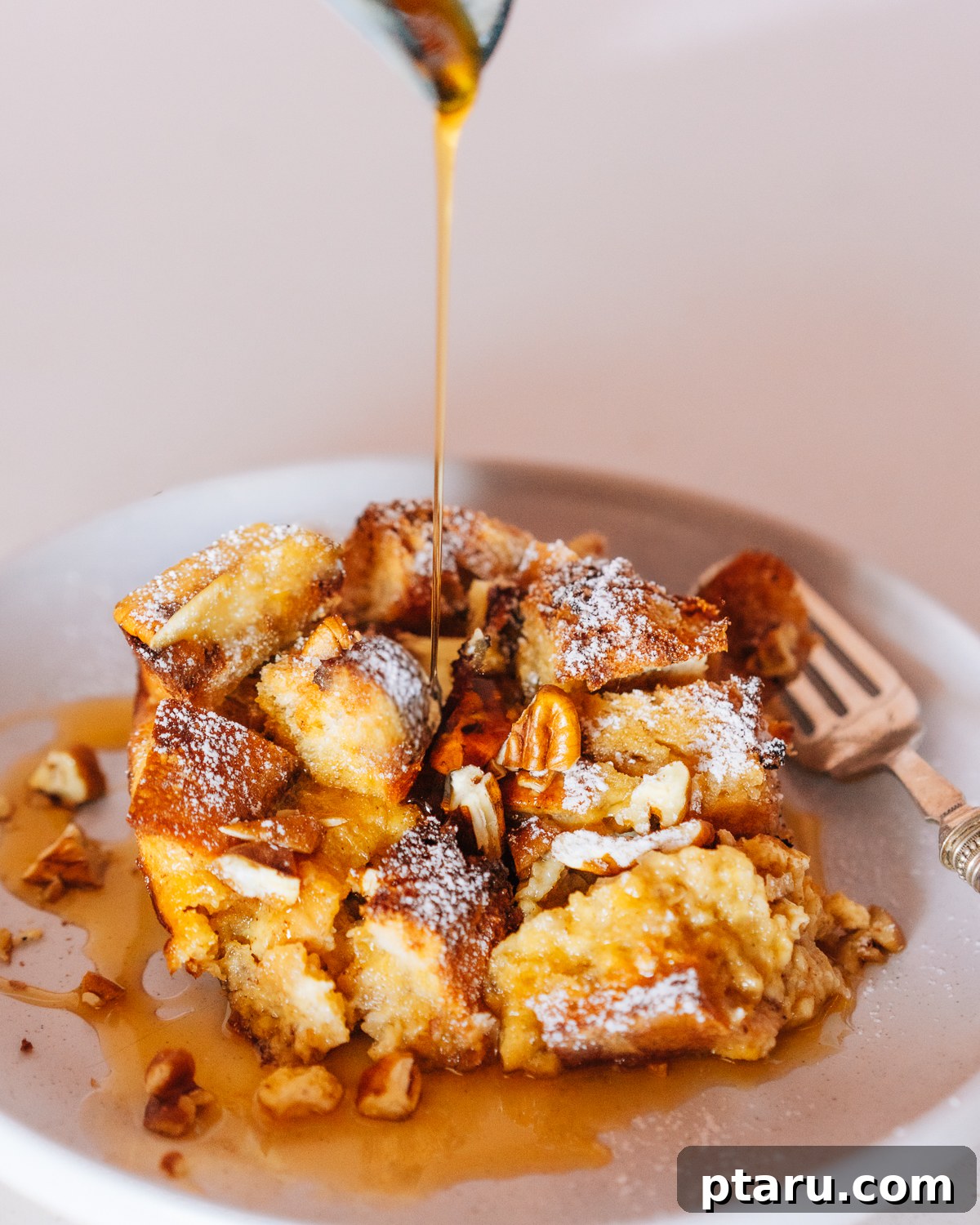
Our French Toast Casserole delivers that irresistible combination of a custardy, tender interior and a beautifully golden-crisp top. It’s infused with the classic, comforting flavors of your favorite French toast, but elevated into a convenient, communal dish. This particular recipe has become my absolute favorite for special occasions, especially as a cherished **Christmas breakfast** tradition. The beauty of this casserole lies in its simplicity and its ability to be prepared the night before, allowing you to enjoy a stress-free morning with loved ones.
Whether you’re hosting a big brunch, feeding a hungry family, or simply craving a comforting sweet breakfast, this casserole hits all the right notes. Its straightforward approach ensures success for cooks of all skill levels, transforming humble bread and pantry staples into a breakfast masterpiece. Get ready to impress with minimal effort and maximum flavor!
Essential Ingredients for Your Overnight French Toast Casserole
Crafting a truly memorable French toast casserole starts with selecting the right ingredients. The good news is, you likely already have most of these simple pantry staples on hand! Each component plays a crucial role in achieving that perfect texture and rich flavor. Exact measurements can be found in the detailed recipe section below.
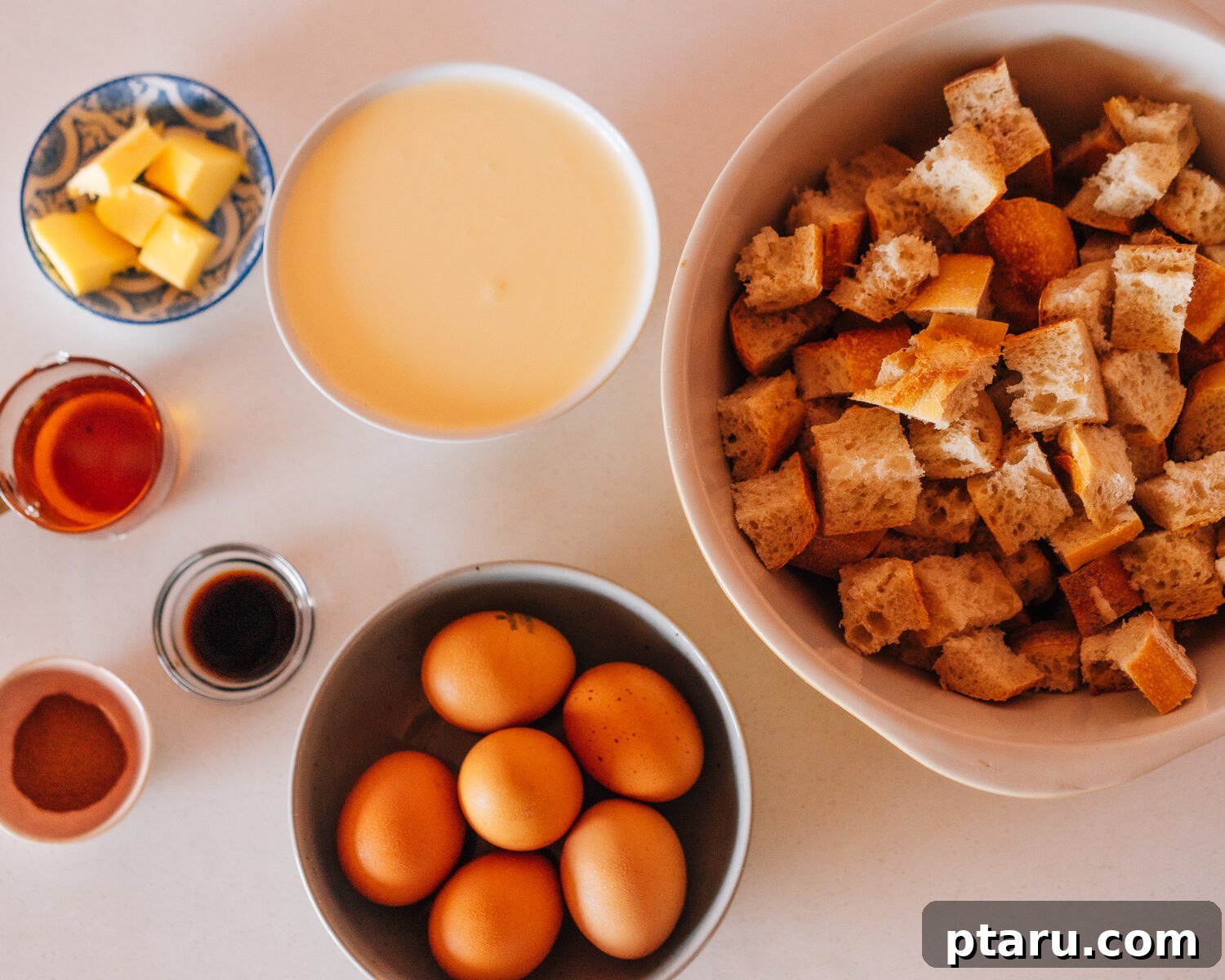
- **Day-Old Brioche, Challah, or French Bread:** The foundation of your casserole. Using day-old or slightly stale bread is key, as it’s drier and absorbs the custard mixture much better than fresh bread, preventing a soggy outcome. Cut it into generous 1-inch cubes for optimal texture. Brioche and challah offer a rich, buttery flavor, while French bread provides a classic base.
- **Large Eggs:** Essential for creating the rich, custardy texture that defines French toast. They bind the ingredients together and provide structure as the casserole bakes.
- **Whole Milk:** Forms the liquid base of our flavorful custard. Whole milk contributes to a richer, creamier end product, but you can certainly use a non-dairy milk alternative (like almond or oat milk) for a lighter version or dietary preference.
- **Heavy Cream:** Adds an indulgent richness and velvety smoothness to the custard. For a slightly lighter casserole without sacrificing too much richness, you can substitute with half-and-half or additional whole milk.
- **Granulated Sugar (or Brown Sugar):** Provides the perfect level of sweetness. Granulated sugar offers a clean sweetness, while substituting half with brown sugar will impart a deeper, more caramel-like flavor, adding another layer of complexity.
- **Pure Vanilla Extract:** A must-have flavor enhancer that complements the sweet bread and dairy beautifully, adding warmth and depth to the casserole.
- **Ground Cinnamon:** The quintessential spice for French toast. Its warm, sweet aroma and flavor perfectly round out the dish.
- **Kosher Salt:** A small pinch of salt in sweet dishes is a culinary secret! It balances the sweetness, enhances all the other flavors, and prevents the casserole from tasting one-dimensional.
- **Unsalted Butter:** Used for greasing your baking dish to prevent sticking and often drizzled over the bread before baking to promote a golden, crispy topping.
Optional Finishing Touches for an Elevated Experience:
- For a beautiful presentation and added texture, consider sprinkling your baked casserole with a delicate dusting of **powdered sugar** and a scattering of **toasted walnuts or pecans** just before serving.
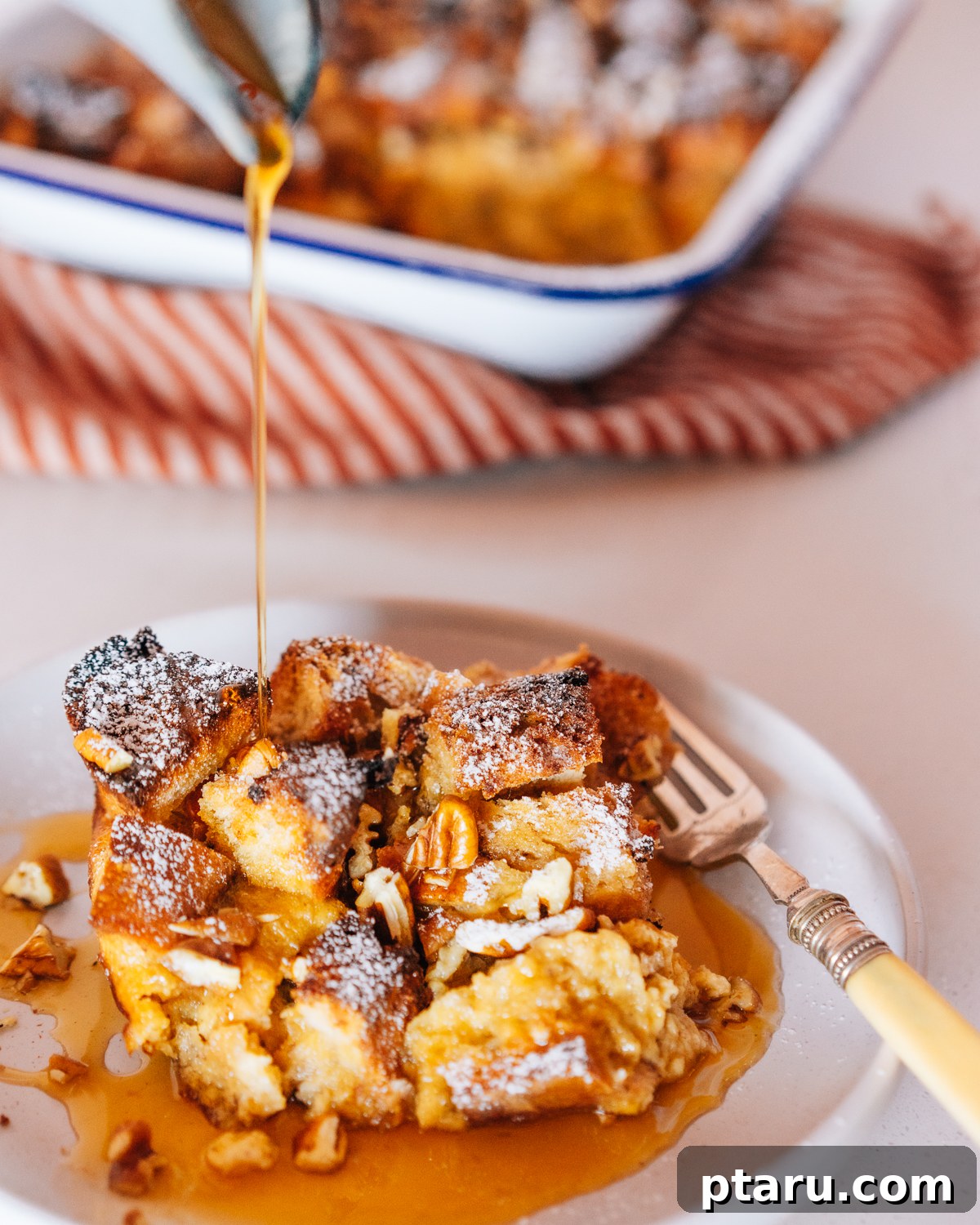
- A generous pour of **warm pure maple syrup** at the table is, of course, highly recommended and completes the classic French toast experience.
Recommended Tools for Effortless Preparation:
- **9×13 Baking Dish:** The ideal size for this casserole, ensuring even baking and generous servings.
- **Large Bowl and Whisk:** Essential for thoroughly combining your custard ingredients into a smooth mixture.
- **Instant-Read Thermometer:** Your secret weapon for perfectly baked custard, ensuring it’s cooked through without being overdone or curdled.
- **Aluminum Foil:** Useful for tenting the casserole during baking to prevent over-browning while the interior cooks.
Step-by-Step Guide: How to Make Overnight French Toast Casserole
Preparing this French toast casserole is incredibly simple, especially with the advantage of being able to assemble it the night before. Follow these easy steps to achieve a perfectly custardy, golden-brown breakfast treat.
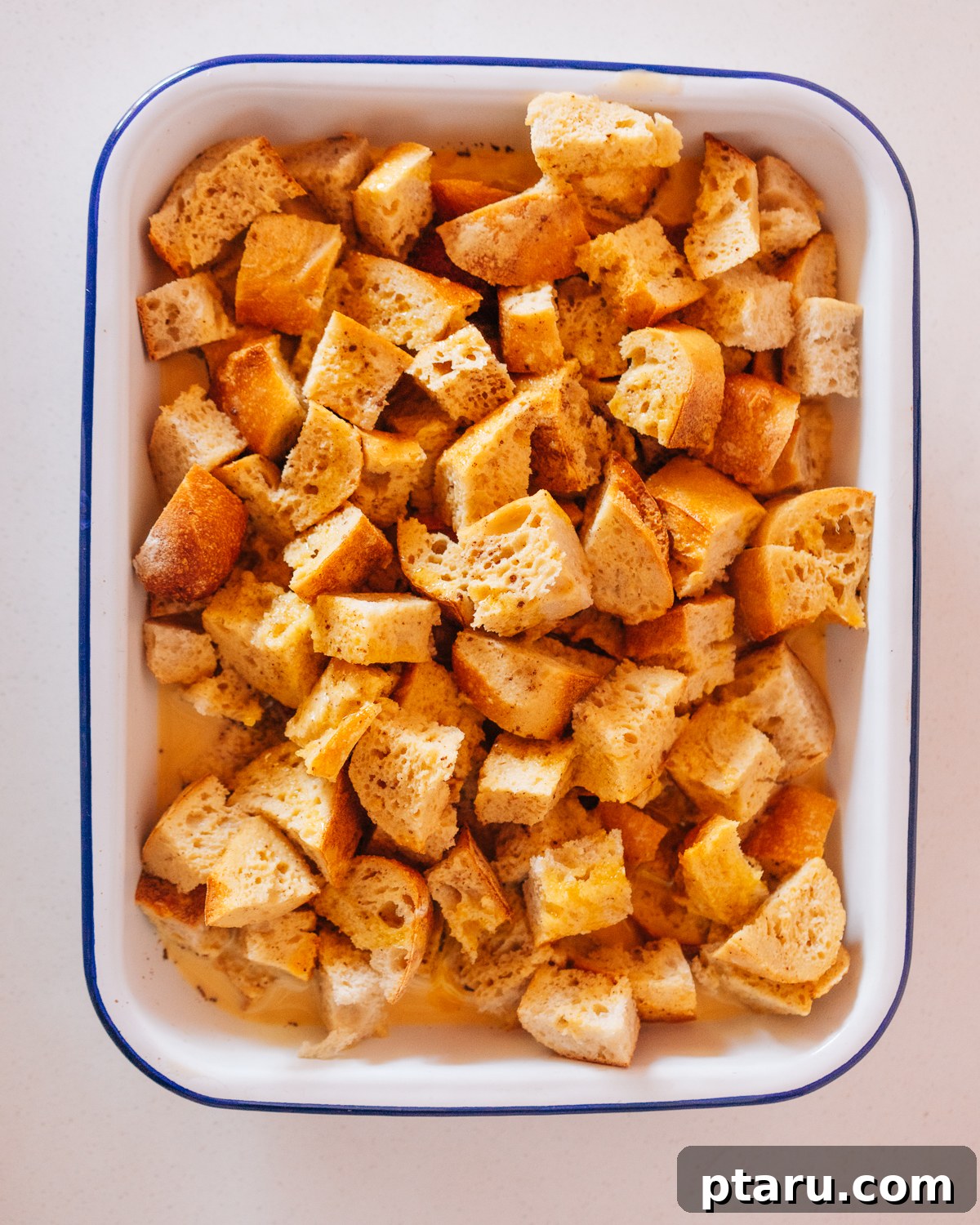
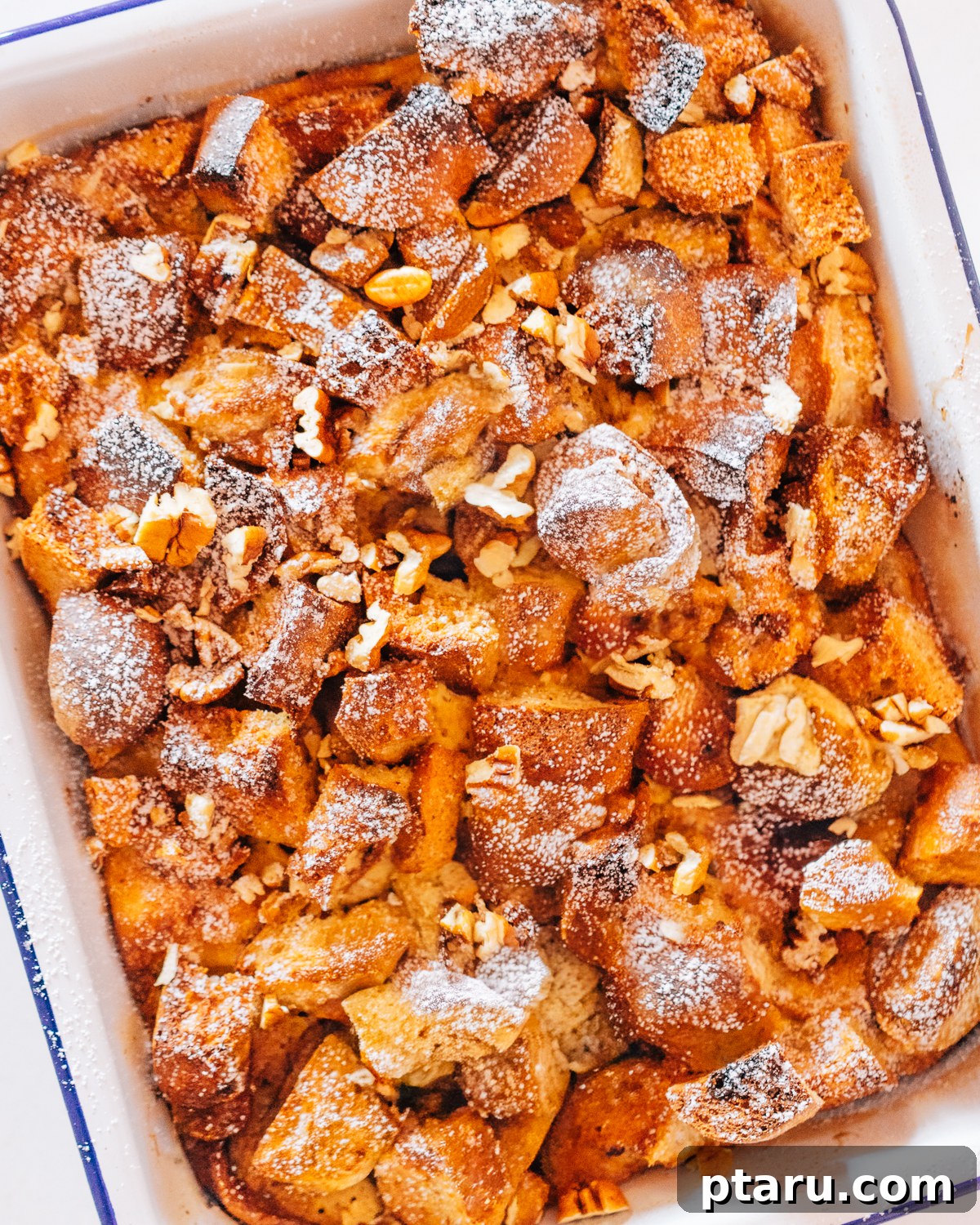
1. Prepare Your Dish and Bread
First, generously butter or grease your 9×13-inch baking dish. This prevents the casserole from sticking and helps create those lovely crispy edges. Next, uniformly spread your cubed day-old bread across the bottom of the prepared dish. Ensure the bread forms an even layer so that every piece gets properly saturated with the custard.
2. Whisk the Luscious Custard
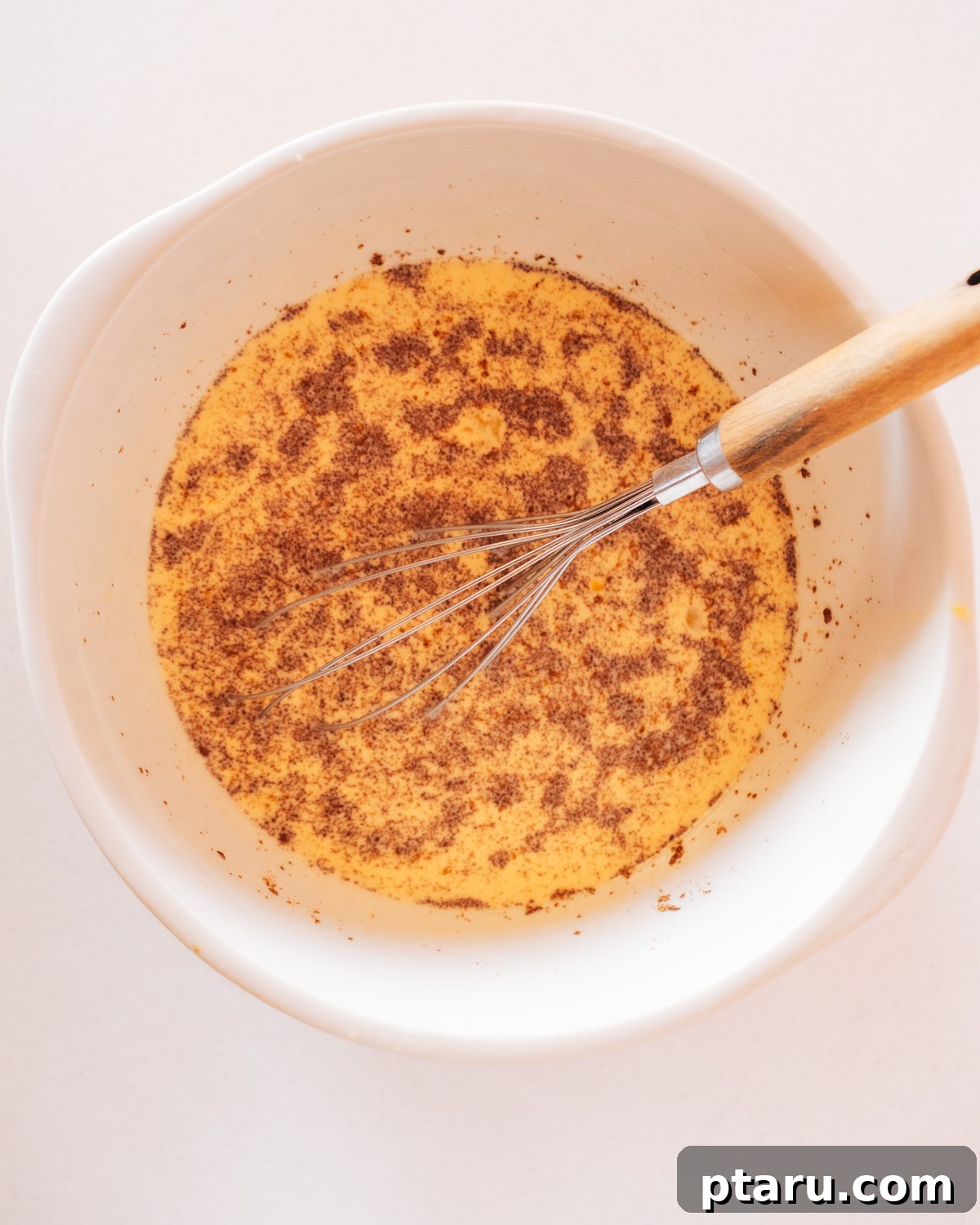
In a large mixing bowl, combine the eggs, whole milk, heavy cream, granulated sugar (or brown sugar), pure vanilla extract, ground cinnamon, and a pinch of kosher salt. Whisk vigorously until all ingredients are thoroughly combined and the mixture is smooth, with no streaks of egg yolk visible. A well-whisked custard is crucial for an even texture throughout the casserole.
3. Assemble and Soak for Maximum Flavor (Overnight Option!)
Carefully pour the whisked egg mixture evenly over the bread cubes in the baking dish. Gently press down on the bread with the back of a spoon or your hands to ensure that every single cube is fully submerged and hydrating in the custard. This step is vital for a moist, tender interior. Once the bread is soaked, drizzle the melted butter over the top. Cover the baking dish tightly with plastic wrap and refrigerate for at least 1 hour, or ideally, **overnight (8-12 hours)**. The longer soak allows the bread to fully absorb the custard, resulting in a more flavorful and consistent casserole.
4. Bake Until Perfectly Set
Preheat your oven to **350°F (175°C)**. If baking straight from the refrigerator, allow the dish to sit at room temperature for 20-30 minutes, or place it in a cold oven and preheat with the oven to prevent thermal shock, especially with glass dishes. Bake the casserole, initially covered with aluminum foil, for approximately 20-25 minutes. Covering prevents the top from browning too quickly while the interior cooks through. After 20-25 minutes, remove the foil and continue baking uncovered for another 20-30 minutes, or until the casserole is beautifully puffed, golden brown on top, and a custardy center reads between **175–185°F (79–85°C)** on an instant-read thermometer. This temperature range ensures the custard is perfectly set and safe to eat. Once baked, remove from the oven and let it rest for 5–10 minutes before slicing and serving. This resting period allows the custard to further set, making for cleaner slices.
Delightful Ways to Serve Your French Toast Casserole
Your freshly baked French Toast Casserole is a showstopper all on its own, but a few thoughtful additions can transform it into an unforgettable brunch experience.
The most classic accompaniment is, of course, a generous drizzle of **warm pure maple syrup**. Its natural sweetness perfectly complements the rich, custardy bread. For a balanced meal, consider serving savory sides like crispy **breakfast sausages** or perfectly cooked **bacon**. The salty crunch of the meat provides a wonderful contrast to the sweet, soft casserole.
Pretty Finishing Touches for a Picture-Perfect Presentation:
- **Confectioners’ Sugar and Toasted Nuts:** A light dusting of powdered sugar adds an elegant touch, while a sprinkle of toasted nuts (like walnuts or pecans) provides a delightful textural crunch.
- **Pomegranate Arils and Fresh Mint Leaves:** For a truly festive and vibrant presentation, especially during the holiday season, scatter bright red pomegranate arils and fresh green mint leaves over the casserole. They add a pop of color and a refreshing counterpoint.
- **Fresh Berries and Cream:** If serving during the warmer spring or summer months, fresh seasonal berries (strawberries, blueberries, raspberries) and a dollop of Greek yogurt or a swirl of whipped cream make for a lighter, refreshing topping.
- **Extra Maple Syrup:** Always have a pitcher of warm maple syrup at the table, allowing everyone to customize their sweetness level.
Exciting Variations to Explore:
While the classic French Toast Casserole is divine, don’t hesitate to experiment with different flavor profiles to suit your cravings!
- **Baked French Toast Slices:** If you prefer the traditional slice format but still want the ease of baking, try a dedicated French Toast Bake recipe designed for individual slices.
- **Citrus Infusion:** Brighten up your casserole with a zesty twist! Incorporate orange zest and a splash of orange juice into your custard, or try an Orange Cream French Toast Casserole for a truly vibrant flavor.
- **Savory Delight:** For those who prefer a less sweet breakfast, French toast casserole can even lean savory. Imagine a casserole featuring cheese, herbs, and perhaps some cooked sausage or bacon bits folded into the bread. My Tater Tot Breakfast Casserole is a fantastic savory alternative if you’re looking for something entirely different!
- **Apple Cinnamon Swirl:** Add thinly sliced apples and a generous swirl of cinnamon-sugar mixture between the bread layers before pouring the custard for a comforting autumnal twist.
- **Chocolate Chip Indulgence:** For a sweeter, kid-friendly option, sprinkle chocolate chips throughout the bread cubes before adding the custard.
Effortless Entertaining: Make-Ahead & Storage Tips
The “overnight” aspect of this French Toast Casserole is its superpower, making it an ideal choice for hassle-free entertaining or busy mornings. Being able to assemble it in advance means you can wake up and simply pop it into the oven, allowing you to relax and enjoy the occasion without the morning rush.
Prepping Ahead for a Seamless Morning:
To make ahead, simply follow all the assembly steps: grease the dish, arrange the bread cubes, pour over the custard, and drizzle with melted butter. Then, cover the baking dish securely with plastic wrap and refrigerate it. The casserole can be prepared **8 to 12 hours in advance**, providing ample time for the bread to soak up all the delicious custardy goodness. On baking day, you can bake it straight from the fridge, though allowing it to sit at room temperature for 20-30 minutes beforehand can help ensure more even cooking and prevent thermal shock to glass dishes. Alternatively, place the cold dish directly into a cold oven and allow it to preheat with the oven.
Storing Leftovers & Reheating:
- **Refrigeration:** Any leftover French Toast Casserole can be stored in an airtight container in the refrigerator for up to 3 days. This ensures it stays fresh and delicious for subsequent breakfasts or snacks.
- **Reheating:** To reheat, place individual slices or the entire remaining casserole in an oven preheated to 300–325°F (150–160°C). Cover it with aluminum foil to keep it moist and prevent further browning, heating until it’s warmed through. For a slightly re-crisped top, uncover it for the last few minutes of reheating. The lower temperature helps warm it gently without drying it out.
- **Freezing:** Yes, this casserole freezes beautifully! Once baked and cooled completely, you can cut it into individual portions and freeze them in an airtight container or freezer-safe bags for up to 2 months. When you’re ready to enjoy, thaw the frozen slices in the refrigerator overnight. Reheat them using the oven method described above for best results.
Pro Tips & The Science Behind a Perfect French Toast Casserole
Achieving French toast casserole perfection isn’t just about following the recipe; it’s also about understanding the subtle science and smart techniques that elevate a good dish to a great one. These pro tips will ensure your casserole is consistently tender, custardy, and perfectly baked every time.
- **The Magic of Day-Old Bread:** This is perhaps the most crucial tip. Day-old or slightly stale bread is drier, allowing it to act like a sponge and fully absorb the liquid custard mixture. Fresh bread, with its higher moisture content, won’t soak up as much liquid, which can lead to a soggy center and a less flavorful final product. Opt for a rich, sturdy bread like brioche, challah, or a good quality French baguette for the best results.
- **Press, Don’t Mash:** When pouring the custard over the bread cubes, it’s important to gently press them down. This ensures uniform hydration of all the bread pieces. However, avoid mashing or compressing the bread too firmly, as this can squeeze out air, making the casserole dense rather than light and airy. A gentle, even press is all you need.
- **Target Temperature for Custard Perfection:** The ideal internal temperature for a perfectly set custard in your French toast casserole is between **175–185°F (79–85°C)**. Using an instant-read thermometer is highly recommended to accurately check this. Baking until the custard reaches this range ensures it’s fully cooked and firm, preventing an underbaked, runny center. It also helps prevent overcooking, which can lead to a rubbery or curdled texture.
- **Resting is Key for Clean Slices:** Just like with many baked goods and meats, allowing your French toast casserole to rest for 5–10 minutes after it comes out of the oven is essential. This short resting period allows the hot custard to settle and firm up slightly, making it much easier to cut into neat, clean slices without falling apart. The flavors also have a chance to meld and intensify during this time.
- **Don’t Skimp on the Butter:** Buttering your baking dish generously not only prevents sticking but also contributes to a deliciously crispy, golden-brown crust on the bottom and sides of the casserole. A drizzle of melted butter over the top before baking further enhances the browning and adds rich flavor.
Frequently Asked Questions: Overnight French Toast Casserole
Got questions about perfecting your French Toast Casserole? We’ve got answers!
While the recipe calls for an overnight soak of 8-12 hours, you can certainly assemble the French Toast Casserole up to 24 hours in advance for optimal texture and flavor. Beyond 24 hours, the bread can begin to break down excessively, potentially leading to a denser, slightly mushy texture rather than the desired custardy bite. So, 24 hours is generally the sweet spot for maximum convenience without compromising quality.
Using an instant-read thermometer is crucial for foolproof French toast casserole. Custard sets reliably when it reaches an internal temperature of 175–185°F (79–85°C). Relying solely on visual cues can be misleading; the top might look golden, but the center could still be underbaked and runny. A thermometer ensures your custard is perfectly cooked through, preventing a soggy center and avoiding the risk of overbaking which can cause the eggs to curdle and become rubbery.
Several factors contribute to avoiding a soggy center: 1) **Use day-old bread:** This is the most critical step as it absorbs the custard efficiently. 2) **Hydrate evenly:** Gently press the bread cubes down to ensure every piece is saturated with the egg mixture. 3) **Bake correctly:** Start baking covered with foil for the initial phase to allow the interior to cook without the top burning, then uncover to achieve that beautiful golden-brown crust. 4) **Check temperature:** Always bake until the center registers 175–185°F (79–85°C) with an instant-read thermometer.
Yes, this French Toast Casserole freezes exceptionally well! Once it has completely cooled after baking, you can slice it into individual portions. Wrap each slice tightly in plastic wrap, then place them in an airtight freezer-safe container or bag. It can be frozen for up to 2 months. To reheat, thaw the slices in the refrigerator overnight, then warm them in an oven preheated to 300–325°F (150–160°C), covered, until hot. Uncover briefly at the end to re-crisp the top.
To prevent thermal shock, which can cause glass baking dishes to crack or shatter, it’s best to avoid placing a cold glass dish directly into a preheated hot oven. You have two safe options: 1) Let the assembled casserole sit at room temperature for 20–30 minutes before baking. 2) Place the cold casserole dish into a cold oven, then turn on the oven and allow it to preheat with the dish inside. This gradual temperature increase helps prevent any issues.

Easy French Toast Casserole (with Overnight Option!)
Jennifer Pallian BSc, RD
10 minutes
40 minutes
8
Ingredients
- 1 lb day-old brioche, challah, or French bread (about 9–10 cups, cut into 1-inch cubes)
- 6 large eggs
- 1 cup whole milk
- 1 cup heavy whipping cream or half-and-half
- ¼ cup pure maple syrup (for the custard)
- 2 tsp pure vanilla extract
- 1 tsp ground cinnamon
- ½ tsp kosher salt
- 4 tbsp unsalted butter, melted
Instructions
- Grease a 9×13-inch baking dish generously. Spread the cubed day-old bread evenly in the prepared dish, forming a single layer.
- In a large bowl, whisk together the eggs, whole milk, heavy cream, ¼ cup maple syrup, vanilla extract, ground cinnamon, and kosher salt until the mixture is completely smooth and well combined.
- Pour the egg mixture evenly over the bread cubes in the baking dish. Gently press down on the bread with your hands or a spatula to ensure all the cubes are fully saturated with the custard. Drizzle the melted butter over the top of the bread. Cover the dish tightly with plastic wrap and refrigerate for at least 1 hour, or preferably overnight (8-12 hours), allowing the bread to soak thoroughly.
- When ready to bake, preheat your oven to 350°F (175°C). If baking straight from the fridge, allow the casserole to sit at room temperature for 20-30 minutes, or place it in a cold oven and preheat with the oven to prevent thermal shock. Bake the casserole, covered with aluminum foil, for approximately 20-25 minutes. Then, remove the foil and continue baking uncovered for another 20-30 minutes, or until the casserole is puffed, golden brown on top, and an instant-read thermometer inserted into the center reads **175–185°F (79–85°C)**.
- Remove the casserole from the oven and let it rest for 5–10 minutes before slicing and serving. This resting period helps the custard set, making for cleaner cuts. Serve warm with additional maple syrup and your favorite toppings.
Notes
If you prefer a sweeter casserole that can stand alone without additional toppings, feel free to increase the maple syrup in the custard to ½ cup.
Nutrition Information (per serving)
- Calories: 409 kcal
- Carbohydrates: 36g
- Protein: 13g
- Fat: 24g
- Saturated Fat: 13g
- Polyunsaturated Fat: 1g
- Monounsaturated Fat: 3g
- Trans Fat: 0.2g
- Cholesterol: 242mg
- Sodium: 477mg
- Potassium: 166mg
- Fiber: 0.1g
- Sugar: 9g
- Vitamin A: 940IU
- Vitamin C: 0.01mg
- Calcium: 142mg
- Iron: 1mg
Nutrition information is automatically calculated, so should only be used as an approximation.
Tried this recipe? Share your thoughts and leave a comment below!
We hope this comprehensive guide inspires you to create your own unforgettable French Toast Casserole. This dish truly embodies comfort and convenience, transforming simple ingredients into a brunch sensation that everyone will adore. Whether you’re making it for a special holiday, a leisurely weekend breakfast, or simply to treat yourself, the ease of preparation and the delightful results are sure to make it a cherished recipe in your kitchen. Enjoy every custardy bite!