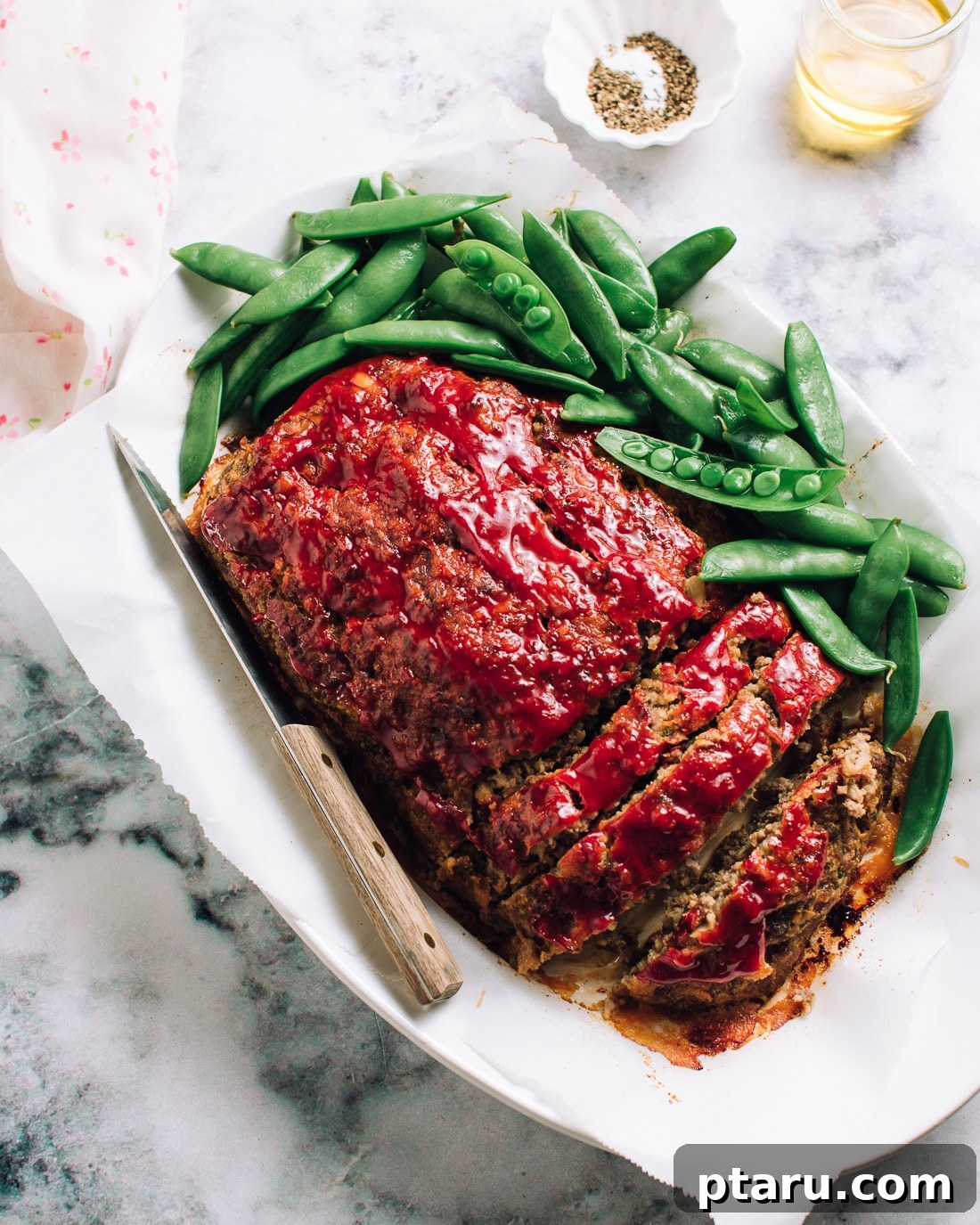
The Ultimate Meatloaf Recipe: Moist, Tender, and Flavorful Comfort Food
Prepare yourself for the **best meatloaf recipe** you’ll ever experience. This isn’t just a meal; it’s a culinary revelation, delivering a perfectly moist and tender interior, crowned with an irresistible sticky, caramelized topping. Forget dry, crumbly, or bland meatloaf; this recipe is crafted to transform even skeptics into true meatloaf lovers. It’s the quintessential comfort food, promising warmth, satisfaction, and a taste of home with every savory bite.
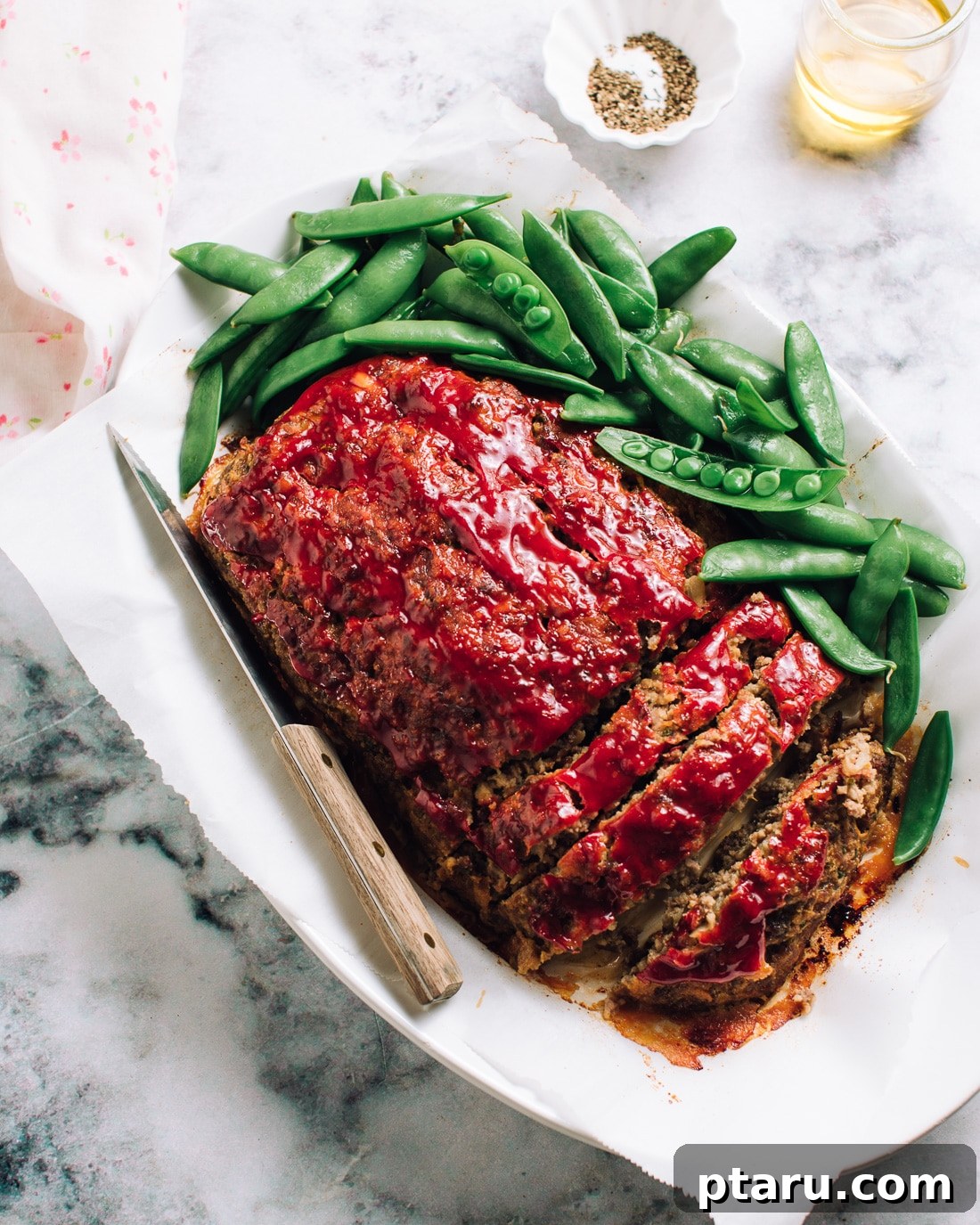
Why This Is The Only Meatloaf Recipe You’ll Ever Need
For many, meatloaf embodies the heart of home cooking – a hearty, satisfying dish that evokes nostalgic memories. Yet, some have unfortunately encountered less-than-stellar versions, leading to a misconception that meatloaf can be dry or uninspiring. We’re here to change that narrative. When prepared correctly, meatloaf is a flavorful, expertly seasoned, and incredibly tender dish, akin to a colossal, shareable meatball that perfectly pairs with classic sides.
This particular recipe elevates meatloaf to an art form, addressing common pitfalls and ensuring a consistently delicious outcome. It’s no wonder meatloaf enjoys such enduring popularity across America; a truly great recipe makes all the difference. Get ready to impress your family and friends with a meatloaf that’s rich in flavor, perfectly textured, and utterly comforting.
The Secrets to Exceptionally Flavorful Meatloaf
Achieving a meatloaf that bursts with flavor and satisfies every craving comes down to two critical elements: meticulous browning and thoughtful seasoning. These steps transform ordinary ground meat into an extraordinary culinary experience.
Mastering the Maillard Reaction for Superior Browning
The key to developing deep, rich flavors and avoiding a lackluster, grey meatloaf lies in maximizing its surface area for proper browning. Instead of confining your meatloaf to a traditional loaf pan, which can steam the meat and hinder caramelization, we advocate for forming it freehand on a parchment-lined baking sheet. This method significantly increases the exposure of the meat to direct oven heat, allowing the outer layer to achieve that coveted golden-brown crust through the Maillard reaction. This caramelization is what imparts an incredible depth of flavor and texture that’s simply unmatched by pan-baked versions.
The Art of Seasoning: A Symphony of Savory Notes
A truly delicious meatloaf is built on a foundation of well-balanced seasoning. Our star flavor builders include the savory depth of Worcestershire sauce, the aromatic punch of fresh garlic, the herbaceous freshness of parsley, and a generous amount of freshly ground black pepper, all complemented by adequate salt. These ingredients work in harmony to create a complex and satisfying taste profile.
For optimal seasoning, especially if you’re uncertain about salt levels, a chef’s trick is to take a small spoonful of the raw meat mixture, cook it quickly in a frying pan or microwave, and taste it. This allows you to adjust the seasoning precisely before baking the entire loaf, ensuring perfect flavor every time. For more on this technique, see our guide on how to “season to taste” in raw meat dishes.
The Irresistible Ketchup Glaze and Its Role
Ketchup plays a dual role in this exceptional meatloaf: both inside the mixture and as a glorious topping. Within the meatloaf, it contributes moisture and a subtle tangy flavor that brightens the overall profile. Applied generously to the exterior, ketchup acts as a protective layer, preventing the meat from drying out during baking. More importantly, under the oven’s heat, it caramelizes beautifully, creating an irresistible, sticky, and slightly charred crust that is absolutely divine. This sweet and savory glaze is a signature element that elevates our meatloaf from good to unforgettable.
Should you desire an alternative, you could also try our incredibly easy and tasty 3-Ingredient Meatloaf Glaze, offering a different yet equally delicious finish.
The Pillars of a Perfectly Moist and Tender Meatloaf
The pursuit of a genuinely moist and tender meatloaf is often considered the holy grail of meatloaf making. Many recipes fall short, resulting in dry, dense, or crumbly textures. Our recipe, however, guarantees succulence through a few ingenious techniques honed over years of culinary exploration. These are the secrets that ensure every slice is juicy and melts in your mouth:
The Breadcrumb-Milk Secret: A Moisture Magnet
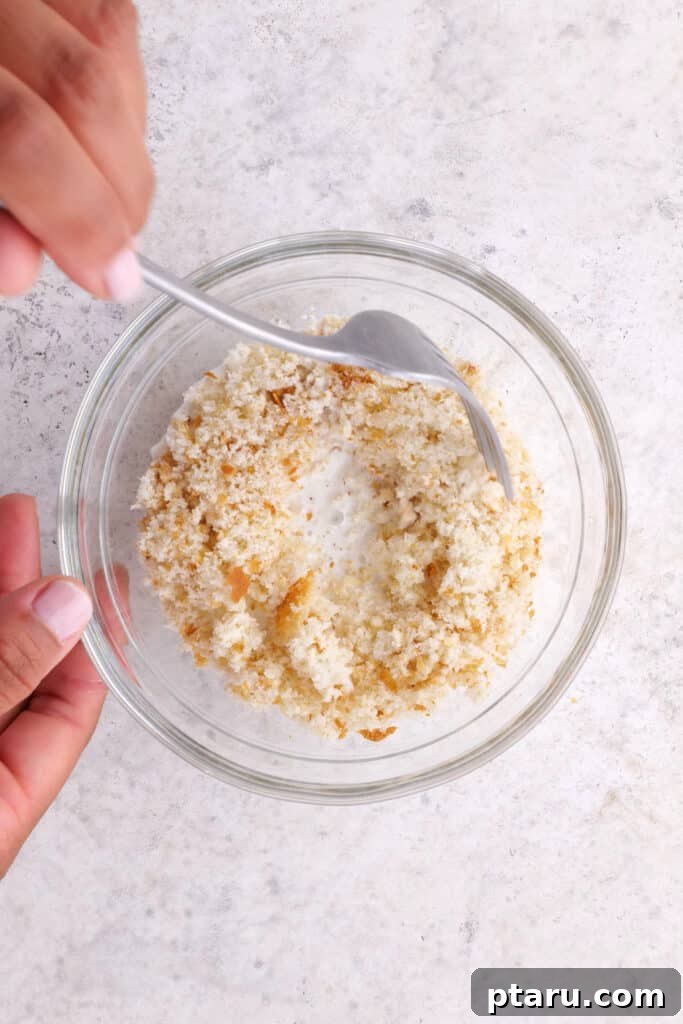
One of the most profound secrets to a supremely moist meatloaf lies in the simple act of soaking breadcrumbs in milk before mixing them with the meat. Meat itself can only retain a certain amount of moisture, but breadcrumbs, especially when hydrated with milk, act like tiny sponges, absorbing and locking in a significant amount of liquid that would otherwise be lost during cooking. This technique is inspired by our incredibly tender meatball recipe, a long-standing family favorite, where milk-soaked bread is key to their succulent texture. By employing fresh breadcrumbs soaked in whole milk, we infuse the meatloaf with an unparalleled level of tenderness and prevent it from drying out, even when cooked to perfection.
Precision Cooking: The Key to Juicy Results
Overcooking is a primary culprit behind dry meatloaf. To ensure your meatloaf remains perfectly juicy, it’s crucial to cook it to the right internal temperature: 160ºF (71°C). While ground meat typically requires 165ºF (74°C) for food safety, meatloaf continues to cook after it’s removed from the oven, a phenomenon known as carryover cooking. This residual heat will naturally bring the internal temperature up to the safe threshold of 165ºF during its resting period. Using a reliable meat thermometer is indispensable here. For a comprehensive understanding of ideal cooking stages, consult my food scientist’s guide to key meatloaf temperatures.
The Essential Resting Period for Maximum Juiciness
Just like a perfectly roasted steak, meatloaf absolutely requires a resting period after baking. This step is non-negotiable for achieving a moist and juicy result. When meat cooks, its muscle fibers contract, pushing the internal juices to the center. Cutting into the meatloaf immediately after it comes out of the oven would allow all those precious juices to run out onto your cutting board, leaving you with a dry and less flavorful dish. By allowing the meatloaf to rest on the pan for at least 10 minutes, the muscle fibers relax, allowing the juices to redistribute evenly throughout the loaf. This reabsorption ensures that every slice is succulent and tender, bursting with flavor.
How to Make the Very Best Meatloaf: A Step-by-Step Guide
Crafting this ultimate meatloaf is a straightforward process, built on foundational cooking principles that ensure success every time. Follow these steps for a perfectly textured and flavored loaf:
- Prepare the Breadcrumb Mixture: In a large bowl, combine the breadcrumbs and milk, stirring gently. Allow this mixture to sit for a few minutes while the breadcrumbs fully absorb the milk. This initial step is vital for locking in moisture.
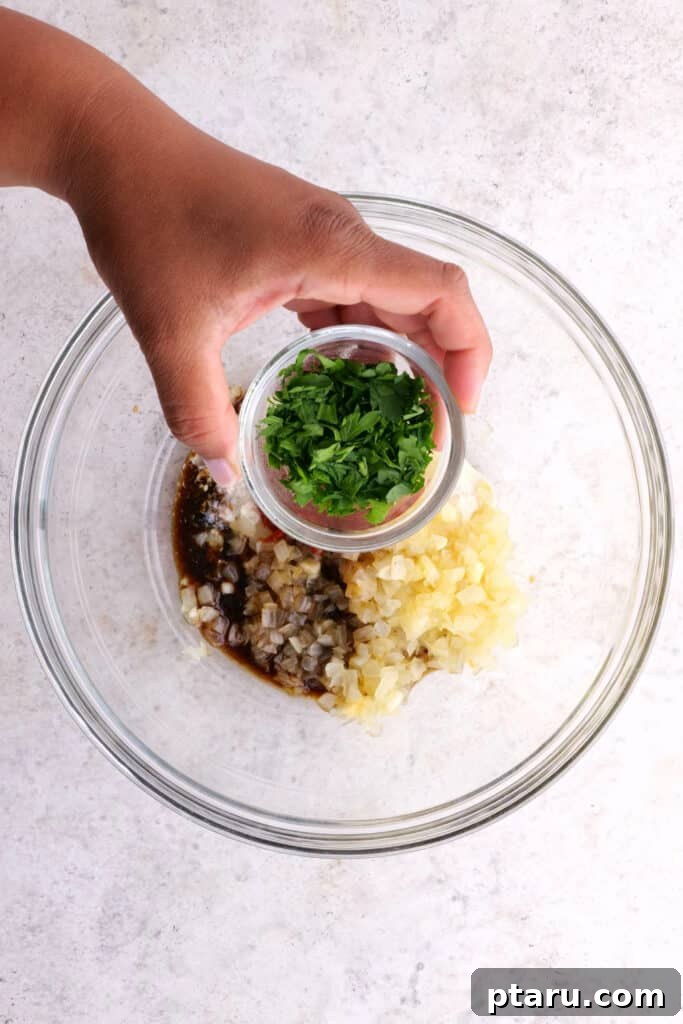
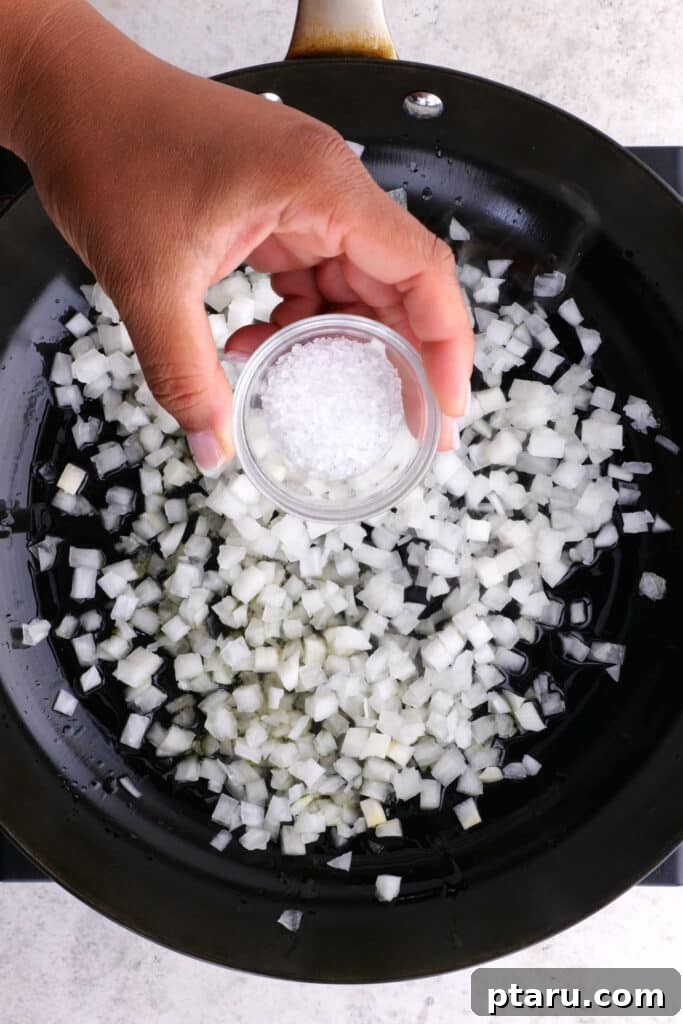
- Sauté Aromatics: In a large saucepan, heat olive oil over medium heat. Add the finely chopped onion along with a portion of the salt, cooking until the onion softens and becomes translucent, which typically takes about 7 minutes. Stir in the minced garlic and cook for another minute until fragrant. Transfer the cooked aromatics to the breadcrumb mixture and let them cool for a few minutes.
- Combine Wet Ingredients: Into the cooled breadcrumb and onion mixture, stir in a quarter cup of ketchup, Worcestershire sauce, fresh parsley (or dried equivalent), the remaining salt, and black pepper. Mix thoroughly until all ingredients are well combined.
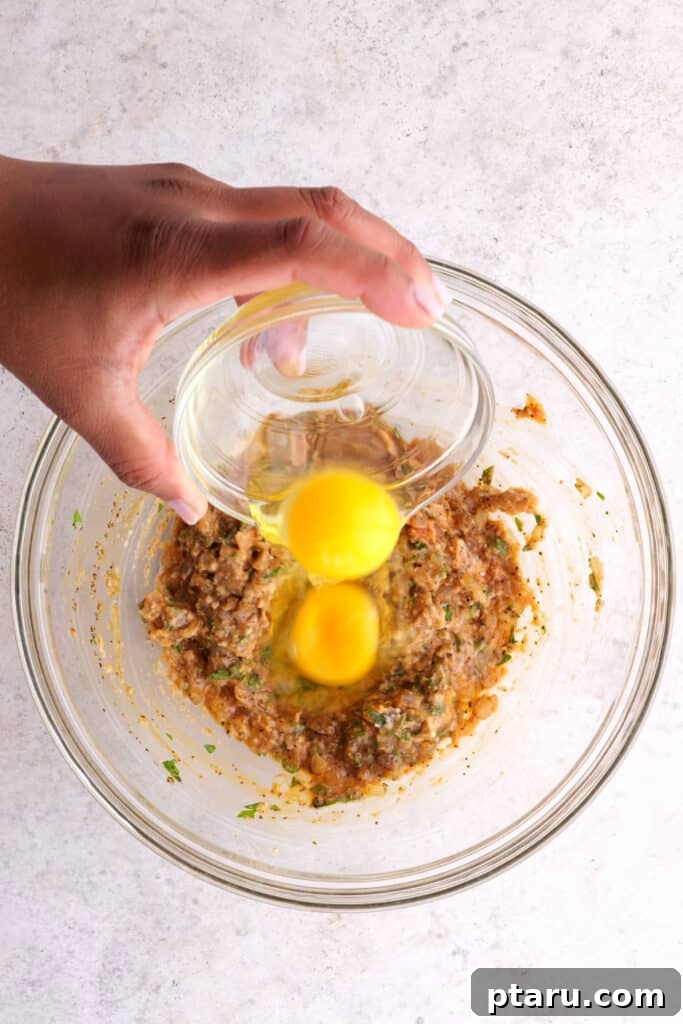
- Incorporate Meat and Eggs: Once the breadcrumb mixture has cooled to the touch, gently stir in the eggs. Then, add the ground meat (beef and pork combination, or all beef). Using your hands, work the mixture together gently but thoroughly. Be careful not to overmix, as this can lead to a tough meatloaf. Mix just until everything is evenly incorporated.
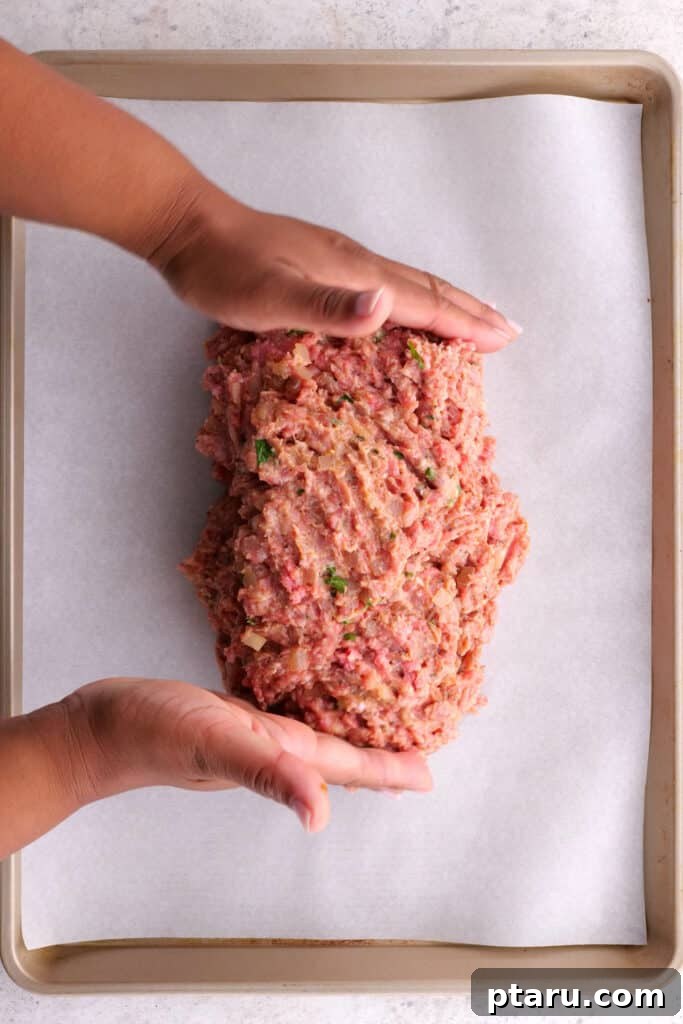
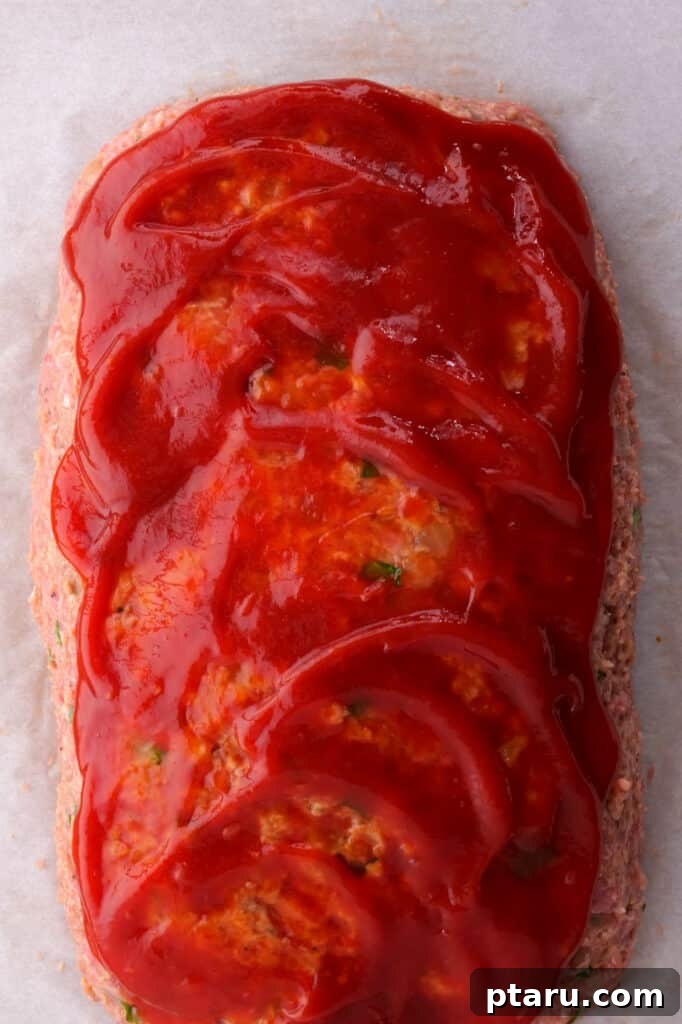
- Shape and Glaze: Scrape the meat mixture onto your prepared baking sheet (lined with parchment paper for easy cleanup and optimal browning). Use your hands to shape the mixture into a neat loaf, approximately 9×5 inches. Dollop the remaining third cup of ketchup over the top and use a spoon to spread it evenly across the entire surface.
- Bake to Perfection: Place the meatloaf on the center rack of your preheated oven (350ºF / 175°C). Bake for about 1 hour, or until a meat thermometer inserted into the center reads 160ºF (71°C).
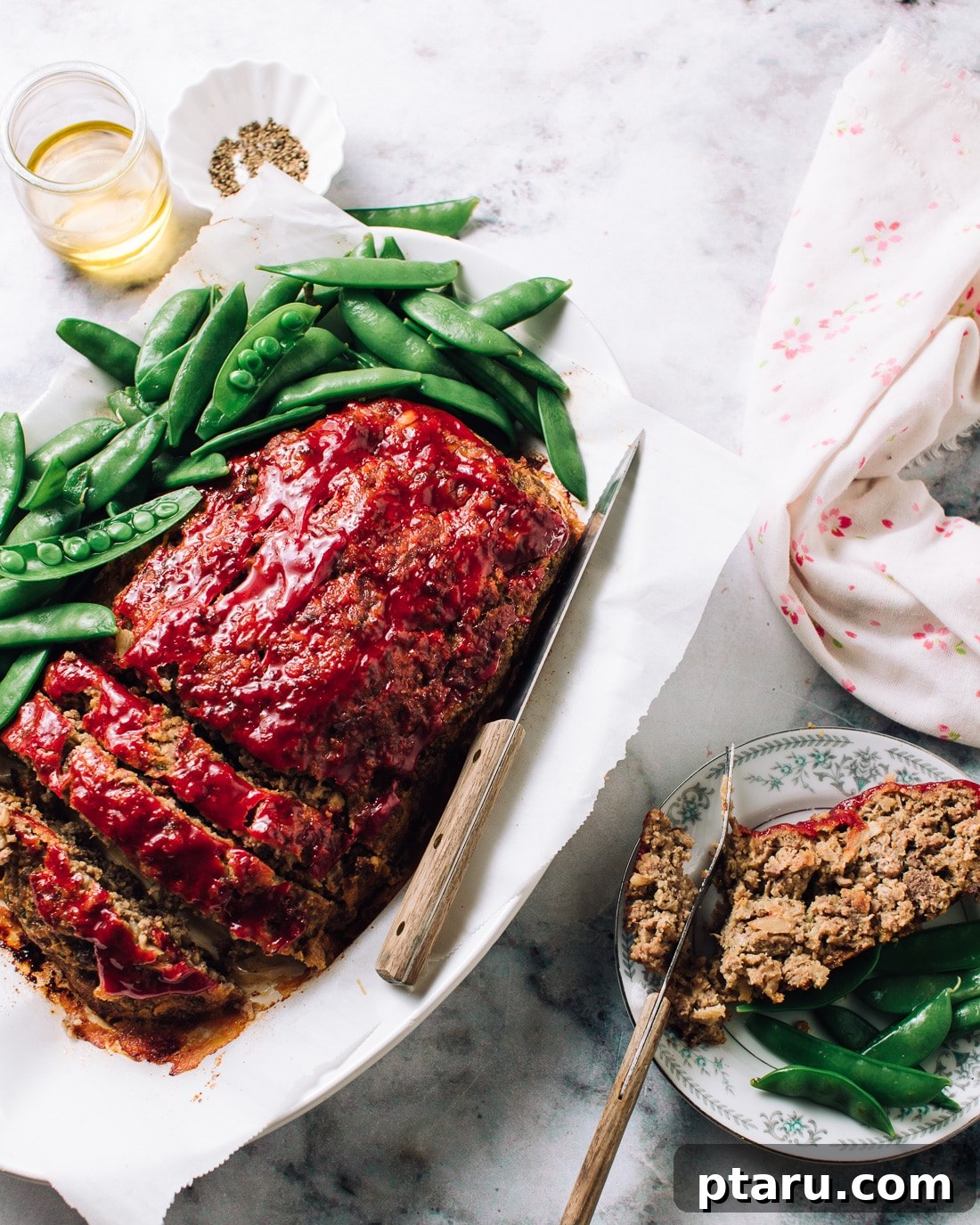
- Rest and Serve: Once baked, remove the meatloaf from the oven and allow it to rest on the pan for 10 minutes before slicing. This resting period is crucial for the juices to redistribute, ensuring a moist and firm loaf that slices beautifully.
How to Keep Your Meatloaf From Falling Apart
A common frustration for home cooks is a meatloaf that crumbles into pieces rather than holding its shape when sliced. Achieving a tender yet sturdy loaf is a delicate balance, but entirely achievable with the right approach. Here’s how we ensure our meatloaf stands tall and slices cleanly:
Choosing the Right Recipe: A Perfect Balance
The foundation of a meatloaf that holds together is the recipe itself. Often, crumbling occurs due to an imbalance: too much liquid or an excessive amount of add-ins (like certain vegetables) compared to insufficient binders (like eggs). Eggs act as the “glue” that holds the meat and other ingredients together. This recipe below has been meticulously developed to strike that perfect balance, yielding a soft, tender loaf that remains beautifully intact. It’s a delicate dance between achieving tenderness and maintaining structural integrity, and this recipe masters it.
The Magic of Resting for Structural Integrity
We’ve discussed resting for moisture, but it’s equally important for structural integrity. After baking, the meatloaf needs time for its internal structure to firm up slightly. The proteins in the meat continue to set as it cools, and the juices redistribute, allowing the loaf to become more cohesive. If you cut into it too soon, the loaf hasn’t had a chance to solidify, leading to a messy, crumbly outcome. A small amount of patience – at least ten minutes of resting – will reward you with elegant, tidy slices every time.
The Indispensable Role of Breadcrumbs in Binding
Beyond moisture, breadcrumbs are critical for binding. They provide bulk and a porous structure that helps interlock the meat fibers and other ingredients. This creates a cohesive matrix that prevents the loaf from disintegrating. The breadcrumbs, especially when soaked in milk, absorb and hold moisture, which contributes to tenderness, but their physical presence also helps create a sturdy, yet soft, meatloaf that is easy to form and slice.
Choosing Your Ground Meat for the Best Meatloaf
The type of ground meat you select significantly impacts the flavor and texture of your meatloaf. While there are various options, we find a specific combination yields the most balanced and delicious results.
For this recipe, I opt for a combination of ground beef and ground pork. Ground beef brings a robust, classic meaty flavor that is quintessential to meatloaf. Ground pork, on the other hand, contributes richness and juiciness due to its higher fat content and different muscle structure. This blend creates a meatloaf that is both deeply flavorful and wonderfully succulent. The fats from the pork render during cooking, keeping the entire loaf moist and adding a depth that leaner meats might miss.
However, if you prefer, or if a beef-pork blend isn’t available, you can certainly use all ground beef. Many traditional recipes do, and it still produces a delicious result. I personally enjoy it both ways, finding comfort in the classic all-beef version as much as the richer blended one. When choosing ground beef, opt for a blend with about 80/20 lean-to-fat ratio for optimal flavor and moisture.
Perfect Pairings: What to Serve with Your Ultimate Meatloaf
No comfort food meal is complete without its perfect accompaniments. Meatloaf, with its rich and savory profile, pairs beautifully with a variety of side dishes that complement its texture and flavor. Here are some of our top recommendations to create a truly satisfying meal:
- Potatoes: Creamy mashed potatoes are an undisputed classic, ideal for soaking up any delicious juices. Baked potatoes offer a simpler, rustic option, while decadent easy au gratin potatoes provide a cheesy, comforting twist. Any form of potato acts as a perfect starchy counterpoint.
- Green Vegetables: To balance the richness of the meatloaf, a vibrant green vegetable is a must. Steamed green beans or snap peas offer a crisp, fresh bite. For something more indulgent, try candied Brussels sprouts, offering a sweet and savory crunch. Simple green peas or a crisp, fresh green salad with a light vinaigrette also work wonderfully, adding essential freshness and texture.
- Warm Bread: A slice of warm, fresh bread or cornbread is excellent for sopping up any remaining sauce or gravy. Our moist cornbread casserole is a particularly special treat, adding a touch of sweetness and a delightful texture contrast to homemade meatloaf.
For an even wider array of choices, explore our extensive collection of 31+ most delicious meatloaf side dishes or if you’re looking for lighter options, check out our 35+ best healthy meatloaf sides.
What to Do with Leftover Meatloaf
One of the true joys of making a generous meatloaf is the prospect of leftovers. Far from being a mere reheat, leftover meatloaf can be transformed into new, equally delicious meals, often becoming even better the next day as the flavors meld and deepen.
Leftover meatloaf is absolutely delicious in classic meatloaf sandwiches, served cold or lightly warmed, perhaps with a slice of cheese and a spread of mayo. Another fantastic option is to heat slices by pan-frying them until crispy, creating a delightful texture contrast. For a truly creative twist, crumble the leftover meatloaf into mashed potatoes and form them into potato cakes, pan-fried in butter until golden and crispy, much like our fish cakes.
This ultimate meatloaf recipe typically yields enough for two full meals (or more) for a family of four, making it an incredibly economical and versatile dish. Many would even argue that the leftovers are the best part of the entire experience!
To ensure your leftovers are as delicious as the first serving, here’s the lowdown on how to reheat meatloaf (so it stays moist and juicy!), how to freeze meatloaf for future meals, and how long meatloaf lasts in the fridge safely.
Frequently Asked Questions About Meatloaf
Without question, it is far better to use milk in meatloaf, especially whole milk. The added fat from the milk contributes significantly to the richness and moist texture of the meatloaf, preventing it from drying out. Furthermore, the milk proteins encourage additional browning reactions during cooking, leading to a more complex and savory flavor profile. Water simply won’t offer these benefits.
No, when baking meatloaf, you generally should not cover it with foil. Covering the meatloaf creates a steaming environment, which can result in a less appealing, grey, and soggy exterior. For optimal flavor and texture, you want browning and caramelization on the surface. Baking it uncovered allows for maximum contact with the oven’s dry heat, facilitating that delicious, crispy crust. The only time you might consider covering it is towards the very end of baking if your ketchup topping appears to be getting too dark, but this is usually unnecessary with the proper baking temperature and time.
There are several common reasons why meatloaf can turn out dry:
- Wrong Recipe: Some recipes simply don’t have the right balance of ingredients to retain moisture. This recipe, with its carefully balanced binders and moisture-locking techniques, is a proven solution.
- Over-baking: Cooking the meatloaf beyond its ideal internal temperature (160ºF / 71°C before resting) is a major cause of dryness. Always use a meat thermometer!
- Insufficient Resting: Cutting into the meatloaf immediately after baking prevents the juices from reabsorbing into the meat, causing them to run out and leaving the loaf dry.
- Missing the Breadcrumb-Milk Trick: Our secret of soaking breadcrumbs in milk before adding them to the mixture is crucial for infusing and locking in moisture that the meat alone cannot hold. Skipping this step often results in a drier meatloaf.
If you need an alternative to traditional breadcrumbs, you have a few excellent options that still help bind the meatloaf and retain moisture:
- Panko Breadcrumbs: These Japanese-style breadcrumbs are lighter and crispier, offering a similar binding quality.
- Gluten-Free Breadcrumbs: Available at most grocery stores, these are a great option for those with gluten sensitivities.
- Quick-Cooking Oats: Rolled oats can act as an effective binder and moisture absorber.
Whichever substitute you choose, be sure to incorporate my soaking trick (soaking them in milk) to ensure maximum moisture and tenderness in your meatloaf.
If you need to make this meatloaf recipe egg-free, that’s entirely possible without compromising texture or flavor. Eggs primarily act as a binder, and several substitutes can perform this role effectively. My favorite egg substitutes for meatloaf include flax eggs (ground flaxseed mixed with water), finely ground oats, or even a small amount of gelatin or pureed vegetables like sweet potato or applesauce (in specific ratios). Each substitute has a slightly different impact, but with the right choice and preparation, your meatloaf will still hold together beautifully.
Absolutely! Meatloaf is an excellent meal for meal prepping. You can prepare the meatloaf mixture completely, shape it, and then store it covered in the refrigerator for up to 24 hours before baking. Alternatively, you can bake the meatloaf and then refrigerate the cooked loaf for 3-4 days, reheating slices as needed. For longer storage, uncooked or cooked meatloaf can be frozen for up to 3-4 months. This makes it a convenient option for busy weeknights.
You’ll also love our Meatloaf with Brown Gravy: tender, savory meatloaf complemented by the tastiest, easiest brown gravy. It’s truly total comfort food!
Pin
The Best Meatloaf Recipe Of Your Life
Video
For a visual guide, please refer to our video tutorial on making the ultimate meatloaf.
Ingredients
- 1 cup breadcrumbs
- ⅓ cup whole milk
- 2 tbsp olive oil
- 1 large onion finely chopped
- 2 ½ tsp coarse salt divided use
- 3 large cloves garlic minced
- ¼ + ⅓ cup ketchup divided use
- 3 tbsp Worcestershire sauce
- 2 tbsp minced fresh parsley or 2 tsp dried
- 1 ¼ tsp ground black pepper
- 2 large eggs
- 1 lb ground beef
- 1 lb ground pork or just use 2 lbs total ground beef
Instructions
-
In a large bowl, stir together breadcrumbs and milk; let stand to absorb for a few minutes. Line a baking sheet with parchment paper or aluminum foil. Preheat oven to 350ºF (175°C).
-
Heat olive oil in a large saucepan over medium heat. Add the finely chopped onion with 1 tsp of salt and cook until softened and translucent, about 7 minutes. Stir in the minced garlic and cook until fragrant, about 1 minute more. Remove from heat and scrape the cooked aromatics into the breadcrumb mixture, allowing it to cool for a few minutes.
-
Stir ¼ cup of ketchup into the breadcrumb mixture, along with Worcestershire sauce, parsley, the remaining salt, and black pepper. Once the mixture is cool enough to handle, stir in the eggs, then add the ground beef and ground pork (or all ground beef). Use your hands to gently but thoroughly combine the mixture until all ingredients are evenly distributed, being careful not to overmix.
-
Scrape the meat mixture onto the prepared baking sheet. Using your hands, shape it into a firm, elongated loaf, roughly 9×5 inches. Dollop the remaining ⅓ cup of ketchup evenly over the top, spreading it with a spoon to create a consistent glaze.
-
Bake the meatloaf in the center rack of the preheated oven for approximately 1 hour, or until an instant-read thermometer inserted into the thickest part of the loaf reads 160ºF (71°C). Once cooked, remove the meatloaf from the oven and allow it to rest on the baking sheet for 10 minutes before carefully slicing and serving. This resting period is essential for juicy, cohesive slices.
Notes
- Soaking the breadcrumbs in milk is an essential technique for locking moisture into this delicious meatloaf, contributing significantly to its tender texture.
- Cook the meatloaf until the center reaches 160ºF (71°C). It will continue cooking to a safe 165ºF (74°C) through carryover cooking as it rests, ensuring it stays perfectly juicy and never dry.
- Resting the meatloaf for at least 10 minutes after baking is very important. This allows the internal juices to reabsorb into the meat, ensuring the meatloaf remains moist and slices beautifully. If you cut into it immediately, the juices will run out, resulting in a drier loaf.
- Baking your meatloaf freehand on a baking sheet is far superior to using a traditional loaf pan. This method maximizes the surface area exposed to heat, promoting exceptional browning and caramelization of the outer layer, which is key for developing rich, delicious flavor and a delightful texture.
Nutrition
Carbohydrates: 9g |
Protein: 22g |
Fat: 28g |
Saturated Fat: 10g |
Polyunsaturated Fat: 2g |
Monounsaturated Fat: 13g |
Trans Fat: 1g |
Cholesterol: 123mg |
Sodium: 1061mg |
Potassium: 482mg |
Fiber: 0.4g |
Sugar: 6g |
Vitamin A: 263IU |
Vitamin C: 5mg |
Calcium: 55mg |
Iron: 2mg
Nutrition information is automatically calculated, so should only be used as an approximation.
Tried this recipe? Leave a comment!