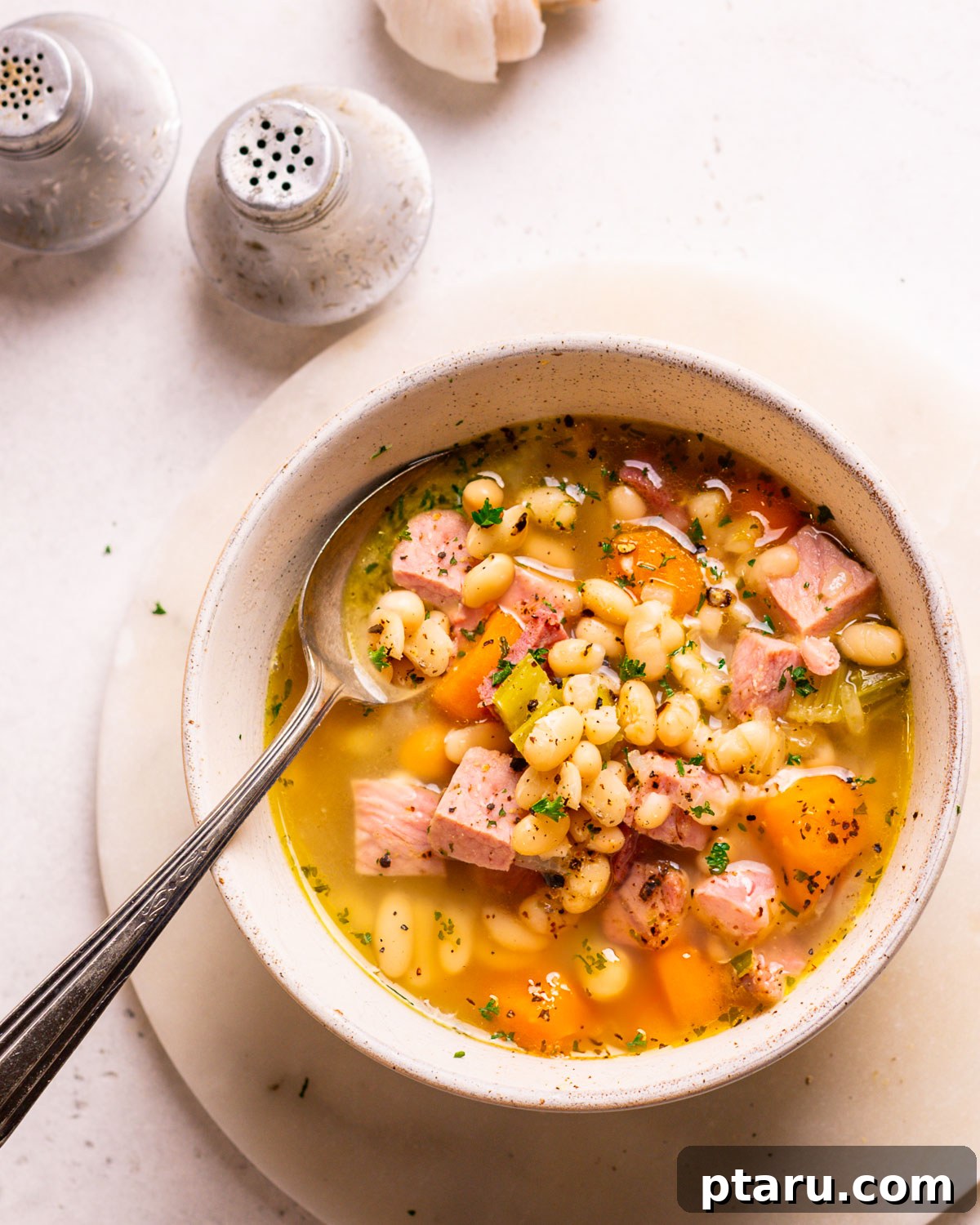
Welcome to the ultimate guide for making the very best Ham and Bean Soup you’ll ever taste! As a dedicated Food Scientist, I’ve perfected this classic comfort food, infusing it with scientific insights to guarantee perfectly tender beans, melt-in-your-mouth ham, and a rich, deeply flavorful broth that will warm you from the inside out. Forget bland, watery soups – this recipe promises an unforgettable culinary experience with just one pot, a few easy steps, and simple, wholesome ingredients.
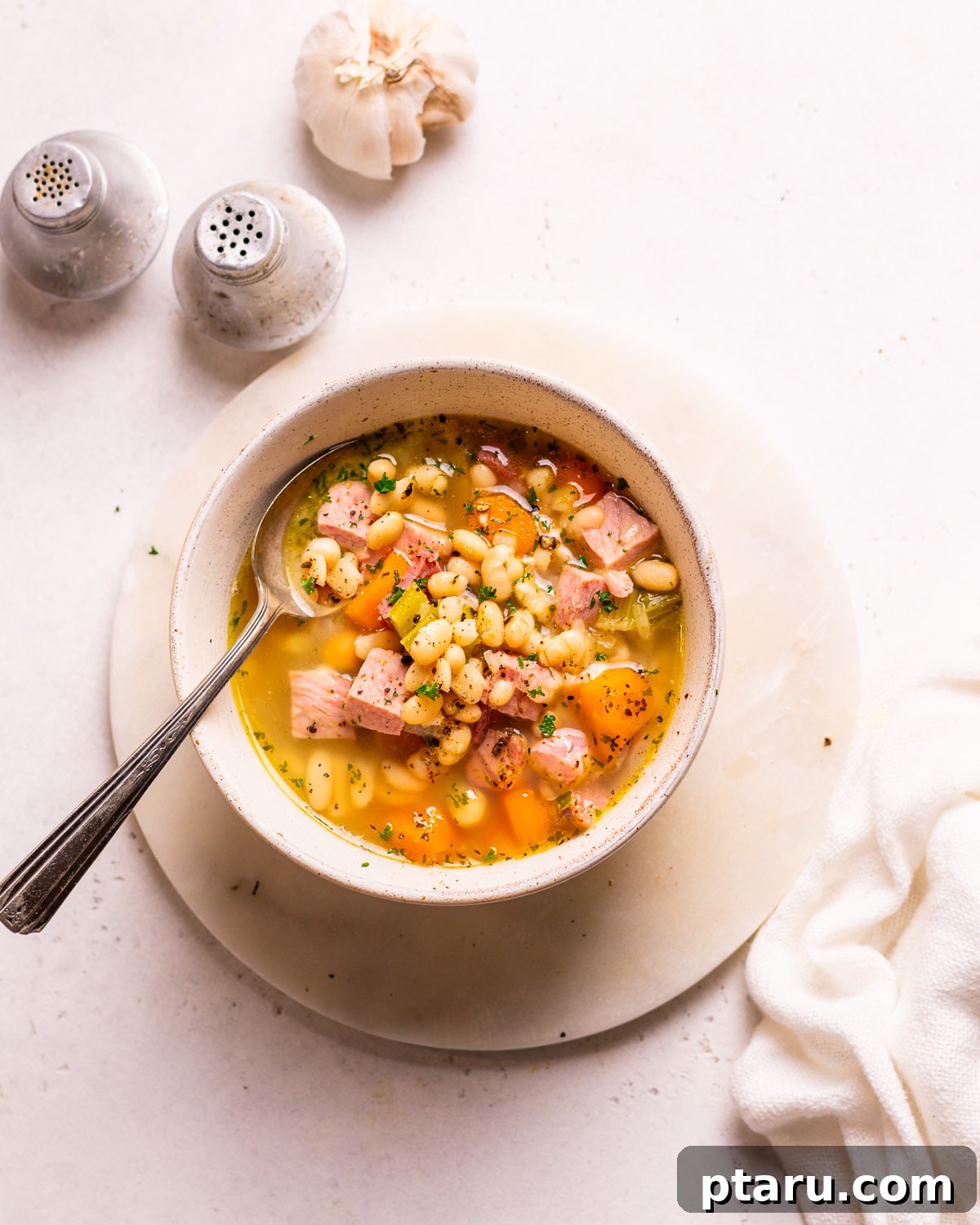
What elevates this old-fashioned Ham and Bean Soup recipe above all others? It’s a harmonious combination of elements: an incredibly rich, robust, and deeply flavorful broth (say goodbye to blandness! 🙅♀️), beans that are cooked to a perfect, creamy tenderness, and ham that practically falls apart with every spoonful. The best part? You have the flexibility to use either dried beans or canned beans, making this a versatile dish that can be ready in under an hour if you choose the canned option. Let’s dive into my top secrets for achieving this culinary masterpiece.
Food Scientist’s Pro Tips & Science-Based Secrets for Perfect Ham and Bean Soup
Crafting truly exceptional soup isn’t just about following instructions; it’s about understanding the nuances of flavor and texture. As a food scientist and devoted soup enthusiast, I’ve uncovered some invaluable tips to transform your ham and bean soup from good to absolutely extraordinary:
- Amplify Umami for Deep Flavor: Umami, often called the fifth taste, is crucial for creating a truly satisfying, savory depth. Ham and a well-made broth naturally contribute umami. To significantly enhance this savory quality and make your soup more complex and addictive, consider adding a small amount of soy sauce (1-2 teaspoons) or even a dash of Worcestershire sauce. These ingredients are packed with glutamates, which are the molecules responsible for umami.
- Introduce a Layer of Smokiness: If you crave a more pronounced smoky flavor, integrating a ham hock is an excellent choice. It slowly releases its smoky essence throughout the cooking process. Alternatively, for a quick and convenient smoky kick, stir in a teaspoon of smoked paprika or a few drops of liquid smoke, adjusting to your preference.
- Leverage the Ham Bone for Velvety Texture: Never discard your ham bone! Simmering it in your soup is a game-changer. The bone releases collagen, which, as it breaks down, naturally thickens the broth, creating a luxurious, velvety texture and mouthfeel. It also imparts an incredible depth of smoky, savory flavor that’s hard to replicate otherwise.
- The Magic of Resting: Like many stews and braises, soup often tastes significantly better the next day. This isn’t just an old wives’ tale; it’s a scientific fact. Allowing the soup to rest overnight gives all the ingredients more time to “marry” and meld their flavors, resulting in a more harmonious and robust taste profile. Store it in the refrigerator overnight and experience the difference!
- The Sauté Foundation: Don’t underestimate the power of properly sautéed aromatics. Caramelizing the natural sugars in your onions, carrots, and celery creates a fundamental layer of sweetness and depth that serves as the backbone of your soup’s flavor. This step develops the Maillard reaction, yielding complex, savory compounds.
Avoid These 3 Common Pitfalls for Your Best Ham and Bean Soup
While ham and bean soup is generally considered a beginner-friendly meal, there are a few typical missteps that can prevent it from reaching its full potential. By understanding and avoiding these common errors, you’ll ensure a consistently delicious outcome:
- Skipping the Essential Sauté Step: Many home cooks jump straight to simmering, but neglecting to sauté the vegetables first is a critical error. This step isn’t just about softening vegetables; it’s about building flavor. Sautéing onions, carrots, and celery caramelizes their natural sugars, creating a rich, sweet, and aromatic base (known as mirepoix) that forms the very foundation of your soup’s depth. Without it, the soup will taste flat and lack complexity.
- Improperly Preparing Dried Beans: If you opt for dried beans, skipping the soaking or pre-cooking step will inevitably lead to tough, undercooked, and often mealy beans. Dried beans require rehydration and softening before they can fully absorb the soup’s flavors and achieve that desirable creamy texture. Always soak them overnight (or use a quick-soak method) and simmer them until they are tender *before* adding them to the main soup pot for final simmering, especially if your ham is already cooked.
- Over-Salting Too Early in the Process: Ham, by its very nature, is salty. Adding too much salt at the beginning of the cooking process, before the ham has had a chance to release its brine into the broth, is a common mistake that can result in an overly salty, unpalatable soup. It’s always best to season lightly at first, then allow the soup to simmer and the flavors to meld. Taste and adjust the salt levels only after the soup has finished cooking, as a significant amount of sodium will leach from the ham itself. Remember, you can always add more salt, but you can’t easily remove it!
Essential Ingredients for Your Perfect Ham and Bean Soup
This heartwarming, one-pot recipe doesn’t demand exotic ingredients or complicated equipment. All you need are some basic, readily available pantry staples and a sturdy soup pot to create a truly comforting meal. The beauty of this recipe lies in its simplicity and the ability of these common ingredients to produce such profound flavor.
Detailed Ham and Bean Soup Ingredient Notes
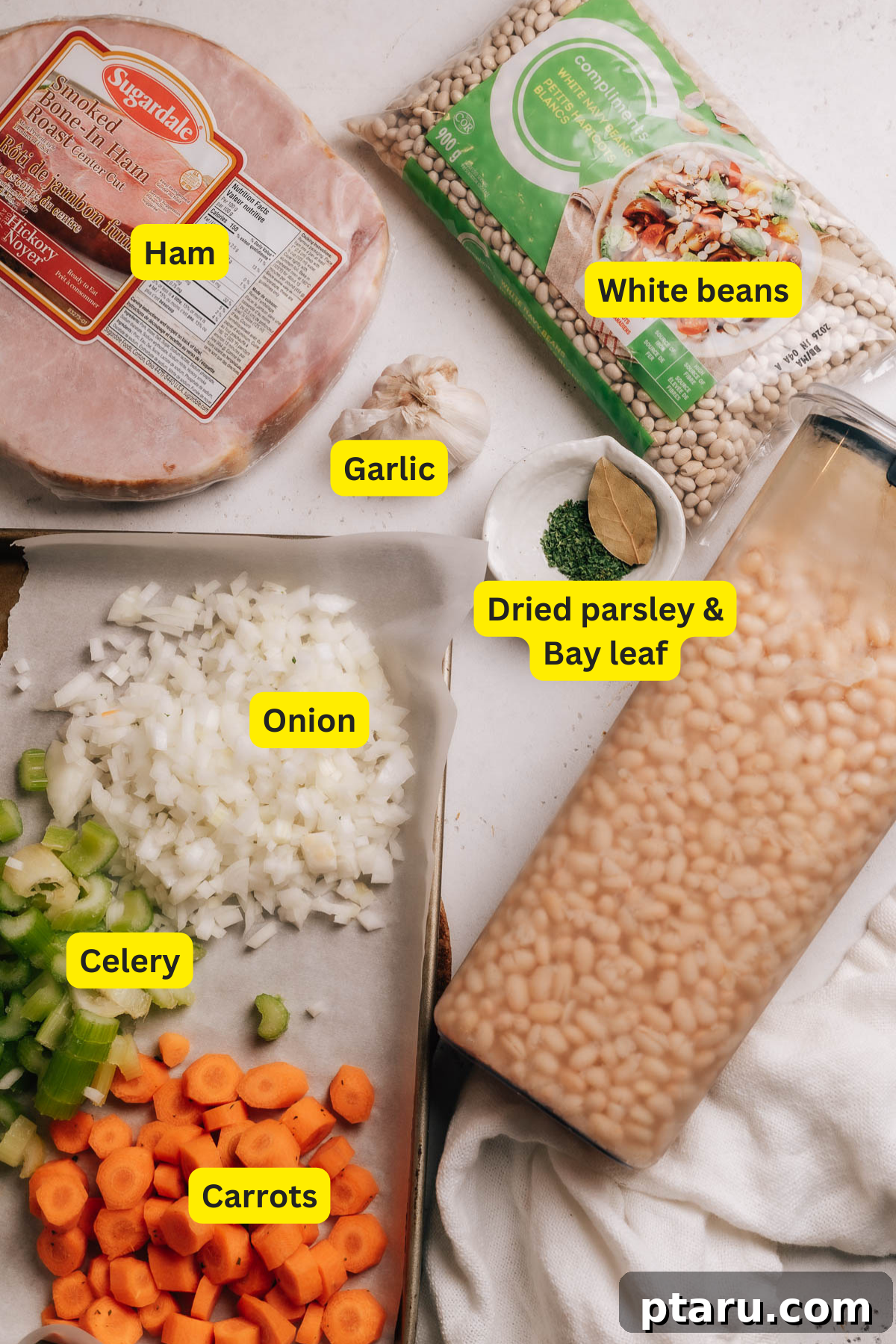
Gather up these simple, pantry basics to get started on your incredibly flavorful soup:
- Aromatics (Onion, Carrots, Celery, Minced Garlic): This classic trio, often called mirepoix, forms the aromatic foundation of your soup. Any good old white onion will do perfectly. For the best, most pungent flavor, always opt for fresh garlic cloves and mince them yourself, rather than using pre-minced varieties.
- Chicken Broth or Stock: This is the liquid backbone of your soup. Both store-bought and homemade chicken stock work wonderfully. To maintain control over the sodium content, especially since ham is naturally salty, I highly recommend using a low-sodium broth. I personally find concentrated chicken bouillon, like “Better than Bouillon,” to deliver exceptional depth of flavor.
- Ham: The star of the show! You have several excellent options here. Diced leftover ham (perfect after holidays), ham steaks, a ham shank, or flavorful ham hocks all contribute unique qualities. If possible, always include a ham bone; it’s a secret weapon for infusing smoky, savory richness and an incomparable depth of flavor. I often use delicious leftovers from my Crockpot Ham or Instant Pot Ham recipes.
- White Beans: Their naturally creamy texture and mild, earthy flavor make white beans the ideal complement to the robust ham and vegetables. You can use either canned beans (drained and rinsed) or pre-soaked dried beans. Varieties like Great Northern, cannellini (white kidney beans), or navy beans are excellent choices.
- Seasonings: A bay leaf, dried parsley, and freshly ground black pepper are essential for rounding out the flavors. Optional additions like a pinch of cayenne for subtle heat or smoked paprika for an extra layer of smokiness can truly elevate the soup.
The full, detailed ingredients list with exact quantities can be found in the comprehensive recipe card at the bottom of this article. 👇
Customizing Your Ham and Bean Soup: Endless Substitutions and Flavorful Variations
This ham and bean soup recipe is wonderfully flexible, making it easy to adapt to your pantry, dietary needs, or flavor preferences. Don’t be afraid to experiment and use what you have on hand to create your unique version of this comforting classic:
- Onion Alternatives: If you don’t have a yellow or white onion, finely chopped shallots or leeks can provide a milder, more delicate flavor profile while still contributing to the aromatic base.
- Root Vegetable Additions: Beyond carrots and celery, feel free to incorporate other hearty root vegetables. Diced parsnips, sweet potatoes, or turnips can add additional sweetness, earthiness, and nutritional bulk to the soup.
- Broth Options: While chicken broth is traditional, vegetable broth works beautifully as a vegetarian or vegan alternative. If you’re short on broth, water combined with a bouillon concentrate or a bouillon cube can also be used, adjusting the seasoning accordingly.
- Meat Variations: For a different meaty flavor, consider replacing the ham with smoked turkey (especially leftover turkey!), crumbled sausage, or crispy bacon pieces. For a completely vegetarian version, simply omit the ham and compensate for the smoky flavor by adding a generous amount of smoked paprika or a few drops of liquid smoke.
- Bean Varieties: While navy beans are classic, great northern beans, cannellini beans, or even pinto beans can be used for similar creamy textures. If you enjoy lentils, my favorite Ham and Lentil Soup recipe offers a fantastic alternative!
- Creamier Consistency: If you prefer a thicker, more velvety soup, use an immersion blender to blend a portion of the soup (about 1-2 cups) directly in the pot. Alternatively, scoop out some beans and mash them with a fork before returning them to the pot.
- Hearty Vegetable Boosts: To make the soup even more substantial and nutritious, stir in diced potatoes (russet or Yukon Gold work well), zucchini, or hardy greens like kale or spinach during the last 10-15 minutes of simmering.
- A Zesty or Spicy Kick: For those who enjoy a bit of heat, incorporate finely diced jalapeños, a pinch of chili flakes, or a dash of your favorite hot sauce into the soup.
- Grain Additions for Extra Heartiness: To turn this soup into an even more filling meal, add cooked grains like barley, quinoa, or farro during the final stages of cooking. They absorb the broth’s flavors beautifully.
How to Make the Best Ham and Bean Soup: A Simple Step-by-Step Guide
Making this ham and bean soup is surprisingly straightforward, proving that incredible flavor doesn’t have to come with a complicated process. Follow these easy steps for a comforting bowl every time:
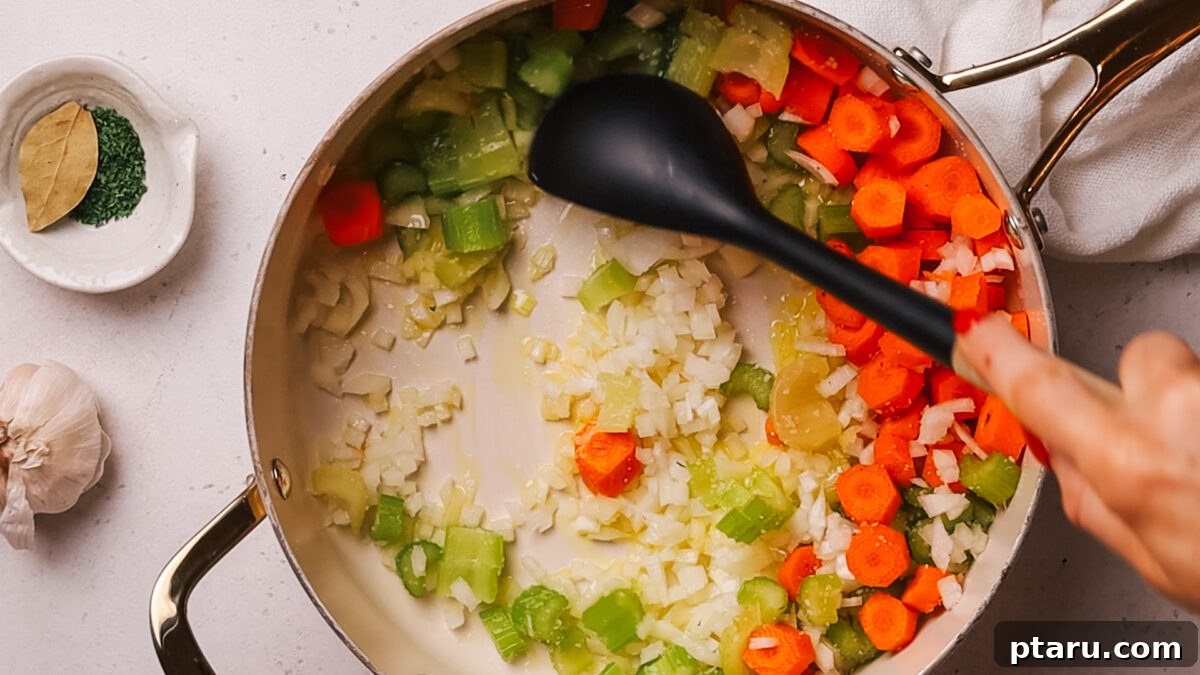

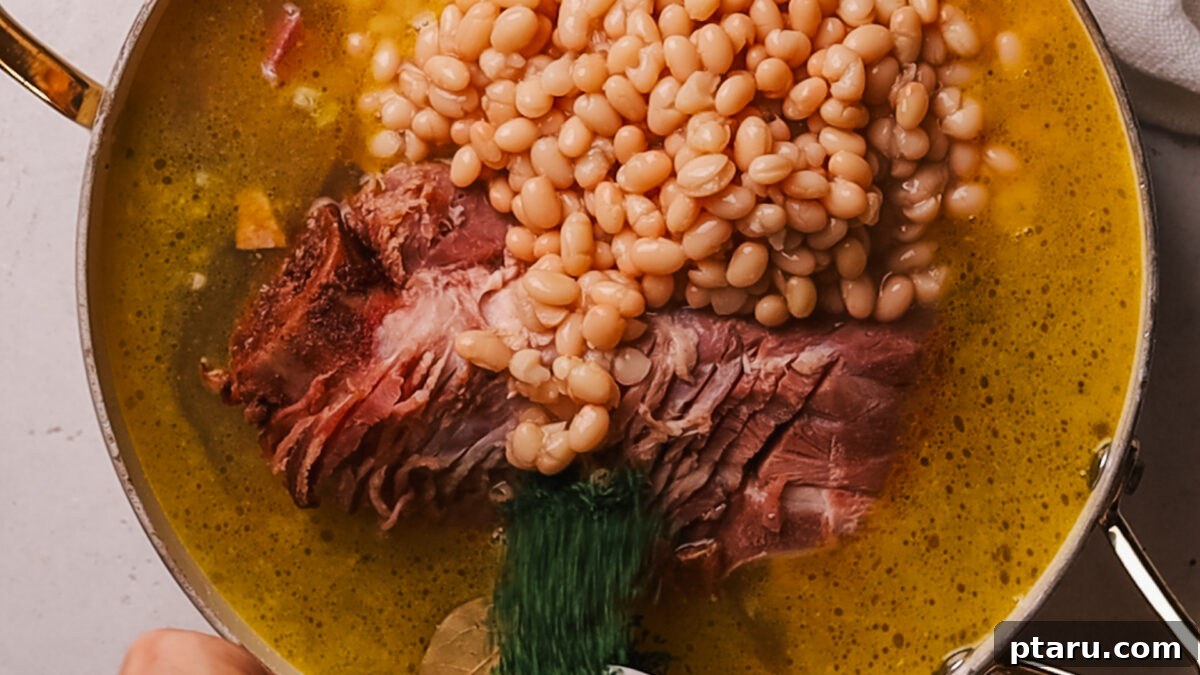
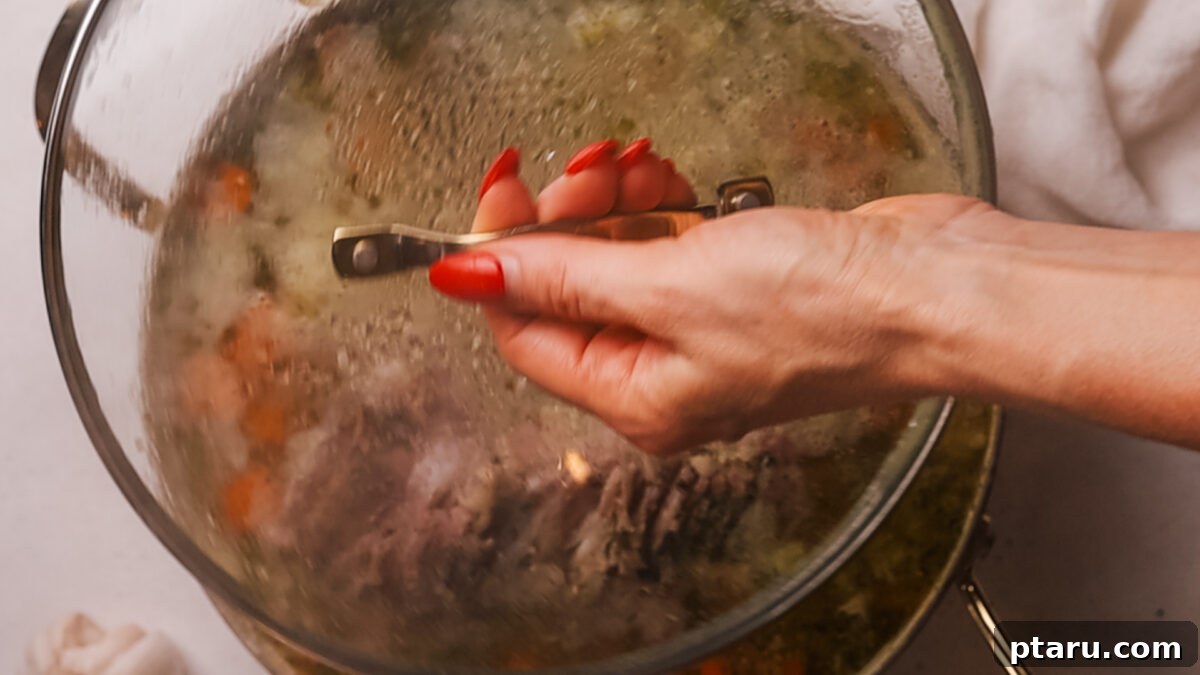
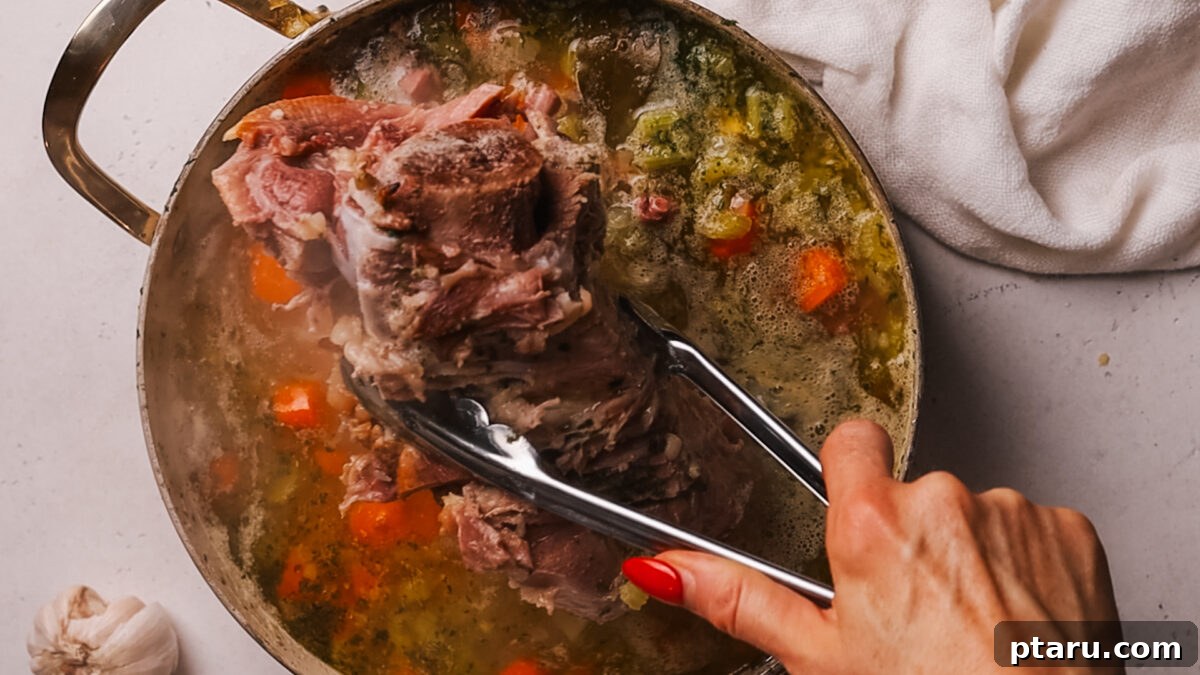
1. Sauté the Vegetables to Build Your Flavor Base
Begin by warming the olive oil in a large, heavy-bottomed pot or Dutch oven over medium heat. Add the diced onions, carrots, and celery to the pot. Sauté these aromatics for 5-7 minutes, stirring occasionally, until the vegetables soften and the onions become translucent and slightly caramelized. This crucial step develops a deep, sweet foundation for your soup.
2. Infuse Garlic and Ham
Stir in the minced garlic and your diced ham. Continue to cook for another 1-2 minutes, allowing the garlic to become fragrant and the ham to release some of its savory flavors into the pot. Be careful not to burn the garlic.
3. Combine Beans and Broth
Add the white beans (drained and rinsed if canned), chicken broth, bay leaf, dried parsley, and black pepper to the pot. If you’re using a ham bone, add it now. Stir everything together thoroughly to ensure all the ingredients are well combined and the flavors can begin to meld.
4. Gentle Simmer for Flavor Development
Bring the mixture to a light boil over medium-high heat. Once boiling, reduce the heat to low, cover the pot, and let the soup gently simmer for 30-40 minutes. This simmering time allows the flavors to deepen and the beans to become perfectly tender. Stir occasionally to prevent sticking.
5. Final Seasoning and Serving
Once the simmering time is complete and the beans are tender, carefully remove and discard the bay leaf. If you used a ham bone, remove it from the pot, shred any meat from it, and return the shredded ham to the soup. Taste the soup and adjust the seasoning with additional salt and pepper as needed. Remember to taste before adding more salt due to the ham’s natural salinity.
Ladle the hot soup into bowls. For a burst of freshness and color, garnish with fresh chopped parsley or green onions before serving.
Special Instructions: Making Ham and Bean Soup with Dried Beans
Using dried beans yields an incredibly rich texture and deeper flavor, but it requires a bit more preparation and cooking time. Here’s how to adapt the recipe:
- Bean Preparation: Start with 1 cup of dried navy beans (or your preferred white bean). You must soak them first.
- Overnight Soak Method: Place beans in a large bowl, cover with cold water by at least 2 inches, and let soak overnight (8-12 hours). Drain and rinse thoroughly before use.
- Quick Soak Method: Place beans in a large pot, cover with water by 2 inches, bring to a boil, and boil for 1 minute. Remove from heat, cover, and let sit for 1 hour. Drain and rinse thoroughly before use.
- Broth Adjustment: When adding the drained, soaked beans to the soup with the broth, you will need to increase the liquid. Use approximately 8 cups of chicken broth, as dried beans absorb a significant amount of liquid during cooking.
- Extended Simmer Time: After bringing the soup to a boil, reduce heat to a gentle simmer, cover, and cook for 1 1/2 to 2 hours, or until the beans are completely tender. Stir occasionally and check the beans for doneness. If the soup becomes too thick, add a little more broth or water.
Hot Tip for Seasoning Dried Beans: When using dried beans (or unsalted canned beans), you will likely need to add an additional 1 to 1-1/2 teaspoons of kosher salt, as the beans themselves won’t contribute much sodium. Always taste and adjust.
Make-Ahead & Storage Tips: Enjoying Your Ham and Bean Soup Anytime
Ham and bean soup is a truly fantastic make-ahead meal, as its flavors famously deepen and improve over time. This makes it ideal for meal prepping or enjoying delicious leftovers throughout the week.
- Refrigeration (Make Ahead): Prepare the soup up to 2-3 days in advance. Allow it to cool completely at room temperature before transferring it to an airtight container. Store it in the refrigerator. The flavors will beautifully meld and intensify overnight, making the soup even more delicious the next day.
- Reheating: To reheat, gently warm the soup on the stovetop over medium heat, stirring occasionally. If the soup has thickened significantly in the refrigerator, add a splash of additional broth or water to achieve your desired consistency. You can also reheat individual portions in the microwave.
- Freezing for Long-Term Storage: This soup freezes exceptionally well, making it perfect for having a comforting meal ready at a moment’s notice. Let the soup cool completely before portioning it into freezer-safe containers or heavy-duty resealable freezer bags. Ensure there’s a little headspace in containers for expansion. Freeze for up to 3 months.
- Thawing and Reheating from Frozen: To thaw, transfer the frozen container to the refrigerator overnight. Once thawed, reheat on the stovetop as described above, adding more broth or water if necessary to adjust the consistency. For quicker reheating, you can also gently reheat directly from frozen over low heat, stirring frequently, though this may take longer.
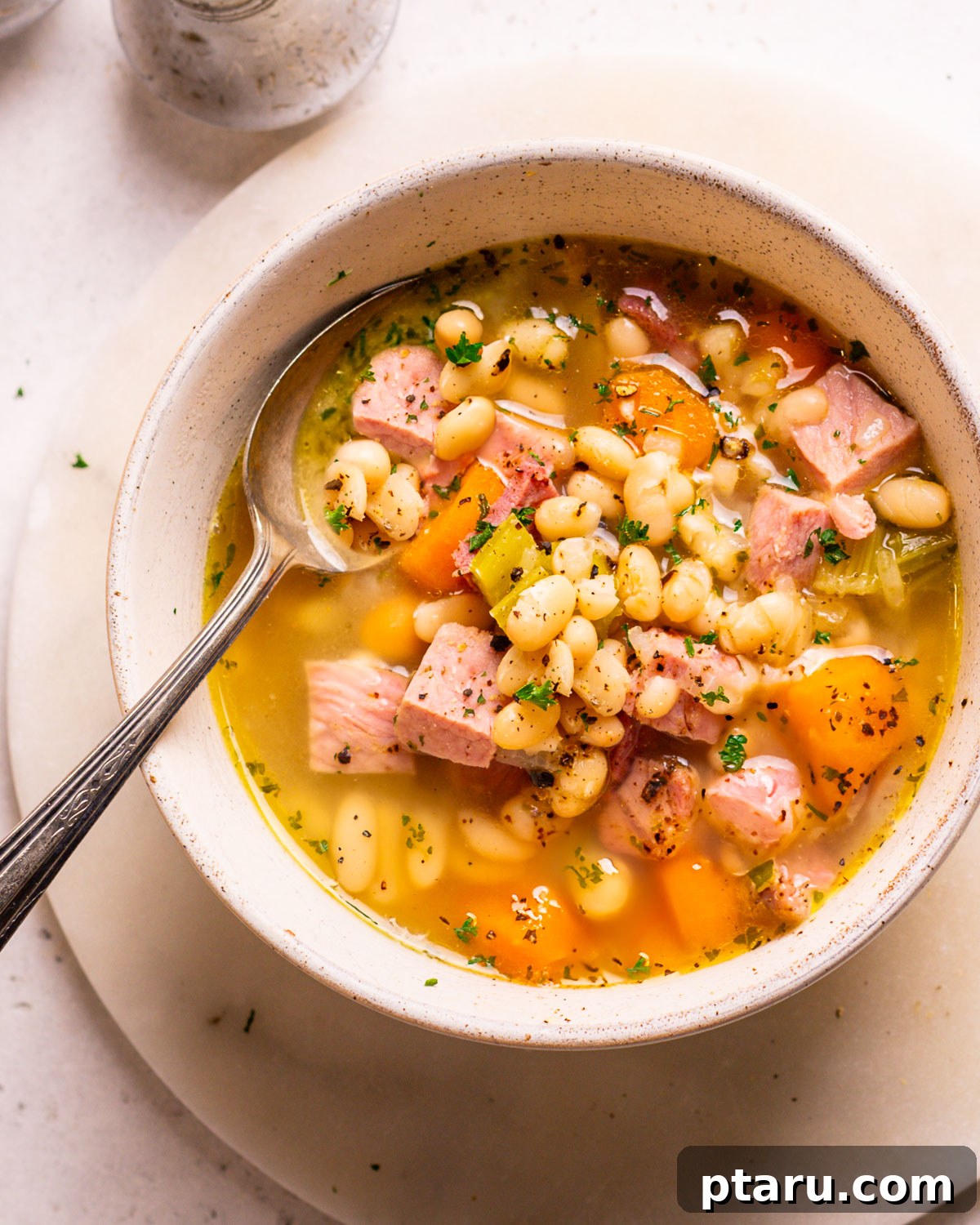
Serving Suggestions: What to Pair with Your Perfect Ham and Bean Soup
This hearty Ham and Bean Soup is a meal in itself, but it pairs wonderfully with a variety of sides that complement its rich flavors and comforting nature. Here are some of my favorite serving suggestions to complete your meal:
- Crusty Bread: Nothing beats dipping a slice of warm, crusty bread into a rich soup. My Dutch-oven crusty bread or a simple baguette are ideal for soaking up every last drop of that flavorful broth.
- Cornbread: For a classic Southern touch, serve your soup with a slice of moist, fluffy cornbread. My cornbread casserole is an excellent choice, adding a hint of sweetness that beautifully balances the savory soup.
- Fresh Green Salad: A light, crisp green salad with a zesty vinaigrette provides a refreshing contrast to the hearty soup, adding freshness and a touch of acidity.
- Simple Crackers: A timeless and easy pairing, crackers offer a satisfying crunch and are perfect for crumbling into your soup or dipping.
- Dollop of Creaminess: For an extra layer of richness and a slight tang, a dollop of sour cream or a swirl of plain Greek yogurt on top of your soup adds a wonderful creamy texture and brightens the flavors.
- Fresh Herbs: A sprinkle of fresh chopped parsley, chives, or green onions just before serving not only adds a vibrant pop of color but also a fresh, herbaceous aroma that elevates the entire dish.
Frequently Asked Questions About Ham and Bean Soup
Just skimming through? Here are answers to some common queries about making and enjoying the best ham and bean soup:
Absolutely! Ham hocks are an excellent choice for adding a deep, smoky flavor and richness to the broth. Simply simmer the ham hock with the soup ingredients. Once the meat is tender and easily falling off the bone, remove the hock, shred the meat, and stir it back into the soup before serving. Discard the bone and any excess fat/skin.
There are a few ways to thicken your soup. You can mash a portion of the beans directly in the pot with a fork or potato masher, or scoop out about 1-2 cups of the soup (including some beans), blend it until smooth with an immersion blender or regular blender, and then return it to the pot. For a quicker fix, create a slurry by whisking 1-2 tablespoons of cornstarch with an equal amount of cold water, then slowly stir it into the simmering soup and cook for a few minutes until it thickens.
If your soup turns out too salty, don’t despair! A common trick is to add a peeled, raw potato (cut into large chunks) to the soup and let it simmer for about 20 minutes. The potato will absorb some of the excess salt. Remember to remove the potato before serving. Alternatively, you can dilute the saltiness by adding more unsalted broth or water, adjusting other seasonings if needed.
Yes, this recipe adapts wonderfully to a slow cooker! For best results, I recommend sautéing the vegetables and garlic on the stovetop first to build the foundational flavors. Then, transfer all sautéed ingredients, ham, beans (pre-soaked if dried), broth, and seasonings to your slow cooker. Cook on low for 6-8 hours or on high for 3-4 hours, or until the beans are tender and flavors are well-developed.
White beans are generally considered ideal for ham and bean soup due to their creamy texture and mild flavor, which complements the ham beautifully. Excellent choices include navy beans (classic), great northern beans, and cannellini beans (white kidney beans). They all provide a lovely creaminess without overpowering the other ingredients.
To prevent your soup from sticking or scorching, always use a heavy-bottomed pot (like a Dutch oven) which distributes heat more evenly. Also, ensure you stir the soup occasionally, especially during prolonged simmering, to prevent solids from settling at the bottom. Keep the heat on a gentle simmer, not a rolling boil, as high heat can encourage sticking.
More Comforting Soup Recipes You’ll Love
If you’ve enjoyed this delightful Ham and Bean Soup, you’ll surely love these other comforting soup recipes that I turn to time and time again:
- Experience what might literally be the best ever tomato soup of your life! It’s rich, creamy, and utterly satisfying.
- This ground turkey soup is a hearty, savory, and incredibly wholesome option for a quick weeknight meal.
- My chicken and dumpling soup is pure comfort in a bowl, truly one of my all-time favorites.
- Indulge in my creamy tortellini soup, a cozy and yummy dish perfect for any time of year.
- For a super wholesome and delicious vegetarian option, try this vibrant vegetable orzo soup.
- And for a classic cold-weather staple, I’m completely obsessed with this easy crockpot chicken noodle soup.
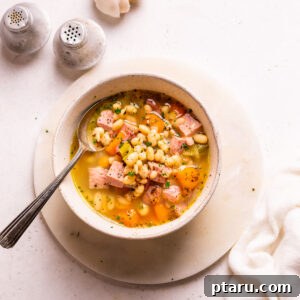
Ham And Bean Soup Recipe (Super Easy with Amazing Flavor!)
Jennifer Pallian BSc, RD
15 minutes
45 minutes
1 hour
6
Video Overview
A video tutorial for this recipe is available to guide you through each step for the perfect Ham and Bean Soup!
Ingredients
- 2 tbsp olive oil
- 1 large onion, diced
- 2 large carrots, diced
- 2 stalks celery, diced
- 1 tsp kosher salt, plus more to taste
- 2 tsp minced garlic
- 6 cups chicken broth
- 2 cups diced ham, plus the bone if available (leftover ham, a ham steak or ham hocks work)
- 2 15-oz cans white beans, drained, or 1 cup dried navy beans, soaked (see note below for dried beans)
- 1 bay leaf
- 1 tsp dried parsley
- ½ tsp black pepper
- ¼ tsp cayenne and/or smoked paprika (optional)
- Optional: Fresh parsley or green onions for garnish
Instructions
- Sauté the vegetables: In a large pot, heat olive oil over medium heat. Add diced onions, carrots, and celery. Sauté for about 5-7 minutes, until the vegetables soften and the onions are translucent.
- Add garlic and ham: Stir in the minced garlic and diced ham. Sauté for another 1-2 minutes to let the garlic become fragrant.
- Incorporate beans and broth: Add the beans, chicken broth, bay leaf, parsley, pepper (and cayenne and/or smoked paprika, if using) to the pot. Stir well to combine.
- Simmer: Bring the soup to a gentle boil, then reduce the heat to low. Cover and let the soup simmer for about 30-40 minutes if using canned beans. Stir occasionally.
- Season and finish: Once the beans are tender, remove the bay leaf. Season the soup with more salt to taste.
- If using ham bones or hocks, remove them from the soup, shred the meat, and return it to the pot.
- Serve: Ladle the soup into bowls and garnish with fresh parsley or green onions for a burst of color and freshness.
Notes
- Use 1 cup dried navy beans. Soak them first overnight in cold water, or use the quick soak method (boil for 1 minute, cover, let them sit for 1 hour, then drain and cook).
- Add the drained, soaked beans to the soup with the broth.
- Increase the broth quantity to 8 cups (they’ll absorb a lot). Cover and simmer soup for 1 1/2 to 2 hours. Stir occasionally, checking the beans for tenderness.
When using dried beans (OR unsalted canned beans) you’ll want another 1 to 1-1/2 tsp kosher salt.
TIPS + TRICKS:
- Umami Boost: For an extra punch of rich savory flavor, stir in 1-2 tsp of soy sauce.
- Smoky Flavor: Want a smokier taste? Add 1/2 tsp of smoked paprika. I love a pinch of cayenne, too.
- Ham Bone Tip: If you have a ham bone, simmer it in the soup to release collagen. This thickens the broth and creates a silky, rich texture.
- Make-Ahead: Soup tastes even better the next day as the flavors have more time to blend. Store it overnight for the best results!
Nutrition
Calories: 226kcal
|
Carbohydrates: 26g
|
Protein: 17g
|
Fat: 7g
|
Saturated Fat: 1g
|
Polyunsaturated Fat: 1g
|
Monounsaturated Fat: 3g
|
Cholesterol: 25mg
|
Sodium: 1796mg
|
Potassium: 596mg
|
Fiber: 6g
|
Sugar: 4g
|
Vitamin A: 3410IU
|
Vitamin C: 3mg
|
Calcium: 96mg
|
Iron: 4mg
Nutrition information is automatically calculated, so should only be used as an approximation.
Tried this recipe? Leave a comment!
Your feedback helps others discover and enjoy this delicious soup.