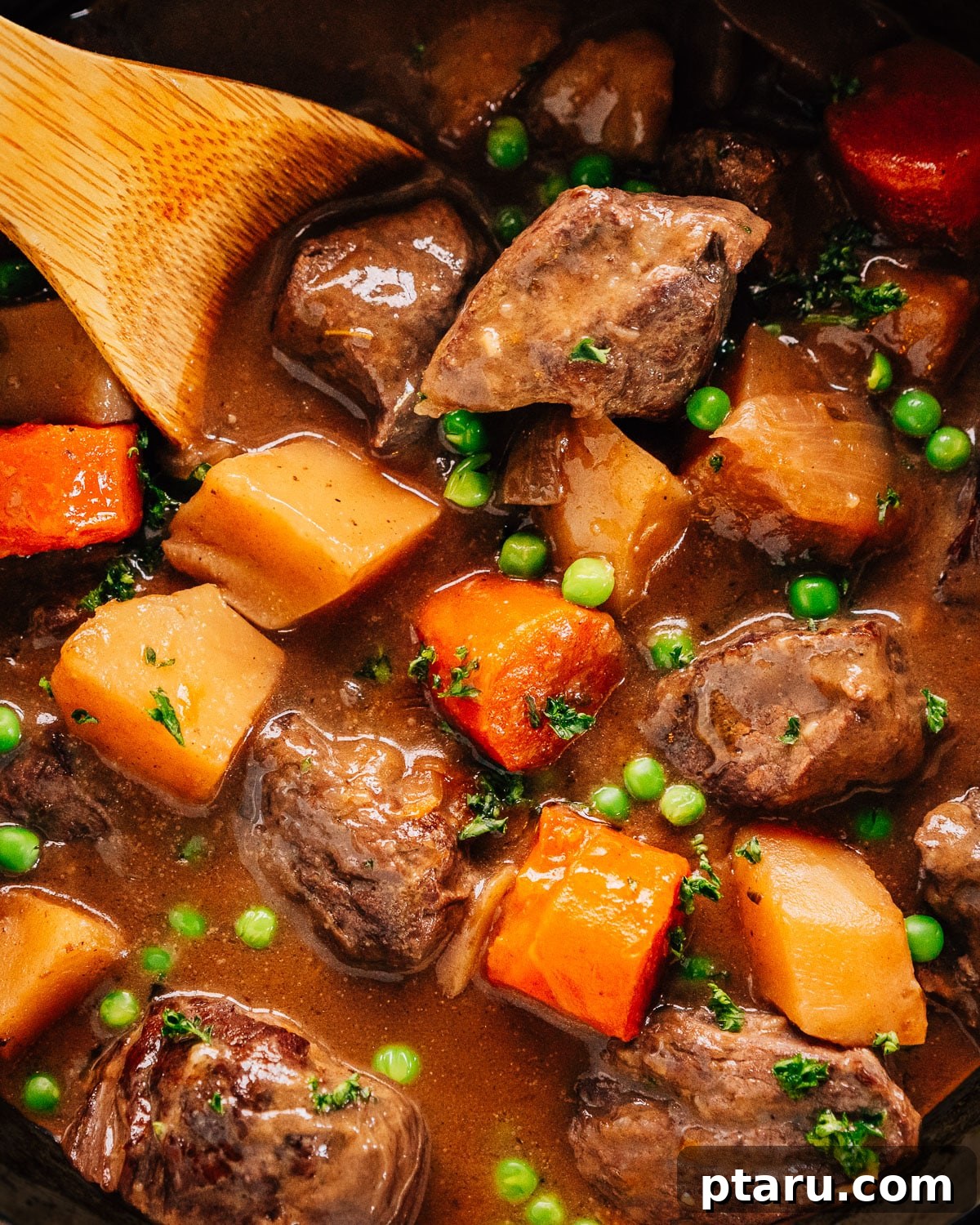
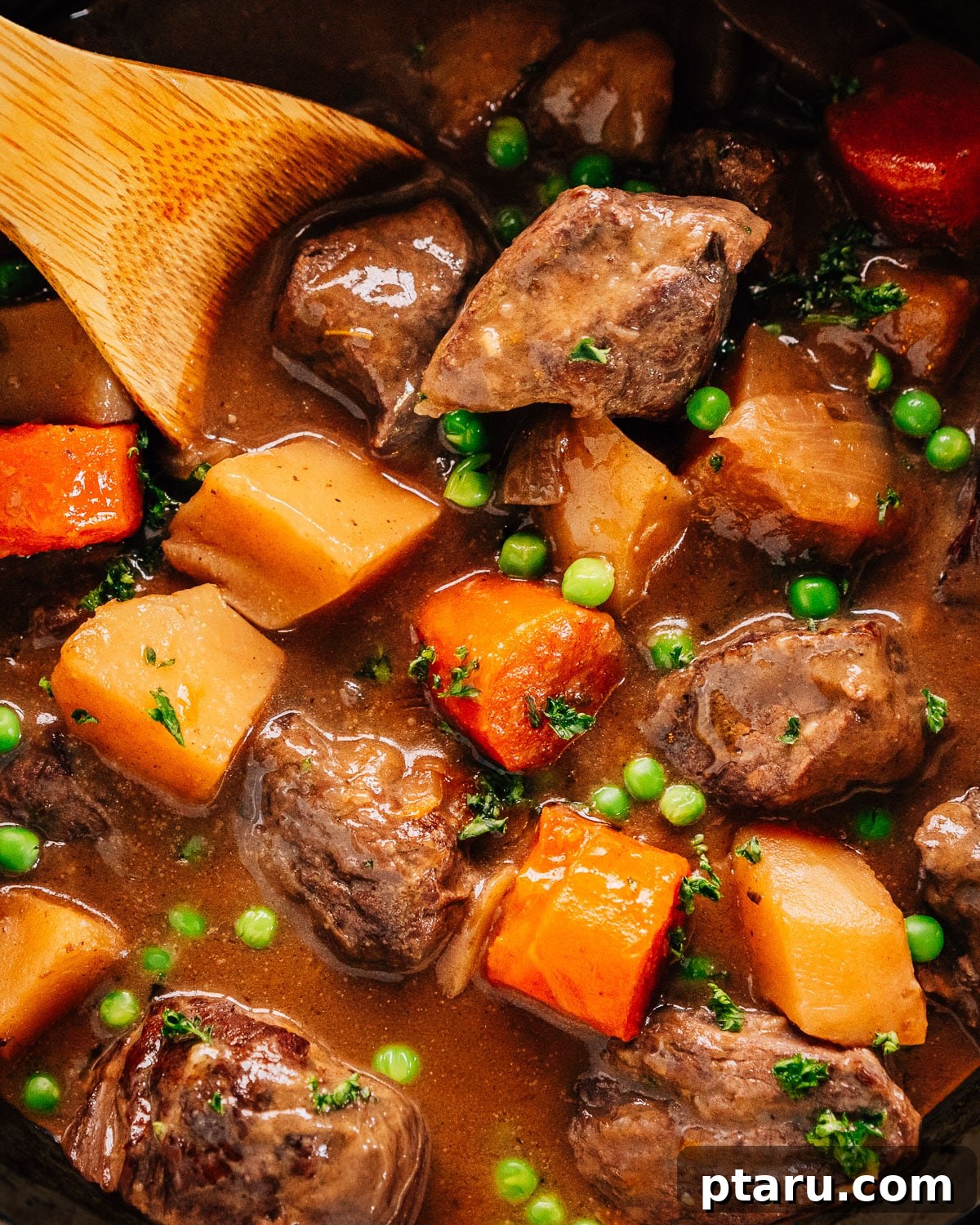
Pressure Cooker Beef Stew stands as the ultimate comfort food, celebrated for its profound, savory flavor and exquisitely tender meat. What truly sets this recipe apart is its remarkable speed – delivering a meal that tastes as though it has been simmering patiently all day, yet is astonishingly ready in just 1 hour from start to finish. This culinary marvel is made possible by the efficiency of your pressure cooker. Bid farewell to the hours of waiting associated with traditional stew preparation; this comprehensive guide will lead you through every step to create a hearty, deeply satisfying beef stew that’s perfect for any occasion, especially those demanding weeknights when you crave something both wholesome and utterly delicious.
Essential Ingredients for the Best Pressure Cooker Beef Stew
Crafting an exceptionally flavorful and tender Pressure Cooker Beef Stew begins with the careful selection of high-quality ingredients. This recipe captures all the classic, comforting flavors you adore, but miraculously comes together in a mere fraction of the time compared to its traditional counterpart, Dutch Oven Beef Stew. My expertly developed version smartly bypasses common pressure cooker challenges, such as the use of tomato paste, which can sometimes trigger the dreaded ‘burn’ warning on your Instant Pot or other pressure cookers, thus guaranteeing a seamless and successful cooking journey every single time. Here’s a detailed exploration of the core components that contribute to this stew’s incredible deliciousness:
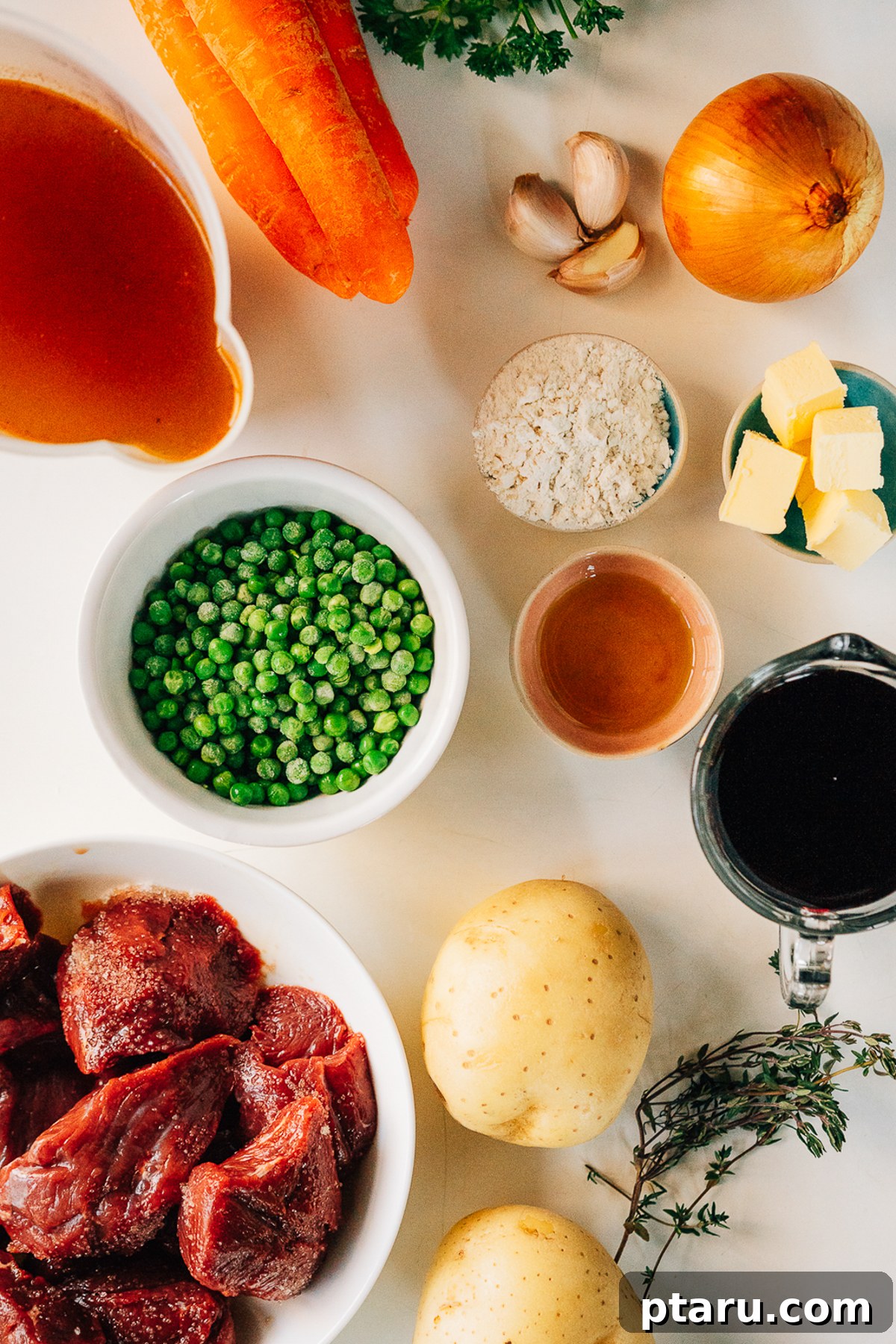
- Beef Stew Meat: The undeniable hero of our stew! For achieving the most tender, melt-in-your-mouth results, beef chuck roast, expertly cut into generous 1 1/2-inch pieces, is unequivocally the best choice. Chuck roast is prized for its abundant connective tissue, which masterfully breaks down under the high-pressure environment, yielding astonishingly succulent and flavorful meat. If you have a passion for incredibly tender beef dishes, you will undoubtedly adore my Crockpot Beef Tips as well.
- Olive Oil: An indispensable fat used for two critical steps: browning the beef to forge a rich, caramelized crust that adds immense depth, and sautéing the aromatic vegetables, thus laying a robust flavor foundation for your stew.
- Onion: A fundamental aromatic that bestows a delicate sweetness and profound depth to the stew’s rich broth. When meticulously sautéed until perfectly softened, onions release their natural sugars, significantly amplifying the overall flavor complexity of the dish.
- Carrots: Providing both a vibrant splash of color and a delightful natural sweetness, carrots are an absolute essential. For ultimate convenience, whole baby carrots can be utilized to bypass the peeling step. Alternatively, regular carrots should be peeled and cut into large, substantial chunks to ensure they maintain their texture and don’t become overly soft during the pressure cooking process.
- Garlic: Freshly minced garlic is an indispensable ingredient, lending its signature pungent, aromatic flavor that profoundly elevates the entire stew. It beautifully complements the rich beef and tender vegetables.
- Red Wine: A dry red wine, such as Cabernet Sauvignon or Merlot, serves a crucial role in deglazing the pot. It expertly lifts all those delectable browned bits (fond) from the bottom, integrating a layer of sophisticated richness and a balanced acidity into the savory gravy. For those who prefer to abstain from alcohol, an equivalent amount of extra beef broth can be used as a perfectly viable substitute.
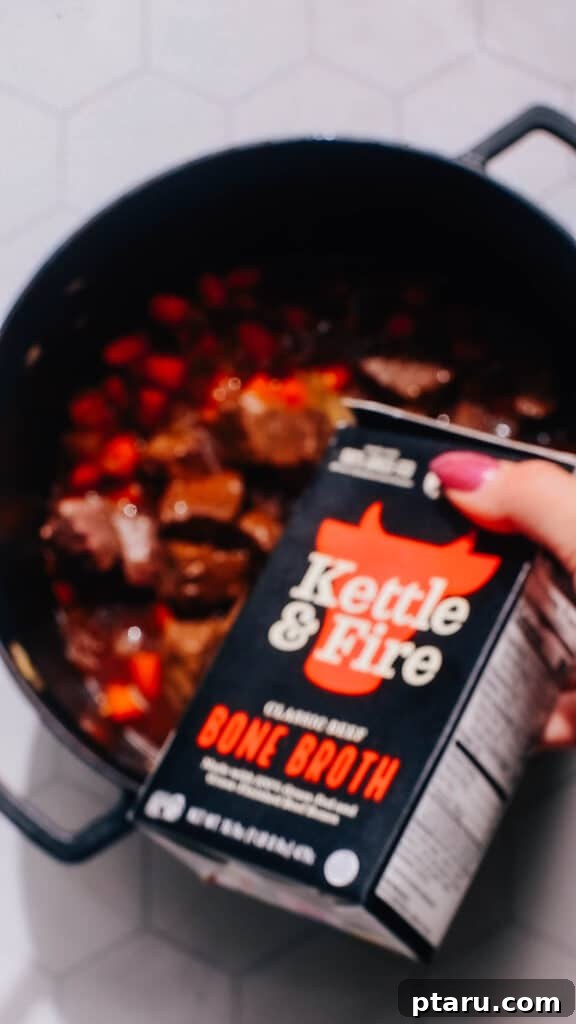
- Beef Broth: Forming the robust and savory base of our stew, a high-quality beef broth is paramount for achieving a deeply flavorful gravy. You can opt for a good store-bought variety or use a concentrated product like “Better Than Bouillon” mixed with boiling water for an outstanding foundation.
- Potatoes: Hearty and wonderfully filling, Yukon Gold or russet potatoes are excellently suited for this stew. It is imperative to cut them into larger, substantial pieces (approximately 1-inch cubes) to guarantee they retain their desirable shape and satisfying texture, resisting disintegration under pressure and contributing perfectly to the stew’s comforting body.
- Thyme: This classic herb infuses the stew with earthy, subtly minty, and peppery undertones that harmoniously complement the beef. Both fresh sprigs or dried thyme leaves perform wonderfully, imparting a timeless and inviting aroma.
- Frozen Peas: Introduced only at the very end of the cooking process, frozen peas contribute a vibrant burst of color and a sweet freshness. This ensures they remain tender-crisp, offering a delightful textural contrast rather than becoming mushy.
- Parsley: Whether fresh or dried, parsley is added towards the end to invigorate the finished stew with its bright, herbaceous flavor, providing a refreshing counterpoint to the rich gravy.
- Butter and Flour: These two unassuming ingredients are meticulously combined to forge a classic roux, which is fundamental for thickening the stew into a luxurious, smooth, and utterly satisfying gravy.
- Salt and Pepper: These fundamental seasonings are employed strategically throughout the cooking process, essential for enhancing and perfectly balancing all the complex flavors, ensuring every single bite is impeccably seasoned to perfection.
For the exact quantities of each ingredient, please refer to the comprehensive recipe card conveniently located at the bottom of this article.
For even more inspiring and delightful meal ideas centered around this versatile protein, make sure to explore my curated collection of best boneless beef recipes.
Customize Your Stew: Delicious Variations and Easy Substitutions
One of the most appealing attributes of this Instant Pot Beef Stew recipe is its incredible adaptability. Feel empowered to customize it to perfectly suit your personal preferences, dietary needs, or simply what ingredients you have readily available. These straightforward swaps allow you to transform this already cozy stew into your own unique culinary masterpiece:
- Wine-Free Version: If you prefer to prepare your meals without alcohol, simply omit the red wine. To maintain the liquid content and rich, savory depth of the stew, substitute it with an equal amount of robust beef broth. The flavor will still be outstanding!
- Different Proteins: While classic beef chuck is traditionally favored, do not hesitate to venture into new culinary territory! You could certainly experiment by using lamb stew meat for a distinctive, richer, and slightly gamey flavor profile, or even chunky pieces of pork shoulder for a different yet equally comforting taste and wonderfully tender texture.
- Extra Vegetables: Elevate both the nutritional value and the textural complexity of your stew by generously incorporating additional vegetables. Sliced celery adds a subtle aromatic underpinning, parsnips contribute a delightful sweet, earthy note, and turnips provide a pleasant, slightly peppery bite. These can be added right alongside the carrots and onions during the sautéing stage.
- Mushrooms: To introduce an extra layer of deep umami flavor and a wonderful earthy dimension, consider browning sliced cremini or button mushrooms thoroughly before you proceed to sauté the onions. The combination of beef and mushrooms is truly a culinary match made in heaven, and it’s a pairing I frequently incorporate into my ever-popular salisbury steak recipe as well!
- Different Herbs: Easily modify the aromatic essence of your stew by substituting the thyme with other complementary herbs. Fresh rosemary sprigs will infuse a piney, highly fragrant note, while bay leaves offer a subtle, yet deeply comforting background flavor that beautifully develops throughout the cooking process.
- Gluten-Free Gravy: To ensure this delicious stew is suitable for individuals following a gluten-free diet, simply swap the traditional butter-flour roux for a cornstarch slurry. To prepare, mix equal parts cornstarch and cold water (begin with approximately half the quantity you would typically use for flour, e.g., 1.5 tablespoons cornstarch combined with 1.5 tablespoons cold water) and whisk it vigorously into the hot broth until it achieves your desired smooth, thickened consistency.
If you’re now craving more quick, convenient, and utterly satisfying pressure cooker meals, you’re in for a treat! Be sure to explore my other fantastic recipes, including the succulent Instant Pot Pork Shoulder, the melt-in-your-mouth Instant Pot Roast Beef, and the incredibly warming and hearty Ultimate Instant Pot Potato Soup recipes!
Essential Tools for the Perfect Pressure Cooker Beef Stew
Equipping yourself with the correct kitchen tools can significantly streamline the cooking process, making it both more efficient and enjoyable. For this pressure cooker beef stew, you won’t require any overly specialized gadgets. However, having these fundamental items readily available will ensure a successful and effortless preparation, leading to a perfectly cooked dish:
- Pressure Cooker or Instant Pot: This is, without a doubt, the star appliance of this recipe! A 6-quart or 8-quart model is ideally suited, offering ample capacity for all the ingredients to cook evenly and thoroughly, yielding consistent, delicious results.
- Wooden Spoon: An indispensable utensil for gently stirring your ingredients. Crucially, it’s perfect for effectively scraping up those wonderfully flavorful browned bits (fond) from the bottom of the pot during the deglazing step – a process vital for developing profound depth of flavor.
- Sharp Knife and Cutting Board: Absolutely essential for safely and efficiently preparing your beef stew meat and all the various vegetables. A sharp knife ensures clean cuts, while a sturdy cutting board provides a stable surface.
- Small Saucepan: This separate saucepan is dedicated to preparing the butter-flour roux. Utilizing a separate pan ensures you can achieve a perfect, lump-free gravy without the challenge of maneuvering around the main pressure cooker pot’s contents.
- Whisk: A small whisk is a key implement for effortlessly creating a perfectly smooth, lump-free roux. It’s equally crucial for seamlessly blending that roux into the hot broth, resulting in a velvety, luxurious gravy.
- Ladle: A practical tool for carefully transferring hot broth from the pressure cooker to the small saucepan for gravy preparation. It also serves as an excellent utensil for elegantly serving individual portions of the finished stew.
How to Make Pressure Cooker Beef Stew: A Detailed & Easy Guide to Perfection
This incredibly satisfying pressure cooker beef stew is constructed in distinct, flavor-building layers, meticulously ensuring that every single component contributes meaningfully to the rich, comforting final dish. We commence by searing the beef to expertly lock in its savory juices, then meticulously build a fragrant base using tender-crisp vegetables and a splash of wine (or broth) to effectively capture all those delectable browned bits. Finally, your reliable pressure cooker takes on the heavy lifting, masterfully transforming inherently tough cuts of meat into fork-tender perfection in an astonishingly short amount of time. Follow these straightforward steps for a truly remarkable homemade beef stew that will delight your senses:

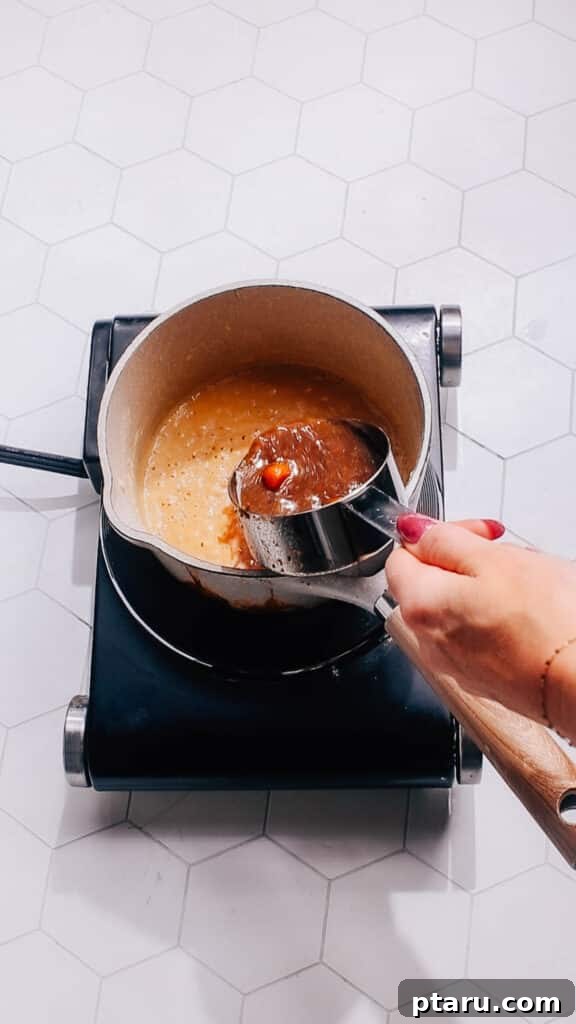
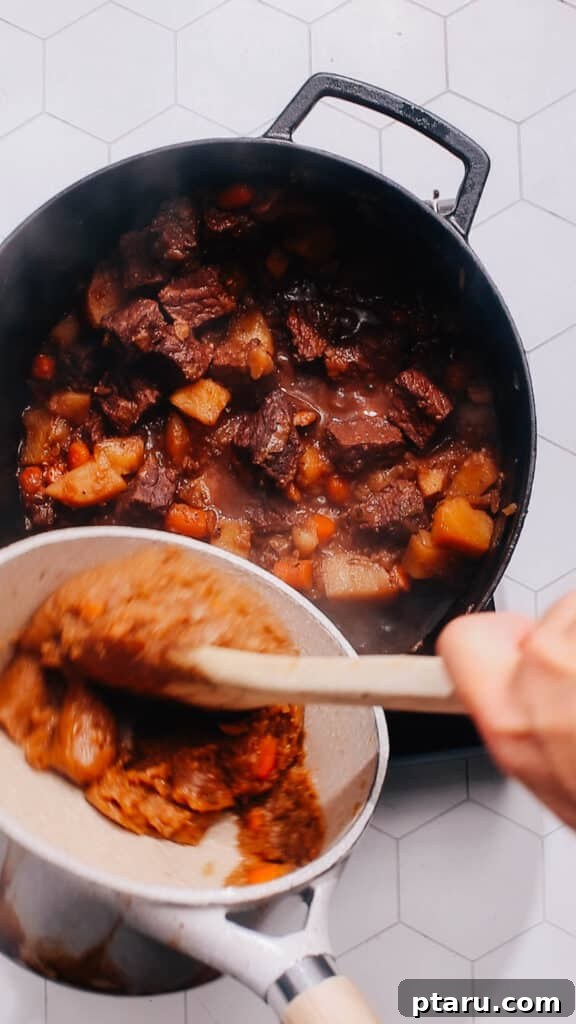
1. Brown the Beef for Maximum Flavor
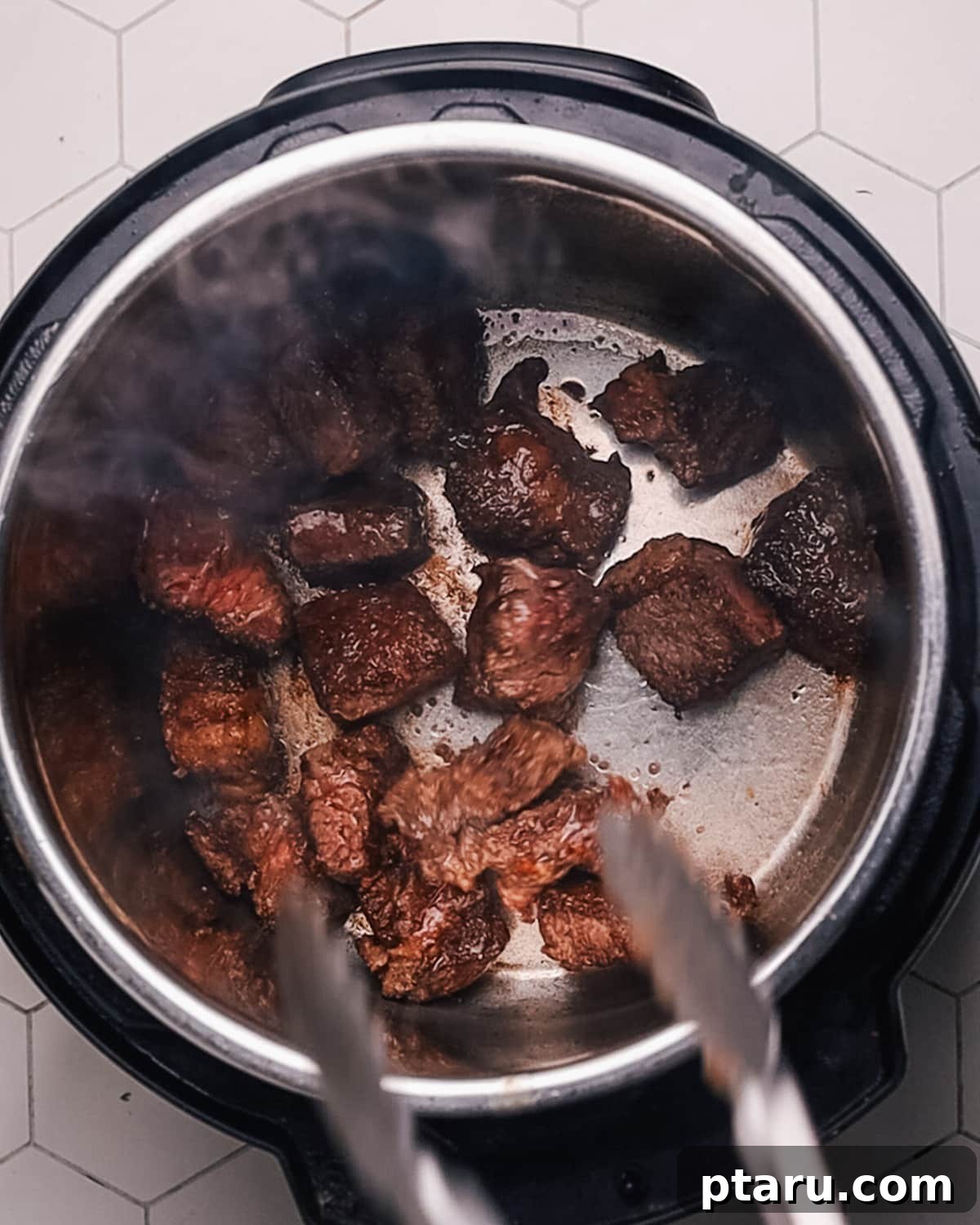
This initial step is absolutely indispensable for developing a profound, rich flavor profile in your stew. Initiate your pressure cooker by setting it to its Sauté mode on high heat. Once the pot is adequately hot, introduce approximately 1 tablespoon of olive oil. Generously season your beef stew meat with both salt and pepper. Proceed to brown the meat in small, manageable batches, meticulously ensuring that you do not overcrowd the pot. Overcrowding will invariably cause the meat to steam rather than achieve that desirable sear, thereby preventing the formation of that highly coveted caramelized crust. Work methodically in batches as required, adding a touch more oil if the pot appears dry between additions. Each batch should achieve a magnificent golden-brown sear, indicating maximum flavor development. Once perfectly browned, carefully transfer the seared meat to a clean plate and set it aside; this allows any flavorful accumulated juices to be reincorporated into the pot later, further enriching the stew.
2. Sauté the Vegetables to Build Aromatic Layers
With the beef expertly browned and resting comfortably, add the remaining olive oil to the same pot, leveraging the existing flavors. At this stage, we introduce the crucial aromatics. Add the finely chopped onion and robust carrots, along with a delicate pinch of salt. Sauté these vegetables for a precise duration of 5-7 minutes, stirring them occasionally, until they begin to visibly soften and acquire a slightly translucent appearance. This essential softening process is key to releasing their inherent natural sugars and complex flavors. Finally, stir in the minced garlic and allow it to cook for just 1 minute more, or until it becomes wonderfully fragrant. Exercise caution to avoid burning the garlic, as this can regrettably impart a bitter taste. These perfectly sautéed vegetables form a wonderfully sweet and savory base, integral to your stew’s success.
3. Deglaze the Instant Pot for Unrivaled Depth
Deglazing is an absolutely critical step that efficiently captures all the magnificent, browned bits (scientifically known as ‘fond’) left adhering to the bottom of the pot after diligently browning the beef and skillfully sautéing the vegetables. Pour in the dry red wine (or an equal amount of extra beef broth if you are opting for a substitution). Immediately employ a sturdy wooden spoon to vigorously scrape up every single bit of fond from the bottom surface of the pot. This rich, caramelized residue is an absolute powerhouse of concentrated flavor, essential to the stew’s depth. Allow the wine to gently simmer for 1-2 minutes, providing sufficient time for some of the alcohol to cook off and for the diverse flavors to beautifully meld, thereby creating an incredibly robust and flavorful base for your gravy.
4. Pressure Cook for Fork-Tender Perfection
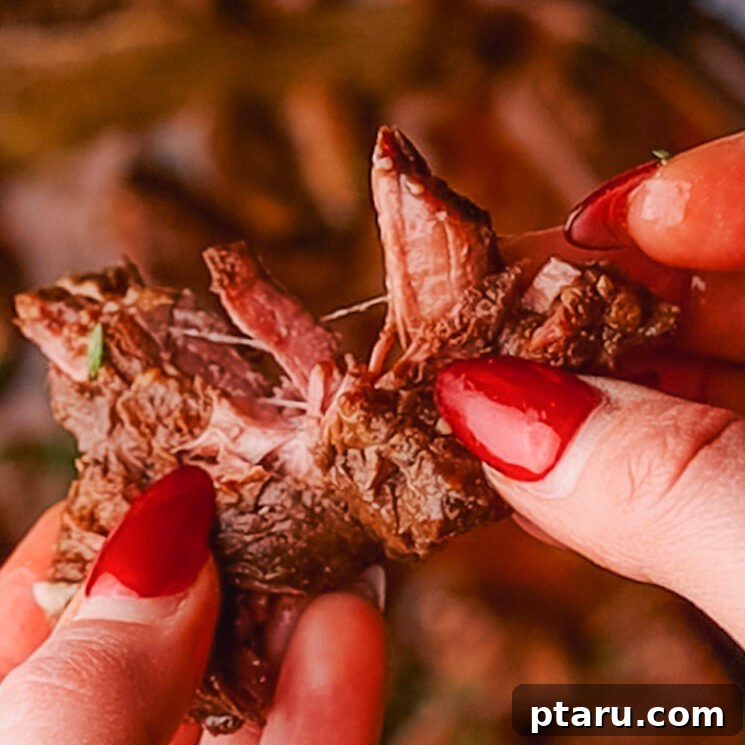
Now, it is truly time for your pressure cooker to demonstrate its unparalleled capabilities! Carefully return the browned beef, along with any precious accumulated juices from the plate, back into the pot. Pour in the beef broth and add the fresh or dried thyme, ensuring even distribution. Gently stir in the cubed potatoes, making certain they are adequately submerged in the rich liquid. Securely lock the lid onto your pressure cooker and set it to cook on High Pressure for an optimal duration of 30 minutes. Once the cooking cycle has triumphantly completed, resist the immediate urge to perform a quick release. Instead, allow the pressure to release naturally for a period of 10-15 minutes. This gentle, natural pressure release is vital as it allows the meat fibers to relax and become exceptionally tender, crucially preventing them from seizing up and becoming tough. After this natural release, you may cautiously vent any remaining pressure.
5. Prepare the Rich, Velvety Gravy
While the pressure cooker is diligently working its magic, you can efficiently prepare the thickening agent for your luxurious gravy. In a small, separate saucepan, melt the butter over a steady medium heat. Once the butter is fully melted and exhibits a gentle bubbling, vigorously whisk in the all-purpose flour. Continue to cook this mixture, stirring constantly and patiently, for 2-3 minutes. This careful process creates a roux, which should gradually transform into a light golden color and emit a wonderfully nutty aroma. This specific cooking step is paramount to effectively eliminate any raw flour taste. Once the pressure cooker is safely opened, carefully ladle approximately 1½-2 cups of the hot, exceptionally flavorful broth (meticulously avoiding any solids) into your prepared roux in the saucepan. Whisk continuously and vigorously until the mixture becomes utterly smooth and visibly thickens to your desired, velvety consistency. This methodical approach guarantees a perfectly lump-free and exquisitely smooth gravy.
6. Finish and Serve Your Hearty Stew
With your perfectly smooth gravy now ready, gently stir the thickened mixture back into the pressure cooker, reuniting it with the tender beef and flavorful vegetables. Incorporate the frozen peas and the fresh or dried parsley, ensuring they are evenly distributed throughout the stew. Set your pressure cooker back to Sauté mode once more and bring the stew to a gentle, controlled boil, stirring it occasionally. This step allows the stew to heat through completely and encourages it to thicken further to a luxurious, desired consistency. Taste the stew and meticulously adjust the seasoning as needed. If you find it requires a touch more salt, a splash of soy sauce is a truly fantastic, understated secret ingredient for adding remarkable depth, richness, and complex umami flavor, without overtly altering the stew’s profile. Remember, the stew will continue to thicken ever so slightly as it cools. Serve it piping hot and revel in your homemade culinary masterpiece!
Avoid These 5 Common Mistakes for Perfect Pressure Cooker Beef Stew
Even the most experienced home cooks can occasionally stumble upon common pitfalls when preparing a comforting beef stew, especially when utilizing a pressure cooker. Understanding and consciously avoiding these frequent mix-ups will be your key to ensuring your stew consistently turns out impeccably, featuring fork-tender meat and a wonderfully rich, flavor-packed gravy every single time:
- Skipping the Browning Step: This particular step is, arguably, the single most critical action for profound flavor development. When you diligently brown the meat, you initiate the Maillard reaction, which creates a complex, deeply flavorful layer (known as ‘fond’) on the bottom of your pot. Neglecting this crucial step means forfeiting that deep, roasted, umami-rich taste that simply cannot be achieved through any other method. Always allocate the necessary time to properly sear your beef until it achieves a beautiful, even golden-brown crust.
- Crowding the Pot When Browning: This is a very common oversight that actively obstructs proper browning. When an excessive quantity of meat is introduced to the pot all at once, the overall temperature within the pot rapidly decreases. Consequently, the meat begins to steam rather than sear, leading to unappetizingly gray pieces of meat with significantly diminished flavor. To achieve that highly desirable, intensely flavorful crust, it is imperative to always brown the beef in small, single-layer batches, allowing ample space for air circulation around each individual piece.
- Cutting Vegetables Too Small: Pressure cookers are remarkably efficient appliances, but this efficiency can ironically be a disadvantage for delicate ingredients. If carrots and potatoes are chopped into excessively small pieces, they are highly susceptible to overcooking and disintegrating into an unappealing mush under the intense high-pressure environment. To preserve their delightful texture and prevent them from vanishing into the broth, always cut root vegetables into large, substantial, bite-sized chunks (ideally at least 1-inch pieces).
- Quick Releasing All the Pressure Immediately: While the quick release method is undeniably useful for specific recipes, it is generally not advisable for larger cuts of meat, such as beef stew meat. A sudden, abrupt drop in pressure can cause the meat fibers to rapidly contract, potentially resulting in tough and chewy beef. Instead, patiently allow the pressure to release naturally for a duration of 10-15 minutes (or even longer for larger quantities) before cautiously performing a manual vent for any residual pressure. This gentle, gradual release permits the meat to adequately rest and become incredibly tender.
- Adding Peas Too Early: Frozen peas are inherently delicate and require only a very brief cooking time. Incorporating them at the outset of the pressure cooking cycle will inevitably lead to overcooked, mushy, and unfortunately dull-colored peas. To retain their vibrant green hue, sweet flavor, and satisfying tender-crisp texture, always stir the frozen peas into the hot stew only after the pressure cooking process is fully completed, just a few minutes before you intend to serve. They only need minimal time to gently heat through.
Maximizing Convenience: Make Ahead and Storage Tips for Pressure Cooker Beef Stew
One of the many delightful characteristics of beef stew is its tendency to taste even more incredible on the second day, as the various flavors are given ample time to fully meld and deepen. This inherent quality makes it an exceptional candidate for efficient meal prepping or for savoring delectable leftovers without compromise. Should you find yourself with a generous amount remaining, consider the wonderful option of transforming it into a supremely comforting Beef Pot Pie for an entirely new, yet equally satisfying meal!
Storing Leftover Instant Pot Beef Stew
- Refrigerate Safely: Once your stew has completely cooled to room temperature, transfer it promptly into an airtight container. It will maintain its excellent quality and freshness beautifully in the refrigerator for up to 4 days, proving perfect for convenient grab-and-go lunches or quick, effortless dinners throughout the week.
- Gravy Thickens as it Cools: Do not be alarmed if your gravy appears considerably thicker when it has cooled. This is a perfectly normal and expected occurrence! The starches present from both the flour and the potatoes will continue to absorb liquid over time. When it comes time to reheat, simply add a splash of extra beef broth or a bit of water to effortlessly achieve your preferred serving consistency.
- Flavor Improvement Overnight: It is no exaggeration – the complex flavors within this stew undergo a remarkable transformation, magically melding and intensifying overnight. The individual components harmonize more deeply, resulting in an even more profound, well-rounded, and utterly satisfying taste experience that is truly hard to beat.
Freezing Pressure Cooker Beef Stew
- Freeze for Extended Storage: For considerably longer preservation, beef stew is an outstanding candidate for freezing. Ensure that the stew is entirely cooled to room temperature before meticulously transferring it into appropriate freezer-safe containers or robust, heavy-duty freezer bags. It can be safely stored in the freezer for an impressive duration of up to 3 months without any significant degradation in quality or flavor.
- Note on Potatoes after Freezing: It is prudent to acknowledge that potatoes can occasionally undergo a slight alteration in texture subsequent to freezing and thawing, sometimes becoming a touch grainier or softer than their freshly cooked counterparts. While they remain perfectly palatable and safe for consumption, their textural integrity might be marginally different.
- Safe Thawing Practices: For optimal results and to ensure paramount food safety, always thaw frozen stew overnight by placing it in the refrigerator. This gentle, gradual thawing process allows for an even defrost, which is crucial for preserving both the intricate flavors and the overall texture of the stew.
Reheating Pressure Cooker Beef Stew
- Stovetop Method: For reheating larger portions or to best preserve the stew’s texture, gently warm it in a saucepan over medium-low heat. Stir it occasionally to prevent any sticking to the bottom. If the gravy appears excessively thick, add a small splash of broth or water until the desired consistency is achieved.
- Microwave for Quick Portions: For heating individual servings quickly and conveniently, the microwave presents an excellent option. Heat in successive 1-minute intervals, thoroughly stirring the stew between each interval, until it is evenly and completely heated through to a safe temperature.
Serving Your Pressure Cooker Beef Stew: Perfect Pairings and Toppings
This wonderfully hearty and deeply comforting beef stew is, without a doubt, a complete and satisfying meal all on its own. It is brimming with succulent, tender beef, an array of flavorful vegetables, and a rich, luxurious gravy. However, pairing it thoughtfully with the right accompaniments can truly elevate the entire dining experience, transforming a simple meal into an unforgettable feast. I personally find immense pleasure in serving this magnificent stew with a generous amount of crusty bread, perfect for dipping and ensuring every last drop of that incredible gravy is savored. Here are some inspired ideas to beautifully round out your meal and undeniably impress your family and friends:
Enhancing Toppings and Flavorful Add-Ins
- Fresh Herbs: A delicate sprinkle of freshly chopped parsley or chives, added just before serving, introduces a vibrant burst of color, a delightful fresh aroma, and a subtle herbaceous lift that brilliantly brightens the rich, savory stew.
- Grated Parmesan Cheese: For an exquisite touch of salty, umami-rich decadence, a fine grating of high-quality Parmesan cheese over each serving can bestow an additional layer of sophisticated, gourmet flavor.
- Dollop of Sour Cream or Crème Fraîche: A small, cooling dollop of sour cream or crème fraîche can introduce a lovely creamy tang, which expertly balances the inherent richness of the stew, adding a pleasing contrast.
- Crispy Fried Onions: For an additional layer of delightful texture and a wonderfully savory crunch, a handful of golden crispy fried onions can serve as a truly delightful and engaging topping.
Complementary Side Dishes for Pressure Cooker Beef Stew
- Crusty Bread: An absolute, undeniable essential! A warm, freshly baked, crusty loaf of no-knead Dutch oven bread is perfectly designed for soaking up every single morsel of the delicious, savory gravy, ensuring nothing goes to waste.
- Easy Buttermilk Biscuits: Fluffy, tender, and incredibly satisfying, easy buttermilk biscuits served alongside the stew are excellent for dipping and contribute a wonderfully comforting, homestyle touch to the meal.
- Simple Green Salad: To expertly cut through the richness of the stew, a light and refreshing green salad, elegantly dressed with a bright, zesty homemade Italian vinaigrette, provides a perfect and invigorating balance.
- Roasted Vegetables: For an infusion of additional hearty vegetables and textural variety, consider serving crispy Roasted Brussels Sprouts with Maple Bacon, offering a distinct and delicious flavor profile.
- Garlic Bread: A timeless and universally loved pairing, homemade garlic bread provides an extra burst of savory flavor and is, of course, absolutely wonderful for scooping up the rich gravy.
- Creamy Mashed Potatoes: While the stew itself generously features potatoes, a luxurious side of extra creamy mashed potatoes can be a truly decadent addition, offering another comforting and smooth texture that complements the tender beef.
More Cozy Pressure Cooker Recipes You’ll Love
If you’ve thoroughly enjoyed the effortless preparation and delightful deliciousness of this pressure cooker beef stew, then prepare for more culinary treats! The pressure cooker is an exceptionally versatile kitchen appliance, perfectly suited for creating an expansive array of comforting, flavorful, and time-saving meals in just a fraction of the conventional cooking time. Here are some other fantastic pressure cooker recipes that are undoubtedly destined to become cherished family favorites in your home:
- Instant Pot Pork Chops: Achieve remarkably tender, incredibly juicy pork chops infused with rich flavor, all ready to enjoy in mere minutes.
- Instant Pot Chicken Soup: A profoundly warming, restorative, and nourishing soup that is absolutely perfect for chilly evenings or whenever you require a quick, wholesome, and comforting meal.
- Pressure Cooker Ham: Effortlessly cook a perfectly moist, exceptionally flavorful ham, ideal for any holiday feast or cherished family gathering, with minimal fuss.
- Instant Pot Beef Barley Soup: A hearty and immensely nourishing soup, generously packed with tender beef, wholesome barley, and a medley of garden-fresh vegetables.
- Instant Pot Chili: Get a rich, slow-simmered tasting chili on the table in record time with this easy, deeply satisfying recipe, perfect for weeknights.
Print Recipe
Pressure Cooker Beef Stew (Easy Recipe!)
Jennifer Pallian BSc, RD
20 minutes
35 minutes
55 minutes
6
Equipment
-
1 Pressure Cooker such as an Instant Pot (6-quart or 8-quart recommended)
-
Wooden Spoon
-
Sharp Knife & Cutting Board
-
Small Saucepan
-
Whisk
-
Ladle
Ingredients
- 3 tbsp olive oil divided
- 1½ lbs beef stew meat (chuck roast cut into 1 1/2″ pieces)
- 2½ tsp kosher salt divided
- ½ tsp black pepper
- 1 large onion (finely chopped)
- 1½ cups chopped carrots (about 3 medium or 18 baby carrots, cut into large chunks)
- 2 tsp minced garlic
- 1 cup dry red wine (or more beef broth)
- 3 cups beef broth (or 3 tsp Beef Better than Bouillon + 3 cups boiling water)
- 2½ cups cubed potatoes (Yukon Gold or Russet, about 2 medium, cut into 1-inch cubes)
- 1 tbsp minced fresh thyme (or 1 tsp dried)
- 1 cup frozen peas
- 1 tbsp minced fresh parsley (or 1 tsp dried)
- 3 tbsp butter
- 3 tbsp all-purpose flour
Instructions
Brown the Beef:
-
Set your pressure cooker to Sauté mode (high). Heat 1 tbsp olive oil. Season beef with 1 tsp kosher salt and ½ tsp black pepper. Brown the beef in batches without crowding the pot, adding more oil as needed. Transfer browned meat to a plate.
Sauté the Vegetables:
-
Add remaining 2 tbsp olive oil to the pot. Cook chopped onion and carrots, along with 1 tsp kosher salt, for 5–7 minutes until softened. Stir in minced garlic and cook for 1 minute more until fragrant.
Deglaze the Pot:
-
Pour in the red wine (or extra broth). Use a wooden spoon to vigorously scrape up all the browned bits from the bottom of the pot. Let it simmer for 1–2 minutes to allow the alcohol to cook off.
Pressure Cook the Stew:
-
Return the browned beef (and any accumulated juices) to the pot. Add beef broth and minced fresh thyme. Stir in the cubed potatoes. Lock the lid of your pressure cooker, set to High Pressure, and cook for 30 minutes. Allow 10–15 minutes of natural pressure release before carefully performing a manual vent for any remaining pressure.
Make the Gravy:
-
While the stew is pressure cooking, melt 3 tbsp butter in a small saucepan over medium heat. Whisk in 3 tbsp all-purpose flour and cook for 2–3 minutes, stirring constantly, until the roux is golden and smells nutty.
-
Once the pressure cooker is open, ladle about 1½–2 cups of hot broth from the pressure cooker (avoiding solids) into the roux in the saucepan. Whisk continuously until the gravy is smooth and thick.
Finish and Serve:
-
Stir the thickened gravy back into the Instant Pot with the beef and vegetables. Add the frozen peas, minced fresh parsley, and remaining ½ tsp kosher salt. Set the Instant Pot to Sauté mode again and simmer for 5 minutes, stirring gently, to allow the stew to heat through completely and thicken further to your desired consistency. Taste and adjust seasoning as needed. For extra rich color and umami flavor, consider adding a splash of soy sauce instead of more salt, if desired. Serve hot and enjoy!
Notes
If you prefer not to use wine, simply substitute with an equal amount of beef broth for a delicious result.
To prevent vegetables from becoming overly soft, ensure potatoes and carrots are cut into large, substantial chunks.
The stew will naturally thicken more as it cools, achieving a richer consistency.
Leftovers are exceptionally delicious the next day! Store in an airtight container in the fridge for up to 4 days. You can also freeze the stew for up to 3 months, though note that potatoes may soften slightly after freezing and thawing.
Nutrition
Calories: 437kcal
|
Carbohydrates: 28g
|
Protein: 31g
|
Fat: 19g
|
Saturated Fat: 7g
|
Polyunsaturated Fat: 1g
|
Monounsaturated Fat: 9g
|
Trans Fat: 0.2g
|
Cholesterol: 85mg
|
Sodium: 1561mg
|
Potassium: 1036mg
|
Fiber: 5g
|
Sugar: 5g
|
Vitamin A: 5900IU
|
Vitamin C: 34mg
|
Calcium: 73mg
|
Iron: 4mg
Nutrition information is automatically calculated, so should only be used as an approximation.
Tried this recipe? Leave a comment!