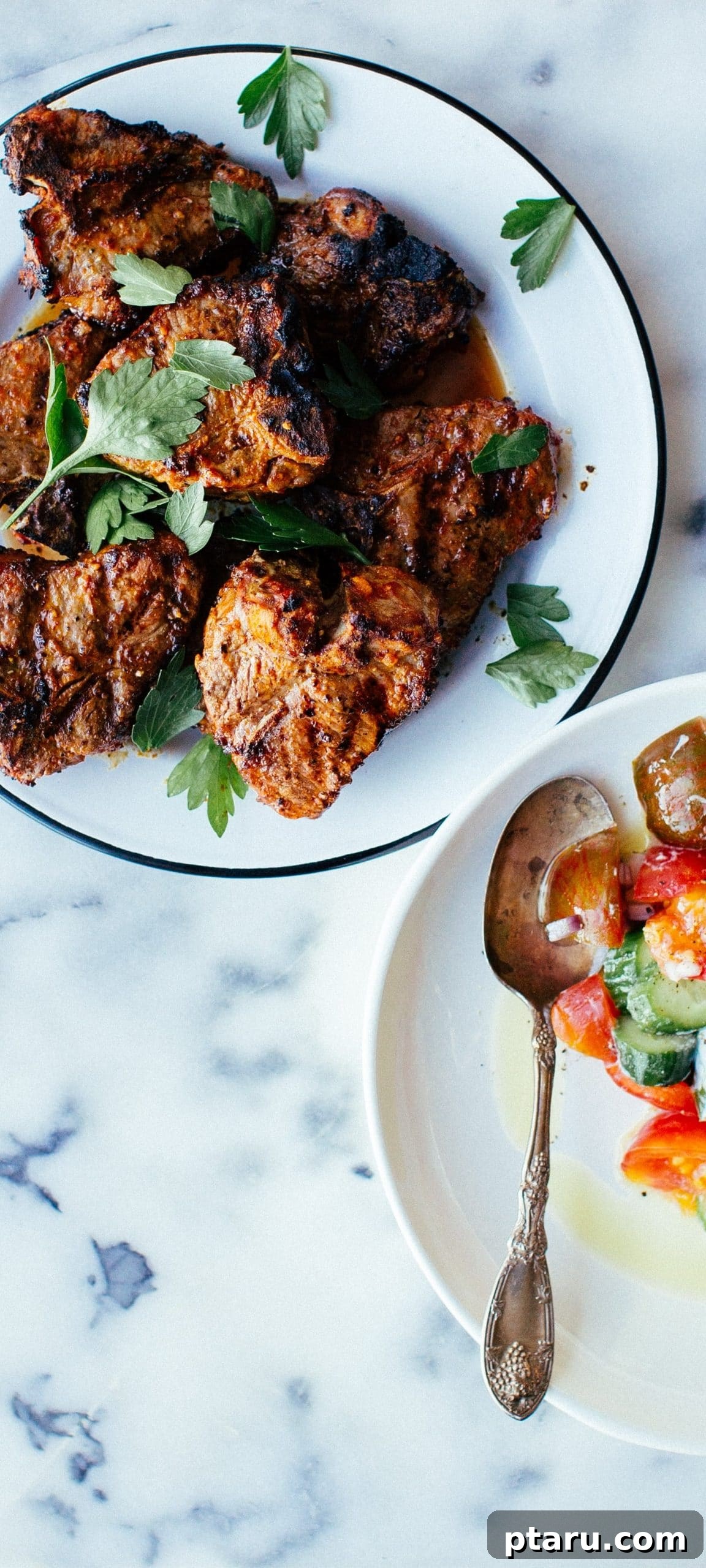
Embark on a culinary journey to the heart of the Middle East with this incredibly easy and authentic recipe for tender, flavorful Kafta Kabobs. Dripping with the rich aromas of aromatic spices and fresh herbs, these succulent ground beef skewers are grilled to juicy perfection, promising an unforgettable meal that’s both simple to prepare and exquisitely delicious. Whether you’re a seasoned chef or a beginner in the kitchen, this guide will help you create a dish that transports your taste buds straight to the vibrant streets of Beirut.
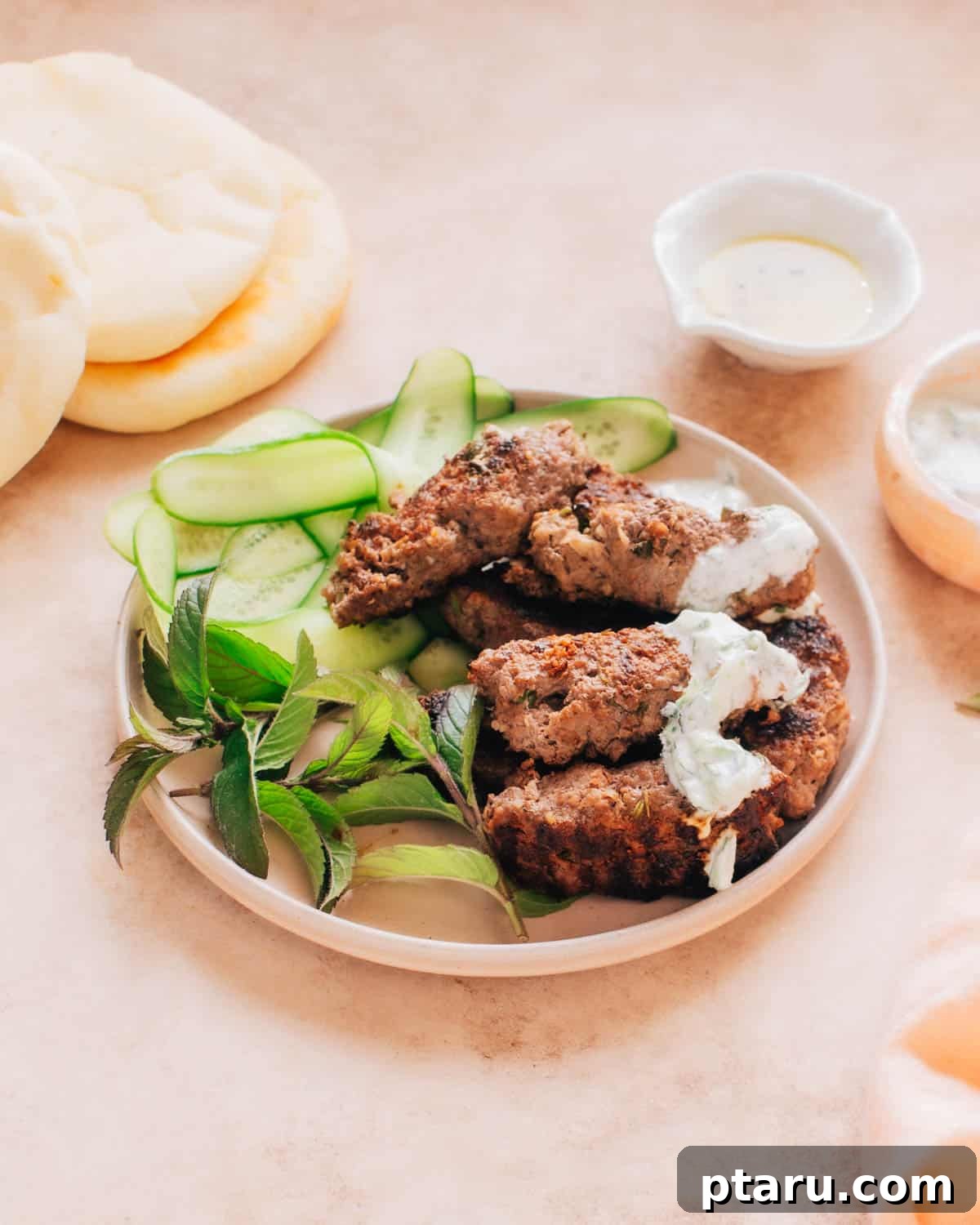
What are Kafta Kabobs?
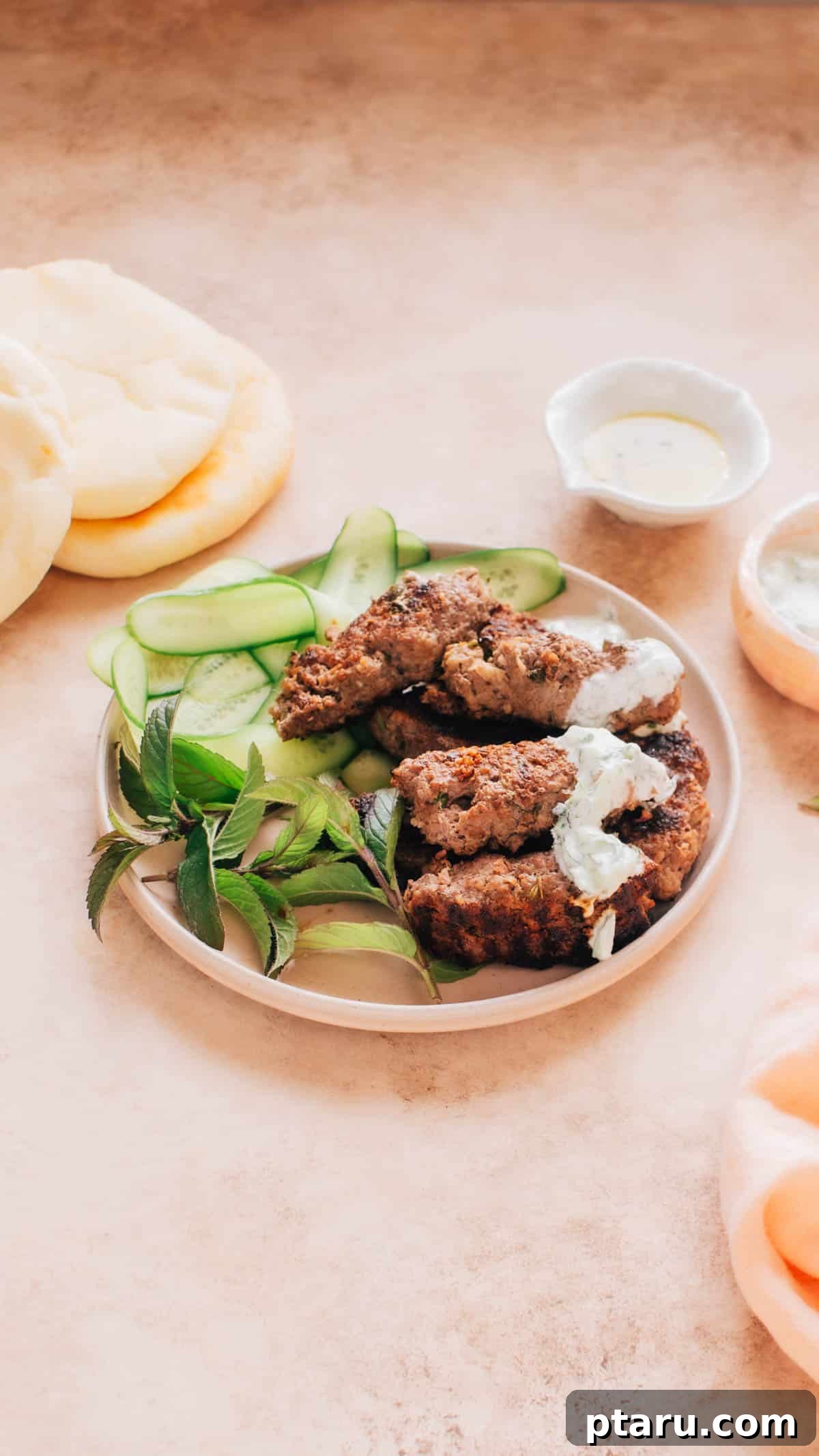
Kafta Kabobs, also widely known as beef kafta kebabs or simply kofta, are a beloved culinary staple across the Middle East, particularly prominent in Lebanese cuisine. This popular dish is crafted from a meticulously seasoned mixture of ground meat, most commonly beef or lamb, infused with a vibrant blend of fresh herbs and exotic spices. The seasoned meat is then skillfully shaped into elongated, sausage-like forms, often pressed around skewers, before being grilled, baked, or pan-fried to achieve a tantalizingly juicy and tender texture.
The distinctive flavor profile of Kafta Kabobs is derived from a harmonious combination of fresh ingredients like bright parsley and cooling mint, perfectly balanced with aromatic spices such as warm coriander, earthy cumin, and a hint of sweet cinnamon. These ingredients not only contribute to the rich taste but also to the inviting aroma that fills the kitchen as they cook. Kafta Kabobs are incredibly versatile and are frequently served as a hearty main course, accompanied by fluffy rice, crisp salads like tabbouleh or fattoush, or nestled in warm pita bread alongside an array of delicious dips and sauces, such as hummus or tahini.
The Rich Origins of Kafta
The exact genesis of Kafta is somewhat shrouded in history, as this culinary delight has been an integral part of gastronomic traditions across various regions for many centuries. It is widely believed to have originated in the Levant region, a historical area encompassing modern-day Lebanon, Syria, Jordan, and Palestine. These countries boast a profound culinary heritage rich in meat-based dishes, and Kafta stands proudly as one of their most cherished and enduring culinary treasures. The preparation of ground meat mixed with spices and herbs reflects ancient practices of making the most of available resources and creating dishes that are both nourishing and deeply flavorful, passed down through generations.
Kebab, Kabob, Kofta: Navigating the Many Names
The terminology surrounding these delicious meat preparations can often be a source of confusion, largely due to diverse linguistic origins and regional adaptations. The term “kabob” is an anglicized variation of the Arabic word “kebab,” which itself is derived from the Persian “kabāb,” meaning “roasted meat.” Depending on the region and language, you’ll encounter various spellings and pronunciations. In English, the plural form is typically “kabobs,” with an added “s.” However, in their original languages, such as Arabic or Persian, the pluralization rules differ. For instance, in Arabic, the plural is often “kabāb,” while in Persian, it might be “kabāb-hā.”
Beyond the spelling variations, Kafta itself is known by a multitude of names across different countries and cultures, each reflecting unique local twists and preparations:
- Kofta: This is a broadly used term spanning many parts of the Middle East, South Asia, and Central Asia. Kofta generally refers to meatballs or meatloaf made from ground meat—which can include lamb, beef, or even chicken—mixed with a variety of spices, herbs, and other ingredients. The meat mixture is often shaped into cylindrical, oval, or spherical patties and can be prepared by grilling, baking, frying, or even simmering in sauces. While many kofta variations are served as individual meatballs, some are indeed prepared on skewers, earning them the name “kofta kebab.”
- Kefte Kabob: Predominantly found in Greece, this version often features a distinct seasoning blend that typically includes fragrant herbs like oregano and mint, lending it a unique Mediterranean character. Kefte are usually grilled and served with fresh salads and yogurt-based dips.
- Koobideh Kabob: A quintessential Iranian delicacy, Koobideh consists of finely ground meat, usually a combination of beef and lamb, seasoned with finely grated onion, salt, and pepper, along with other subtle spices. The mixture is carefully shaped onto flat, wide metal skewers and expertly grilled over an open flame, resulting in a tender and incredibly flavorful kebab. The secret to its texture often lies in the precise ratio of fat and the thorough kneading of the meat mixture.
- Kafta Kebabs: In many Levantine countries, Kafta is specifically shaped onto skewers and cooked over a grill, thus fitting perfectly into the broader category of “kebab.” This form is a testament to the region’s grilling traditions and is frequently served with warm pita bread, a generous drizzle of tahini, and fresh salads.
- Shish Kofta: The term “Shish Kofta” (or shish kafta/shish kabob) explicitly denotes kofta that is threaded onto skewers, with “shish” meaning skewer in Turkish. The ground meat mixture is molded onto typically metal or wooden skewers and then grilled until beautifully charred and cooked through, offering a delightful smoky flavor that is hard to resist.
Variations and Regional Differences: Kafta recipes are wonderfully diverse, with slight variations from one region or even household to another. These differences manifest in the choice of spices, herbs, and additional ingredients. For instance, while onions, garlic, parsley, and mint are common staples, some regions might incorporate sumac for a tangy zest, paprika for color and mild heat, or a touch of allspice for a deeper warmth. Furthermore, local cooking methods—whether open-flame grilling, baking in a traditional oven, or pan-frying—and the preferred types of meat (lean vs. fatty beef, lamb, or a mix) significantly influence the ultimate taste, texture, and appearance of the Kafta.
Why You’re Going to Love This Kafta Kabob Recipe
This Kafta Kabob recipe is poised to become an instant favorite in your culinary repertoire, and here are compelling reasons why it deserves a spot:
- Unforgettable Flavor and Juiciness: Prepare for a taste sensation! The exquisite blend of fresh, vibrant herbs and rich, aromatic Middle Eastern spices creates a depth of flavor that is truly unforgettable. Each bite offers a juicy burst, ensuring these kabobs are anything but dry. The balanced seasoning tantalizes the palate, leaving you craving more of their succulent goodness.
- Remarkably Easy to Make: Don’t let the exotic name intimidate you. This recipe is designed for simplicity. With just a few straightforward steps, from mixing the ingredients to grilling, you can have these mouthwatering kabobs ready on your plate in remarkably little time, making it perfect for both busy weeknights and relaxed weekend gatherings.
- Versatile for Any Occasion: Kafta Kabobs are incredibly adaptable. They make a fantastic centerpiece for a family dinner, an impressive dish for entertaining guests, or even a flavorful component for meal prepping. Serve them with a variety of sides, and they effortlessly fit into any dining scenario.
- Wholesome and Satisfying: Packed with lean protein and fresh vegetables, these kabobs offer a wholesome meal option. They are satisfying without being overly heavy, providing sustained energy and delightful flavors that everyone will appreciate.
- An Authentic Taste of the Middle East: This recipe captures the essence of traditional Lebanese Kafta, bringing authentic Middle Eastern flavors right into your home kitchen. Experience the rich culinary heritage with every perfectly grilled skewer.
Gather Your Ingredients for the Best Kafta
Before you begin the exciting process of creating these delectable Kafta Kabobs, ensure you have all the essential, high-quality ingredients at hand. The freshness and balance of these components are key to achieving the perfect Middle Eastern flavor profile:
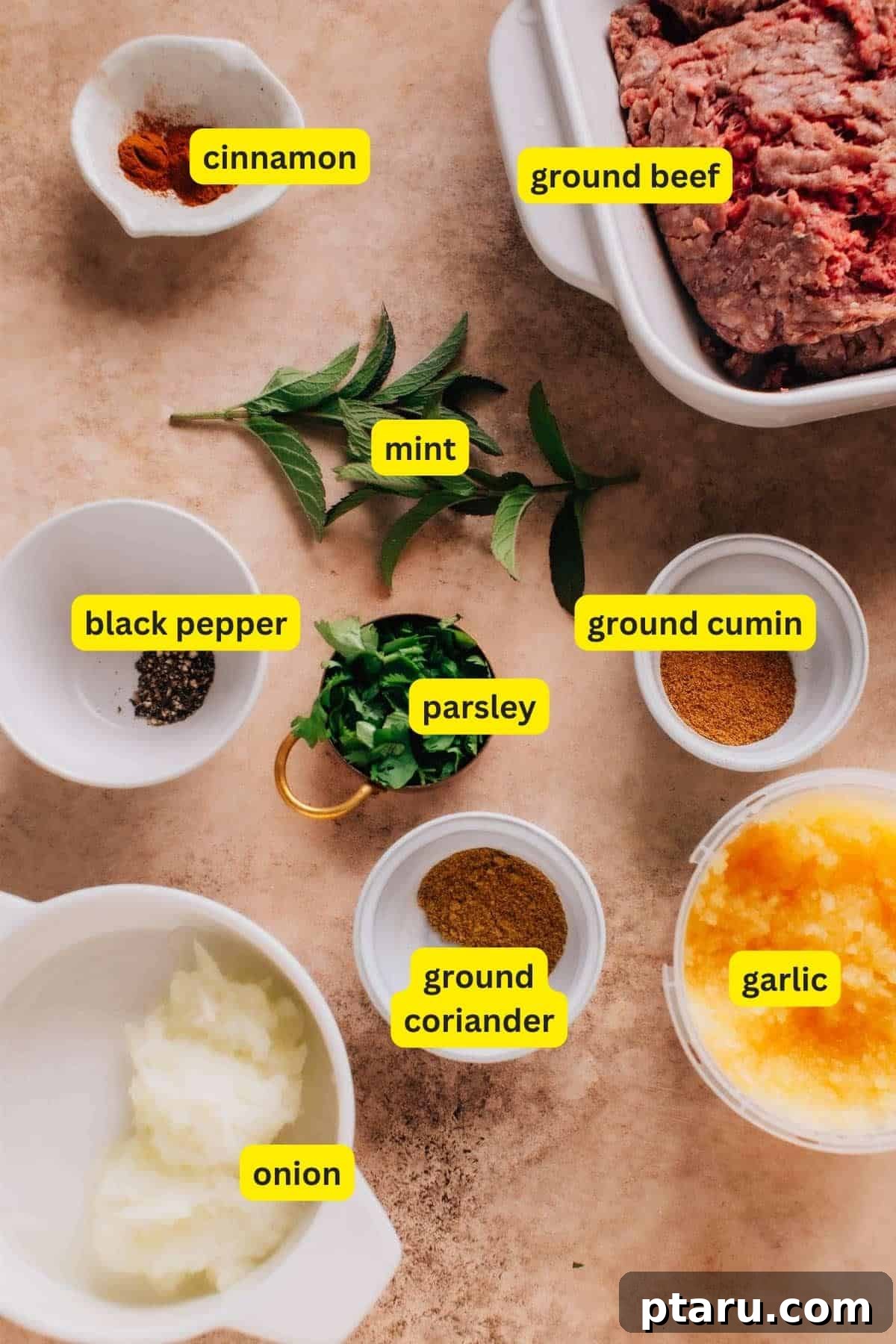
- Ground Beef: This forms the hearty foundation of our kabobs. For the juiciest and most flavorful results, we recommend using regular ground beef with an 80/20 lean-to-fat ratio. While lean ground beef (90/10) can also be used, the slightly higher fat content in regular ground beef melts during cooking, infusing the kabobs with incredible moisture and richness that is characteristic of authentic Kafta.
- Fresh Parsley: A generous amount of freshly minced parsley is crucial. It contributes a vibrant, herbaceous freshness and a beautiful green hue that is essential to the flavor and presentation of Kafta. Always opt for fresh over dried for superior taste.
- Fresh Mint: The inclusion of fresh mint provides a wonderful, cooling contrast to the warm spices and rich beef. Its bright, aromatic notes lift the entire dish, adding a layer of complexity and authenticity.
- Grated Onion: Instead of finely chopped, grating the onion is a game-changer. It ensures the onion’s moisture is evenly distributed throughout the meat mixture, keeping the kabobs tender and preventing dry spots. It also disperses its subtle sweetness and pungent flavor seamlessly without large, noticeable pieces.
- Minced Garlic: Freshly minced garlic is indispensable for its pungent, savory depth, which significantly enhances the overall flavor profile of the Kafta.
The Essential Kafta Spices
Just a few carefully selected pantry spices are all you need to transform the simple ground beef into a flavor-packed shish kafta masterpiece. These spices are the heart of Middle Eastern cuisine:
- Ground Coriander: This spice brings a wonderfully warm, citrusy, and slightly earthy note that beautifully complements the other spices and rounds out the flavor profile.
- Ground Cumin: A cornerstone of Middle Eastern cooking, cumin imparts a distinctive warm, earthy, and slightly pungent flavor that is absolutely essential for authentic Kafta.
- Cinnamon: Often a surprising addition to savory meat dishes for those unfamiliar with Middle Eastern cuisine, cinnamon provides a subtle hint of sweet warmth and depth. It doesn’t make the dish taste sweet but rather enriches the overall spice blend, adding an intriguing complexity.
- Kosher Salt: Essential for seasoning, kosher salt not only balances and enhances all the individual flavors but also helps in binding the meat mixture together.
- Black Pepper: Freshly ground black pepper adds a mild, sharp heat and brightens the overall taste of the kabobs, providing a perfect counterpoint to the other warm spices.
Grab These Essential Tools
To successfully create the perfect grilled Kafta Kabobs that are evenly cooked and beautifully charred, gathering the right tools before you start is crucial. Here’s what you’ll need:
- Grill or Grill Pan: For achieving those coveted char marks and a smoky flavor, a good grill is indispensable. You can use an outdoor charcoal or gas grill for classic results, or an indoor grill pan on your stovetop for convenience, allowing you to enjoy Kafta year-round. An oven broiler can also be an alternative if neither is available.
- Skewers (Optional but Recommended): While you can form Kafta into freeform patties, using skewers makes handling and grilling much easier, ensuring even cooking and a traditional presentation. You can use durable metal skewers, which are reusable and conduct heat well, or wooden/bamboo skewers. If using wooden or bamboo skewers, remember to soak them in water for at least 30 minutes before grilling to prevent them from burning.
- Large Mixing Bowl: A spacious mixing bowl is necessary for thoroughly combining the ground meat, herbs, and seasoning ingredients without making a mess. Avoid using a food processor for mixing, as this can easily lead to over-mincing the meat and turning the mixture into an undesirable paste-like consistency, which can result in tough kabobs. Hand-mixing is best for tender results.
- Instant-Read Thermometer: This tool is vital for food safety and for ensuring your kabobs are cooked to juicy perfection without being overdone. It allows you to quickly and accurately check the internal temperature of the meat, guaranteeing it reaches a safe 165ºF (74ºC) while remaining tender.
How to Make a Juicy Grilled Beef Kafta Kabob: Easy Step-by-Step Directions
Follow these simple and precise steps to create your own batch of mouthwatering, juicy beef Kafta Kabobs. Precision in preparation and cooking will ensure optimal flavor and texture:
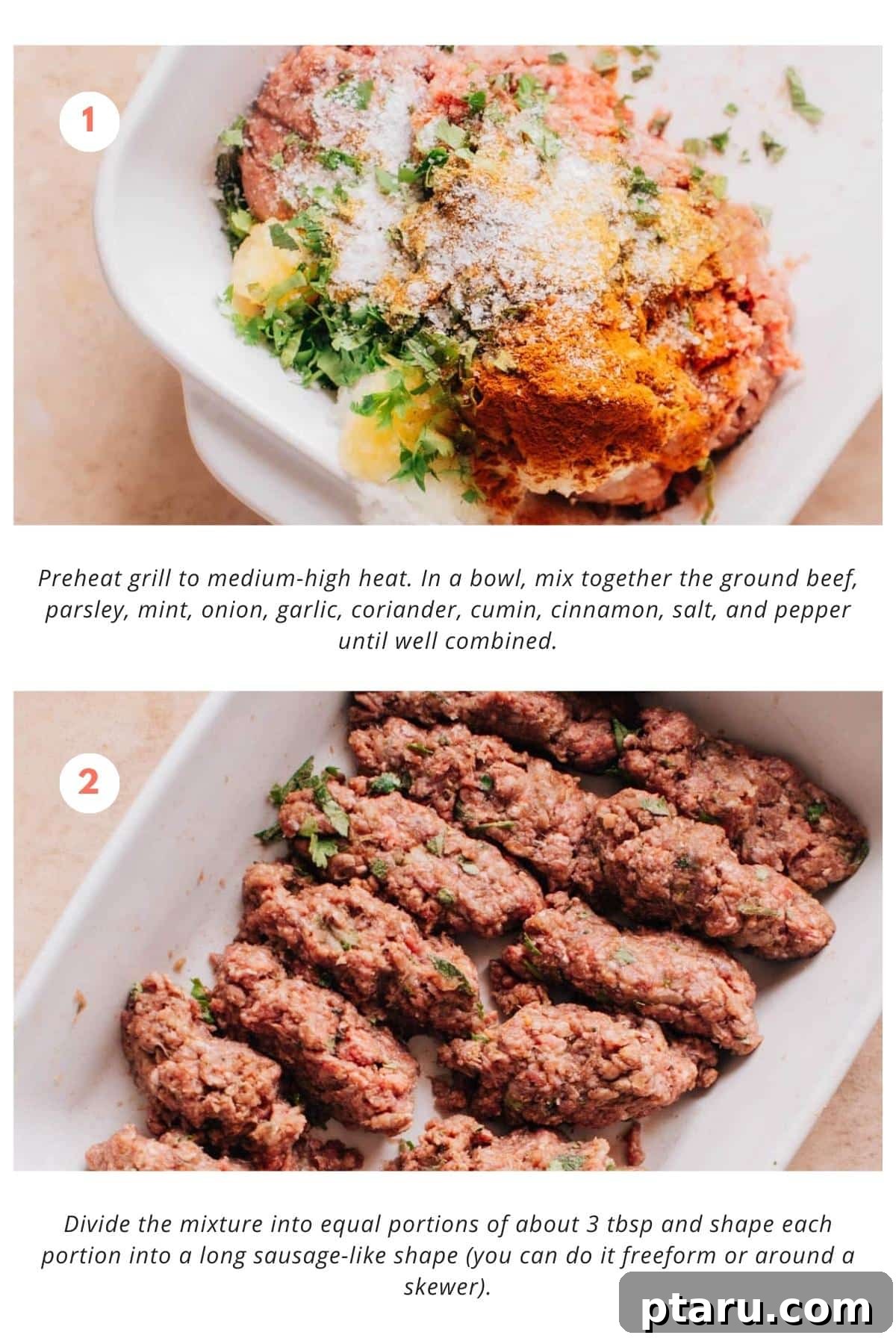
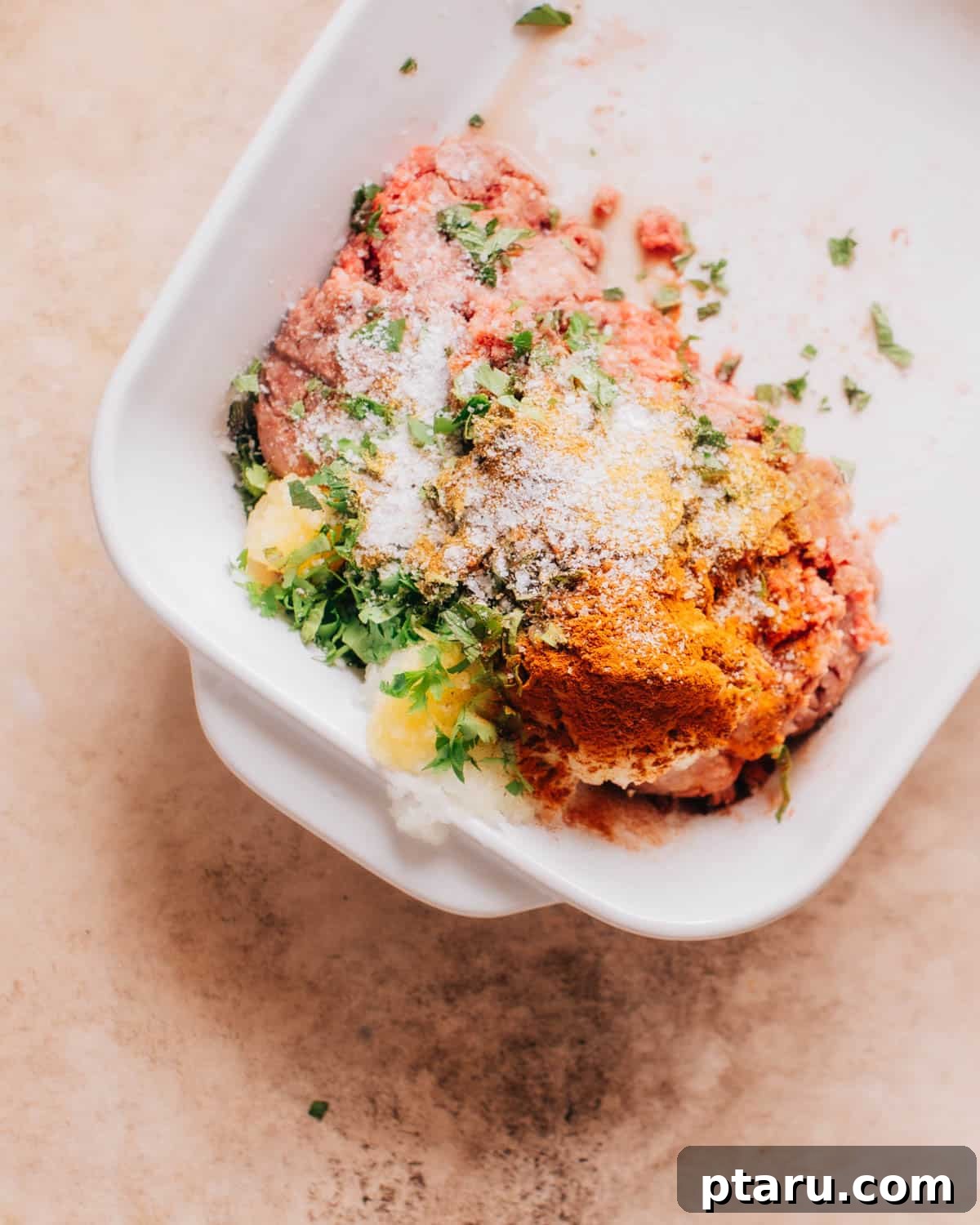
- Prepare the Grill: Begin by preheating your grill to a medium-high heat setting. This is crucial for ensuring even cooking and achieving those desirable, appetizing char marks on the exterior of the kabobs. If using wooden skewers, remember to soak them in water for at least 30 minutes beforehand to prevent them from catching fire during grilling.
- Mix the Ingredients: In a large mixing bowl, combine the ground beef, freshly minced parsley, fresh mint, grated onion, minced garlic, ground coriander, ground cumin, cinnamon, kosher salt, and black pepper. Use your hands to gently but thoroughly mix all the ingredients until they are just combined. Be careful not to overmix, as this can lead to a tougher texture in the final kabobs. The mixture should be uniform but not pasty.
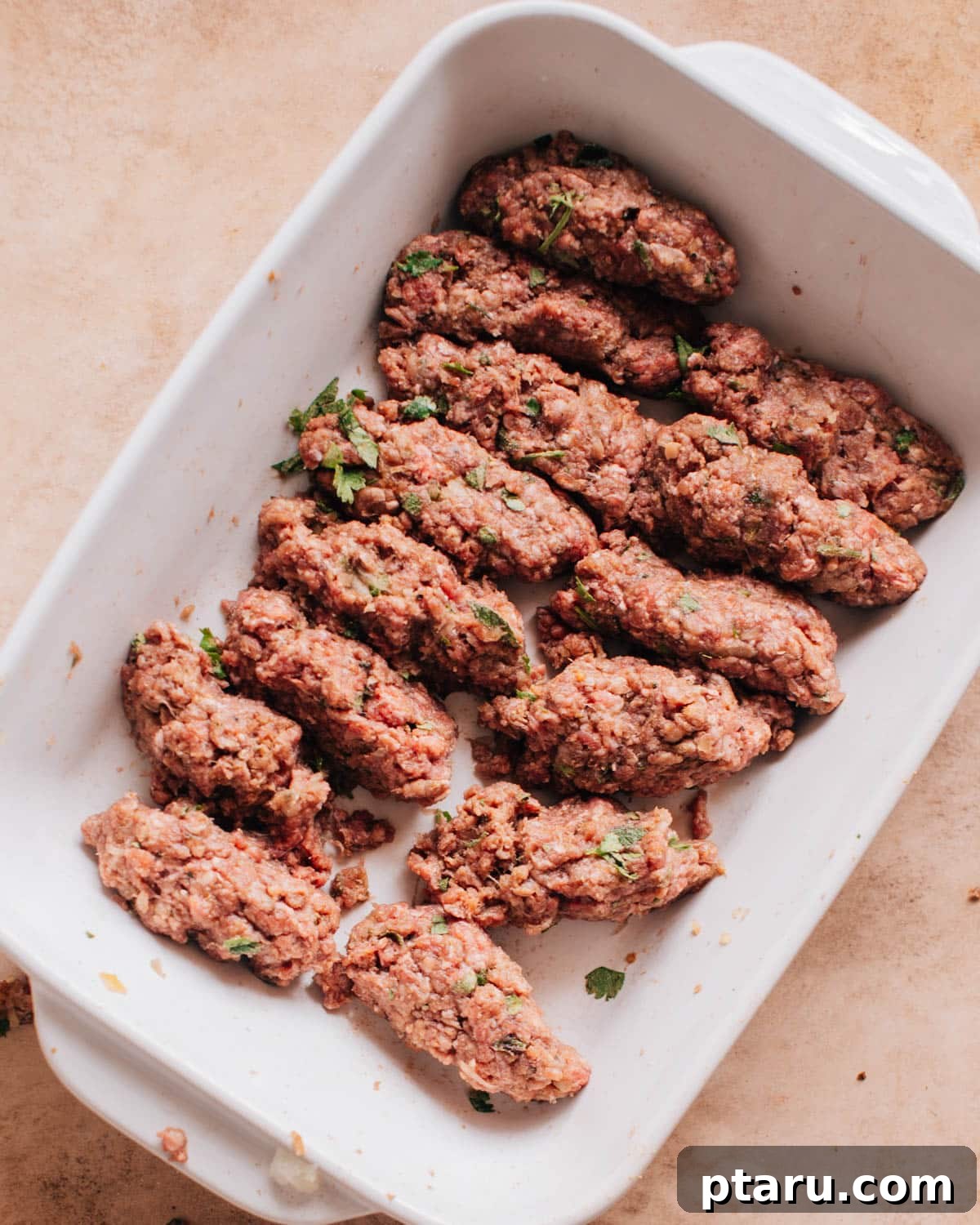
- Divide the Mixture: Once thoroughly mixed, divide the beef mixture into equal portions. For consistent sizing and even cooking, aim for portions of approximately 3 tablespoons each. This helps ensure all kabobs cook at roughly the same rate.
- Shape the Kabobs: Take each portion of the meat mixture and carefully form it into a long, cylindrical sausage-like shape. You have the option to mold them freeform into elongated patties, or for a more traditional presentation and easier grilling, gently press and shape the mixture around pre-soaked wooden or metal skewers. Ensure the meat is firmly pressed onto the skewer to prevent it from falling off during cooking.
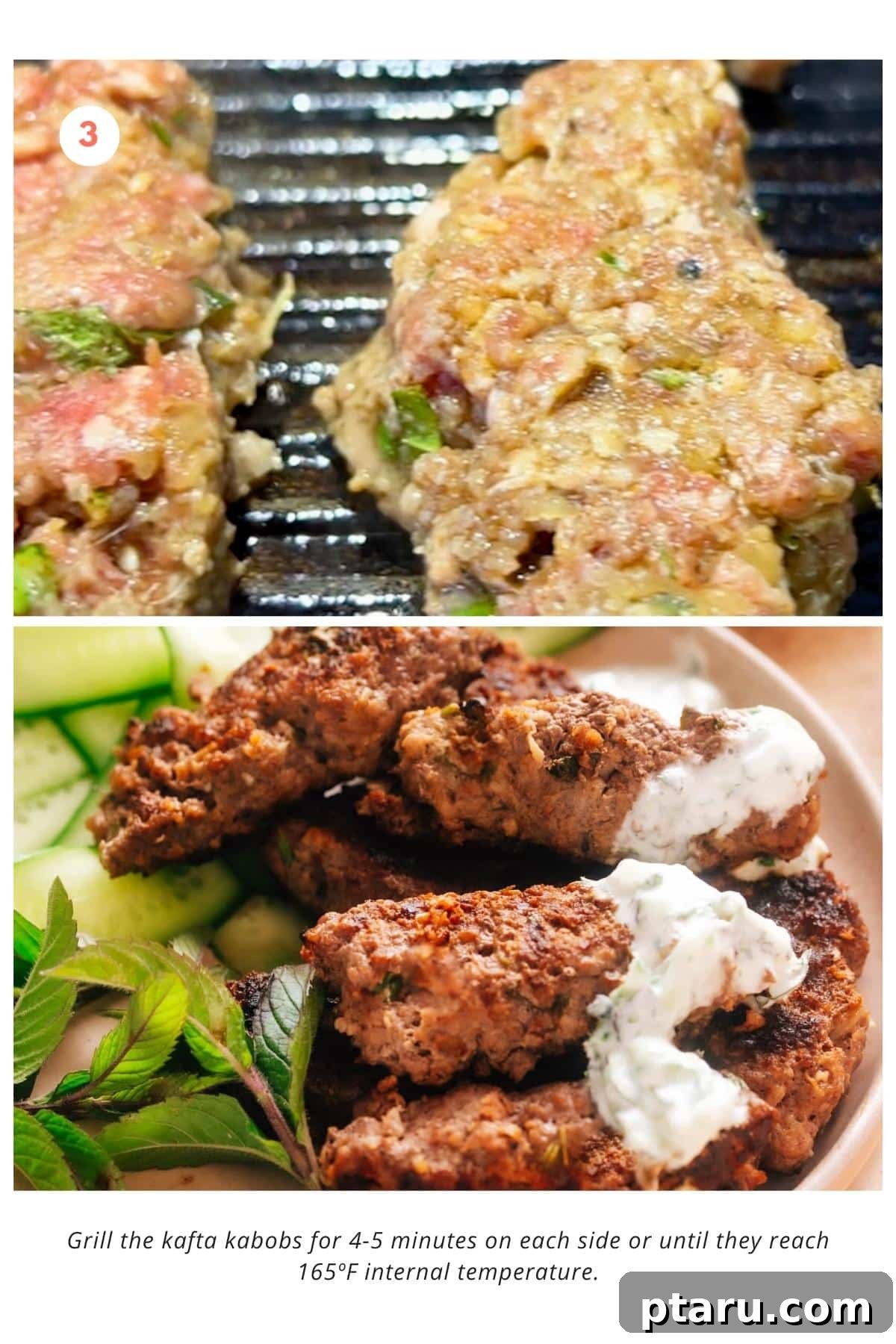
- Grill to Perfection: Place the shaped Kafta Kabobs directly on the preheated grill grates. Cook on medium-high heat for about 4-5 minutes per side. You’re looking for a beautiful golden-brown crust with appealing char marks. Gently turn them with tongs, ensuring all sides get adequate heat. Avoid flipping them too frequently.
- Check Internal Temperature: For safe consumption and optimal juiciness, it’s essential to check the internal temperature of your kabobs using an instant-read thermometer. They are fully cooked and safe to eat when they reach an internal temperature of 165ºF (74ºC). Remove them from the grill immediately once they hit this temperature to prevent overcooking and preserve their tender texture.
How Do You Keep Kafta Kebobs From Breaking?
Preventing your delicious Kofta or Kafta Kebabs from crumbling apart on the grill is a common concern for many home cooks. Achieving that perfectly intact, juicy skewer requires a few key techniques. Follow these 5 simple tips to ensure your kebabs hold their shape beautifully:
- Finely Chop or Mince All Ingredients: The consistency of your mixture is paramount. Ensure that not only the meat but also the onions, herbs, and any other additions are very finely chopped or minced. Large chunks can create weak points in the mixture, making it more prone to breaking. A homogeneous, finely textured mixture binds together more effectively.
- Refrigerate the Mixture: After combining all your ingredients, it’s highly beneficial to refrigerate the meat mixture for a minimum of 30 minutes, or even up to an hour. Chilling allows the fats in the meat to solidify slightly and the flavors to meld, resulting in a firmer, more manageable mixture that is significantly easier to shape and less likely to fall apart during cooking.
- Wet Your Hands When Shaping: This simple trick makes a huge difference. Before you start shaping the kebabs, lightly dampen your hands with cold water or a tiny amount of oil. This prevents the sticky meat mixture from clinging to your fingers, allowing you to form smooth, compact, and well-sealed kebabs that are less likely to crack or break.
- Properly Preheat the Grill or Pan: A sufficiently preheated cooking surface is critical. Ensure your grill or pan is hot before placing the kebabs on it. The immediate high heat will quickly sear the exterior of the kebab, forming a crust that locks in juices and helps the meat maintain its shape. If the surface isn’t hot enough, the meat might stick and tear when you try to move or flip it.
- Handle with Care and Patience: Be gentle throughout the grilling process. Use tongs or a wide spatula to carefully turn the kebabs, avoiding any abrupt movements or excessive force that could cause them to fracture. A key indicator that they are ready to flip is when they naturally release from the grill grates without sticking. If they are still stuck, they aren’t ready yet; allow them a little more time to form that crucial crust.
What to Serve with Kafta Kabob
Elevate your juicy beef Kafta Kabobs into a complete and unforgettable meal by serving them alongside a selection of complementary side dishes and thoughtful presentation tips. The right accompaniments enhance the flavors and create a truly authentic Middle Eastern dining experience:
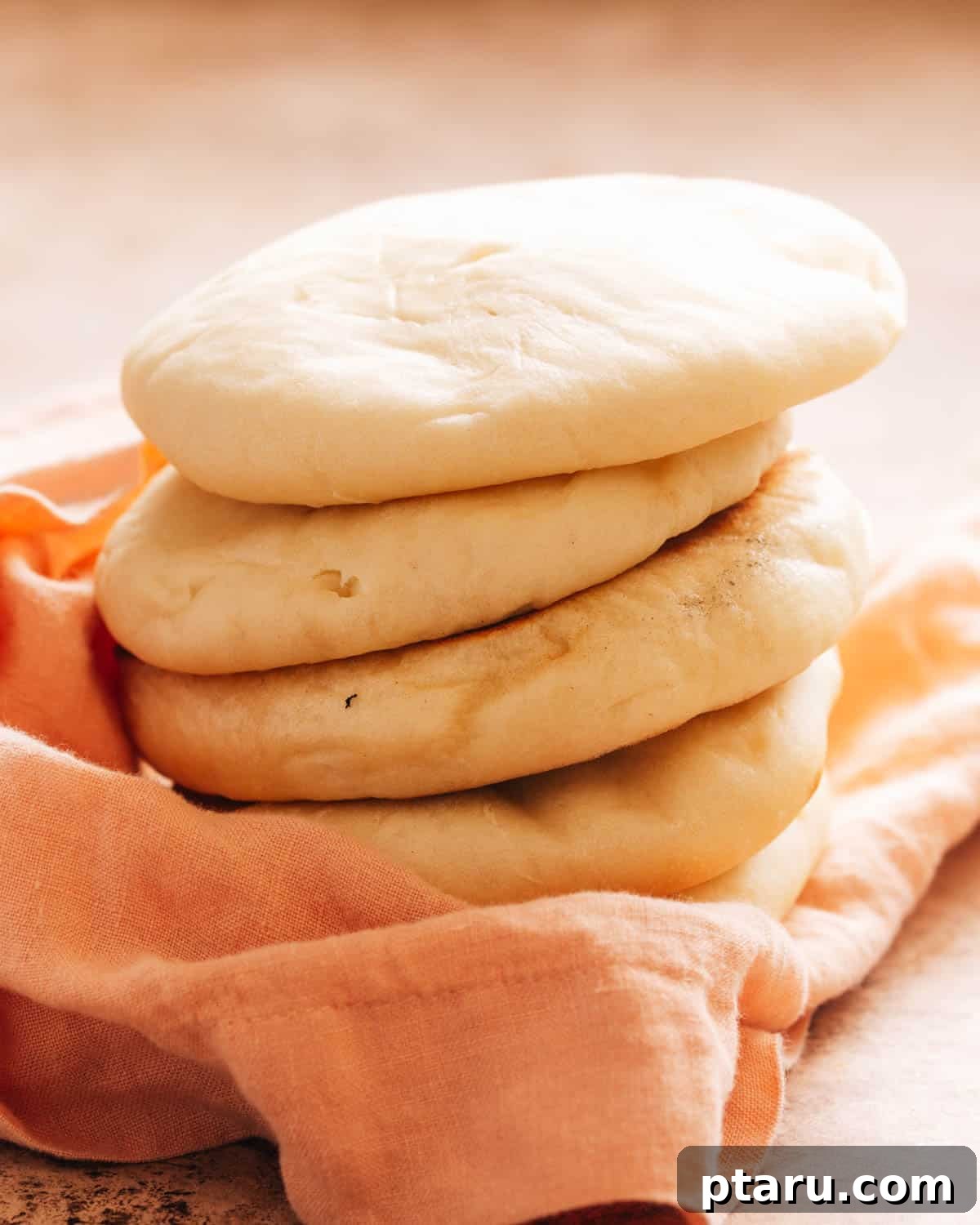
- Delicious Flatbreads: No Middle Eastern meal is complete without warm, soft flatbread. Wrap your flavorful kabobs in warm homemade naan, fluffy Turkish bread, or classic pita for a satisfying, handheld meal that allows you to soak up all the delicious juices and flavors.
- Creamy Dips and Sauces: Enhance the experience with an array of flavorful dips. Traditional choices include creamy hummus, nutty tahini sauce, or a refreshing tzatziki (a Greek yogurt and cucumber dip). An Indian yogurt sauce can also provide a delightful tanginess.
- Fresh Garnishes: A simple garnish can make a significant difference. Sprinkle some extra chopped fresh parsley or mint over the cooked kabobs just before serving. This not only adds a pop of vibrant color but also introduces a burst of fresh flavor, invigorating the palate.
- Fluffy Couscous: Serve your Kafta Kabobs alongside a light and fluffy couscous. Explore any one of these delicious Israeli Couscous recipes, which offer a delightful texture, or opt for a refreshing classic couscous salad with a zesty lemon dressing. The subtle flavor of couscous perfectly complements the robust kabobs.
- Refreshing Salads: A crisp, tangy salad cuts through the richness of the meat, providing a wonderful balance. A traditional tabbouleh or a vibrant fattoush salad, with its distinctive fried pita pieces and sumac dressing, pairs perfectly. My Indian father-in-law’s famous Cucumber Yogurt Salad (Raita) would also offer a delightful, cooling contrast.
- Grilled Vegetables: For a healthy and incredibly tasty side, add some grilled vegetables. Eggplant, zucchini, bell peppers, or even cherry tomatoes, lightly seasoned and grilled until tender-crisp, complement the kabobs beautifully. Quick and crispy air fryer eggplant would be a particularly excellent and convenient option.
Make Ahead and Storage Tips
Thoughtful preparation and proper storage are key to ensuring your Beef Kafta Kabobs remain fresh, flavorful, and convenient for future meals. These tips will help you maximize their deliciousness and minimize waste:
- Make Ahead: Kafta Kabobs are an excellent candidate for meal prepping. You can prepare the entire meat mixture up to a full day in advance. Simply combine all the ingredients as directed, then cover the bowl tightly with plastic wrap and store it in the refrigerator for up to 24 hours. This not only saves time on cooking day but also allows the flavors to meld and deepen, resulting in an even more delicious kabob. When you’re ready to grill, simply shape and cook.
- Storing Leftovers: If you have any cooked Kafta Kabobs remaining, allow them to cool completely to room temperature first. Then, transfer them to an airtight container and store them in the refrigerator. They will remain fresh and delicious for up to 3 days. To reheat, you can use a microwave, a lightly oiled skillet, or even a preheated oven until warmed through.
- Freezing for Later: For longer-term storage, Kafta Kabobs freeze exceptionally well. You can freeze them either raw (shaped) or cooked.
- Uncooked: Shape the kabobs as desired, then arrange them in a single layer on a baking sheet lined with parchment paper. Freeze until solid (this prevents them from sticking together). Once frozen, transfer the individual kabobs to a freezer-safe container or heavy-duty freezer bag. They will keep well for up to 2 months. Thaw in the refrigerator overnight before cooking as usual.
- Cooked: Allow cooked kabobs to cool completely. Arrange them on a baking sheet and freeze until solid, then transfer to an airtight, freezer-safe container or bag. They can be frozen for up to 1-2 months. Reheat from frozen or thawed in the oven or on a skillet until hot.
Variations and Substitutions to Customize Your Kafta Kabobs
Kafta Kabobs are wonderfully adaptable, allowing for creative variations and substitutions to suit different tastes, dietary preferences, or ingredients you have on hand. Don’t hesitate to experiment and make this recipe truly your own:
- Alternate Protein Choices: While ground beef is traditional, you can easily swap it out for other types of ground meat to create a different flavor profile.
- Ground Lamb: For a richer, more intensely Middle Eastern flavor, substitute ground lamb. Lamb Kafta is incredibly popular and offers a distinctively robust taste.
- Ground Turkey or Chicken: For a leaner, lighter option, ground turkey or chicken can be used. Be mindful that these meats are less fatty, so you might need to add a touch more grated onion or a tablespoon of olive oil to maintain moisture and prevent them from drying out during cooking.
- Additional Spices for Unique Twists: Feel free to expand the spice blend beyond the core ingredients to explore new dimensions of flavor.
- Smoked Paprika: Adds a lovely smoky depth and a beautiful reddish hue.
- Allspice: A common Middle Eastern spice that contributes a complex, warm, and slightly sweet-peppery note, enhancing the traditional profile.
- Sumac: For a tangy, slightly lemony zest, a pinch of sumac can brighten the flavors, especially popular in Levantine cuisine.
- Nutmeg: A tiny pinch can add an extra layer of warm spice complexity.
- Vegetarian Kafta Kabobs: For a delicious plant-based version, you can adapt the concept using a mixture of grated vegetables.
- Combine finely grated zucchini, carrots, mushrooms, and perhaps some cooked lentils or chickpeas for texture.
- To bind the mixture, you’ll likely need breadcrumbs (or gluten-free breadcrumbs) and an egg (or a flax egg for a vegan option).
- Season generously with the same Kafta spices, ensuring a rich and savory flavor.
- Form into patties or shape around skewers and cook until golden and firm.
Expert Tips and Tricks for the Best Beef Kafta Kabob
To truly master the art of Kafta Kabob-making and ensure every batch is succulent, flavorful, and perfectly cooked, consider these expert suggestions:
- Avoid Overmixing the Kafta Mixture: This is perhaps the most crucial tip for tender kabobs. Overmixing ground meat mixtures, like Kafta, can lead to a denser, tougher, and less juicy texture. This phenomenon occurs due to the development of myosin, a type of protein found in muscle fibers that acts as a binding agent. When ground meat is mixed vigorously or for too long, the myosin develops more fully, creating strong protein bonds. While some mixing is necessary to evenly distribute the seasoning and other ingredients, excessive mixing causes the meat mixture to become overly cohesive and elastic, resulting in a rubbery texture. Mix just until the ingredients are uniformly incorporated – stop as soon as you no longer see streaks of unmixed spices or herbs, and the mixture feels cohesive but not sticky or pasty.
- Prevent Sticking to the Grill: Nothing is more frustrating than kabobs tearing apart when you try to flip them. To avoid this, ensure your grill is properly preheated to medium-high heat for at least 5-10 minutes before cooking. A hot grill creates an immediate sear, which helps the meat release. Additionally, lightly oil the grill grates or your grill pan before placing the kabobs. You can do this by folding a paper towel, dipping it in a neutral oil (like vegetable or canola), and carefully wiping it over the hot grates using tongs. Do not attempt to turn the kabobs until they naturally lift easily from the surface.
- Soak Wooden Skewers: If you opt to use wooden or bamboo skewers for your Kafta, a simple but essential step is to soak them in water for a minimum of 30 minutes (or even longer) before you thread the meat onto them. This hydration prevents the skewers from drying out, igniting, or burning completely during the grilling process, especially over high heat. It ensures your kabobs cook evenly and remain securely on their skewers.
FAQs About Kafta Kabobs
Kafta is traditionally made from ground meat, most commonly beef or lamb, or a combination of both. It’s distinctively seasoned with a vibrant blend of fresh herbs like parsley and mint, and aromatic Middle Eastern spices such as coriander, cumin, and cinnamon, along with finely grated onion and garlic. This combination gives it its signature rich and savory flavor profile.
To ensure your kofta kebabs hold together without breaking, several factors are important: finely mince all ingredients (meat, onion, herbs) for better binding, mix the ground meat and spices thoroughly until the mixture becomes slightly sticky and cohesive, chill the mixture in the refrigerator for at least 30 minutes to firm up the fats and flavors, and moisten your hands with cold water or oil when shaping the kebabs to prevent sticking and allow for firmer molding.
Kebabs can break for several reasons: the meat mixture might not be properly combined or is too coarse (ingredients not finely minced), the mixture was not chilled sufficiently, you might be over-handling them during the grilling process, or the grill temperature is either too low (causing sticking) or too high (cooking the outside too fast before a crust can form). Ensuring a well-bound, chilled mixture, gentle handling, and a properly preheated, oiled grill will help keep your kebabs intact.
While both are essentially ground meat formed into shapes, kofta generally refers to a specific category of spiced ground meat preparations originating from Middle Eastern, South Asian, Central Asian, and Balkan cuisines. They typically feature distinct spice blends (like cumin, coriander, mint) and are often oblong or cylindrical in shape. “Meatballs” is a broader, more generic term used worldwide, encompassing various cuisines and often having a spherical shape and different flavor profiles (e.g., Italian meatballs with marinara sauce).
“Kabob” (or “kebab”) is a general term referring to pieces of meat, seafood, or vegetables that are cooked on a skewer or spit, often grilled or roasted. It can be made with whole chunks of marinated meat. “Kafta,” on the other hand, is a specific type of Middle Eastern kebab. It is made from seasoned ground meat (beef or lamb), which is then shaped into elongated forms, often pressed onto skewers, and then grilled or baked. So, while all Kafta is a type of kebab, not all kebabs are Kafta.
Absolutely! If you don’t have a grill or prefer baking, Kafta Kabobs can be baked in the oven. Preheat your oven to 400°F (200°C). Arrange the shaped kabobs on a baking sheet lined with parchment paper or foil. Bake for 15-20 minutes, flipping halfway through, until they are cooked through and reach an internal temperature of 165°F (74°C). For a slightly charred finish, you can broil them for the last few minutes.
If You Love Ground Beef Like I Do, Try These Recipes
If the rich and versatile nature of ground beef has captured your culinary heart, you’ll be thrilled to discover more delicious ways to incorporate it into your cooking. Explore these fantastic recipes that showcase the incredible adaptability and flavor potential of ground beef:
- Ultimate Ground Beef Tacos: Craft irresistible tacos bursting with seasoned ground beef, fresh vibrant toppings, and your favorite salsa for an authentic Mexican-inspired meal that’s perfect for a fun family dinner.
- Hearty Chili Con Carne: Dive into a comforting bowl of this robust and flavorful Mexican chili, made with tender ground beef, kidney beans, and a medley of warming spices, simmered to perfection.
- Effortless Crockpot Spaghetti Sauce with Ground Beef: Discover the secret to a richly flavorful and deeply satisfying spaghetti sauce, effortlessly made in your crockpot. This recipe promises easy, delicious weeknight cooking with minimal fuss.
- The Best Moist and Tender Meatloaf: Master the classic comfort food with this recipe for the ultimate moist and tender meatloaf, complete with a sticky, caramelized glaze that will have everyone asking for seconds.
- Flavorful Keema Naan: While traditionally made with lamb, this recipe can be easily adapted to use a savory ground beef filling. Learn to make soft and fluffy naan from scratch, stuffed with a spiced meat mixture, for an incredible Indian-inspired treat.
Next Reading: Delve deeper into the world of ground beef with these intriguing collections: 20 Unusual Ground Beef Recipes + Ground Beef Casserole Recipes for even more culinary inspiration!
Beef Kafta Kabob Recipe
This Kafta Kabob recipe makes succulent beef skewers dripping with flavor. The seasoned meat mixture is grilled to juicy perfection. Rated 5 stars from 2 votes.
Prep Time: 15 minutes
Cook Time: 10 minutes
Total Time: 25 minutes
Servings: 4
Ingredients
- 1 ½ lbs ground beef (regular 80/20 is juicier, but lean will do)
- ¼ cup minced fresh parsley
- ¼ cup minced fresh mint
- ½ cup grated onion
- 1 tbsp minced garlic
- 1 ½ teaspoons ground coriander
- 1 ½ teaspoons ground cumin
- ½ teaspoon cinnamon
- 1 ¼ tsp kosher salt
- ½ tsp black pepper
Instructions
- Preheat grill to medium-high heat. If using wooden skewers, soak them in water for at least 30 minutes to prevent burning.
- In a large bowl, mix together the ground beef, parsley, mint, onion, garlic, coriander, cumin, cinnamon, salt, and pepper until well combined. Be careful not to overmix.
- Divide the mixture into equal portions of about 3 tbsp each and shape each portion into a long sausage-like form. You can either make them freeform or carefully mold them around a skewer.
- Grill the kafta kabobs for 4-5 minutes on each side, or until they reach an internal temperature of 165ºF (74ºC).
Nutrition (Approximate per serving)
- Calories: 454 kcal
- Carbohydrates: 4g
- Protein: 30g
- Fat: 35g
- Saturated Fat: 13g
- Polyunsaturated Fat: 1g
- Monounsaturated Fat: 15g
- Trans Fat: 2g
- Cholesterol: 121mg
- Sodium: 851mg
- Potassium: 561mg
- Fiber: 1g
- Sugar: 1g
- Vitamin A: 453 IU
- Vitamin C: 8mg
- Calcium: 65mg
- Iron: 4mg
Nutrition information is automatically calculated, so should only be used as an approximation.