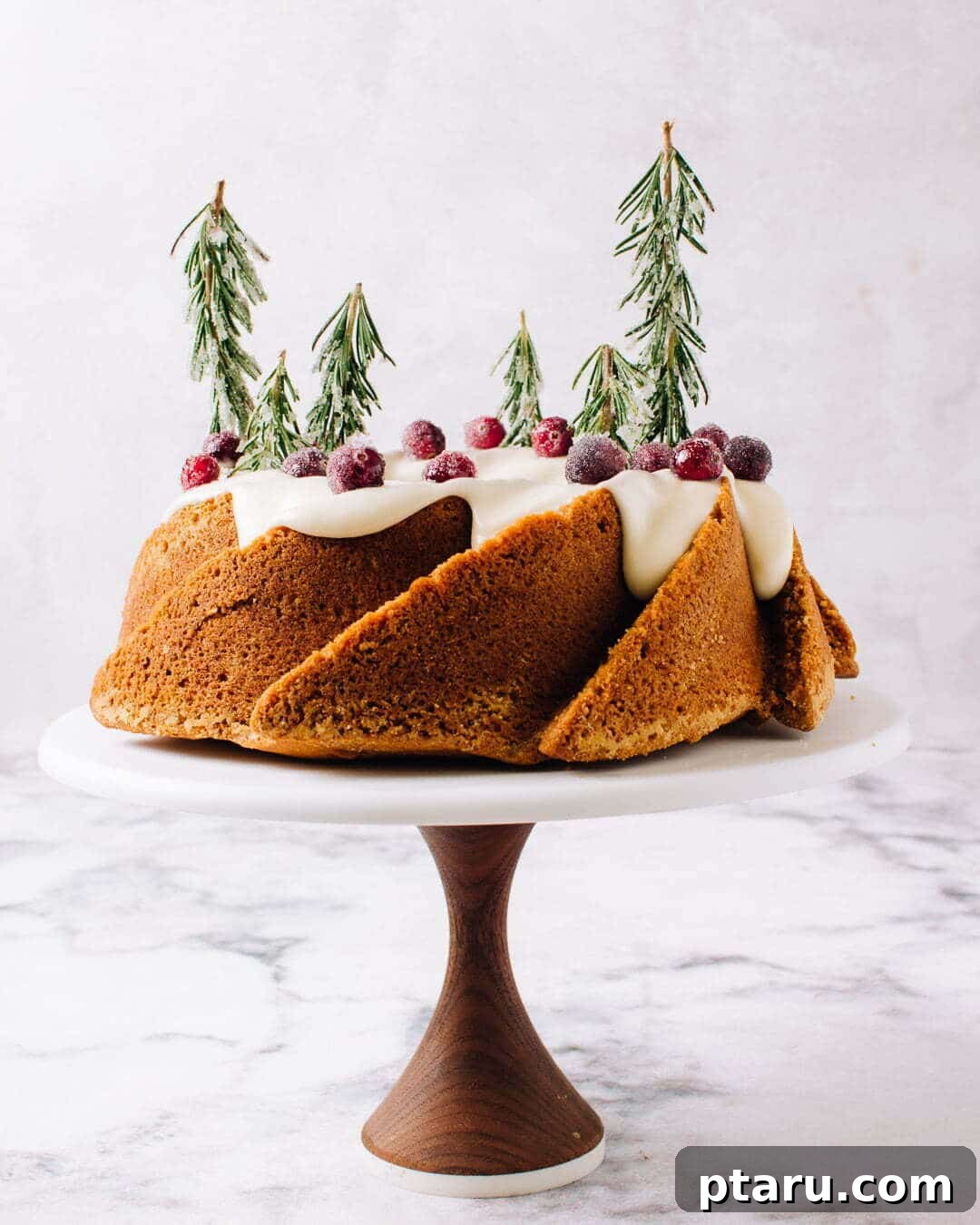
Welcome, fellow bakers and food enthusiasts! Today, I am overjoyed to share with you a truly spectacular recipe that encapsulates the very essence of holiday cheer: our Exquisite Holiday Spice Bundt Cake. This cake isn’t just a dessert; it’s an experience. Imagine a cake that’s profoundly rich with the aromatic warmth of ginger, cinnamon, nutmeg, and cloves, yet surprisingly light, soft, and incredibly fluffy in texture. Each bite is a journey through festive flavors, perfectly balanced to delight your palate during the most wonderful time of the year. To crown this masterpiece, a generous layer of thick, glossy cream cheese frosting cascades down its sides, creating those irresistible, picture-perfect drips. Adorned with sparkling sugared rosemary and ruby-red cranberries, this bundt cake transforms into a stunning, festive centerpiece, guaranteed to impress at any holiday gathering.

The flavor profile of this bundt cake is undeniably Christmas, capturing the spirit of the season in every tender crumb. It’s infused with vibrant orange zest, which brightens the deep, earthy notes of the spices. Fresh ginger provides a subtle warmth, while cinnamon brings a classic sweetness. Nutmeg adds a comforting, aromatic depth, and cloves deliver a delicate, pungent finish that truly elevates the overall taste. The result is a moist cake that tastes like pure holiday magic. To complete its enchanting wintery appeal, we’ll scatter a generous dusting of sugared cranberries and artfully arrange sprigs of sugared rosemary on top. These simple yet elegant decorations mimic freshly fallen snow and frosted evergreen branches, creating a beautiful, snow-dusted winter wonderland cake-scape that’s almost too pretty to eat.
Mastering Your Holiday Bundt Cake: Essential Baking Tips
Baking a bundt cake can be incredibly rewarding, but achieving that perfect, clean release and stunning presentation sometimes requires a few tricks. Here are five invaluable tips to ensure your Holiday Spice Bundt Cake turns out flawlessly every time, making you a bundt baking pro.
1. The Art of Greasing Your Bundt Pan: What to Use and What to Avoid
The most common challenge with bundt cakes is getting them out of the pan in one piece. The secret lies in proper greasing. For an effortless release, I consistently find that greasing with a solid fat yields the best results. While shortening has long been the standard for professional bakers, offering excellent non-stick properties, many home bakers are now seeking alternatives. I’ve personally experimented with coconut oil and can confidently say it works beautifully, providing a reliable non-stick barrier without any questionable ingredients. To achieve the best coverage, melt your chosen solid fat (shortening or coconut oil) slightly, then use a pastry brush to thoroughly coat every nook and cranny of your bundt pan, ensuring no spot is missed, especially in intricate designs.
On the other hand, it’s crucial to avoid certain fats. Butter, for instance, contains sticky lecithin and milk solids, in addition to about 20% water. These components can stubbornly adhere to the pan, creating a sticky residue that actively impedes clean cake removal. Over time, regular cooking spray can also be problematic. While convenient, the aerosols in these sprays can build up and actually gum up the non-stick coating on your bundt pan, making future releases even more difficult and potentially damaging your bakeware.
2. Achieving a Clean Release: The Best Flour for Your Bundt Pan
Once your bundt pan is perfectly greased, the next step is to “flour” it. While you *could* use regular all-purpose flour, it’s not always the optimal choice for a clean cake release. All-purpose flour tends to absorb moisture, potentially forming a gummy paste that sticks to the cake and leaves an unsightly white residue. This can detract from your cake’s beautiful, golden-brown crust and make removal more challenging.
My preferred alternative, and a true game-changer, is almond flour. Almond flour works wonderfully because its granular texture creates a more substantial and effective barrier between the cake batter and the pan walls, akin to fine sand rather than a starch paste. This granular separation significantly reduces sticking. Moreover, almond flour browns beautifully during baking, blending seamlessly with the cake’s crust for an invisible, pristine finish. You won’t see any tell-tale white dusting, just a perfectly golden exterior.
To illustrate the difference: the cake pan pictured above shows some of the gummy residue often left by traditional flouring methods. In contrast, the cake below, prepared with almond flour, released much more cleanly and presents a flawless, flour-free surface. While you might need to look closely to appreciate the subtle difference, the ease of removal alone makes almond flour a worthwhile choice if you have it on hand.

3. Selecting the Ideal Bundt Mould: What to Look For and What to Avoid
The design of your bundt pan plays a far greater role in successful cake release than many bakers realize. A simpler cake mould with fewer intricate details and sharper angles makes a significant difference in ensuring your cake comes out in one perfect piece. While highly decorative bundt pans are visually appealing, their complex designs often create more opportunities for the cake to stick and break during removal.
Opt for bundt pans that feature bigger, rounded curves and smoother surfaces rather than tight corners, deep crevices, or delicate, protruding details. Pans with simpler, more forgiving designs minimize the surface area where batter can cling and make it easier to loosen the cake. Think about it: every sharp angle or tiny detail is a potential sticking point that can tear a delicate cake. For example, a classic, smooth-curved bundt pan is generally much easier to work with than one adorned with extremely fine, elaborate patterns that resemble architectural carvings. Investing in a high-quality, heavy-gauge aluminum pan also helps, as it distributes heat more evenly, leading to a more consistent bake and often, an easier release.
4. The Steam Method: Expert Tips for Effortless Cake Removal
Beyond proper greasing and flouring, the cooling process is critical for a perfect bundt cake release. First, after removing your cake from the oven, allow it to cool in the pan for precisely 10 minutes. This crucial period permits the cake’s bottom and sides to steam slightly, creating a moist cushion that helps it release more easily from the pan. During this time, the cake also sets further and contracts ever so slightly from the pan walls.
After the initial 10-minute cool-down, gently run a soft, heat-resistant silicone or plastic spatula between the cake grooves and the pan’s inner edge. Avoid using a metal knife, as it can scratch and damage the non-stick coating of your precious bundt pan. Once you’ve loosened the edges, confidently place a wire cooling rack on top of the bundt pan and, in one swift motion, flip the entire assembly over. Give it a gentle shake. If the cake doesn’t immediately release, don’t panic! Simply wrap the bottom of the bundt pan in a hot, damp towel for an additional five to ten minutes. The added warmth and moisture from the towel will enhance the steaming effect, further loosening any stubborn spots and making subsequent attempts at release much more successful.
5. Achieving Picture-Perfect Icing Drips on Your Bundt Cake
A beautifully frosted bundt cake, especially one with elegant drips, adds an undeniable touch of artistry to your dessert. The secret to achieving those perfect, glossy cream cheese icing drips lies in both consistency and practice. You want your icing to be pourable, but thick enough to hold its shape as it drips, rather than running off the cake and pooling entirely at the bottom.
My best trick for mastering this technique is to practice! Before icing your actual cake, place an overturned small bowl (one that mimics the shape and size of your bundt cake’s inner hole) inside a larger bowl. Pretend this small bowl is your bundt cake and practice your icing pour. Drizzle the icing slowly, starting from the top center and letting it naturally cascade down the sides. Observe how it drips and adjust the consistency as needed. If your icing is too thick, add a tiny splash of whipping cream or milk, one teaspoon at a time, mixing well after each addition until you reach the desired pourable texture. If it’s too thin and runny, gradually whisk in more powdered sugar until it thickens. The beauty of this practice method is that you can scrape your practice icing back into the bowl and use it on the real cake, ensuring zero waste while building your confidence for the main event.
Holiday Spice Bundt Cake
By: Jennifer Pallian BSc, RD
This spiced holiday cake, adorned with a glossy cream cheese frosting, offers a harmonious blend of soft, fluffy texture and rich, comforting flavors of ginger, cloves, cinnamon, and nutmeg. It’s an ideal festive treat.
Prep & Cook Time: 1 hour 45 minutes
Servings: 10
Ingredients
For the Cake:
- 1 cup (226g) softened unsalted butter
- 1 ½ cups (300g) granulated sugar
- 3 large eggs, at room temperature
- 1 ½ tsp pure vanilla extract
- Zest of one large orange
- 11.25 oz (approx. 2 ½ cups) all-purpose flour (fluffed with a fork, then lightly spooned into a cup and leveled off for accuracy)
- 1 ½ tsp baking powder
- ½ tsp baking soda
- ½ tsp kosher salt
- 2 tsp ground cinnamon
- 2 tsp ground ginger
- ½ tsp ground nutmeg
- ⅛ tsp ground cloves
- ¾ cup (180ml) buttermilk, at room temperature
For the Cream Cheese Frosting:
- 1 cup (120g) confectioners’ sugar (powdered sugar), sifted
- 4 oz (113g) softened cream cheese, full-fat
- 6 tbsp (90ml) whipping cream (heavy cream), plus more if needed
- ½ tsp pure vanilla extract
For Decorating (Optional):
- Handful of fresh cranberries
- Several sprigs of fresh rosemary
- Granulated sugar (for sugaring cranberries and rosemary)
Instructions
- Preheat your oven to 350ºF (175ºC). Prepare a 10 or 12-cup bundt pan by thoroughly greasing it. For best results and easy release, I recommend using a solid fat like coconut oil or shortening, applied meticulously with a pastry brush to cover every curve and crevice. Then, lightly “flour” the pan with almond flour, tapping out any excess.
- In a large mixing bowl, using an electric mixer on medium speed, beat together the softened butter and granulated sugar until the mixture is very light, pale, and fluffy. This typically takes about 4 minutes.
- Add the eggs one at a time, beating well after each addition. Make sure to scrape down the sides of the bowl after each egg is fully incorporated before adding the next. Once all eggs are in, beat in the vanilla extract and fresh orange zest until just combined.
- In a separate medium-sized bowl, whisk together the all-purpose flour, baking powder, baking soda, kosher salt, cinnamon, ginger, nutmeg, and cloves. Ensure all dry ingredients are evenly distributed.
- With the electric mixer on low speed, gradually add half of the dry flour mixture to the butter mixture and beat until just incorporated. Next, add half of the buttermilk and beat on low speed until combined. Repeat this process with the remaining flour mixture and buttermilk, mixing until the batter is smooth but being careful not to overmix. Overmixing can lead to a tough cake.
- Scrape the cake batter evenly into your prepared bundt pan. Bake for approximately 45 minutes, or until an internal thermometer inserted into the thickest part of the cake reads 190ºF (88ºC), a wooden tester inserted comes out clean, and the sides of the cake just begin to pull away from the edges of the pan.
- Allow the cake to cool in the bundt pan for exactly 10 minutes. This crucial cooling time allows the cake to steam slightly and contract from the pan, making removal easier. After 10 minutes, gently run a small, soft spatula (silicone is ideal) around the inner edge of the pan to help loosen the cake. Place a wire cooling rack on top of the bundt pan, then carefully flip the entire assembly over. If the cake does not immediately release, let it cool upside down for another 5 minutes before giving it a gentle wiggle. If still stubborn, wrap the bottom of the pan with a hot, damp towel for a few minutes to enhance the steaming effect, then try again. Let the cake cool completely on the wire rack before frosting.
- While the cake cools, prepare the frosting. In a medium bowl, beat together the sifted confectioners’ sugar, softened cream cheese, whipping cream, and pure vanilla extract. Start on low speed to prevent a cloud of powdered sugar, then gradually increase to high speed and beat until the frosting is smooth, thick, and glossy. If the frosting is too thick, add more whipping cream, one teaspoon at a time, until it reaches a thick but pourable consistency perfect for drips. If it’s too thin, add a little more sifted confectioners’ sugar.
- Once the bundt cake is completely cooled, pour the luscious cream cheese frosting over it, allowing it to drip elegantly down the fluted sides.
- For a truly festive presentation, top your cake with sparkling sugared rosemary and sugared cranberries. You can also add halved fresh raspberries and pomegranate arils if serving immediately for an extra pop of color and freshness.
Why This Holiday Spice Bundt Cake Will Be Your New Favorite
This Holiday Spice Bundt Cake isn’t just another seasonal recipe; it’s destined to become a cherished part of your holiday traditions. Its unique blend of rich, warm spices like ginger, cinnamon, nutmeg, and cloves, combined with the bright notes of orange zest, creates an irresistible aroma that will fill your home with comfort and joy. The cake’s exceptionally moist and tender crumb, coupled with the velvety, tangy cream cheese frosting, offers a delightful contrast in textures and flavors. It’s deceptively simple to make, especially with our proven tips for bundt cake perfection, ensuring a stunning and delicious result every time. This cake is not only a fantastic centerpiece for your holiday table but also a heartwarming gift for loved ones or a delightful treat for cozy evenings.
Serving Suggestions and Perfect Pairings
The versatility of this Holiday Spice Bundt Cake makes it perfect for a variety of festive occasions. Serve it as a show-stopping dessert after a holiday meal, allowing the rich flavors to be the perfect conclusion to your feast. It also makes for an elegant addition to a holiday brunch spread or a delightful accompaniment to an afternoon tea party during the winter months. For beverages, consider pairing a slice with a warm cup of coffee, a comforting spiced chai latte, a rich hot chocolate, or even a glass of mulled wine for an extra layer of holiday cheer. A scoop of vanilla bean ice cream or a dollop of freshly whipped cream can also elevate this cake to an even more indulgent dessert experience.
Storing Your Holiday Spice Bundt Cake
To ensure your exquisite Holiday Spice Bundt Cake remains fresh and delicious, proper storage is key. If your cake is unfrosted, it can be stored at room temperature, tightly covered in an airtight container, for up to 3 days. However, once frosted with the cream cheese icing, the cake must be refrigerated due to the dairy content of the frosting. Place the frosted cake in an airtight container or cover it loosely with plastic wrap to prevent it from drying out, and store it in the refrigerator for up to 4-5 days. Allow refrigerated slices to come to room temperature for about 30 minutes before serving to enjoy the cake’s full flavor and soft texture. For longer storage, this bundt cake freezes beautifully. Wrap individual slices or the entire unfrosted cake tightly in plastic wrap, then again in aluminum foil, and freeze for up to 2-3 months. Thaw overnight in the refrigerator before bringing to room temperature and frosting, if applicable.
Creative Variations to Explore
While this Holiday Spice Bundt Cake recipe is perfect as is, it also provides a wonderful canvas for creative variations. Feel free to adjust the spice blend to your preference – perhaps a little extra ginger for a spicier kick, or more cloves for deeper warmth. Consider adding finely chopped candied ginger or a handful of toasted pecans or walnuts to the batter for added texture and flavor. For the frosting, you could experiment with an eggnog-flavored cream cheese frosting, a maple glaze, or even a simple lemon zest glaze for a brighter contrast. Instead of sugared cranberries and rosemary, try decorating with candied orange peels, a dusting of powdered sugar, or a sprinkle of edible gold glitter for an extra touch of holiday sparkle. The possibilities are endless, allowing you to personalize this festive cake to your taste and occasion.
We Hope You Enjoy This Festive Masterpiece!
We are confident that this Holiday Spice Bundt Cake will become a beloved tradition in your home, bringing warmth, joy, and delicious flavors to your holiday celebrations. Its enchanting aroma and delightful taste are sure to create lasting memories. We encourage you to try this recipe and share your baking journey with us. Happy baking, and happy holidays!