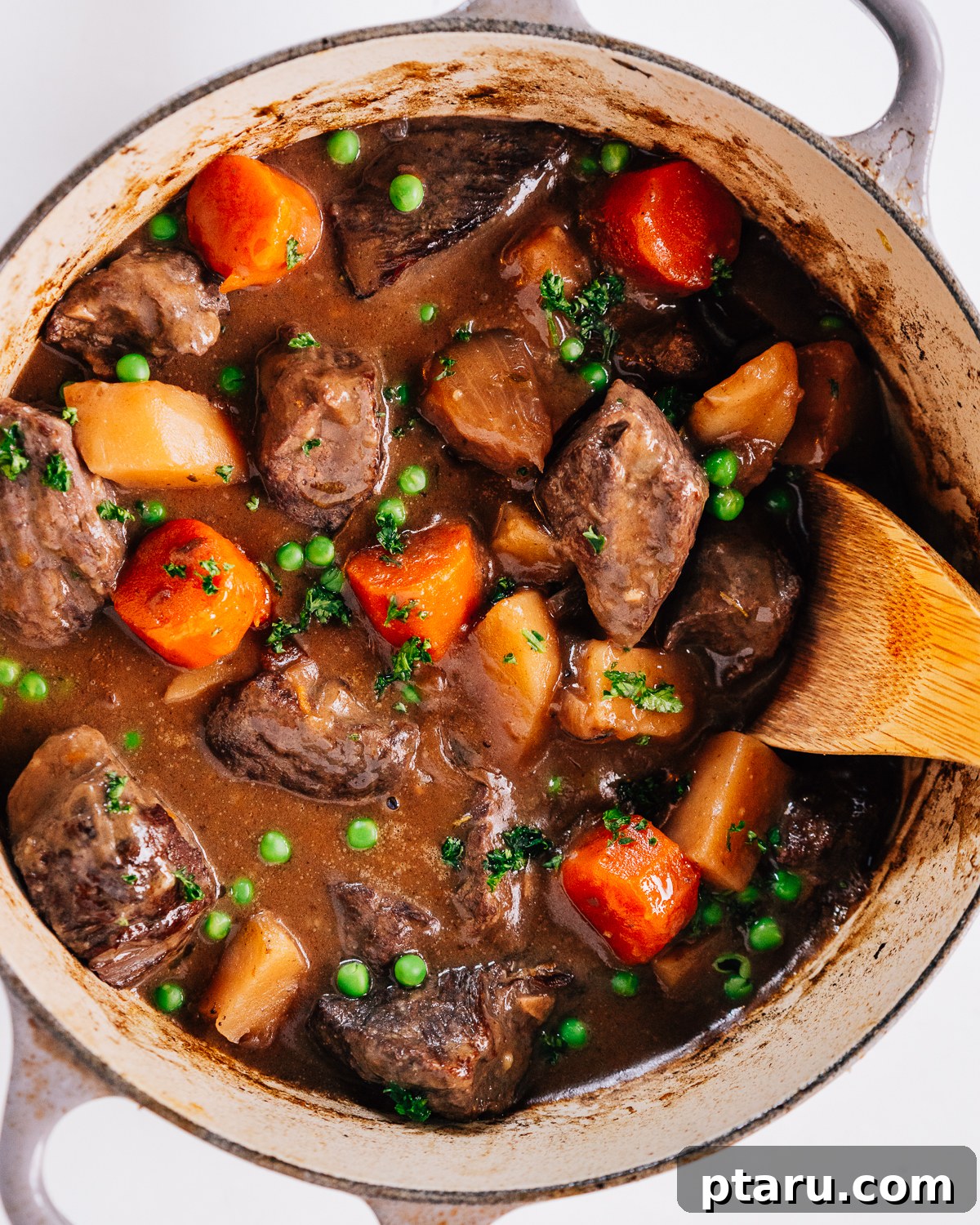
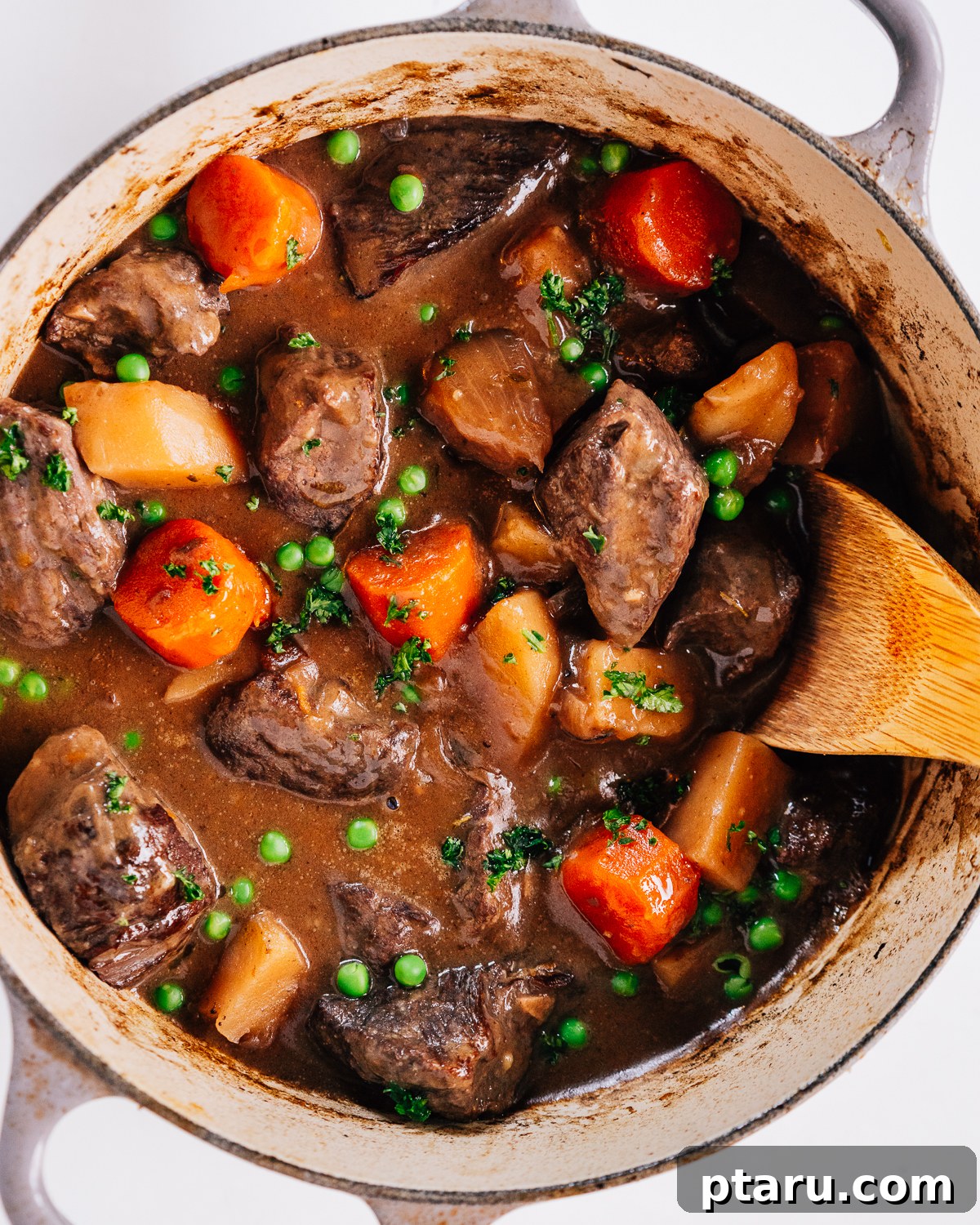
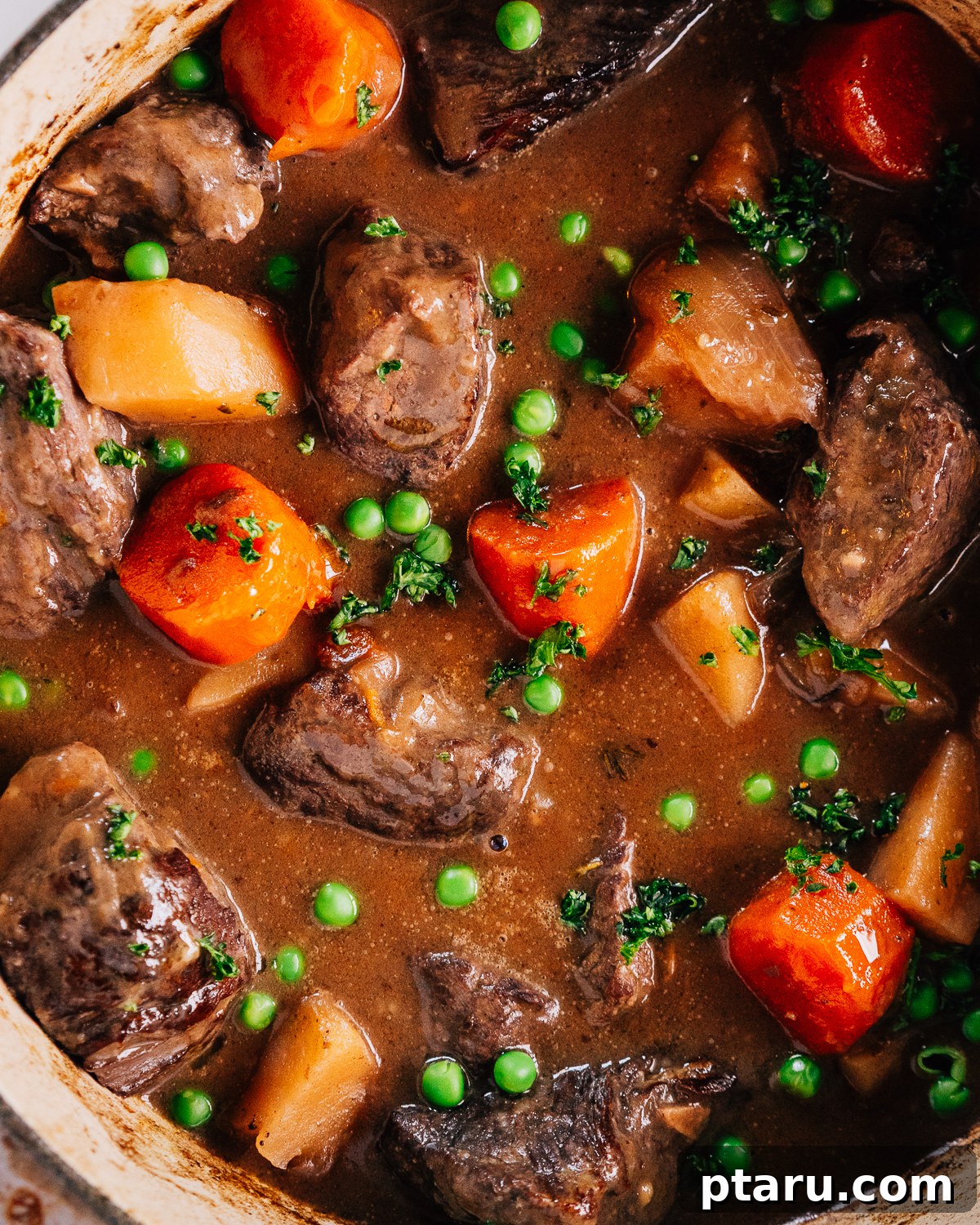
There’s nothing quite like a hearty bowl of **Dutch Oven Beef Stew** to warm the soul. This recipe delivers melt-in-your-mouth, buttery-soft beef complemented by an array of tender vegetables, all enveloped in a rich, deeply flavored gravy. It’s the quintessential comfort food, perfect for chilly evenings and guaranteed to bring smiles to your family’s table.
The Ultimate Dutch Oven Beef Stew Recipe
My family consistently raves about this beef stew. The secret lies in the long, gentle cooking process within a Dutch oven, which transforms tough cuts of beef into incredibly tender morsels, much like in my Dutch Oven Pot Roast. This method isn’t just about cooking; it’s about coaxing out layers of flavor and achieving that coveted melt-in-your-mouth texture that makes every bite truly satisfying. Plus, any leftovers are fantastic reimagined into a savory beef pot pie.
Why a Dutch Oven is Perfect for Beef Stew
A Dutch oven is an indispensable kitchen tool, especially for stews. Its heavy construction and even heat distribution ensure that your beef stew cooks uniformly, preventing hot spots and allowing the ingredients to simmer gently. The tight-fitting lid locks in moisture, creating a self-basting environment that keeps the meat succulent and the vegetables tender without drying out. This versatile pot allows you to brown your meat and sauté vegetables on the stovetop before transferring it to the oven for a slow, hands-off braise, building complex flavors all in one vessel.
Essential Ingredients for Your Dutch Oven Beef Stew
Crafting a truly exceptional beef stew starts with a selection of fresh, high-quality ingredients. Here’s a closer look at what you’ll need for this traditional, comforting dish:
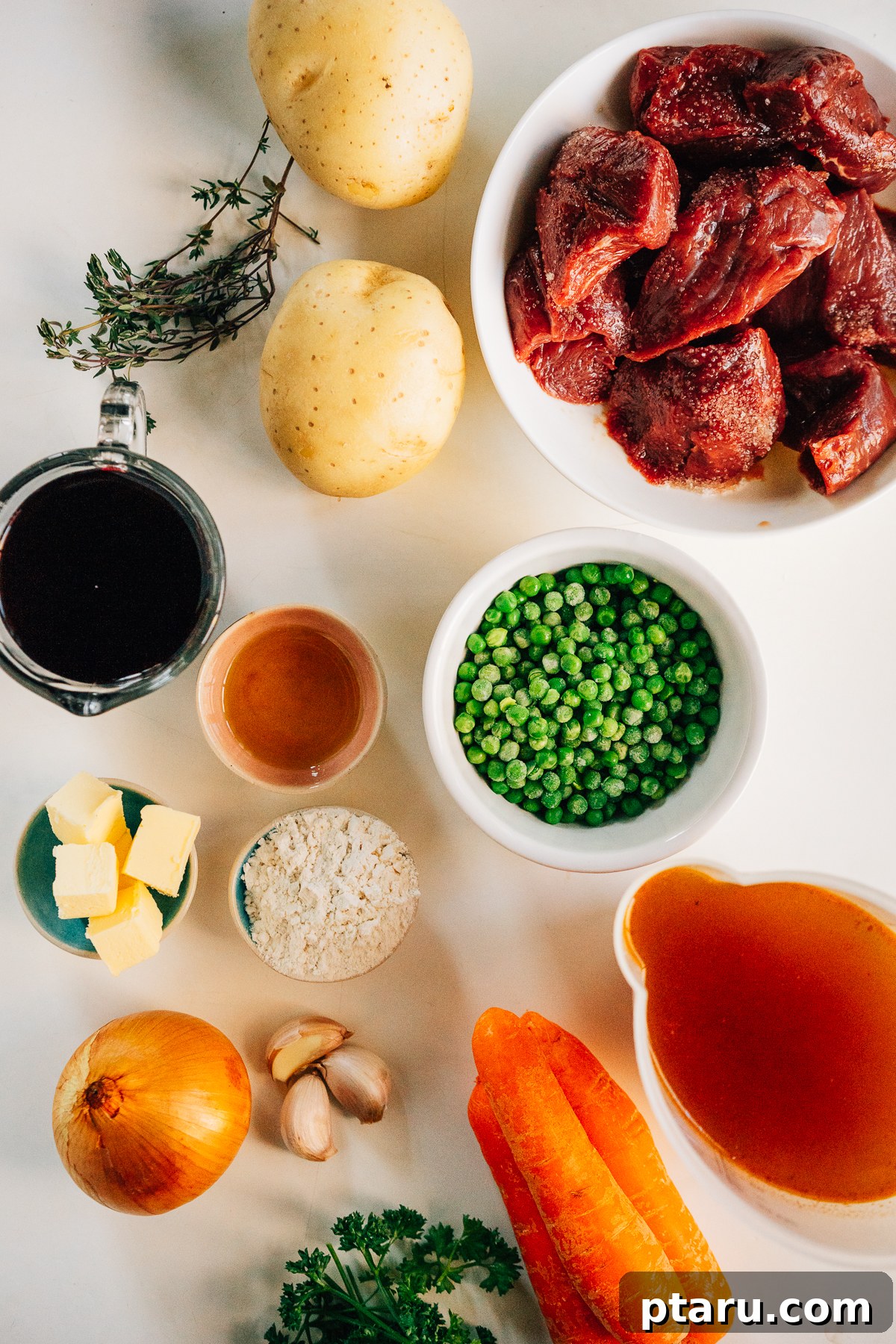
- Olive Oil: Used in two crucial stages: first, for perfectly browning the beef to develop a deep, rich crust, and then for sautéing your aromatic vegetables. Opt for a good quality extra virgin olive oil to impart the best foundational flavor.
- Beef Cubes: The star of the show. I typically use stewing beef, which is pre-cut for convenience. Alternatively, you can take a beef chuck roast and cut it into uniform 1 to 1 ½-inch chunks. Chuck is ideal for stewing as it contains collagen that breaks down into gelatin during long, slow cooking, resulting in incredibly tender and flavorful meat.
- Onion: Finely chopped, it provides a sweet and savory base for the stew, caramelizing beautifully as it cooks.
- Carrots: Whether you choose regular carrots, peeled and chopped, or opt for the ease of baby carrots, they add natural sweetness, color, and essential nutrients to the stew.
- Garlic: Minced fresh garlic is indispensable for its pungent aroma and savory depth, forming the aromatic heart of the stew.
- Red Wine: A dry red wine like Cabernet Sauvignon, Pinot Noir, or Merlot works wonderfully. It adds complexity and helps deglaze the pot, lifting all those flavorful browned bits from the bottom of the pan.
- Beef Stock or Broth: The primary liquid base for the stew. I highly recommend Better than Bouillon for its superior flavor compared to many boxed broths, plus it allows you to easily adjust the quantity needed.
- Potatoes: Waxy potatoes such as Yukon Golds are excellent as they hold their shape well, preventing the stew from becoming overly starchy. Russet potatoes, on the other hand, will contribute to a slightly thicker, more rustic consistency. Cut them into roughly ½-inch cubes. Small red potatoes can also be halved and left unpeeled for extra texture and convenience.
- Fresh Herbs: A generous amount of fresh thyme and parsley brightens the flavor profile. These herbs infuse the stew with an earthy, aromatic freshness that elevates the entire dish.
- Frozen Peas: Added at the very end, frozen peas provide a pop of vibrant color and a touch of sweetness. No need to thaw them beforehand.
- Butter and All-Purpose Flour: These two ingredients are combined to create a classic roux, which is crucial for thickening the stew into that desired luscious, velvety gravy consistency.
While fresh herbs are preferred for their vibrant flavor, dried herbs can also be used. Remember to use a smaller quantity when substituting dried for fresh, typically about one-third of the amount. Exact ingredient quantities are detailed in the full recipe card at the bottom of the article.
Customizing Your Stew: Substitutions and Variations
One of the beauties of Dutch Oven Beef Stew is its adaptability. Feel free to customize this recipe based on your preferences or what you have on hand:
- Wine Substitute: If you prefer to cook without alcohol, simply replace the red wine with an equal amount of extra beef broth or unsweetened grape juice. Both options will maintain the depth of flavor without the alcohol content.
- Vegetable Additions: Enhance the nutritional value and flavor by incorporating other root vegetables. Parsnips, turnips, celery, or mushrooms are fantastic choices for adding complexity and texture. For a touch of sweetness and a different nutritional profile, sweet potatoes can be used in place of regular potatoes.
- Protein Alternatives: While beef chuck is traditional, you can easily substitute other cuts or even different proteins. Brisket works wonderfully for its similar collagen content and slow-cooking potential. Lamb stew meat offers a distinct flavor profile that pairs beautifully with the herbs. Growing up, we often used leftover roast beef (such as my eye of round roast or air fryer roast beef) for a quick and flavorful stew.
- Gluten-Free Option: To make this stew gluten-free, substitute a gluten-free all-purpose flour blend for the regular flour when making the roux. Alternatively, a cornstarch slurry (cornstarch mixed with a small amount of cold water) can be whisked in at the end to thicken the stew.
- Herb Variations: Experiment with different fresh herbs to tailor the flavor. Rosemary or oregano can be used in place of, or in addition to, thyme for an equally aromatic result. Adding one or two bay leaves during the simmering process will also contribute a subtle, earthy depth.
- Pea Alternatives: If peas aren’t your favorite, feel free to swap them for green beans or simply omit them entirely. The stew will still be delicious and hearty.
If you’re looking for other hearty meal ideas, you’ll also love my Instant Pot Steak recipe and Chicken Stew with Biscuit Topping.
Essential Kitchen Tools for This Recipe
To prepare this Dutch Oven Beef Stew, gather these basic kitchen essentials:
- Large Dutch Oven with Lid: The star equipment for simmering your stew to perfection. A capacity of 5-7 quarts is ideal.
- Sharp Knife and Cutting Board: For safely and efficiently preparing your beef and vegetables.
- Wooden Spoon or Spatula: Essential for browning the beef, sautéing vegetables, and scraping up flavorful bits from the bottom of the pot.
- Whisk: Crucial for making a smooth, lump-free roux and incorporating it into the stew for a silky gravy.
- Ladle: For serving your delicious stew and for carefully scooping broth for the roux.
Step-by-Step Guide: How to Make Dutch Oven Beef Stew
Follow these straightforward steps to create a perfect, hearty beef stew in your Dutch oven:
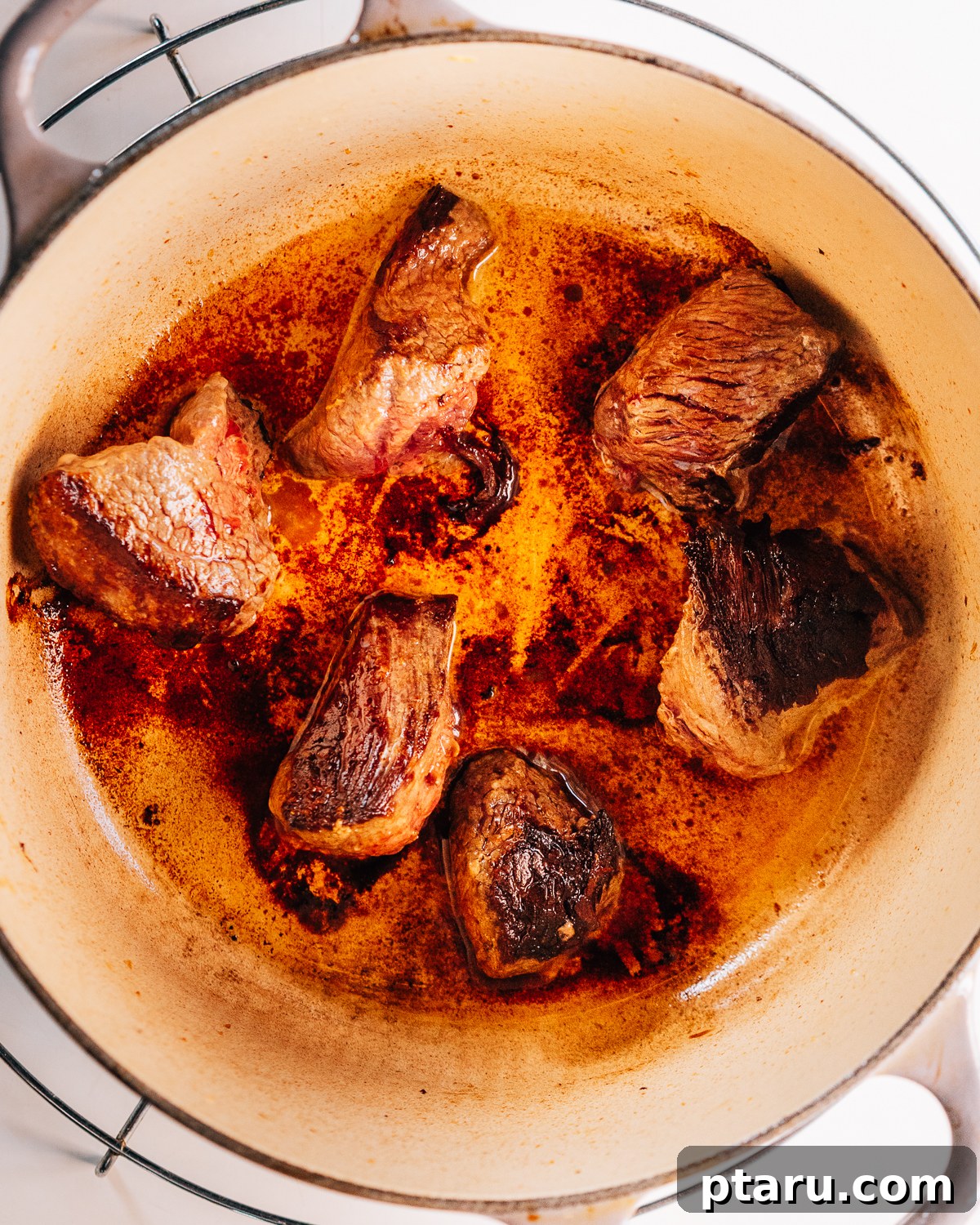
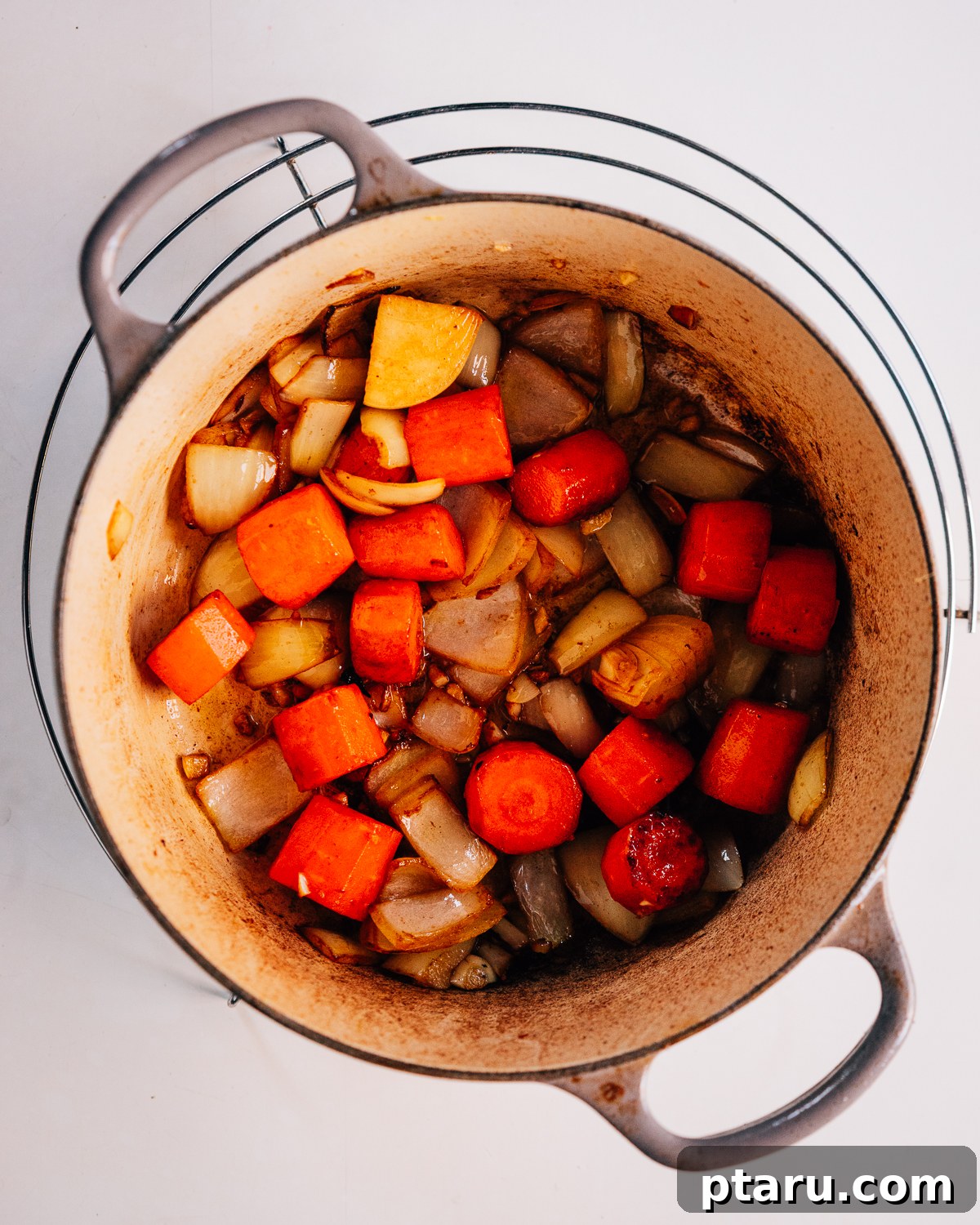
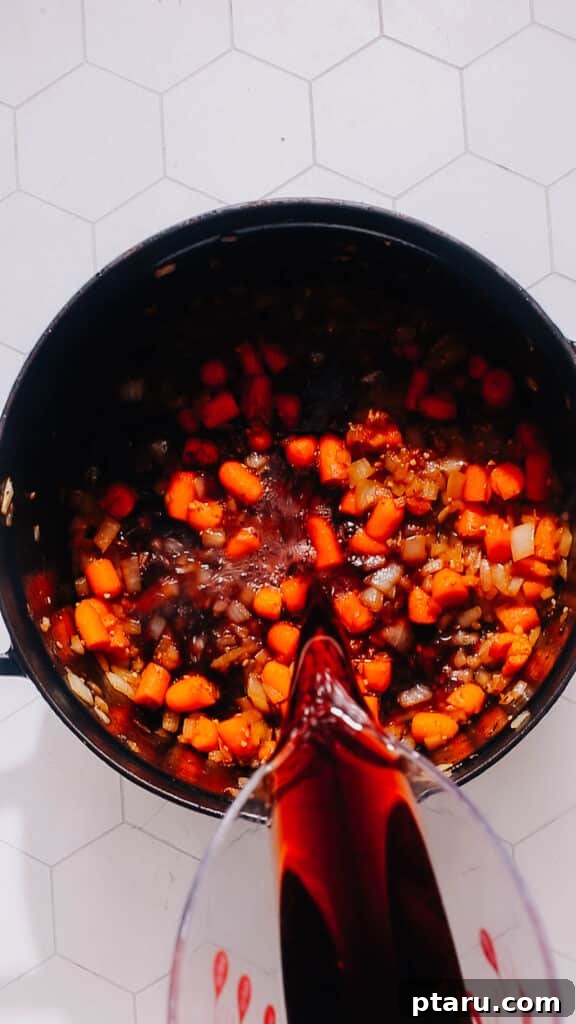
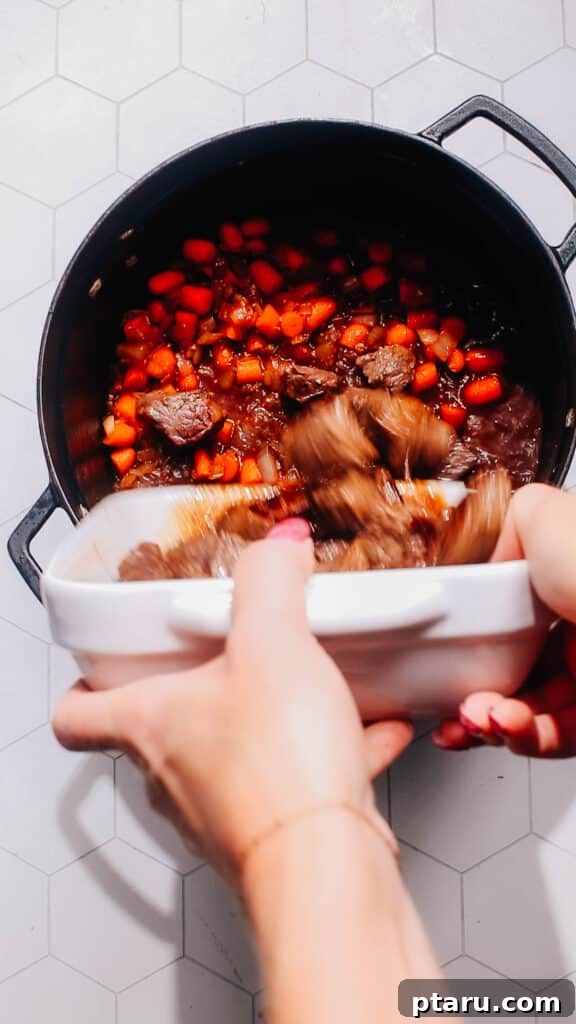
1. Brown the Beef to Perfection
Heat a tablespoon of olive oil in your Dutch oven over medium-high heat. Season your beef cubes generously with salt and pepper. Brown the beef in small batches, ensuring not to overcrowd the pot. Overcrowding will steam the meat instead of searing it, preventing that crucial golden-brown crust and deep flavor development. This Maillard reaction is key to a flavorful stew. Once beautifully browned on all sides, remove the beef from the pot and set it aside in a bowl.
2. Sauté the Aromatic Vegetables
Add the remaining olive oil to the same pot. Reduce the heat slightly to medium. Add the chopped onion and carrots, along with a pinch of salt. Sauté them for about 5-7 minutes, stirring occasionally, until they begin to soften and become slightly translucent. Stir in the minced garlic and cook for just one minute more until fragrant. Be careful not to burn the garlic, as it can turn bitter.
3. Deglaze, Simmer, and Tenderize
Pour in the red wine, increasing the heat slightly. Use a wooden spoon or spatula to vigorously scrape up all the delicious browned bits (fond) from the bottom of the pan. This deglazing step adds immense flavor to your stew. Return the browned beef and any accumulated juices to the pot. Pour in the beef broth and add the fresh thyme. Bring the mixture to a boil, then reduce the heat to low, cover the Dutch oven, and let it simmer gently for at least 1 hour. This extended cooking time allows the tough collagen in the beef to break down, resulting in fork-tender meat.
4. Introduce the Potatoes for Final Tenderness
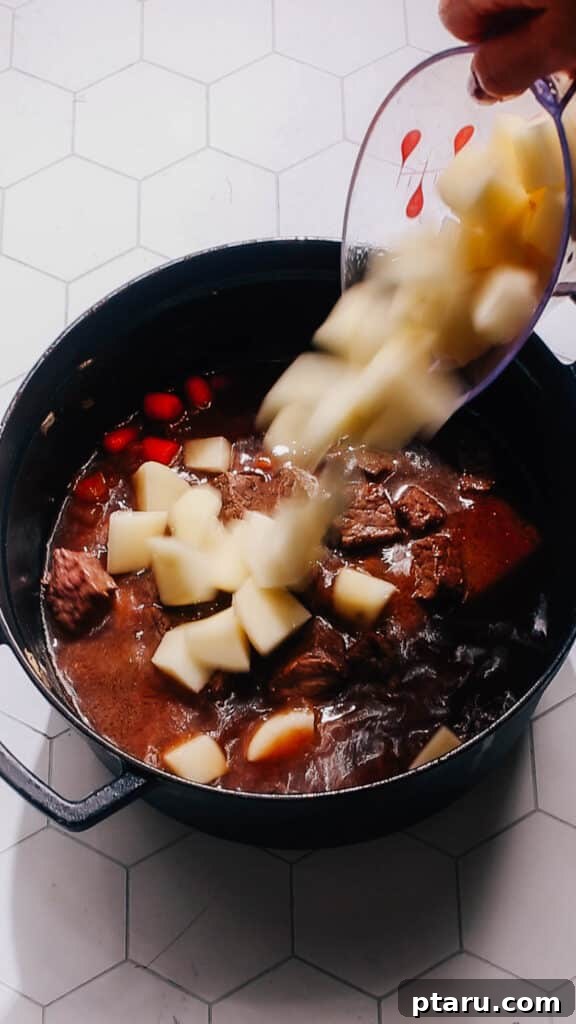
After the beef has had its initial simmer, stir in the cubed potatoes. Continue to simmer the stew, uncovered this time, for another 30–40 minutes, or until both the beef and potatoes are incredibly tender when pierced with a fork. Keep an eye on the liquid level, adding a splash more broth if the stew becomes too thick.
5. Create a Velvety Roux for the Gravy
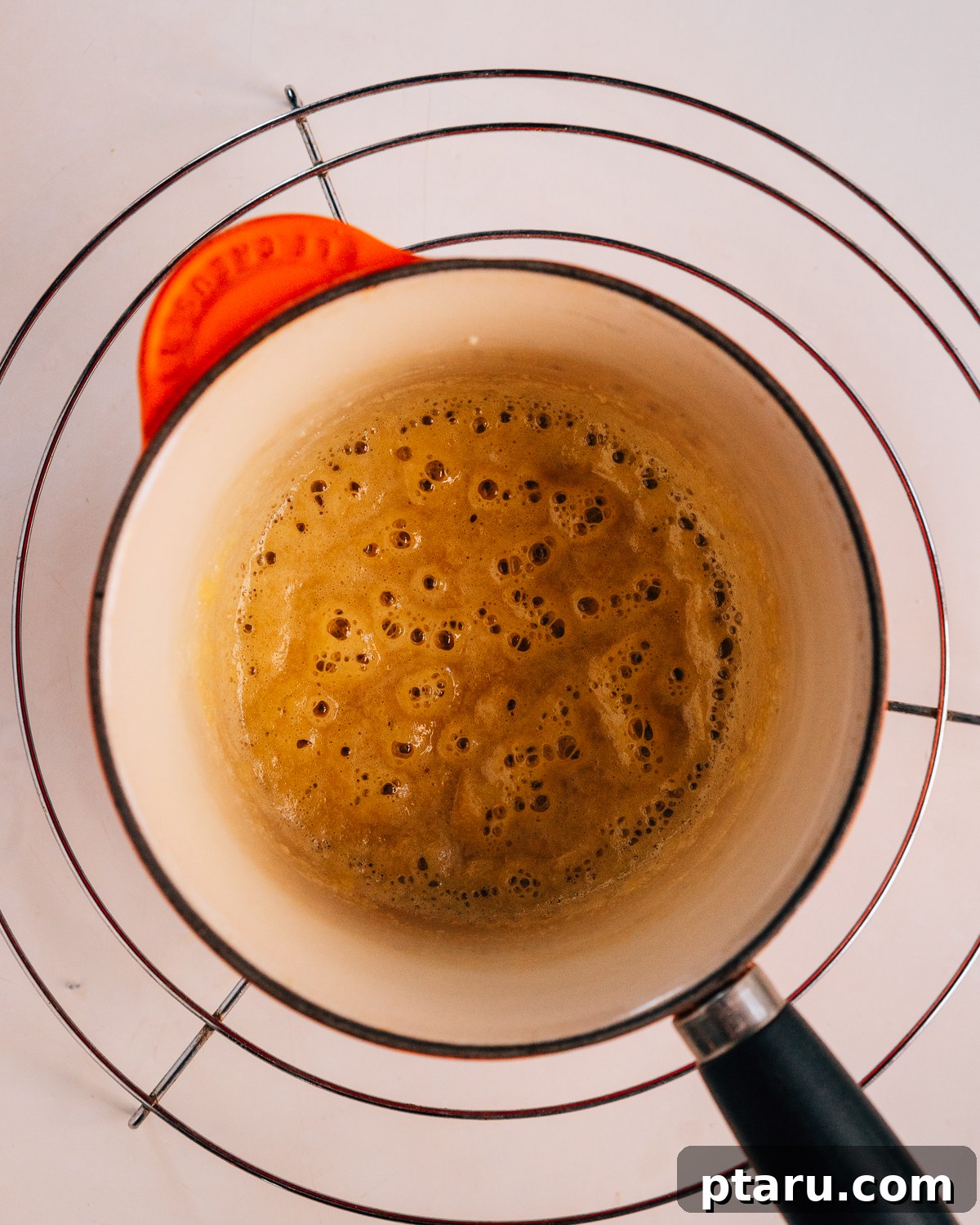
While the stew finishes simmering, prepare your roux. In a separate small saucepan, melt the butter over medium heat. Once melted, whisk in the flour and cook for 2-3 minutes, stirring constantly, until the mixture turns golden brown and smells nutty. This cooking step is important for eliminating the raw flour taste. Carefully ladle about 2 cups of the hot broth from your simmering stew into the roux, whisking continuously to prevent lumps. Simmer this mixture over medium heat until it is smooth and noticeably thickened, creating a rich gravy base.
6. Combine and Finish with Freshness
Pour the prepared gravy mixture back into the Dutch oven with the stew and stir well to combine, ensuring the gravy coats all the ingredients. Finally, add the frozen peas, minced fresh parsley, and the remaining ½ teaspoon of salt. Allow the stew to simmer for another 5 minutes to heat through the peas and marry all the flavors. Taste and adjust the seasoning as needed. Serve hot and enjoy!
Avoid These 5 Common Mistakes for a Perfect Beef Stew
As a food scientist, I’ve seen many culinary missteps. Here are the common pitfalls to avoid when making Dutch Oven Beef Stew, ensuring your dish is a triumph:
1. Not Browning the Meat Properly: This is arguably the most critical step for flavor development. Skipping or rushing the browning process means missing out on the rich, complex flavors created by the Maillard reaction. Aim for a deep, golden-brown crust on all sides of the beef. Don’t overcrowd the pot; sear the meat in small batches to allow proper caramelization rather than steaming.
2. Skipping the Deglazing Step: After browning the beef, flavorful browned bits (fond) will stick to the bottom of your Dutch oven. These are liquid gold! Deglazing with red wine or broth helps release these concentrated flavors, integrating them into the stew’s liquid base. Failing to deglaze leaves a significant amount of flavor behind in the pan.
3. Adding All Vegetables at Once: Different vegetables have different cooking times. Potatoes, for instance, need much less time to become tender than the beef. Adding them too early will result in mushy, disintegrating potatoes. Introduce firmer vegetables like carrots and onions early to build flavor, but add quick-cooking vegetables like potatoes and peas later in the simmering process to ensure they retain their texture and don’t overcook.
4. Trying to Rush the Cooking Process: Beef stew is the epitome of “low and slow.” The magic happens during extended, gentle simmering. The collagen in tough stew meat requires hours to slowly break down into gelatin, which is what gives the stew its luxurious, rich body and the beef its fall-apart tenderness. Rushing the cooking will result in tough, chewy meat and a less flavorful broth.
5. Cheating with the Gravy (Adding Raw Flour Directly): It might be tempting to stir flour directly into the stew to thicken it, but this often leads to lumps and a raw flour taste. Making a separate roux with butter and flour ensures the flour is cooked out, developing a nutty flavor, and creating a smooth, glossy gravy when whisked into the hot broth. This technique gives you precise control over the texture and results in a far superior, luscious consistency.
Make Ahead and Storage Tips
Dutch Oven Beef Stew is an ideal make-ahead meal, as the flavors deepen and meld beautifully overnight. Planning ahead can even enhance the taste experience.
Storing Leftovers
Allow the stew to cool completely before transferring it to an airtight container. Store it in the refrigerator for up to 4 days. Ensuring it’s fully cooled before sealing helps prevent condensation and maintains freshness.
Freezing for Later
For longer storage, freeze the stew in individual portions for up to 3 months. While it freezes well, be aware that potatoes may develop a slightly grainy or softer texture after thawing and reheating. This is a common occurrence with starchy vegetables.
Reheating Instructions
To reheat, gently warm the stew on the stovetop over medium-low heat, stirring occasionally. If the stew has thickened too much in the fridge, add a splash of extra beef broth or water to achieve your desired consistency. Alternatively, you can reheat it in the microwave in intervals, stirring between each to ensure even heating.
Perfect Pairings: How to Serve This Dutch Oven Beef Stew
This hearty Dutch Oven Beef Stew is a complete meal on its own, but it pairs wonderfully with a few simple accompaniments that help soak up all that delicious gravy:
- Crusty Bread: Serve your stew piping hot with warm, crusty bread like easy Dutch Oven bread or savory Homemade Garlic Bread. The bread is perfect for mopping up every last drop of the rich gravy.
- Creamy Mashed Potatoes: Embrace the “potatoes on potatoes” concept! A generous scoop of fluffy mashed potatoes provides a comforting contrast to the stew and a delightful way to enjoy the flavorful sauce.
- Buttermilk Biscuits: Light and airy buttermilk drop biscuits are an excellent choice for dipping into the stew and add another layer of homemade comfort.
- Green Salad: A simple, crisp green salad with a light vinaigrette can provide a refreshing counterpoint to the richness of the stew.
Frequently Asked Questions About Dutch Oven Beef Stew
Quickly browsing? Here are some common questions and answers you might be looking for:
Absolutely! You can easily replace the red wine with an equal amount of additional beef broth or unsweetened grape juice for a delicious non-alcoholic version.
Beef chuck is highly recommended. Its rich marbling and high collagen content make it ideal for long, slow cooking, resulting in incredibly tender and flavorful meat.
Yes, you can! First, brown the beef and sauté the vegetables on the stovetop as directed to build essential flavors. Then, transfer all ingredients to your slow cooker and cook on low for 6–8 hours, or on high for 3–4 hours, until the beef is tender. Prepare and add the roux at the very end to thicken the stew before serving.
Making a separate roux ensures a perfectly smooth, lump-free, and velvety gravy. It also allows the flour to cook properly, eliminating any raw flour taste and developing a deeper, nutty flavor that directly stirring flour into the stew cannot achieve.
Yes, absolutely! Beef stew is one of those dishes that often tastes even better the next day as the flavors have more time to meld and deepen. It stores well in the refrigerator for up to 4 days and is also freezer-friendly, though the texture of the potatoes might change slightly upon thawing, becoming a little grainy.
The key to tender beef stew meat is patience and a low, slow simmer. Tough cuts like chuck contain collagen that needs time (typically 1.5 to 2.5 hours) at a gentle simmer to break down into gelatin. Don’t rush this process; cover your Dutch oven and let it do its magic.
More Delicious Beef Recipes to Explore
If you enjoyed this hearty beef stew, be sure to check out these other fantastic beef recipes:
- Tender and Juicy Eye of Round Roast
- Classic Old Fashioned Vegetable Beef Soup
- Versatile Shredded Beef (Crockpot or Oven!)
- Easy and Succulent Instant Pot Pot Roast
- Air Fryer Roast Beef (Extra Juicy!)
- Flavorful Beef Teriyaki
Print Recipe
Dutch Oven Beef Stew (Easy, Melt-in-the-Mouth Recipe!)
Ingredients
- 3 tbsp olive oil, divided
- 1 ½ lbs beef stew meat, cut into bite-size pieces
- 2 ½ tsp kosher salt, divided
- ½ tsp black pepper
- 1 large onion, finely chopped
- 1 ½ cups chopped carrots (from about 3 carrots or 18 baby carrots)
- 2 tsp minced garlic
- 1 cup red wine (or use more broth for non-alcoholic)
- 3 cups beef broth, plus more as needed
- 2 ½ cups cubed potatoes (about 2 medium potatoes)
- 1 tbsp minced fresh thyme (or 1 tsp dried)
- 1 cup frozen peas
- 1 tbsp minced fresh parsley (or 1 tsp dried)
- 3 tbsp butter
- 3 tbsp all-purpose flour
Instructions
-
Brown the Beef
Heat 1 tbsp olive oil in a large Dutch oven over medium-high heat. Season the beef with 1 tsp salt and the pepper. Sear in batches until browned on all sides, adding more oil as needed. Transfer to a bowl and set aside.
-
Sauté the Vegetables
Add remaining oil to the pot. Cook onion, carrots, and 1 tsp salt over medium heat until softened, about 7 minutes. Stir in the garlic and cook 1 minute more until fragrant.
-
Deglaze and Simmer
Pour in the red wine and scrape up the browned bits from the bottom of the pot. Return the beef and any juices to the pot. Add the broth and thyme. Bring to a boil, then reduce heat to low, cover, and simmer for 1 hour.
-
Add Potatoes
Stir in the potatoes. Simmer uncovered for another 30–40 minutes, until the beef and potatoes are very tender.
-
Make the Gravy Base
In a separate saucepan, melt the butter over medium heat. Whisk in the flour and cook for 2–3 minutes, until golden and nutty-smelling. Ladle about 2 cups of broth from the stew (avoid scooping solids), and slowly whisk it into the roux. Simmer until smooth and thickened.
-
Combine and Finish
Pour the gravy mixture back into the Dutch oven and stir to combine. Add the peas, parsley, and remaining ½ tsp salt. Simmer for 5 more minutes, then taste and adjust seasoning if needed. Serve hot.
Notes
For best flavor, brown the beef in batches without overcrowding the pot.
If you don’t have red wine, extra beef broth works well as a substitute.
Leftovers taste even better the next day. Store covered in the fridge for up to 4 days.
Stew can be frozen but the potatoes may lose their texture a little bit.
Nutrition
Calories: 307kcal | Carbohydrates: 20g | Protein: 23g | Fat: 14g | Saturated Fat: 5g | Polyunsaturated Fat: 1g | Monounsaturated Fat: 7g | Trans Fat: 0.2g | Cholesterol: 64mg | Sodium: 1173mg | Potassium: 783mg | Fiber: 4g | Sugar: 3g | Vitamin A: 4384IU | Vitamin C: 24mg | Calcium: 53mg | Iron: 3mg
Nutrition information is automatically calculated, so should only be used as an approximation.
Your feedback helps others make delicious meals.