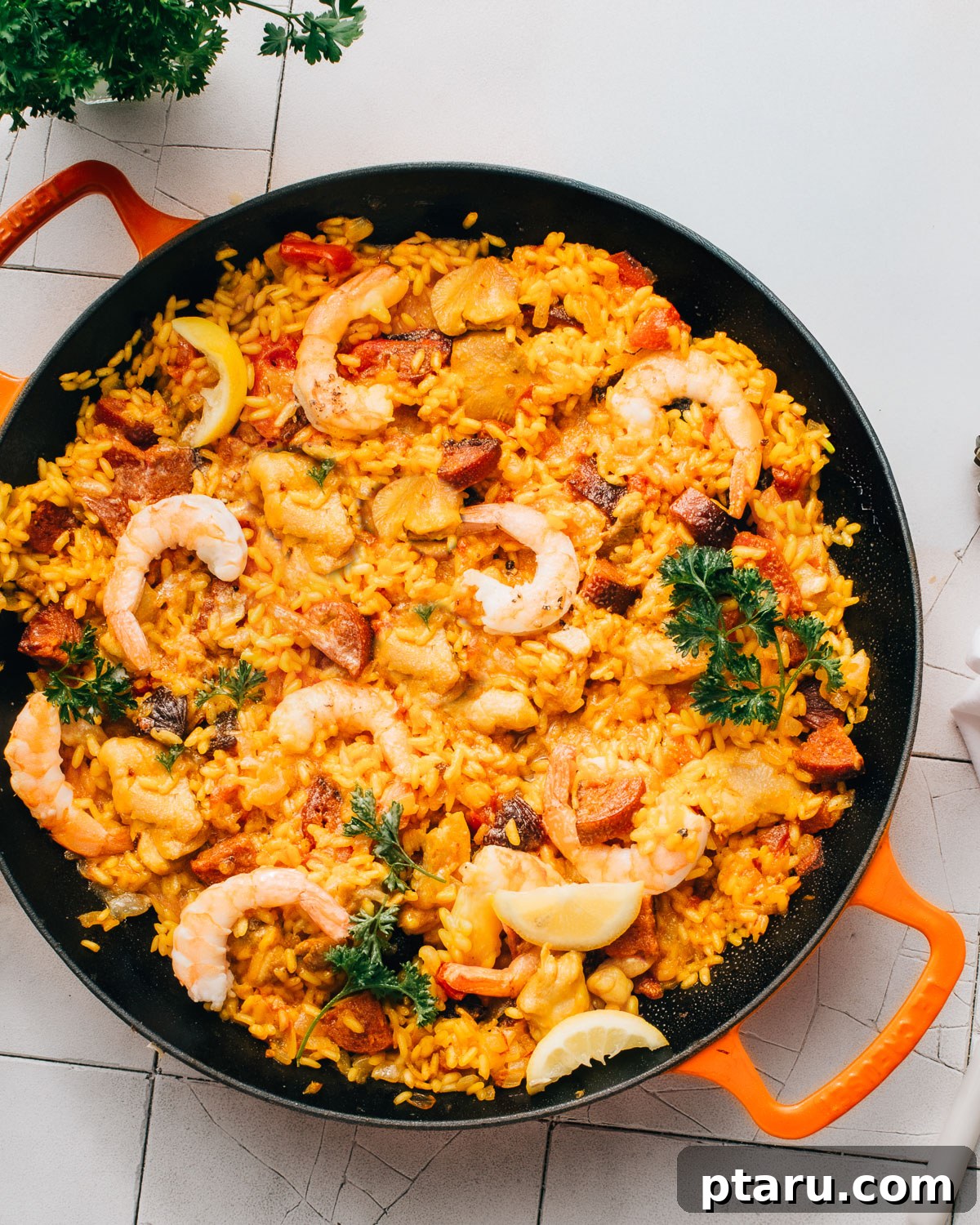
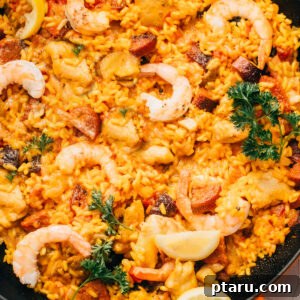
Embark on a culinary journey to the vibrant heart of Spain with this spectacular Chorizo Paella recipe, brimming with succulent shrimp, tender chicken, and authentic Spanish flavors. This stunning one-pan dish is not only a feast for the senses but also surprisingly easy to prepare, making it a perfect choice for both weeknight dinners and special gatherings. Infused with the delicate aroma of saffron, the smoky warmth of paprika, and a bright finish of lemon, every spoonful promises an unforgettable taste of traditional Spanish cuisine.
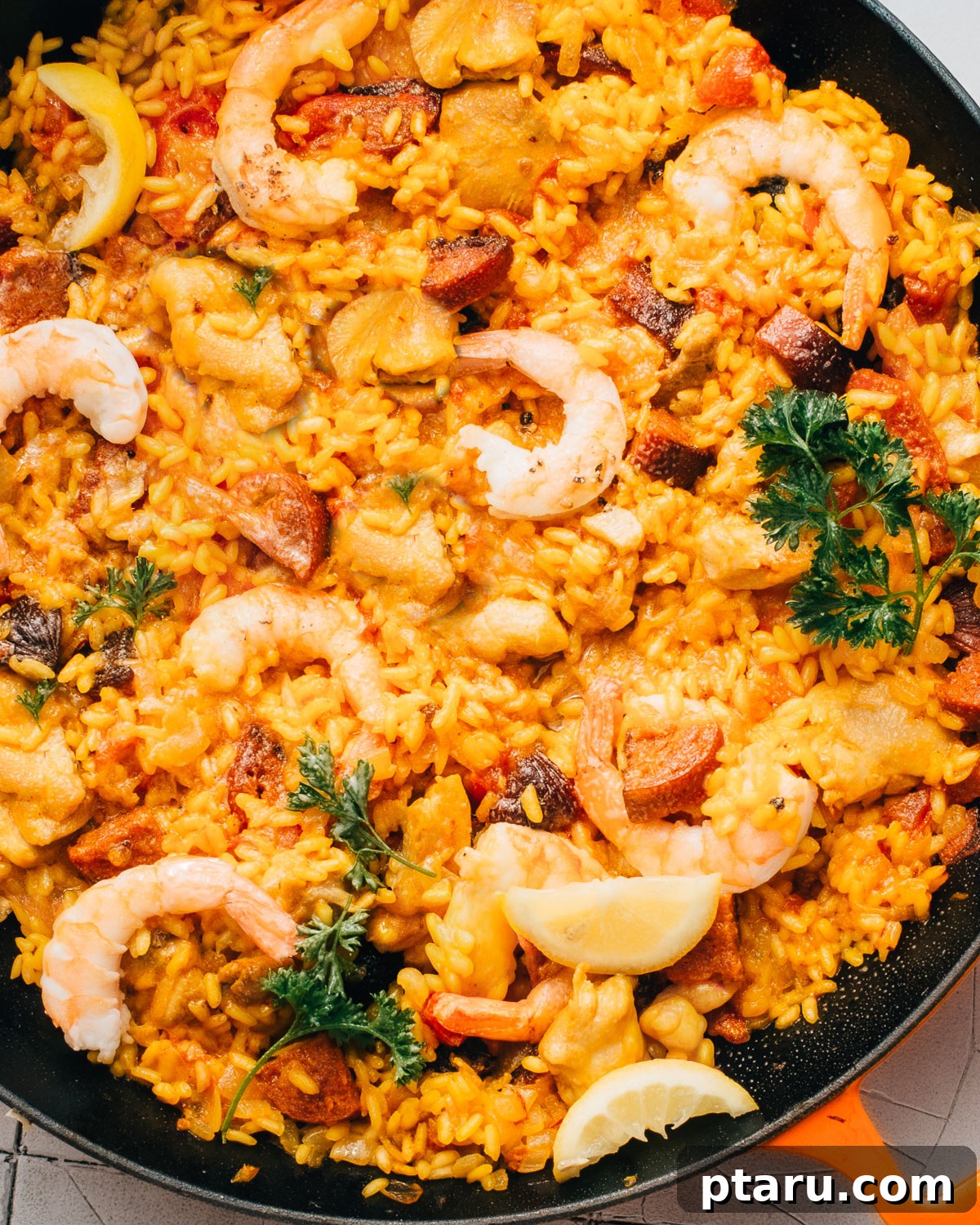
The allure of paella lies in its ability to bring together diverse ingredients into a harmonious and deeply flavorful single dish. While often perceived as complex, this recipe simplifies the process without compromising on authenticity or taste. You’ll be amazed at how easily you can achieve a truly remarkable Spanish feast right in your own kitchen, all without needing to turn on the oven. It’s the ultimate one-pan chicken and rice recipe, elevated with the addition of premium chorizo and juicy shrimp.
Why This Paella Shines: Unpacking the Flavor and Ease
This Chorizo Paella isn’t just another rice dish; it’s a celebration of bold flavors and efficient cooking. Here’s why this particular recipe stands out:
- One-Pan Simplicity: The beauty of paella lies in its ability to cook and serve everything in a single pan. This minimizes cleanup and maximizes flavor integration, allowing all the ingredients to meld beautifully.
- Authentic Spanish Profile: From the smoky notes of cured chorizo to the fragrant whispers of saffron and smoked paprika, every ingredient is carefully selected to evoke the traditional tastes of Spain.
- Rich Protein Medley: The combination of tender chicken, savory cured chorizo, and juicy shrimp offers a delightful textural contrast and a depth of flavor that appeals to all palates.
- Weeknight Friendly: Despite its impressive appearance, this recipe is designed to be weeknight-fast, proving that gourmet flavors don’t require hours in the kitchen.
- The Allure of Socarrat: Learn the secret to achieving the coveted “socarrat” – the crispy, caramelized layer of rice at the bottom of the pan – a hallmark of truly exceptional paella.
Key Ingredients: Crafting the Perfect Flavor Base
Every ingredient in this paella plays a crucial role in building its complex flavor profile. Understanding their purpose will help you master this dish.
- Olive Oil: Use a high-quality olive oil, but not extra-virgin, which has a lower smoke point and can burn at the high temperatures needed for searing. A good quality regular olive oil provides a hot, even sear for the proteins and a rich base for the sofrito.
- Large Peeled Shrimp: These become the glistening “jewels” of your seafood paella. Using large, already peeled and deveined shrimp saves time and ensures a tender, succulent bite that cooks quickly and adds a fresh, oceanic sweetness to the dish.
- Cured Spanish Chorizo: This is a non-negotiable ingredient for an authentic chorizo paella. Unlike fresh chorizo sausages, cured Spanish chorizo (the hard, dry-cured variety) renders a wonderfully flavorful oil as it cooks, which then infuses the entire dish. Its spicy, smoky notes are central to the paella’s character.
- Boneless Skinless Chicken Thighs: Chicken thighs are ideal for one-pot dishes due to their higher fat content, which helps them stay incredibly tender and juicy even after simmering for an extended period. They absorb the rich flavors of the chorizo and spices beautifully. Chicken breast can also be used, but it’s prone to drying out if overcooked.
- Yellow Onion & Fresh Garlic: These classic aromatics form the foundational “sofrito” – a slowly cooked base that develops deep flavor. Minced onion and garlic provide a sweet, pungent core that is essential for any great paella. For an extra layer of sweetness and color, consider sautéing in 1-2 small red bell peppers alongside the onion.
- Smoked Paprika (Pimentón Ahumado): This is the soul of Spanish paella, imparting that unmistakable smoky aroma and a beautiful reddish hue. Insist on genuine Spanish smoked paprika for the best results; it’s vastly different from regular paprika.
- Diced Tomatoes: Roma tomatoes are often preferred for their firm, meaty flesh and lower seed content, which contributes a rich, concentrated tomato flavor without making the paella watery. They add a crucial acidic balance to the dish.
- Saffron Threads: The signature note of authentic paella. Saffron is responsible for the dish’s golden color and its delicate, ethereal floral aroma. While optional if budget is a concern, it truly elevates the paella to another level. Always bloom saffron in a little warm water or broth before adding to maximize its flavor and color.
- Chicken Broth + Dry White Wine: This liquid combination provides a balanced richness and acidity. Unsalted chicken broth forms the bulk of the liquid, while a splash of dry white wine (like a Sauvignon Blanc or Pinot Grigio) adds a layer of sophisticated flavor. If you prefer to avoid alcohol, simply use additional chicken broth and a squeeze of fresh lemon juice at the end to mimic the acidity.
- Bomba Rice (Spanish Rice) or Arborio Rice: The choice of rice is critical. Bomba rice, a short-grain Spanish variety, is considered the most authentic for paella because of its ability to absorb a large amount of liquid without becoming mushy, while still remaining al dente. Arborio rice, a more readily available short-grain rice, is an excellent substitute and works beautifully to achieve a similar texture. Avoid long-grain rice, as it won’t give you the desired creamy yet firm consistency.
- Parsley & Lemon Slices: These fresh garnishes are not just for aesthetics. Minced fresh parsley adds a burst of vibrant color and herbaceous freshness, while lemon wedges served at the table allow each diner to add a squeeze of bright acidity, cutting through the richness and enhancing all the flavors. You could also stir in 1 cup of frozen green peas at the very end, just to heat through, for an extra pop of color and sweetness.
Essential Equipment Tip: While a dedicated paella pan is designed to maximize surface area for even cooking and the formation of crispy bits (the coveted socarrat), don’t fret if you don’t own one. A large cast-iron skillet, a wide nonstick pan, or any broad, shallow oven-safe pan will also work effectively to create this delicious dish.
Step-by-Step Guide to Crafting Your Perfect Paella
Creating this flavorful paella is a straightforward process when you follow these steps. The key is to build layers of flavor and resist the urge to stir the rice too much, allowing the “socarrat” to form.
- Prepare the Shrimp: Begin by heating 2 tablespoons of olive oil in your paella pan or large skillet over medium-high heat. Pat your peeled and deveined shrimp dry with paper towels to ensure a good sear. Sprinkle them with 1/4 teaspoon of kosher salt. Cook the shrimp in a single layer for about 1-2 minutes per side until they turn opaque and develop a beautiful golden hue. Be careful not to overcrowd the pan; cook in batches if necessary. Once cooked, transfer the shrimp to a plate and set aside; they will be added back at the end.
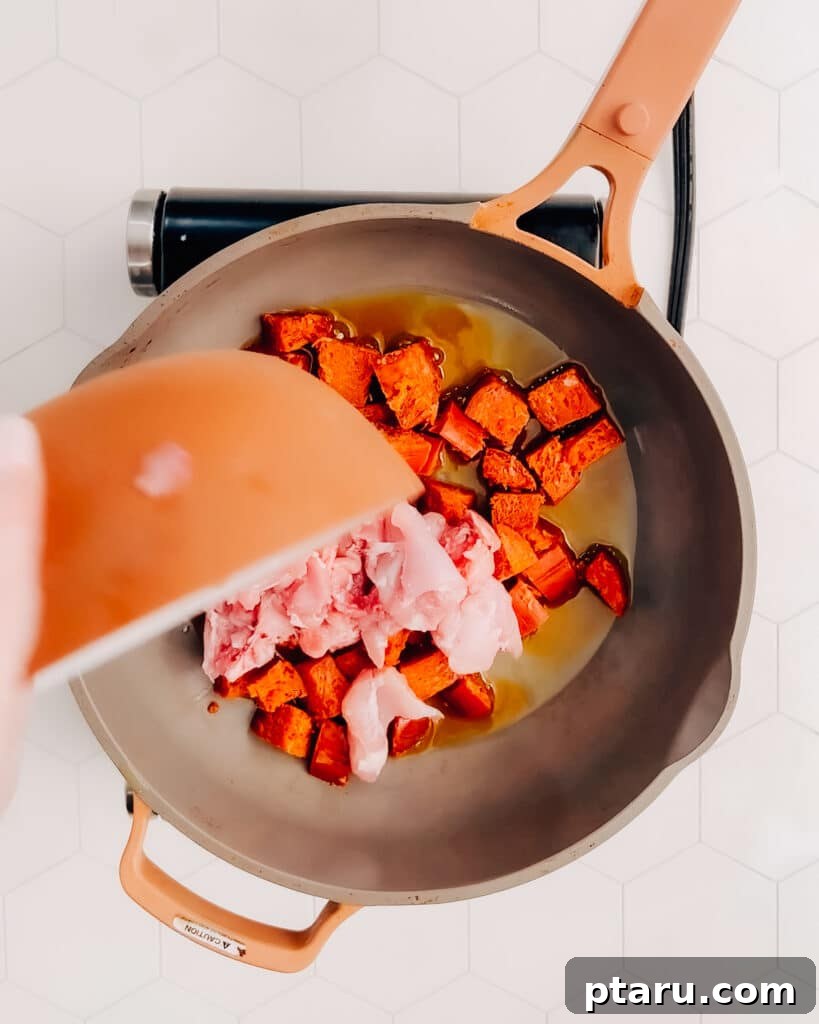
- Brown Chorizo and Chicken: Add the remaining 2 tablespoons of olive oil to the same pan, if needed. Introduce the bite-sized pieces of cured chorizo and chicken thighs. Season the chicken with 1/2 teaspoon of kosher salt. Cook over medium-high heat, stirring occasionally, until the chicken is nicely browned on all sides and the chorizo has rendered its flavorful, vibrant red oil. This step is crucial for establishing the deep, smoky base of the paella.
- Sauté Aromatics: Push the chicken and chorizo to one side of the pan. Add the minced yellow onion to the cleared space, along with a pinch more salt. Cook, stirring occasionally, until the onion softens and becomes translucent, about 5-7 minutes. Then, stir in the minced garlic and smoked paprika. Cook for another 2 minutes, stirring constantly, allowing the spices to toast and release their incredible aroma.
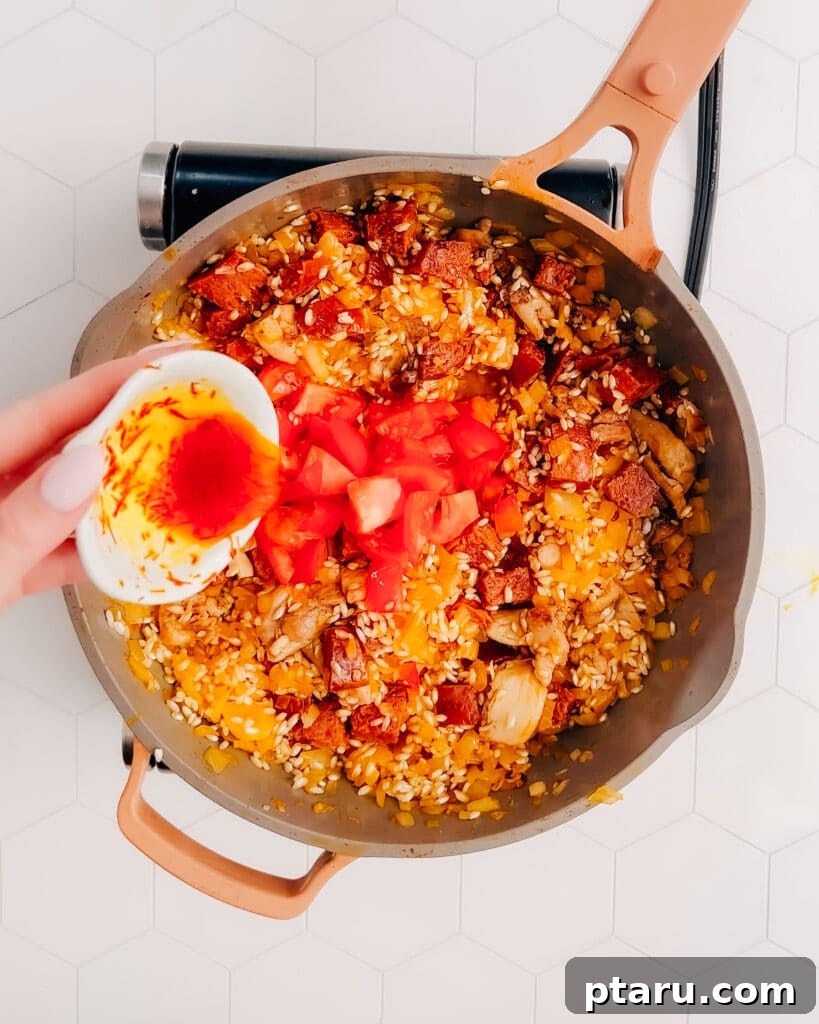
- Build the Liquid Base: Incorporate the diced Roma tomato, saffron (which you should have steeped in 2 tablespoons of warm water), unsalted chicken broth, dry white wine (or extra broth), and 3/4 teaspoon more salt, plus the pepper. Stir everything together gently, scraping up any delicious browned bits from the bottom of the pan. Bring this flavorful liquid to a gentle boil.
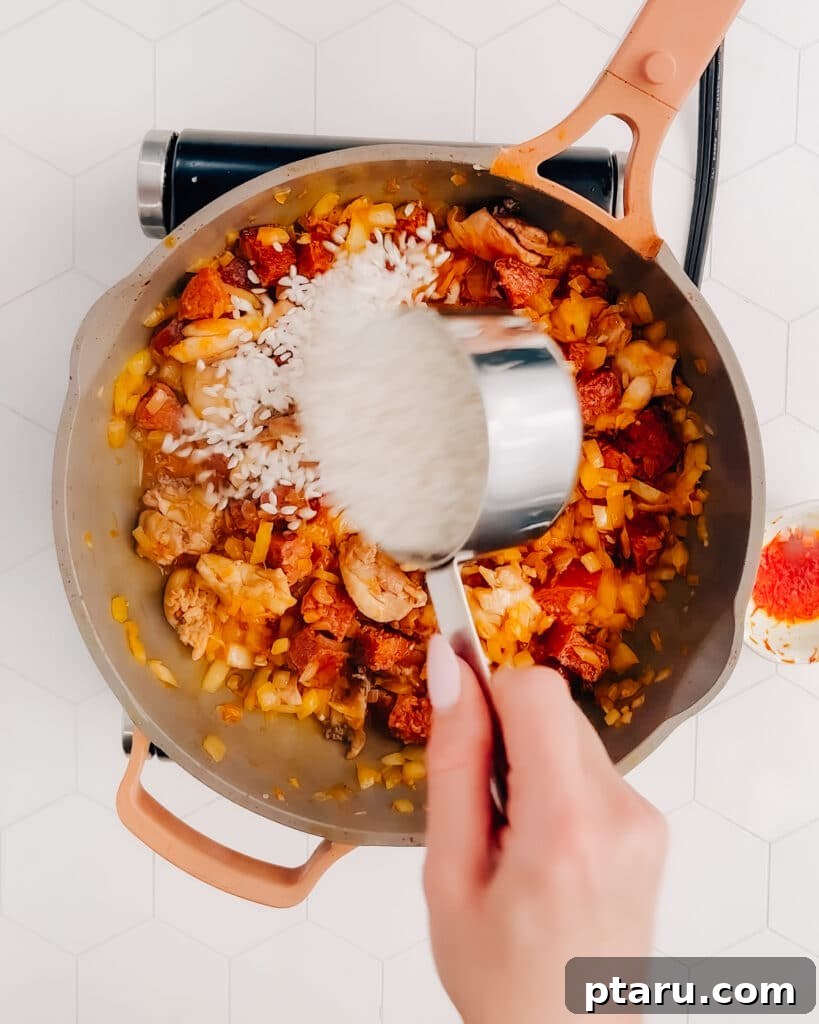
- Add the Rice and Simmer: Once the liquid is boiling, evenly scatter the arborio (or bomba) rice over the surface. Give it one gentle stir to distribute the rice, ensuring it’s submerged in the liquid. This is the crucial moment: do not stir the rice again after this point! Reducing agitation allows the starches to release naturally and encourages the formation of the desired “socarrat.” Reduce the heat to low, cover the pan if it has a lid (or use foil), and simmer undisturbed for approximately 15-20 minutes, or until most of the liquid has been absorbed and the rice is tender but still has a slight bite (al dente). You might hear a gentle crackling sound at the end, indicating the socarrat is forming.
- Final Assembly and Rest: Once the rice is cooked and the liquid mostly absorbed, arrange the pre-cooked shrimp evenly over the top of the paella. Remove the pan from the heat, cover it again, and let it rest for 5-10 minutes. This resting period allows the flavors to meld further and the rice to absorb any remaining liquid, resulting in a more cohesive dish.
- Garnish and Serve: Uncover the paella, sprinkle generously with fresh minced parsley, and serve immediately. Offer a small bowl of fresh lemon wedges on the side, allowing diners to add a bright, acidic zest to their portion.
Achieving the Perfect Socarrat: The Crispy Bottom Layer
The “socarrat” is arguably the most prized element of a truly great paella – that irresistible, crispy, caramelized crust of rice that forms at the bottom of the pan. It’s a testament to good technique and patience. Here’s how to achieve it:
- Even Heat Distribution: Use a wide, heavy-bottomed pan (like a paella pan or cast-iron skillet) that conducts and distributes heat evenly. This prevents hot spots and ensures a consistent crust.
- Resist Stirring: Once the rice is added and briefly stirred into the liquid, stop stirring! Stirring releases starch and prevents the rice grains from adhering to the bottom of the pan and crisping up.
- Listen for the Crackle: Towards the end of the cooking time (usually the last 5-10 minutes of simmering), pay close attention. You should start to hear a gentle sizzling or crackling sound coming from the bottom of the pan. This is the rice drying out and caramelizing.
- Control the Heat: Maintain a consistent, medium-low heat during the simmering phase. If you suspect the heat isn’t quite strong enough at the very end to form the socarrat, you can briefly increase it to medium for the final few minutes, but be very careful not to burn it.
- Don’t Peek Too Often: While tempting, frequent peeking by lifting the lid releases steam, which is essential for cooking the rice evenly.
- The Reveal: After the paella has rested, gently scrape the bottom of the pan with a spoon. You should feel and hear a distinct, crispy layer. If it’s sticking too much or burning, your heat was too high. If there’s no crispiness, it might have been too low or not long enough. Practice makes perfect!
Serving Suggestions: What to Pair with Your Paella
A well-made paella is often a complete meal in itself, but complementing it with a few simple side dishes can elevate the dining experience and create a truly Spanish spread.
- Simple Green Salad: A light, crisp green salad with a zesty vinaigrette (like a homemade Italian dressing) provides a refreshing contrast to the richness of the paella.
- Garlic Bread: Crusty homemade garlic bread is perfect for soaking up any extra juices and flavors from the pan.
- Pan-Cooked Asparagus: Simply sautéed asparagus with garlic offers a fresh, vibrant vegetable side that pairs beautifully with the savory proteins.
- Steamed Mussels or Clams: For an even more impressive seafood feast, especially when hosting, consider serving a generous bowl of steamed mussels or clams as a delightful appetizer or an additional protein.
- Wine Pairings: A dry, crisp white wine such as Albariño (a classic Spanish choice), Sauvignon Blanc, or a light-bodied Rosé will complement the seafood and chicken wonderfully. For red wine lovers, a lighter-bodied Tempranillo or Garnacha can also work well.
Make-Ahead, Storage, and Creative Variations
This paella is best enjoyed fresh, but leftovers are still delicious, and the recipe offers wonderful versatility for different tastes and dietary needs.
Storage Instructions:
- Fridge: Allow any leftover paella to cool completely before transferring it to an airtight container. It can be stored in the refrigerator for up to 3 days.
- Freeze: For longer storage, paella can be frozen for up to 2–3 months. Thaw frozen paella gently in the refrigerator overnight.
- Rewarming: Reheat paella slowly over low heat on the stovetop or in the microwave. If it seems a little dry, add a splash of chicken broth or water to help rehydrate the rice.
Exciting Variations:
- Vegetarian Paella: Easily transform this into a delightful vegetarian dish by omitting the meat and seafood. Replace them with a colorful array of vegetables such as artichoke hearts, green beans, roasted red bell peppers, asparagus, zucchini, or mushrooms. Be sure to use vegetable broth instead of chicken broth, and perhaps a touch more smoked paprika for depth.
- Seafood-Only Paella (Paella de Mariscos): For seafood lovers, skip the chicken and chorizo. Load up your paella with an assortment of your favorite oceanic delights like mussels, clams, squid rings, firm white fish (such as cod or snapper), and extra shrimp.
- Mixed Paella (Paella Mixta): This recipe already leans towards a mixed paella, but you can customize the protein blend further. Add pork tenderloin, rabbit, or even duck for a richer, more traditional mixed paella.
- Squid Ink Paella (Arròs Negre): For an adventurous twist, incorporate a sachet of squid ink into the broth. This will give your paella a dramatic black color and a unique, intensely savory, briny flavor that is highly prized in some Spanish regions.
- Shortcut with Pre-Cooked Shrimp: If you’re really short on time, use thawed pre-cooked shrimp. Simply stir them into the paella during the last few minutes of simmering, just long enough to heat them through, instead of searing them at the beginning.
- No Saffron? No Problem: Saffron, while iconic, can be pricey. If it’s outside your budget, feel free to omit it. Your paella will still be incredibly delicious, relying on the robust flavors of the chorizo and smoked paprika.
Frequently Asked Questions About Paella
What is the secret ingredient in paella?
The true “secret” to paella’s distinctive flavor and golden color is saffron. These precious threads impart a delicate floral aroma and a beautiful yellow hue that is characteristic of authentic Spanish paella. While optional, especially if budget is a concern, saffron truly elevates the dish. Even without it, your paella will still be incredibly flavorful thanks to the other robust ingredients like smoked paprika and chorizo.
What is the best rice for paella?
For the most authentic paella, Spanish Bomba rice is considered the best. It’s a short-grain rice known for its ability to absorb a lot of liquid without becoming sticky or mushy, while maintaining its shape. An excellent and more accessible substitute is Arborio rice, another short-grain variety commonly used for risotto, which performs similarly well in paella. Avoid using long-grain rice as it won’t achieve the desired texture.
Does paella have to have meat?
Absolutely not! While many classic paellas feature meat (like chicken, rabbit, or chorizo) or seafood, paella is highly versatile. You can easily make a delicious seafood-only paella (Paella de Mariscos) with mussels, clams, shrimp, and fish, or a vibrant vegetarian paella by using a medley of vegetables like bell peppers, artichokes, and green beans, along with vegetable broth.
What is the best paella pan?
A traditional paella pan is wide and shallow, with sloping sides, designed to maximize the surface area for the rice to cook evenly and for the coveted “socarrat” (crispy bottom crust) to form. These pans are typically made of carbon steel. However, you don’t need a specific paella pan to make a fantastic dish. A large, heavy-bottomed cast-iron skillet or any wide, shallow nonstick pan will also work wonderfully, providing ample space for your ingredients and aiding in even heat distribution.
What chorizo should you use for paella?
For paella, it is crucial to use cured Spanish chorizo, not fresh or raw chorizo sausages. Cured chorizo is a hard, dry-cured sausage that is already cooked. When heated, it browns beautifully and, most importantly, renders a generous amount of its rich, flavorful, and often vibrant red oil, which then seasons the entire pan and permeates the rice. Fresh chorizo, on the other hand, tends to dry out with the longer cooking time required for paella and doesn’t impart the same depth of flavor.
Discover More Irresistible Seafood Recipes
If you’ve enjoyed this delightful paella, explore these other fantastic seafood dishes that are sure to tantalize your taste buds:
- Bright and Zesty Shrimp, Corn & Avocado Ceviche
- Creamy Coconut Shrimp Laksa: An Aromatic Noodle Soup
- Easy Masala Tuna Fish Cakes (Indian Style)
Chorizo Paella with Shrimp and Chicken: The Full Recipe
By: Jennifer Pallian BSc, RD
This stunning, one-pan paella packed with shrimp, chicken, and authentic Spanish flavor is a true MUST-TRY easy recipe that will impress every time.
Prep Time: 10 minutes
Cook Time: 30 minutes
Servings: 6
Ingredients
- 4 tbsp olive oil, divided use
- ½ lb shrimp, peeled and deveined
- 6 oz cured Spanish chorizo, cut into bite-sized pieces
- 3 boneless, skinless chicken thighs, cut into bite-sized pieces
- 1 large yellow onion, minced
- Kosher salt, to taste
- 2 cloves garlic, minced
- 1 tsp smoked paprika
- 1 large Roma tomato, diced
- ⅛ tsp saffron threads, soaked in 2 tbsp warm water
- 1 ½ cups unsalted chicken broth
- ¼ cup dry white wine (or additional broth + a squeeze of lemon juice)
- ½ tsp black pepper
- 1 cup arborio rice (or Bomba rice)
- 1 tbsp minced fresh parsley, for garnish
Instructions
- Heat 2 tbsp olive oil in a paella pan or large skillet over medium-high heat. Pat shrimp dry, sprinkle with 1/4 tsp salt, and cook in a single layer until golden underneath. Flip and cook until just opaque. Transfer to a plate and set aside.
- Add remaining 2 tbsp olive oil (if needed) to the same pan. Add chorizo and chicken thighs. Season chicken with 1/2 tsp salt. Cook until browned, then add the minced onion plus ¼ tsp more salt. Cook until onion is soft. Stir in minced garlic and smoked paprika; cook for another 2 minutes, stirring constantly.
- Add diced tomato, saffron (with its soaking water), chicken broth, dry white wine, ¾ tsp more salt, and the pepper. Stir everything gently, then evenly add the arborio rice. Bring to a boil, then reduce heat to low, cover the pan, and simmer undisturbed until most of the liquid is absorbed, approximately 15-20 minutes. Avoid stirring the rice to encourage the formation of “socarrat.”
- Once the rice is cooked and liquid absorbed, arrange the cooked shrimp on top of the paella. Remove the pan from heat, cover, and let it rest for 5-10 minutes. Sprinkle with fresh minced parsley and serve immediately with lemon slices on the side.
Recipe Notes
- While a true paella pan is not strictly necessary, its wide surface area helps maximize the crispy bits (socarrat) on the bottom. My personal preference is one from Le Creuset.
- For a quick shortcut, use thawed pre-cooked shrimp and simply stir them in to heat through at the very end of the cooking process.
- Always opt for cured Spanish chorizo over fresh chorizo sausages. Cured chorizo renders flavorful oil and maintains its texture much better during the longer cooking time of paella.
- If saffron is not available or too expensive, you can omit it. The paella will still be delicious, relying on the robust flavors of smoked paprika and chorizo.
Nutrition Information (Approximate Per Serving)
- Calories: 476 kcal
- Carbohydrates: 32g
- Protein: 23g
- Fat: 27g
- Saturated Fat: 7g
- Polyunsaturated Fat: 3g
- Monounsaturated Fat: 11g
- Trans Fat: 0.1g
- Cholesterol: 123mg
- Sodium: 348mg
- Potassium: 314mg
- Fiber: 1g
- Sugar: 2g
- Vitamin A: 358 IU
- Vitamin C: 4mg
- Calcium: 37mg
- Iron: 3mg
Nutrition information is automatically calculated, so it should only be used as an approximation.
Loved this recipe? Share your experience!
We’d love to hear how your Chorizo Paella turned out. Leave a comment and let us know your favorite part of this Spanish delicacy!