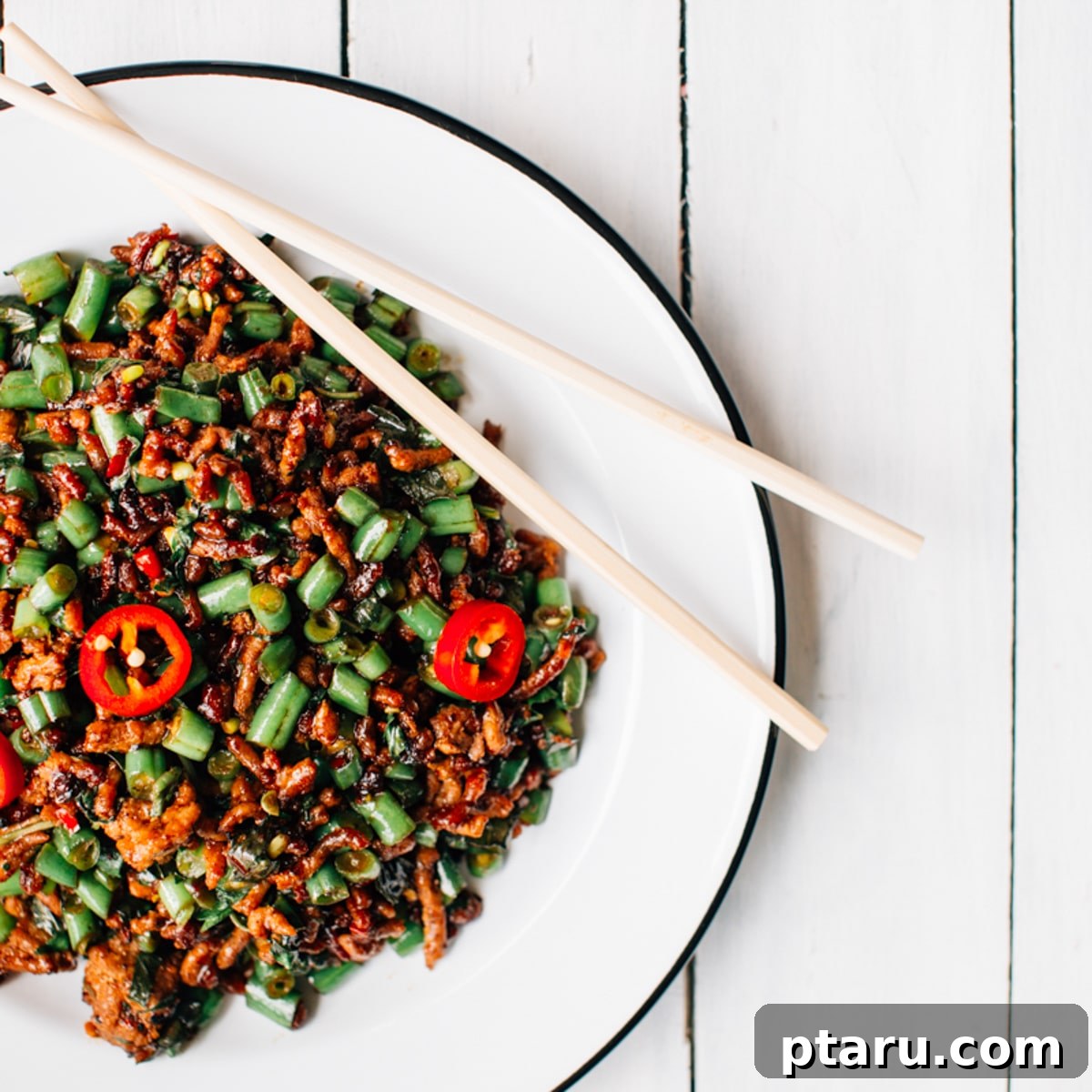
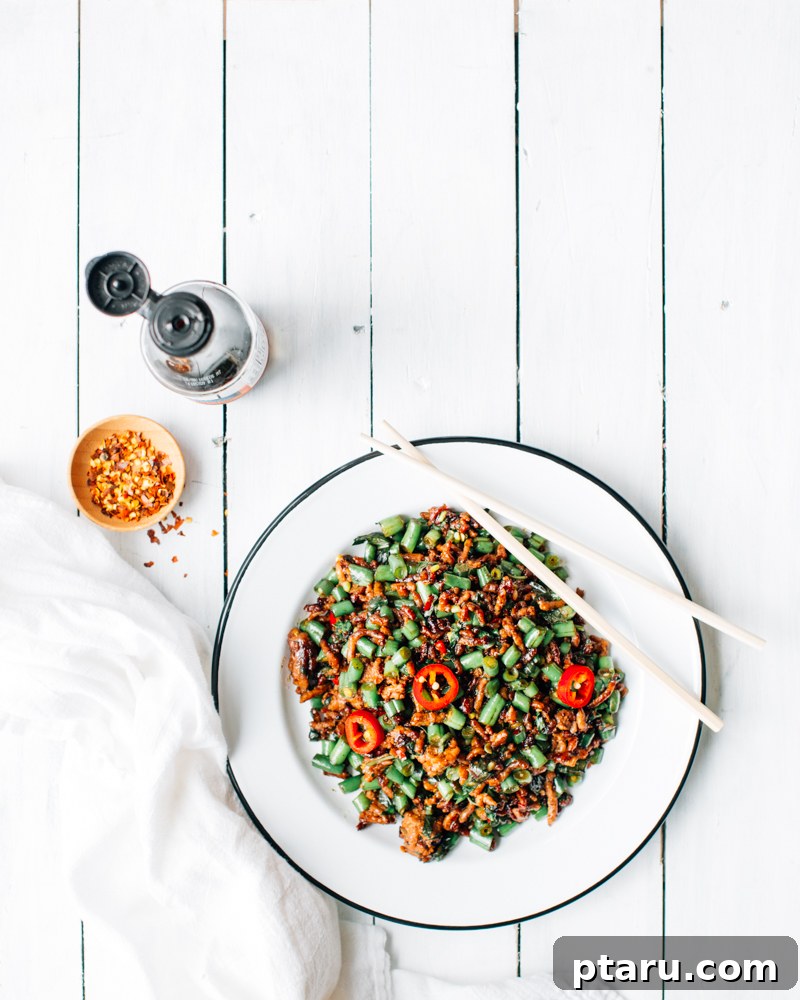
Welcome to the ultimate guide for creating an authentic Thai Basil Pork stir-fry, famously known as Pad Krapow Moo. This beloved Thai dish features succulent, garlicky-spicy minced pork, vibrant fresh basil, and perfectly stir-fried green beans, all coated in an irresistibly savory sauce. Forget takeout; this quick, easy, and incredibly flavorful recipe brings the vibrant tastes of Thailand straight to your kitchen, satisfying your cravings with every bite. It’s a perfect solution for a healthy, protein-packed meal that comes together faster than delivery, offering a customizable spice level to suit every palate.
What is Thai Basil Pork (Pad Krapow Moo)?
Thai Basil Pork, or Pad Krapow Moo (ผัดกะเพราหมู), is one of Thailand’s most popular and iconic street food dishes. The name “Pad Krapow” literally translates to “stir-fried holy basil,” highlighting the dish’s star ingredient. It typically consists of ground or thinly sliced pork rapidly stir-fried with fragrant Thai holy basil leaves, fiery bird’s eye chilies, pungent garlic, and a rich, savory sauce. This dynamic combination creates a complex flavor profile that is simultaneously salty, spicy, slightly sweet, and deeply aromatic. Traditionally, Pad Krapow Moo is served steaming hot over jasmine rice, often crowned with a perfectly fried egg (kai dao) with crispy edges and a runny yolk, adding an extra layer of richness and texture.
While often found in Thai restaurants worldwide, the true essence of Pad Krapow Moo lies in its simplicity and the balance of bold flavors. It’s known for its rapid cooking time, making it a staple for quick lunches and dinners. The distinct, peppery, and anise-like flavor of Thai holy basil is what truly sets this dish apart from other stir-fries, providing an unforgettable authentic taste experience. It’s a dish that perfectly embodies the spirit of Thai cuisine – fresh, vibrant, and bursting with incredible flavors.
- Authentic Thai Flavors: Experience the true taste of Thailand with a harmonious blend of soy sauce, fish sauce, and brown sugar, creating a wonderful umami depth. This is beautifully complemented by the peppery notes of fresh basil and the exciting heat of fresh chilies.
- A Wholesome & Balanced Dish: The addition of crisp green beans provides a refreshing texture and vital nutrients, balancing the rich, savory pork and the bold sauces for a well-rounded meal.
- Versatile Serving Options: Whether you prefer it over fluffy steamed jasmine rice for a classic experience or tossed with your favorite noodles, this dish easily adapts, making it a versatile and delicious addition to any meal plan.
- Healthy & Satisfying: Compared to many takeout options, preparing this dish at home allows for control over ingredients, often resulting in a healthier version with more vegetables and less oil, without compromising on flavor.
Why You’re Going to Love This Homemade Thai Basil Pork Recipe
If you’ve been yearning for an authentic taste of Thailand, your search ends here. This Thai Basil Pork recipe isn’t just a meal; it’s an experience, delivering immense flavor with surprising simplicity. We combine savory ground pork, crisp green beans, aromatic chilies, and a generous heap of fresh basil. The easy-to-prepare sauce, a perfect medley of soy sauce, fish sauce, and a touch of brown sugar, expertly balances the dish’s inherent heat, creating a flavor profile that’s truly spot on. You’ll be amazed at how effortlessly this dish captures the essence of your favorite Thai restaurant, right in your own kitchen.
Beyond its fantastic taste, this recipe offers several compelling reasons to make it a regular in your rotation:
- Incredibly Quick and Easy: From initial prep to a plated masterpiece, this stir-fry is ready in less than 30 minutes, making it an ideal solution for busy weeknights. It’s significantly faster than waiting for delivery and often healthier too, as you control the quality and quantity of ingredients, like adding more vibrant green beans and using less oil.
- Rich in Protein: Ground pork serves as a high-quality protein source, ensuring you feel satisfied and energized after your meal, making it an excellent choice for a hearty dinner.
- Customizable Heat Level: Tailor the spiciness of this dish exactly to your preference. While we enjoy a medium-to-spicy kick, you can easily adjust the amount of fresh chilies during cooking or add crushed red pepper flakes at the end. This flexibility ensures everyone at the table can enjoy it, from mild to fiery.
- Bursting with Freshness: The abundant use of fresh basil, garlic, and chilies elevates the dish with vibrant aromas and flavors that are simply unparalleled, transforming simple ingredients into something extraordinary.
- Affordable & Accessible Ingredients: Many of the ingredients are pantry staples or easily found at most grocery stores, making this delicious Thai meal both economical and convenient to prepare.
(P.S. If you adore Thai food as much as we do, you must also try our Pad Woon Sen, Thai Curry Fish, Peanut Sweet Potato Soup, Sweet Chili Noodles Salad, Thai Scallops, Meatballs in Sweet Chili Sauce, and Pad Thai recipes).
Essential Ingredients for Authentic Thai Basil Pork
Crafting a truly authentic Thai Basil Pork relies on a few key ingredients that bring out its distinctive flavor. Understanding each component’s role will help you achieve that perfect balance.
- Ground Pork: Opt for lean ground pork for a healthier option, or a slightly fattier cut for more flavor and moisture. You can also use ground chicken, turkey, or beef for variations.
- Thai Holy Basil (Krapow): This is the soul of the dish. Thai holy basil has a distinct peppery, slightly spicy, and anise-like flavor that is crucial for authenticity. If true holy basil is unavailable, Thai sweet basil (which has a licorice-like aroma) or even regular Italian sweet basil can be used as substitutes, though the flavor profile will differ slightly.
- Thai Bird’s Eye Chilies: These small, potent chilies provide the signature heat of Pad Krapow. Adjust the quantity to your preferred spice level. For milder heat, remove the seeds.
- Garlic: Freshly minced garlic is essential for building a robust aromatic base. Do not substitute with garlic powder.
- Green Beans: Finely chopped green beans add a delightful crunch and vibrant color, integrating seamlessly with the ground pork. They also add a fresh, crisp element that balances the richness of the dish.
- Vegetable Oil: A neutral oil like vegetable, canola, or peanut oil is best for stir-frying at high temperatures.
- Kosher Salt: Enhances the overall flavors of the ingredients.
- The Savory Sauce: This simple yet powerful blend creates the umami-rich coating for the stir-fry:
- Soy Sauce: Provides the fundamental salty, savory base.
- Fish Sauce: A cornerstone of Thai cuisine, fish sauce adds a profound umami depth and savory complexity that cannot be replicated.
- Brown Sugar: A touch of brown sugar balances the saltiness and heat, adding a subtle sweetness that rounds out the flavors.
- Optional additions: A fried egg on top and a pinch of crushed dried red chilies for extra heat are highly recommended for the full experience.
Grab These Essential Kitchen Tools
Get your kitchen ready for some sizzling action! Having the right tools on hand will make preparing your Thai Basil Pork a breeze.
- Large Skillet or Wok: Essential for stir-frying, a large skillet or wok ensures even cooking and allows ingredients to spread out, achieving perfect caramelization and flavor infusion. Its high sides are also great for tossing.
- Chopping Board and Sharp Knife: Indispensable for finely chopping your aromatics like onion, garlic, and chilies, as well as thinly slicing your green beans. Precision in chopping helps ingredients cook evenly and integrate well.
- Whisk: A small whisk is perfect for effortlessly combining your soy sauce, fish sauce, and brown sugar into a smooth, well-mixed sauce.
- Spatula or Wooden Spoon: Ideal for stirring and breaking up the ground pork, as well as tossing all the ingredients together during the stir-frying process.
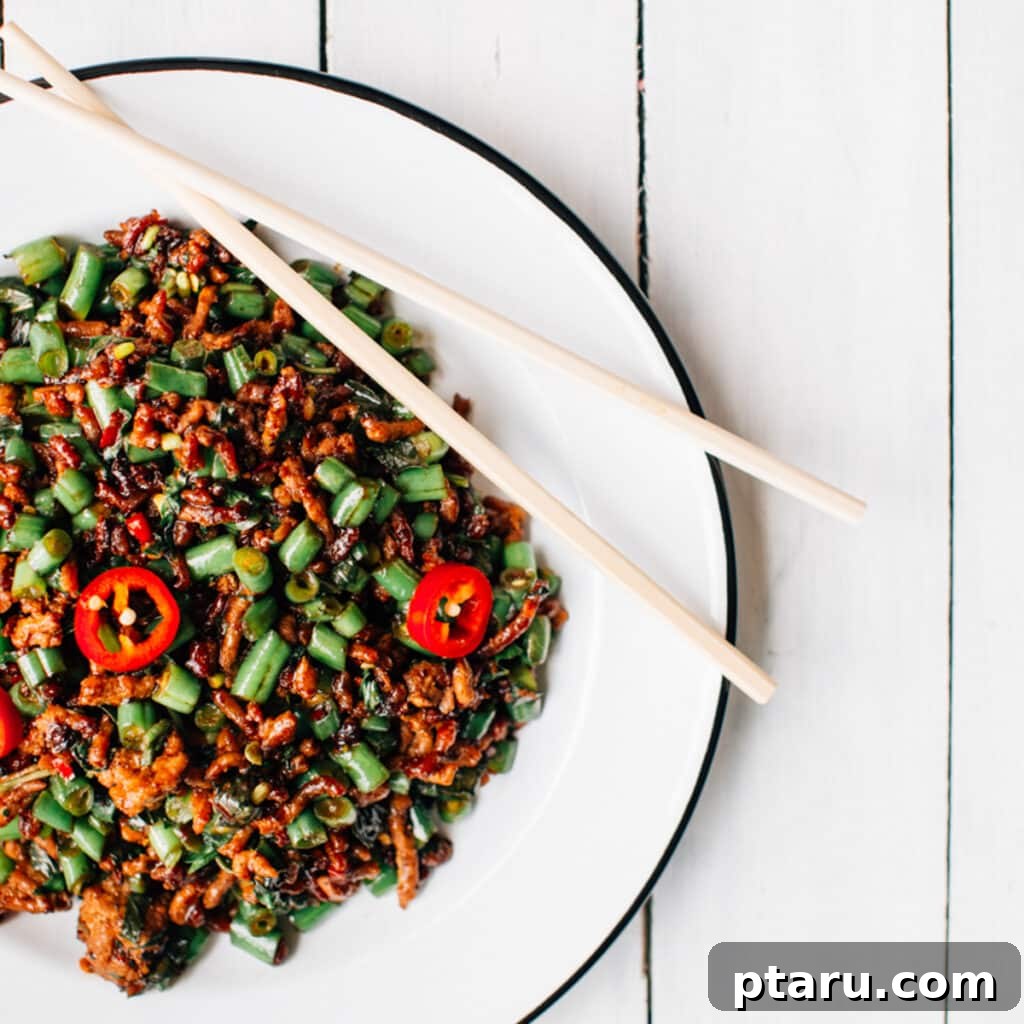
How to Make Thai Basil Pork: Easy Step-by-Step Directions
Follow these simple steps to bring this incredibly flavorful Thai Basil Pork to life in your kitchen. Each stage is designed to build layers of taste, ensuring a delicious and authentic result.
- Heat the Oil to Sizzling Perfection: Begin by heating your vegetable oil in a large skillet or wok over medium-high heat. Getting the oil sufficiently hot ensures a quick, sizzling start to your stir-fry, essential for proper caramelization and wok hei (the smoky essence of stir-frying).
- Sauté the Aromatics: Add the finely chopped onion, minced garlic, and chilies to the hot oil. Sauté them briefly, about one minute, until they release their intoxicating fragrances. This step creates the aromatic foundation that will infuse the entire dish with deep flavor.
- Cook the Pork to Crispy Edges: Introduce the ground pork and a pinch of kosher salt to the pan. Cook, breaking up the pork with a spoon, until it’s no longer pink and begins to crisp beautifully at the edges. These deliciously caramelized bits add incredible texture and depth of flavor.
- Stir-Fry the Green Beans to Crisp-Tender Perfection: Add the thinly sliced green beans to the pan. Continue to cook, stirring frequently, for about 2 minutes. The goal is for them to become crisp-tender, retaining their vibrant green color and a satisfying crunch, without becoming overly soft. Thinly slicing green beans crosswise gives them a unique texture that complements the ground pork wonderfully.
- Whisk and Add the Savory Sauce: While the pork and beans are cooking, quickly whisk together the soy sauce, fish sauce, and brown sugar in a small bowl. Once the vegetables are ready, pour this rich, savory sauce into the pan and stir vigorously to evenly coat all the ingredients. Taste and adjust seasoning as needed, adding a pinch of crushed red chilies if you desire more heat.
- Stir in the Fresh Basil Last: Finally, remove the pan from the heat and stir in the generous amount of fresh basil leaves. The residual heat from the stir-fry will gently wilt the basil, releasing its fragrant aroma and adding a beautiful pop of fresh green color without overcooking it. This ensures the basil’s vibrant flavor remains prominent. Serve immediately.
How to Serve Your Thai Basil Pork
This versatile Thai Basil Pork stir-fry pairs wonderfully with several accompaniments, making it a flexible addition to your meal rotation.
- Over Steaming Rice: For a classic and comforting Thai experience, serve your Pad Krapow Moo over a generous bed of fluffy jasmine rice. The rice is perfect for soaking up all the delicious, savory sauce.
- With Noodles: If you prefer noodles, this dish is fantastic with various types, such as wide rice noodles (sen yai), vermicelli, or even ramen noodles. The noodles will absorb the rich flavors of the stir-fry beautifully.
- Top with a Fried Egg (Kai Dao): Elevate your dish by adding a perfectly fried egg on top, often called ‘kai dao’ in Thai. A crispy-edged egg with a runny yolk adds a luxurious creaminess that complements the spicy pork perfectly.
- Side of Fresh Salad: A simple side salad, perhaps with a light vinaigrette or a refreshing cucumber salad, can offer a delightful, cooling contrast to the richness and spice of the main dish.
- Lime Wedges: Serve with fresh lime wedges on the side for a squeeze of bright, acidic zest that can cut through the richness and enhance the flavors.
Make Ahead and Storage Tips
Thai Basil Pork is fantastic fresh, but it also lends itself well to meal prepping and storing leftovers.
- Prep Ahead: To significantly speed up cooking time on a busy weeknight, you can chop all your vegetables (onion, garlic, chilies, green beans) and whisk together your sauce ingredients (soy sauce, fish sauce, brown sugar) ahead of time. Store them separately in airtight containers in the refrigerator for up to 2 days.
- Storing Leftovers: Any leftover Thai Basil Pork should be stored in an airtight container in the refrigerator. It will keep well for up to 3 days. The flavors often deepen overnight, making it even more delicious the next day!
- Reheat and Serve: To reheat, simply transfer the leftovers to a skillet or wok over medium heat. Stir frequently until heated through. To refresh the aroma and flavor, you can stir in a small handful of fresh basil leaves just before serving. Avoid microwaving if possible, as it can sometimes make the pork tough and the basil lose its vibrancy.
Variations and Substitutions to Customize Your Dish
One of the beauties of Thai Basil Pork is its adaptability. Feel free to experiment with these variations and substitutions to make the dish truly your own, or to suit dietary needs.
- Vegetarian Option: Easily transform this into a delicious vegetarian meal by substituting the pork with firm or extra-firm tofu, crumbled tempeh, or your favorite plant-based ground meat alternative. Ensure to press tofu well to remove excess water before stir-frying for best texture.
- Different Proteins: While pork is traditional, this recipe works wonderfully with other ground meats. Try ground chicken, turkey, or beef for a different flavor profile. Thinly sliced chicken or beef can also be used, adjusting cooking times accordingly.
- Boost the Veggies: Enhance the nutritional value and texture by adding extra stir-fry friendly vegetables. Great additions include sliced bell peppers, mushrooms, carrots, bamboo shoots, or baby corn. Add firmer vegetables earlier in the stir-fry process to ensure they cook through.
- Thai Basil Substitute: The most authentic version uses Thai Holy Basil (Krapow). If you can find it at an Asian market, definitely use it. If not, Thai sweet basil (Horapha), which has a more licorice-like flavor, is an excellent alternative. As a last resort, regular Italian sweet basil can be used, though the dish will have a different, milder aromatic profile.
- Spice Level Adjustment: For those who love a serious kick, increase the number of Thai bird’s eye chilies. For a milder version, remove the seeds from the chilies or use fewer, or even substitute with a milder chili like a serrano or jalapeño.
- Added Sweetness: If you prefer a slightly sweeter sauce, you can increase the amount of brown sugar to taste.
- Umami Boost: A dash of oyster sauce can be added to the sauce mixture for an extra layer of savory umami and a slightly thicker consistency.
Expert Tips and Tricks for a Perfect Stir-Fry
Achieve restaurant-quality Thai Basil Pork with these insider tips and tricks that will elevate your cooking.
- Prioritize Fresh Ingredients: The quality of your ingredients directly impacts the final flavor. Using fresh garlic, onions, chilies, and especially fresh basil, will significantly enhance the aromatic depth and vibrancy of your dish. Avoid dried herbs or pre-minced garlic for the best results.
- Master the High Heat: Stir-frying thrives on high heat. Ensure your wok or skillet is very hot before adding any ingredients. This allows for quick cooking, achieving a beautiful sear on the pork and keeping vegetables crisp-tender, rather than steaming them.
- Don’t Overcrowd the Pan: Cooking in batches, if necessary, is crucial for stir-frying. An overcrowded pan lowers the temperature, leading to steamed instead of stir-fried ingredients, preventing proper browning and flavor development.
- Adjust Heat to Your Taste: Be mindful of the Thai bird’s eye chilies; they pack a punch! Start with a smaller quantity if you’re unsure of your spice tolerance, and you can always add more crushed red pepper flakes at the end.
- Add the Basil Last: This is a critical step for preserving the basil’s delicate flavor and vibrant green color. Stir in the fresh basil leaves right at the very end, just as you take the pan off the heat. The residual heat will gently wilt them, releasing their potent aroma without overcooking them into bitterness.
- Prep Everything Before You Cook (Mise en Place): Stir-fries cook incredibly fast. Have all your ingredients chopped, sauces mixed, and ready to go before you even turn on the heat. This way, you won’t be scrambling, and you’ll prevent anything from overcooking.
- Taste and Adjust: Always taste your sauce and the finished dish before serving. You can always add a little more soy sauce for saltiness, fish sauce for umami, or brown sugar for sweetness to achieve your perfect balance.
Get your wok sizzling and start cooking this delicious Thai Basil Pork dish – it’s sure to become a staple in your dinner rotation! This incredibly flavorful and quick-to-prepare meal is a testament to the magic of Thai cuisine, bringing an authentic and satisfying experience right to your home. (P.S. if you love quick, easy Asian takeout-inspired recipes, you must also try our Pad Woon Sen, Gochujang Chicken, Thai Basil Pork, Chili Oil Ramen, Orange Chicken, and Honey Garlic Chicken recipes.)
What new weeknight meals have you discovered lately? Share your favorites in the comments below!
Frequently Asked Questions About Thai Basil Pork
While both are common in Thai cuisine, Thai sweet basil (Horapha) and Thai holy basil (Krapow) have distinct flavor profiles. Thai sweet basil has a slightly sweet, anise-like, and licorice flavor, often used in curries and pho. Thai holy basil, the traditional basil for Pad Krapow, has a more pungent, peppery, and spicy flavor, with hints of cloves. It is heartier and stands up better to stir-frying. While Thai sweet basil can be a substitute, true Pad Krapow flavor comes from holy basil.
Thai basil is a versatile herb that enhances the flavor and aroma of various dishes. Here are some common ways to use it:
Stir-fries: The most famous use is in dishes like Pad Kra Pao (Thai basil pork). Add leaves towards the end of cooking to retain their vibrant flavor and aroma.
Curries: Incorporate Thai sweet basil into green, red, or yellow curries to add a fresh, aromatic dimension. Stir the leaves in after turning off the heat, allowing them to wilt gently.
Soups: Add fresh Thai basil leaves to soups such as Tom Yum or Tom Kha Gai, either during the final stages of cooking or as a fragrant garnish before serving.
Salads: For an extra burst of flavor, include Thai basil in refreshing salads like Larb (minced meat salad), Yum Woon Sen (glass noodle salad), or Som Tum (papaya salad).
Marinades: Use chopped Thai basil in marinades for meats, poultry, or seafood. Its unique flavor will beautifully infuse into the protein.
Wraps and Rolls: Enhance the overall taste of fresh spring rolls, lettuce wraps, or rice paper rolls by adding whole Thai basil leaves.
Garnish: Thai basil makes an excellent garnish for noodle dishes like Pho, Pad Thai, or Drunken Noodles.
Always wash Thai basil leaves thoroughly before use and remove the tougher stems if preferred. Remember that Thai holy basil has a stronger, spicier flavor than sweet basil, so adjust the quantity according to your taste.
Generally, no, you don’t typically use the woody stalks of Thai basil. The tender leaves are the primary part used in cooking for their potent flavor and aroma. However, very tender parts of the upper stalks can sometimes be finely chopped and used to infuse flavor, especially in broths or soups, but it’s best to avoid the tougher, woody lower parts as they can be fibrous and unpleasant to chew.
Yes, authentic Pad Krapow Moo is traditionally quite spicy, thanks to the generous use of Thai bird’s eye chilies. The heat is a key characteristic of the dish, complementing the savory pork and fragrant basil. However, when making it at home, you have complete control over the spice level. You can reduce the number of chilies, remove the seeds, or even use a milder chili variety to suit your preference.
While Thai Basil Pork is best enjoyed fresh off the wok, you can definitely prepare components ahead of time. Chopping all your vegetables and whisking the sauce can be done up to 2 days in advance. Cooked leftovers store well in an airtight container in the refrigerator for up to 3 days. Reheating in a skillet with a fresh sprinkle of basil will help revive its flavors and aroma.
Rating: 5 from 8 votes
Thai Basil Pork
Jennifer Pallian BSc, RD
10
15
25
4
Ingredients
- 3 tbsp vegetable oil
- ¼ cup finely chopped onion
- 4 cloves garlic minced
- 2 thai bird chilies
- 1 lb lean ground pork
- ½ tsp kosher salt
- 9 oz green beans thinly sliced crosswise (yields about 2 cups)
- ¼ cup soy sauce
- 2 tbsp fish sauce
- 1 tsp brown sugar
- 1 cup packed basil leaves thinly sliced
- crushed dried red chilies to taste (optional)
- Noodles or rice for serving
Instructions
-
Heat oil in a large skillet or wok over medium-high heat. Add onion, garlic, and chilies; sauté until fragrant, about a minute. Add pork and salt; cook, breaking up with a spoon, until no longer pink inside and crisping at edges. Add green beans and cook, stirring frequently, until crisp-tender but still bright green, about 2 minutes.
-
Meanwhile, whisk together soy sauce, fish sauce, and brown sugar. Pour into pan and stir to coat pork and beans. Taste and add a pinch of crushed chilies if more heat is desired. Stir in basil leaves and serve with noodles or rice.
Nutrition
Calories: 432kcal
|
Carbohydrates: 9g
|
Protein: 23g
|
Fat: 34g
|
Saturated Fat: 11g
|
Polyunsaturated Fat: 8g
|
Monounsaturated Fat: 13g
|
Trans Fat: 0.1g
|
Cholesterol: 82mg
|
Sodium: 1887mg
|
Potassium: 545mg
|
Fiber: 2g
|
Sugar: 4g
|
Vitamin A: 450IU
|
Vitamin C: 10mg
|
Calcium: 55mg
|
Iron: 2mg
Nutrition information is automatically calculated, so should only be used as an approximation.
Tried this recipe? Leave a comment below! We’d love to hear about your experience and any delicious twists you added.