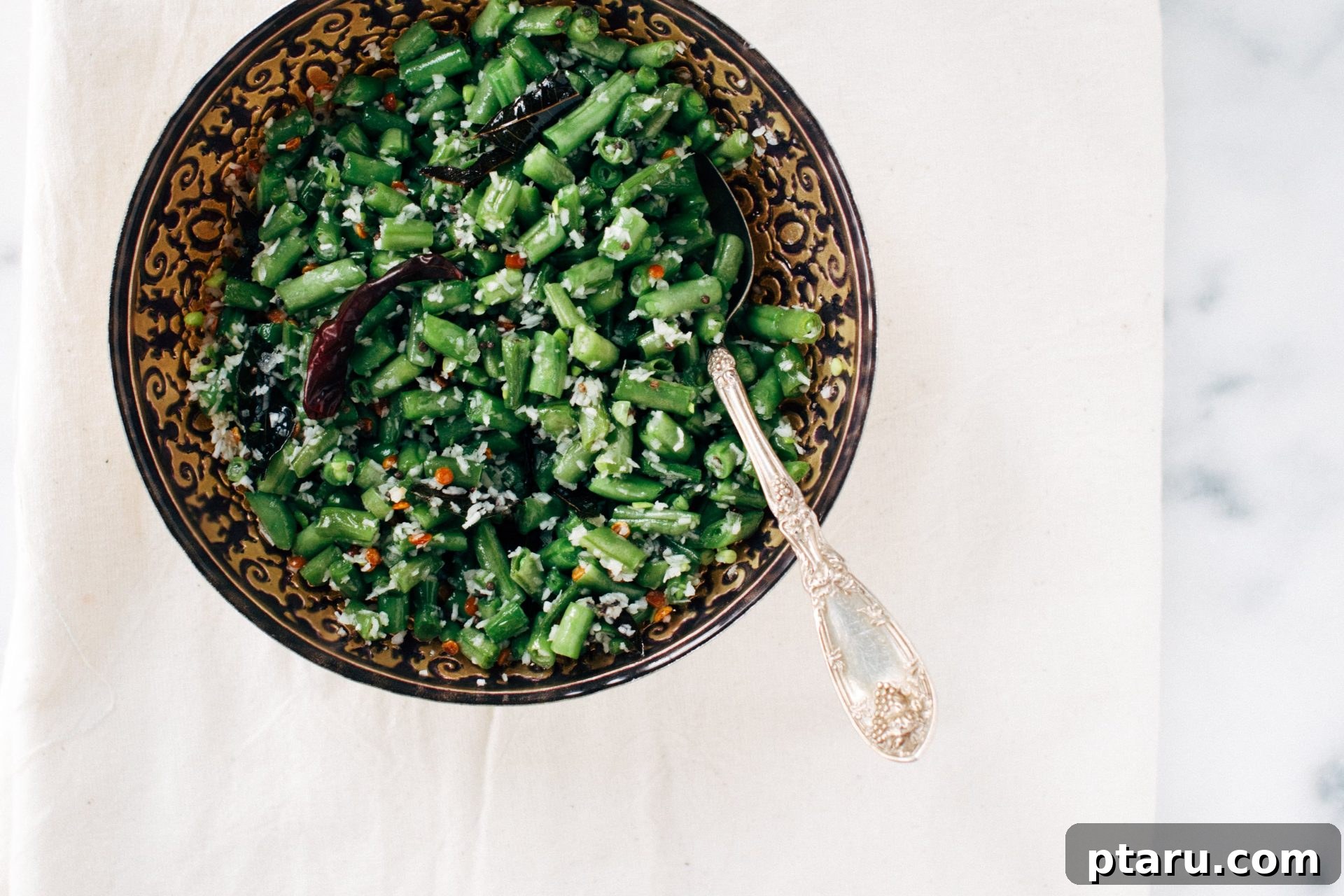
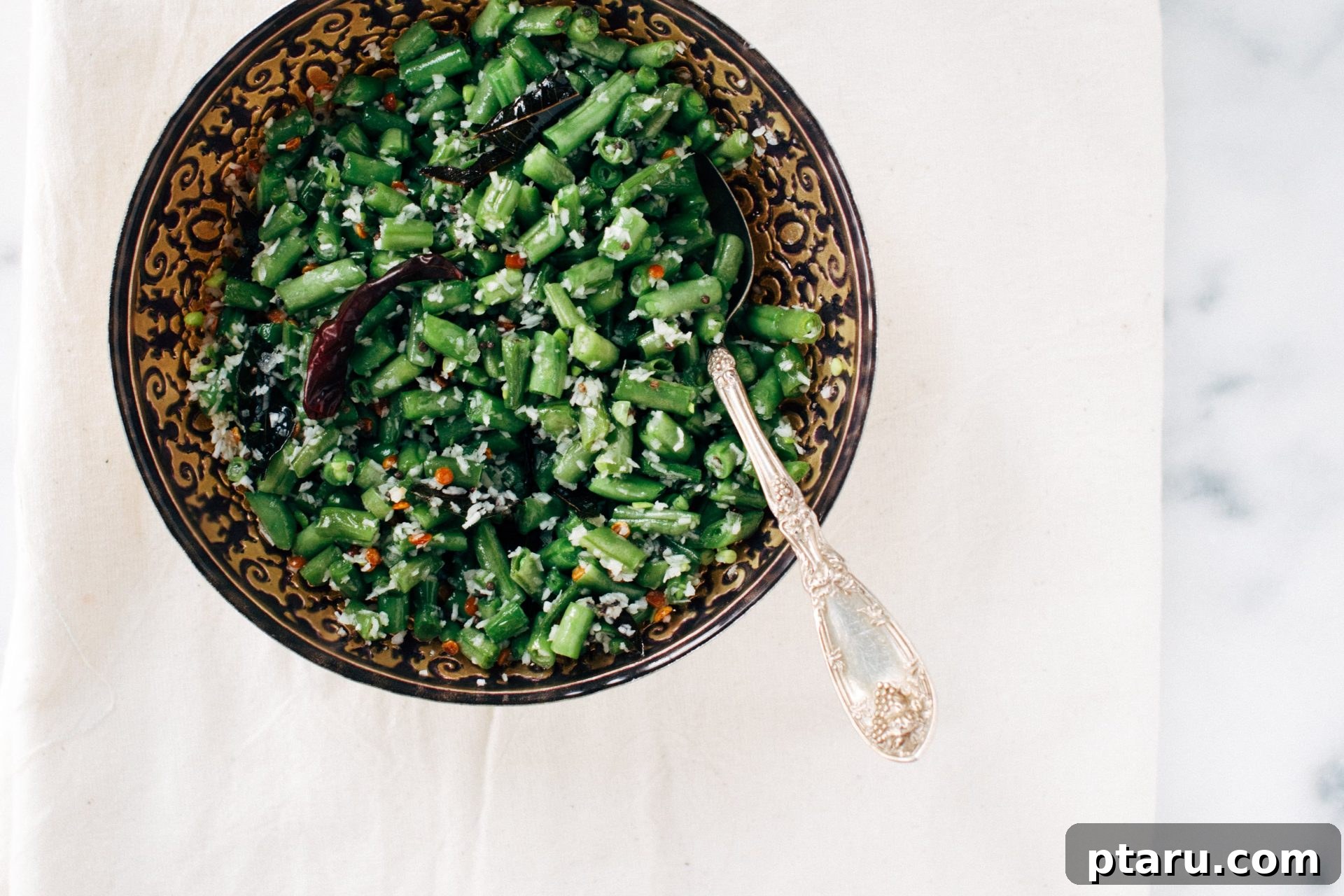
Green Bean Poriyal: A Taste of South India’s Coconut Stir-Fry
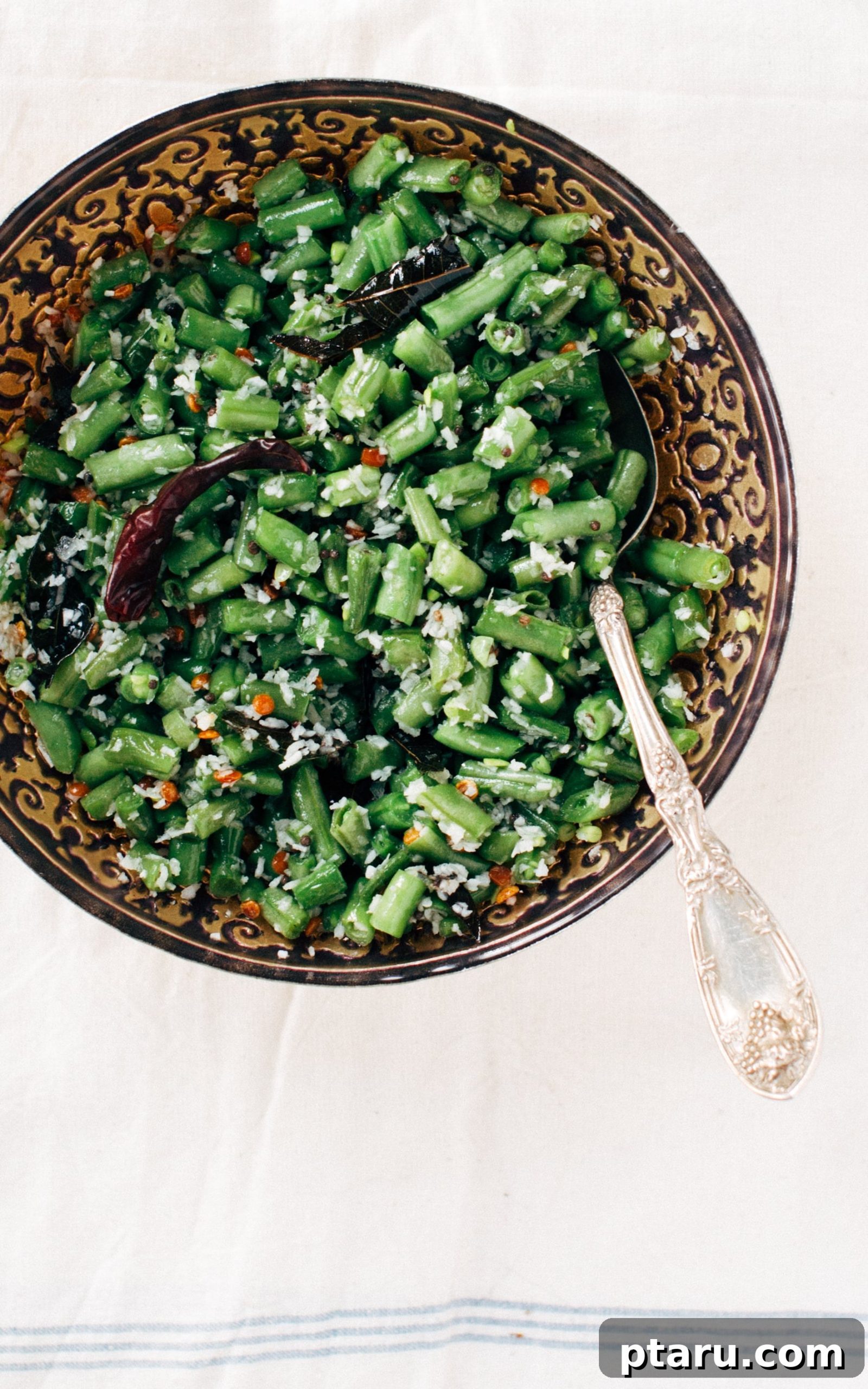
Embark on a culinary journey to the heart of South India with Poriyal, also known as Thoran – a vibrant and incredibly flavorful coconut stir-fry. This particular rendition, featuring crisp green beans, holds a special place in my food memories, transporting me back to the serene backwaters of Alleppey in beautiful Kerala, my husband Adarsh’s ancestral land. I vividly recall my first taste of this exquisite dish, served simply on a banana leaf aboard a tranquil houseboat. It was an epiphany; I never knew vegetables could be so incredibly delicious, a moment that truly illuminated why vegetarianism is such a profound part of Indian culture.
The beauty of Poriyal lies in its simplicity and versatility. While green beans are a personal favorite, I’ve had the pleasure of enjoying this stir-fry prepared with a variety of other vegetables, each equally delightful. Cabbage poriyal is a revelation, offering a sweet and tender texture, while carrot, okra, and beet versions are equally popular and satisfying. Even bitter gourd, with its distinctively intense bitterness, finds its place in this beloved preparation, though its strong flavor can be an acquired taste. This recipe focuses on green beans, highlighting their fresh crunch and ability to perfectly absorb the aromatic spices.
The Aromatic Foundation: Tempering for Unforgettable Flavor
At the core of Poriyal’s irresistible taste is the tempering, or tadka, a traditional South Indian technique where whole spices are fried in hot oil to release their essential oils and infuse the dish with profound flavor. This Poriyal builds its unique character on a quartet of essential tempering ingredients: mustard seeds, fresh curry leaves, dried red chilis, and urad dal, all gently fried in fragrant coconut oil. While traditional recipes often call for a generous amount of oil, my adaptation balances flavor with a slightly lighter touch, without compromising on authenticity.
The finely chopped vegetables, in this case, tender green beans, are then briefly sautéed to retain their vibrant color and crisp-tender texture. The finishing touch is the addition of coconut, ideally freshly grated for unparalleled moisture and sweetness. However, unsweetened desiccated coconut serves as an excellent and convenient substitute, delivering that characteristic nutty aroma. The resulting flavor profile is a harmonious blend of nutty, sweet, and subtly spicy notes – a combination that is supremely addictive and will leave you craving more.
Urad Dal: The Secret to Nutty Crunch and Earthy Depth
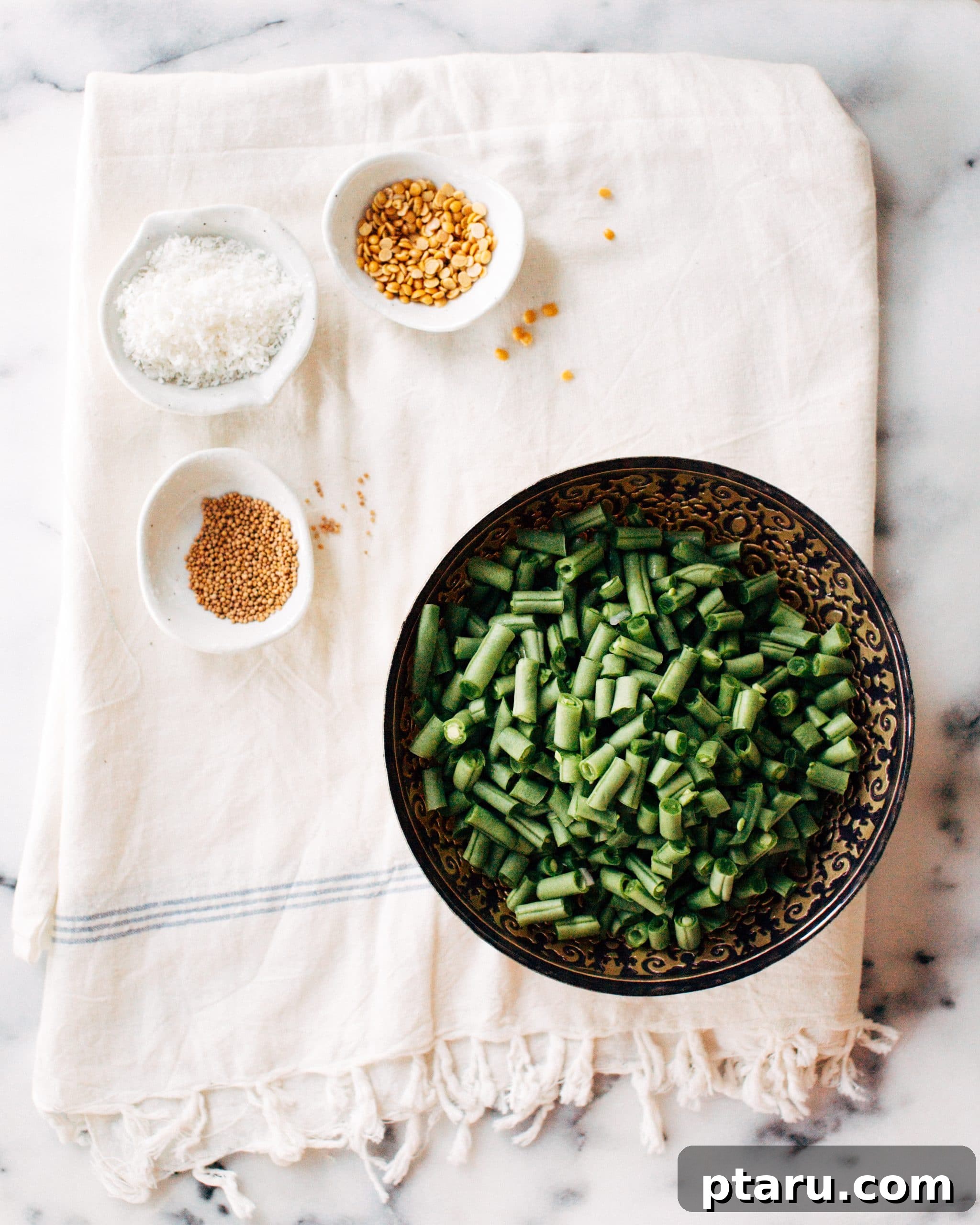
Urad dal, often overlooked by those unfamiliar with South Indian cuisine, is a crucial ingredient in Poriyal. These are split, husked black lentils, revered for their distinctive flavor and texture. They form a fundamental component in many South Indian staples, such as the fermented batters for dosas (savory crepes) and idlis (steamed rice cakes). In the context of a Poriyal or Thoran, when fried in oil, urad dal transforms into small, golden morsels that impart a wonderfully earthy nuttiness and a delightful, subtle crunch – think of the satisfying texture of fried chickpeas.
While the quantity of urad dal used in Poriyal might seem small, its contribution to the overall character of the dish is immense. It’s truly a mistake to omit them. If authentic urad dal is difficult to source, you can achieve a similar nutty flavor and textural contrast by substituting with finely chopped peanuts or blanched almonds. However, the unique, almost savory earthiness of urad dal is something truly special. I confess, there was a time I considered skipping them in South Indian recipes, often only calling for a teaspoon or two. But it wasn’t until I noticed their subtle presence in a seemingly simple restaurant rice dish that I fully appreciated how much depth and dimension they add, elevating the entire culinary experience.
Curry Leaves: The Indispensable Heart of South Indian Aromatics
If you’ve never experienced the incredible, fragrant aroma of fresh curry leaves, you are in for a treat. There is genuinely no substitute for their unique and complex flavor profile. Curry leaves are rich, subtly nutty, and possess an indescribable essence that sets them apart from other herbs like bay leaves or lime leaves. Their aroma is captivating, instantly evoking the authentic scents of South Indian kitchens. They are, quite simply, impossible to perfectly describe, and truly nothing else compares.
Sourcing fresh curry leaves might require a visit to a specialty Indian grocery store or an Asian market. I often buy them in bulk during my visits to Vancouver’s “Little India” and freeze them, ensuring a steady supply for my cooking. Fortunately, with modern convenience, fresh curry leaves are becoming more accessible, even available through online retailers. Their inclusion is non-negotiable for an authentic Poriyal; they are the heart of its aromatic foundation.

Poriyal’s Place in South Indian Cuisine and Beyond
In Kerala, Poriyal is more than just a dish; it’s a staple. You’ll find it, in various vegetable forms, gracing almost every restaurant lunch thali – a traditional platter offering a delightful sampling of different curries, rice, and side dishes, often served on a fresh banana leaf. Its presence on the thali is a testament to its importance and versatility. Poriyal serves as an ideal accompaniment to richer, long-simmered Indian main courses, offering a refreshing contrast with its light, fresh, and healthy qualities. It cuts through the richness, providing a balanced and complete meal experience.
Beyond being a perfect side, Poriyal can also stand alone as a light and wholesome vegetarian meal. It’s packed with nutrients from the vegetables and healthy fats from the coconut oil, making it a fantastic choice for those seeking nutritious and flavorful plant-based options. Its quick cooking time also makes it an excellent weeknight dinner solution.
Green Bean Poriyal: The Simple Recipe for Authentic Flavor
This Green Bean Poriyal recipe is designed to bring the authentic flavors of Kerala right into your kitchen with minimal effort. With fresh ingredients and straightforward steps, you’ll be able to create a delightful stir-fry that is both incredibly tasty and remarkably healthy. This dish is naturally vegetarian and can easily be made vegan, catering to various dietary preferences.
Prep Time: 10 minutes
Cook Time: 10 minutes
Total Time: 20 minutes
Servings: 4
Ingredients
- 4 tbsp peanut or coconut oil
- 2 tsp husked split urad dal (also known as husked, split mungo beans or black gram), OR substitute with finely chopped peanuts or blanched almonds for similar texture and nuttiness
- 2 tsp mustard seeds
- 5 fresh curry leaves
- 1 dried red chili pepper (whole), or 1/4 tsp crushed red chili pepper for less heat
- 1 lb green beans, trimmed and chopped crosswise into 1/2-inch pieces
- 1 tsp kosher salt, or adjust to taste
- ¼ cup unsweetened desiccated coconut (or freshly grated coconut for best results)
Instructions
- Heat the oil in a large skillet or frying pan over medium-high heat. Once the oil is shimmering hot, add the urad dal, mustard seeds, curry leaves, and dried chili pepper.
- Cook, stirring frequently, for about one minute, or until the spices become fragrant and the urad dal turns a shade darker and lightly golden. This step is crucial for developing the foundational flavors of the Poriyal.
- Add the chopped green beans and salt to the skillet. Cover the pan and cook for approximately 2 minutes, stirring occasionally, until the green beans are crisp-tender. Be careful not to overcook them; they should retain a slight bite and vibrant color.
- Remove the pan from the heat and stir in the unsweetened desiccated coconut until well combined. The residual heat will warm the coconut and allow its flavor to meld with the vegetables and spices.
- Serve your Green Bean Poriyal immediately as a delicious side dish with your favorite Indian meal, or enjoy it on its own for a light and healthy option.
For those who appreciate the rich and diverse flavors of Indian cuisine, Poriyal is an essential dish to master. Its delightful blend of textures and aromas, coupled with its ease of preparation, makes it a truly rewarding recipe. This Green Bean Poriyal is a testament to the fact that simple ingredients, when combined with thoughtful technique, can create extraordinary culinary experiences.
P.S. If you’ve fallen in love with this recipe and are eager to explore more comforting vegetarian Indian dishes, I highly recommend trying my Creamy Malai Kofta Recipe. Imagine lightly fried dumplings crafted from paneer and potato, delicately studded with raisins and almonds, all swimming in a rich, creamy, tomato-based sauce. It’s the epitome of serious vegetarian comfort food!