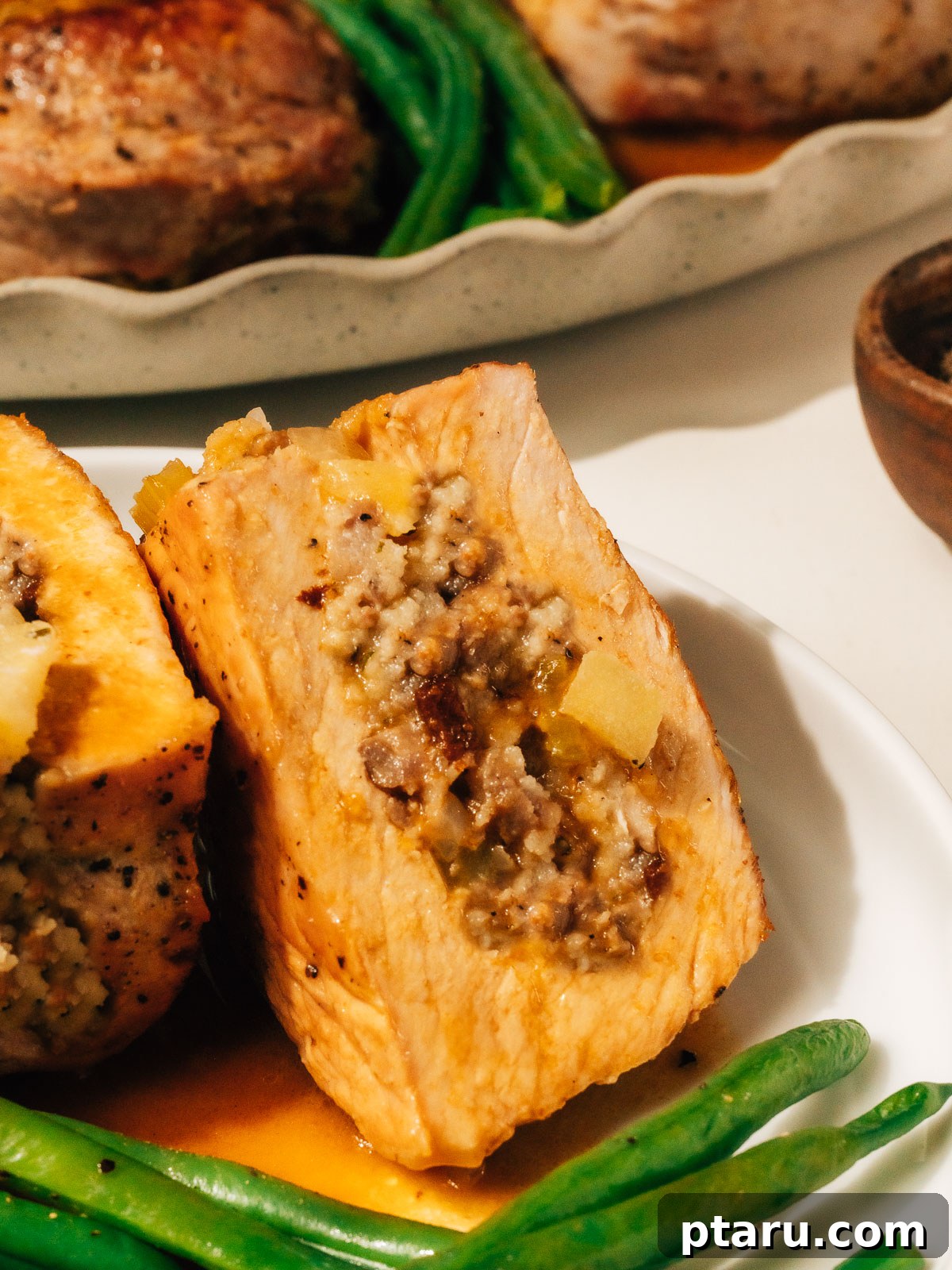
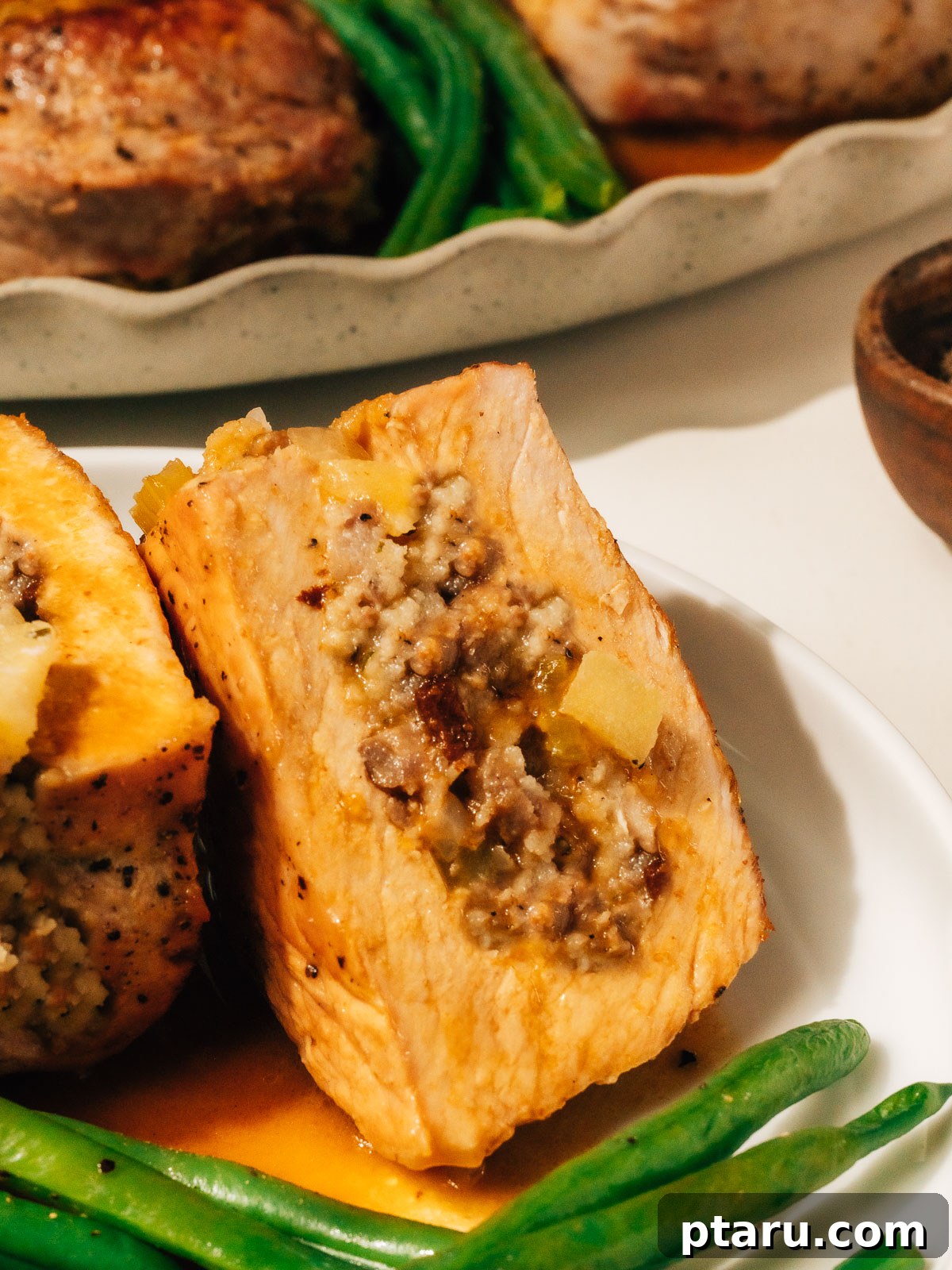
Prepare to elevate your dinner game with these incredible Stuffed Pork Chops. This recipe features a savory and sweet sausage-apple stuffing that locks in moisture and infuses every bite with robust flavor. Perfectly seared to a golden crisp, then roasted to tender perfection, these chops are finished with a rich, buttery apple cider pan sauce that consistently earns rave reviews. What truly makes this dish a standout is its deceptive simplicity – it’s a one-skillet recipe that tastes like it required far more effort than it actually did, making it ideal for both special occasions and impressive weeknight meals.
Mastering the Flavor: Essential Stuffed Pork Chops Ingredients
The brilliance of this recipe lies in its thoughtfully chosen ingredients, especially the versatile stuffing. Beyond its incredible taste, the stuffing plays a crucial role in keeping the pork chops exceptionally juicy as they bake. This means you achieve maximum flavor with minimal fuss, relying on high-quality components to do the heavy lifting. We’ll delve into each ingredient, ensuring you understand its contribution to this unforgettable dish. (Be sure to read our Common Mistakes + Pro Tips section for expert advice on keeping your chops perfectly moist every time!)
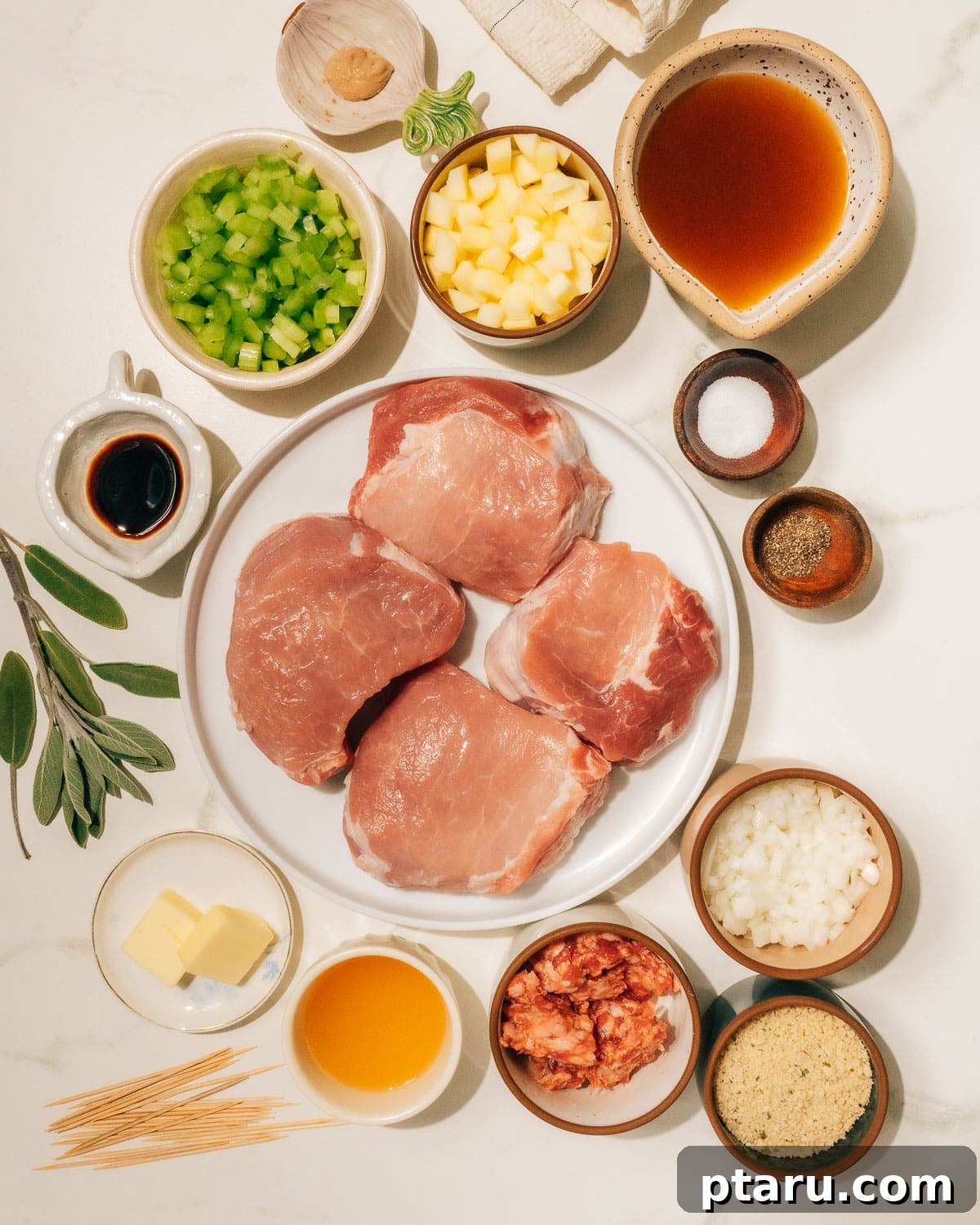
Here’s a detailed look at everything you’ll need to create these irresistible apple and sausage stuffed pork chops:
Premium Pork Chop Components
- Thick-cut Pork Chops: The foundation of our dish. Opt for bone-in or boneless chops, ideally 1 1/2 inches thick. This specific thickness is vital for creating a deep, robust pocket capable of holding ample stuffing without tearing, ensuring your chops remain succulent throughout the cooking process.
- Kosher Salt: Essential for seasoning the pork both inside and out, enhancing its natural flavors and promoting a beautiful crust during searing.
- Black Pepper: Freshly ground black pepper adds a pungent counterpoint to the savory pork and sweet apple.
- Olive Oil: Used for searing the pork chops before they enter the oven. A good quality olive oil helps create that desirable golden-brown crust and contributes to the overall richness.
The Heart of the Dish: Delectable Stuffing Ingredients
- Mild Italian Sausage: The flavorful base of our stuffing. Remember to remove the casings. This ingredient alone brings a wealth of savory, herbaceous notes, simplifying the seasoning process significantly. Its fat content also contributes to the stuffing’s moist texture.
- Olive Oil: Used to sauté the aromatic vegetables and sausage, ensuring even cooking and developing deeper flavors.
- Apple: Honeycrisp or Granny Smith are highly recommended. Their firm texture ensures they hold their shape and deliver a fresh, crisp taste within the stuffing, providing a delightful textural contrast. If you prefer a sweeter profile, go with Honeycrisp; for a tart balance, Granny Smith is your choice. (Much like how they shine in my skillet pork chops with sautéed apples!)
- Onion: Finely chopped onion adds a foundational aromatic sweetness that mellows as it cooks.
- Celery: Contributes a subtle crunch and classic savory depth to the stuffing, rounding out the flavor profile.
- Fresh Sage: The quintessential herb for pork and apple dishes. Fresh sage offers the most vibrant, earthy aroma, but dried sage works perfectly fine if fresh isn’t available. Its distinct flavor pairs beautifully with the sausage and apple.
- Panko Breadcrumbs: These Japanese-style breadcrumbs are lighter and crisper than traditional breadcrumbs, binding the stuffing mixture together without making it heavy. They absorb the liquid, ensuring the filling holds its shape beautifully inside the chop.
- Apple Cider: Or chicken broth. This liquid component adds essential moisture to the filling, preventing it from drying out, and imparts a delicate sweetness and tang that complements the apples and pork.
- Kosher Salt: To season the stuffing mixture, balancing and enhancing all the individual flavors.
- Black Pepper: A pinch of black pepper adds a touch of warmth and spice to the aromatic stuffing.
The Unforgettable Pan Sauce Ingredients
- Chicken Broth: Forms the savory base of our exquisite pan sauce, picking up all the delicious browned bits from the skillet.
- Apple Cider: Or white wine. Both options contribute a bright acidity and subtle sweetness, cutting through the richness of the pork and adding complexity to the sauce.
- Dijon Mustard: A key ingredient that adds a tangy, slightly sharp kick and helps to emulsify the sauce, giving it a smooth, cohesive texture.
- Balsamic Vinegar: Optional, but highly recommended for an added layer of rich, dark, and complex depth to the finished sauce. A little goes a long way.
- Unsalted Butter: Whisked in at the very end, butter is the secret to a velvety, glossy, and impossibly rich pan sauce, transforming it into a luxurious pork gravy that coats the chops beautifully.
- Salt and Pepper: For final seasoning, adjusted to taste, ensuring the sauce is perfectly balanced.
The precise quantities for each ingredient are listed in the detailed recipe card at the bottom of this page.
Creative Variations and Smart Substitutions
This recipe is incredibly adaptable, allowing for easy swaps based on your pantry, dietary needs, or flavor preferences. Don’t hesitate to customize it to your liking!
- Bone-in vs. Boneless Pork Chops: While boneless chops are slightly more straightforward to prep and stuff, bone-in pork chops often deliver more flavor and tend to stay juicier due to the bone’s insulation. Both options yield fantastic results in this recipe.
- Sausage Alternatives: Feel free to experiment with sweet or spicy Italian sausage, depending on your palate. If the distinct taste of fennel in Italian sausage isn’t your favorite, breakfast sausage makes an excellent and milder swap. Alternatively, ground pork can be seasoned with a pinch of fennel seed and garlic powder to achieve a similar profile.
- Apple Varieties: Any firm apple will work wonderfully. Honeycrisp offers a sweeter note, while Granny Smith provides a more tart contrast. Steer clear of softer varieties like Red Delicious or McIntosh, as they tend to become mushy during cooking, losing their desirable texture.
- Apple Cider Swaps: If apple cider isn’t readily available, white wine (such as Chardonnay or Pinot Grigio) or even plain chicken broth can be successfully used in both the stuffing mixture and the delectable pan sauce.
- Herb Alternatives for Sage: Fresh thyme or rosemary are both fantastic substitutes for sage, offering distinct yet complementary earthy notes that pair beautifully with pork and apple.
- Panko Breadcrumb Options: While panko breadcrumbs contribute to a lighter, airier stuffing texture, regular dried breadcrumbs can certainly be used in their place without significantly altering the outcome.
Seeking more effortless pork dinner ideas? My baked pork chops in the oven, Instant Pot pork chops, and air fryer pork chops are all reader-favorite, weeknight-friendly options that deliver on flavor and simplicity.
Essential Kitchen Tools for Stuffed Pork Chops
You won’t need any specialized or elaborate gadgets for this stuffed pork chops recipe. Just a few common kitchen essentials will ensure success.
- Oven-Safe Skillet: A 12-inch cast iron or stainless steel pan is truly ideal for this recipe. It allows you to sear the chops on the stovetop and then transfer the entire pan directly to the oven for roasting, minimizing cleanup and maximizing efficiency. If you don’t have an oven-safe skillet, simply sear the chops on the stovetop and then transfer them to a baking dish for the roasting step.
- Sharp Boning or Paring Knife: A sharp, precise knife is critical for carefully cutting a clean, wide pocket into the thick pork chops without tearing the meat, ensuring the stuffing stays securely inside.
- Toothpicks: Small but mighty, toothpicks are used to neatly seal the open edge of the stuffed pork chops during searing and roasting, preventing the delicious filling from escaping. Flat-sided toothpicks are generally easier to insert and remove.
- Instant-Read Thermometer: The most reliable and foolproof tool for ensuring your pork is cooked to the perfect internal temperature (140-145°F) without any guesswork, guaranteeing juicy, tender results every time.
- Tongs: Indispensable for safely flipping the chops in the hot skillet, allowing you to maintain a gentle grip and keep the stuffing pressed firmly within the pocket.
- Rimmed Baking Sheet: Useful if you need to sear the pork chops in batches due to pan crowding, providing a convenient surface for transferring them to the oven for roasting.
How to Make Stuffed Pork Chops: A Step-by-Step Guide for Succulent Results
Creating these easy stuffed pork chops from start to finish is a straightforward and rewarding process. Follow these detailed steps to achieve perfect, juicy results and a sauce that will have everyone asking for the recipe.
Step 1: Prepare the Irresistible Stuffing
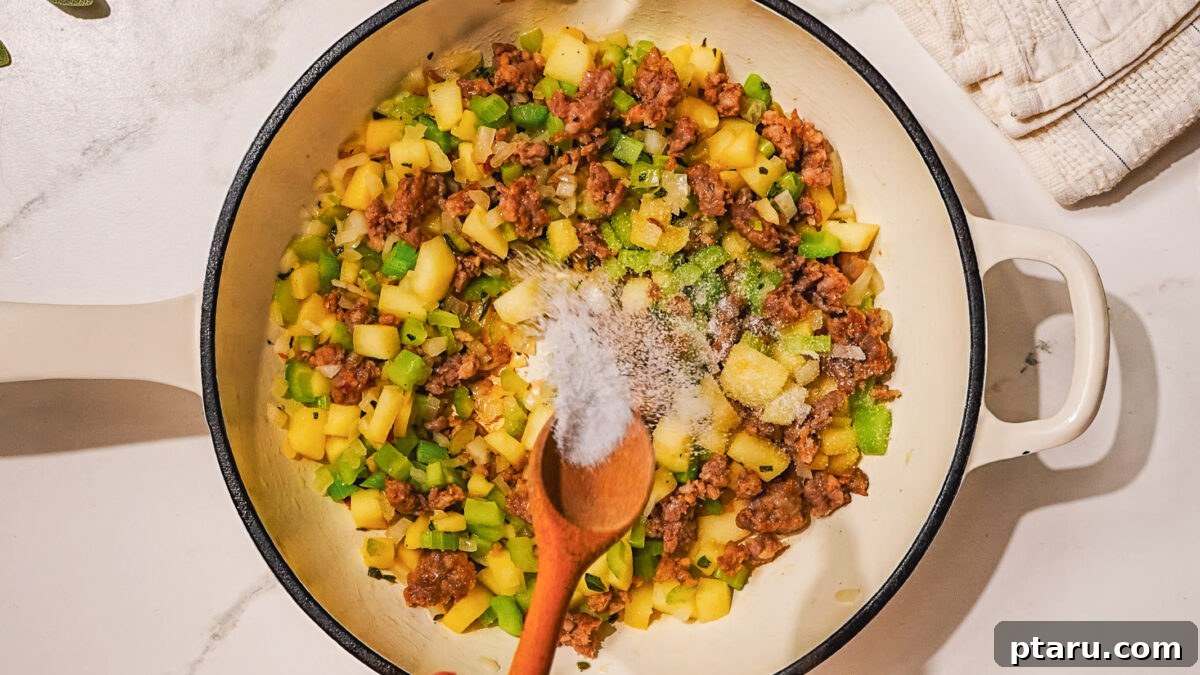
Begin by heating 1 tablespoon of olive oil in a large, sturdy skillet over medium heat. Add the mild Italian sausage, ensuring the casings have been removed. Cook the sausage for 4 to 5 minutes, using a spoon to break it apart into crumbles as it browns, until it’s fully cooked through and wonderfully fragrant. Next, introduce the finely diced apple, chopped onion, chopped celery, fresh sage, a quarter teaspoon of kosher salt, and a quarter teaspoon of black pepper to the skillet. Continue to sauté this mixture for another 4 to 5 minutes, stirring occasionally, until the apples have softened slightly and the onions become translucent, releasing their sweet aromas. Finally, stir in the panko breadcrumbs and apple cider (or chicken broth). Cook for just 1 to 2 more minutes, allowing the breadcrumbs to absorb the liquid and for the mixture to come together firmly when pressed. Taste the stuffing and adjust seasoning if necessary. Remove the skillet from the heat and set the stuffing aside to cool slightly while you prepare the pork chops.
Step 2: Expertly Prep the Pork Chops
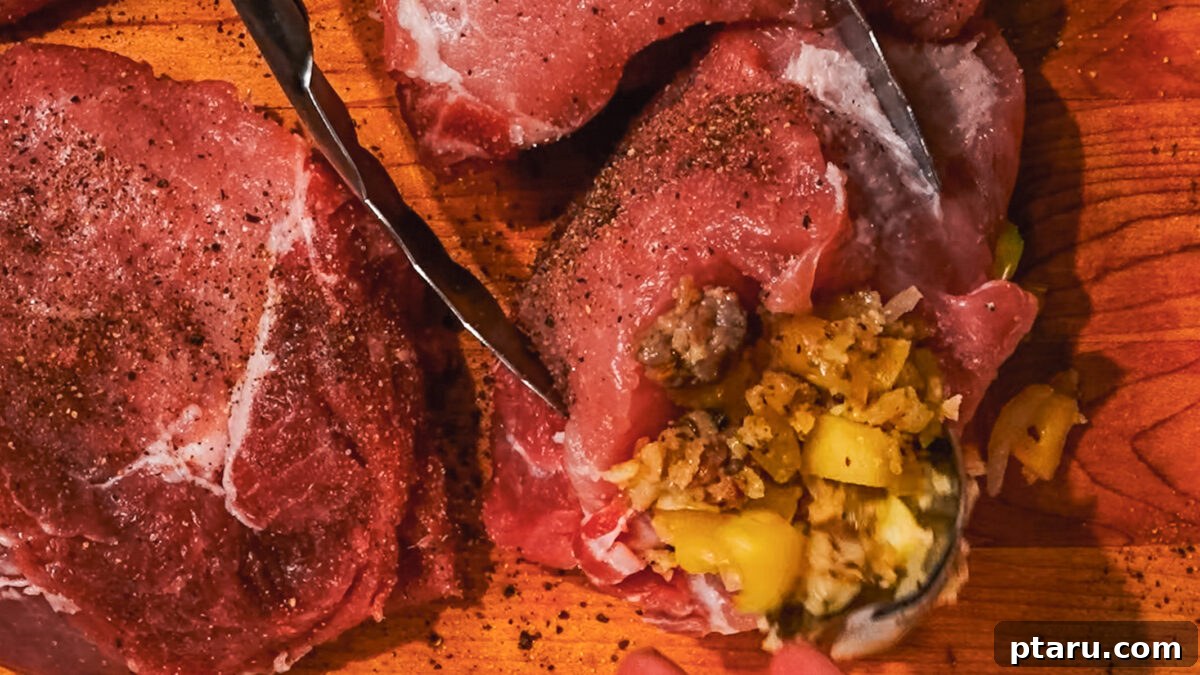
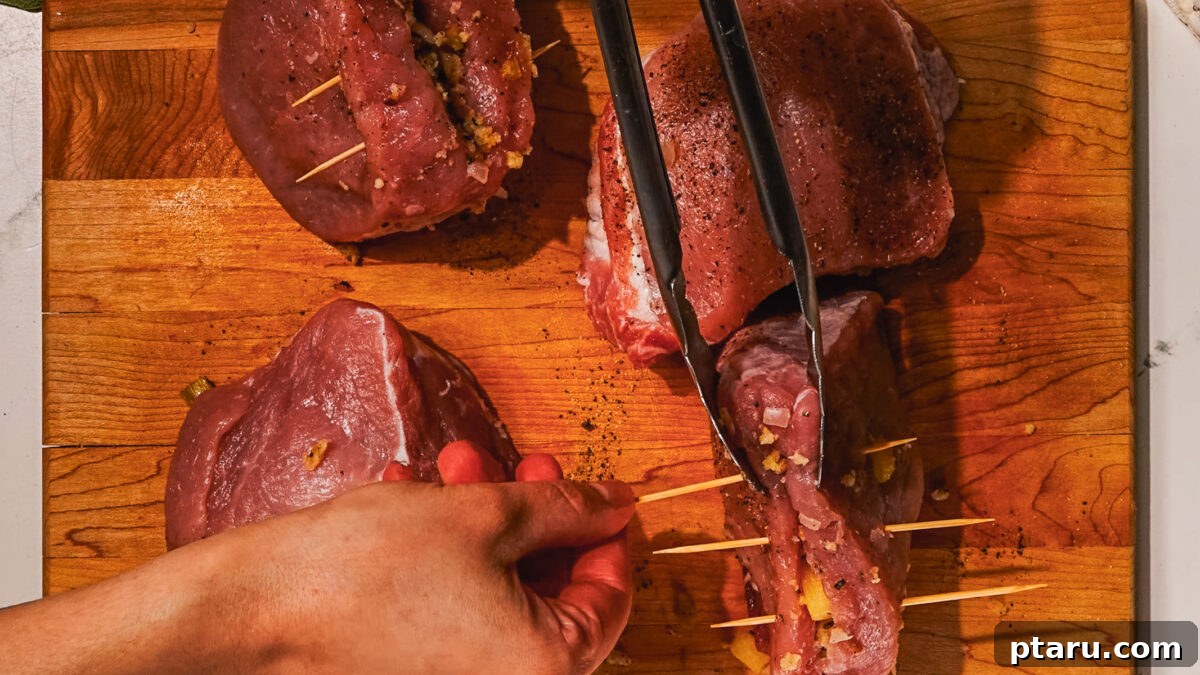
Careful preparation of the pork chops is key to a successful dish. Inspect each chop for any thick white fat caps along the edge. If present, trim and discard them. A substantial fat cap won’t render adequately during the quick searing and roasting process, resulting in an unpleasantly rubbery texture. If the fat layer is already thin or mostly trimmed, it’s fine to leave it for added flavor and moisture. Now, using a sharp boning or paring knife, carefully cut a deep horizontal pocket into the thickest side of each pork chop. Aim to stop about 1/2 inch from the opposite side and edges, creating a wide, generous pocket without cutting all the way through. This ensures the stuffing remains securely enclosed. Generously season both the inside of each pocket and the exterior of the chops with the remaining 2 teaspoons of kosher salt and 3/4 teaspoon of black pepper. Spoon the cooled stuffing mixture into each pocket, pressing it in firmly and compactly with your fingers to prevent it from falling out. Secure the open edge of each chop with one or two toothpicks. A slight overflow of stuffing at the opening is perfectly acceptable and adds to the rustic charm.
Step 3: Sear for Flavor, Roast for Tenderness
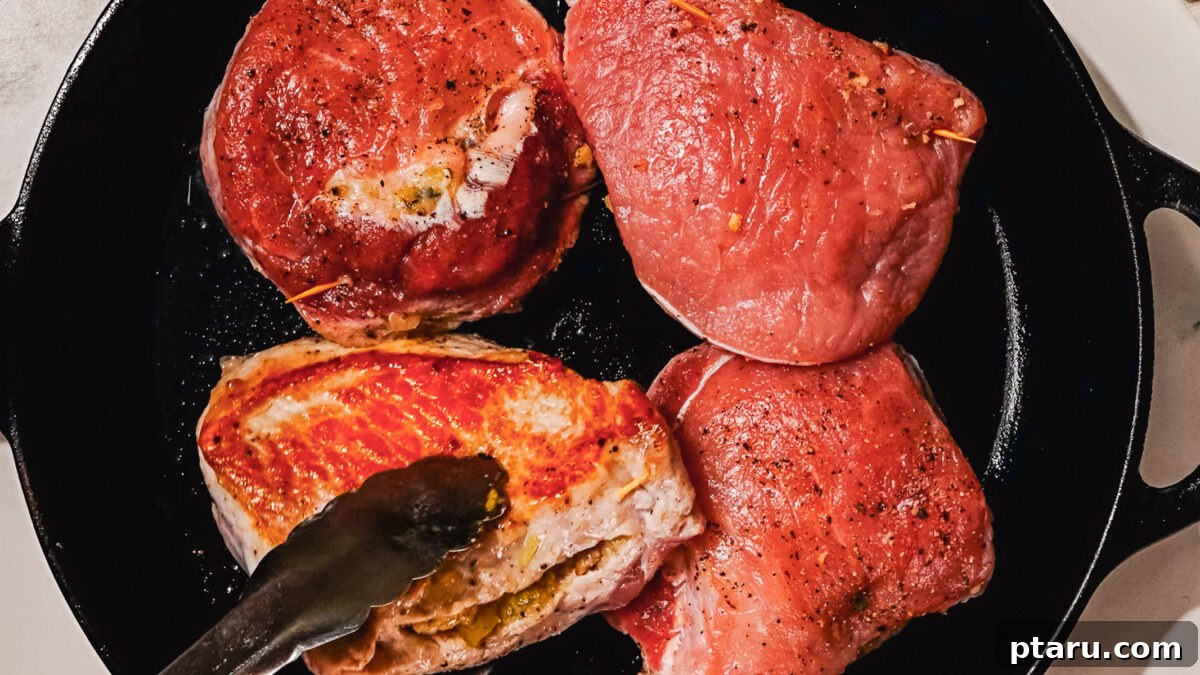
Preheat your oven to a robust 400°F (200°C). Return your large oven-safe skillet to medium-high heat on the stovetop and add 1 tablespoon of olive oil. Heat the oil until it shimmers, indicating it’s hot enough to create a perfect sear. Carefully place the stuffed chops into the hot skillet, ensuring not to overcrowd the pan (this is crucial for proper browning, not steaming). Sear the chops for 2 minutes without moving them, allowing a beautiful, deep golden-brown crust to form on the bottom. Using tongs, gently flip each chop. As you turn them, subtly squeeze the open side shut to help keep the stuffing intact. Sear the second side for another 2 minutes until similarly golden. If your skillet is not large enough to accommodate all four chops without crowding, sear them in two batches, then transfer all seared chops to a rimmed baking sheet for the next step. Transfer the skillet (or baking sheet) with the seared chops to the preheated oven. Roast for 10 to 15 minutes. The exact timing will depend on the thickness of your chops and your oven’s calibration. The most reliable way to check for doneness is to insert an instant-read thermometer into the thickest part of the pork (being careful not to poke into the stuffing). Pull the chops from the oven when they reach an internal temperature of 140 to 145°F. Immediately transfer the cooked chops to a clean plate and allow them to rest undisturbed for 5 minutes before serving. This resting period is vital for the juices to redistribute throughout the meat, ensuring maximum tenderness and flavor.
Step 4: Craft the Luscious Pan Sauce
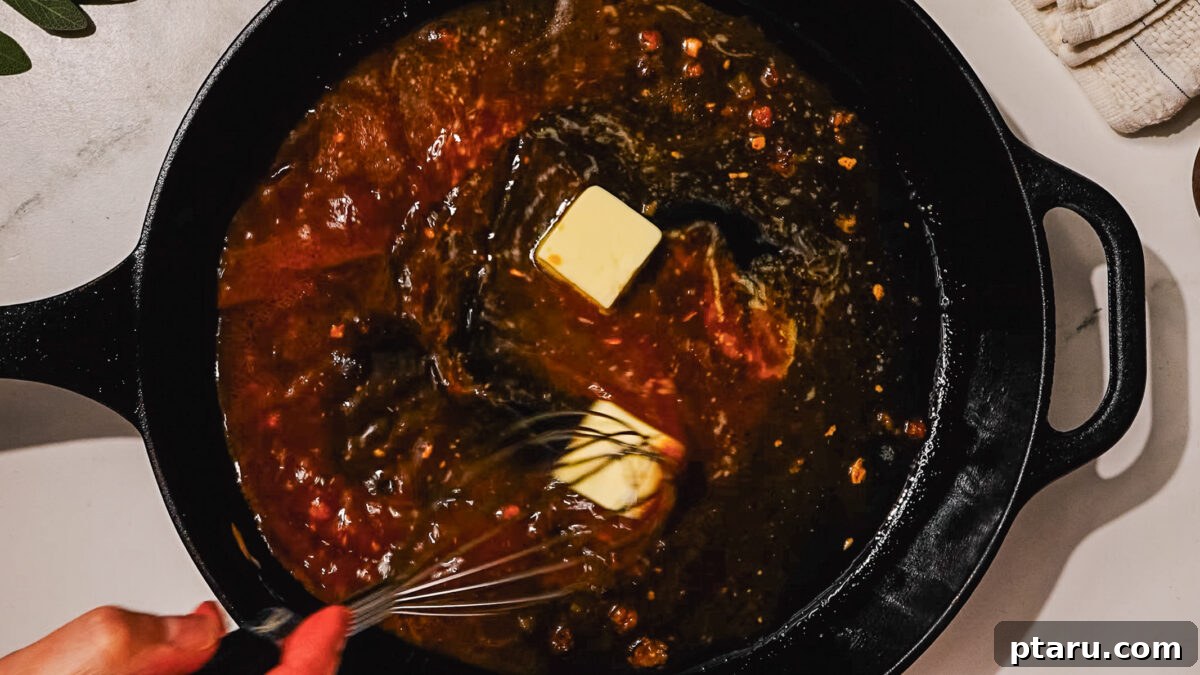
While your magnificent chops are resting, place the same skillet you used for searing back over medium heat on the stovetop. Do not clean the pan, as the browned bits (or “fond”) left behind are packed with flavor. Add 1/2 cup of chicken broth and 1/4 cup of apple cider (or white wine) to the skillet. Use a wooden spoon to vigorously scrape up all the delicious browned bits from the bottom of the pan, incorporating them into the liquid. Allow the sauce to simmer for 2 to 3 minutes, or until it has slightly reduced and thickened. Stir in the 1 teaspoon of Dijon mustard and, if using, the 1 teaspoon of balsamic vinegar. Continue to reduce for another minute, allowing the flavors to meld beautifully. Remove the skillet from the heat and, while whisking constantly, add the 2 tablespoons of unsalted butter, one piece at a time, until the sauce becomes glossy, smooth, and slightly thickened. Finally, pour in any accumulated resting juices from the plate where the chops were resting – these juices are pure gold for flavor! Taste the sauce and season with a small pinch of salt and pepper as needed. Remember that the broth and cider reduce and concentrate in flavor, so taste before adding too much salt.
Step 5: Present and Serve with Panache
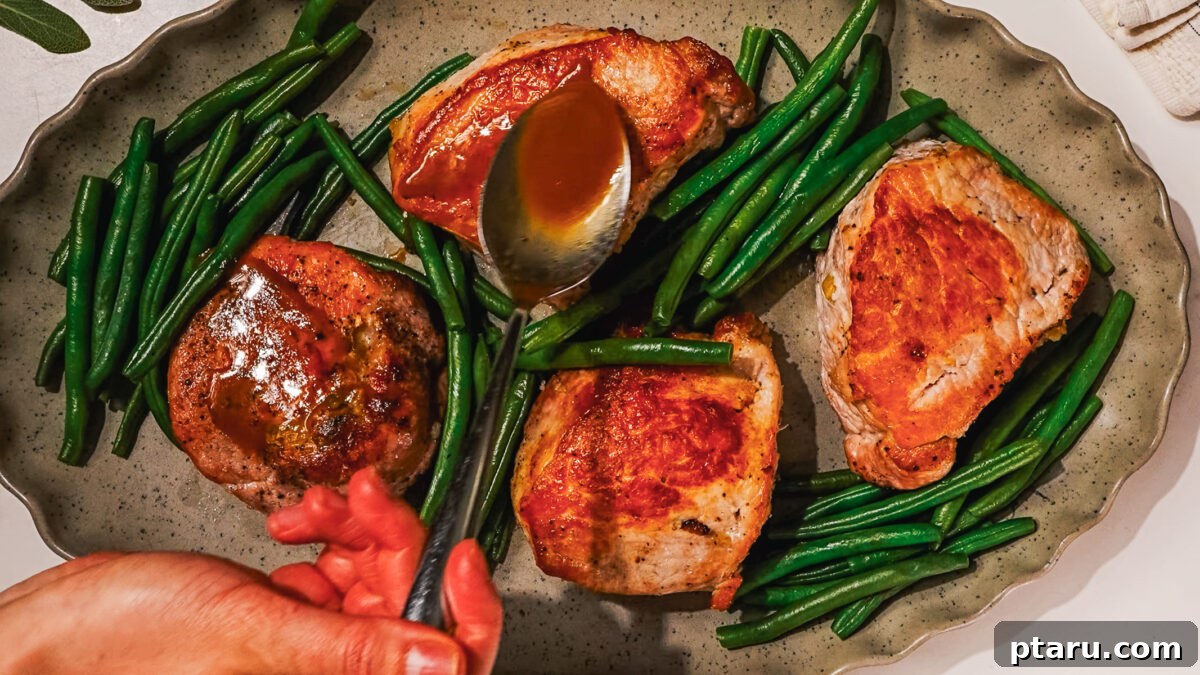
Once the pork chops have rested, carefully remove and discard all the toothpicks from each chop. If any stuffing has slightly fallen out during cooking, gently press it back into the pocket. To serve, arrange the stuffed pork chops on individual plates, preferably with the stuffed side facing up to showcase the inviting filling. Generously spoon the warm, buttery pan sauce over each chop. Serve immediately with your chosen side dishes and prepare for a chorus of compliments!
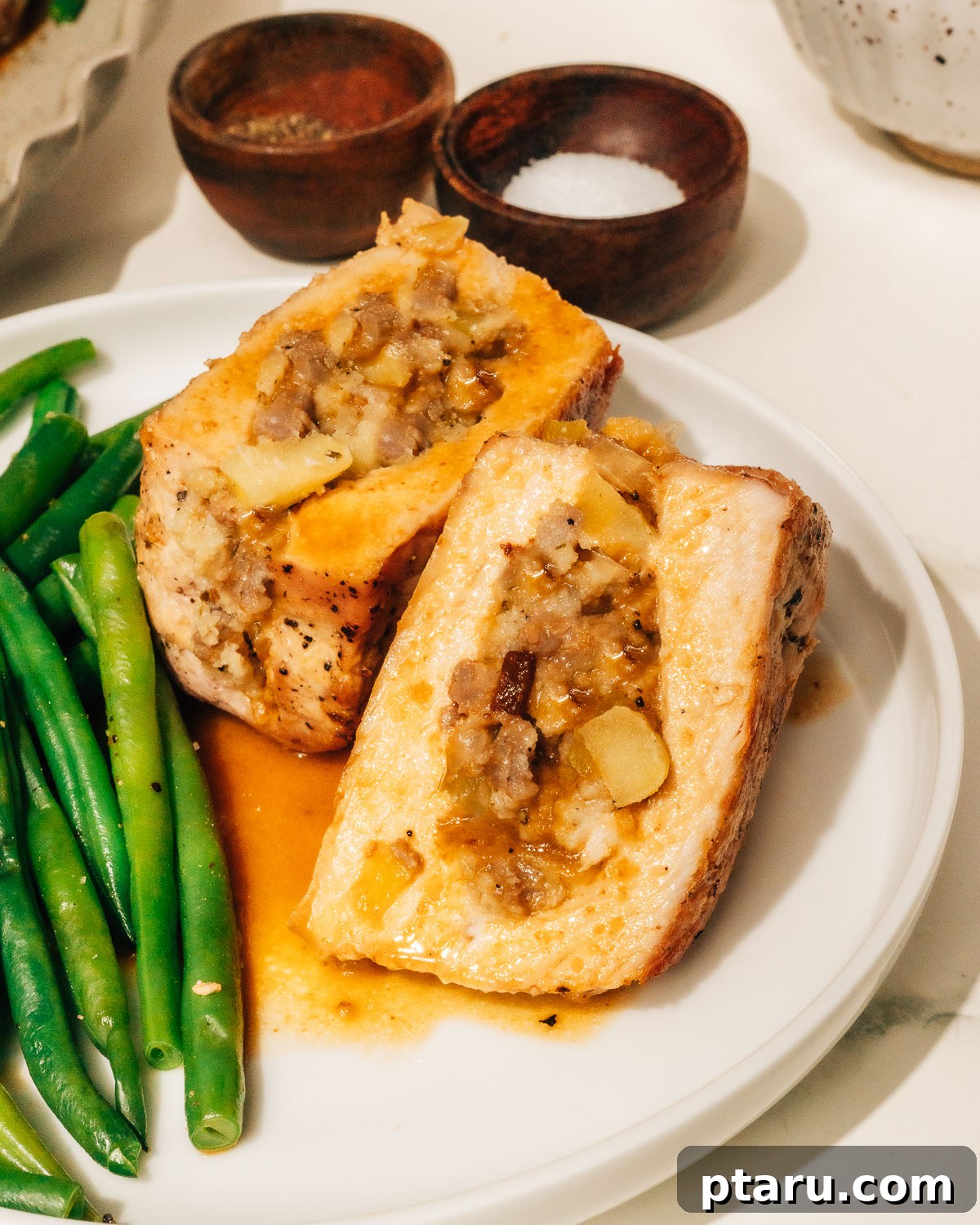
Avoid These 5 Common Mistakes for Perfect Stuffed Pork Chops
Even seasoned cooks can stumble when preparing stuffed pork chops. Here are the most frequent pitfalls to avoid, ensuring your dish is consistently tender, juicy, and packed with flavor:
- Using Thin Chops: This is perhaps the most critical mistake. You absolutely need pork chops that are at least 1 1/2 inches thick to create a substantial, proper stuffing pocket. Thinner chops simply won’t accommodate enough filling and, more importantly, will cook too rapidly, leading to dry, tough meat before the stuffing is adequately warmed through. Always choose thick cuts for optimal results.
- Under-packing the Stuffing: Don’t be shy! When filling the chops, use your fingers to press the stuffing in firmly and compactly. Loose, lightly packed stuffing is prone to falling out into the hot oil during the searing process, creating a mess and resulting in uneven heating within the oven. A tightly packed stuffing ensures it stays put and cooks evenly.
- Skipping the Essential Sear: The initial searing of the pork chops isn’t just for aesthetics; it’s fundamental for flavor development. The high heat creates a rich, deeply browned “fond” (the caramelized bits stuck to the bottom of the pan) which is then deglazed to form the base of your pan sauce. Without this crucial browning, your pan sauce will lack depth and complex flavor. Always aim for a beautiful, deep golden crust.
- Cooking Past 145°F: Pork is notoriously unforgiving when overcooked. Its lean nature means it dries out incredibly quickly. To achieve perfectly juicy pork chops, pull them from the oven when an instant-read thermometer inserted into the thickest part of the meat (avoiding the stuffing) registers between 140°F and 145°F. The carryover cooking will safely bring the internal temperature up to 145°F during the resting period. This precise temperature control is the same reliable approach I use for a tender roast pork loin, and it consistently delivers.
- Cutting in Before Resting: Patience is a virtue when it comes to cooked meat. Allowing the pork chops to rest for a full 5 minutes after cooking is non-negotiable. This critical step allows the muscle fibers to relax and the internal juices to redistribute evenly throughout the meat. If you cut into the chops too soon, those precious, flavorful juices will simply run out onto your cutting board, leaving you with drier pork.
Make-Ahead Tips and Storage Solutions for Convenience
This stuffed pork chops recipe is perfect for planning ahead, allowing you to enjoy a gourmet meal without the day-of rush. Proper storage also ensures delicious leftovers.
Storing Leftovers with Care
- Refrigerator Storage: Any leftover cooked stuffed pork chops should be stored promptly in an airtight container in the refrigerator for up to 3 days. Before storing, remember to remove any toothpicks.
- Separate Sauce Storage: For best results, store the pan sauce separately in a small, sealed jar. It maintains its quality and flavor for 3 to 4 days in the fridge and reheats beautifully on the stovetop.
Freezing for Future Enjoyment
- Uncooked Stuffed Pork Chops: To prepare ahead, wrap each uncooked, stuffed pork chop tightly in plastic wrap, then place them in a freezer-safe bag or container. They can be frozen for up to 2 months. Thaw them overnight in the refrigerator before proceeding with the searing and roasting steps.
- Cooked Leftovers: Cooked stuffed pork chops also freeze remarkably well. Allow them to cool completely before individually wrapping them in plastic wrap, then storing them in a freezer-safe bag for up to 2 months.
Reheating Stuffed Pork Chops for Best Quality
- Oven Reheating Method: The best way to reheat cooked stuffed pork chops is in the oven. Place them in an oven-safe dish, cover tightly with foil, and reheat at a gentle 300°F (150°C) for 15 to 20 minutes, or until warmed through. To prevent the pork from drying out, add a small splash of chicken broth or water to the bottom of the pan before covering.
- Avoid High Heat: It’s crucial to reheat pork “low and slow.” High heat will rapidly dry out the already cooked meat, compromising its tenderness and flavor. This gentle reheating approach is similar to how you’d carefully warm slow cooker pork loin to maintain its succulence.
Perfect Pairings: How to Serve These Stuffed Pork Chops
These hearty stuffed pork chops are robust enough to be the star of any meal, yet a thoughtfully chosen side dish can transform them into a complete and truly unforgettable dining experience. Always remember to spoon that amazing pan sauce generously over each chop right before serving. For an elegant presentation that highlights the delicious filling, I recommend plating them with the stuffed side facing up.
Inspired Side Dishes for Stuffed Pork Chops
- Creamy Mashed Potatoes: This is my absolute go-to pairing for this recipe. The smooth, buttery mashed potatoes provide the perfect canvas for soaking up every drop of that rich, savory pan sauce, which effectively doubles as an incredible gravy for your potatoes.
- Maple Roasted Butternut Squash: The inherent sweetness and earthy notes of maple-roasted butternut squash beautifully complement the savory Italian sausage and sweet apple in the stuffing. It’s a harmonious pairing, especially fitting for fall or winter meals.
- Sautéed Greens: For a lighter, yet equally delicious, contrast, consider serving wilted spinach or sautéed kale. These vibrant greens balance the richness of the buttery pan sauce and offer a healthy, refreshing element to the plate.
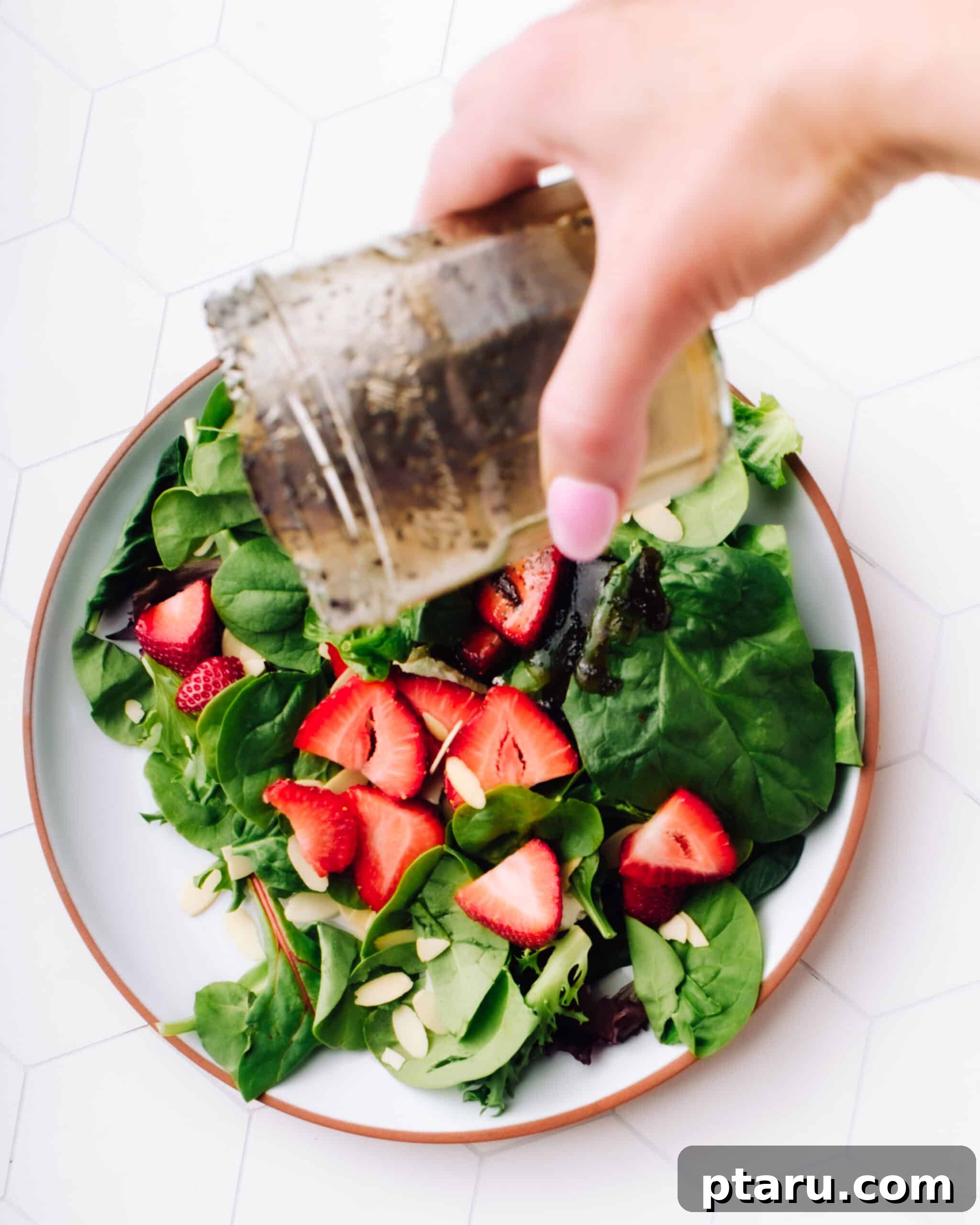
- Simple Green Salad: A crisp green salad with a bright, acidic vinaigrette provides an excellent counterpoint to the richness of the pork and sauce. The fresh, tangy flavors cleanse the palate and add a refreshing crunch.
- Roasted Asparagus or Green Beans: Quick and easy, simply roasted asparagus or blanched green beans tossed with a bit of garlic and lemon make for an effortless and elegant side that doesn’t compete with the main dish.
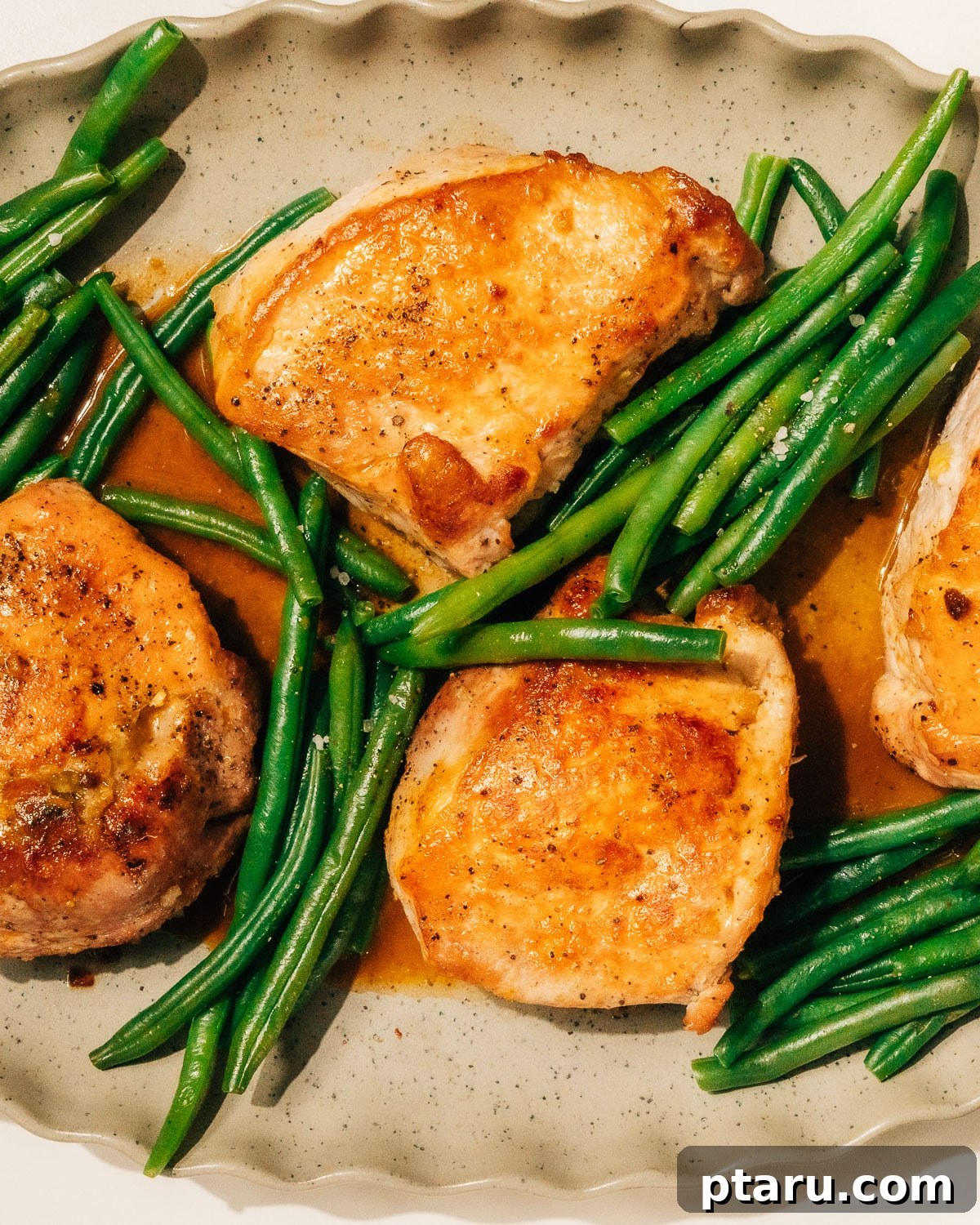
Expert Insights: Pro Tips & Science-Based Secrets for Perfect Stuffed Pork Chops
Having prepared this stuffed pork chops recipe countless times, I’ve gathered some invaluable tips and scientific insights to help you achieve restaurant-quality results in your own kitchen. These finer points can truly elevate your dish from good to absolutely extraordinary.
- Always Start with Hot Oil: The importance of shimmering hot oil cannot be overstated when searing meat. If the oil isn’t hot enough when the chops go into the pan, they will steam instead of sear, preventing the formation of that crucial, flavorful golden crust. A proper sear locks in juices and builds the foundation for your incredible pan sauce. This is the same golden rule I swear by for my baked pork chops, too.
- Precisely Trim the Fat Cap: While some fat adds flavor and moisture, a thick white fat cap on the edge of your pork chop will not render down sufficiently during a relatively short oven roast. This results in a chewy, unpleasant texture. Take a moment to trim off any excessively thick fat for a cleaner, more enjoyable eating experience.
- Pack the Stuffing Tightly: This isn’t just about preventing a mess. A firmly packed stuffing holds its shape better, ensuring it cooks evenly and doesn’t spill out into the hot oil during the sear or in the oven. Use your fingers to really compress the filling into the pocket.
- The Tongs Technique for Flipping: This might sound like a small detail, but it makes a big difference. When flipping the stuffed chops in the skillet, use your tongs to gently squeeze the open side shut as you turn them. This simple two-second maneuver prevents the stuffing from dislodging and spilling out into the pan, keeping your presentation and your filling intact.
- Reduce the Sauce Before Buttering: For a truly luscious and glossy pan sauce, allow the chicken broth and apple cider to simmer and reduce for a full 2 to 3 minutes before whisking in the butter. This reduction concentrates the flavors and ensures the sauce has enough body to cling beautifully to the pork chops, rather than being a thin, watery accompaniment. A well-reduced sauce coats the pork chop much better, enhancing every bite.
Frequently Asked Questions About Stuffed Pork Chops
Just looking for quick answers? Here are responses to the most commonly asked questions about making delicious stuffed pork chops.
The best pork chops for stuffing are thick-cut, ideally at least 1 1/2 inches thick. This thickness provides ample space to create a deep, sturdy pocket for the filling without cutting all the way through the meat. Both bone-in and boneless chops can be used effectively. Bone-in chops often retain a bit more moisture and flavor during cooking due to the presence of the bone.
Cutting a pocket in a pork chop is simpler than it seems with the right technique. Use a sharp boning or paring knife. Insert the knife horizontally into the thickest side of the chop, starting from the edge. Angle the blade slightly to carefully widen the pocket internally. Continue cutting inward, stopping approximately half an inch from the opposite side and the other three edges. Work slowly and carefully to avoid piercing through the meat.
Stuffed pork chops should be cooked to an internal temperature of 140°F to 145°F. Always insert an instant-read thermometer into the thickest part of the pork itself, making sure not to touch the stuffing, which can have a different temperature. Remove the chops from the oven when they reach 140°F. During a 5-minute resting period, carryover heat will safely bring the temperature up to 145°F, ensuring juicy and tender results without overcooking.
After searing, stuffed pork chops typically bake at 400°F (200°C) for 10 to 15 minutes. The precise cooking time can vary based on the exact thickness of your chops and your oven’s accuracy. It’s always best to rely on an instant-read thermometer rather than time alone. Begin checking the internal temperature at the 10-minute mark and remove them when they reach 140°F to prevent overcooking.
Yes, you can certainly prepare parts of this recipe in advance to save time. The stuffing mixture can be made up to a day ahead and stored in an airtight container in the refrigerator. You can also stuff the raw pork chops a few hours before cooking and keep them refrigerated. However, it’s generally not recommended to fully cook the chops entirely ahead of time, as pork can tend to dry out when reheated.
Absolutely! While the apple-sausage stuffing is incredibly popular, this recipe is adaptable to your preferences. Feel free to use your favorite stuffing recipe, or even a good quality store-bought stovetop stuffing. Just ensure the stuffing is not overly wet to maintain its structure within the pork chop.
Keeping baked stuffed pork chops wonderfully juicy relies on three key factors: using thick-cut chops (at least 1 1/2 inches), cooking to the correct internal temperature (pulling them at 140-145°F), and always allowing them to rest for 5 minutes before slicing. The sausage-apple stuffing itself helps lock in moisture, and generously spooning the rich pan sauce over each chop right before serving adds another layer of moisture and flavor.
More Irresistible Pork Recipes You’ll Love
If you enjoyed these stuffed pork chops, be sure to explore more of our favorite pork dishes:
- How to Cook Pork Chops in the Oven
- Crockpot Pork Loin (Slow Cooker Pork Loin)
- Easy Roast Pork Loin
- Slow Cooker Pork Shoulder (Crockpot Recipe)
Stuffed Pork Chops with Sausage, Apple & Tasty Pan Sauce!
Jennifer Pallian BSc, RD
4
Recipe Overview Video
A quick video demonstration to guide you through the cooking process for these delicious stuffed pork chops. (Video content would be embedded here if JavaScript was allowed, but we’re keeping it pure HTML!)
Ingredients
For the Stuffing
- 1 tbsp olive oil
- 6 oz mild Italian sausage (casings removed)
- ½ cup peeled and finely diced apple (like Honeycrisp or Granny Smith)
- ½ cup finely chopped onion (about 1/3 of a medium onion)
- ½ cup finely chopped celery (1 large or 2 small stalks)
- ½ tbsp chopped fresh sage (or 1/2 tsp dried)
- ¼ tsp kosher salt
- ¼ tsp black pepper
- ½ cup panko breadcrumbs
- ¼ cup apple cider (or chicken broth)
For the Pork Chops
- 4 1 1/2″-thick pork chops (boneless or bone-in, about 2 to 2 1/4 lbs total)
- 2 tsp kosher salt
- ¾ tsp black pepper
- 1 tbsp olive oil
For the Pan Sauce
- ½ cup chicken broth
- ¼ cup apple cider (or white wine)
- 1 tsp Dijon mustard
- 1 tsp balsamic vinegar (optional, for depth)
- 2 tbsp unsalted butter
- Salt and pepper to taste
Instructions
Make the Stuffing
- Heat 1 tbsp olive oil in a large skillet over medium heat. Add the sausage and cook for 4 to 5 minutes, breaking it up with a spoon, until browned and cooked through.
- Add the apple, onion, celery, sage, salt, and pepper. Sauté for 4 to 5 minutes, stirring occasionally, until the apple has softened and the onion is translucent.
- Stir in the panko and apple cider. Cook for 1 to 2 more minutes, until the breadcrumbs absorb the liquid and the mixture holds together when pressed. Taste and adjust seasoning if needed. Set aside and let cool slightly.
Prep the Chops
- If any chops have a thick white fat cap on the edge, trim and discard it. A fat cap won’t render during a quick sear and stays rubbery. If the fat is thin and already mostly trimmed, you can leave it.
- Cut a deep horizontal pocket in the thickest side of each chop with a sharp boning or paring knife, stopping about 1/2 inch from the opposite side and edges. You want the pocket to be as wide as possible without cutting through.
- Season both the outside and the inside of each pocket generously with the 2 tsp kosher salt and 3/4 tsp black pepper.
- Spoon the stuffing into each pocket and use your fingers to press it in firmly and compactly. Secure the open edge with one or two toothpicks to keep it closed during searing. A little overflow at the opening is fine.
Sear and Roast
- Preheat the oven to 400°F (200°C).
- Heat 1 tbsp olive oil in a large oven-safe skillet over medium-high heat until shimmering. Add the stuffed chops and sear for 2 minutes without moving them, until a deep golden crust forms on the bottom.
- Use tongs to flip each chop, squeezing the open side gently shut as you turn it to prevent stuffing from falling into the oil. Sear for another 2 minutes on the second side.
- If all four chops don’t fit in one skillet without crowding, sear them in two batches, then transfer them to a rimmed baking sheet for the roasting step.
- Transfer the skillet (or baking sheet) to the oven. Roast for 10 to 15 minutes, until an instant-read thermometer inserted into the thickest part of the pork (not the stuffing) reads 140 to 145°F.
- Transfer the chops to a plate and let them rest for 5 minutes before serving. Do not cut in early or the juices will run out.
Make the Pan Sauce
- Place the same skillet over medium heat. Add the chicken broth and apple cider. Use a wooden spoon to scrape up all the browned bits from the bottom of the pan. Let it simmer for 2 to 3 minutes until slightly reduced.
- Stir in the Dijon mustard and balsamic vinegar if using. Let the sauce reduce for another minute, then remove from heat and whisk in the butter one piece at a time until the sauce is glossy and slightly thickened.
- Pour in any juices that have accumulated on the plate from the resting chops. Season with a small pinch of salt and pepper to taste. The broth reduces and concentrates as it simmers, so taste before adding salt.
Serve
- Remove the toothpicks from each chop. Press any stuffing that fell out back into the pocket. Spoon the pan sauce generously over each chop and serve right away.
Notes
Fat Cap: Trim any thick white fat cap from the edge of the chop before cooking. This type of fat won’t render sufficiently during the quick sear and will result in a tough, chewy texture. If the fat is already thin or mostly trimmed, it’s fine to leave it.
Apple Choice: Honeycrisp apples will add a delightful sweetness to your stuffing, while Granny Smith apples will contribute a pleasant tartness. Both work exceptionally well. Avoid soft varieties such as Red Delicious or McIntosh, as they tend to become mushy during the cooking process.
Sausage Flavor: Mild Italian sausage provides the ideal flavorful base for the filling. If you enjoy a kick, spicy Italian sausage is also a fantastic option. For those who dislike the taste of fennel, breakfast sausage offers a milder, yet still savory, alternative.
Stuffing Ahead: To streamline your meal prep, the entire stuffing mixture can be prepared up to 1 day in advance and stored in the refrigerator. Before stuffing the chops, allow it to come to room temperature for about 15 minutes.
Batch Searing: If your skillet cannot comfortably accommodate all four chops without crowding, it’s essential to sear them in two separate batches. Crowding the pan lowers the temperature and causes the meat to steam rather than sear, preventing the formation of that delicious golden crust. After searing, transfer both batches to a rimmed baking sheet for roasting.
Pan Sauce Foundation: The pan sauce is ingeniously built directly in the same skillet used for searing the chops. Do not clean the pan beforehand; the browned bits (fond) left behind are crucial for developing deep, rich flavor in your sauce. The balsamic vinegar is optional but adds remarkable depth and complexity.
Achieving Doneness: The key to juicy pork is cooking it precisely. Remove the chops from the oven when an instant-read thermometer registers 140°F in the thickest part of the meat (not the stuffing). Allow them to rest for 5 minutes, during which carryover heat will bring them to the safe and perfectly tender 145°F. Cooking beyond this point will quickly dry out the pork.
Storage for Leftovers: Leftover cooked chops can be stored in an airtight container in the fridge for up to 3 days. Remember to remove all toothpicks prior to storage. Store the pan sauce separately in a small, sealed jar. To reheat, place chops covered with foil in a 300°F oven with a splash of broth to maintain moisture. Avoid high heat when reheating to prevent drying.
Nutrition
Carbohydrates: 14g
Protein: 37g
Fat: 34g
Saturated Fat: 12g
Polyunsaturated Fat: 4g
Monounsaturated Fat: 16g
Trans Fat: 0.4g
Cholesterol: 136mg
Sodium: 1837mg
Potassium: 748mg
Fiber: 2g
Sugar: 6g
Vitamin A: 283IU
Vitamin C: 3mg
Calcium: 47mg
Iron: 2mg
Nutrition information is automatically calculated and should only be used as an approximation.
Tried this recipe? Share your experience!
We’d love to hear how your Stuffed Pork Chops turned out. Leave a comment below and let us know your favorite part!