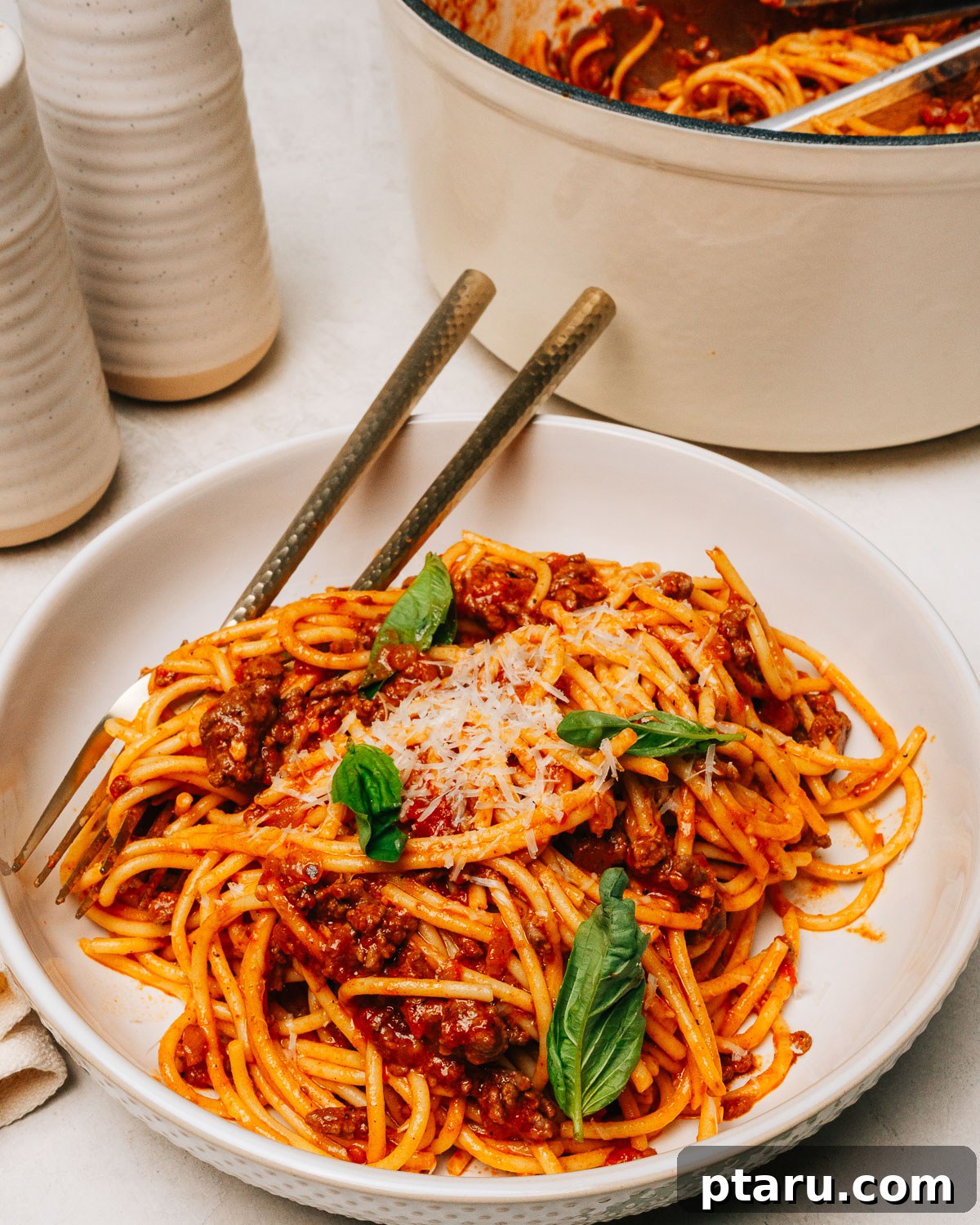
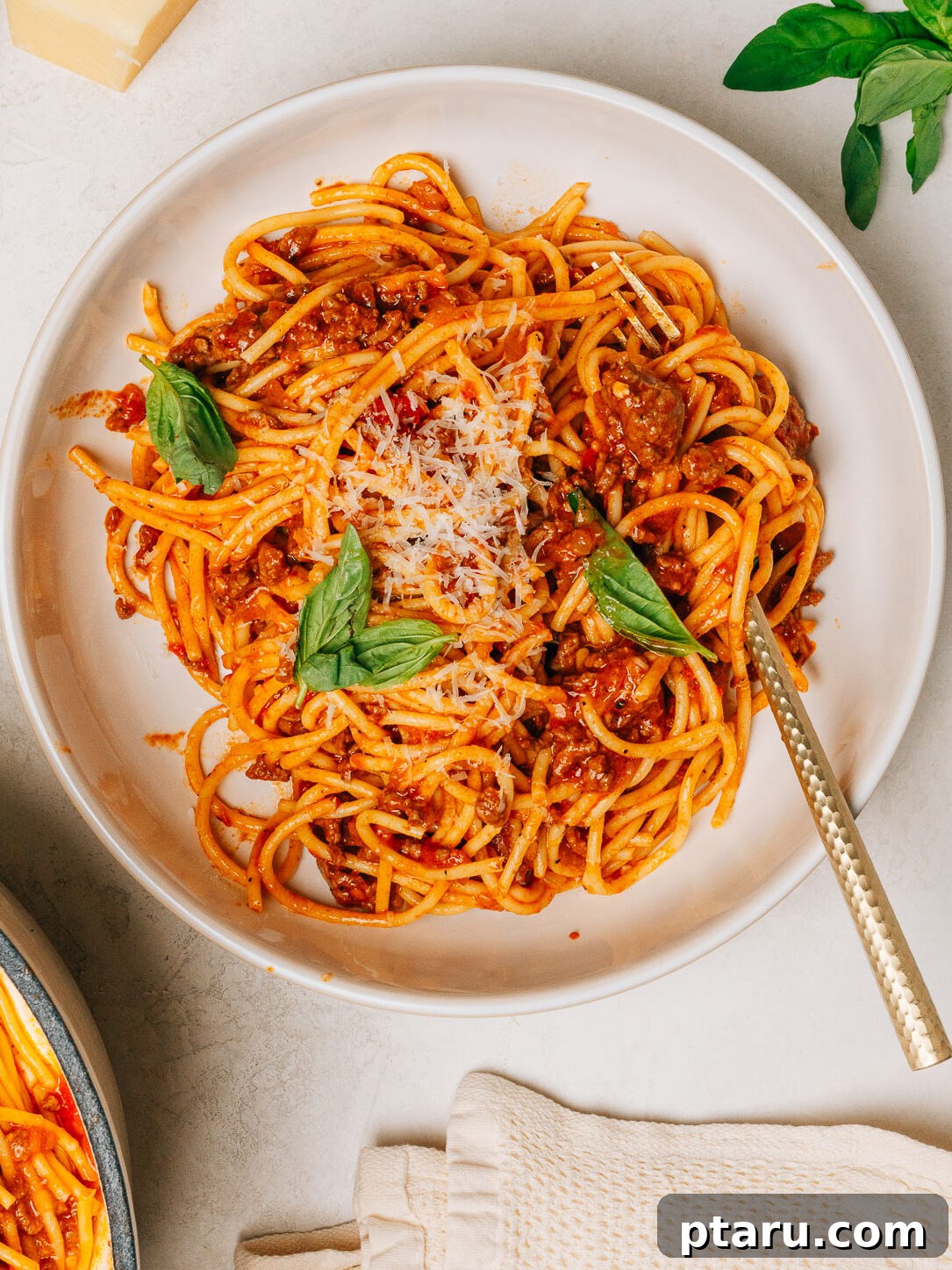
This easy spaghetti recipe with ground beef is the ultimate comfort food, a timeless dinner that satisfies every palate. Imagine a rich, savory meat sauce, slow-simmered to perfection, clinging to every delicate strand of pasta, infused with deep tomato flavor and perfectly browned beef. It’s more than just a meal; it’s a culinary experience that brings warmth and joy to the table.
While often perceived as a simple dish, a few clever food science secrets elevate this easy spaghetti with ground beef recipe from good to absolutely extraordinary. We’ll delve into the magic of browning tomato paste, gently caramelizing onions, and the surprising power of a tiny pinch of baking soda. These are not mere steps; they are guarantees for a sauce bursting with unparalleled flavor. Curious about the “why”? Read on to uncover the culinary wisdom!
Essential Ingredients for the Best Ground Beef Spaghetti
Creating this incredibly delicious, yet surprisingly simple, spaghetti dish relies on a foundation of basic pantry staples. Each ingredient plays a vital role in building the layers of flavor that make this recipe a household favorite.
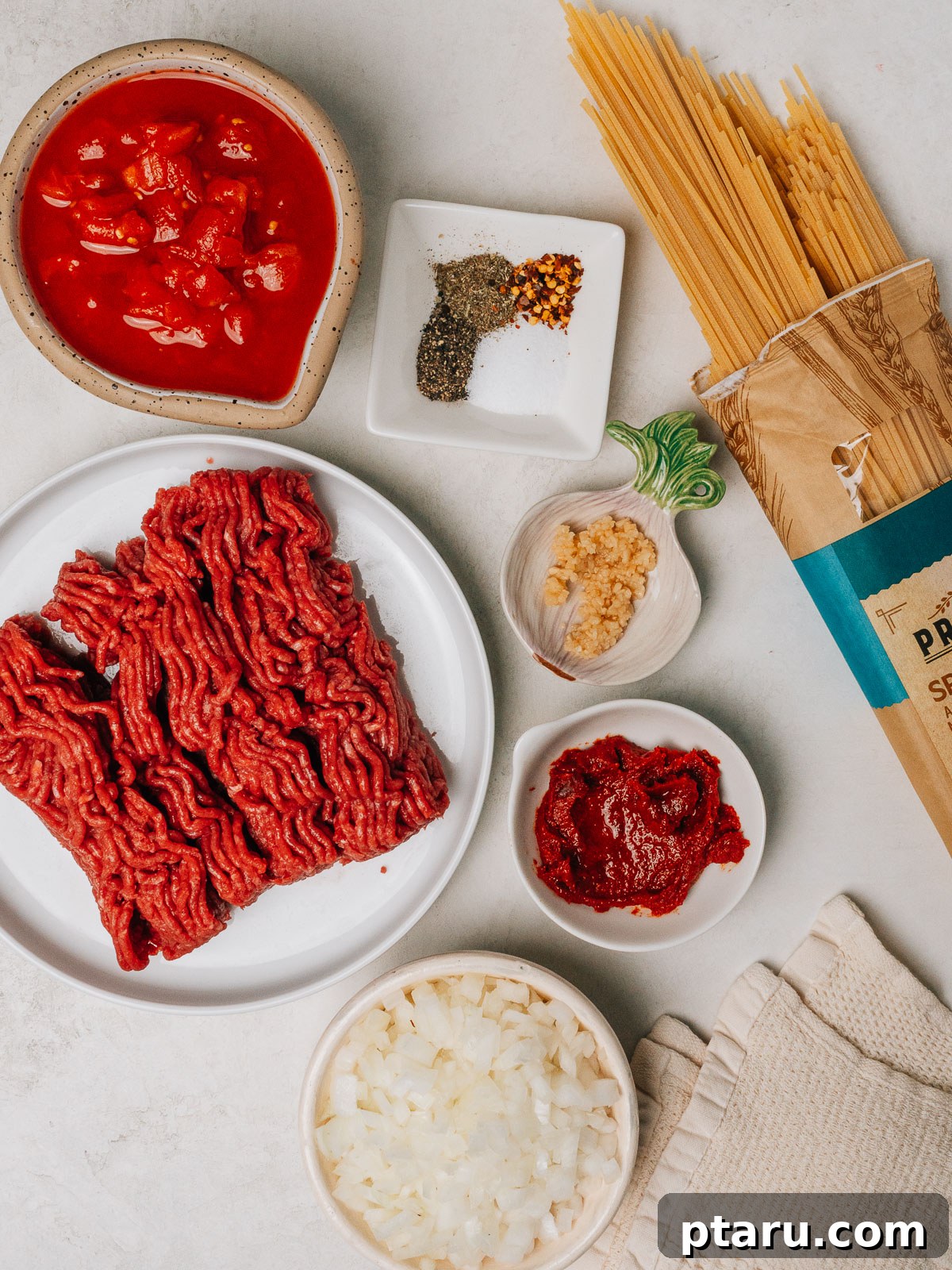
- Spaghetti: A classic choice, one pound typically serves a generous crowd. However, feel free to experiment with other long pasta noodles like linguine or bucatini if those are your preference or what you have on hand. The key is to select a pasta that can lovingly hold the rich sauce.
- Olive Oil: A good quality extra virgin olive oil provides the base for sautéing and adds a subtle fruity note that complements the other flavors.
- Onion: A single large onion, finely minced, forms the aromatic backbone of the sauce. Its slow cooking releases natural sugars, contributing essential sweetness and depth.
- Kosher Salt: Used judiciously throughout the cooking process – for the onions, the beef, and most importantly, for generously salting the pasta water. It’s crucial for seasoning each component from within.
- Garlic: Fresh garlic cloves, finely minced, impart a vibrant, fragrant aroma. Cooked briefly, it enhances the savory profile without turning bitter. While garlic powder can work in a pinch, the fresh cloves truly shine in a recipe with so few core ingredients.
- Ground Beef: Opt for 85 to 90 percent lean ground beef. This fat content strikes the perfect balance, ensuring ample flavor from the rendered fat without making the sauce overly greasy, contributing to a superior texture.
- Tomato Paste: This concentrated tomato powerhouse is essential. Browning it in the pot before adding other liquids builds an incredibly deep, roasted tomato flavor, transforming its sharp, raw notes into a rich, umami essence.
- Diced Tomatoes: A 28 oz can of diced tomatoes provides body, texture, and bright tomato flavor. If you prefer a smoother sauce, passata (strained tomatoes) can be used as a seamless substitute.
- Baking Soda: A small, almost imperceptible pinch of baking soda is a game-changer. It effectively neutralizes the often metallic or tinny, acidic flavor of canned tomatoes, drawing out their natural sweetness far more effectively than adding sugar. This is a subtle yet powerful trick for a perfectly balanced sauce.
- Seasonings: Freshly ground black pepper for a subtle kick, dried oregano for classic Italian herby notes, and red pepper chili flakes for those who appreciate a touch of warmth and spice. These seasonings are integral to the signature taste of this hearty meat sauce.
You’ll find the full, precise recipe quantities conveniently listed in the detailed recipe card at the very bottom of this article.
Creative Variations and Smart Substitutions
This versatile meat sauce adapts beautifully to various tastes and dietary needs. Don’t hesitate to personalize it with these simple yet impactful variations and substitutions:
- Ground Turkey or Pork: For a lighter take or a different flavor profile, either ground turkey or ground pork can be used in place of beef. Ground turkey is leaner, so you might consider adding a touch more olive oil to ensure the sauce doesn’t dry out.
- Italian Sausage: Elevate the richness and herbaceousness of your sauce by swapping half of the ground beef for crumbled Italian sausage. Both mild and spicy varieties work wonderfully, adding an extra layer of complexity.
- Crushed Tomatoes: If a thicker, smoother sauce is your preference from the outset, use crushed tomatoes instead of diced tomatoes. They break down more easily and contribute to a more uniform consistency.
- Fresh Basil: For a burst of fresh, aromatic flavor, stir in a generous handful of torn fresh basil leaves just before serving. The warmth of the sauce will coax out its vibrant perfume.
- Gluten-Free Pasta: This sauce is naturally gluten-free, making it easy to adapt for those with sensitivities. Simply use your preferred gluten-free spaghetti or other pasta shape; the sauce remains unchanged and equally delicious.
- More Vegetables: Boost the nutritional content and add subtle sweetness by grating in a carrot or finely dicing a bell pepper, zucchini, or eggplant. Add these vegetables with the onions to allow them ample time to soften and meld seamlessly into the sauce.
Essential Tools for Perfect Spaghetti and Meat Sauce
Having the right kitchen tools makes the cooking process smoother and ensures the best possible outcome for your spaghetti and meat sauce. Here are a few indispensable items:
- Large Dutch Oven or Heavy-Bottomed Pot: This is a key piece of equipment. Its wide surface area provides ample space to properly brown the ground beef, preventing it from steaming, and its even heat distribution allows the sauce to simmer gently and develop rich flavors over time.
- Large Pot for Pasta: For boiling spaghetti, a large pot is crucial. It allows the pasta to cook freely in plenty of salted water, preventing sticking and ensuring a perfectly al dente texture.
- Wooden Spoon or Spatula: Ideal for breaking up the ground beef as it browns and for stirring the sauce as it simmers, preventing it from sticking to the bottom of the pot and ensuring even cooking.
- Tongs or Pasta Fork: These tools are perfect for efficiently tossing the cooked spaghetti with the simmering sauce, ensuring every strand is thoroughly coated in deliciousness.
If you’re a true connoisseur of pasta with meat sauce, you’ll also love exploring my best meat sauce recipe for an even deeper dive into flavor development, or discover the simplicity of this one-pot pasta where all ingredients cook harmoniously together.
How to Craft the Perfect Spaghetti with Ground Beef: A Step-by-Step Guide
This recipe stands out as one of my most cherished and comforting ground beef creations. It comes together remarkably quickly, yet a couple of expert tricks transform it from a basic weeknight meal into a truly outstanding dish that tastes like it’s been simmering all day.
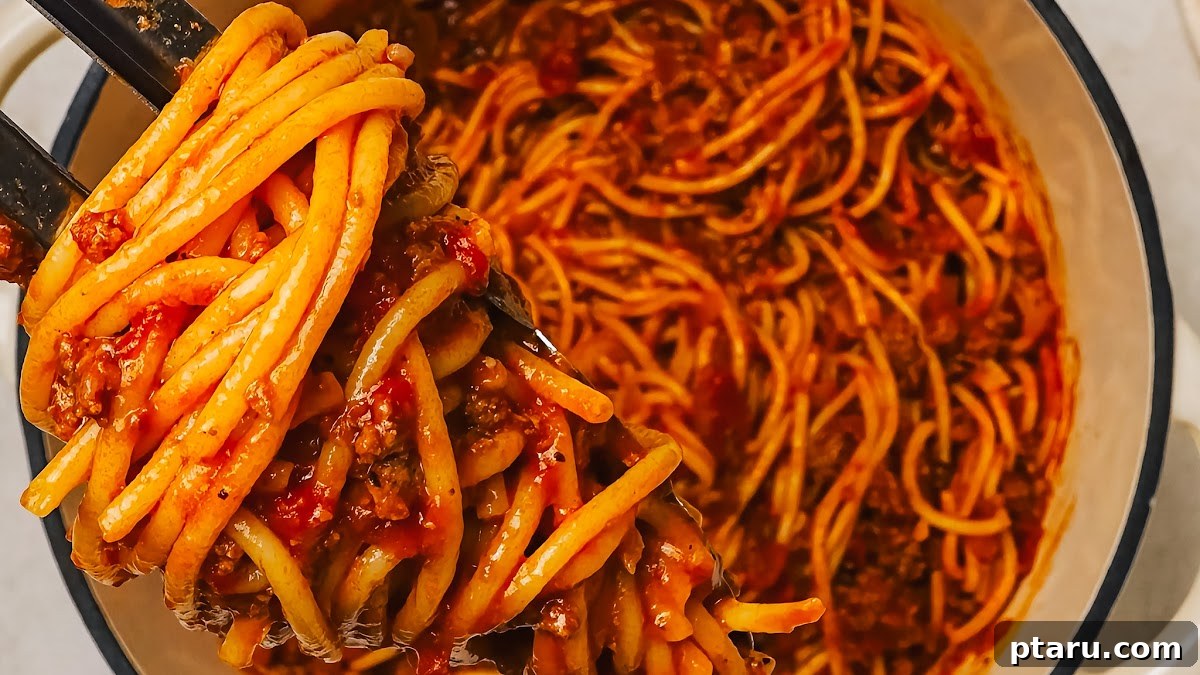
1. Cook the Onions Low and Slow for Natural Sweetness
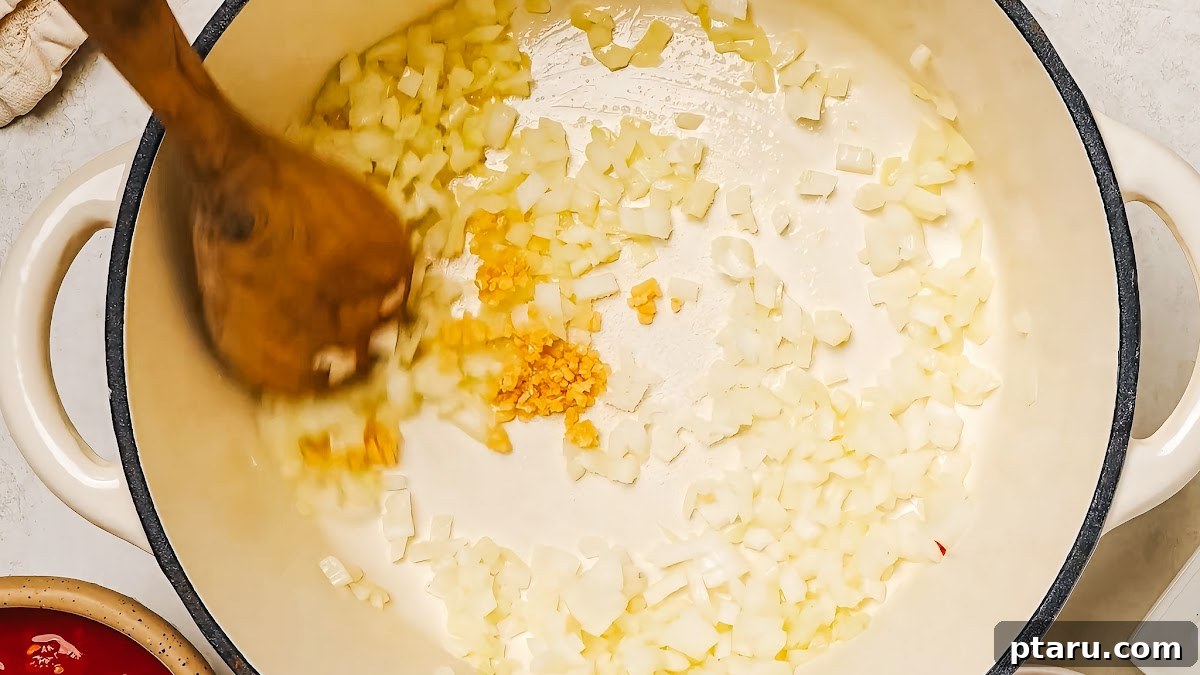
Begin by heating the olive oil in your large Dutch oven or heavy-bottomed pot over medium heat. Add the minced onion along with a teaspoon of kosher salt. Cook these onions patiently, stirring occasionally, until they become incredibly soft, translucent, and just begin to take on a delicate golden hue. This crucial step typically takes 10 to 12 minutes.
Resist the temptation to rush this process. The extended cook time is not merely about softening the onions; it actively breaks down their cellular structure and converts their pungent sulfur compounds into delightful natural sugars. This foundational sweetness is paramount to the overall balance and depth of your finished sauce, creating an umami base that sugar alone cannot replicate.
2. Brown the Beef for Profound Flavor
Once the onions are perfectly softened, add the minced garlic and cook for a mere 30 seconds until its intoxicating aroma fills your kitchen. Next, add the ground beef to the pot, seasoning it generously with the remaining salt and a good grind of black pepper. Increase the heat to medium-high.
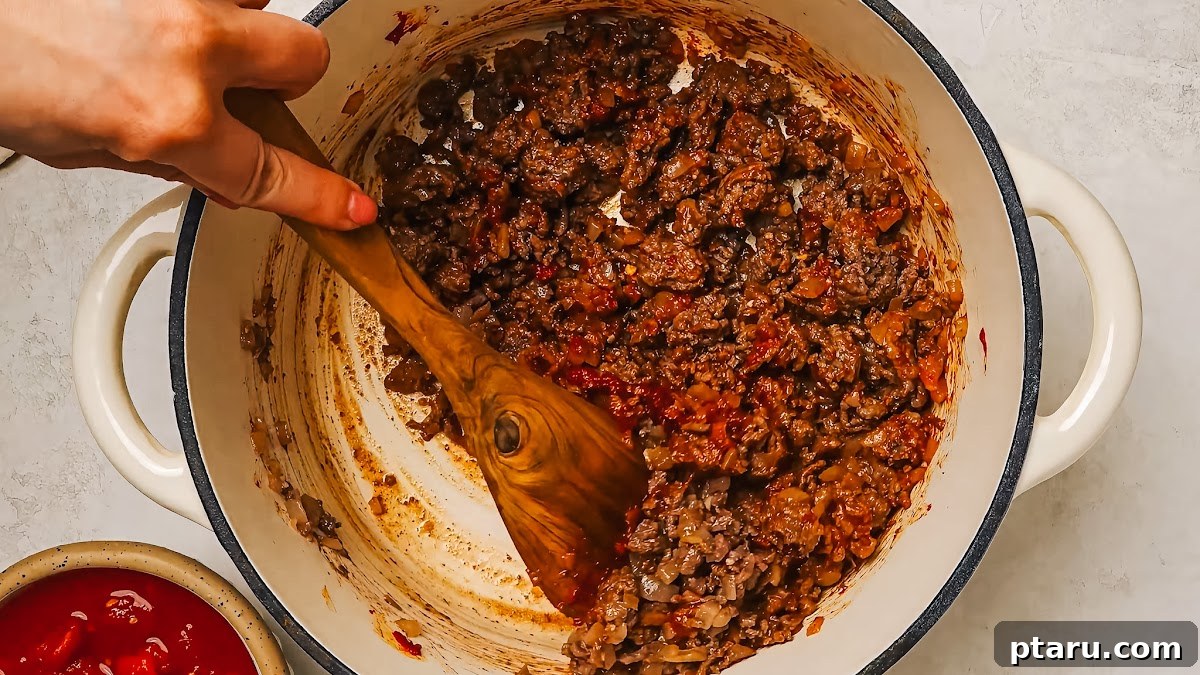
Using your wooden spoon or spatula, break the beef into smaller pieces. The key here is to allow the beef to brown deeply, developing rich, caramelized spots on its surface. Avoid stirring constantly; instead, let the beef sit undisturbed in contact with the hot pan for several minutes at a time. These dark, flavorful bits are the result of the Maillard reaction – a complex chemical process that creates hundreds of new flavor compounds, essential for a truly savory meat sauce.
3. Toast the Tomato Paste for Unrivaled Depth
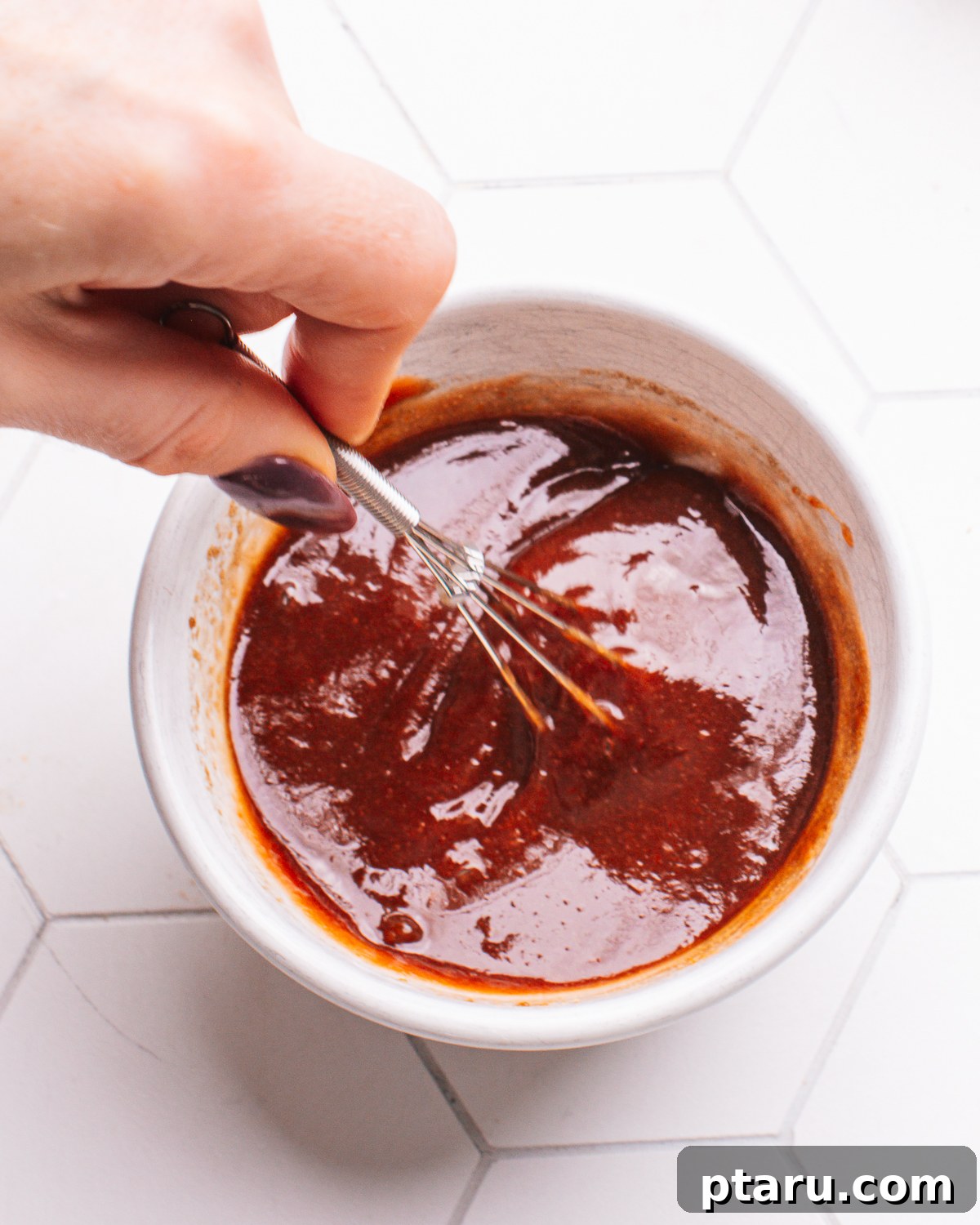
After the beef is thoroughly browned, stir in the tomato paste. Cook it for a solid 4 to 5 minutes, stirring frequently to prevent burning. You’ll notice it will gradually darken in color, deepen in aroma, and begin to stick slightly to the bottom of the pot. This is precisely what you want!
This is arguably the most critical flavor-building step. Raw tomato paste can taste sharp, tinny, and overly acidic. By browning or “toasting” it, you caramelize its sugars and transform those harsh notes into a concentrated, complex, and roasted sweetness. This process unlocks an incredible depth of flavor that defines a truly exceptional spaghetti sauce, distinguishing it from an ordinary one.
4. Simmer the Sauce to Meld Flavors
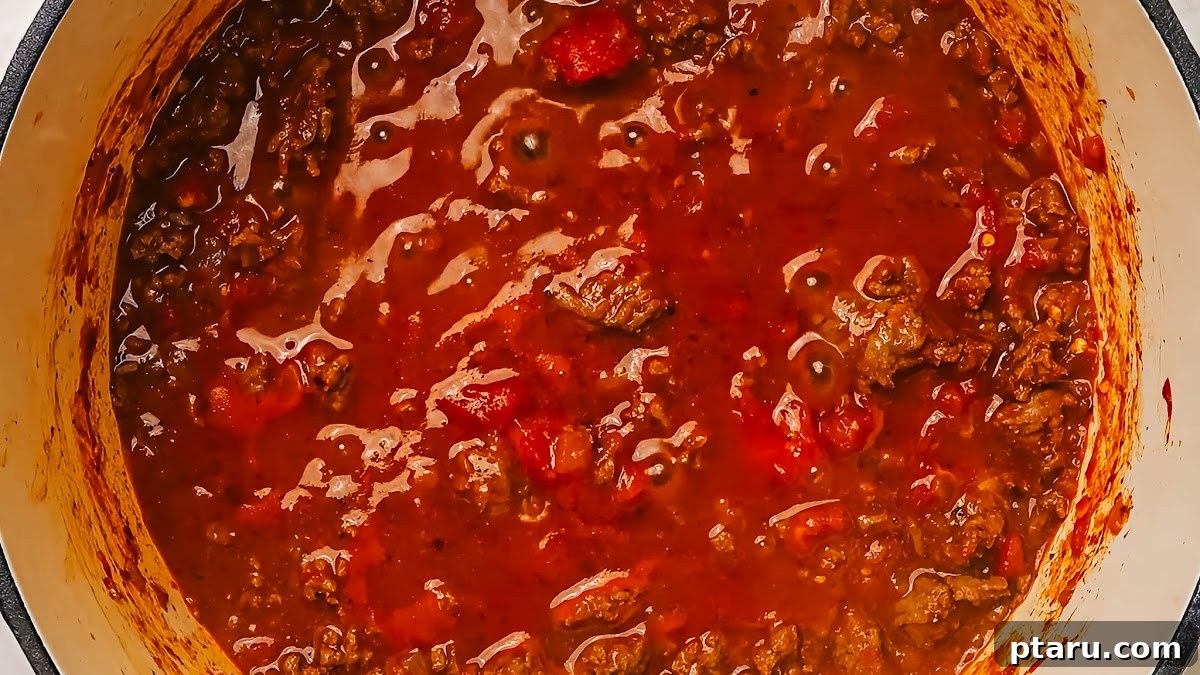
Pour in the diced tomatoes, including their juices, which will help deglaze the pot, scraping up all those flavorful browned bits. Add the dried oregano and red pepper flakes if you’re using them, along with that secret pinch of baking soda. Bring the mixture to a gentle simmer, then reduce the heat to low and cook, uncovered, for a minimum of 30 minutes.
The longer you allow the sauce to simmer, the richer and more complex its flavor profile will become. Thirty minutes yields a perfectly solid and delicious sauce, but if you have the luxury of time, letting it gently bubble for an hour or even two will allow the flavors to fully meld and intensify, rewarding you with an even more spectacular result.
5. Toss with Pasta for Perfect Harmony
While the sauce simmers, bring a large pot of generously salted water to a rolling boil. Cook the spaghetti according to package directions until it is perfectly al dente – firm to the bite, not mushy. Before draining, make sure to reserve about half a cup of the starchy pasta water. This “liquid gold” is a secret weapon!
Immediately after draining, add the cooked spaghetti directly to the pot with the simmering meat sauce. Toss everything together vigorously, ensuring every single strand of pasta is beautifully coated. If the sauce appears too thick or needs a bit of loosening, splash in a spoonful or two of that reserved starchy pasta water. The starch in the water helps to emulsify the sauce, making it cling beautifully to each noodle rather than sliding off, ensuring every bite is bursting with flavor.
Avoid These 5 Common Mistakes for Superior Spaghetti with Ground Beef
Even the simplest dishes can go wrong if key steps are overlooked. Here are the most frequent missteps to avoid, ensuring your spaghetti with ground beef turns out perfectly every time:
- Not Browning the Beef Enough: This is a cardinal sin in meat sauce creation! Pale, gray, steamed meat means you’ve completely missed out on the flavor-rich Maillard reaction. Always allow the beef to sit undisturbed on medium-high heat until you see distinct, dark, caramelized spots forming. This browning is where the deep, savory essence comes from.
- Skipping the Tomato Paste Toasting Step: Simply stirring in raw tomato paste adds harshness and acidity to your sauce. The magic happens when you cook it for 4 to 5 minutes until it darkens and slightly sticks to the bottom of the pot. This process reduces acidity and develops a profound, roasted sweetness, transforming the flavor profile entirely.
- Rushing the Onions: Undercooked onions retain their sharp, raw flavor and crunchy texture, which can be jarring in a smooth, rich sauce. Give them the full 10 to 12 minutes they need to soften completely and caramelize slightly. This slow cook-down converts their natural sugars and creates a sweet, aromatic foundation for the entire dish.
- Draining the Pasta Water Too Early: That cloudy, starchy pasta water is truly “liquid gold.” Never drain it all away. Always reserve at least half a cup before you strain your pasta. This starchy liquid is essential for adjusting the sauce’s consistency and helping it emulsify, making it perfectly coat every strand of pasta.
- Serving Sauce on Top Instead of Tossing: While aesthetically pleasing, simply spooning sauce over drained pasta is a missed opportunity. Tossing the cooked pasta directly into the sauce allows each noodle to absorb the rich flavors, creating a cohesive, delicious dish where the sauce clings perfectly. A pile of sauce on top will just slide to the bottom of the bowl.
Make-Ahead Tips and Storage Solutions
One of the many beauties of this rich meat sauce is that its flavors actually deepen and improve overnight in the refrigerator. It’s truly one of those dishes that tastes even better the next day, making it perfect for meal prepping!
Storing Leftovers Safely and Deliciously
- Sauce Only: For optimal freshness and versatility, store the cooked meat sauce in an airtight container in the refrigerator for up to 4 days. This allows you to cook fresh pasta whenever you’re ready to serve.
- Pasta and Sauce Together: While convenient, cooked pasta combined with sauce will absorb some of the liquid over time. This combination keeps well for up to 3 days in the fridge.
Freezing for Future Meals
- Freeze the Sauce Only: The meat sauce freezes exceptionally well for up to 3 months without any loss of flavor or texture. Cooked pasta, however, tends to become mushy when frozen and thawed, so it’s best to freeze the sauce separately. Explore these 26+ recipes with meat sauce if you find yourself with extra!
- Portion it Out: For ultimate convenience, freeze the sauce in single or family-sized portions. This allows for quick, effortless weeknight dinners whenever a craving strikes.
- Thaw Overnight: For the best results, transfer the frozen sauce from the freezer to the refrigerator the night before you plan to use it, allowing it to thaw gradually.
Reheating Spaghetti with Ground Beef
- Stovetop Method: Gently reheat the sauce in a pan over medium-high heat, stirring frequently. If it appears too thick, add a splash of water or broth to loosen it back to its desired consistency.
- Microwave Method: For a quick reheat, place your serving in a microwave-safe dish, cover, and heat in 1-minute intervals, stirring thoroughly between each interval until heated through.
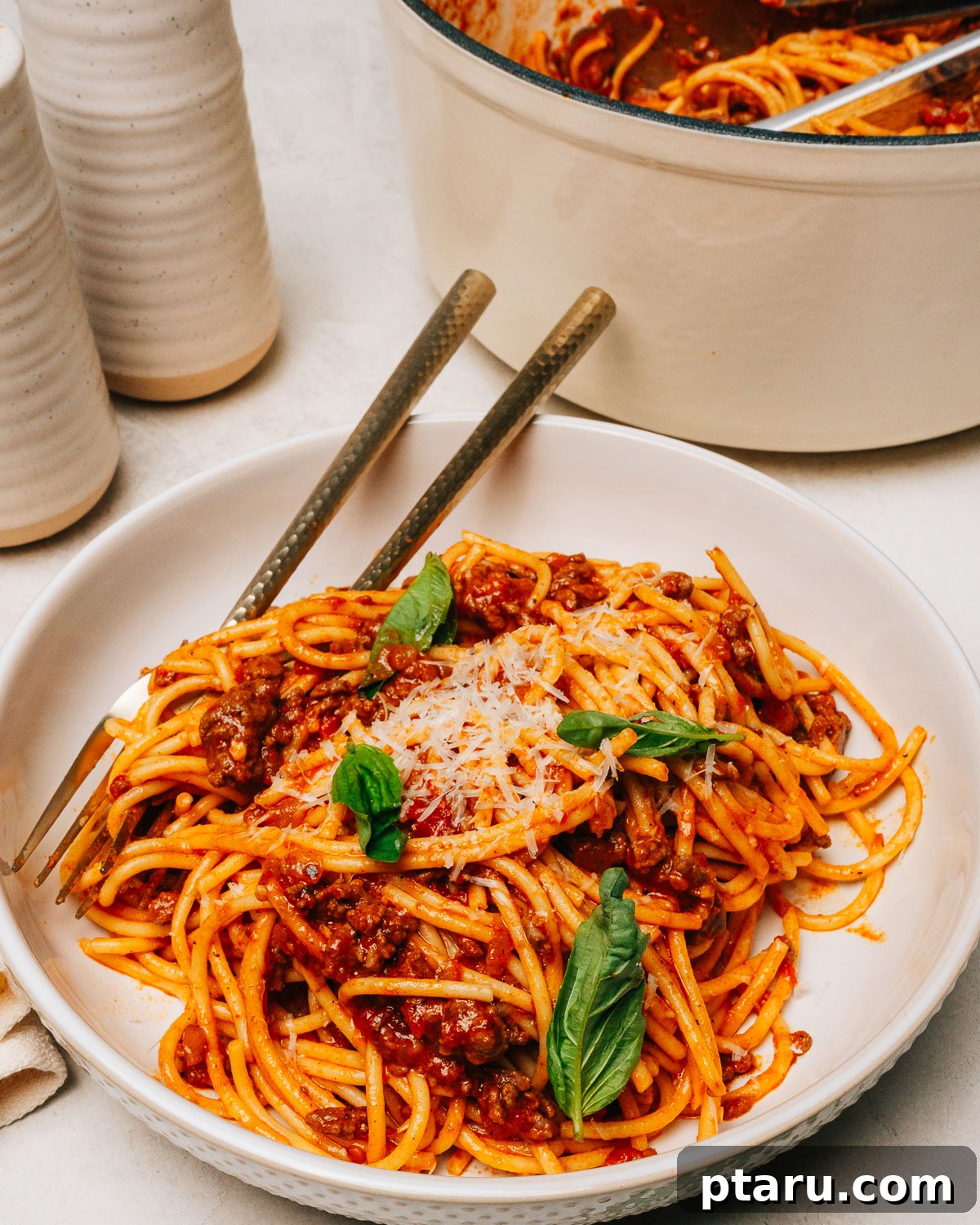
Perfect Pairings: How to Serve This Delicious Spaghetti
Serving this easy spaghetti with ground beef is an art in itself. While utterly satisfying on its own, a few thoughtful additions can elevate the entire dining experience. For an even broader array of pairing ideas, be sure to check out my comprehensive guide to good sides for pasta.
Irresistible Spaghetti Toppings
- Freshly Grated Parmesan Cheese: A generous dusting of high-quality, freshly grated Parmesan (or Pecorino Romano) is practically non-negotiable. Its salty, nutty flavor complements the rich meat sauce beautifully.
- Fresh Basil: Tearing a few fresh basil leaves and scattering them over the hot pasta before serving adds a burst of vibrant color, a fresh herbaceous aroma, and a lovely peppery note.
- Red Pepper Flakes: For those at the table who crave an extra kick of heat, a small bowl of red pepper flakes allows them to customize their spice level to perfection.
- Extra Virgin Olive Oil: A final drizzle of a good quality extra virgin olive oil just before serving adds a luxurious sheen, a subtle fruitiness, and ties all the flavors together with a silky finish.
Complementary Side Dishes for Spaghetti with Ground Beef
- Classic Garlic Bread: Buttery, crispy, and infused with aromatic garlic, homemade garlic bread is the quintessential companion to any pasta dish. It’s absolutely perfect for soaking up every last drop of that delectable sauce. You might also love my cheesy garlic bread fingers for an extra indulgent treat.
- Simple Green Salad: To balance the richness of the spaghetti, a light and refreshing green salad dressed with a bright vinaigrette provides a welcome contrast. Think crisp lettuce, cherry tomatoes, and cucumber for a fresh, balanced meal.
Mastering the Art: Final Notes and Secret Tips for the Best Spaghetti with Ground Beef
While this recipe is straightforward, these nuanced tips are what truly distinguish a good spaghetti with ground beef from a truly unforgettable one. Pay attention to these details, and you’ll be consistently serving up restaurant-quality results in your own kitchen:
- Salt the Pasta Water Generously: This cannot be overstated. Your pasta water should taste like the sea. This is your one and only opportunity to season the pasta itself from the inside out, infusing flavor into every single noodle. Under-salted pasta is bland pasta, regardless of how good your sauce is.
- The Maillard Reaction is Everything: Embrace the power of browning! Both the ground beef and the tomato paste require proper, deep browning. That rich, dark color isn’t just for aesthetics; it signifies the Maillard reaction, a complex chemical process that creates hundreds of new, deep, and complex savory flavor compounds that are impossible to achieve any other way. Don’t rush these steps!
- Longer Simmer Means Richer Sauce: While 30 minutes is the absolute minimum for a respectable sauce, true depth and complexity develop over time. If your schedule allows, let the sauce gently simmer for 90 minutes to 2 hours at a bare, slow bubble. This extended cooking period allows the flavors to fully meld, intensify, and create a truly harmonious profile.
- Finish the Pasta Directly in the Sauce: Resist the urge to serve sauce over the pasta. Always transfer the drained pasta directly into the pot with the sauce. The residual heat from the pasta and its surface starch help the sauce to grab onto and coat every single strand, ensuring a cohesive and incredibly flavorful dish with every bite.
- Pasta Water is Your Secret Weapon: Never, ever discard all of your pasta water! A strategic splash of that starchy, flavorful liquid is the secret ingredient for an emulsified, silky, and glossy sauce. It helps bind the sauce to the pasta and gives it a professional, polished finish.
- Make Double and Freeze: This meat sauce is a freezer champion. It freezes beautifully, and having a batch stashed away means you’re just 15 minutes away from a homemade, hearty dinner anytime. It’s the ultimate convenience for busy weeknights.
Frequently Asked Questions About Spaghetti with Ground Beef
Just skimming for quick answers? Here are some of the most commonly asked questions about making the perfect spaghetti with ground beef, answered concisely:
For the best balance of flavor and texture, use 85 to 90 percent lean ground beef. It contains enough fat to render down and create rich flavor without making the sauce excessively greasy. If you notice a significant amount of excess fat pooling in the pan after browning, you can spoon off a little before adding the tomatoes.
The sauce should simmer for at least 30 minutes to achieve a solid, integrated flavor. For a truly richer, more profound depth of flavor, extend the simmering time to 90 minutes to 2 hours, maintaining a very gentle, bare bubble and stirring occasionally.
Absolutely! The flavors in this meat sauce actually improve significantly overnight. You can prepare the sauce up to 4 days in advance and store it in an airtight container in the refrigerator, or freeze it for up to 3 months. Simply cook fresh pasta when you’re ready to serve.
The most common reason for an acidic or metallic-tasting sauce is not properly browning the tomato paste. It’s crucial to cook the tomato paste for 4 to 5 minutes, stirring frequently, until it darkens in color and starts sticking to the bottom of the pot. This process converts the raw acidity into a much deeper, sweeter, and more complex flavor. Additionally, a pinch of baking soda can help neutralize excess acidity from canned tomatoes.
Generally, with 85 to 90 percent lean ground beef, there’s usually just enough rendered fat to contribute richness and flavor to the sauce without making it greasy. You only need to drain the fat if there’s a significant amount pooling in the pan after the beef has fully browned. A little fat is good for flavor!
Yes, absolutely! While spaghetti is classic, other pasta shapes like linguine, bucatini, rigatoni, or penne all work exceptionally well with this sauce. Thicker meat sauces like this one tend to cling especially well to pasta shapes with ridges, twists, or tubes that can trap the rich sauce inside.
Pasta water is a vital ingredient for a perfect sauce! It contains starch released from the pasta during cooking, which acts as a natural emulsifier and thickener. Adding a splash when you toss the pasta helps to bind the sauce, creating a silky, glossy coating that adheres beautifully to every strand instead of sliding off.
Yes, incorporating additional vegetables is a fantastic idea to boost nutrition and flavor. Grated carrots, finely diced bell peppers (any color), or chopped mushrooms are excellent choices. Add them to the pot along with the onions, giving them ample time to soften and blend seamlessly into the sauce as it simmers.
More Delightful Ground Beef Pasta Recipes to Explore
If you’ve enjoyed this classic spaghetti with ground beef, you’ll surely love these other comforting and flavor-packed pasta dishes featuring ground beef:
- Hearty Hamburger Casserole
- Satisfying Cheeseburger Casserole
- Effortless Crockpot Lasagna
- Slow-Cooker Spaghetti Sauce with Ground Beef
- Classic American Chop Suey (a delicious macaroni dish with a tomato-y ground beef sauce!)
Spaghetti Recipe with Ground Beef
Jennifer Pallian BSc, RD
15
45
1
8
servings
Video
Ingredients
-
1
lb
spaghetti -
¼
cup
olive oil -
1
large onion
minced -
1.5
tsp
kosher salt
divided, plus more for salting pasta water -
2
tbsp
minced garlic -
1.75
lb
ground beef
85 to 90 percent lean -
1
6 oz can tomato paste -
1
28 oz can diced tomatoes or passata -
½
tsp
black pepper -
½
tsp
dried oregano
optional -
¼
tsp
baking soda -
¼
tsp
red pepper flakes
optional
Instructions
Make the Sauce
-
Heat olive oil in a large Dutch oven or heavy-bottomed pot over medium heat. Add the minced onion and 1 tsp kosher salt, then cook until the onion is very soft and lightly golden, which takes approximately 10 to 12 minutes.
-
Add the minced garlic and cook for 30 seconds until fragrant. Next, add the ground beef and increase the heat to medium-high. Season with the remaining ½ tsp salt and black pepper. Cook, breaking up the beef, until it is deeply browned and caramelized in spots, typically 8 to 12 minutes.
-
Stir in the tomato paste and cook, stirring frequently, until it darkens in color and begins to stick slightly to the bottom of the pot, about 4 to 5 minutes. This crucial step significantly builds richness and depth of flavor.
-
Pour in the diced tomatoes along with their juices, and add the oregano, baking soda, and red pepper flakes (if using). Bring the sauce to a gentle simmer, then reduce the heat to low. Cook uncovered at a bare simmer for at least 30 minutes, or for up to 2 hours for even richer flavor, stirring occasionally.
Cook the Spaghetti
-
Bring a large pot of generously salted water to a rolling boil. Cook the spaghetti according to package directions until it is perfectly al dente (firm to the bite). Before draining, remember to reserve about ½ cup of the starchy pasta water.
-
Add the cooked spaghetti directly to the pot with the pasta sauce, tossing thoroughly to coat every strand evenly. Taste the sauce and adjust the salt as needed. If you desire a thinner sauce, add a splash or two of the reserved pasta water to achieve the perfect consistency.
Notes
Tomato Paste: The proper browning of tomato paste is crucial. It significantly reduces raw acidity and develops a deep, rich color and flavor. Do not skip or rush this essential step.
Simmer Time: While 30 minutes provides a good, solid sauce, allowing it to simmer for 90 minutes to 2 hours will result in an even richer, more complex flavor profile. Maintain a very gentle bubble during this extended simmering period.
Make Ahead: This sauce improves with time! It can be refrigerated for up to 4 days, or frozen for up to 3 months, making it an excellent meal prep option.
Nutrition
Calories:
532
kcal
|
Carbohydrates:
45
g
|
Protein:
25
g
|
Fat:
28
g
|
Saturated Fat:
9
g
|
Polyunsaturated Fat:
2
g
|
Monounsaturated Fat:
14
g
|
Trans Fat:
1
g
|
Cholesterol:
70
mg
|
Sodium:
509
mg
|
Potassium:
428
mg
|
Fiber:
2
g
|
Sugar:
2
g
|
Vitamin A:
24
IU
|
Vitamin C:
2
mg
|
Calcium:
40
mg
|
Iron:
3
mg
Nutrition information is automatically calculated, so should only be used as an approximation.