
Prepare to fall in love with this **Cheese Naan** recipe. It’s incredibly easy to make and delivers an obsessively delicious experience, featuring lush, melty cheese lovingly stuffed into a warm, soft, and buttery garlic-infused flatbread. This isn’t just a side dish; it’s a culinary journey that brings the heart of Indian flavors right to your kitchen.
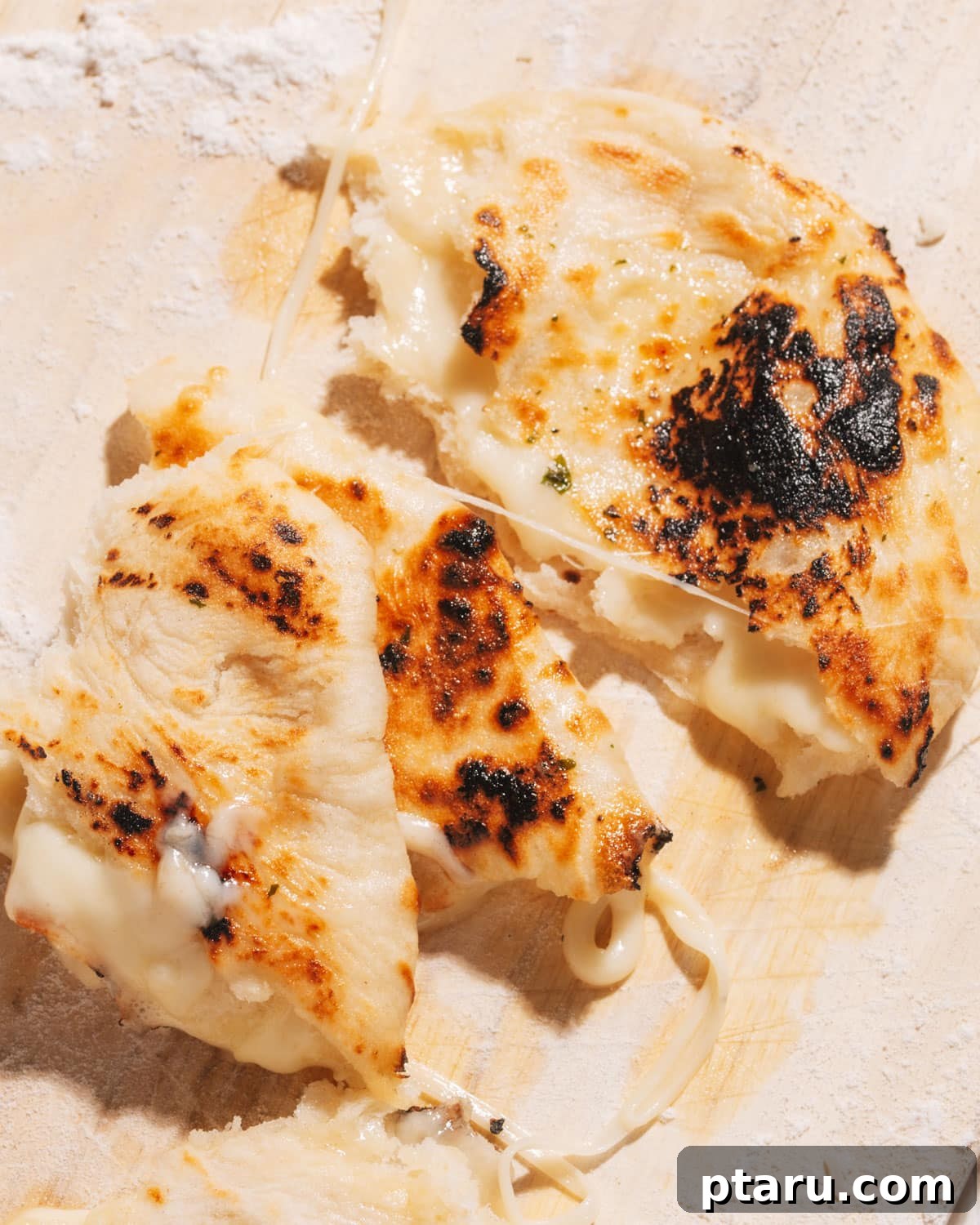
Growing up, my Indian husband cherished homemade cheese naan just like this, and it’s easy to understand why he’s so passionate about it. The warm, stretchy, and satisfyingly gluten-y flatbread, generously filled with gooey cheese, truly makes me weak in the knees. It’s a comfort food that transcends cultural boundaries, offering a delightful combination of textures and flavors that are simply irresistible.
This versatile Indian cheese bread is perfect for countless occasions. I adore scooping it up with a dollop of cool yogurt for a quick, satisfying snack. It serves as an exquisite appetizer when paired with a rich, warm butter chicken sauce, or elevates any meal when served alongside your favorite curries. Imagine tearing into a piece of this soft, fluffy, pull-apart naan, revealing pockets of perfectly melted cheese and aromatic herbs. This recipe isn’t just good; it’s an absolute game-changer that you’ll want to make again and again.
Why Homemade Cheese Naan is the Best
While store-bought options are available, nothing compares to the freshness and flavor of homemade cheese naan. Making it from scratch allows you to control the quality of ingredients, customize the fillings, and achieve that perfect chewy, pillowy texture that’s often missing in pre-made versions. Plus, the aroma of freshly baked naan filling your home is an experience in itself!
5 Common Mistakes to Avoid for Perfect Cheese Naan
As a food scientist, I love demystifying the cooking process with science-based tips. Crafting the perfect naan is an art, but avoiding these common pitfalls will guarantee a fluffy, flavorful result every time. Here are the most frequent mistakes home cooks make with this recipe:
- Adding too much flour: It’s tempting to add extra flour when the dough feels sticky, but this is a common trap. Over-flouring leads to a dense, dry, and tough naan that lacks its characteristic softness. Trust the recipe and resist the urge to add more flour than specified. The dough’s stickiness will reduce as you knead it thoroughly and allow it to rise properly, transforming into a manageable, elastic ball.
- Not letting the dough rise properly: Yeast-leavened bread requires patience. Shortchanging the rising time will result in a flat, heavy naan. Allow the dough to rise for the full hour, or until it has visibly doubled in size. This crucial step allows the yeast to work its magic, creating air pockets that contribute to a wonderfully light and airy texture.
- Overfilling with cheese: While the idea of extra cheesy naan is appealing, excessive filling causes the cheese to leak out during cooking. This not only creates a mess but also leads to dry spots in your naan. Aim for a generous but manageable amount that can be fully enclosed and sealed within the dough, ensuring an even melt and preventing spillage.
- Cooking at an incorrect temperature: The skillet temperature is paramount for a perfectly cooked naan. If the pan isn’t hot enough, the naan will dry out before it gets those lovely charred spots and proper puff. If it’s too hot, it will burn on the outside while remaining raw inside. Preheat your cast iron skillet over medium-high heat for at least 5 minutes. Test the temperature by sprinkling a few drops of water onto the surface; they should sizzle vigorously and evaporate immediately.
- Skipping the butter brushing: This final step is often overlooked but is absolutely essential. Brushing the hot naan with melted butter (especially garlic butter) immediately after cooking not only infuses it with incredible flavor but also helps to lock in moisture, keeping the naan soft, pliable, and utterly delicious. Don’t skip this critical finishing touch!
Essential Ingredients for Your DIY Cheese Naan
Gather these basic staples to embark on your homemade cheese naan adventure. You’ll be surprised at how simple the ingredient list is for such an incredible result.
Ingredients
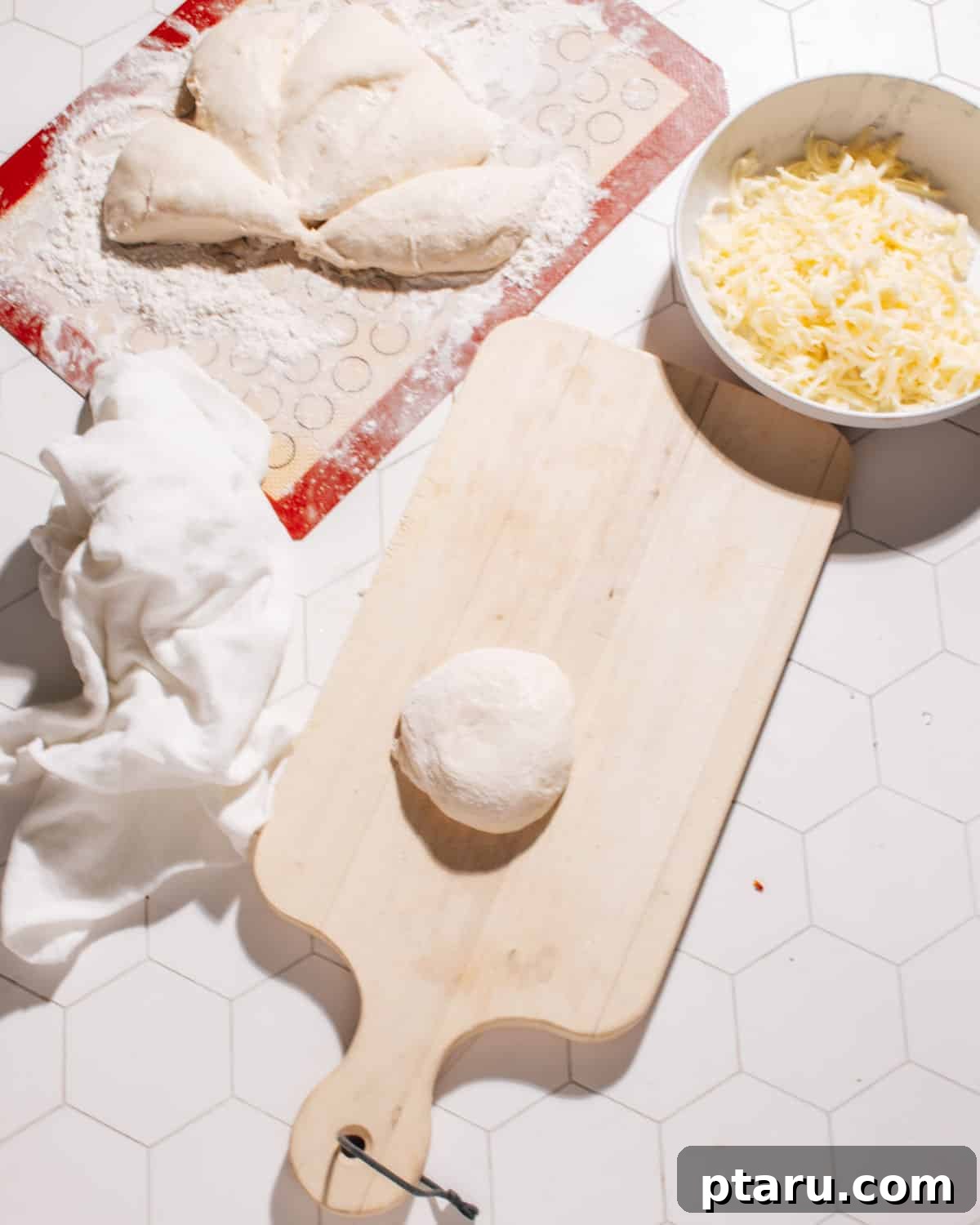
You can create these delightful flatbreads with just a handful of straightforward ingredients. Each component plays a vital role in achieving that signature naan texture and flavor:
- All-purpose flour: This is the foundation of our naan, providing the necessary gluten for a stretchy, chewy texture and a robust structure that holds up to the cheese filling. Using good quality all-purpose flour is key for the best results.
- Instant dry yeast: The leavening agent that makes our naan light and airy. Ensure your yeast is fresh and active for an optimal rise. Check the expiration date to avoid a flat naan.
- Kosher salt: Essential for seasoning the dough, enhancing both the inherent flavors of the flour and the subsequent deliciousness of the cheese and yogurt. I prefer Kosher salt for its less harsh taste and larger crystals, which distribute evenly.
- Baking powder and baking soda: These chemical leavening agents work in harmony with the yeast. They provide an extra boost of lift, ensuring the naan is exceptionally light, fluffy, and tender.
- Plain yogurt or buttermilk: Adds crucial moisture to the dough, contributing to its tenderness and a subtle, pleasant tang that balances the richness of the cheese. Full-fat yogurt will yield a richer dough.
- Melted butter: Incorporating butter into the dough, and brushing it on the finished naan, imparts a rich flavor and helps create that signature soft, tender texture. It’s also vital for keeping the naan moist.
- Shredded mozzarella cheese: The star of the show! Mozzarella is chosen for its excellent melting properties, providing a wonderfully gooey, stretchy, and creamy filling that melts beautifully without excessive oil separation when the naan is cooked.
- Minced cilantro: A classic and vibrant herb in Indian cuisine, cilantro adds a fresh, aromatic finish. It’s an optional garnish, but highly recommended for an authentic touch. You can also experiment with finely chopped parsley or fresh thyme for a different flavor profile.
Ingredient Substitutions and Creative Variations
Feel free to customize this recipe to suit your preferences or dietary needs with these swaps and delightful add-ins:
- Flour swaps: For a more wholesome and heartier naan, you can use whole wheat flour. Be aware that whole wheat flour absorbs more liquid, so you may need to slightly increase the amount of water or yogurt in the dough to achieve the correct consistency.
- Yogurt or buttermilk alternatives: If you’re looking for an even richer, creamier dough, Greek yogurt is an excellent substitute for plain yogurt. If you don’t have yogurt or buttermilk on hand, simply mix regular milk with a teaspoon of lemon juice or vinegar and let it sit for 5 minutes to create a makeshift buttermilk.
- Butter alternatives: To alter the flavor or make the naan dairy-free, consider using ghee (clarified butter) for a nutty, traditional Indian flavor, or a high-quality plant-based butter for a vegan option.
- Mozzarella cheese alternatives: While mozzarella is ideal for its melt, you can substitute it with other fantastic melting cheeses. Try cheddar for a sharper flavor, fontina for a nuttier, creamier melt, or a blend of your favorite cheeses like Monterey Jack or provolone for a complex profile.
- Spicy naan: For those who love a kick, finely chopped green chilies or a pinch of red pepper flakes can be incorporated into the dough or mixed with the cheese filling for a fiery twist.
- Vegan naan: To make this recipe completely vegan, use a plant-based yogurt or a milk alternative (like almond or soy milk) mixed with lemon juice for the dough. Ensure you use a plant-based butter for brushing and a high-quality dairy-free shredded cheese for the filling.
- Herb & Spice additions: Beyond cilantro, consider adding finely minced garlic (if not already in the butter), kalonji seeds (nigella seeds), or a pinch of dried fenugreek leaves (kasoori methi) to the dough or butter for added depth of flavor.
Essential Tools to Grab
Having the right equipment makes the naan-making process smooth and enjoyable:
- Stand mixer with paddle and dough attachments: While not strictly essential (you can knead by hand), a stand mixer greatly simplifies the dough-making process, ensuring consistent kneading and development of gluten.
- Rolling pin: Crucial for rolling out your dough balls evenly and consistently before filling and cooking.
- Cast-iron skillet: The preferred choice for cooking naan. Its ability to retain and distribute heat evenly is key to achieving that perfect char and puff, mimicking a traditional tandoor oven.
- Parchment paper: Useful for preventing sticking and making it easier to handle the dough during rising and shaping.
How to Make Cheese Naan: An Easy Step-by-Step Guide
Get ready to create this utterly delicious, out-of-this-world cheesy naan bread with these straightforward steps:
Step 1: Prepare the Dough
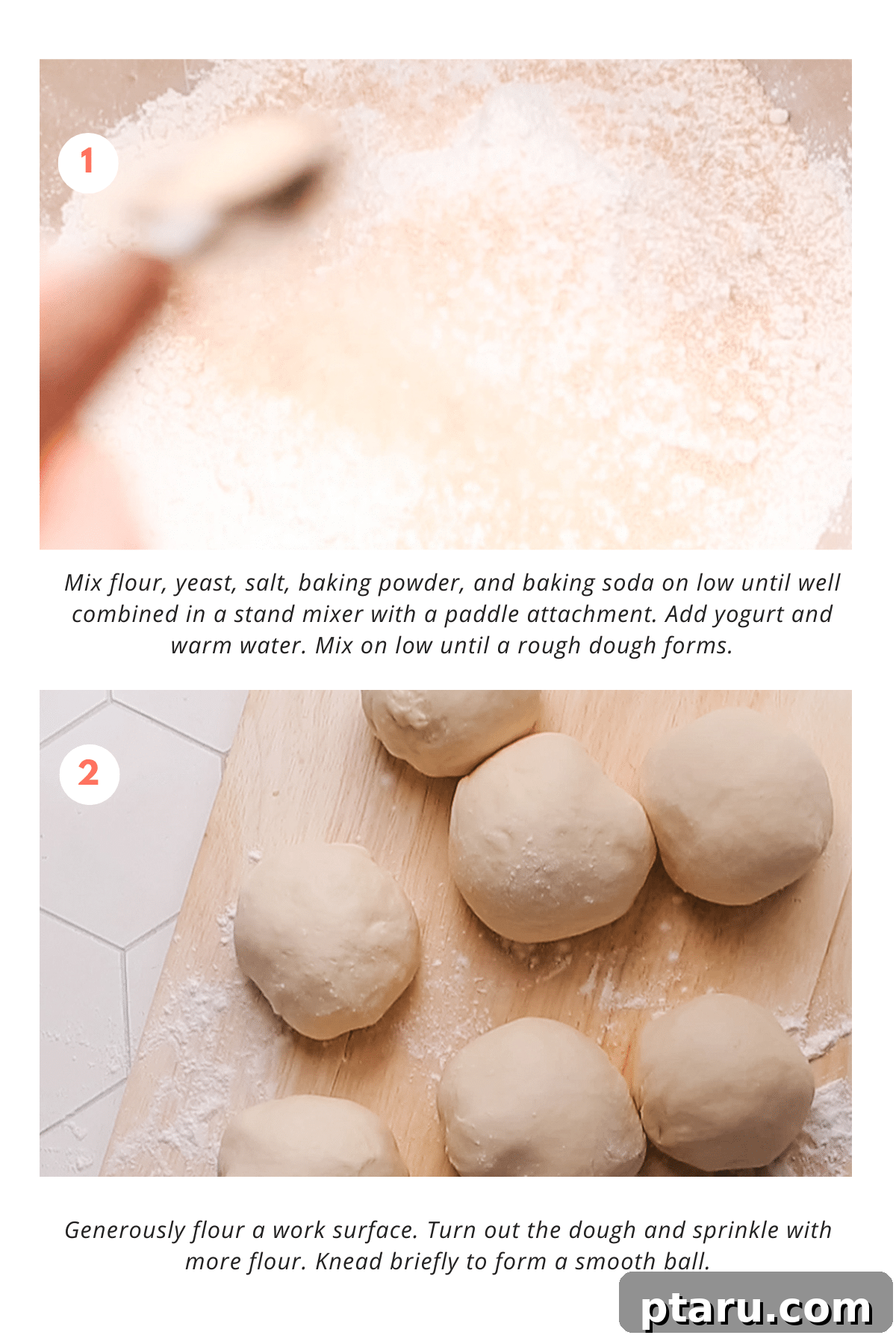
In the bowl of a stand mixer fitted with a paddle attachment, combine the all-purpose flour, instant dry yeast, kosher salt, baking powder, and baking soda. Mix on low speed for about 30 seconds until all the dry ingredients are thoroughly combined. Next, add the plain yogurt (or buttermilk) and warm water. Continue mixing on low speed until a shaggy, rough dough begins to form. Scrape down the sides of the bowl as needed to ensure all ingredients are incorporated.
Step 2: Knead the Dough
Switch from the paddle attachment to the dough hook attachment. Knead the dough on medium-low speed for approximately 4 minutes. Initially, the dough will appear quite sticky, clinging to the sides of the bowl and the hook. However, as gluten develops through kneading, it will gradually become more cohesive and manageable. Resist the temptation to add extra flour during this stage, as it can lead to a dry naan. Trust the process; the dough will transform.
Step 3: Shape the Dough Balls
Generously flour a clean work surface. Carefully turn the sticky dough out onto the floured surface and sprinkle it with a bit more flour. Knead the dough briefly by hand for about 30 seconds to form it into a smooth, cohesive ball. Using a bench scraper or knife, divide the dough into 8 equal pieces. For easier handling of the sticky dough, lightly dampen your hands before shaping each piece into a smooth, round ball.
Step 4: Oil and Rise
Prepare a piece of parchment paper by lightly flouring it. Arrange the dough balls on the floured parchment paper, ensuring they have some space between them. Lightly dust the tops of the dough balls with flour. Cover them with another piece of parchment paper or a clean kitchen towel. Let the dough balls rise in a warm, draft-free place for 1 hour. This allows the yeast to activate fully, creating a light and airy structure.
Step 5: Fill and Roll the Naan
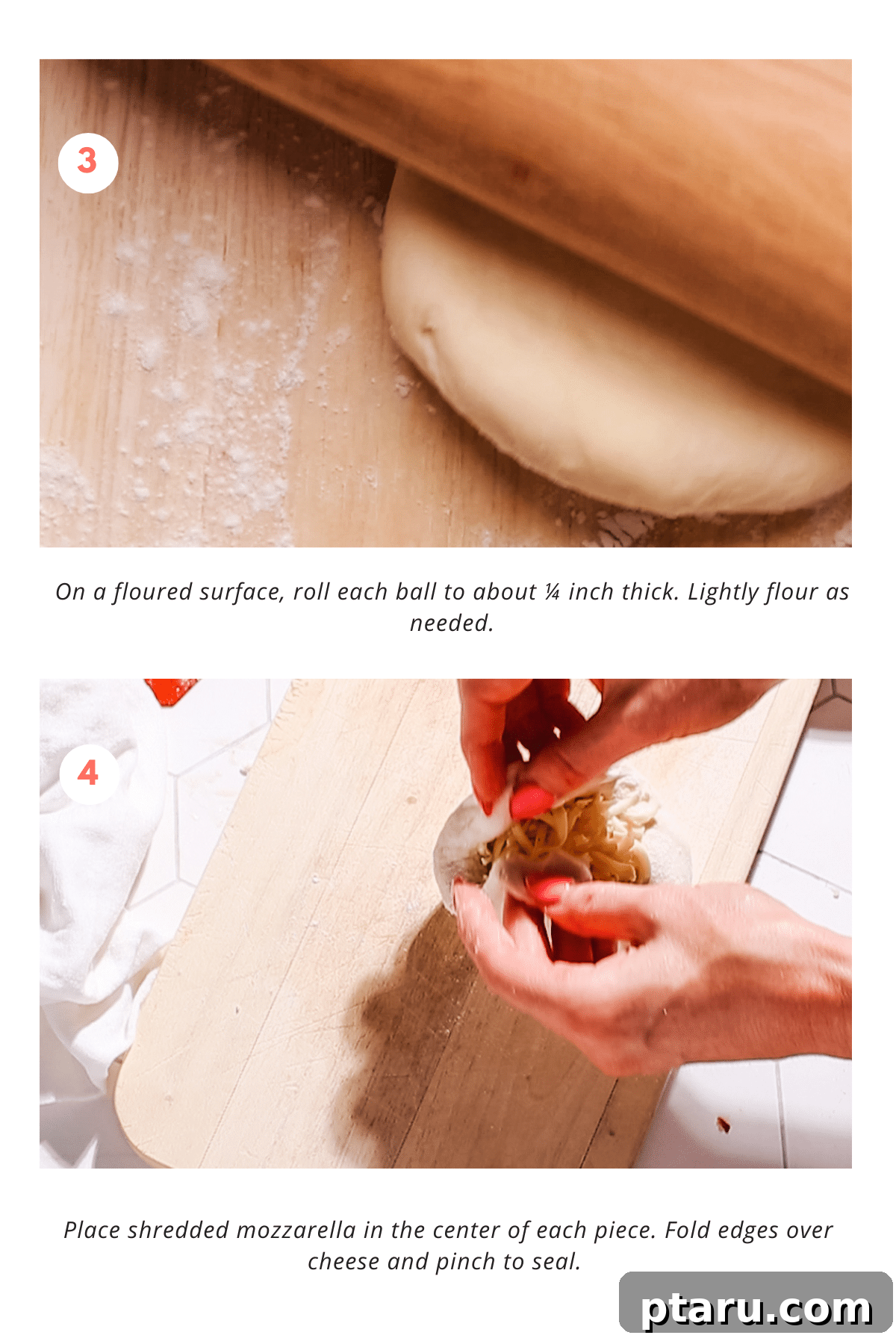
Once the dough has risen, prepare a lightly floured surface. Take one dough ball and gently roll it out with a rolling pin to about ¼ inch thick, or slightly thinner, into an oval or circular shape. Lightly flour your rolling pin and surface as needed to prevent sticking. Place a small handful (about 2 tablespoons) of shredded mozzarella cheese in the center of the rolled-out dough. Gather the edges of the dough over the cheese, bringing them together to form a pouch. Pinch the seams firmly to seal the cheese completely inside. Place the sealed dough ball seam-side down and gently flatten it with your hands or rolling pin, ensuring the cheese remains enclosed without tearing the dough. Repeat for all dough balls. Let the filled naan dough pieces rest for 10 minutes; this allows the gluten to relax, making them easier to cook without shrinking.
Step 6: Cook the Naan
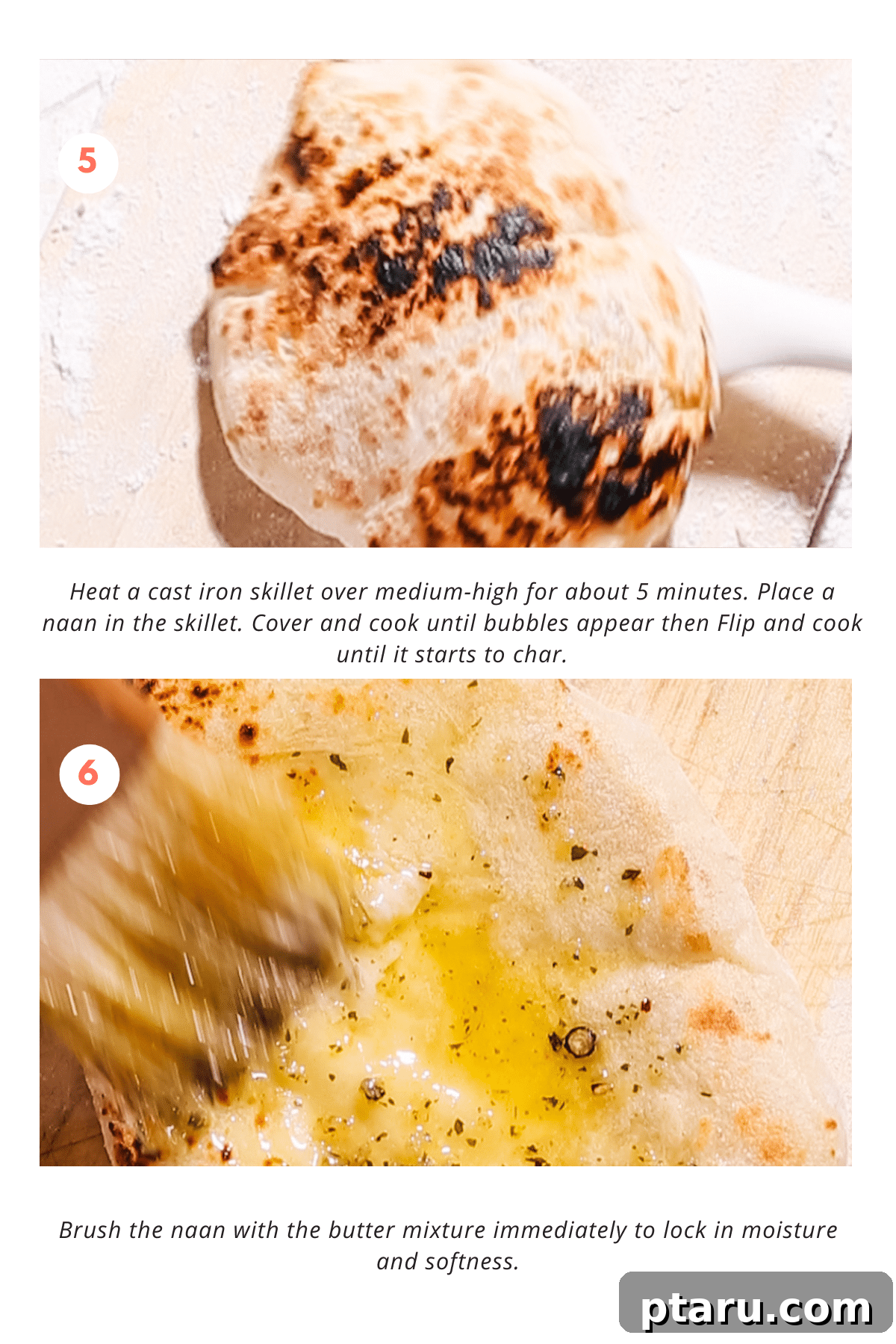
Heat a cast iron skillet over medium-high heat for approximately 5 minutes until it’s thoroughly hot. To confirm the correct temperature, sprinkle a few drops of water into the pan; they should sizzle immediately and evaporate. Place one filled naan into the hot, dry skillet (no oil needed at this stage). Cover the skillet with a lid or another large pan to trap the steam, which helps the naan puff up. Cook for 30-60 seconds, or until visible bubbles appear on the surface. Flip the naan over and cook uncovered for another 30 seconds, or until it loses its raw dough appearance and develops appealing charred spots on both sides. Repeat for the remaining naan, adjusting heat as needed.
Step 7: Finish and Serve
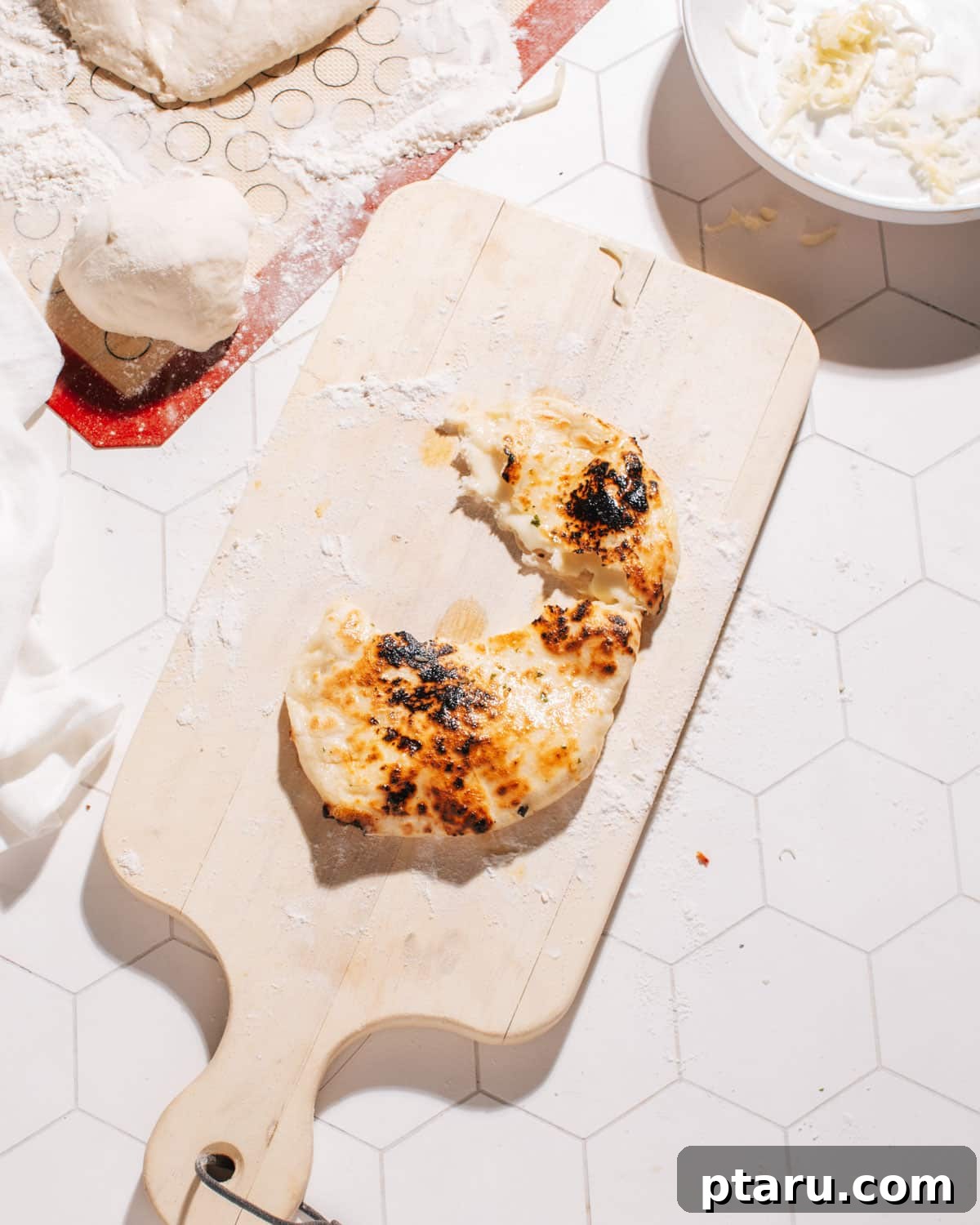
As each naan finishes cooking, immediately transfer it to a plate and cover it with a clean kitchen towel to keep it warm and prevent it from drying out. In a small bowl, melt the butter. If desired, stir in the minced cilantro (or garlic, if you prefer garlic naan). Brush the warm naan generously with the butter mixture. This step is crucial for locking in moisture, enhancing flavor, and ensuring a soft, pliable texture. Serve immediately! Be cautious when taking your first bite, as the melted cheese inside will be incredibly hot, like lava, straight off the pan. Keep any remaining naan warm in a serving dish covered with a towel until ready to eat.

Make Ahead Tips and Storage Instructions
Planning ahead makes entertaining a breeze, and proper storage ensures you can enjoy your delicious cheese naan for days. Here’s how to manage leftovers and prepare in advance:
Make Ahead Options
- Refrigerate Dough: Prepare the dough as instructed, and let it complete its initial rise. After rising, gently divide and shape the dough into individual balls. Arrange these dough balls on a lightly oiled baking sheet lined with parchment paper. Cover the entire tray tightly with plastic wrap to prevent drying and refrigerate for up to 24 hours. When ready to cook, remove the dough from the refrigerator and let it come to room temperature (about 30-60 minutes) before rolling, filling, and cooking as per the recipe.
- Freeze Dough: For longer storage, you can freeze the dough after its initial rise. Divide and shape the dough into balls. Wrap each dough ball individually and tightly in plastic wrap, then place them into a resealable freezer bag. Freeze for up to 3 months. To use, transfer the desired number of dough balls to the refrigerator overnight to thaw. Then, let them come to room temperature before proceeding with rolling, filling, and cooking.
Storing Leftover Cooked Naan
If you have any cooked cheese naan remaining, proper storage will help maintain its softness and flavor:
- Room Temperature: Leftover cooked naan can be stored at room temperature for up to 2 days. Make sure it’s kept in an airtight container or a resealable plastic bag to prevent it from drying out.
- Refrigeration: For extended freshness, refrigerate cooked naan for up to 5 days. Wrap each naan individually or stack them with parchment paper in between, then place in an airtight container or bag.
- Freezing Cooked Naan: Once completely cooled, wrap each naan tightly in plastic wrap, then transfer them to a resealable freezer bag. Freeze for up to 3 months. This is a fantastic way to have homemade naan ready whenever a craving strikes.
Reheating Cheese Naan to Perfection
Reheating naan properly is key to restoring its soft, warm, and delicious qualities. Avoid microwaving for too long, as it can make the naan rubbery. Here are three effective ways to reheat your leftovers:
- In a Skillet (Recommended): This method is ideal for bringing naan back to life. Place the naan in a dry skillet over medium heat. Cook each side for 1-2 minutes, or until it’s warmed through and slightly crisp at the edges. A few drops of water sprinkled in the pan before heating can help create steam for softness.
- In the Oven: Preheat your oven to 350°F (175°C). For best results, lightly dampen the naan with a few drops of water (or wrap in foil) before placing it directly on the oven rack or on a baking sheet. Bake for 5-10 minutes, or until it is heated through and soft again.
- In the Microwave: While not my top choice, this is the quickest method. Place the naan on a microwave-safe plate and cover it with a slightly damp paper towel. Microwave on high for 20-30 seconds. Check for warmth and continue in 10-second intervals if needed. Be careful not to overheat.
How to Serve This Irresistible Cheese Naan Recipe
Cheese naan is incredibly versatile and pairs beautifully with a wide array of Indian curries and dishes, making it an ideal companion for any authentic Indian spread. Its soft, pillowy texture and cheesy pockets make it perfect for scooping up rich sauces and gravies. Here are some fantastic serving suggestions:
- With Classic Indian Curries: This naan is utterly delicious alongside hearty lentil dishes like Amma’s special Masoor Dal or a comforting Indian Chickpea Curry Recipe (Channa Masala).
- Paneer Dishes: It’s also a perfect match for creamy and rich paneer (Indian cheese) dishes such as Paneer Butter Masala, savory Saag Paneer (spinach with paneer), flavorful Malai Kofta, or a vibrant Palak Paneer.
- Chicken & Meat Curries: For meat lovers, this life-changing Chicken Korma absolutely deserves a steaming side of cheese naan. Don’t forget my Best-Ever Creamy Butter Chicken or its vegetarian counterpart, Easy Homemade Butter Paneer, which are also exquisite pairings for this cheesy delight.
- As an Appetizer or Snack: Serve warm naan pieces with a side of cooling raita (yogurt dip), chutneys, or even hummus for a delightful appetizer. It’s also fantastic on its own as a hearty snack.
Frequently Asked Questions About Cheese Naan
Just quickly scanning this post? Don’t miss these common questions and their concise answers to perfect your cheese naan-making skills:
Yes, absolutely! To make vegan cheese naan, use a plant-based yogurt or a milk alternative (like almond or soy milk) mixed with a teaspoon of lemon juice for the dough. Ensure you also use a plant-based butter for brushing the cooked naan and choose a high-quality dairy-free shredded cheese for the filling.
While a cast iron skillet is highly recommended for its excellent heat retention and even cooking, you can certainly use a regular heavy-bottomed non-stick skillet or a griddle. The key is to ensure it is thoroughly preheated over medium-high heat to achieve those desired charred spots and a good puff.
Several factors can cause naan not to puff. The most common reasons include the pan not being hot enough, the dough not having risen sufficiently, or the dough being rolled unevenly (too thick or too thin in spots). Ensure your skillet is screaming hot, allow the dough its full rising time, and try to roll the dough to a consistent ¼-inch thickness.
You can easily substitute instant dry yeast with active dry yeast. To do so, dissolve the active dry yeast in the warm water (specified in the recipe) with a pinch of sugar. Let it sit for about 5-10 minutes until it becomes frothy and bubbly, indicating it’s active. Then, add this mixture to your dry ingredients as instructed.
It’s normal for naan dough to be quite sticky initially. Resist the urge to add excessive flour during the initial mixing and kneading. The stickiness will decrease as you knead it thoroughly and gluten develops. If it remains too sticky to handle when shaping, lightly flour your hands and the work surface rather than incorporating more flour into the dough itself.
Absolutely! While a stand mixer simplifies the process, you can mix and knead the dough entirely by hand. Combine the dry ingredients in a large bowl, then add the wet ingredients and stir with a wooden spoon or your hands until a rough dough forms. Turn the dough out onto a lightly floured surface and knead by hand for about 8-10 minutes until it’s smooth, elastic, and less sticky.
Yes, for a delicious garlic cheese naan, you can mince 1-2 cloves of garlic and add it directly to the melted butter that you brush on the hot naan. Alternatively, you can mix finely minced garlic into the dough itself during the kneading phase for a more integrated garlic flavor.
Explore More Naan Delights!
Completely smitten with naan? I understand completely – it’s truly captivating! There’s nothing left to do but dive deeper into the world of this incredible flatbread. Here’s my collection of must-try recipes and essential knowledge about naan that you’re sure to adore:
- My butter naan recipe went viral for a reason; it’s a definite must-make. For a classic duo, you absolutely must try its best friend, garlic naan.
- How utterly delicious does aloo naan sound? This variation features soft naan dough generously packed with a flavorful, spiced potato filling. It’s a meal in itself!
- Elevate your naan game by making keema naan bread – a next-level delicious naan bread stuffed with savory, spiced ground lamb or other minced meat. It’s so good you’ll want to hold me back!
- Ever wondered about the difference between paratha vs naan? Let’s explore the distinct characteristics and culinary uses of these popular Indian flatbreads.
- And then there’s the classic comparison of roti vs naan. Get the full lowdown on their preparation, textures, and typical pairings right here.

Cheese Naan
Jennifer Pallian BSc, RD
15 minutes
2 minutes
1 hour 15 minutes
1 hour 32 minutes
8
Ingredients
- 4 cups all-purpose flour
- 1 tbsp instant dry yeast
- 2 tsp kosher salt
- 1 tsp baking powder
- ½ tsp baking soda
- ¾ cup plain yogurt or buttermilk
- 1 cup warm water
- 4 tbsp butter melted
- 2 cups shredded mozzarella cheese
- 1 tbsp minced cilantro optional
Instructions
-
Combine flour, yeast, salt, baking powder, and baking soda in the bowl of a stand mixer fitted with a paddle attachment. Mix on low until the dry ingredients are well combined. Add the yogurt and warm water. Mix on low speed until a rough dough forms. Switch to the dough hook attachment and knead on medium-low for about 4 minutes. The dough may seem very sticky at first but will become more manageable as it kneads. Avoid adding extra flour.
-
Flour a work surface generously. Turn the dough out onto it and sprinkle with more flour. Knead briefly to form a smooth ball. Divide the dough into 8 equal pieces and shape each into a ball. The dough will be quite sticky, so dampen your hands to handle it more easily. If it is too sticky, incorporate a bit more flour.
-
Flour a piece of parchment paper and place the dough balls on it. Flour the tops of the dough balls. Cover with another piece of parchment paper and let rise for 1 hour.
-
On a floured surface, roll each dough ball flat with a rolling pin to about ¼ inch thick, or slightly thinner. Lightly flour as needed. Place a small handful of shredded mozzarella in the center of each dough piece. Fold the edges over the cheese. Twist the ends together and pinch to seal. Place the seam-side down and gently roll the dough again to flatten, making sure the cheese remains enclosed. Let the dough rest for 10 minutes.
-
Preheat a cast iron skillet over medium-high heat for about 5 minutes. To test the heat, sprinkle a few drops of water in the pan; if they sizzle and evaporate immediately, the pan is ready. Place a naan into the hot skillet. Cover and cook until bubbles appear (about 30-60 seconds). Flip and cook until the dough loses its raw appearance and starts to char in spots (about 30 seconds more).
-
Transfer the cooked naan to a plate and cover with a towel to keep warm. Melt the butter and mix with minced cilantro, if using. Brush the warm naan with the butter mixture immediately to lock in moisture and ensure softness.
-
Wait a few minutes before serving because the cheese inside will be hot like lava when fresh off the pan! Keep naan warm in a serving dish covered with a clean towel.
Notes
Flour Measurement Tip: Weigh your flour using a kitchen scale for the most accurate measurement, as volume-based measuring cups can lead to using too much flour due to compaction.
Hand-Mixing Option: If you don’t have a stand mixer, you can mix the dough by hand. Combine the dry ingredients in a bowl. Add the yogurt and water, stirring with a wooden spoon until a rough dough forms. Turn the dough out onto a floured surface and knead by hand until smooth (about 10 minutes).
Direct Flame Variation: For a more traditional tandoori-style naan, cook the naan over a gas flame. After flipping the naan, cook the underside for just 5-10 seconds to seal it. Using tongs, place the naan directly over a lit gas burner. Cook until it puffs and develops charred spots (this only takes a few seconds), then transfer to a plate and cover with a towel to keep warm. Be attentive as the naan can burn quickly.
Water Temperature: Use water between 120°F and 130°F for the dough. Water that is too hot can kill the yeast, while cooler water will slow the rising process.
If the skillet becomes too hot during cooking, reduce the heat for a minute before cooking the next naan. No oil or butter should be used in the pan; a properly preheated pan will prevent sticking.
Allow the dough to rest for 10 minutes after rolling to ensure bubbles form. If the dough doesn’t rest, the gluten will be tight, causing the dough to shrink and lose its ability to puff properly.
Nutrition
Calories: 354 kcal |
Carbohydrates: 46g |
Protein: 14g |
Fat: 15g |
Saturated Fat: 8g |
Polyunsaturated Fat: 1g |
Monounsaturated Fat: 4g |
Trans Fat: 0.2g |
Cholesterol: 41mg |
Sodium: 938mg |
Potassium: 65mg |
Fiber: 6g |
Sugar: 3g |
Vitamin A: 393IU |
Vitamin C: 0.1mg |
Calcium: 245mg |
Iron: 2mg
Nutrition information is automatically calculated, so should only be used as an approximation.