
Dive into the world of fresh, vibrant, and utterly delicious Spring Rolls! These Vietnamese-style summer rolls are a celebration of fresh ingredients, featuring crisp, colorful vegetables and succulent shrimp, all elegantly wrapped in delicate rice paper. More than just a meal, they’re an experience – light, healthy, and incredibly satisfying. Get ready to master the art of making these exquisite rolls, complete with our no-fail tips for working with rice paper wrappers and essential mistakes to avoid.
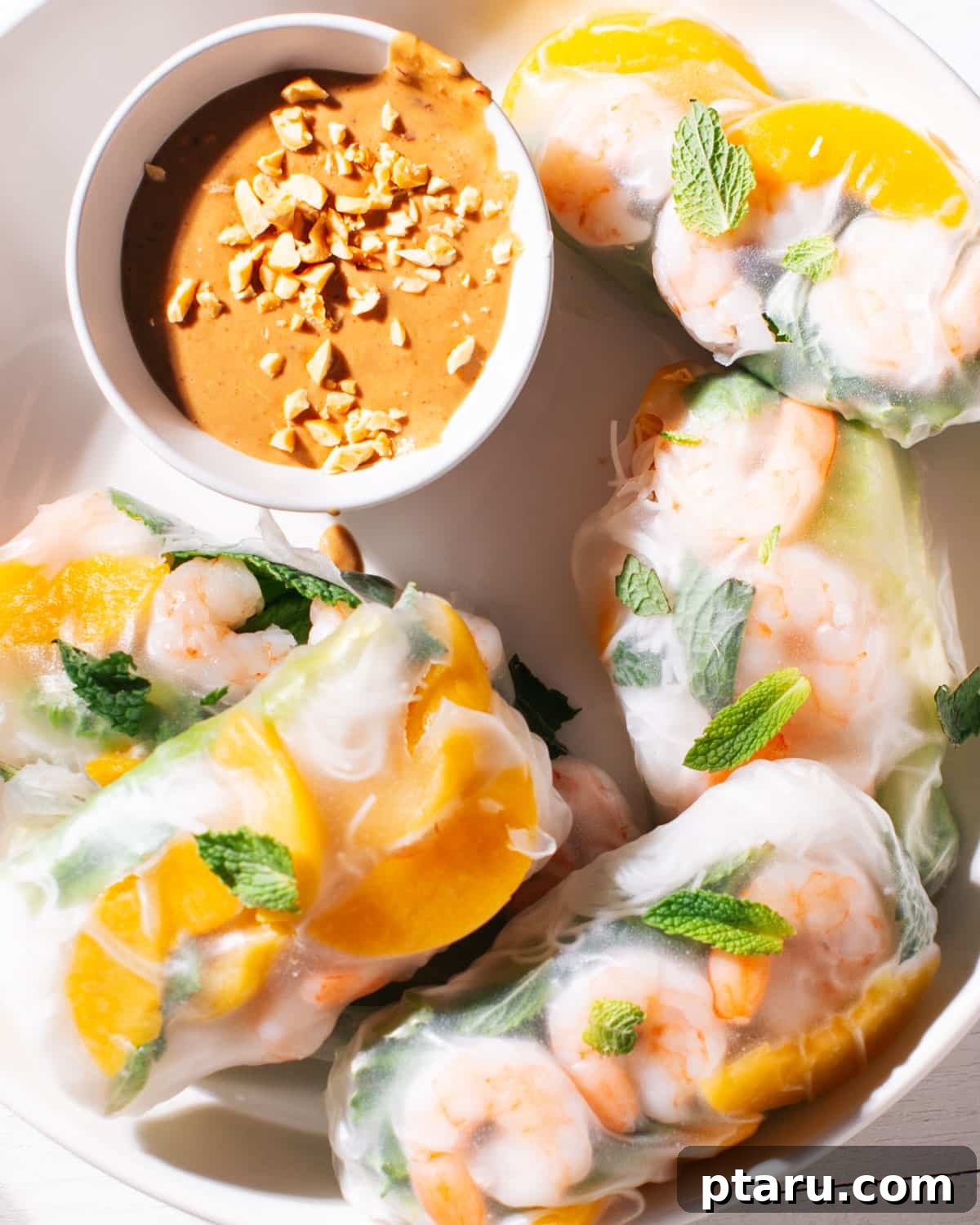
These soft spring rolls, often referred to as Vietnamese summer rolls or gỏi cuốn, are a staple in Southeast Asian cuisine. Unlike their fried counterparts, these are served fresh, offering a delightful contrast of textures and flavors without any additional cooking once the fillings are nestled into the rice paper wrappers. They are the epitome of fresh, healthy eating.
Whether you’re looking for a stunning appetizer, a refreshing light lunch, or a healthy dinner option, these spring rolls fit the bill perfectly. Their delicate nature and fresh ingredients make them incredibly versatile. The secret to their irresistible charm? A rich, savory, and slightly sweet homemade peanut dipping sauce, transforming each bite into a culinary delight. Get ready to dunk!
Related Recipe: Craving more peanut flavor? You’ll love our recipe for Cold Peanut Noodles – the peanut sauce truly is *that* good!
Why You’ll Love This Fresh Spring Rolls Recipe
There are countless reasons why these fresh spring rolls will become your go-to recipe all year long, especially during warmer months:
- Effortlessly Quick & Simple: With just a little practice, assembling these spring rolls becomes remarkably quick and straightforward. Beyond preparing the fillings, no cooking is required, making them an ideal choice for a speedy meal or a healthy snack when you’re short on time.
- Fun & Engaging Activity: Rolling spring rolls is a wonderfully interactive and enjoyable culinary experience. It’s perfect for gathering friends and family, including kids, for a “build-your-own” setup. This allows everyone to customize their rolls with preferred ingredients, fostering creativity and catering to diverse tastes.
- Naturally Gluten-Free & Healthy: For those with gluten sensitivities or anyone seeking lighter meal options, rice paper wrappers offer a fantastic alternative to traditional wheat-based wraps. They provide a similar satisfying texture without the gluten, making these rolls a truly inclusive dish. They are also packed with fresh vegetables, making them incredibly nutritious and low in calories.
- Highly Customizable: The beauty of fresh spring rolls lies in their adaptability. You can easily swap out ingredients to suit dietary needs, preferences, or whatever fresh produce you have on hand. From various proteins to a rainbow of vegetables and fruits, the possibilities are endless.
- Perfect for Any Occasion: These visually appealing and delicious rolls are suitable for a wide range of occasions. Serve them as an elegant appetizer at a dinner party, a refreshing picnic staple, a nutritious work lunch, or a light and satisfying weeknight dinner.
Here’s What You Need: Ingredients and Equipment
Gathering your ingredients and essential tools is the first step to creating these delightful, crunchy fresh spring rolls. Most items are readily available at Asian grocery stores or even your local supermarket.
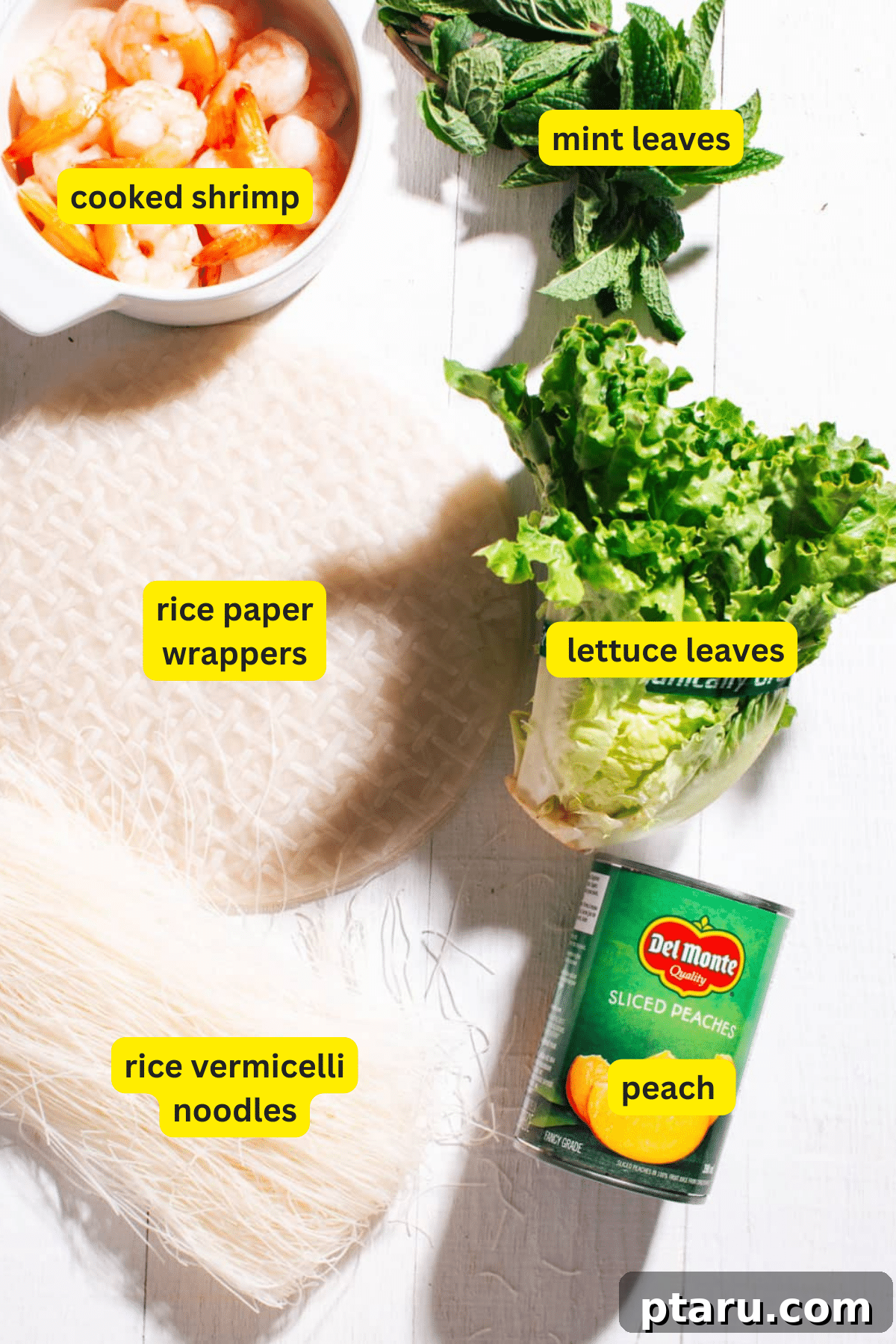
Essential Ingredients for Perfect Spring Rolls
Round up these core ingredients for your fresh spring rolls. For a detailed, complete list with exact measurements, please refer to the full recipe card below.
For the Spring Rolls:
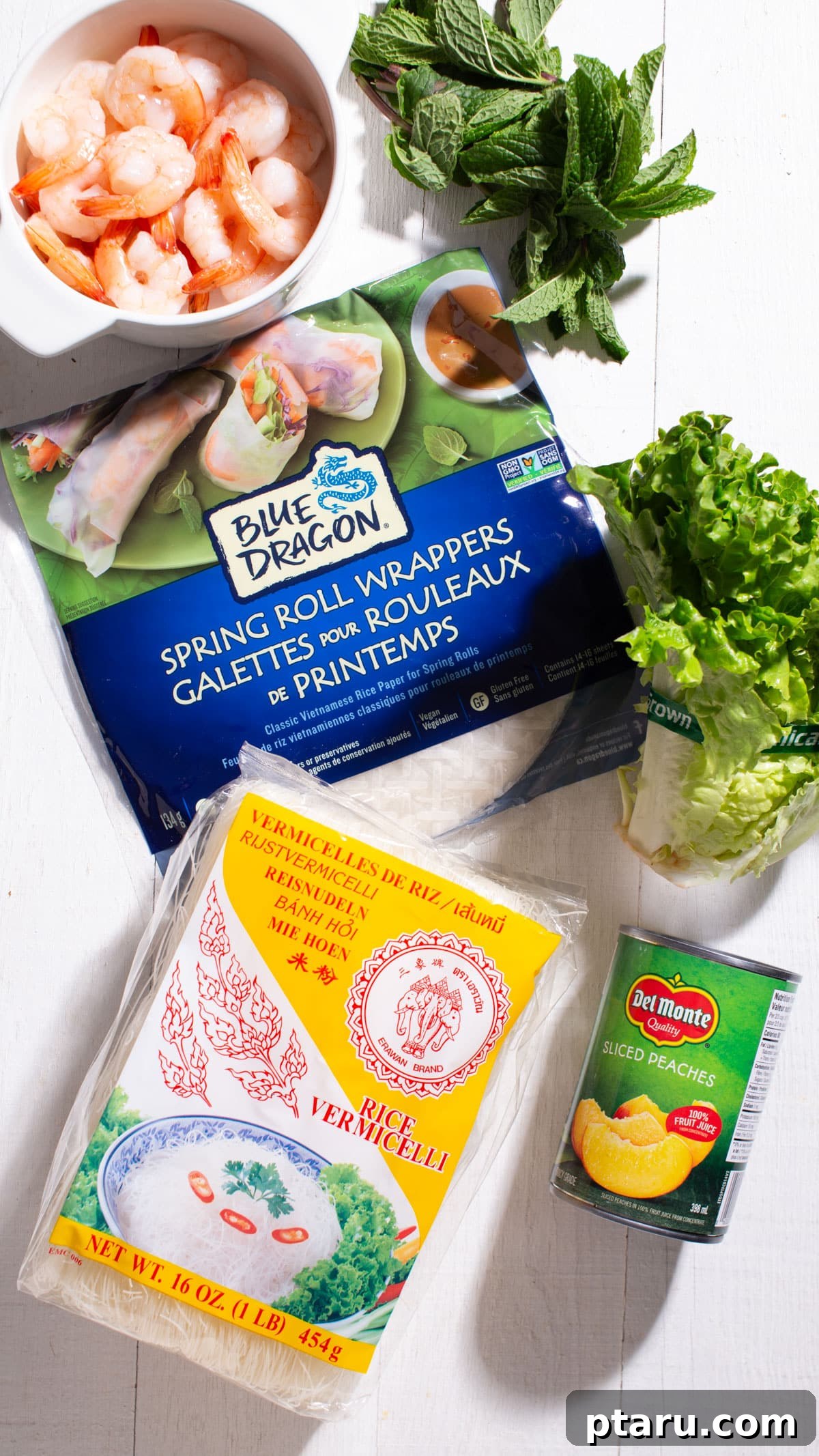
- Rice Vermicelli Noodles: These delicate, thin rice noodles form a crucial part of the filling, offering a light, slightly chewy texture that absorbs flavors beautifully. Cook them al dente for the best mouthfeel.
- Rice Paper Wrappers: The star of the show! These translucent, thin wrappers, made from rice flour, become pliable and slightly sticky when hydrated, elegantly encasing your fresh fillings. Choose round or square wrappers, ensuring they are firm before soaking.
- Cooked Shrimp: Adds a delightful protein boost with a naturally sweet flavor and firm, succulent texture. Opt for plump, medium-sized cooked shrimp, peeled and deveined, for convenience and visual appeal.
- Peach or Mango Slices: A surprising but incredibly delicious addition! These fruits introduce a sweet, juicy contrast that perfectly complements the savory shrimp and fresh herbs, adding an authentic Vietnamese touch.
- Fresh Mint Leaves: Essential for that characteristic refreshing aroma and taste. Mint provides a vibrant, cooling counterpoint to the other ingredients.
- Crisp Lettuce Leaves: Butter lettuce or green leaf lettuce works wonderfully, providing a fresh, crunchy base and adding bulk without overpowering other flavors.
For the Irresistible Peanut Sauce:
- A Batch of Homemade Peanut Sauce: No fresh spring roll is complete without a rich, creamy, and flavorful dipping sauce. Our favorite easy peanut sauce recipe is highly recommended for its perfect balance of sweet, savory, and tangy notes.
Optional Garnishes & Flavor Enhancers:
- Crushed Peanuts for Garnish: A sprinkle of lightly toasted, crushed peanuts adds an appealing crunchy texture and an extra layer of nutty flavor, whether on top of the sauce or incorporated directly into the rolls.
Creative Substitutions and Delicious Variations
The beauty of fresh spring rolls lies in their incredible versatility. Feel free to customize this recipe to your heart’s content, adapting it to dietary needs, seasonal ingredients, or personal preferences. Here are some popular ideas:
- Nut-Free Alternative: If you or your guests have nut allergies, the peanut butter in the dipping sauce can be easily replaced. Good substitutes include tahini (sesame paste) or sunflower seed butter, maintaining a similar creamy texture.
- Vegetarian & Vegan Spring Rolls: Easily transform this recipe by swapping the shrimp for plant-based proteins. Firm or extra-firm tofu, pressed to remove excess water, marinated in soy sauce (or tamari for gluten-free) and pan-fried until golden, makes an excellent and hearty substitute. Tempeh is another fantastic option.
- Fruit Swaps for Unique Sweetness: While peach and mango add a wonderful sweet touch, you can experiment with other fruits. Creamy avocado offers a rich, smooth texture and healthy fats. For different sweet notes, consider julienned pineapple or papaya.
- Boost the Texture with More Veggies: Load up your rolls with an even greater variety of crunchy vegetables! Excellent additions include finely julienned carrots, crisp cucumber sticks, thinly sliced green onions, shredded purple cabbage, vibrant red bell peppers, snappy snap peas, or even baby corn. Think of anything you’d find in a colorful stir-fry mix – they all contribute fantastic texture and visual appeal.
- Hearty Chicken Spring Rolls: For a lean protein alternative, switch out the shrimp for cooked, shredded, or thinly sliced poached chicken breast. Marinated and grilled chicken can also add a smoky flavor.
- Herbaceous Twists: While mint is traditional, don’t hesitate to experiment with other fresh herbs. Fresh cilantro offers a bright, citrusy note, while basil (Thai basil for an authentic touch) brings a peppery, aromatic depth.
- Noodle Alternatives: If rice vermicelli isn’t available or you prefer a different texture, glass noodles (made from mung bean starch) are a great substitute. For a low-carb option, thinly spiralized zucchini noodles or simply packing the wrappers with more crisp lettuce, julienned cabbage, and carrots are excellent choices.
- Rice Paper Wrapper Alternatives: For a completely different wrap experience, large collard green leaves or softened cabbage leaves can be used. Nori sheets (seaweed wraps, typically for sushi) also make for a unique and savory wrapper, imparting a distinct umami flavor.
Essential Tools to Grab
You won’t need any specialized kitchen gadgets for this recipe, just a few common items to make your rice paper spring roll assembly smooth and enjoyable:
- Large Pot: Essential for boiling water to cook your vermicelli noodles.
- Colander: To efficiently drain and rinse the cooked noodles.
- Shallow Dish or Pie Plate: Crucial for softening your rice paper wrappers. A dish wide enough to fully submerge the wrapper is ideal.
- Damp Kitchen Towel or Paper Towel: This is your best friend when rolling! Lay it flat on your workspace to prevent the softened wrappers from sticking and to keep them moist as you assemble your spring rolls.
- Sharp Knife and Cutting Board: For preparing all your fresh vegetables, fruits, and shrimp.
How to Make Fresh Spring Rolls: An Easy Step-by-Step Guide
Ready to roll? Let’s dive into making a beautiful batch of homemade fresh Vietnamese spring rolls. Follow these simple steps for perfect results every time:
Step 1: Prepare the Vermicelli Noodles
Bring a medium pot of water to a rolling boil. Add the rice vermicelli noodles and immediately turn off the heat. Let the noodles soak for 2-3 minutes, or until they are tender but still retain a slight chewiness. Avoid overcooking, as they can become mushy. Once tender, drain the noodles thoroughly in a colander and rinse them under cold water. This stops the cooking process and prevents them from sticking together. Set them aside to cool completely.
Step 2: Soften the Rice Paper Wrappers (One at a Time)
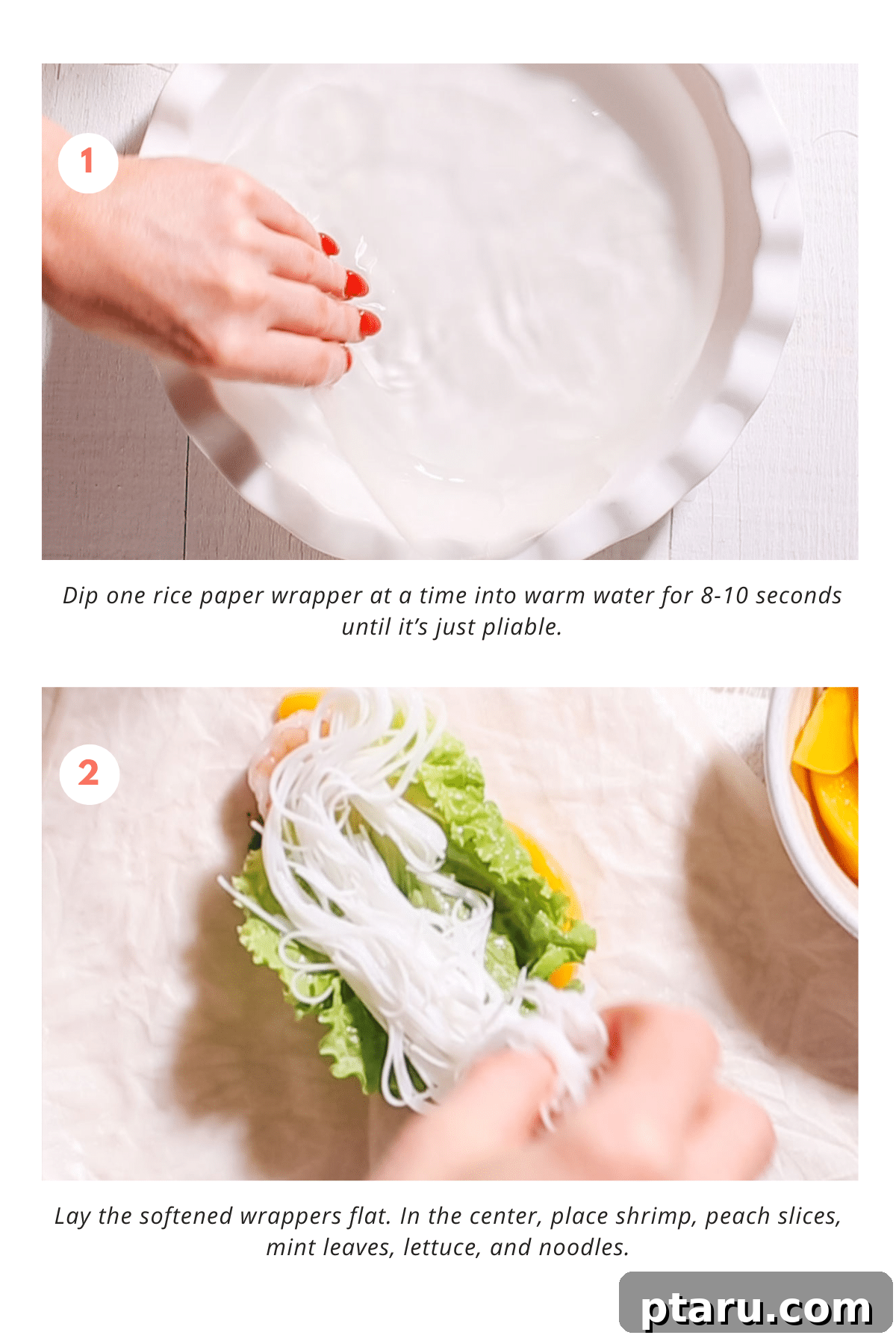
Fill a shallow dish or pie plate with warm (not hot) water. Take one rice paper wrapper and dip it into the warm water for approximately 8-10 seconds. The key is to make it pliable but still slightly firm to the touch – it will continue to soften as you work with it. Over-soaking will make it too sticky and prone to tearing. Once pliable, carefully remove the wrapper and lay it flat on your clean, damp kitchen towel. The damp towel helps prevent sticking and keeps the wrapper moist.
Step 3: Fill and Fold the Wrappers
This is where the magic happens! Position your fillings strategically on the lower third of the softened wrapper, leaving space around the edges for folding. Start with about 2-3 cooked shrimp (if using), arranging them visibly along the center. Over the shrimp, add a few slices of peach or mango, a couple of fresh mint leaves, a piece of lettuce, and a small handful of cooled vermicelli noodles.
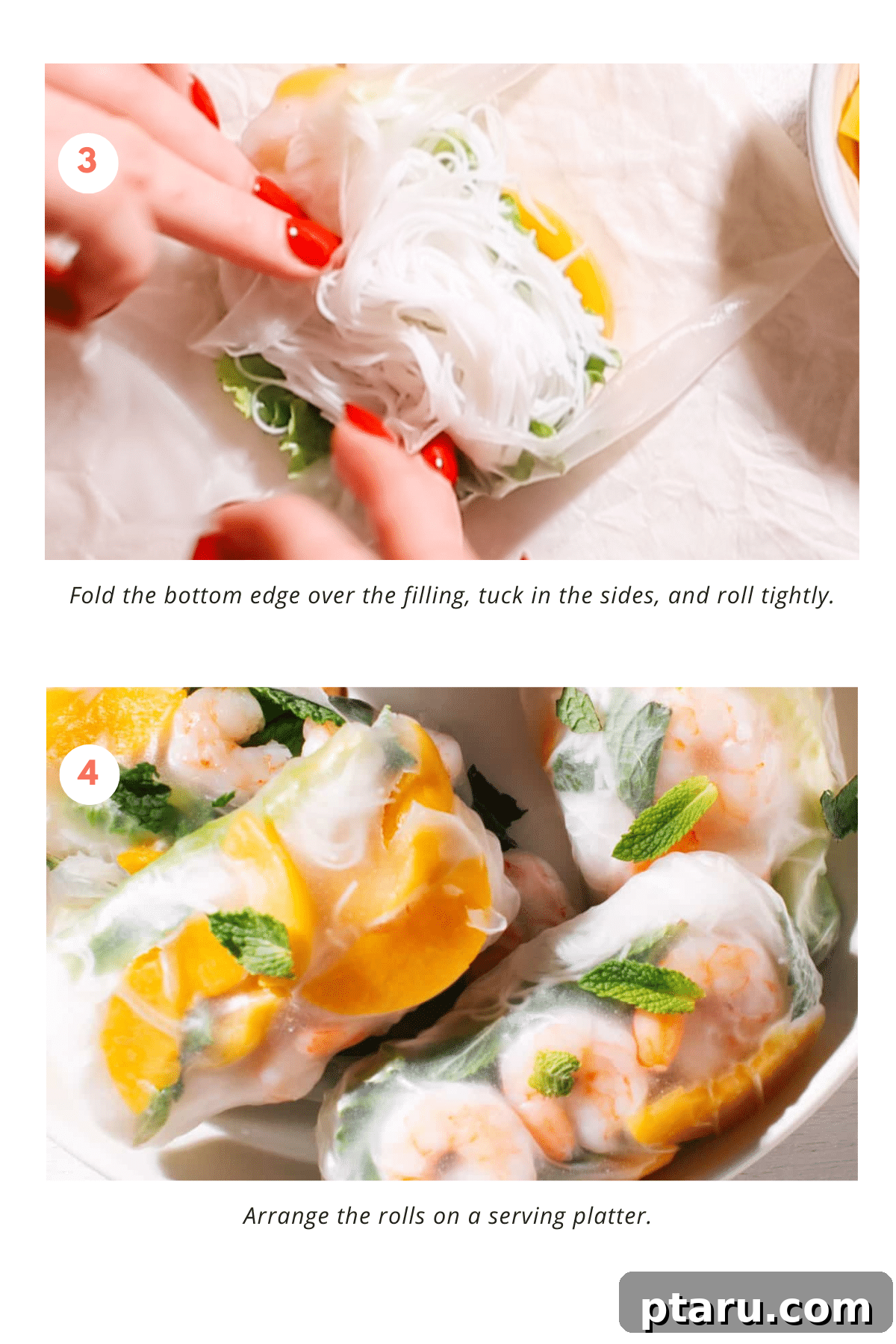
To fold: First, fold the bottom edge of the wrapper up and over the filling, pulling it gently but firmly. Next, tuck in the sides of the wrapper towards the center. Finally, roll the entire assembly tightly from the bottom towards the top. Aim for a snug roll, but don’t pull so hard that the wrapper tears. If you’ve placed the shrimp near the edge, they should be visible through the translucent wrapper, adding to the aesthetic appeal.
Step 4: Arrange and Serve
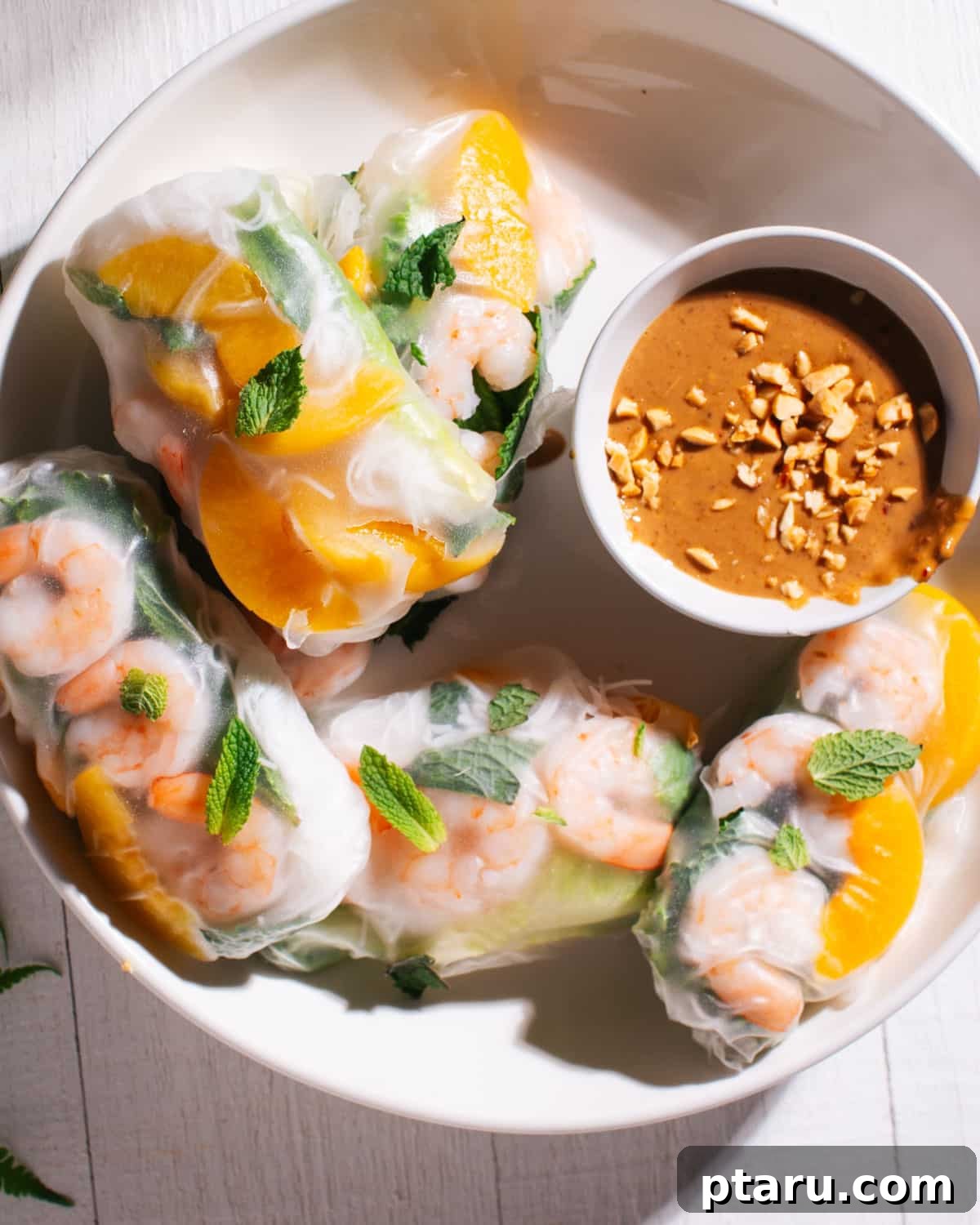
Once rolled, arrange your fresh spring rolls on a serving platter. It’s crucial to space them out so they don’t touch each other; otherwise, they will stick together and can tear when separated. Repeat the softening, filling, and rolling process with the remaining ingredients until all your delicious spring rolls are made. Serve them immediately with a generous side of our amazing peanut dipping sauce for the ultimate fresh flavor experience.
Make Ahead and Storage Tips for Spring Rolls
While fresh spring rolls are undoubtedly best enjoyed immediately after rolling, there are ways to prepare them slightly in advance for convenience. Proper storage is key to maintaining their delicate texture.
Preparing Ahead:
To save time, slice and prepare all your vegetables, fruit, and shrimp ahead of time. Cook and cool the vermicelli noodles. Keep all these components separate in airtight containers in the refrigerator. This way, when you’re ready to assemble, it’s a quick and easy process.
Short-Term Storage (Same Day):
If you need to prepare the rolls a few hours before serving (e.g., for a party), prevent the wrappers from drying out by arranging them on a platter and covering them loosely with a damp paper towel or a clean, damp kitchen cloth, then covering the entire platter with plastic wrap. This will help maintain their soft and pliable texture. Ensure the rolls are not touching each other on the platter to avoid sticking.
Overnight Storage (Up to 24 Hours):
For storage up to 24 hours, place the rolls in an airtight container. Line the bottom of the container with a slightly damp paper towel. Arrange the rolls in a single layer, ensuring they have a bit of space between them to prevent sticking. Place another damp paper towel over the top of the rolls before sealing the container. Store in the refrigerator. Remember, the texture will be best within 24 hours.
Freezing Spring Rolls:
Unfortunately, fresh spring rolls are not suitable for freezing. The rice paper wrappers will become brittle and crack when frozen, and their texture will be unpleasantly mushy upon thawing. It’s always best to enjoy these rolls fresh.
How to Serve Your Fresh Spring Rolls
These versatile spring rolls are perfect for a variety of occasions. Their fresh and light nature makes them an ideal choice for appetizers, picnics, potlucks, or a refreshing light lunch. Here are some serving suggestions to elevate your meal:
- The Classic Pairing: Always serve these delightful rolls with a generous batch of our homemade peanut dipping sauce. The creamy, savory, and slightly sweet sauce is the perfect complement to the fresh fillings.
- Trending Appetizer Spread: For a popular and flavorful appetizer spread, serve your fresh spring rolls alongside other crowd-pleasers. They pair beautifully with our viral TikTok sushi bake, creating a diverse and exciting spread that caters to various tastes.
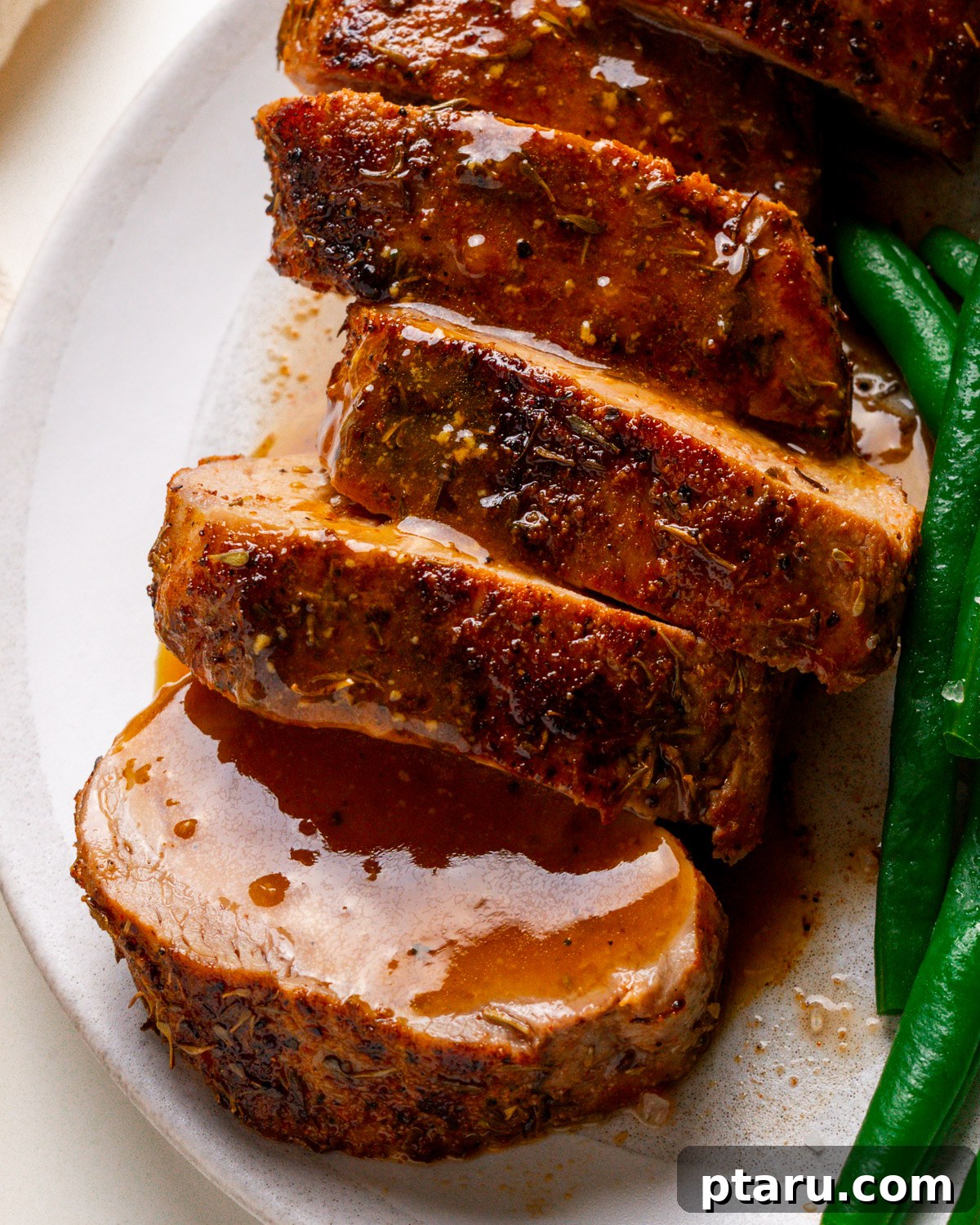
- Summer BBQ Starter: Kick off your summer barbecue with these light and refreshing rolls as a starter. Follow them up with main dishes like grilled coconut salmon satay or spiced grilled pork tenderloin with peanut sauce and cucumber salad for a complete and cohesive Asian-inspired feast.
- Asian Appetizer Platter: For an impressive spread, combine fresh spring rolls with other beloved Asian appetizers such as classic egg rolls, a vibrant platter of sushi or sashimi, and savory pot stickers (dumplings). This creates a feast for both the eyes and the palate.
- Light Meal Combo: For a more substantial light meal, pair your spring rolls with a simple clear soup, a small side salad with a ginger dressing, or a small portion of plain steamed rice.
5 Common Mistakes to Avoid When Making Fresh Spring Rolls
Working with delicate rice paper wrappers can sometimes be a bit challenging, especially for beginners. They are prone to tearing and sticking if not handled correctly. But don’t worry! By being aware of these frequent pitfalls, you can ensure a smooth rolling process and perfectly formed spring rolls every time.
- Overfilling the Wrappers: This is perhaps the most common mistake. Adding too much filling makes it incredibly difficult to roll the wrapper tightly and invariably leads to rips and tears. Aim for a moderate amount of filling, ensuring you can comfortably fold and seal the roll. Less is often more when it comes to elegant spring rolls.
- Not Prepping All Ingredients in Advance: Trying to chop vegetables, cook noodles, and roll at the same time is a recipe for chaos and dried-out wrappers. Always have all your fillings (cooked noodles, sliced veggies, shrimp, herbs, sauce) prepped, arranged, and within easy reach before you even start softening your first wrapper. This creates a streamlined assembly line.
- Inconsistent or Loose Rolling: A loosely rolled spring roll is prone to falling apart when handled or dipped. To achieve a tight, secure roll, place your fillings on the lower third of the wrapper. First, fold the bottom edge up over the filling, pressing gently. Then, neatly tuck in the sides of the wrapper. Finally, roll tightly from the bottom upwards, ensuring a snug cylindrical shape. Practice makes perfect!
- Improper Storage Leading to Dryness or Sticking: Fresh spring rolls dry out quickly when exposed to air, making the wrappers brittle. Conversely, if stored touching each other, they will stick together irrevocably. After rolling, immediately cover them with a damp cloth or paper towel, and then place them in an airtight container. Make sure there’s space between each roll to prevent sticking, or use parchment paper dividers.
- Over-Soaking Rice Paper Wrappers: Dipping the wrapper in water for too long makes it excessively soft, sticky, and extremely delicate, almost guaranteed to tear. The trick is a quick dip in warm water – just a few seconds until it’s pliable but still slightly firm. Remember, it will continue to soften as you add fillings and roll. A common beginner mistake is thinking it needs to be completely limp before you start.
- Working on an Unsuitable Surface: Trying to roll on a dry, sticky surface will cause frustration. Always work on a clean, slightly damp kitchen towel or a lightly oiled cutting board. The dampness helps prevent the rice paper from sticking to the surface, making it much easier to manipulate and roll without tearing.
Frequently Asked Questions About Spring Rolls
Just skimming through? Here are some quick answers to the most commonly asked questions about making and enjoying fresh spring rolls:
How do I soften rice paper wrappers correctly?
To soften rice paper wrappers, briefly dip each one into a shallow dish or pie plate filled with warm (not hot) water. Submerge the wrapper for only a few seconds (typically 8-10 seconds) until it becomes pliable yet still slightly firm. It will continue to soften as you work with the fillings. Always check the specific package instructions for the brand you’re using, as times can vary slightly.
Are fresh spring rolls gluten-free?
Yes, traditional rice paper wrappers are made from rice flour and are naturally gluten-free. The vermicelli noodles are also typically made from rice. However, the gluten-free status of your spring rolls ultimately depends on the dipping sauce used and any other ingredients. Always check the labels of sauces (especially soy sauce, which often contains wheat) to ensure they are certified gluten-free (e.g., tamari instead of regular soy sauce).
Can I use different filling ingredients for my spring rolls?
Absolutely! Fresh spring rolls are incredibly versatile and are designed for customization. Common delicious fillings include cooked proteins like shrimp, chicken, or tofu; a variety of sliced vegetables such as carrots, cucumber, bell peppers, and lettuce; and fresh herbs like mint, cilantro, and basil. You can also add fruits like mango or avocado for a sweet or creamy twist.
How do I prevent rice paper wrappers from tearing?
Preventing tears requires gentle handling and attention to detail. Key tips include: 1) Don’t oversoak the wrappers; they should be pliable but still firm. 2) Avoid overfilling the rolls; use a moderate amount of ingredients. 3) Work on a slightly damp surface (like a clean kitchen towel) to prevent sticking. 4) Handle the softened wrappers with care, as they become very delicate when wet.
Can I make spring rolls ahead of time?
While fresh spring rolls are best enjoyed immediately for optimal texture, you can prepare them a few hours in advance. To keep them fresh and prevent drying, arrange them on a platter or in an airtight container with a small space between each roll, then cover them with a damp paper towel or cloth and plastic wrap. This helps maintain their moisture and pliability. They are best consumed within 24 hours.
Can I make a vegetarian or vegan version of these spring rolls?
Yes, it’s very easy to make vegetarian or vegan spring rolls. Simply swap the shrimp for plant-based alternatives like marinated and pan-fried firm tofu or tempeh. You can also increase the quantity and variety of vegetables and noodles to create a satisfying and flavorful meat-free roll.
Other Asian-Style Take-out Inspired Recipes You’ll Love
If you’re a fan of quick, easy, and flavorful Asian takeout-inspired recipes, you’re in for a treat! Expand your culinary repertoire with these delicious dishes that bring the flavors of Asia right into your kitchen:
- Classic Chow Mein Noodles
- Savory Chicken and Broccoli Stir-fry
- Authentic Pad Woon Sen (Thai Glass Noodle Stir-fry)
- Spicy Gochujang Chicken
- Flavorful Hunan Shrimp
- Quick Thai Basil Pork with Green Beans
- Comforting Chili Oil Ramen
- Sweet and Tangy Orange Chicken
- Healthier Honey Garlic Chicken
- My personal favorite: The Ultimate Spicy Ramen Recipe
Spring Rolls (Fresh, Easy Recipe!)
By: Jennifer Pallian BSc, RD
Fresh Spring Rolls packed with vibrant crunchy veggies and plump shrimp. Our guide includes no-fail tips for working with rice paper wrappers and avoids common mistakes for perfect results every time.
Prep Time: 15 minutes
Cook Time: 5 minutes
Total Time: 20 minutes
Servings: 6 rolls
Ingredients
For the Spring Rolls:
- 3 oz rice vermicelli noodles
- 6 round rice paper wrappers
- 12 medium cooked shrimp, peeled and deveined
- ½ cup peeled sliced peach or mango
- 12 fresh mint leaves
- 6 lettuce leaves (such as butter lettuce)
For the Peanut Sauce:
- 1 batch of homemade peanut sauce
Optional:
- Crushed peanuts for garnish
Instructions
Cook the Vermicelli Noodles:
- Bring a large pot of water to a boil. Add the rice noodles, turn off the heat, and let them soak for 2-3 minutes, or until soft.
- Drain the noodles and rinse thoroughly with cold water to stop the cooking process and prevent sticking. Set aside to cool.
Soften Rice Paper Wrappers (One at a Time):
- Fill a shallow dish with warm water. Dip one rice paper wrapper at a time into the warm water for 8-10 seconds, until it is just pliable but still slightly firm. (It will continue to soften as you assemble).
- Place the softened wrapper on a clean, damp kitchen towel or cutting board.
Assemble:
- Lay down 2 shrimp in the center of the lower third of the wrapper. Over these, add a few fruit slices, a couple of mint leaves, a lettuce leaf, and a small handful of vermicelli noodles.
- Fold the bottom edge of the wrapper up and over the filling. Then, fold in the sides of the wrapper. Finally, roll the entire assembly tightly from the bottom towards the top to secure the contents. Ensure the shrimp are visible through the wrapper if desired.
- Arrange the finished rolls on a serving platter, ensuring they are spaced apart to prevent them from sticking together.
- Repeat with the remaining wrappers and fillings. Serve immediately with the prepared peanut sauce.
Notes
Cooking Tips: The key to perfect wrappers is not to oversoak them. They should be pliable but still have some firmness; they will continue to soften. Handle gently to prevent tearing, as they become very delicate when wet.
Serving Tips: For the freshest look and best texture, these rolls are ideal when served immediately. If preparing a few hours in advance, cover them with a damp paper towel and plastic wrap to keep them from drying out.
Storage Tips: Consume within 24 hours for the best taste and texture. When storing, ensure rolls do not touch each other, as the rice paper wrappers will stick together and tear when separated. Store in an airtight container lined with a damp paper towel, with another damp paper towel on top of the rolls.
Nutrition (per roll, approximate)
Calories: 130kcal | Carbohydrates: 25g | Protein: 6g | Fat: 1g | Saturated Fat: 0.1g | Polyunsaturated Fat: 0.2g | Monounsaturated Fat: 0.1g | Trans Fat: 0.002g | Cholesterol: 27mg | Sodium: 286mg | Potassium: 139mg | Fiber: 1g | Sugar: 1g | Vitamin A: 1924IU | Vitamin C: 7mg | Calcium: 42mg | Iron: 1mg
Nutrition information is automatically calculated and should only be used as an approximation. It does not include the peanut sauce.