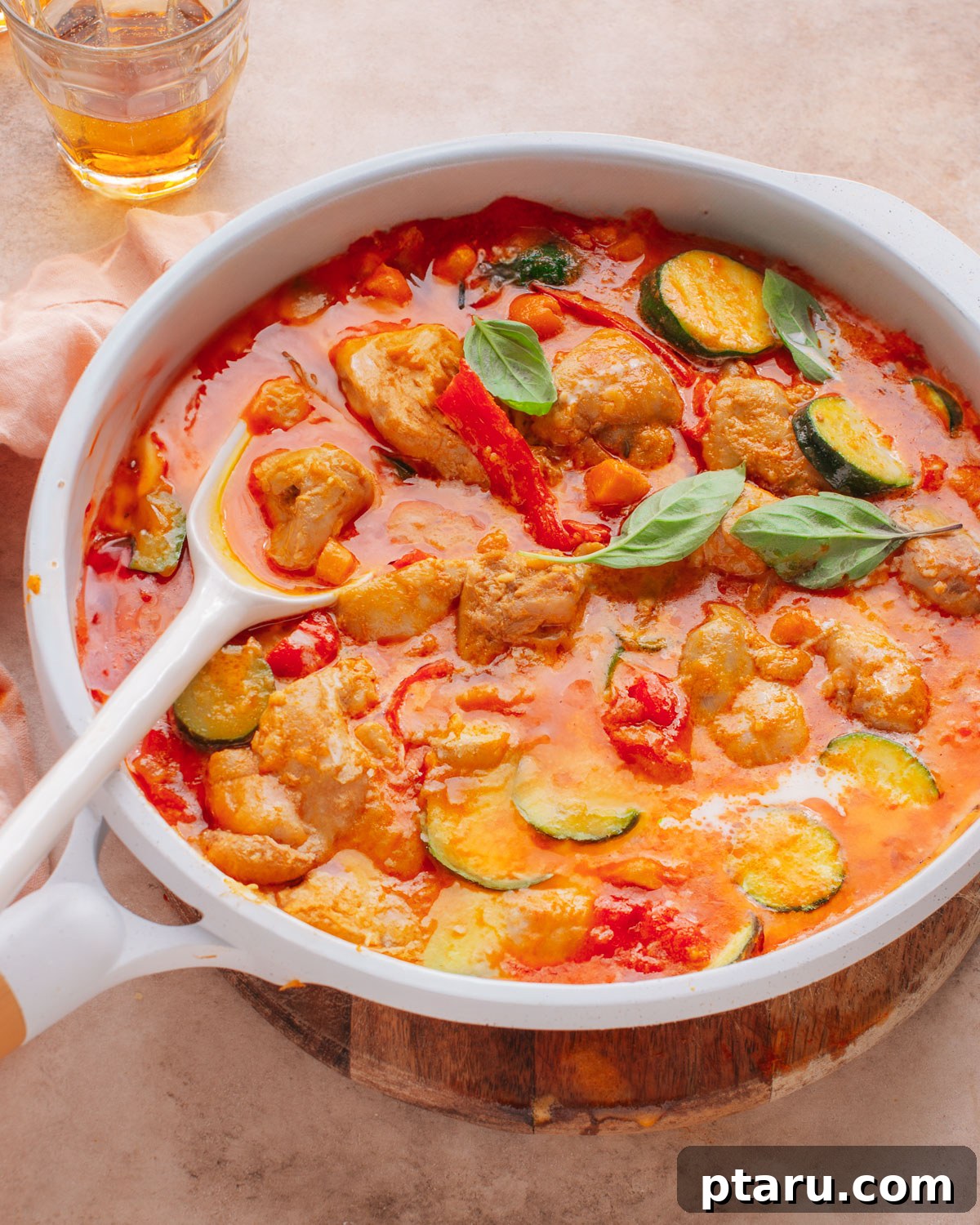
Welcome to your new favorite weeknight savior: this incredibly easy and unbelievably flavorful Thai Red Curry Chicken. Forget bland dinners or lengthy cooking times; this recipe brings the vibrant, aromatic taste of authentic Thai cuisine right to your kitchen in under 30 minutes. It’s truly one of the quickest, most satisfying meals you can whip up, making it perfect for busy evenings when you crave something special without the fuss.
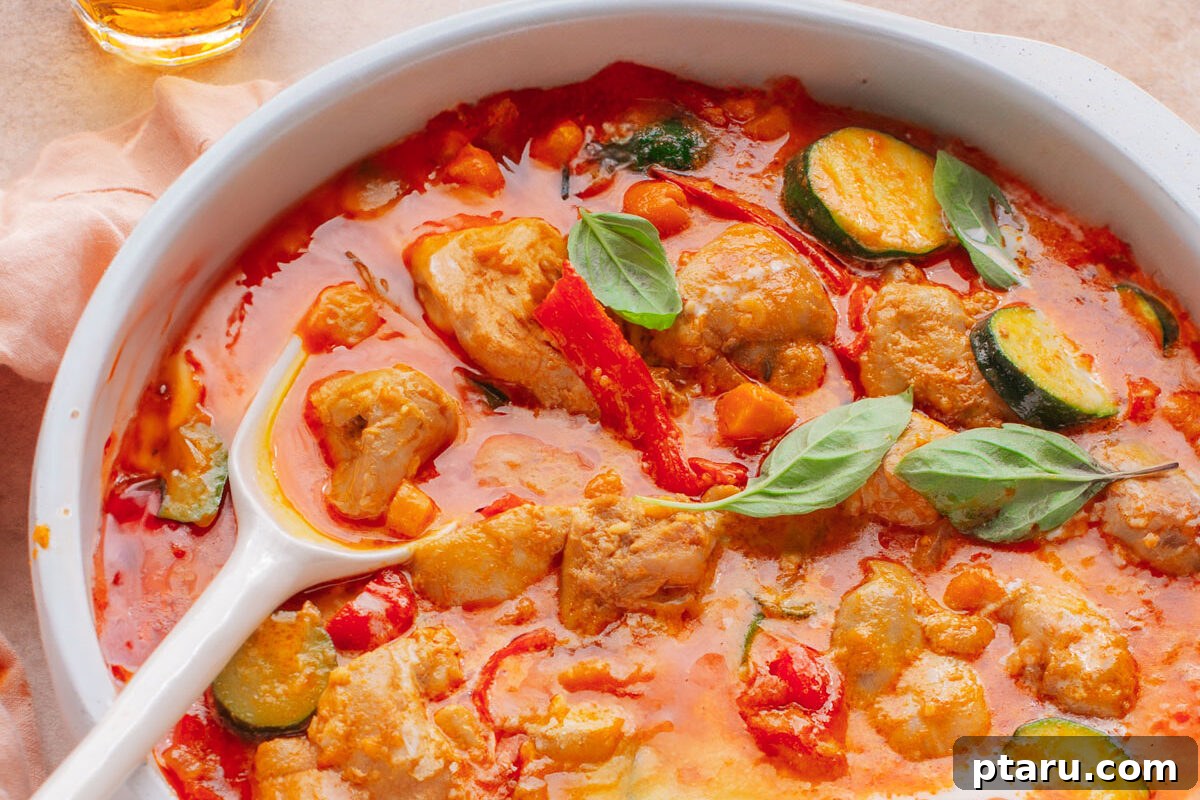
What makes this easy red curry recipe an absolute standout? Its remarkable versatility! It effortlessly adapts to whatever you have on hand, whether that’s fresh chicken, frozen shrimp, or a medley of leftover vegetables. The secret to its profound depth of flavor lies in just two essential pantry staples: a high-quality Thai red curry paste and creamy, full-fat coconut milk. These ingredients form the backbone of a rich, spicy, and perfectly balanced sauce that will transport your taste buds straight to Thailand.
Essential Thai Red Curry Ingredients
Crafting an authentic and delicious Thai Red Curry starts with selecting the right ingredients. Here’s a breakdown of everything you’ll need to create this incredibly flavorful dish:
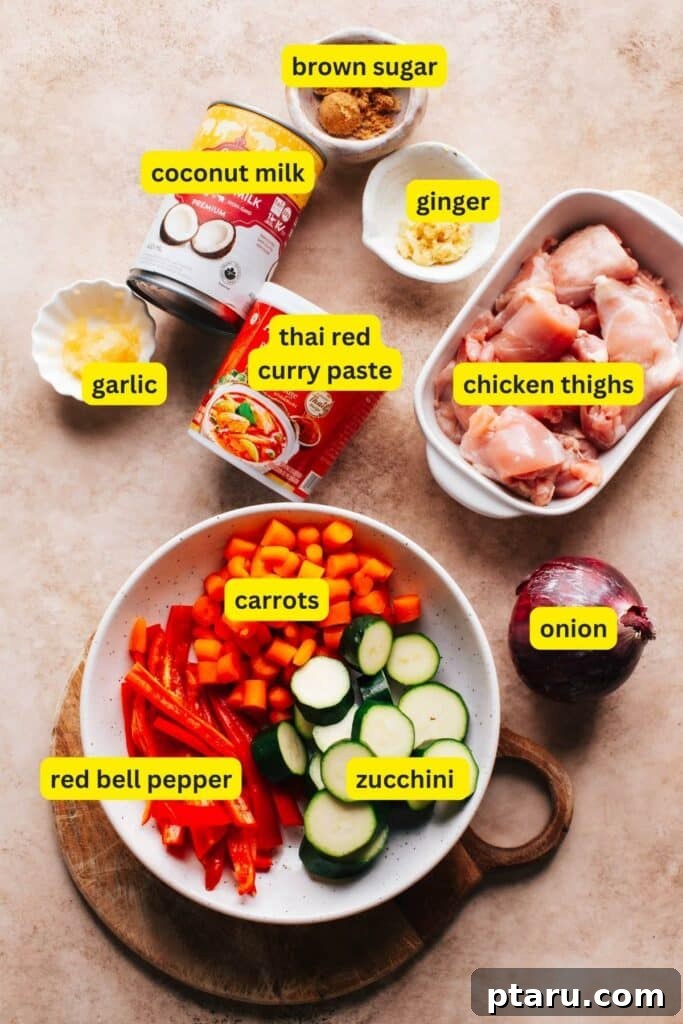
- Thai Red Curry Paste: This is the heart and soul of your curry. It’s a complex blend of red chilies, lemongrass, galangal, kaffir lime peel, and spices that provides both heat and incredible aromatic depth. For the best flavor, I highly recommend the Aroy-D brand, widely available in Asian markets and many larger supermarkets. Its consistent quality ensures a rich and balanced base for your curry.
- Unsweetened Coconut Milk: Crucial for that signature creamy texture and subtle sweetness. Always opt for canned, full-fat unsweetened coconut milk, not the beverage version found in cartons. The higher fat content is essential for a rich, luxurious sauce that properly emulsifies and carries the flavors.
- Brown Sugar: Just a touch of brown sugar works wonders to balance the heat from the curry paste and the tartness that can sometimes come from the coconut milk. It adds a subtle sweetness that rounds out the overall flavor profile, creating a harmonious and addictive sauce.
- Aromatic Base (Onion, Garlic, Ginger): While the curry paste is powerful, adding fresh onion, garlic, and ginger lays down an extra layer of foundational flavor that truly elevates the dish. If you’re truly pressed for time, the curry paste, coconut milk, and brown sugar alone will still yield a delicious result, but these aromatics provide an undeniable boost.
Note: If you’re interested in exploring a different, yet equally delicious, culinary journey, consider trying an Indian version of curry. This coconut curry chicken recipe offers a versatile and flavorful alternative with distinct Indian spices.
Customizing Your Red Curry: Proteins & Vegetables
This is where the fun truly begins! Thai Red Curry is incredibly forgiving and adaptable, allowing you to personalize it with your preferred proteins and a bounty of fresh or frozen vegetables. Embrace the flexibility and make it your own.
- Proteins of Choice:
- Boneless Chicken Thighs: My personal favorite for this recipe. Chicken thighs are incredibly forgiving; they can simmer beautifully, absorbing all the wonderful flavors of the curry sauce without drying out, resulting in tender, juicy bites every time.
- Delicious Alternatives: Don’t limit yourself! This curry shines with a variety of proteins. Consider swapping in succulent chicken breast, hearty tofu for a vegetarian option, lean ground turkey, quick-cooking shrimp, flaky salmon, delicate scallops, or fiber-rich chickpeas. Each option brings its unique texture and taste, proving that I’ve truly never met a red curry I didn’t adore.
- Vibrant Vegetables:
- My Go-To Trio: I often reach for red bell pepper, zucchini, and carrots for their color, texture, and mild sweetness.
- Explore & Experiment: The beauty of this recipe is its adaptability to your crisper drawer’s contents. Think vibrant eggplant, crisp broccoli, sweet snap peas, earthy butternut squash, creamy sweet potatoes, sunny yellow peppers, nutrient-dense kale or spinach, crunchy cabbage, delicate bok choy, or tender green beans. The goal is to aim for roughly 3 cups of coarsely chopped vegetables or small items like baby corn. The possibilities are truly endless!
- Fresh Garnishes for a Bright Finish:
- Fresh Basil Leaves and Lime Wedges: These are technically optional, but I highly recommend them. A generous sprinkle of fresh basil leaves (Thai basil if you can find it, but Italian basil works wonderfully) adds a layer of aromatic freshness, while a squeeze of fresh lime juice just before serving provides a crucial tangy brightness that perfectly cuts through the richness and spice of the curry.
How to Make Easy Red Curry: A Simple Step-by-Step Guide
Now that we’ve gathered our stellar ingredients, let’s dive into the incredibly straightforward cooking process. You’ll be amazed at how simple it is to create restaurant-quality Thai curries right at home, especially when you start with a good store-bought curry paste. Follow these easy steps to prepare your perfect bowl of Red Curry Chicken.
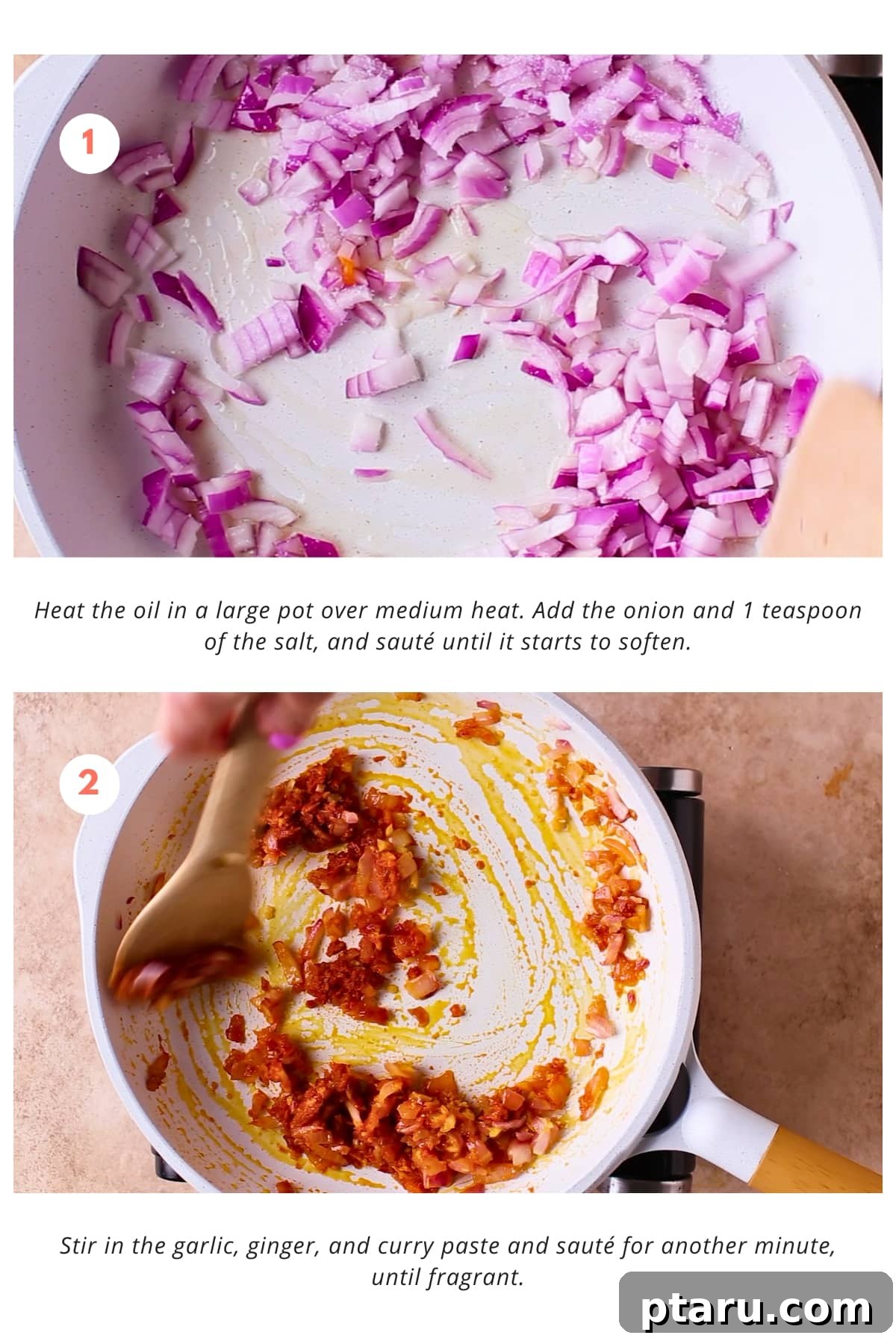
- 1. Heat the Oil: Begin by heating your chosen oil (vegetable, canola, or coconut oil all work well) in a large pot or Dutch oven over medium heat. This prepares your cooking vessel for the aromatic journey ahead.
- 2. Sauté Onion and Salt: Add the chopped onion to the heated oil along with 1 teaspoon of kosher salt. Sauté the onion gently, stirring occasionally, until it begins to soften and become translucent, usually about 3-5 minutes. The salt not only seasons the onion but also helps draw out its moisture, leading to a sweeter, more tender base.
- 3. Infuse with Aromatics and Curry Paste: Stir in the minced garlic and ginger, along with the star of the show – the Thai red curry paste. Continue to sauté for another minute or two, stirring constantly. This crucial step “blooms” the curry paste, releasing its potent, complex aromas and intensifying its flavors, which will permeate the entire dish.
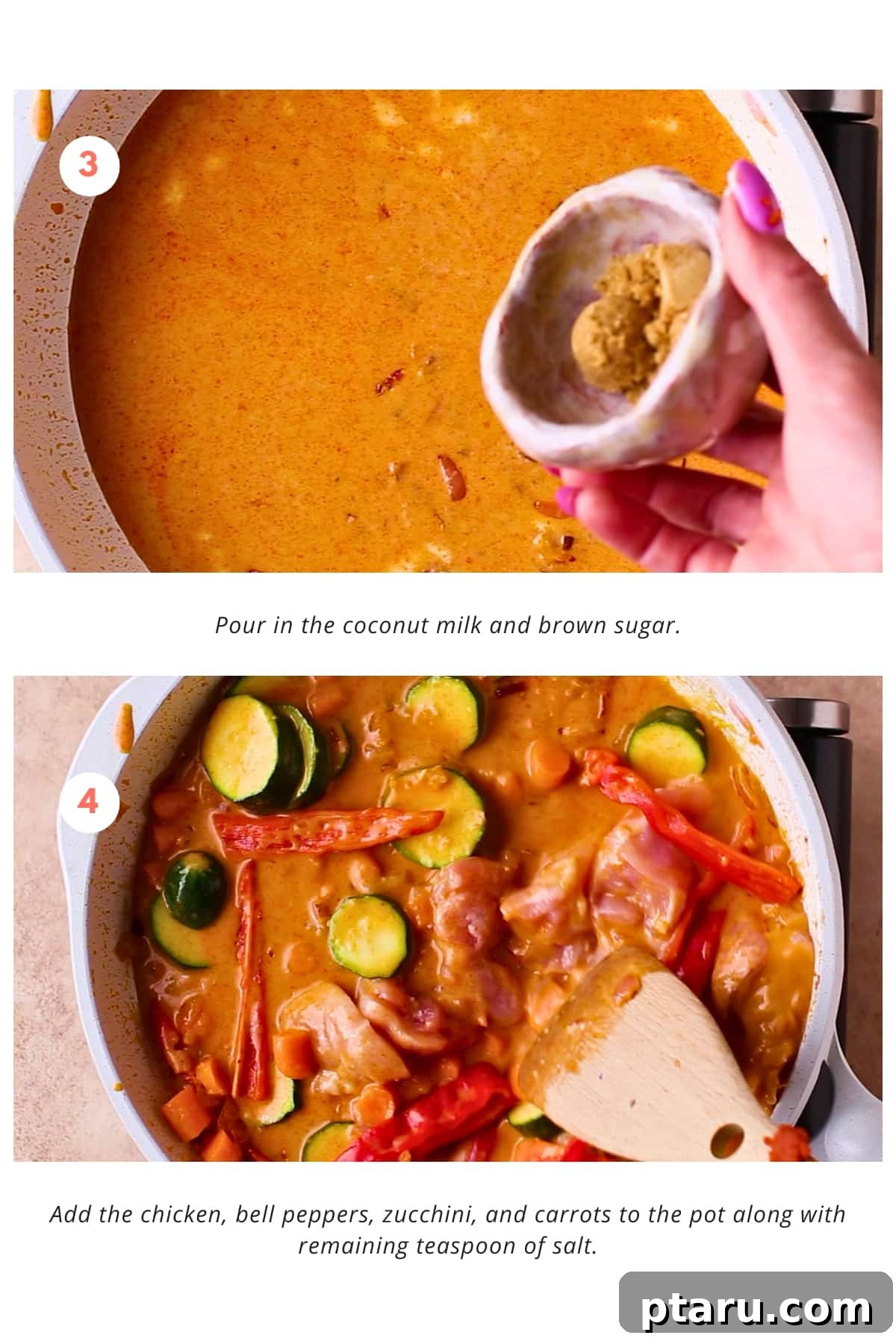
- 4. Create the Creamy Base: Carefully pour in the full can of unsweetened coconut milk. Stir it well to combine with the sautéed aromatics and curry paste. Then, add the brown sugar, stirring until it dissolves. This mixture will form the rich, creamy, and subtly sweet foundation of your curry.
- 5. Introduce Proteins and Veggies: Add your bite-sized chicken pieces (or chosen protein) and all the coarsely chopped vegetables (bell peppers, zucchini, carrots, or your preferred mix) to the pot. Add the remaining teaspoon of salt, ensuring everything is well coated by the sauce. This introduces the main components of your hearty meal.
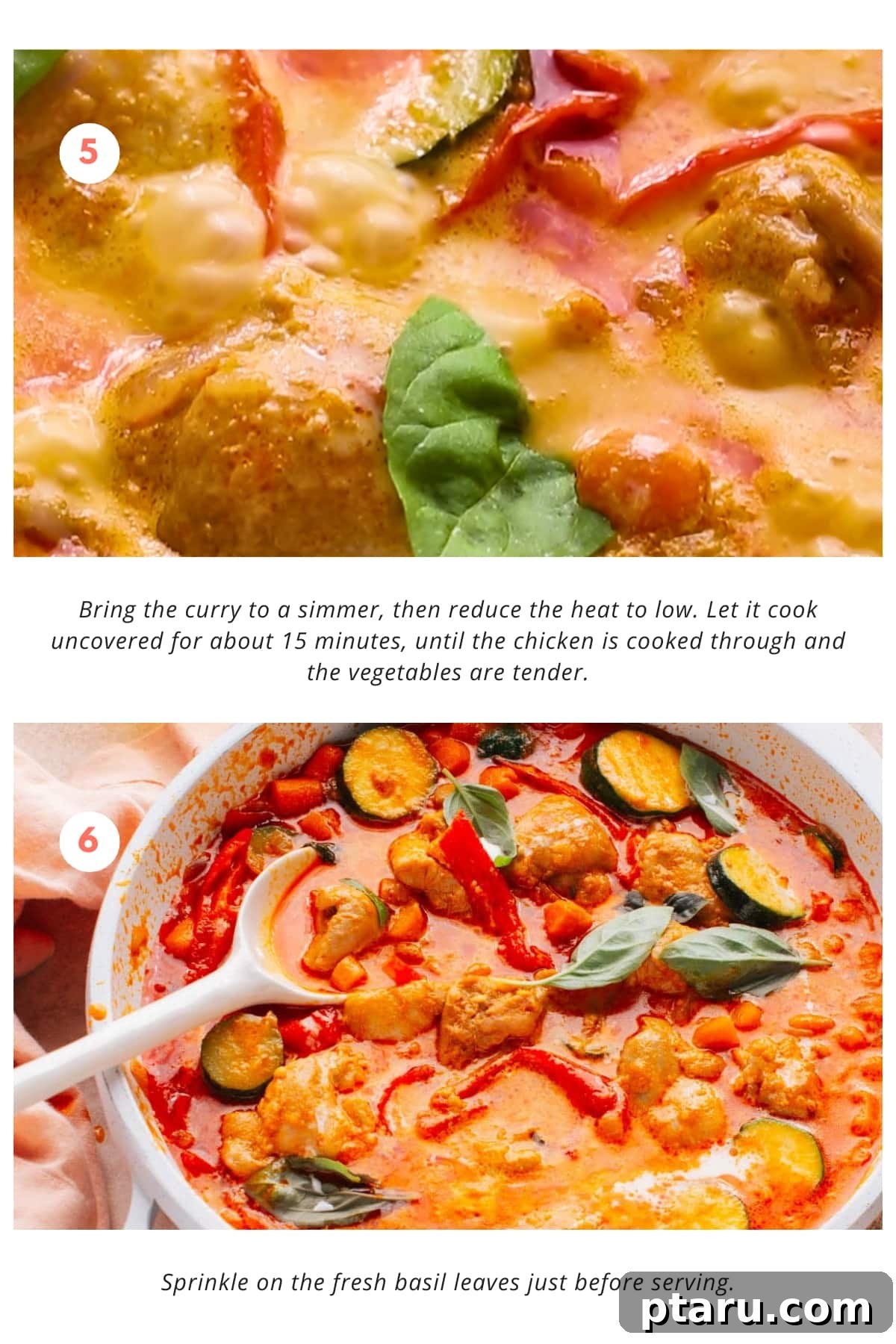
- 6. Simmer to Perfection: Bring the curry mixture to a gentle simmer over medium heat. Once simmering, reduce the heat to low and let it cook uncovered for about 15 minutes. This allows all the beautiful flavors to meld together, the chicken to cook through until tender, and the vegetables to reach their desired doneness – tender-crisp or fully soft, depending on your preference.
- 7. Final Fresh Touch: Just before serving, sprinkle generously with fresh basil leaves. This adds a wonderful, fragrant finish that brightens the entire dish. Serve immediately with your preferred accompaniments.
Make-Ahead and Storage Tips for Your Red Curry
Life can be hectic, and preparing delicious, wholesome meals sometimes feels like an insurmountable task. Fortunately, this Red Curry with Chicken recipe is incredibly accommodating when it comes to make-ahead preparation and convenient storage, ensuring you always have a fantastic meal ready to go.
- Prepare in Advance: One of the best qualities of this curry is that its flavors actually deepen and develop even more beautifully when made ahead. You can comfortably prepare the entire dish a day before you plan to serve it. Simply allow it to cool completely, then cover and refrigerate. When you’re ready to enjoy, gently reheat the curry on the stove over medium-low heat, stirring occasionally, until it’s warmed through. You might need to add a splash of water or extra coconut milk if it has thickened too much.
- Storing Leftovers: Have some delicious curry left over? No problem! This recipe yields fantastic leftovers. Transfer any remaining curry into an airtight container and store it in the refrigerator for up to four days. For longer-term storage, this Red Curry freezes exceptionally well. Portion it into freezer-safe containers or bags and freeze for up to two months. To reheat from frozen, simply thaw it overnight in the refrigerator, then warm gently on the stove over low heat until piping hot. This makes it an ideal meal prep option for healthy, flavorful lunches or dinners throughout the week.
💡 Expert Tips for a Perfect Red Curry
While this recipe is incredibly easy, a few expert tips and tricks can help you elevate your Red Curry Chicken from great to absolutely extraordinary. Master these nuances to achieve a truly memorable Thai meal.
- Bloom Your Curry Paste: This is perhaps the most crucial tip! Before adding any liquids, always sauté your curry paste in a little oil for a minute or two, stirring constantly. This process, known as “blooming,” helps to awaken and deepen the flavors and aromas of the paste’s spices, ensuring your curry is incredibly flavorful and rich, not just spicy.
- Embrace Full-Fat Coconut Milk: It might be tempting to opt for light coconut milk to reduce calories, but for a truly authentic and satisfying Thai Red Curry, full-fat coconut milk is non-negotiable. Its richness and creamy consistency are essential for developing that luscious, velvety sauce that is a hallmark of great curry. It also helps to temper the spice more effectively.
- Don’t Skip the Fresh Garnishes: While fresh basil and a squeeze of lime juice might seem like mere decorations, they play a vital role in the dish’s overall flavor profile. The aromatic basil adds a layer of herbaceous freshness, while the lime juice provides a crucial tangy brightness that cuts through the richness and heat, balancing the complex flavors beautifully. These simple additions can transform your curry.
- Taste and Adjust: Always taste your curry before serving and adjust the seasoning as needed. You might want a pinch more brown sugar for sweetness, an extra dash of salt, or a bit more lime juice for tang. The balance of sweet, salty, spicy, and sour is key in Thai cuisine.
- Consider Fish Sauce: For an extra layer of authentic umami, add a teaspoon or two of fish sauce along with the coconut milk. It deepens the savory notes without making the curry taste “fishy.”
How to Serve Your Delicious Red Curry
Serving your Red Curry with Chicken is about more than just plating; it’s about creating a holistic dining experience that celebrates the vibrant flavors and textures of Thai cuisine. Proper presentation and thoughtful pairings can enhance every bite.
- For a truly traditional Thai dining experience, there’s no better accompaniment than a generous bed of perfectly steamed jasmine rice. Its delicate fragrance and fluffy texture are ideal for soaking up every drop of the rich, spicy, and creamy curry sauce. For an effortlessly perfect result, I often rely on my super-easy, no-fail basmati rice recipe, which can be adapted for jasmine rice with similar success.
- For stunning presentation, once your curry is cooked, transfer it to a large, beautiful serving bowl. Then, liberally sprinkle some additional fresh basil leaves over the top. This not only adds a lovely pop of color but also reinforces that fresh, aromatic layer of flavor that’s so essential to the dish.
- Don’t forget to include a small bowl of fresh lime wedges on the side. A final squeeze of lime juice just before eating is transformative, adding a bright, zesty tang that beautifully complements and balances the complex rich and spicy notes of the curry. It truly awakens the palate.
- For those who crave extra heat, offer a small dish of thinly sliced fresh chili peppers (like bird’s eye chilies) or a side of your favorite chili sauce. This allows each diner to customize their spice level to perfection, ensuring everyone enjoys the curry exactly how they like it.
- Consider pairing your Red Curry with a chilled glass of crisp white wine (like a Riesling or Sauvignon Blanc) or a light, refreshing beer. The acidity and effervescence can beautifully cut through the richness of the curry and complement its spicy kick.
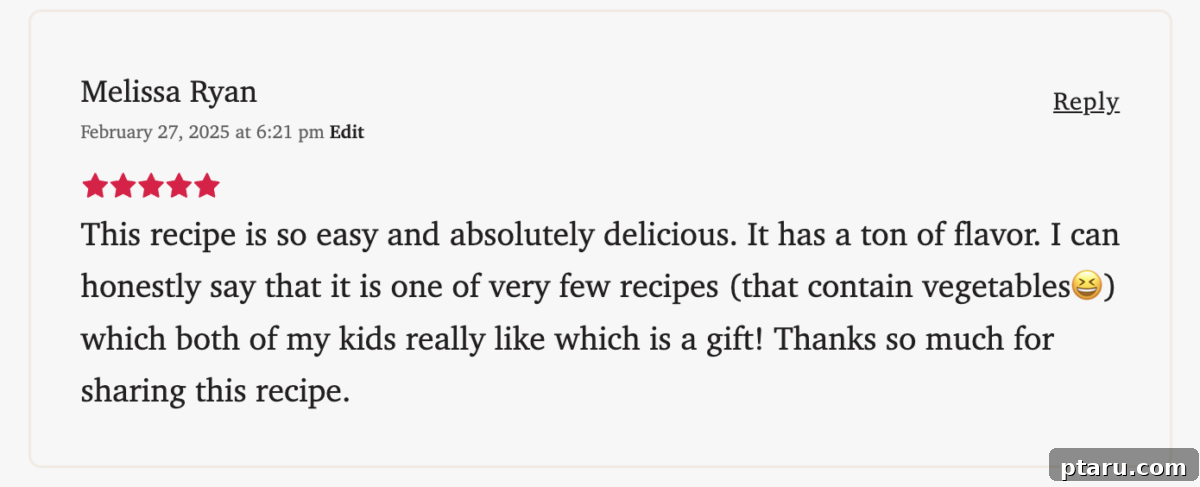
Featured Review
Frequently Asked Questions About Thai Red Curry
No, red curry is unequivocally not Chinese. It is a quintessential dish from Thailand, renowned for its vibrant flavors, aromatic blend of herbs and spices, and signature creamy coconut milk base. While both Chinese and Thai cuisines offer incredibly delicious and diverse dishes, red curry is a distinct and celebrated part of Thai culinary heritage.
Thai red curry paste is a complex and aromatic blend of fresh and dried ingredients. Its primary components typically include a generous amount of dried red chili peppers (giving it its characteristic color and heat), garlic, shallots, lemongrass, galangal (Thai ginger), kaffir lime peel, cilantro root, and sometimes shrimp paste. These ingredients are traditionally pounded together in a mortar and pestle to create a potent, flavorful paste that forms the essential base for many Thai dishes, including this delicious Red Curry Chicken.
The spiciness of Red Curry Chicken can vary significantly, depending on the brand of red curry paste you use and your personal preference. Generally, red curry has a noticeable and often invigorating level of heat. However, the beauty of making it at home is that you are entirely in control of the spice! You can adjust the heat by adding more or less red curry paste, or by incorporating additional fresh chili peppers if you like it fiery. Using full-fat coconut milk also helps to mellow the spice. Feel free to customize it to be as mild or as intensely spicy as your palate desires!
Thai Red Curry is incredibly versatile when it comes to protein choices. While chicken (especially chicken thighs) is a popular and classic option, you can easily adapt the recipe with a variety of other proteins. Excellent choices include tender beef slices, succulent pork, quick-cooking shrimp, flaky fish (like cod or salmon), hearty tofu or tempeh for vegetarian options, ground turkey, or even chickpeas for a plant-based version. The rich, flavorful red curry sauce complements almost any protein, encouraging you to get creative and discover your favorite combination!
The beauty of Red Curry Chicken lies in its adaptability to a wide array of vegetables, enhancing both flavor and texture. Beyond the classic bell peppers, zucchini, and carrots, popular choices include bamboo shoots, crunchy snap peas, tender eggplant, broccoli florets, cauliflower, sweet potatoes, butternut squash, green beans, or leafy greens like spinach or bok choy. Adding different vegetables allows you to vary the dish, enjoy seasonal produce, and boost its nutritional value.
Absolutely! This recipe is incredibly easy to adapt for vegetarian and vegan diets. Simply swap the chicken for plant-based proteins like firm tofu (pressed and cubed), tempeh, or chickpeas. Ensure your red curry paste does not contain shrimp paste (most common store-bought brands like Aroy-D are often vegetarian, but always check the label). All other ingredients – coconut milk, vegetables, brown sugar, and aromatics – are plant-based. You’ll still achieve a rich, satisfying, and flavorful curry!
Storing and reheating leftover Red Curry is straightforward. Allow the curry to cool completely, then transfer it to an airtight container. It can be stored in the refrigerator for up to 3-4 days. For reheating, gently warm the curry on the stovetop over medium-low heat, stirring occasionally, until it is heated through. You may want to add a tablespoon or two of water or extra coconut milk if the sauce has thickened too much during storage. Red curry also freezes well for up to 2 months; thaw in the refrigerator overnight before reheating.
More Delicious Thai Recipes You’ll Love
If you adore Thai recipes as much as I do, then your culinary adventure shouldn’t stop here! Explore these other fantastic Thai dishes that are bursting with authentic flavors and are sure to become new favorites in your home kitchen:
- Pad Woon Sen: This delightful stir-fried glass noodle dish offers a lighter alternative to heavier noodle dishes, packed with your choice of protein, crisp vegetables, and a savory, sweet sauce. It’s perfect for a quick and satisfying meal.
- Thai Curry Fish: Dive into the vibrant flavors of the sea with this fragrant and creamy fish curry. Made with tender fish, aromatic Thai curry paste, and rich coconut milk, it’s so good you’ll want to add it to your regular rotation.
- Pad Thai: A true icon of Thai cuisine, this classic noodle dish features a tantalizing balance of sweet, sour, and savory thanks to its tamarind-infused sauce. Customizable with chicken, shrimp, tofu, or vegetables, it’s a crowd-pleaser every time.
- Thai Basil Pork (Pad Krapow Moo Saap): Experience the fiery and fragrant notes of this beloved classic. Featuring ground pork, plenty of fresh Thai basil, and crisp green beans in a savory sauce, it’s a quick stir-fry that delivers big on flavor.
- Thai Scallops with Corn Relish: For a more elegant yet equally flavorful dish, these tender scallops are cooked in a luscious Thai-style sauce infused with curry paste and coconut milk, often served with a bright and refreshing corn relish.
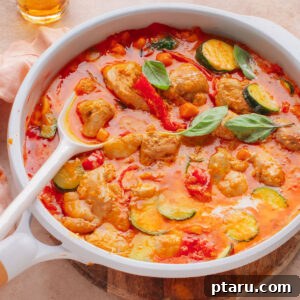
Easiest Red Curry Chicken (Simple 30-Minute Recipe!)
Jennifer Pallian BSc, RD
5 minutes
17 minutes
30 minutes
4
Video
(Video content not available in this format)
Equipment
-
Measuring Cups and Spoons
-
Chef’s Knife
-
Large Pot or Dutch Oven (e.g., Cast iron skillet)
-
Wooden Spoon or Spatula
Ingredients
- 1 tablespoon oil (vegetable, canola, or coconut)
- 1 medium onion chopped (approximately 1 ½ cups)
- 2 tsp kosher salt divided use
- 1 tbsp minced garlic (about 3-4 cloves)
- 1 tablespoon minced fresh ginger
- 2 tablespoons Thai red curry paste (recommended: Aroy-D brand)
- 1 can unsweetened full-fat coconut milk (14 ounces)
- 2 teaspoons brown sugar (or to taste)
- 1 lb boneless, skinless chicken thighs cut into bite-sized pieces
- 1 red bell pepper sliced (about 1 cup)
- 1 small zucchini sliced (about 1 cup)
- 2 carrots peeled and thinly sliced (about 1 cup)
- ½ cup fresh basil leaves torn (ideally Thai basil, but Italian basil works beautifully)
- Lime wedges for serving (optional, but highly recommended)
Instructions
-
Heat the oil in a large pot or Dutch oven over medium heat. Add the chopped onion and 1 teaspoon of the salt. Sauté, stirring occasionally, until the onion begins to soften and become translucent, about 3-5 minutes.
-
Stir in the minced garlic, ginger, and Thai red curry paste. Continue to sauté for another minute, stirring constantly, until the paste is fragrant and deeply aromatic. This step “blooms” the flavors.
-
Pour in the full can of unsweetened coconut milk and add the brown sugar. Stir well to combine, ensuring the sugar dissolves and the curry paste is fully incorporated into the creamy liquid.
-
Add the bite-sized chicken pieces, sliced bell peppers, zucchini, and carrots to the pot. Stir in the remaining 1 teaspoon of salt, making sure all ingredients are well coated with the flavorful sauce.
-
Bring the curry to a gentle simmer over medium heat. Once simmering, reduce the heat to low. Allow it to cook uncovered for about 15 minutes, or until the chicken is thoroughly cooked through (no longer pink inside) and the vegetables are tender to your liking. Stir occasionally to prevent sticking.
-
Just before serving, sprinkle generously with fresh basil leaves. Serve immediately, ideally over steamed jasmine rice, with lime wedges on the side for an optional squeeze of fresh citrus. Enjoy your incredibly easy and delicious homemade Thai Red Curry!
Nutrition
Per Serving (Approximate):
- Calories: 570 kcal
- Carbohydrates: 18 g
- Protein: 23 g
- Fat: 47 g
- Saturated Fat: 27 g
- Polyunsaturated Fat: 5 g
- Monounsaturated Fat: 11 g
- Trans Fat: 0.1 g
- Cholesterol: 111 mg
- Sodium: 1294 mg
- Potassium: 851 mg
- Fiber: 5 g
- Sugar: 11 g
- Vitamin A: 7556 IU
- Vitamin C: 55 mg
- Calcium: 74 mg
- Iron: 3 mg
Nutrition information is automatically calculated and should only be used as an approximation. Factors like ingredient brands and specific preparation methods can alter nutritional values.
Tried this recipe? Share your thoughts below!
Your feedback helps fellow home cooks!