The Ultimate Homemade Pork Gravy: Silky, Savory, and Simply Irresistible
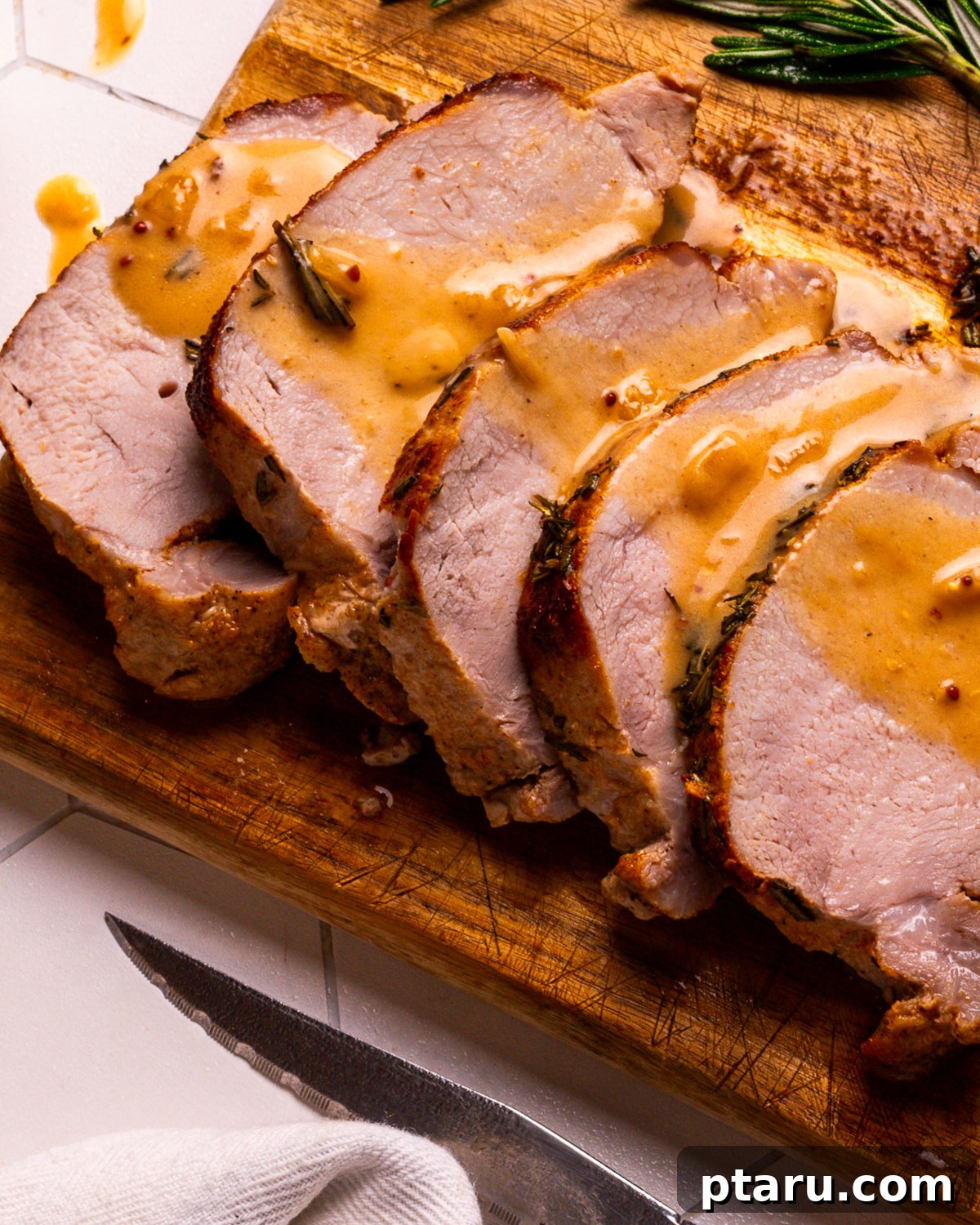
Every magnificent roast pork loin deserves an equally magnificent gravy. This isn’t just any gravy recipe; it’s the definitive guide to crafting a pork gravy that is consistently silky, incredibly creamy, and bursting with a depth of rich, savory flavor. This recipe has become my go-to, tried-and-true companion for every pork roast, transforming simple meals into memorable feasts.
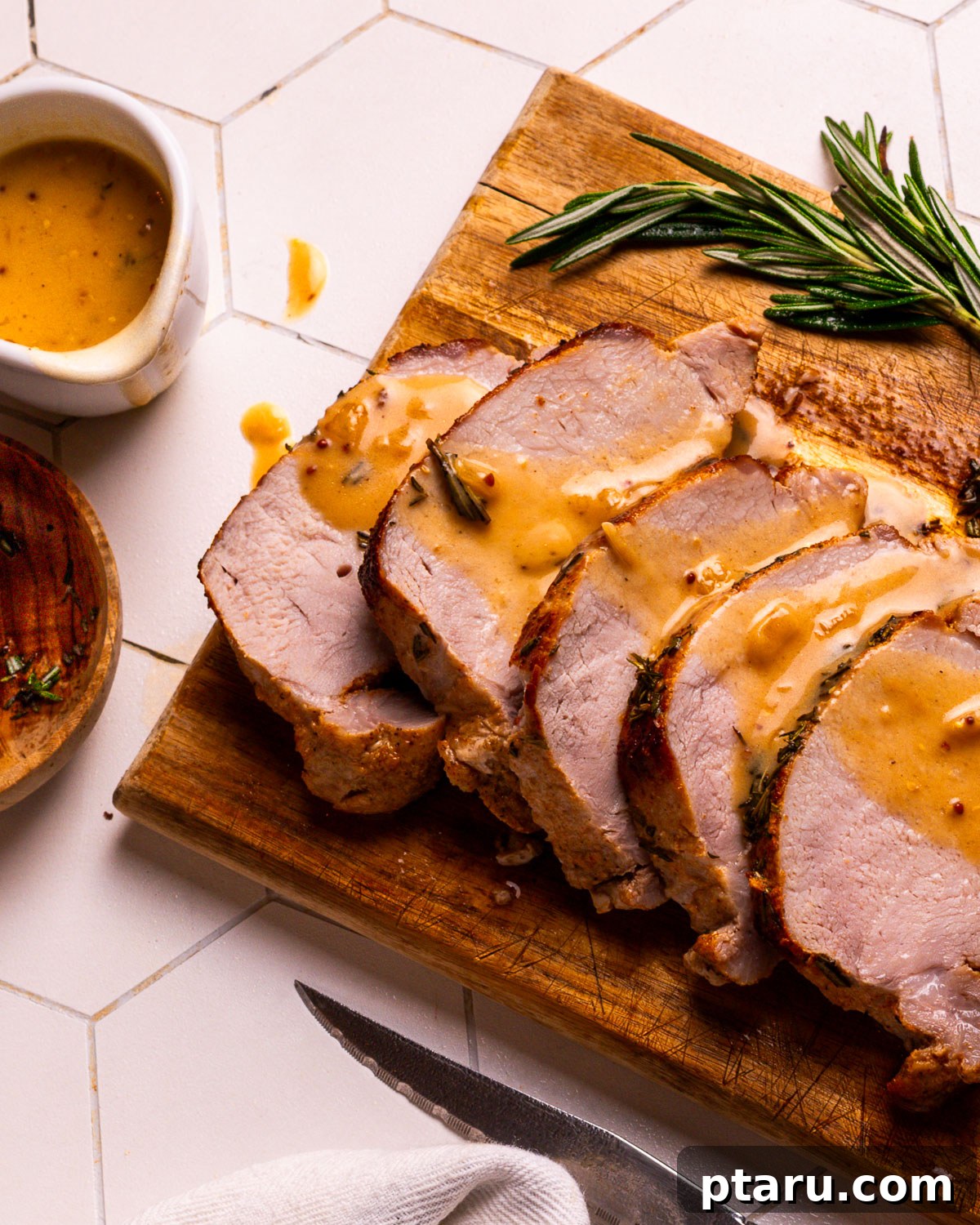
Mastering the Best Ever Pork Gravy (An Effortless Recipe!)
This exceptional homemade pork gravy recipe first gained acclaim as an integral part of my popular Roast Pork Loin recipe. Since then, the feedback has been overwhelmingly positive, with comments pouring in daily like, “the pan sauce is absolutely outstanding!” and, “this sauce is truly restaurant-quality and would complement any meat beautifully.” It’s a testament to how a simple addition can dramatically elevate an entire meal.
What truly distinguishes this recipe from a basic brown gravy is its thoughtfully layered flavor profile. We begin by gently softening finely minced onion in rich butter, creating a subtle sweetness and aromatic base. Next, we introduce flour, allowing it to brown into a perfect roux, eliminating any raw flour taste and contributing to a beautiful color. The liquids are then added – a harmonious blend of robust chicken broth and a hint of white wine – bringing brightness and acidity. Finally, the secret weapons: a dollop of grainy mustard and a splash of heavy cream for unparalleled richness, before whisking in those invaluable pan drippings that capture the essence of your perfectly roasted pork. This meticulous approach ensures a gravy that’s complex, balanced, and utterly irresistible.
Essential Ingredients for Your Perfect Pork Gravy
The beauty of this recipe lies in its adaptability. Even if you don’t have pan drippings readily available, fear not! I’ve included an easy workaround, ensuring you can whip up this incredible gravy any night of the week, transforming an ordinary meal into something extraordinary. Each ingredient plays a crucial role in building the gravy’s signature flavor and texture.
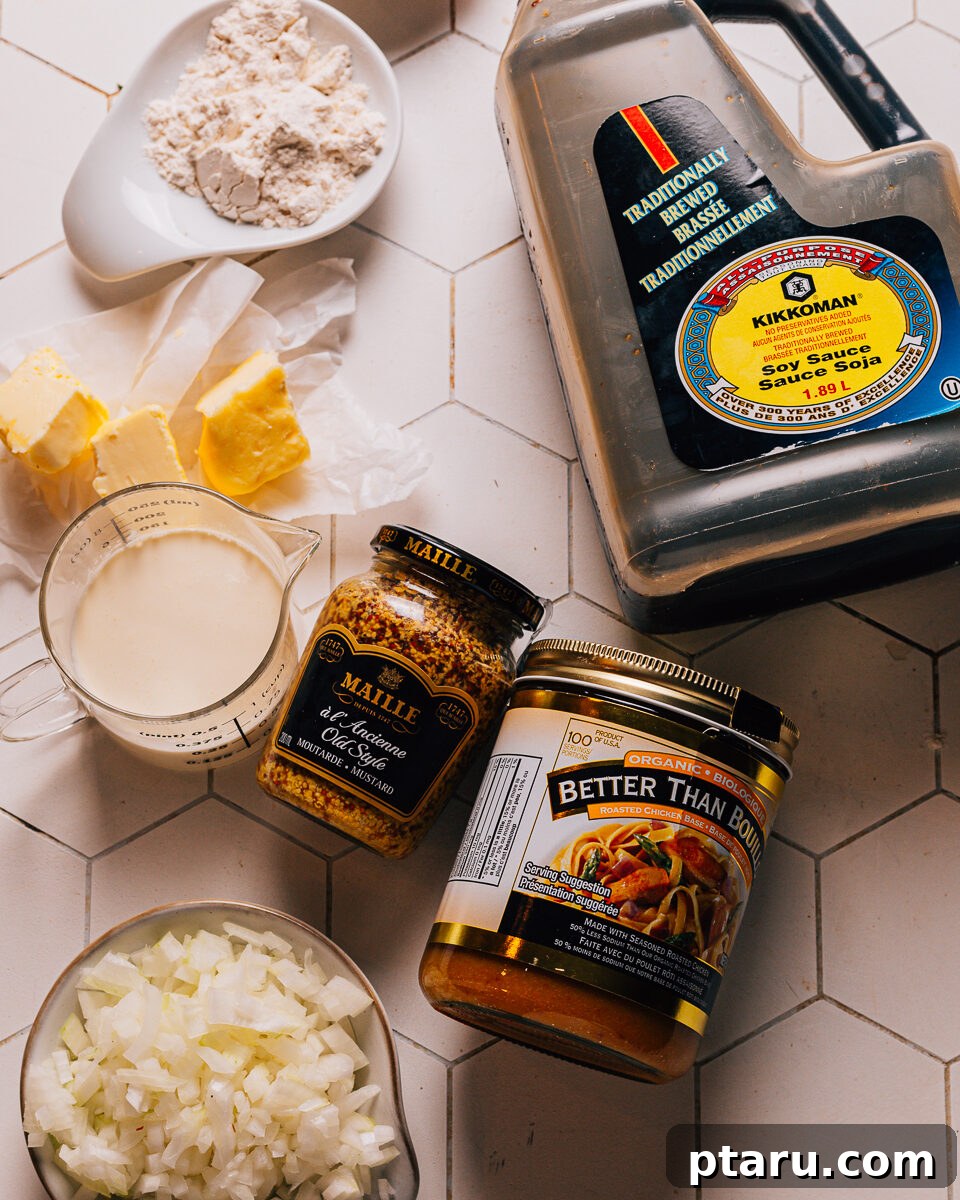
While full quantities are detailed in the recipe card below, let’s take a closer look at each component and why it’s indispensable for achieving that perfect, restaurant-quality pork gravy:
- Unsalted Butter: This forms the essential fat base for our roux and lays the foundation for all subsequent flavors. Using unsalted butter is key, as it gives you complete control over the final salt level, allowing the natural flavors to truly shine. Opt for high-quality butter for the best taste.
- Finely Minced Onion: This ingredient is crucial for adding a subtle sweetness and body to the gravy without any noticeable chunks. The goal is for the onion to soften and almost “melt” into the sauce, creating a smooth consistency and a depth of flavor that a regular brown gravy often lacks. The finer the mince, the better it integrates.
- All-Purpose Flour: Three tablespoons of all-purpose flour are precisely what’s needed to create a roux that thickens the gravy to that ideal, pourable consistency. Cooking the flour with the butter for a couple of minutes is vital; this process toasts the flour, developing a nutty flavor and, most importantly, eliminating any raw, pasty taste.
- Chicken Broth: The backbone of this savory gravy, chicken broth might seem like an unexpected choice for pork. However, its cleaner, more neutral flavor profile allows the rich pork drippings and other nuanced ingredients to come through vividly, rather than being overshadowed by a heavier beef broth. Choose a good quality, low-sodium chicken broth.
- White Wine: Just two tablespoons of white wine contribute a remarkable brightness and a touch of acidity, preventing the gravy from feeling heavy on the palate. It adds a sophisticated layer of flavor that complements the pork beautifully. If you prefer to avoid cooking with wine, simply substitute with an equal amount of additional chicken broth. Dry white wines like Sauvignon Blanc or Pinot Grigio work best.
- Grainy Mustard (or Dijon): This is truly the secret weapon in our pork gravy arsenal. It introduces a tangy, slightly spicy depth that masterfully cuts through the richness of the heavy cream and pork drippings, creating a balanced and incredibly addictive flavor. Don’t skip this ingredient if you want that “wow” factor. Dijon mustard offers a smoother alternative if you prefer no grains.
- Heavy Cream: Stirred in at the very end, heavy cream is what gives this gravy its luxurious, silky, and luscious texture. It adds unparalleled richness and a velvety mouthfeel. For the best results, do not substitute with milk or half-and-half, as these will not provide the same decadent body and creaminess.
- Soy Sauce: A tablespoon of soy sauce might seem unconventional, but it’s a game-changer. It deepens the savory, umami quality of the gravy’s flavor in a way that is utterly undetectable as soy itself. Instead, it simply makes you wonder why the gravy tastes so incredibly good and well-rounded. Use regular or low-sodium soy sauce.
- Pan Drippings: These are the golden treasure collected from roasting your pork. They infuse the homemade gravy with an unmatched, concentrated pork flavor. It’s crucial to skim off any excess fat from the drippings before incorporating them. If you find yourself without pan drippings, an additional ¼ cup of chicken broth makes an excellent substitute, though the drippings truly elevate the taste.
Crafting Your Perfect Pork Gravy From Scratch
One of the best strategies for perfectly timed gravy is to prepare it on the stovetop while your pork roast is still in the oven. This allows you to have it ready to go. Then, simply reheat and finish it off at the end of the cooking time, ideally after your pork has rested for a few minutes. This resting period is crucial, as it allows the meat to reabsorb its juices and provides you with the maximum amount of precious pan drippings for the most flavorful gravy.
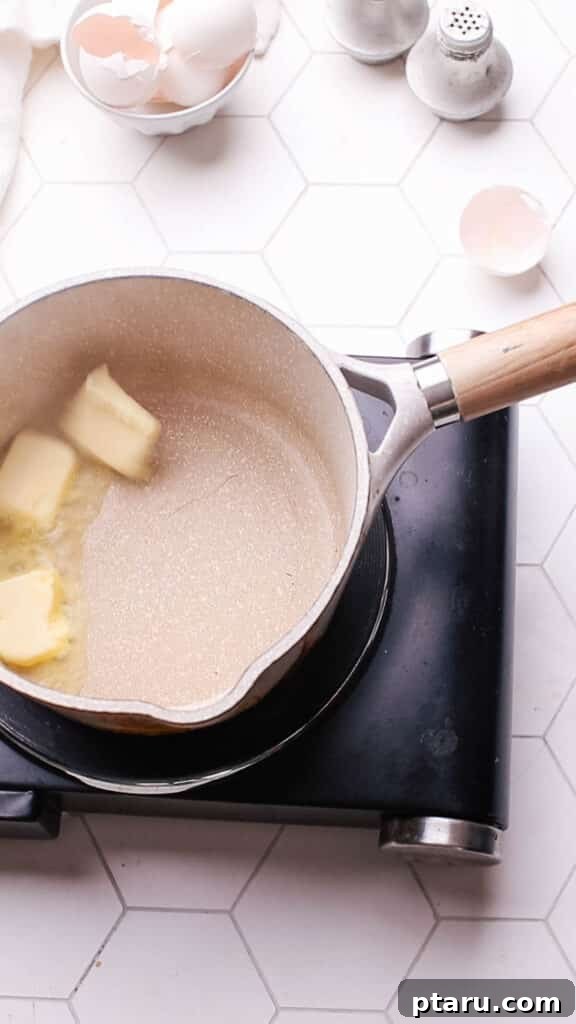
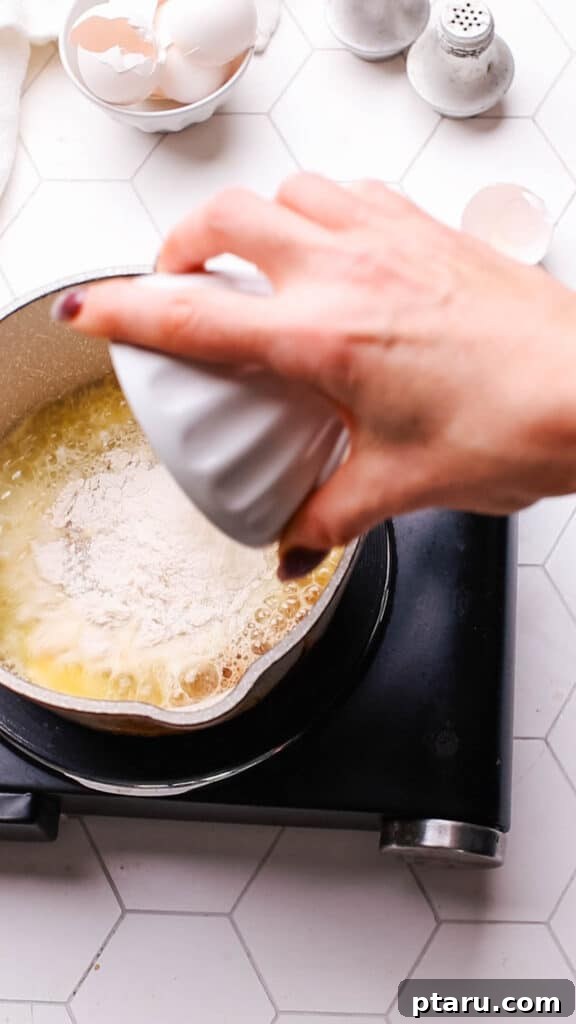
Step 1: Soften the Onion for a Flavorful Base
Begin by melting the unsalted butter in a medium saucepan over medium heat. Once shimmering, add the finely minced onion along with a small pinch of kosher salt. Cook, stirring frequently to prevent browning, for approximately 5 minutes, or until the onion pieces are completely softened and translucent. The key here is not to caramelize the onion, but to render it soft so it melts seamlessly into the gravy, adding a subtle, sweet background note without any chunky texture.
Step 2: Build the Perfect Roux for Thickness and Flavor
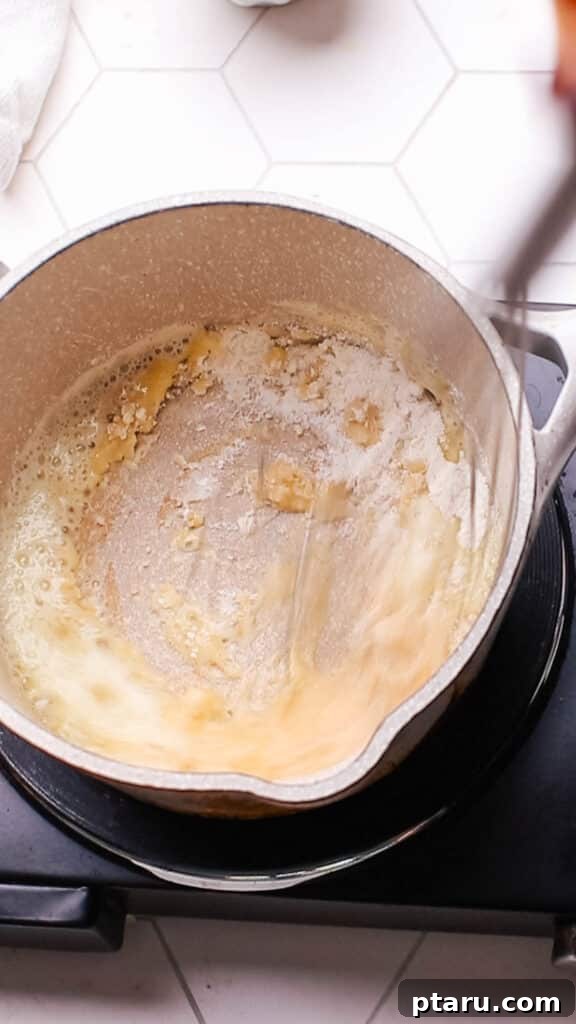
Once the onion is softened, whisk in the all-purpose flour. Continue to whisk constantly for 1 to 2 minutes. During this stage, the mixture will transition from a pasty white to a beautiful light golden color, and you’ll notice a distinct nutty aroma. This crucial step, known as cooking the roux, is essential for developing a deep flavor and eliminating the raw, starchy taste that can plague an undercooked gravy. Don’t rush it; a properly cooked roux is the secret to a smooth, delicious gravy.
Step 3: Gradually Incorporate Liquids and Flavor Enhancers
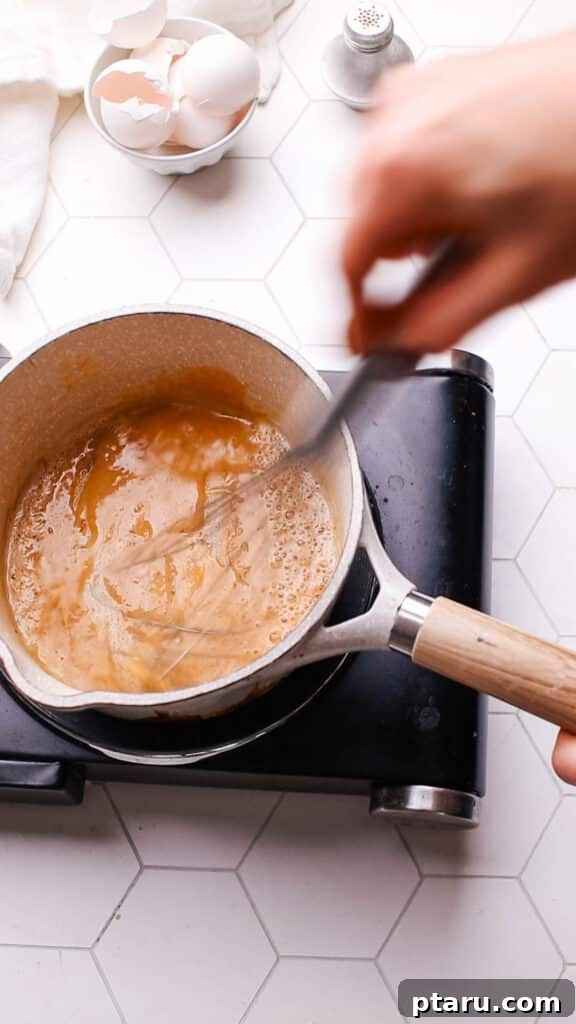
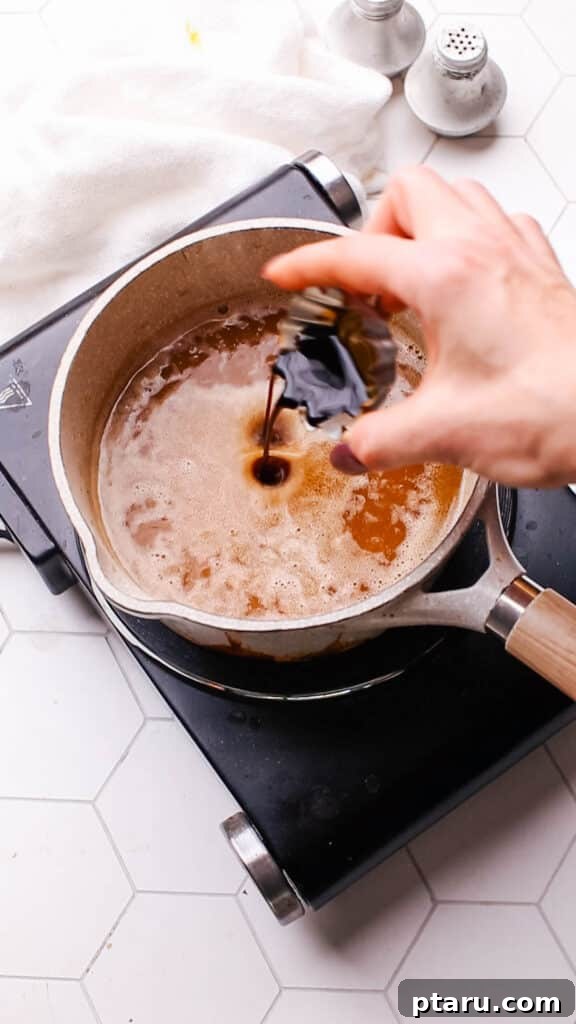
Now, it’s time to add the liquids. Slowly whisk in the chicken broth and white wine, starting with just a small amount at a time. This gradual addition is vital to prevent lumps from forming; initially, you’ll create a thick paste, then progressively thin it out. Once all the liquid has been incorporated and the gravy base is smooth, stir in the grainy mustard (or Dijon), heavy cream, freshly ground black pepper, and the secret ingredient – soy sauce. These additions introduce layers of tang, richness, and umami that make this gravy truly special.
Step 4: Add Pan Drippings and Simmer to Perfection
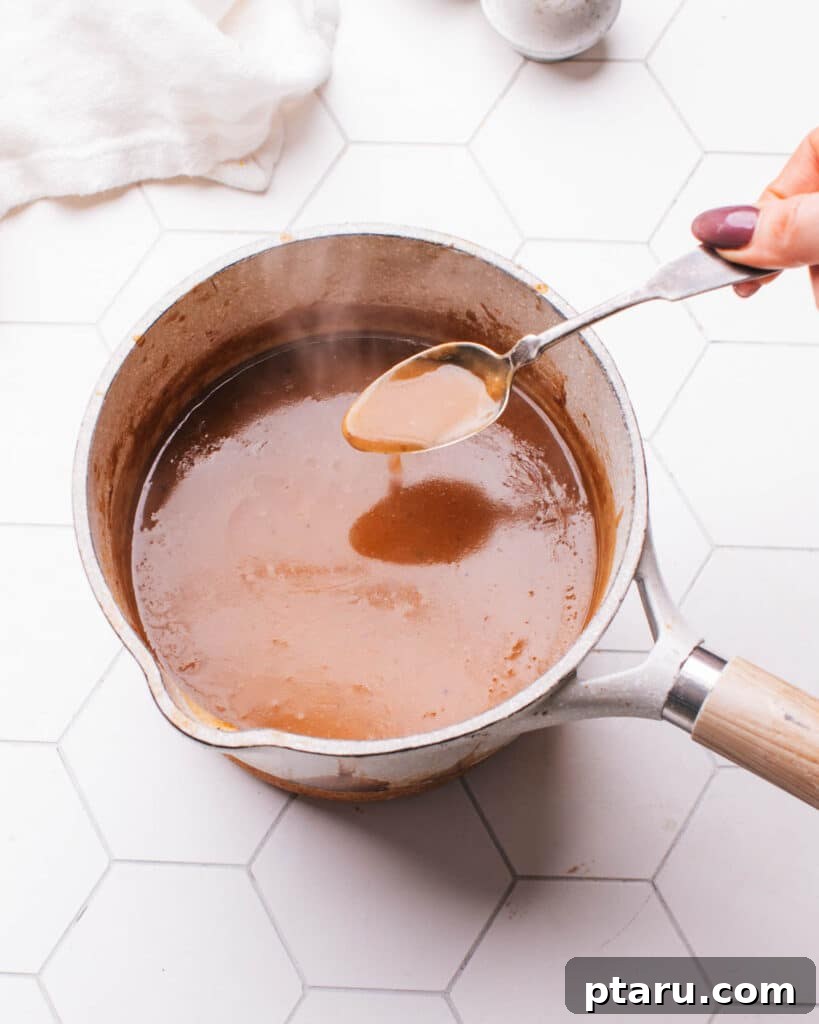
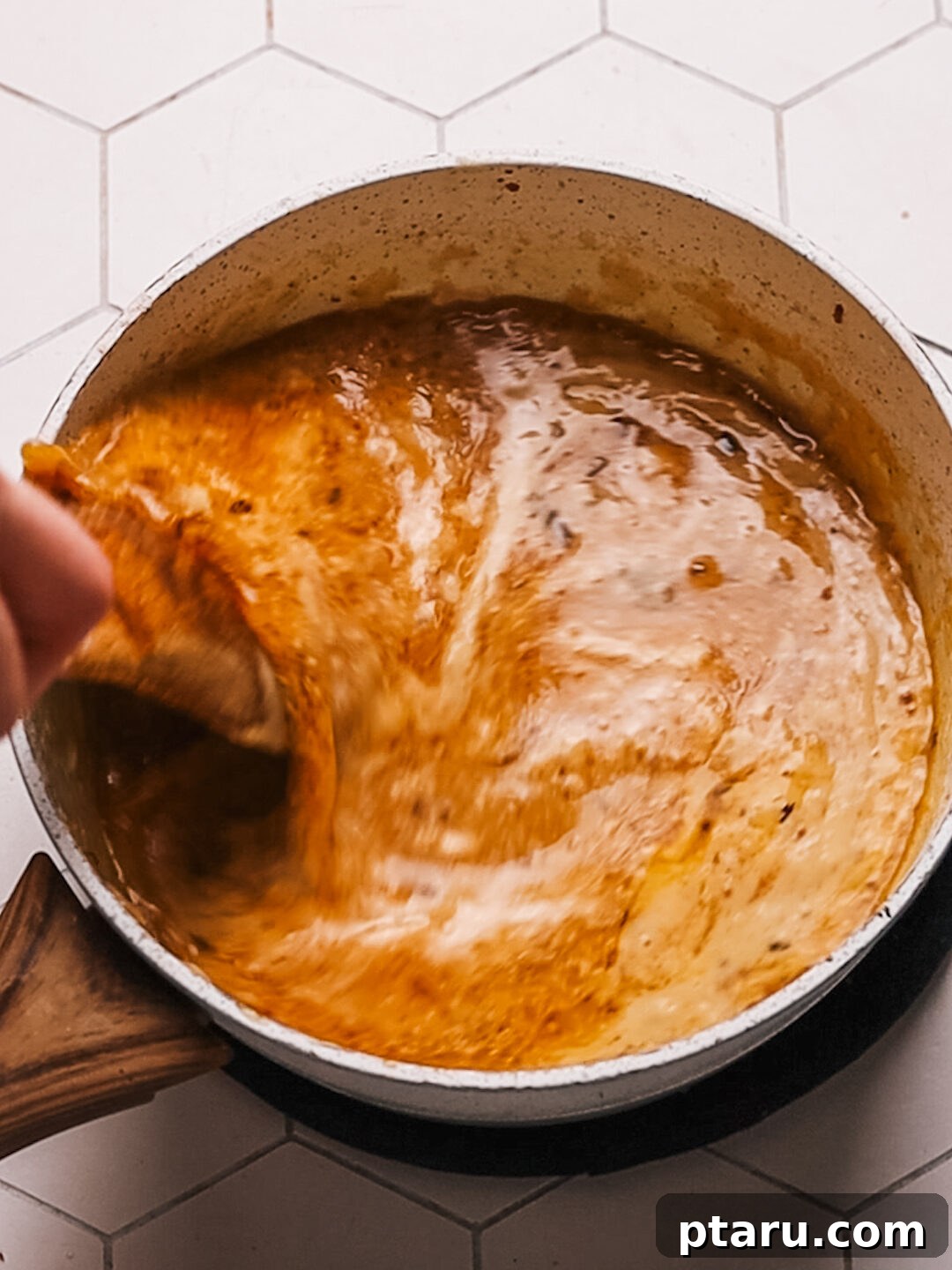
Finally, pour in your reserved pan drippings from the roast pork, ensuring you’ve skimmed off any excess fat beforehand. If you don’t have drippings, simply use an extra splash of chicken broth. Bring the gravy to a gentle simmer, cooking and stirring occasionally for 3 to 4 minutes. Watch as it thickens to your desired consistency; it should be pourable yet coat the back of a spoon. Taste the gravy and adjust the seasoning with more salt and pepper as needed. Remember that pan drippings can vary in saltiness. If your gravy becomes too thick, a simple splash of extra broth will thin it out to perfection.
Perfect Pairings: What to Serve with Your Decadent Pork Gravy
While this exquisite gravy was initially created to complement a magnificent pork loin roast, its versatile and deeply savory flavor makes it a fantastic accompaniment for a wide array of dishes. It’s truly a sauce that can elevate any meal, from a special occasion dinner to a comforting weeknight supper.
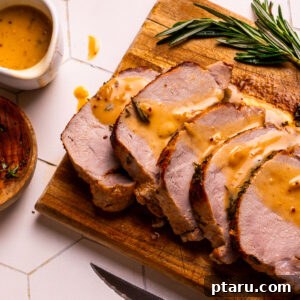
- Roast Pork Loin: This is where it all began! Imagine tender slices of juicy roast pork loin, draped generously with this velvety gravy. It’s a classic, unbeatable combination that epitomizes the perfect Sunday dinner or holiday meal. The gravy enhances every bite, adding moisture and an explosion of flavor.
- Air Fryer Pork Loin: For those who love a beautifully crisp crust on their pork, the air fryer delivers. The creamy, rich gravy provides a wonderful contrast to the crispy exterior, ensuring every element of your meal is balanced and satisfying.
- Baked Pork Chops: No large roast in sight? No problem! This gravy transforms simple broiled or baked bone-in or boneless pork chops into a meal that feels far more special than the effort required. A generous spoon of gravy makes even the quickest weeknight dinner feel luxurious.
- Creamy Mashed Potatoes: This pairing is absolutely non-negotiable. Creamy, fluffy mashed potatoes and this rich pork gravy are quite simply made for each other. The potatoes soak up every drop of flavor, creating a comforting and incredibly satisfying combination. Don’t forget homemade stuffing for an even more indulgent side.
- Other Pork Dishes: Don’t limit yourself! This gravy is fantastic over slow-cooked pulled pork, pork schnitzel, or even alongside perfectly cooked pork tenderloin medallions. Its robust flavor is a natural fit for almost any pork preparation.
- Beyond Pork: While designed for pork, its rich and savory profile makes it surprisingly versatile. Consider drizzling it over roasted chicken, turkey, or even beef for a comforting, homemade touch.
I also feature popular recipes for Slow Cooker Pork Loin and Instant Pot Pork Loin, each offering their own unique gravy preparations. However, this classic stovetop pork gravy remains a beloved favorite for its unbeatable depth of flavor and texture.
Expert Tips for Crafting the Best Pork Gravy Every Time
Achieving a truly outstanding gravy is an art, but with these simple tips, you’ll be able to create a consistently perfect, restaurant-quality sauce that will impress everyone at your table. Pay attention to these details for a flawless result:
- Mince the Onion Very Finely: This step cannot be overstated. The ultimate goal is for the onion to essentially dissolve into the gravy as it cooks, imparting flavor and body without leaving any discernible pieces. A coarse chop will result in stringy bits that feel out of place in an otherwise silky sauce. Take your time with a sharp knife, or if you prefer, you can blend the finished gravy with an immersion blender for ultimate smoothness.
- Cook the Flour Long Enough: A common mistake is rushing the roux. An undercooked roux will impart a pasty, raw flour taste to your gravy. A properly cooked roux, achieved by whisking constantly for 1 to 2 minutes over medium heat, will turn a light golden color and emit a distinct, pleasant nutty aroma. This golden hue and fragrance are your cues that it’s ready for the liquid.
- Add the Liquid Slowly at First: To prevent lumps, especially during the initial stages, add the broth and wine slowly. The first few splashes of liquid are the most critical. Whisk them in thoroughly, creating a smooth, thick paste, before gradually pouring in the remaining liquid more freely. This ensures a lump-free and velvety smooth gravy every time.
- Skim the Fat from Your Drippings: Pan drippings are culinary gold, packed with flavor. However, too much fat can make your gravy greasy. Allow the drippings to settle in a small bowl for a couple of minutes, then carefully skim off the layer of fat that rises to the top. You want only the flavorful, savory juices. A fat separator can be incredibly helpful here if you have one.
- Taste Before You Season: The saltiness of pan drippings can vary significantly depending on how heavily you seasoned your pork roast. To avoid over-seasoning, always add salt at the very end, after the drippings have been incorporated and the gravy has simmered for a few minutes. Taste and adjust incrementally until the flavor is perfectly balanced.
- Keep it Warm on Low Heat: If your pork is still resting and you’ve completed your gravy, it can be held perfectly on the lowest heat setting for 10 to 15 minutes. Stir it occasionally to prevent a skin from forming. If it thickens too much during this time, simply whisk in a splash of additional chicken broth to bring it back to the desired consistency.
- Don’t Be Afraid to Adjust Consistency: Gravy consistency is a matter of personal preference. If it’s too thick, thin it with a little more broth or even a splash of hot water. If it’s too thin, let it simmer gently for a few more minutes, uncovered, allowing some liquid to evaporate, or use the quick thickening trick mentioned in the FAQ.
Storing and Reheating Your Homemade Pork Gravy
This delicious pork gravy is fantastic as leftovers, making meal prep easier and ensuring you can enjoy its rich flavor again. Proper storage and reheating are key to maintaining its quality and texture.
Leftover pork gravy stores beautifully in an airtight container in the refrigerator for up to 3 days. It’s perfectly normal for the gravy to thicken considerably as it cools; don’t be alarmed!
- To Reheat on the Stovetop: Gently warm the gravy in a small saucepan over low heat. As it heats, whisk in a splash or two of chicken broth (or even water) until it loosens back to its original pourable, silky consistency. Continue to stir until it is heated through, but avoid boiling vigorously, as this can affect the cream’s texture.
- To Reheat in the Microwave: For a quicker option, microwave the gravy in a microwave-safe bowl. Start with 60 to 90 seconds on medium power, then remove and whisk thoroughly. Continue microwaving in 30-second intervals, whisking in between, until heated through and smooth. You may still need to add a splash of broth to achieve the desired consistency.
Can You Freeze Pork Gravy?
Yes, you can absolutely freeze pork gravy, making it ideal for future meals. It will keep well in a freezer-safe container for up to 2 months.
- Thawing and Reheating Frozen Gravy: Cream-based gravies can sometimes separate slightly when thawed due to the emulsion breaking. This is completely normal and easily remedied. Simply thaw the gravy overnight in the refrigerator, then reheat it gently over low heat on the stovetop, whisking vigorously as it warms. A good whisk will bring the sauce back together, restoring its smooth, luscious texture. You may need to add a small amount of broth or cream to achieve the perfect consistency.
Frequently Asked Questions About Pork Gravy
A: Yes, absolutely! While pan drippings add an unparalleled depth of flavor, you can still create a rich and delicious gravy without them. Simply substitute the pan drippings with an extra ¼ cup of chicken broth. The gravy will still be incredibly flavorful and satisfying. For an added touch of richness, you can stir in a small knob of unsalted butter at the very end.
A: Don’t panic! Lumpy gravy is a common occurrence but is easy to fix. The quickest method is to pour the gravy through a fine mesh strainer, pressing any lumps through with the back of a spoon. Alternatively, you can use an immersion blender (or carefully transfer to a regular blender) to blend the gravy until completely smooth. Just be cautious when blending hot liquids.
A: Yes, this gravy can easily be adapted to be gluten-free. For a simple swap, use a 1:1 gluten-free flour blend in place of all-purpose flour for the roux. Another excellent option is to use cornstarch: instead of making a roux, whisk 1.5 tablespoons of cornstarch into a small amount (about 1 tablespoon) of cold broth to create a slurry. Stir this slurry into the simmering gravy near the end of the cooking process, and it will thicken quickly. Additionally, ensure you swap the soy sauce for tamari or coconut aminos, which are gluten-free alternatives.
A: You certainly can use beef broth, but I generally recommend chicken broth for pork gravy. Beef broth tends to have a bolder, more assertive flavor that can sometimes overpower the delicate nuances of pork drippings and the unique tang of the mustard. Chicken broth is more neutral, allowing all the other carefully layered flavors to shine through beautifully. That said, if beef broth is all you have on hand, it will still produce a good, hearty gravy, albeit with a slightly different flavor profile.
A: If your gravy is too thin, the easiest way to thicken it is to simply let it simmer a few minutes longer, uncovered, over medium-low heat, stirring frequently. As the liquid evaporates, the gravy will naturally reduce and thicken. If you need it to thicken more quickly, you can create a cornstarch slurry: whisk together one teaspoon of cornstarch with one tablespoon of cold water, then stir it into the simmering gravy. It will visibly thicken within a minute or two.
A: Absolutely! This gravy is perfect for making ahead. Prepare it completely, allow it to cool to room temperature, then transfer it to an airtight container and refrigerate for up to 3 days. When you’re ready to serve, reheat it gently over low heat on the stovetop, whisking in a splash of broth as it warms up to restore its silky consistency. It reheats beautifully and tastes just as good as freshly made.
A: To enhance the richness, you can stir in an extra tablespoon of unsalted butter or a splash more heavy cream at the very end of cooking, right before serving. A tiny pinch of MSG (monosodium glutamate) or nutritional yeast can also amplify the umami flavor, making the gravy taste even more deeply savory without altering its core profile.
Print Recipe
Best Easy Pork Gravy
Jennifer Pallian BSc, RD
5
10
6
Ingredients
- 4 tbsp unsalted butter
- ¾ cup onion very finely minced
- ¼ tsp kosher salt
- 3 tbsp all-purpose flour
- 1 cup chicken broth
- 2 tbsp white wine or additional chicken broth
- 1 tbsp grainy mustard or Dijon
- ½ cup heavy cream
- ½ tsp freshly ground black pepper
- 1 tbsp soy sauce
- Pan drippings from roasting pork fat skimmed (substitute ¼ cup extra chicken broth if unavailable)
Instructions
-
Melt the butter in a medium saucepan over medium heat. Add the finely minced onion and salt. Cook, stirring occasionally, until completely softened, about 5 minutes. Do not let it brown.
-
Whisk in the flour and cook, whisking constantly, for 1 to 2 minutes until the mixture turns a light golden color and smells slightly nutty.
-
Slowly whisk in the chicken broth and white wine, adding a little at a time at first to prevent lumps. Once smooth, stir in the grainy mustard, heavy cream, black pepper, and soy sauce.
-
Pour in the reserved pan drippings (fat skimmed). Bring to a gentle simmer and cook, stirring occasionally, for 3 to 4 minutes until thickened to your desired consistency.
Taste and adjust salt and pepper as needed. If the gravy becomes too thick, thin with a splash of broth.
Notes
– To make gluten-free: Use a 1:1 gluten-free flour blend, or make a cornstarch slurry (1.5 tbsp cornstarch whisked with 1 tbsp cold water) and stir in near the end instead of making a roux. Use tamari in place of soy sauce.
– To thin a gravy that’s become too thick: whisk in chicken broth, a splash at a time, over low heat.
– To thicken quickly: whisk 1 tsp cornstarch with 1 tbsp cold water, stir in, and simmer 1 to 2 minutes.
– Make ahead: Refrigerate in an airtight container for up to 3 days. Reheat gently over low heat, whisking in a splash of broth to restore consistency.
– Freeze: Up to 2 months. Whisk over low heat after thawing to bring back together if separated.
Nutrition
Carbohydrates: 6g |
Protein: 2g |
Fat: 15g |
Saturated Fat: 9g |
Polyunsaturated Fat: 1g |
Monounsaturated Fat: 4g |
Trans Fat: 0.3g |
Cholesterol: 44mg |
Sodium: 447mg |
Potassium: 72mg |
Fiber: 1g |
Sugar: 2g |
Vitamin A: 533IU |
Vitamin C: 2mg |
Calcium: 27mg |
Iron: 0.4mg
Nutrition information is automatically calculated, so should only be used as an approximation.
We hope you enjoy this ultimate pork gravy recipe as much as we do! Your feedback and experiences are incredibly valuable. Don’t hesitate to leave a comment below and share how this silky, savory gravy transformed your meal!