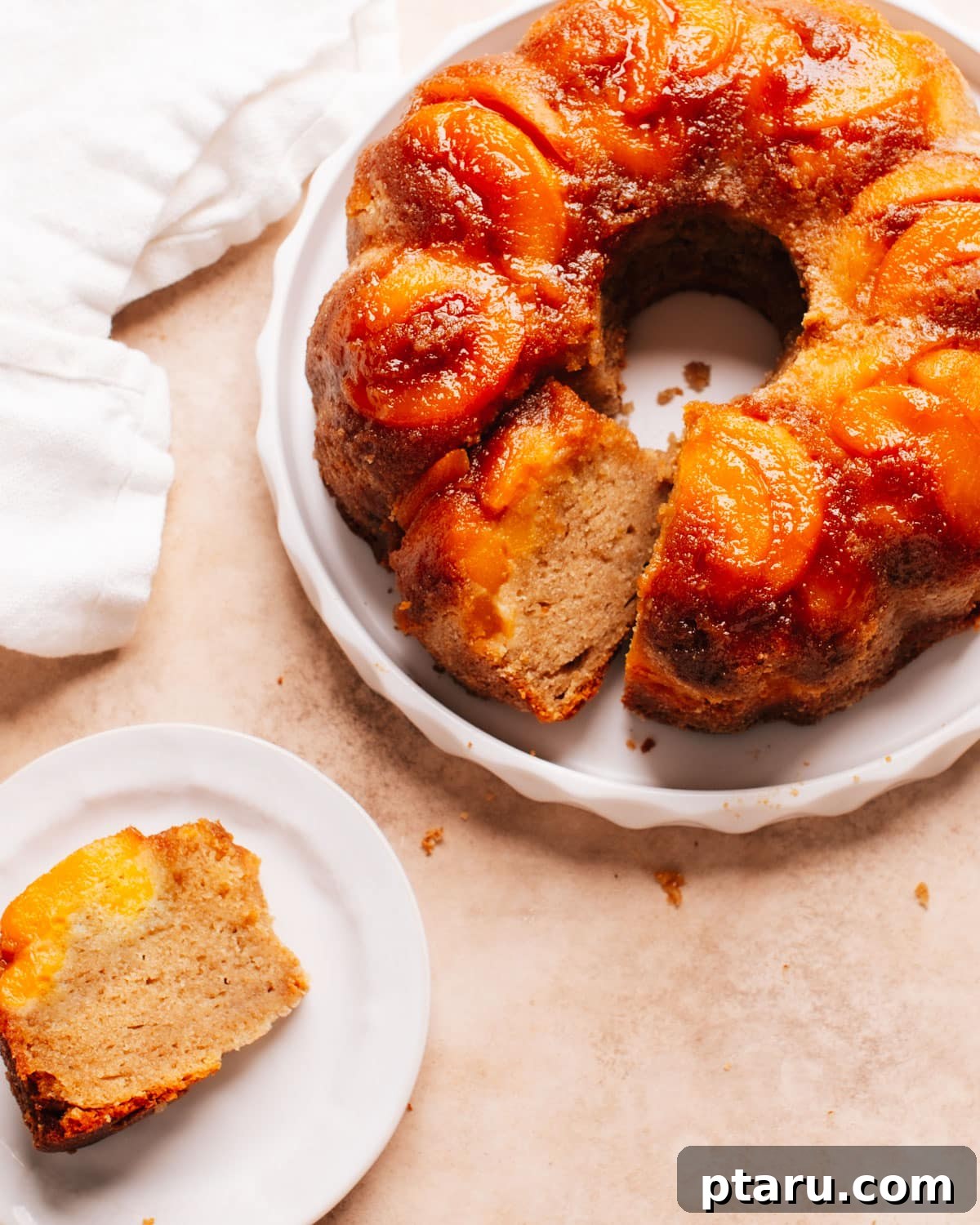
Prepare to be enchanted by this truly remarkable Peach Cobbler Pound Cake. It’s not just a dessert; it’s an experience, bringing together the best qualities of two beloved classics into one irresistible creation. Imagine a supremely moist and tender pound cake, infused with the vibrant essence of ripe peaches, each slice studded with succulent peach chunks. But the magic doesn’t stop there; it’s generously topped with a rich, caramelized brown sugar glaze that forms a gooey, delightful crust, reminiscent of a classic cobbler. This unique combination delivers an unparalleled depth of flavor and texture that will have everyone asking for more. Perfect for peach enthusiasts, this cake offers a sophisticated yet comforting alternative to traditional cobblers and fruit crisp recipes, making it an ideal treat for gatherings, holidays, or simply a cozy evening at home.
Why This Peach Cobbler Pound Cake Will Become Your New Favorite
This isn’t just another cake recipe; it’s a meticulously crafted culinary delight designed to impress. Here’s why this Peach Cobbler Pound Cake is destined for your recipe hall of fame:
- An Unmatched Moist & Buttery Base: At its heart is a rich, buttery pound cake, perfectly balanced with the delicate tang of cream cheese. This unique fat combination creates an incredibly moist, fluffy, and tender crumb that practically melts in your mouth. Each bite is bursting with sweet peach flavor, complemented by generous chunks of fresh or frozen peaches throughout the cake.
- Versatile Peach Options: While fresh, in-season peaches are always a treat, this recipe is incredibly forgiving and delicious with various forms of peaches. You can easily adapt it using thawed frozen peaches, which offer convenience without compromising flavor. Even drained, canned peaches can be used, allowing you to enjoy a taste of summer sunshine any time of the year. This flexibility ensures you can whip up this amazing dessert whenever the craving strikes.
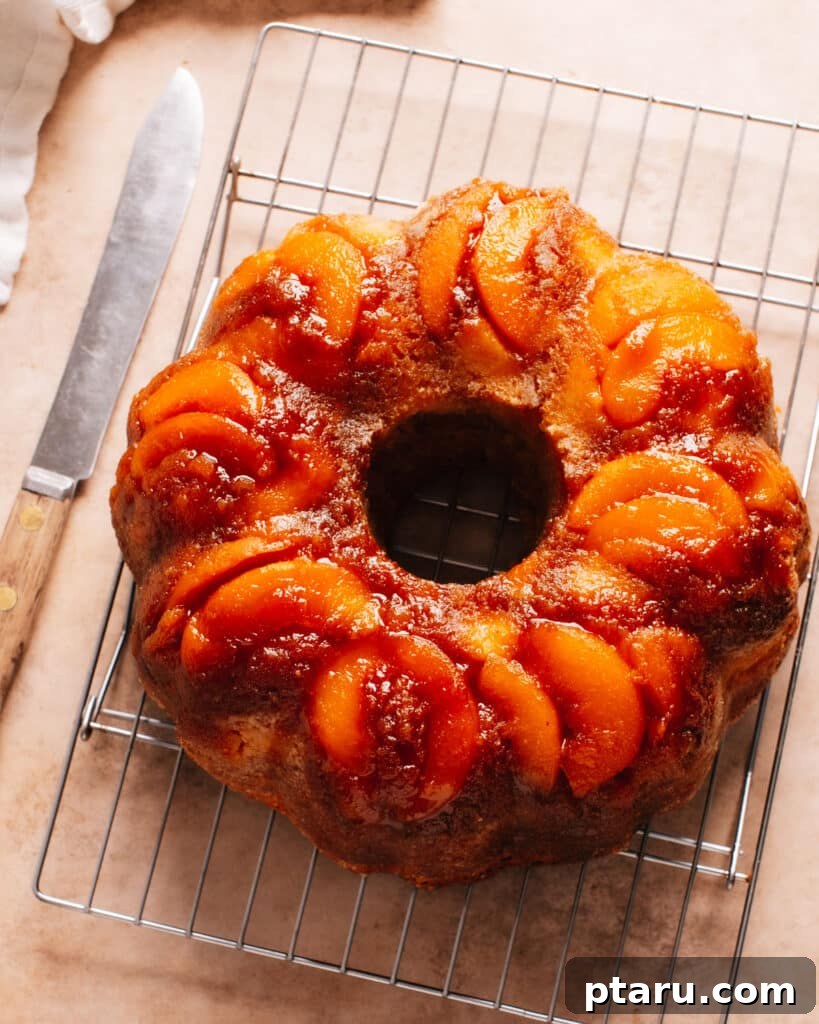
- The Genius Caramelized Cobbler Topping: What truly elevates this cake is its innovative cobbler topping. Unlike unpredictable streusel toppings often found in similar recipes, our caramelized brown sugar peach topping is specifically designed to release effortlessly from the Bundt pan. This results in a stunning, golden-brown crust of tender peach slices bathed in a rich, buttery caramel that adds an extra layer of sweetness and textural contrast, taking your cake to an entirely new level of deliciousness.
- Effortless Elegance: Baked in a Bundt pan, this cake naturally presents a beautiful, intricate design. The caramelized topping cascades over the top, making for a truly impressive presentation with minimal effort. It looks like it took hours, but the process is surprisingly straightforward!
If you find yourself enchanted by the comforting flavors of cobblers, be sure to explore our delightful Strawberry Cobbler recipe next. For those who appreciate truly exceptional cakes, we highly recommend trying our Moist Vanilla Cake, the zesty Cranberry Lemon Cake, the vibrant Blood Orange Cake, the decadent Moist Chocolate Cake, and the aromatic Portuguese Orange Cake.
Essential Ingredients for Your Perfect Peach Cobbler Pound Cake
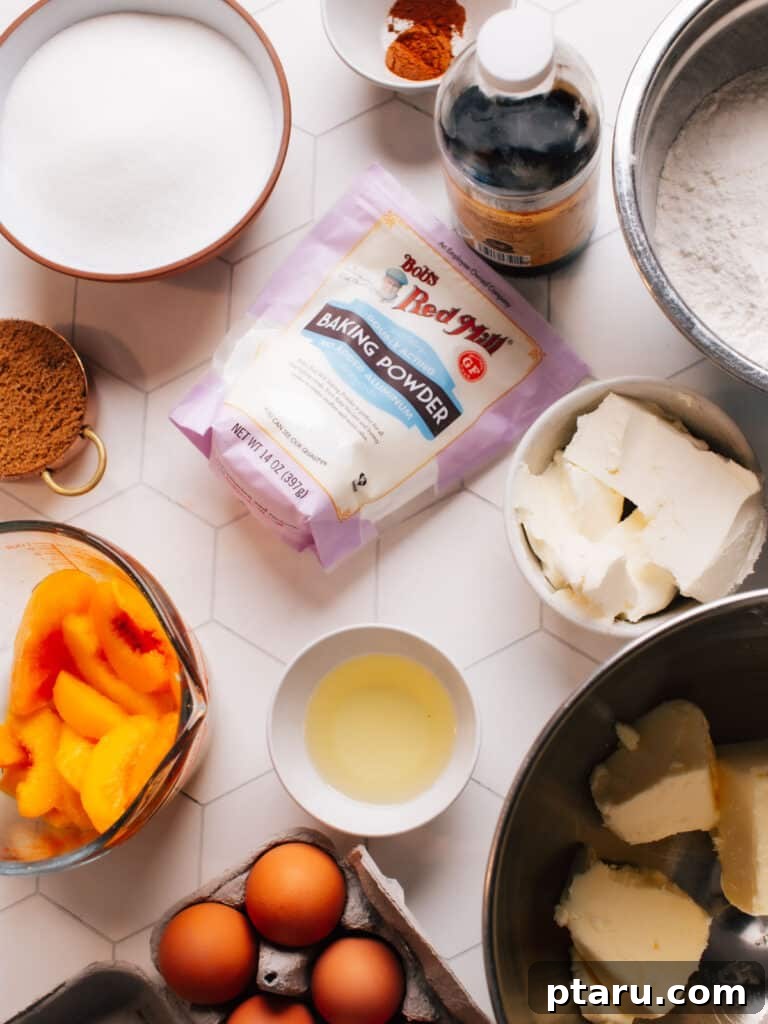
Crafting this extraordinary cake begins with selecting the right ingredients. Each component plays a vital role in achieving its signature moist texture and rich flavor profile:
- The Secret to Unrivaled Moisture: A Unique Blend of Fats: This recipe calls for a special combination of butter, cream cheese, and a neutral oil. Butter provides that classic, rich pound cake flavor we all adore, while cream cheese adds a wonderful tanginess that beautifully complements the peaches, along with an incredible softness to the crumb. The addition of oil ensures the cake remains exceptionally moist and tender, even at room temperature, as oil stays liquid unlike butter which re-solidifies. If you only have unsalted butter, simply add an extra pinch of salt to balance the flavors.
- Perfect Peaches, Fresh or Otherwise: Ripe peaches are undeniably delicious, but their skins can be notoriously tricky to remove. For convenience without sacrificing flavor, thawed frozen peaches are an excellent choice. They’re usually picked at peak ripeness and already sliced, saving you prep time. You can also use well-drained canned peaches (discarding any syrup to avoid excess sweetness). To easily peel fresh whole peaches, score an ‘x’ shape on the bottom with a paring knife and blanch them in boiling water for a couple of minutes. The skins will then slip off effortlessly.
- A Hint of Warm Spice: A touch of cinnamon and nutmeg adds a subtle warmth and depth to the cake, enhancing the natural sweetness of the peaches. These spices perfectly round out the flavor profile, creating a comforting aroma and taste. If you prefer a more classic, unadorned pound cake flavor, you can certainly omit them.
- The Irresistible Cobbler Topping: This simple yet brilliant topping is created by melting butter and combining it with brown sugar. This delectable mixture is then poured over peach slices arranged at the base of your Bundt pan. As it bakes, it caramelizes into a glossy, gooey, and absolutely delicious peach topping that forms the cake’s beautiful crown when inverted.
Essential Tools for Baking Success
To successfully bake this delightful Peach Cobbler Pound Cake, you’ll need a few common kitchen tools. No need for specialized gadgets; these basics will ensure your cake turns out perfectly every time:
- A Reliable Bundt Pan: A 10-cup or 12-cup Bundt pan is crucial for achieving the cake’s distinctive and elegant ring shape. Proper greasing and flouring of the pan are absolutely essential to prevent sticking and ensure a clean release.
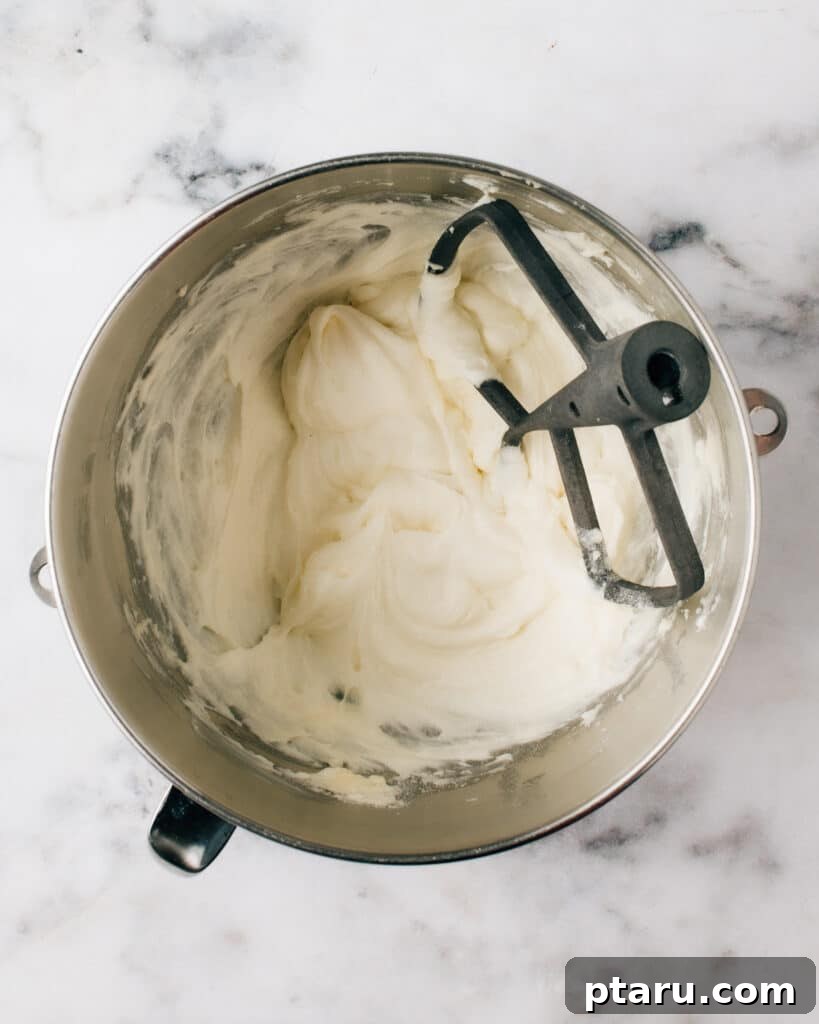
- Stand Mixer with Paddle Attachment: While you can use a hand mixer, a stand mixer makes the creaming process effortless. The paddle attachment is ideal for beating the butter, cream cheese, and sugar together until light and fluffy, incorporating the necessary air for a tender cake.
- Whisk and Mixing Bowls: You’ll need a whisk to thoroughly combine your dry ingredients, ensuring even distribution of leavening agents and spices. Two large mixing bowls (one for wet, one for dry) will keep your ingredients organized before combining.
- Rubber Spatula: A flexible rubber spatula is invaluable for scraping down the sides of your mixer bowl, ensuring all ingredients are fully incorporated. It’s also perfect for gently folding in the diced peaches without overmixing the batter, preserving the cake’s tenderness.
- Wire Rack: Essential for proper cooling, a wire rack allows air to circulate around the entire cake, preventing it from becoming soggy and ensuring a perfectly even texture.
- Oven Mitts and a Hot Towel: Safety first! Oven mitts are a must for handling the hot Bundt pan. A hot, damp towel can be a lifesaver if your cake is reluctant to release from the pan; the gentle steam helps loosen it.
- Instant-Read Thermometer: For absolute precision, an instant-read thermometer is your best friend in baking. It takes the guesswork out of knowing when your cake is perfectly cooked through, guaranteeing optimal moistness and texture.
Step-by-Step Guide to Making This Peach Cobbler Pound Cake
Creating this delicious dessert is a delightful process. Follow these easy step-by-step instructions to achieve a flawless and flavorful cake every time.
Preparing Your Bundt Pan for Perfection
- Begin by generously greasing your 10 or 12-cup Bundt pan. For the best non-stick insurance, we recommend using coconut oil or shortening (which are pure fats) and dusting it thoroughly with almond flour. This combination helps prevent the cake from sticking and ensures a beautiful, clean release after baking. Make sure to coat every nook and cranny of the pan.
Crafting the Velvety Pound Cake Batter
- Cream the Fats and Sugar: In the bowl of a stand mixer fitted with the paddle attachment, combine the softened butter, cream cheese, and neutral oil. Beat on medium-high speed for about 3 minutes until the mixture is exceptionally light and fluffy, full of air. Next, gradually add the granulated sugar and continue beating for another 2 minutes until fully incorporated and creamy.
- Incorporate Eggs and Vanilla: Reduce the mixer speed to medium-low. Add the large eggs one at a time, beating well after each addition until fully combined. It’s important to scrape down the sides of the bowl frequently to ensure even mixing. Finally, beat in the pure vanilla extract, ensuring it’s well distributed for that irresistible aroma.
- Whisk the Dry Ingredients: In a separate large mixing bowl, whisk together the all-purpose flour, baking soda, baking powder, kosher salt, cinnamon, and nutmeg. This step ensures all leavening agents and spices are evenly distributed, preventing pockets of unmixed ingredients.
- Combine Wet and Dry: With the mixer speed set to low, gradually add the whisked dry ingredients to the wet mixture. Mix *just* until the batter comes together and turns from lumpy to smooth. This usually takes only about 15-20 seconds. Overmixing at this stage can develop too much gluten, resulting in a tough, dense cake. Pause once to scrape down the sides of the bowl and paddle to ensure everything is fully incorporated.
- Gently Fold in Diced Peaches: Using a large silicone spatula, gently fold the diced peaches into the batter. Use a sweeping motion, scooping batter from the bottom and folding it over the top, distributing the peaches evenly without crushing them. This gentle touch maintains the cake’s tender texture.
Creating the Irresistible Cobbler Topping
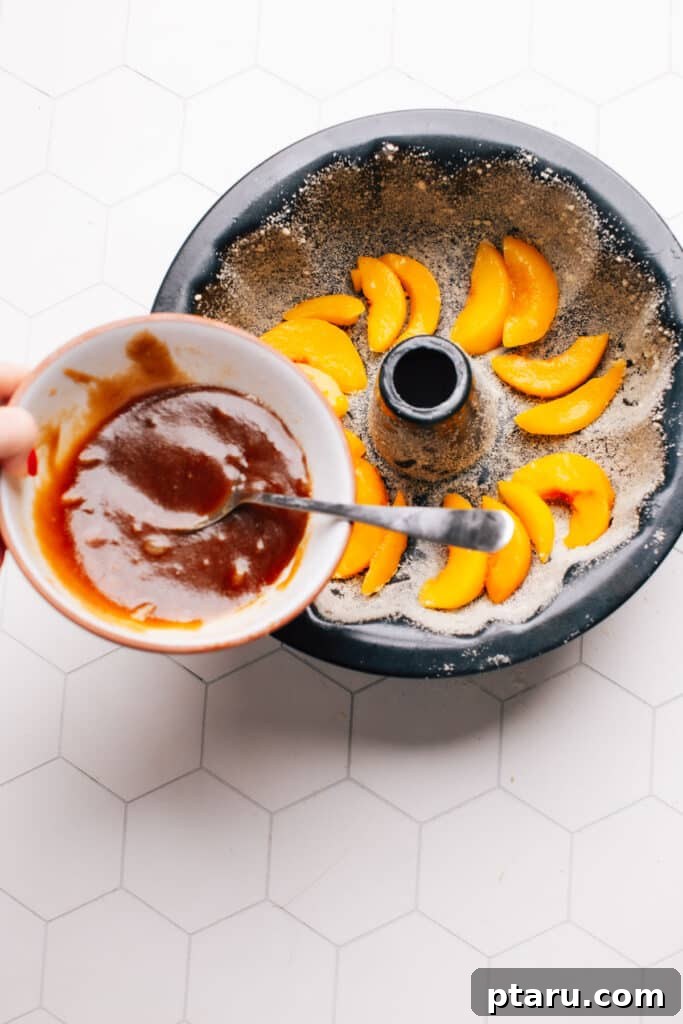
- Arrange Peach Slices: Carefully arrange the peach slices in an even layer within the grooves and along the bottom of your prepared Bundt pan. This will form the beautiful top layer of your inverted cake.
- Prepare the Caramel Mixture: In a small bowl, mix the melted butter with the brown sugar until smooth and well combined. Spoon this delicious caramel mixture evenly over the peach slices in the pan, ensuring each peach is coated and the bottom of the pan is covered.
Assembling Your Masterpiece
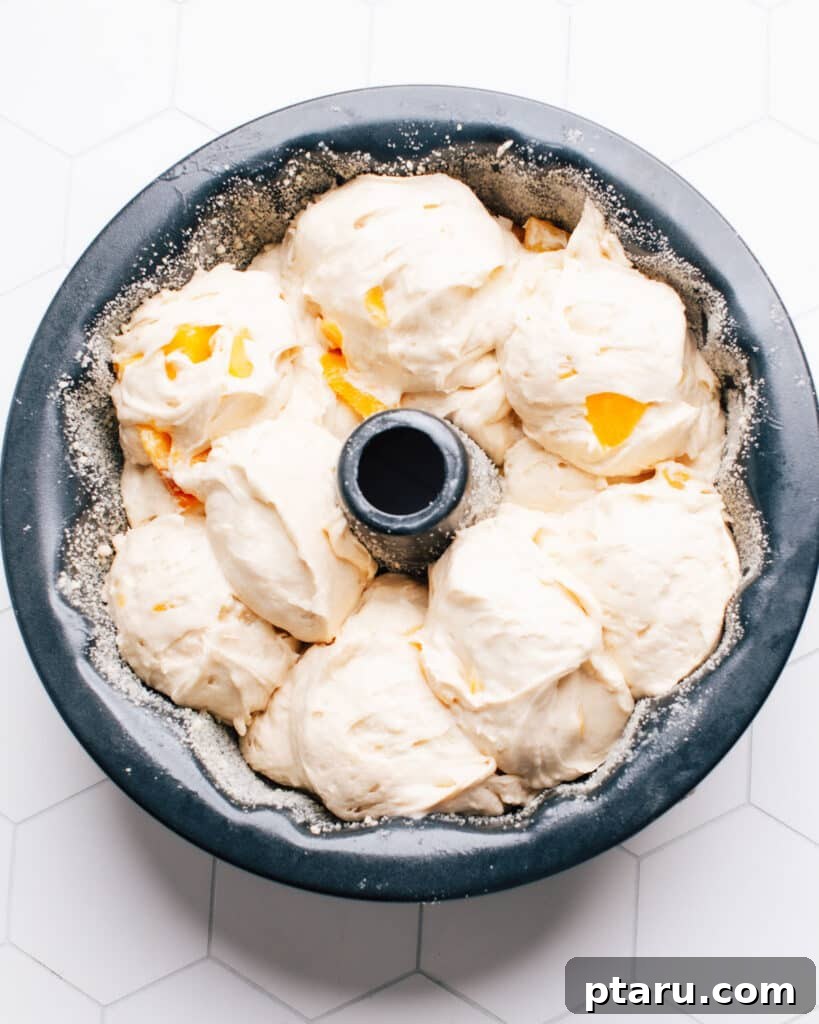
- Layer the Batter: Gently spoon the prepared pound cake batter evenly over the cobbler topping mixture in the Bundt pan. An ice cream scoop can be particularly helpful for this step, allowing for even distribution.
- Smooth the Top: Lightly smooth out the top surface of the cake batter with your spatula. This helps ensure an even bake.
Baking Your Peach Cobbler Pound Cake to Golden Perfection
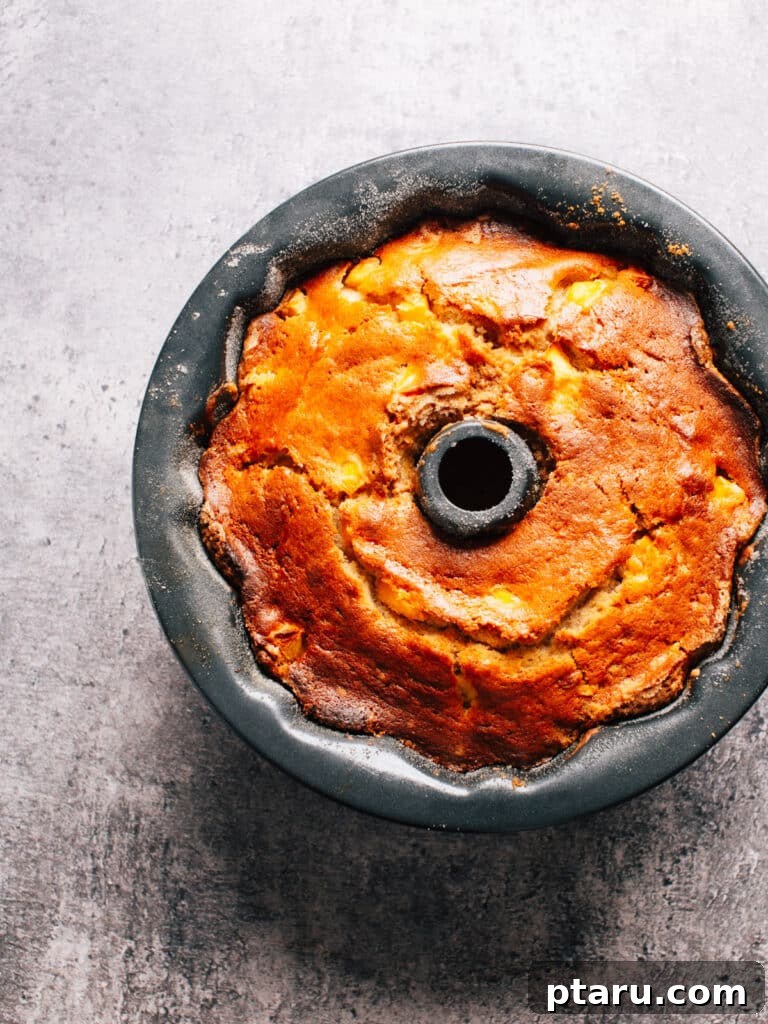
- Initial Bake: Place the Bundt pan in the center of your preheated oven. Bake for approximately 60-75 minutes.
- Cover to Prevent Over-Browning: After about 40-50 minutes of baking, you’ll notice the top of the cake starting to turn a deep golden brown. At this point, loosely cover the Bundt pan with aluminum foil. This prevents the cake from browning too much on the outside before the center is fully cooked.
- Check for Doneness: Continue baking until an instant-read thermometer inserted into the thickest part of the cake (avoiding the hole in the center) registers an internal temperature of 190ºF (88ºC). This temperature is key for a perfectly moist crumb.
- Cool and Release: Once baked, remove the cake from the oven and allow it to cool in the pan for precisely 5 minutes. This crucial cooling time allows the cake to release steam and slightly pull away from the pan. After 5 minutes, run a thin, flexible knife around the edges of the cake to loosen it further. Place a wire cooling rack directly on top of the Bundt pan. Using oven mitts, confidently flip the entire assembly over. Gently tap the bottom of the pan a few times, then carefully lift the pan off the cake. If it doesn’t release easily, don’t force it; instead, place a hot, damp towel over the inverted pan for a few more minutes to generate steam and assist with release, then try again. Allow the cake to cool completely on the wire rack before slicing and serving.
Expert Tips for Crafting the Ultimate Peach Cobbler Pound Cake
Achieving a truly exceptional pound cake involves a few professional insights. Incorporate these tips for a consistently perfect bake:
- Choose the Right Bundt Pan for Easy Release: Opt for a simple Bundt pan design, like this simple pan. Intricate designs, while beautiful, can make cake release more challenging. A pan with fewer detailed crevices will significantly reduce the risk of the cake sticking or tearing.
- The Golden Rule: Room Temperature Ingredients: This is a non-negotiable step for pound cakes. Softened butter, cream cheese, and eggs at room temperature emulsify better, creating a smooth, airy batter that traps more air. This trapped air is vital for the cake’s light and fluffy texture. To quickly soften butter, microwave it at 50% power for about 35 seconds. The ideal temperature for creaming butter is between 60-65ºF (15-18ºC). Butter that’s too warm will lose its ability to hold air, leading to a denser cake. For other ingredients like eggs, check out our guide on how to quickly bring baking ingredients to room temperature.
- Precision in Flour Measurement (by Weight): For consistent and professional results, measuring flour by weight (grams) is highly recommended. Flour tends to compact in its bag, meaning a scoop-and-level method can easily result in too much flour, leading to a dry or dense cake. A kitchen scale ensures accuracy every time.
To see ingredients by weight: Many online recipe cards offer a “METRIC” button to convert ingredient measurements to grams. Look for this option at the top of the ingredients list in your recipe box for ultimate precision.
Frequently Asked Questions About Peach Cobbler Pound Cake
What is the difference between a Bundt cake and a pound cake?
The distinction lies in both preparation and presentation. A Bundt cake refers to any cake baked in a Bundt pan, which creates a distinctive ring shape with decorative flutes or grooves. It’s a method of baking rather than a specific recipe. A pound cake, on the other hand, is a type of cake traditionally made with a pound each of butter, sugar, flour, and eggs. Historically, these cakes were known for their dense and rich texture. However, modern pound cake recipes, like this Peach Cobbler Pound Cake, have evolved. They often incorporate “secret ingredients” such as cream cheese and oil, along with professional techniques, to achieve the classic buttery flavor of a pound cake but with a wonderfully soft, fluffy, and moist crumb that’s far from dry or heavy.
Is it better to use fresh, frozen, or canned peaches for baking?
Each type of peach has its advantages. Fresh, in-season, ripe peaches offer the most vibrant and authentic flavor for baking, making them ideal for recipes like this Peach Cobbler Pound Cake. However, preparing fresh peaches can be time-consuming, especially when it comes to peeling. As detailed in our ingredients section, you can quickly blanch them to loosen their skins. For convenience, frozen, sliced peaches are an excellent alternative. They are typically picked and frozen at their peak ripeness, providing great flavor with significantly less effort. Canned peaches can also work, but they are usually packed in syrup, which adds extra sweetness and moisture. If using canned peaches, ensure you drain them very well and pat them dry to prevent your cake from becoming soggy and to control the overall sweetness of the recipe.
Are yellow or white peaches better for cobbler and cakes?
For cobblers, pound cakes, and most peach-based baked goods, yellow peaches are absolutely superior. The key difference lies in their acid content. Yellow peaches possess a higher acidity, which provides a lovely, subtle tartness. This slight tartness is crucial for balancing out the sweetness in a dessert, creating a more complex and harmonious flavor profile. White peaches, while delicious when eaten fresh, are much sweeter and have a lower acid content. Using them in a baked recipe will likely result in a dessert that is overwhelmingly sweet and lacks that desirable balanced taste.
What is the ideal baking temperature for a large cake?
The optimal baking temperature often depends on the size and volume of the cake. For smaller cakes, such as those baked in loaf pans, 350ºF (175ºC) is typically perfect. This temperature allows for sufficient browning and crust development by the time the cake is fully cooked. However, for a larger volume cake, like a Bundt cake, a slightly lower temperature of 325ºF (160ºC) is generally best. This reduced temperature prevents the exposed surfaces of the cake from burning or becoming too dark before the dense center has had a chance to cook through thoroughly. It promotes an even bake from edge to center, ensuring a uniformly moist crumb.
How do you ensure a pound cake releases cleanly from a Bundt pan?
Getting a Bundt cake out of its pan flawlessly is a common concern, but with these proven techniques, it becomes straightforward:
- Start with a Superior Grease and Flour: For effortless release, I highly recommend using coconut oil or shortening to grease your Bundt pan. These pure fats perform better than butter (which contains milk solids and water) or non-stick sprays (which can leave residue). For dusting, almond flour is excellent as it won’t leave a gummy residue on your baked cake, though all-purpose flour works if that’s what you have. Ensure every crevice of the pan is thoroughly coated.
- The Crucial Cooling Time: After removing the cake from the oven, allow it to cool *in the pan* for precisely 10 minutes. This critical period allows steam to release into the pan, helping the cake to naturally pull away from the sides and bottom.
- Gentle Loosening: Carefully run a small, soft silicone spatula (or a thin, flexible knife) between the cake and the pan edges. Be gentle to avoid scratching the non-stick surface.
- The Confident Flip: Place a wire cooling rack directly on top of the warm cake in the pan. Using oven mitts, securely hold both the pan and the rack together and, with a confident motion, flip them over so the cake rests on the cooling rack. Give the bottom of the pan a few gentle taps, then carefully try to lift the pan away.
- The Hot Towel Trick (If Needed): Should the cake resist releasing, immediately place a hot, damp towel over the inverted pan for an additional few minutes. The steam will help further loosen the cake. Then, try lifting the pan again. With a little patience and these tricks, you’ll be able to get your cake out of the Bundt pan perfectly every time!
What are the secrets to achieving a truly moist and soft pound cake?
For a pound cake that boasts an irresistibly soft and moist texture, professional bakers employ a few key secrets:
- The Power Duo: Butter AND Oil: While butter is indispensable for that classic, rich pound cake flavor, incorporating a neutral oil (like avocado or canola) into the batter is a game-changer. The key difference is that oil remains liquid at room temperature, while butter re-solidifies as the cake cools. This ensures your final cake stays wonderfully soft, tender, and moist long after it has come out of the oven, preventing any dryness.
- The Art of Minimal Mixing After Flour: Once you add the flour to your wet ingredients, the rule is simple: mix *only until just combined*. Overmixing is the enemy of a tender cake. When flour and water mix, gluten begins to develop. The more you agitate the batter, the stronger and more elastic the gluten matrix becomes, resulting in a tough, rubbery, and dense cake. A brief 15-20 second mix to just incorporate the flour is all you need.
- Precision with a Thermometer: Ditch the toothpick test for truly perfect results! While a clean toothpick can indicate doneness, it doesn’t guarantee optimal moisture. Instead, start checking your cake with an instant-read cooking thermometer at the lower end of the suggested baking time. Insert it into the thickest part of the cake. The ideal internal temperature for a perfectly baked, moist pound cake is 190ºF (88ºC). At this temperature, the starches are set, and the cake is fully cooked but retains its moisture. If the temperature is slightly lower, bake for another 1-2 minutes. Temperatures significantly higher than 190ºF indicate moisture loss as water rapidly turns to steam, resulting in a drier cake.
Creative Ways to Serve Your Peach Cobbler Pound Cake
Once your delectable Peach Cobbler Pound Cake is baked to perfection, it’s time to elevate the experience with some delightful serving suggestions. Transform your cake from simply delicious to absolutely extraordinary:
- A Cloud of Whipped Cream: A generous dollop of freshly whipped cream is a classic pairing. Its light, airy texture and delicate sweetness perfectly complement the rich cake and caramelized peaches, adding a touch of elegance.
- Decadent Caramel Drizzle: For an extra layer of indulgence, warm up your favorite store-bought or homemade caramel sauce. A luscious drizzle over each slice, especially while the cake is still slightly warm, creates a heavenly combination of flavors and textures.
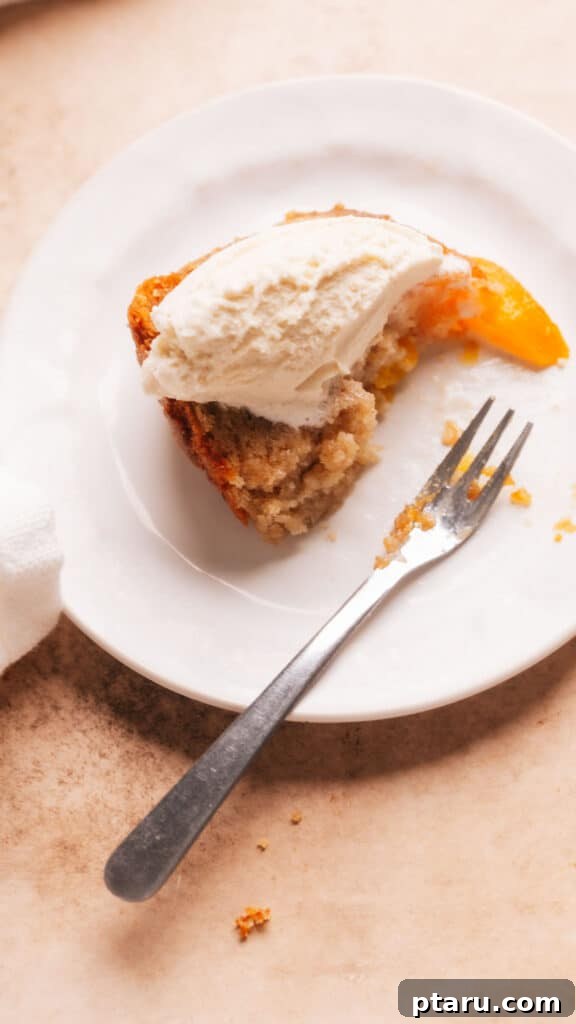
- The Ultimate À La Mode: There’s nothing quite like a scoop of creamy vanilla bean ice cream melting gently over a warm slice of Peach Cobbler Pound Cake. The contrast between the warm cake and cold ice cream, along with their complementary flavors, is a truly classic and satisfying dessert experience.
- Fresh Peach Garnish: If you have extra fresh peaches on hand, thinly slice them and arrange them beautifully on top of individual cake slices or around the whole cake. This adds a burst of fresh flavor, vibrant color, and an appealing presentation.
- A Sprinkle of Toasted Nuts: For a delightful textural contrast and nutty flavor, lightly toast some chopped pecans or walnuts and sprinkle them over the cake or individual servings.
Optional Vanilla Glaze Recipe for an Extra Touch
For those who desire an additional layer of sweetness and a beautiful finish, this simple vanilla glaze is the perfect complement. Whisk these ingredients together until smooth:
- 1 cup confectioners’ sugar (powdered sugar)
- 4-6 tablespoons whipping cream (start with 4 and add more gradually for desired consistency)
- ¼ teaspoon pure vanilla extract
- A tiny pinch of fine sea salt (to enhance flavor)
Once whisked, spoon this smooth, pourable icing evenly over the completely cooled Peach Cobbler Pound Cake for a truly elegant presentation and an added touch of vanilla sweetness.
Make-Ahead & Storage Tips for Your Peach Cobbler Pound Cake
Whether you’re planning ahead for a special occasion or simply want to savor your delicious leftovers, these tips will help you keep your Peach Cobbler Pound Cake fresh and delightful:
- Make Ahead: This pound cake is an excellent make-ahead dessert. You can bake it up to one day in advance of serving. To maintain its exquisite freshness and moist texture, wrap the cooled cake tightly in plastic wrap or aluminum foil. Store it at room temperature, away from direct sunlight or heat sources. Avoid refrigerating pound cake unless absolutely necessary, as the cold air can dry it out faster.
- Freeze Leftovers for Future Enjoyment: Don’t let a single slice go to waste! If you have leftover cake, individual slices can be frozen beautifully. Wrap each slice tightly in plastic wrap, then place the wrapped pieces in a freezer-safe airtight container or heavy-duty freezer bag. Store in the freezer for up to 3 months. When you’re ready to indulge, simply thaw the cake at room temperature for a few hours before serving.
- Reheat for Optimal Warmth: If your cake has been stored in the refrigerator or freezer, gently reheating it can bring back its warm, comforting appeal and soften the caramelized topping. You can briefly warm individual slices in the microwave for 15-30 seconds or wrap them loosely in foil and heat in a preheated oven at 300ºF (150ºC) for about 5-10 minutes until warmed through.
- Store Leftovers at Room Temperature: For short-term storage (1-2 days), store any leftover cake slices in an airtight container at room temperature. This helps to maintain its moisture and prevent the topping from hardening too much. Ensure it’s kept away from direct heat or humidity.
Delightful Recipe Variations to Explore
This Peach Cobbler Pound Cake recipe is a fantastic foundation for creative experimentation. Feel free to put your own spin on it with these delicious variations:
- Blueberry Cobbler Pound Cake: Easily transform this recipe by swapping the peaches for fresh or frozen blueberries. For an extra burst of citrusy brightness, add 1-2 teaspoons of lemon zest to the cake batter. The tartness of the blueberries and lemon will beautifully complement the sweet pound cake.
- Apple Cinnamon Pound Cake: Embrace autumnal flavors by replacing the peaches with finely diced apples (such as Granny Smith or Honeycrisp). Increase the cinnamon to 1 ½ teaspoons and add an extra ¼ teaspoon of nutmeg to the cake batter. For the topping, consider a classic streusel made with brown sugar, butter, cinnamon, and finely chopped walnuts or pecans for added crunch.
- Strawberry Shortcake Pound Cake: For a delightful summer twist, use diced fresh strawberries in place of peaches in the cake batter. Serve slices with a generous dollop of fresh whipped cream and additional sliced fresh strawberries, mimicking the beloved flavors of a classic strawberry shortcake. A hint of lemon zest in the batter would also be lovely here.
- Tropical Mango Coconut Pound Cake: Replace peaches with diced fresh mango and substitute some of the flour with an equal amount of shredded coconut. A splash of coconut extract in addition to vanilla could elevate the tropical notes.
- Spiced Pear Ginger Pound Cake: Use finely diced pears and add ½ teaspoon of ground ginger and a pinch of ground cloves to the spice blend. A light ginger glaze made with confectioners’ sugar and fresh ginger juice could make a wonderful topping.
Behind the Scenes: The Journey of This Peach Pound Cake
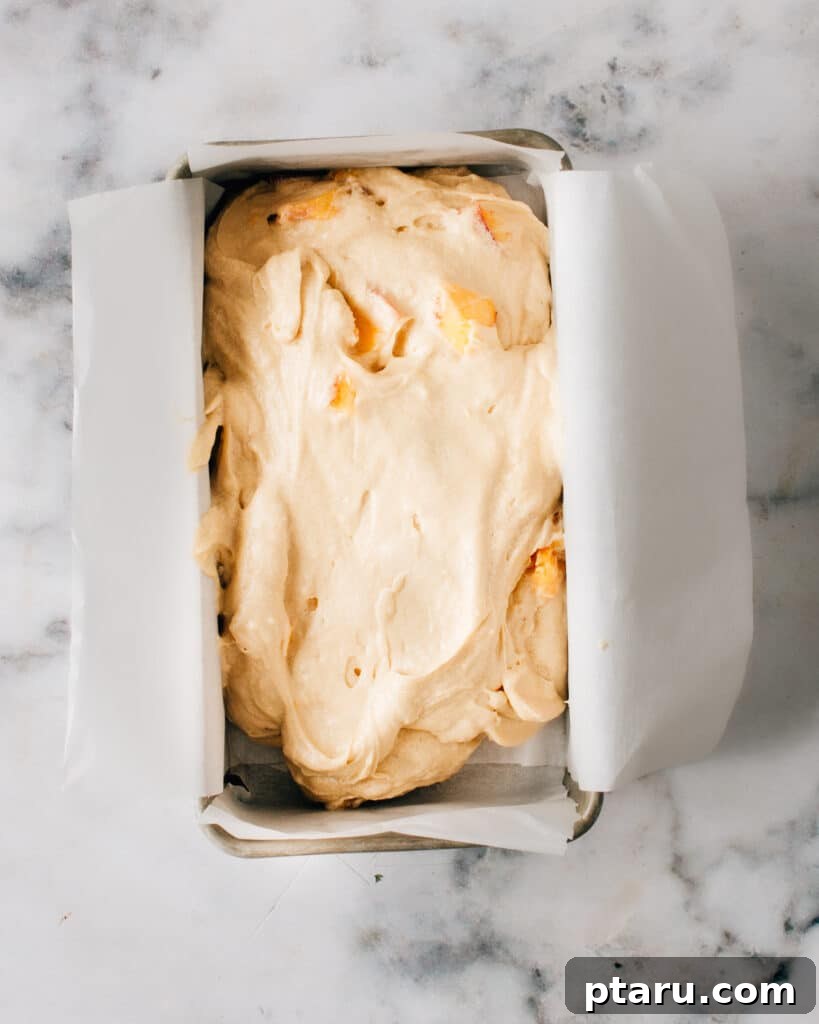
This beloved recipe originally began its journey as a simple peach pound cake baked in a loaf pan. We loved it so much that we transformed it into this magnificent Bundt cake version with the irresistible cobbler topping. For a glimpse of its soft, fluffy, and incredibly moist interior in its original loaf form, you can see a casual photo we previously shared on our Instagram stories. We are thrilled to share this perfected recipe with you, confident it will become a cherished favorite in your kitchen!

Peach Cobbler Pound Cake Recipe
By: Jennifer Pallian BSc, RD
This Peach Cobbler Pound Cake is a soft, moist, and perfectly tested cream cheese pound cake featuring a delightful brown sugar peach cobbler topping. It’s an unforgettable dessert that combines the best of two classic treats.
- Prep Time: 20 minutes
- Cook Time: 1 hour 10 minutes
- Servings: 12
Ingredients
For the Pound Cake:
- 1 ⅓ cup + 1 tbsp salted butter, softened
- 1 cup cream cheese, softened
- 4 tbsp avocado oil or canola oil; any neutral-tasting oil is fine
- 2 ⅛ cups granulated sugar
- 6 large eggs, room temperature
- 2 tsp pure vanilla extract
- 3 cups + 1 tbsp all-purpose flour
- 1 tsp baking soda
- 1 tsp baking powder
- 1 tsp kosher salt
- 1 tsp cinnamon
- ¼ tsp nutmeg
- 2 cups diced peaches (fresh, frozen & thawed, or well-drained canned)
For the Cobbler Topping:
- ½ cup brown sugar
- ¼ cup melted butter
- 1 ½ cups peach slices (fresh, frozen & thawed, or well-drained canned)
Instructions
- Prepare the Pan: Preheat your oven to 325ºF (160ºC). Generously grease and flour a 10 or 12-cup Bundt pan. For best results, use coconut oil or shortening and almond flour (refer to notes below for detailed tips on pan preparation and cake release).
- Create the Cobbler Topping Base: In a small bowl, mix the melted butter with brown sugar until smooth. Arrange the peach slices evenly in the grooves at the bottom of the prepared Bundt pan. Pour the brown sugar mixture over the peaches, ensuring they are well coated.
- Begin the Cake Batter: In the bowl of a stand mixer fitted with the paddle attachment, combine the softened butter, cream cheese, and neutral oil. Beat on medium-high speed for about 3 minutes until the mixture is very light and fluffy.
- Add Sugar and Eggs: Gradually add the granulated sugar to the creamed mixture and continue beating for another 2 minutes until fully incorporated and fluffy. Reduce the mixer speed to medium-low and add the eggs one at a time, beating well after each addition and scraping down the sides of the bowl as needed. Beat in the pure vanilla extract.
- Combine Dry Ingredients: In a separate large mixing bowl, whisk together the all-purpose flour, baking soda, baking powder, kosher salt, cinnamon, and nutmeg until well combined.
- Integrate Wet and Dry: With the mixer speed on low, gradually add the dry ingredient mixture to the wet ingredients. Mix *just* until the batter transitions from lumpy to smooth, approximately 15-20 seconds total. Be careful not to overmix, as this can lead to a tough cake. Pause once to scrape down the bowl and paddle.
- Fold in Peaches: Gently fold in the diced peaches using a silicone spatula. Use a sweeping motion to scoop batter from underneath and fold it over the top, distributing the peaches evenly without crushing them.
- Assemble the Cake: Carefully spoon the cake batter evenly over the cobbler topping mixture in the Bundt pan. A large ice cream scoop can make this easier. Smooth out the top of the batter.
- Bake: Place the Bundt pan in the center of the preheated oven. Bake for approximately 60-75 minutes. After 40-50 minutes, when the cake begins to brown significantly, loosely cover the top of the pan with aluminum foil to prevent excessive darkening.
- Check for Doneness: Continue baking until an instant-read thermometer inserted into the thickest part of the cake (avoiding the hole in the center) registers 190ºF (88ºC). This ensures a perfectly moist crumb.
- Cool and Release: Once baked, remove the cake from the oven and let it cool in the pan for 5 minutes. After 5 minutes, run a thin knife around the edges of the cake to loosen it. Place a wire cooling rack over the top of the pan, and using oven mitts, confidently flip the entire assembly over. Gently tap the bottom of the pan a few times, then carefully lift the pan off the cake. If it doesn’t release easily, place a hot, damp towel over the inverted pan for a few more minutes to generate steam and assist with release, then try again. Allow the cake to cool completely on the wire rack before slicing.
Notes
- For Ingredients By Weight: For precise baking, consider using a kitchen scale. To convert US Customary measurements to metric weights (grams), use a reliable online converter or a recipe card that offers metric options.
- How to Ensure a Perfect Cake Release from the Pan:
- Start with a Superior Grease and Flour: For effortless release, I highly recommend using coconut oil or shortening to grease your Bundt pan. These pure fats perform better than butter (which contains milk solids and water) or non-stick sprays (which can leave residue). For dusting, almond flour is excellent as it won’t leave a gummy residue on your baked cake, though all-purpose flour works if that’s what you have. Ensure every crevice of the pan is thoroughly coated.
- The Crucial Cooling Time: After removing the cake from the oven, allow it to cool *in the pan* for precisely 10 minutes. This critical period allows steam to release into the pan, helping the cake to naturally pull away from the sides and bottom.
- Gentle Loosening: Carefully run a small, soft silicone spatula (or a thin, flexible knife) between the cake and the pan edges. Be gentle to avoid scratching the non-stick surface.
- The Confident Flip: Place a wire cooling rack directly on top of the warm cake in the pan. Using oven mitts, securely hold both the pan and the rack together and, with a confident motion, flip them over so the cake rests on the cooling rack. Give the bottom of the pan a few gentle taps, then carefully try to lift the pan away.
- The Hot Towel Trick (If Needed): Should the cake resist releasing, immediately place a hot, damp towel over the inverted pan for an additional few minutes. The steam will help further loosen the cake. Then, try lifting the pan again. With these proven techniques, you’ll achieve a perfect release every time!
- Making a Peach Cobbler Pound Cake Loaf: For a smaller batch, halve all the ingredients. Line a 6-cup (8.5 x 4.5 inches or 9 x 5 inches) loaf pan with parchment paper, allowing a 2-inch overhang on the longer sides for easy lifting. Bake for approximately 60-70 minutes, or until an internal temperature of 190ºF (88ºC) is reached with a cooking thermometer.
Nutrition Information (Approximate Per Serving)
- Calories: 445 kcal
- Carbohydrates: 75g
- Protein: 8g
- Fat: 13g
- Saturated Fat: 7g
- Polyunsaturated Fat: 1g
- Monounsaturated Fat: 4g
- Trans Fat: 0.2g
- Cholesterol: 112mg
- Sodium: 455mg
- Potassium: 161mg
- Fiber: 2g
- Sugar: 50g
- Vitamin A: 645 IU
- Vitamin C: 2mg
- Calcium: 67mg
- Iron: 2mg
Nutrition information is automatically calculated and should be used as an approximation.