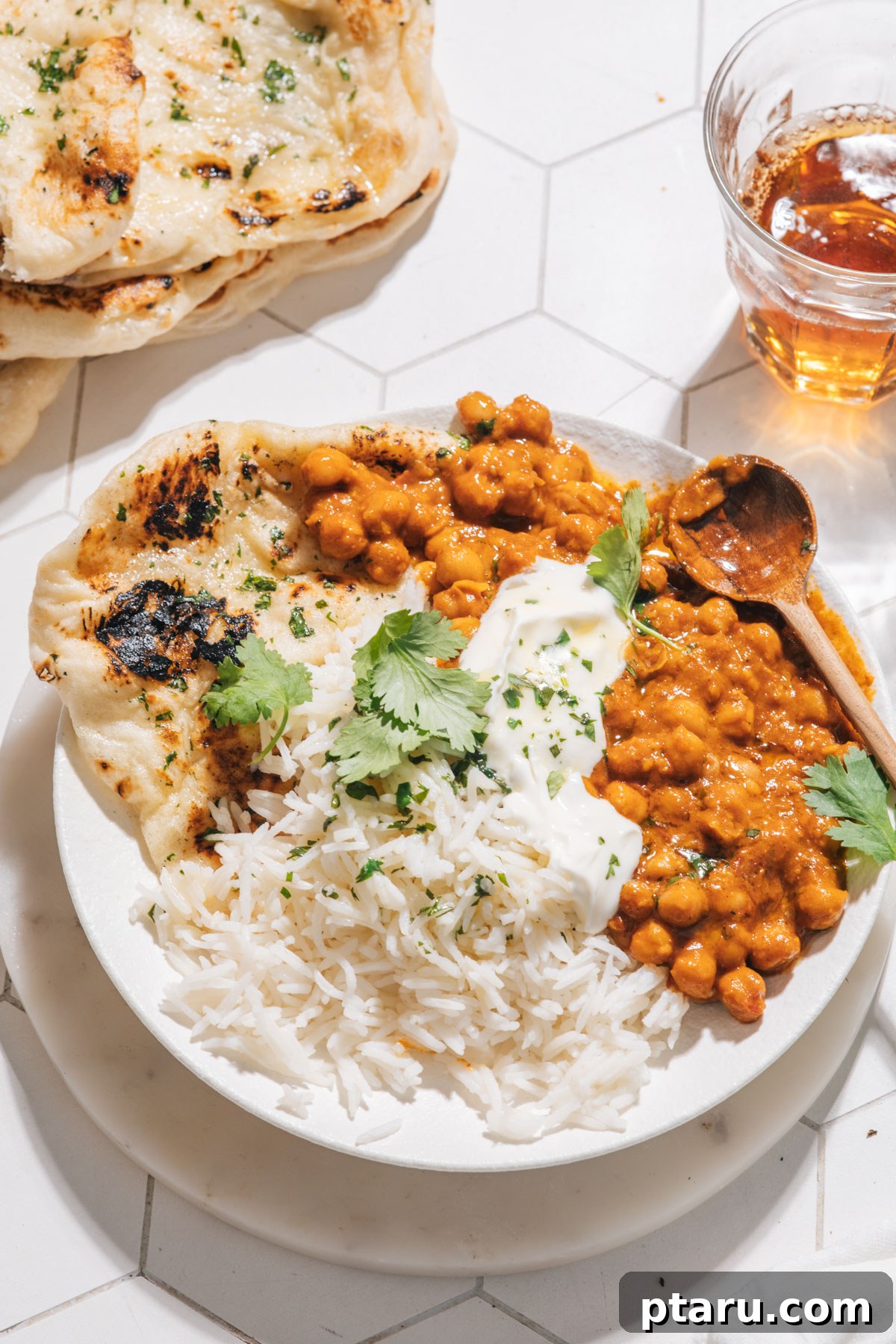
Prepare to create the most irresistible Curry Chickpeas you’ve ever tasted, a dish so flavorful it will have everyone asking for seconds. This quick and easy recipe is a true crowd-pleaser, delivering a depth of flavor that rivals more complex dishes, all while being completely vegan. It’s no wonder it’s a favorite in my own Indian household!
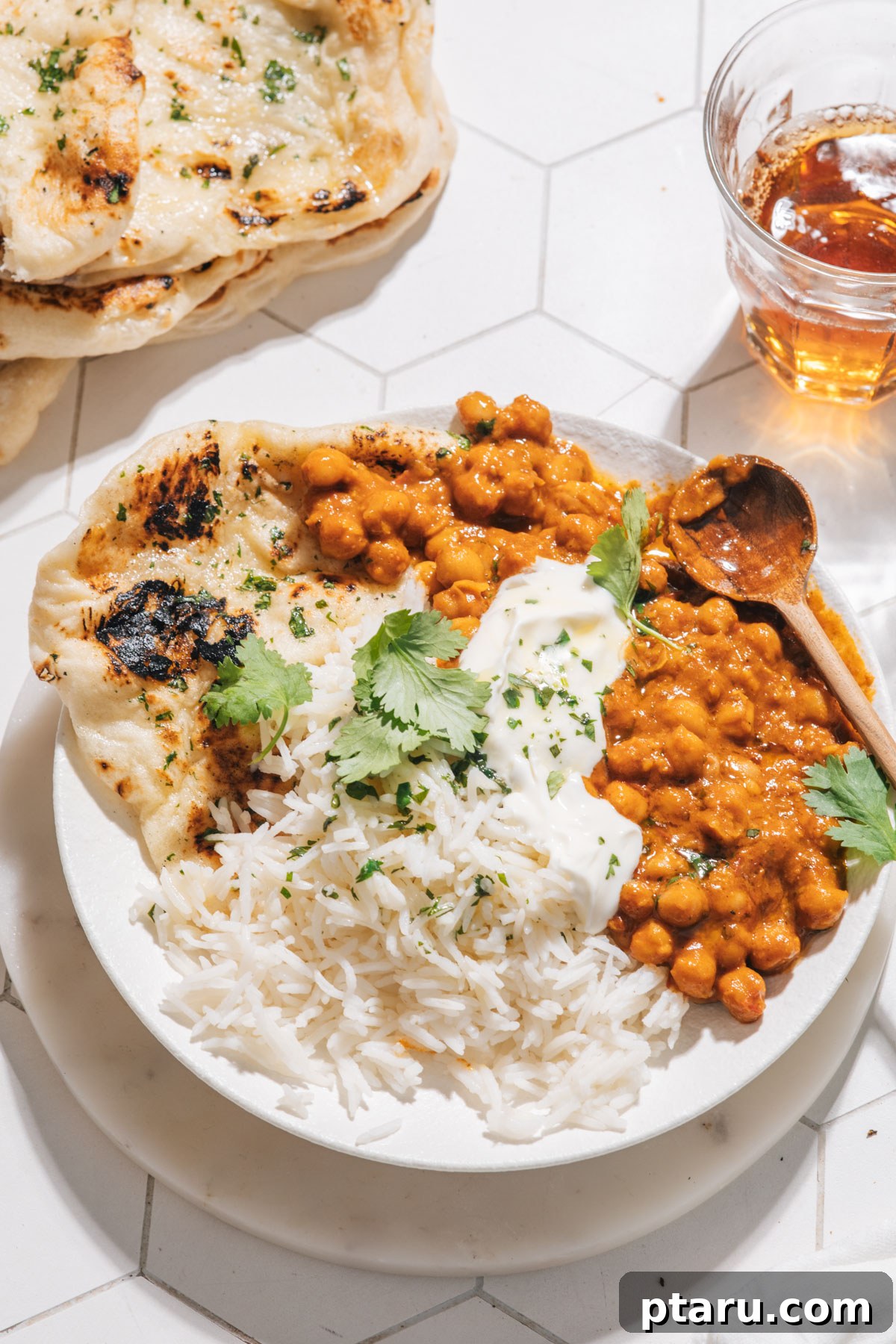
Once you try a bowl of these sumptuous curry chickpeas, you’ll find it impossible to resist finishing every last bite. The luxurious flavor profile is reminiscent of a beloved butter chicken, but re-imagined as a vibrant plant-based dish. It perfectly balances warm, aromatic Indian spices with a comforting, velvety sauce, lightened and enriched by the addition of creamy coconut milk. This creates an incredibly satisfying experience for your palate.
This dish truly embodies a bowl of pure goodness, with its silky texture and beautifully layered flavors. Best of all, it just happens to be entirely vegan, making it a fantastic option that delights both meat-eaters and vegetarians alike. It’s a testament to how flavorful and wholesome plant-based cooking can be.
Why You’ll Absolutely Love This Easy Chickpea Curry Recipe
While traditional chana masala, as prepared by my Indian mother-in-law, is undeniably authentic and delicious, it can often be more labor-intensive. This particular chickpea curry recipe offers a quicker and equally satisfying alternative, making it perfect for modern, busy lifestyles.
There are countless reasons why this creamy coconut chickpea curry will quickly become a staple in your kitchen:
- Effortless One-Pot Wonder: Say goodbye to excessive cleanup! This recipe comes together beautifully in a single pot, making it a dream for busy weeknights and simplifying meal prep. Minimal dishes mean more time to enjoy your delicious creation.
- Pantry Staples for Convenience: Utilizing readily available ingredients like canned chickpeas and coconut milk makes this curry exceptionally quick and straightforward. You likely have most of what you need on hand, eliminating last-minute grocery runs.
- Incredible Creamy Sauce & Rich Flavor: Prepare for a truly indulgent experience. The rich, velvety sauce is spiced to perfection, delivering a taste that’s often described as a vegan take on “butter chicken” – comforting, complex, and utterly delicious.
- Healthy & Wholesome: Packed with plant-based protein and fiber from the chickpeas, this curry is not only flavorful but also incredibly nutritious. It’s a meal you can feel good about eating and serving.
- Versatile & Customizable: Easily adapt this recipe to suit your taste preferences or what you have available. Add more vegetables, adjust the spice level, or experiment with different garnishes.
- Naturally Vegan & Gluten-Free: Perfect for those with dietary restrictions, this recipe caters to both vegan and gluten-free diets without compromising on taste or satisfaction.
Essential Ingredients for Your Vegan Chickpea Curry
Get ready to add this to your collection of favorite veggie curry recipes! The beauty of this dish lies in its simple, accessible ingredients. Here’s what you’ll need to create this flavor-packed delight:
Key Ingredients for Curried Chickpeas
Gather these essential ingredients to prepare your sensational curried chickpeas. Many of these are likely already staples in your pantry, especially if you enjoy cooking Indian-inspired dishes:
- Oil or Ghee: The foundation for sautéing your aromatics. Use a neutral oil like vegetable or coconut oil for a vegan option, or ghee for a richer, traditional flavor.
- Onions, Garlic, and Ginger: These form the aromatic base of the curry. Finely chopped onions, combined with minced garlic and ginger, create a fragrant and flavorful foundation that is absolutely crucial for a rich curry sauce.
- Garam Masala or Curry Powder: The heart of the curry’s spice blend. Garam masala provides a complex, warm, and slightly sweet flavor, while a good quality curry powder offers a balanced mix of aromatic spices and a gentle heat.
- Paprika: Adds a lovely mild flavor and a beautiful reddish hue to the sauce, enhancing its visual appeal.
- Ground Cumin: Contributes an earthy, warm, and slightly pungent flavor that is characteristic of many Indian dishes.
- Cayenne Pepper: Provides a touch of heat, which you can adjust to your preference for a mild or spicier curry.
- Diced Tomatoes: Whether fresh or canned, diced tomatoes contribute a crucial tangy base and body to the curry sauce, breaking down to create a rich, integrated flavor.
- Full-Fat Coconut Milk: This is key to achieving the incredible creaminess and subtle sweetness that defines this particular curry. Full-fat varieties provide the most luxurious texture and rich flavor, ensuring a weighty and satisfying sauce.
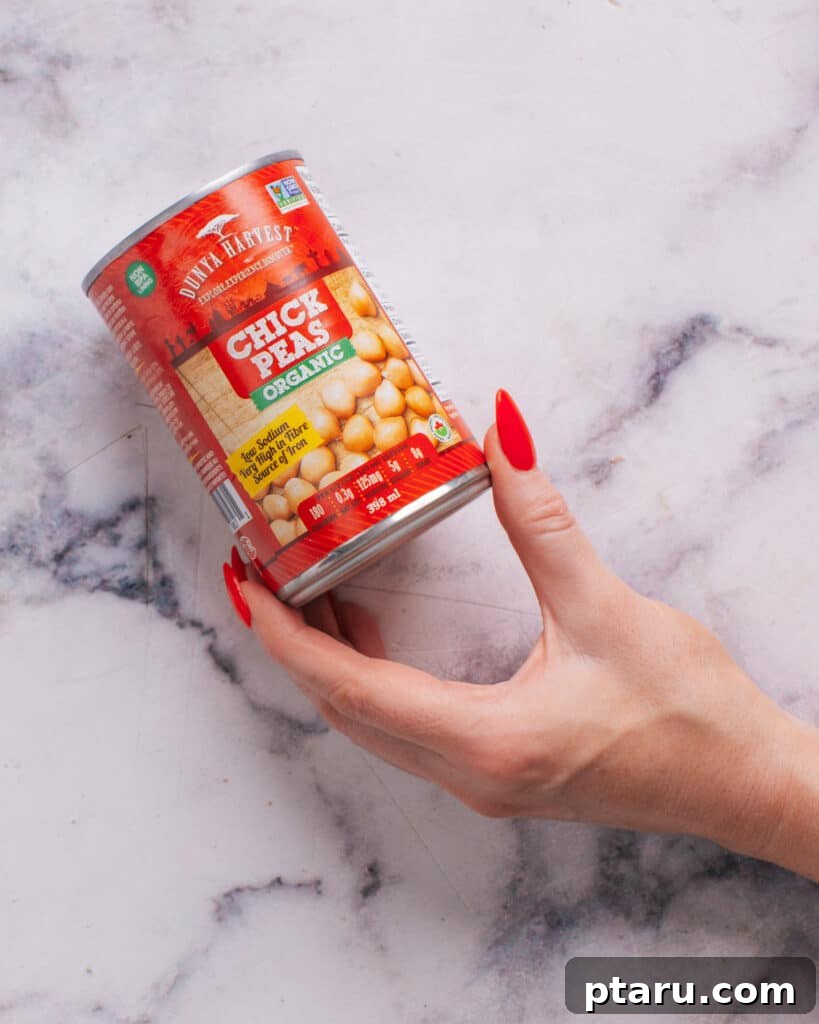
- Chickpeas: The star of the dish! These hearty, protein-packed legumes serve as the substantial base of the curry. Canned chickpeas offer unmatched convenience, but you can also cook dried chickpeas from scratch for a slightly different texture and depth.
- Kosher Salt: Essential for balancing and enhancing all the flavors in the curry. Seasoning gradually and tasting as you go is key to perfection.
Creative Substitutions and Delicious Variations
This chickpea curry recipe is wonderfully flexible, allowing you to easily swap out ingredients or add new ones to customize the base recipe to your liking. Don’t be afraid to get creative in the kitchen!
- Oil or Ghee Alternatives: For a completely dairy-free and vegan option, readily use vegetable oil, olive oil, or coconut oil in place of ghee. Each will impart a slightly different flavor profile, with coconut oil enhancing the tropical notes.
- Onion Choices: While yellow onions are standard, red onions offer a slightly sharper, sweeter flavor, and shallots provide a more delicate, nuanced taste. Any of these can be used successfully.
- Garlic and Ginger Convenience: Freshly minced garlic and ginger undeniably offer the most vibrant and pungent flavors. However, in a pinch, you can opt for pre-minced jars or even powdered versions (use about 1/2 teaspoon of powder for every tablespoon of fresh).
- Paprika Play: For an extra layer of complexity, try using smoked paprika, which will introduce a delightful smoky undertone to your curry. If you prefer a milder flavor profile or simply don’t have it, feel free to omit paprika entirely.
- Heat Adjustments: If cayenne pepper isn’t available or you prefer a different type of heat, red pepper flakes are an excellent substitute. For a fresh, fiery kick, finely chopped green chilies can also be added.
- Boost with More Veggies: Elevate the nutritional value and texture of your curry by incorporating additional vegetables. Baby spinach can be wilted in during the last few minutes of simmering. Cauliflower florets, sliced carrots, colorful bell peppers, or even cubes of sweet potatoes can be added during the last 10-15 minutes of simmering to ensure they cook through but retain a pleasant bite. This is a fantastic way to empty your fridge!
- Protein Power-Up: While chickpeas are the star, you could also add cubes of firm tofu or paneer (if not strictly vegan) during the final simmer for extra protein and texture.
- Herbaceous Finish: A sprinkle of fresh chopped cilantro is classic, but fresh mint or basil can also add an unexpected, refreshing twist.
Essential Tools for This One-Pot Wonder
One of the many joys of this recipe is its simplicity, not just in ingredients but also in the minimal equipment required. It truly is a one-pot wonder, keeping your kitchen mess to a minimum:
- Large Pot or Dutch Oven: A sturdy, generously sized pot is all you need to cook the entire curry from start to finish. A Dutch oven works wonderfully for even heat distribution.
- Sharp Knife and Cutting Board: For efficiently prepping and chopping your onions, garlic, and ginger.
- Immersion Blender (Optional): While not strictly necessary, an immersion blender is a fantastic tool to achieve an ultra-smooth, creamy curry sauce by blending a portion of the mixture directly in the pot. If you don’t have one, a regular blender will also work (just be careful when blending hot liquids).
- Spatula or Wooden Spoon: For stirring and sautéing your ingredients.
How to Make Creamy Coconut Curry Chickpeas: A Step-by-Step Guide
Creating your flavorful chickpea curry is straightforward and enjoyable. Follow these simple steps for a perfect, restaurant-quality meal right in your own kitchen:
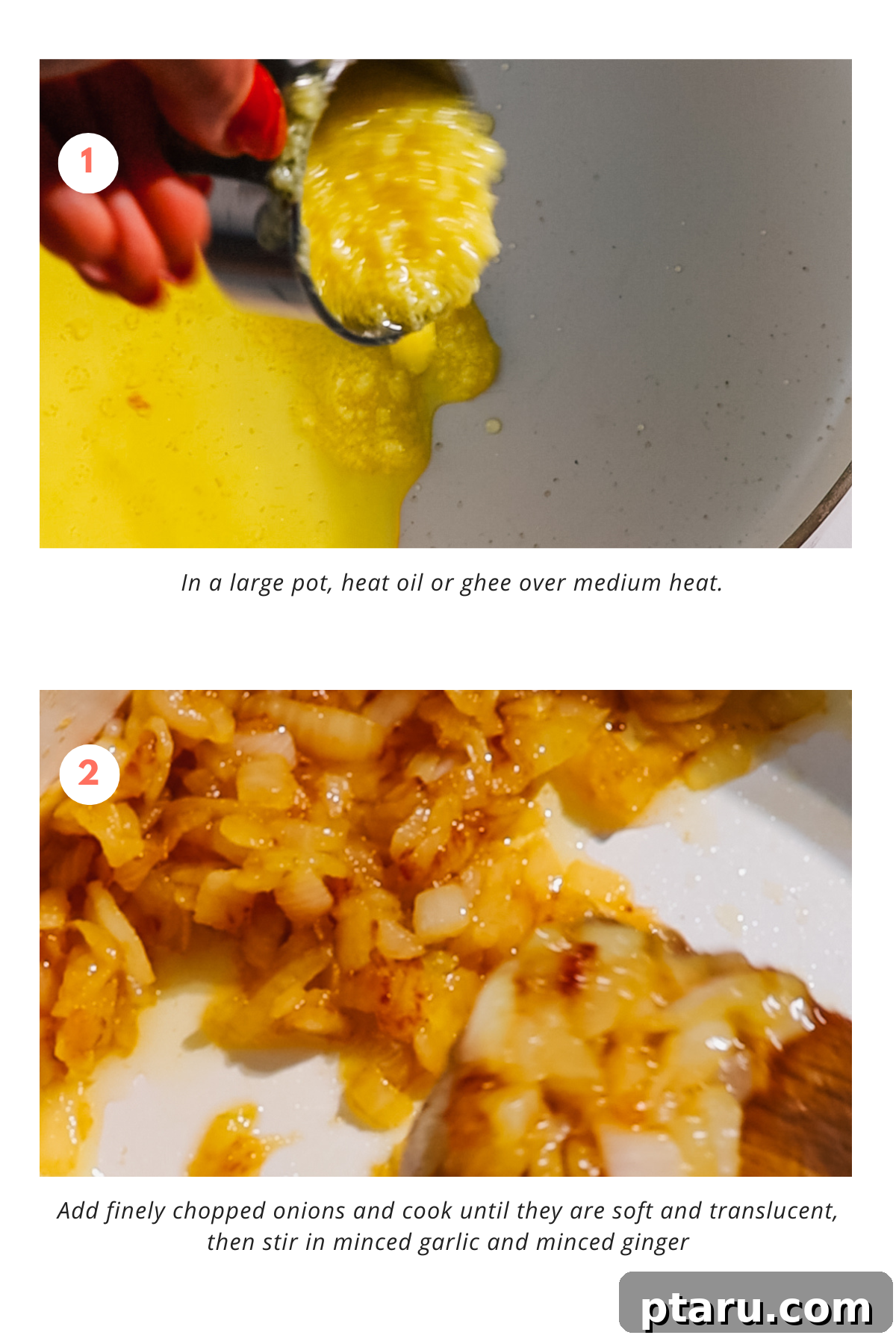
1. Cook the Aromatic Base
Begin by heating your chosen oil or ghee in a large pot over medium heat. Add the finely chopped onions and sauté them gently for about 5-7 minutes. Stir frequently until they become wonderfully soft, translucent, and slightly golden – this caramelization is crucial for flavor. Next, stir in the minced garlic and ginger, cooking for another 1-2 minutes until their fragrant aromas fill your kitchen. Be careful not to burn the garlic.
2. Bloom the Spices
Now, it’s time to introduce the magic! Add the garam masala or curry powder, paprika, ground cumin, cayenne pepper, and 2 teaspoons of kosher salt to the pot. Mix these vibrant spices thoroughly with the onions, garlic, and ginger. Continue to cook for another minute, stirring constantly. This brief toasting process, known as “blooming” the spices, helps to release their essential oils and deepen their flavors significantly.
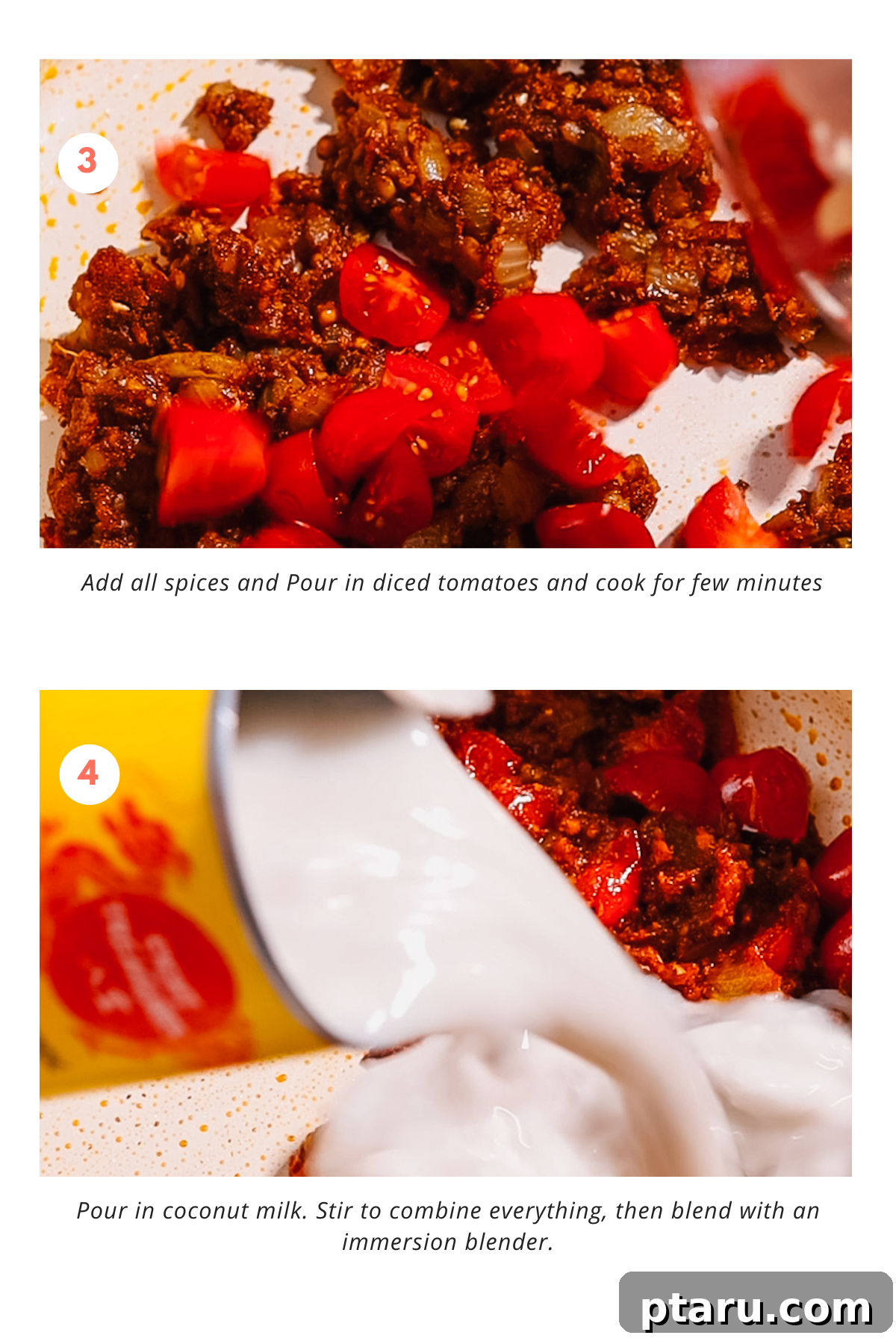
3. Add Tomatoes for Depth
Pour in the diced tomatoes (fresh or canned). Stir well to combine all the ingredients. Let this mixture cook for approximately 5 minutes, stirring occasionally. The tomatoes will begin to break down, releasing their juices and creating a rich, tangy foundation for your sauce. The mixture should become well integrated and slightly thickened.
4. Introduce Coconut Milk
Next, pour in the full-fat coconut milk. Stir everything together until thoroughly combined. For an incredibly smooth and luscious sauce, this is the perfect moment to use an immersion blender. Blend directly in the pot until your desired creamy consistency is achieved. If you prefer a chunkier texture, you can skip this step or blend only half of the sauce.
5. Add Chickpeas and Simmer to Perfection
Finally, add the drained and rinsed chickpeas to the pot. Stir gently, ensuring that every chickpea is beautifully coated in the creamy, aromatic sauce. Reduce the heat to low, cover the pot partially, and allow the curry to simmer for 20-30 minutes. This simmering time is crucial for allowing the flavors to meld and deepen, transforming the individual ingredients into a harmonious and incredibly delicious dish. Stir occasionally to prevent sticking.
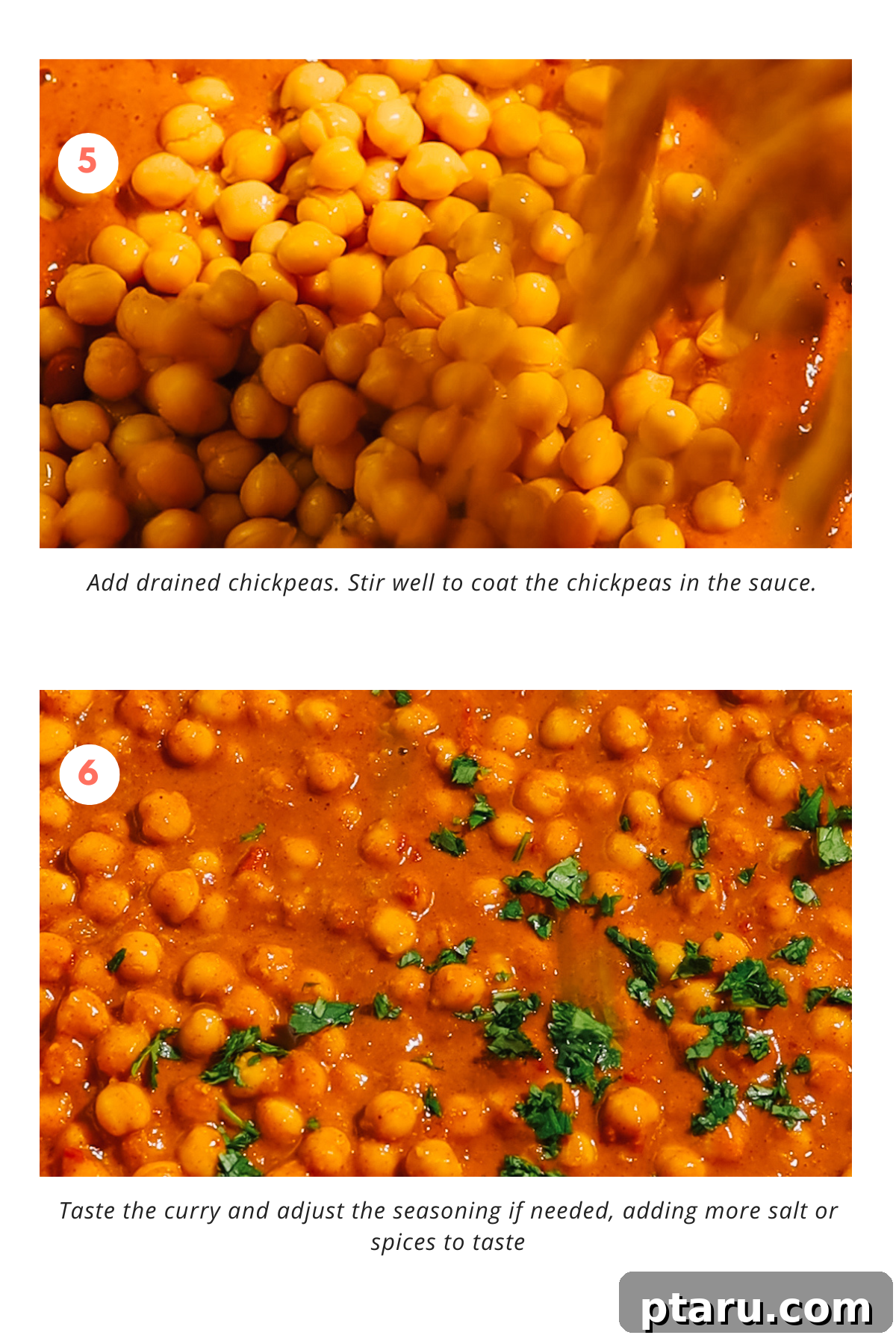
6. Adjust Seasoning and Serve
Before serving, taste the curry and make any necessary adjustments to the seasoning. You might find it needs a touch more salt, a pinch of sugar to balance the acidity of the tomatoes, or an extra dash of cayenne for more heat. Serve your exquisite creamy coconut curry chickpeas hot, ideally over fluffy basmati rice or with warm naan bread.
Avoid These 5 Common Mistakes for Perfect Curry Chickpeas
Even the simplest recipes can present challenges. Here are typical issues often encountered when making chickpea curry, along with practical tips on how to avoid them for the best results:
- Overcooking or Burning the Onions: Cooking onions for too long, or at too high a heat, can cause them to become dark and bitter, imparting an unpleasant flavor to your entire curry. The goal is a soft, translucent, and golden-brown color, not a deep brown or black. Sauté them over medium heat, stirring frequently, and don’t rush this initial step.
- Skipping the Spice Toasting (Blooming): Adding liquid ingredients like tomatoes directly to the pot without briefly toasting the dry spices first is a common oversight. Toasting your garam masala, paprika, cumin, and cayenne pepper in the hot oil with the aromatics for a minute or two before adding the tomatoes helps to ‘bloom’ the spices. This process releases their full aromatic oils and deepens their flavors, resulting in a much more vibrant and complex curry.
- Not Balancing the Seasoning Adequately: It’s surprisingly easy to either under-season or over-season a curry. The key is to taste as you go. Start with the recommended amount of salt, then taste the curry after it has simmered for a while. Gradually add more salt or other spices if needed, making small adjustments until you achieve a perfectly balanced flavor profile. Remember, you can always add more, but you can’t easily remove it.
- Neglecting Sufficient Simmer Time: Rushing the simmering process is detrimental to flavor development and sauce consistency. Shortening the recommended simmer time of 20-30 minutes will result in a less developed, harmonious flavor and a thinner, watery sauce. Allow the curry to gently simmer for the full duration; this gives all the ingredients time to meld together, allows the spices to infuse deeply, and helps the sauce to thicken beautifully.
- Using Low-Fat Coconut Milk for Creaminess: While a tempting choice for calorie-conscious cooks, using low-fat coconut milk will significantly reduce the luxurious creaminess and richness that is characteristic of this curry. For the best texture and flavor, always opt for full-fat coconut milk. If you’re concerned about calories, focus on portion control rather than compromising on the essential ingredients.
Make Ahead and Storage Tips for Your Chickpea Curry
One of the fantastic aspects of this chickpea curry is how well it stores and often tastes even better the next day as the flavors continue to meld. Preparing it in advance is a great way to save time on busy days. Cook the curry according to the directions and then allow it to cool completely to room temperature before storing.
Leftovers:
Store any leftover curry in an airtight container in the refrigerator for up to 3-4 days. For optimal flavor development, many find that chickpea curry tastes even more delicious a day or two after it’s made, making it an excellent candidate for meal prepping.
Freezing for Longer Storage:
This curry freezes beautifully! Once completely cooled, transfer it to a freezer-safe container or a heavy-duty zip-top bag, ensuring you leave some headspace for expansion. It can be frozen for up to 3 months without significant loss of quality. Always label the container with the date for easy tracking.
Reheating Instructions:
To reheat frozen curry, thaw it overnight in the refrigerator. Then, gently reheat it on the stovetop over medium heat, stirring occasionally, until it is thoroughly warmed through. Alternatively, you can reheat individual portions in the microwave, stirring halfway through to ensure even heating. If the curry appears too thick after freezing and thawing, simply add a splash of water or extra coconut milk to achieve your desired consistency.
Important Note: To maintain the best quality and texture, it’s always recommended to store the curry separately from any rice or other side dishes. Combine them only when you are ready to serve.
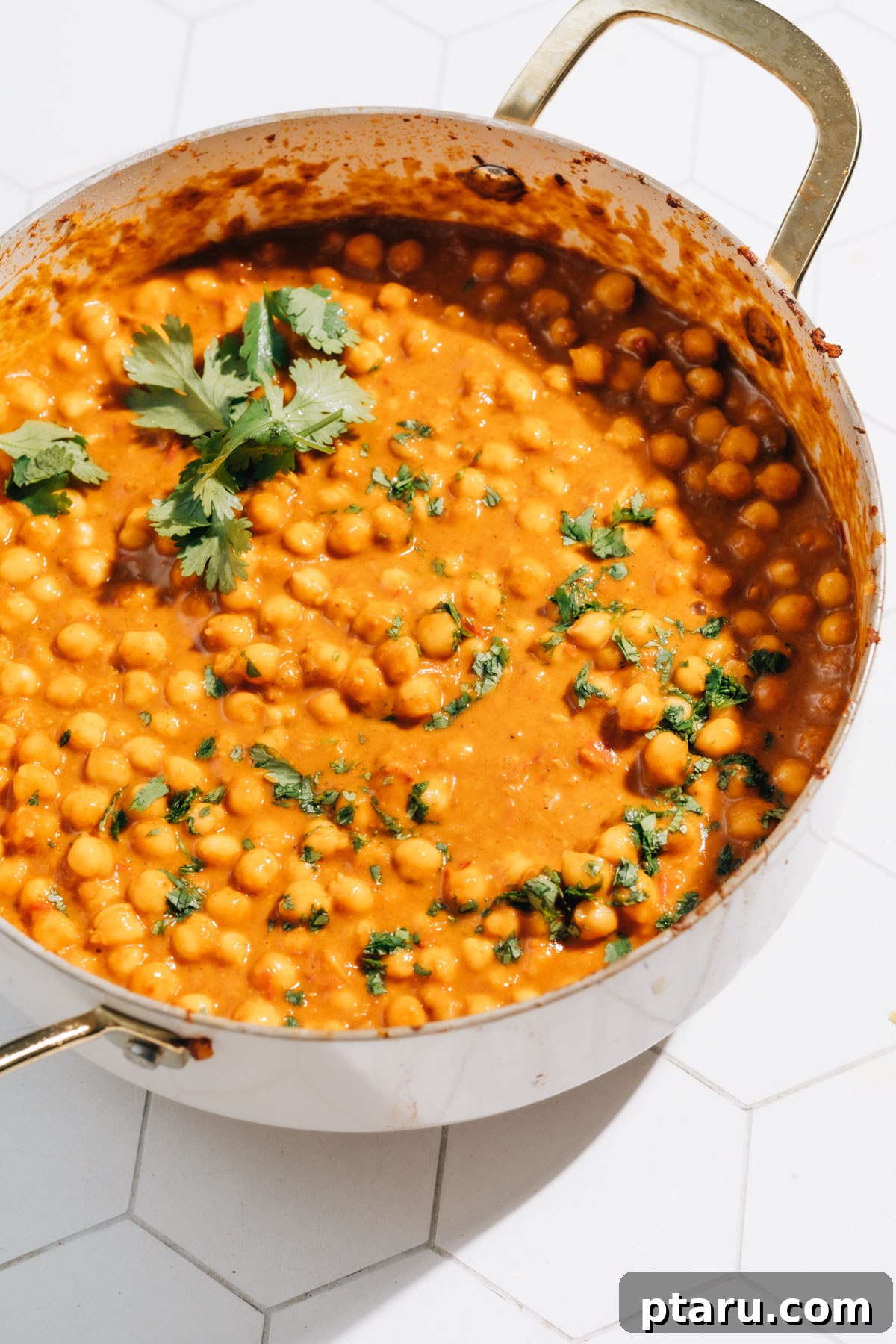
Delicious Ways to Serve Your Creamy Curry Chickpeas
This versatile curry chickpeas recipe is a complete meal on its own, but it truly shines when paired with the right accompaniments. Here are some fantastic ideas to elevate your dining experience:
- Classic Rice Pairings:
- Steamed Basmati Rice: Its fragrant aroma and fluffy texture perfectly complement the creamy curry, soaking up all the delicious sauce. Check out our Basmati Rice Recipe for perfection.
- Brown Rice or Quinoa: For a healthier, whole-grain option, these provide a nutty contrast and added fiber.
- Fresh & Vibrant Sides:
- Fresh Cilantro: A generous sprinkle of freshly chopped cilantro adds a burst of freshness and color.
- Lime or Lemon Wedges: A squeeze of fresh lime juice right before serving brightens all the flavors and adds a zesty kick. I always love to pop a chubby lime wedge on the side.
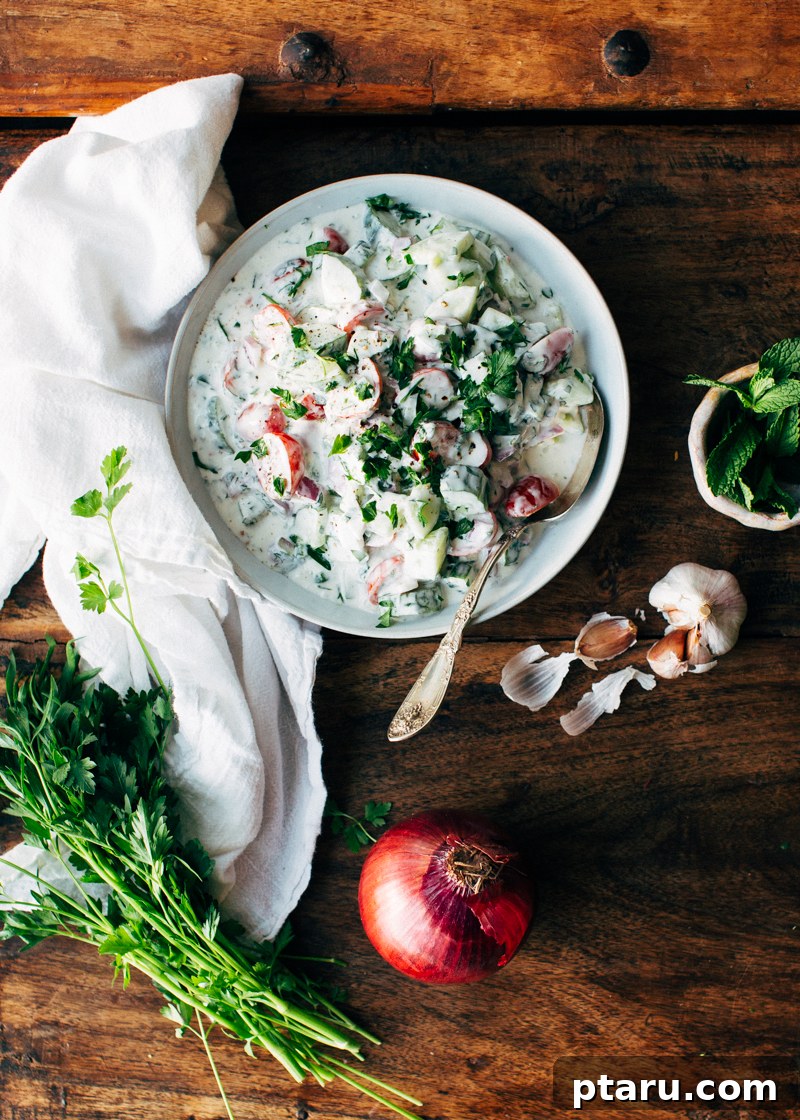
- Fresh Salad: A simple green salad or an Indian Cucumber Yogurt Salad (Raita) provides a cooling contrast to the rich curry.
- Authentic Indian Flatbreads: These are ideal for scooping up every last drop of that incredible sauce.
- Butter Naan or Garlic Naan: Soft, chewy, and flavorful, these are perfect for dipping.
- Roti or Chapati: Lighter, whole wheat flatbreads that are staples in Indian cuisine.
- Aloo Naan or Paratha: Flaky and often stuffed, these add another layer of texture and flavor.
- Complementary Indian Sides:
- Indian Coconut Green Beans (Poriyal): A wonderful stir-fry that pairs beautifully with curries.
- Yogurt Cucumber Salad (Raita): A cooling and refreshing side that balances the spices.
- Refreshing Indian Drinks: Complete your meal with a traditional Indian beverage.
- Authentic Indian Chai Tea or Karak Chai: Warm and spiced, perfect for after your meal.
- Chai Coffee: A delightful fusion for coffee lovers.
- Mango Lassi: A sweet, creamy, and cooling yogurt drink that’s always a treat.
- Sweet Endings: After such a satisfying meal, why not explore our collection of Indian Dessert Recipes or Indian Sweet Recipes for a show-stopping finish?
Frequently Asked Questions About Creamy Curry Chickpeas
Just quickly scanning for answers? Here are some common queries about making this delicious chickpea curry:
Yes, absolutely! While canned chickpeas offer convenience, dried chickpeas can be used for a slightly earthier flavor and firmer texture. You’ll need to soak them overnight and then cook them until tender before adding them to the curry. Approximately 1 ½ cups of dried chickpeas will yield about 5 cups of cooked chickpeas, which is equivalent to three 14-oz cans.
Yes, this recipe is inherently vegan, making it perfect for both vegetarian and vegan diets. Just ensure you use a plant-based oil (like vegetable or coconut oil) instead of ghee if strictly vegan, or if you simply prefer a dairy-free option.
To increase the heat, you have a few options. You can simply add more cayenne pepper to taste. For a fresh kick, include finely chopped fresh green chilies (like serrano or Thai chilies) along with the garlic and ginger. Alternatively, a pinch of red chili powder can be stirred in with the other dry spices. Add gradually and taste as you go to achieve your preferred level of spice without making it overwhelmingly hot.
If coconut milk isn’t to your taste or isn’t available, you can substitute it with other creamy liquids. Almond milk or cashew cream are good plant-based alternatives, though they will subtly alter the curry’s flavor profile and creaminess. For a non-vegan option, regular dairy cream or half-and-half can be used, but this will change the character of the curry significantly.
Absolutely! This curry is a fantastic base for incorporating more vegetables. Popular additions include bell peppers (add with tomatoes), baby spinach (stir in during the last 5 minutes to wilt), cauliflower florets, or cubed sweet potatoes (add along with the chickpeas for the final simmer). Adding vegetables boosts nutrition and flavor.
If your curry is too thin, you can thicken it by simmering it uncovered for a longer period, allowing more liquid to evaporate. Another effective method is to use an immersion blender to blend a portion of the curry (or transfer a cup to a regular blender and return it to the pot). For a quick fix, you can dissolve a tablespoon of cornstarch or flour in a small amount of cold water to create a slurry, then stir it into the simmering curry and cook for a few more minutes until thickened.
If your curry turns out too salty, there are several ways to balance the flavors. You can add a small amount of sugar or a splash of fresh lemon/lime juice to counteract the saltiness. Incorporating extra vegetables (like potatoes or more chickpeas) can also help absorb some of the excess salt. Alternatively, serving it with unsalted plain rice or a plain yogurt raita can help dilute the saltiness in each bite.
Explore More Cozy Indian Vegetarian Recipes
If you’ve loved this creamy chickpea curry, you’re in for a treat! Discover more comforting and flavorful Indian vegetarian dishes that are perfect for any meal:
- Creamy Madras Lentils (the ultimate vegetarian comfort food, rich and satisfying)
- Amma’s special Masoor Dal recipe (a staple red lentil soup, easy and wholesome)
- Indian Chickpea Salad (a refreshing and protein-packed salad)
- Malai Kofta (rich, creamy, and delightful vegetable kofta balls in a luscious sauce)
- Saag Paneer & Palak Paneer (classic Indian spinach and cheese curries, vibrant and flavorful)
And don’t miss our comprehensive collection of Indian Vegetarian Dinner Recipes for endless inspiration and delicious meal ideas!
Coconut Curry Chickpeas (Quick & Easy Recipe!)
Learn how to make the tastiest Curry Chickpeas that’ll have everyone licking the plate. This quick, easy recipe is a family favorite!
Prep Time: 10 minutes
Cook Time: 30 minutes
Total Time: 40 minutes
Servings: 8

Ingredients
- ¼ cup oil or ghee
- 2 large onions, finely chopped
- 2 tbsp minced garlic
- 2 tbsp minced ginger
- 3 tbsp garam masala or curry powder
- 1 tbsp paprika
- 1 tsp ground cumin
- ¼ tsp cayenne pepper
- 3-4 tsp kosher salt (to taste)
- 1 ¼ cup diced tomatoes (fresh or canned)
- 1 (14-oz) can full-fat coconut milk
- 3 (14-oz) cans chickpeas, drained and rinsed (or 1 ½ cups dried chickpeas, cooked to yield 5 cups)
Instructions
- Heat the Oil: In a large pot or Dutch oven, heat oil or ghee over medium heat.
- Cook the Onions: Add finely chopped onions and cook for 5-7 minutes until soft, translucent, and lightly golden.
- Add Garlic and Ginger: Stir in minced garlic and minced ginger. Cook for another 2-3 minutes until fragrant, being careful not to burn.
- Add Spices: Mix in garam masala or curry powder, paprika, ground cumin, cayenne pepper, and 2 tsp of kosher salt. Stir well to coat the aromatics with the spices, cooking for about 1 minute until fragrant.
- Add Tomatoes: Pour in diced tomatoes. Cook for 5 minutes, stirring occasionally, until the tomatoes break down and the mixture is well combined.
- Add Coconut Milk: Stir in the full-fat coconut milk. For a smooth, creamy sauce, blend with an immersion blender directly in the pot until desired consistency is reached.
- Add Chickpeas: Add the drained and rinsed chickpeas. Stir well to ensure they are fully coated in the sauce.
- Simmer: Reduce the heat to low, partially cover the pot, and let the curry simmer gently for 20-30 minutes. Stir occasionally to prevent sticking and allow flavors to meld.
- Adjust Seasoning: Taste the curry and adjust the seasoning as needed, adding more salt or spices to your preference. Serve hot.
Notes
Salt Quantity: The final amount of salt needed will depend on the salt content of your canned chickpeas and tomatoes, as well as how much liquid evaporates during simmering. Start with 2 teaspoons, and adjust to taste during the final step. If the sauce tastes sweet or flat, it often needs a bit more salt.
Nutrition Information (Approximate per serving)
Nutrition information is automatically calculated and should be used as an approximation.
- Calories: 316 kcal
- Carbohydrates: 26g
- Protein: 8g
- Fat: 22g
- Saturated Fat: 12g
- Polyunsaturated Fat: 3g
- Monounsaturated Fat: 5g
- Trans Fat: 0.03g
- Sodium: 892mg
- Potassium: 468mg
- Fiber: 7g
- Sugar: 7g
- Vitamin A: 522 IU
- Vitamin C: 9mg
- Calcium: 65mg
- Iron: 3mg
Tried this recipe? Share your thoughts!
We’d love to hear how your creamy coconut curry chickpeas turned out. Leave a comment and let us know your favorite way to serve it!