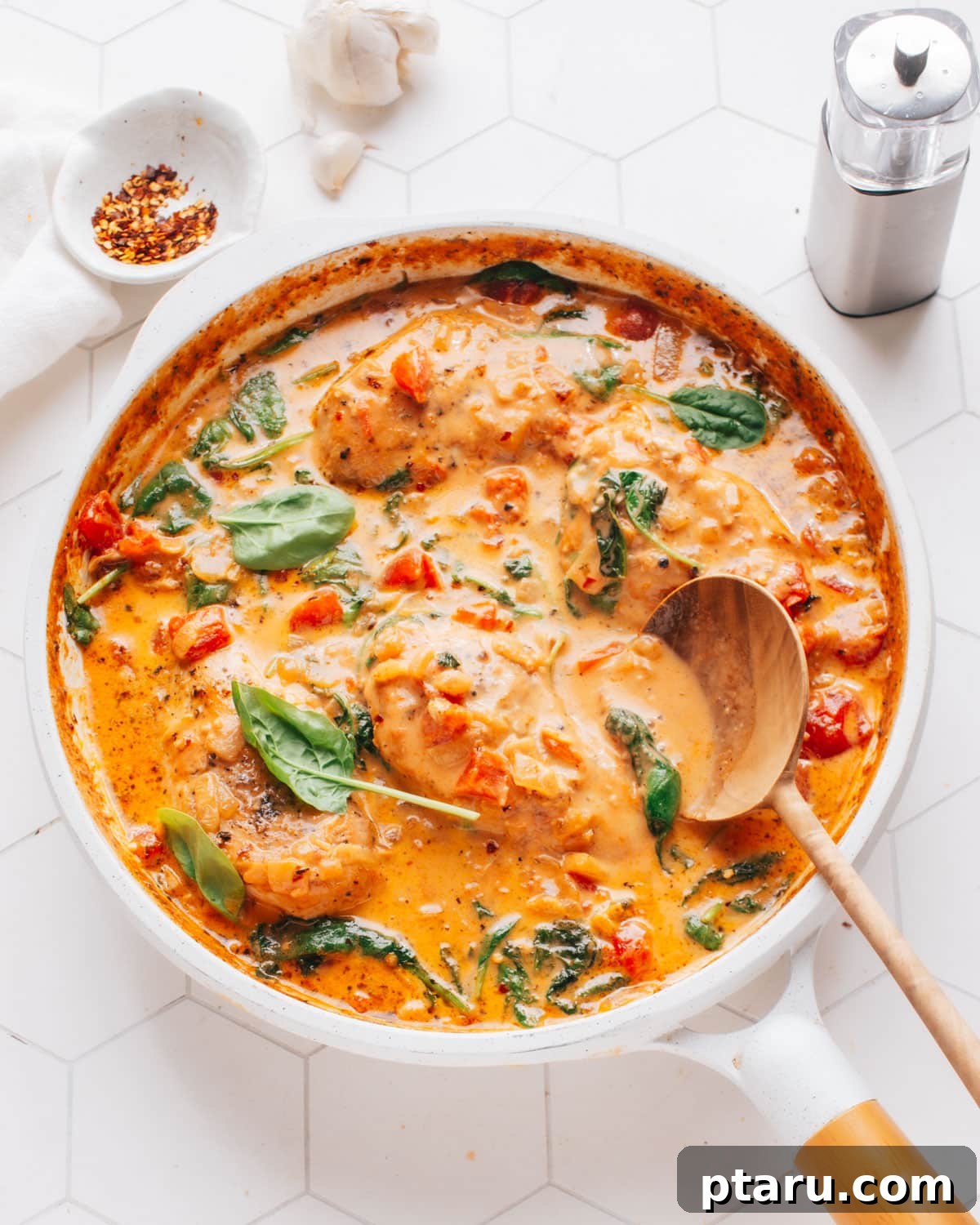
Prepare to fall in love with this incredibly creamy Tuscan Chicken recipe! It’s an explosion of authentic Italian-inspired flavors, featuring perfectly juicy chicken nestled in the most irresistible, velvety sauce. This dish is so delicious and simple to make, your entire family will be requesting it on repeat. Get ready for a restaurant-quality meal that comes together effortlessly in one pan.
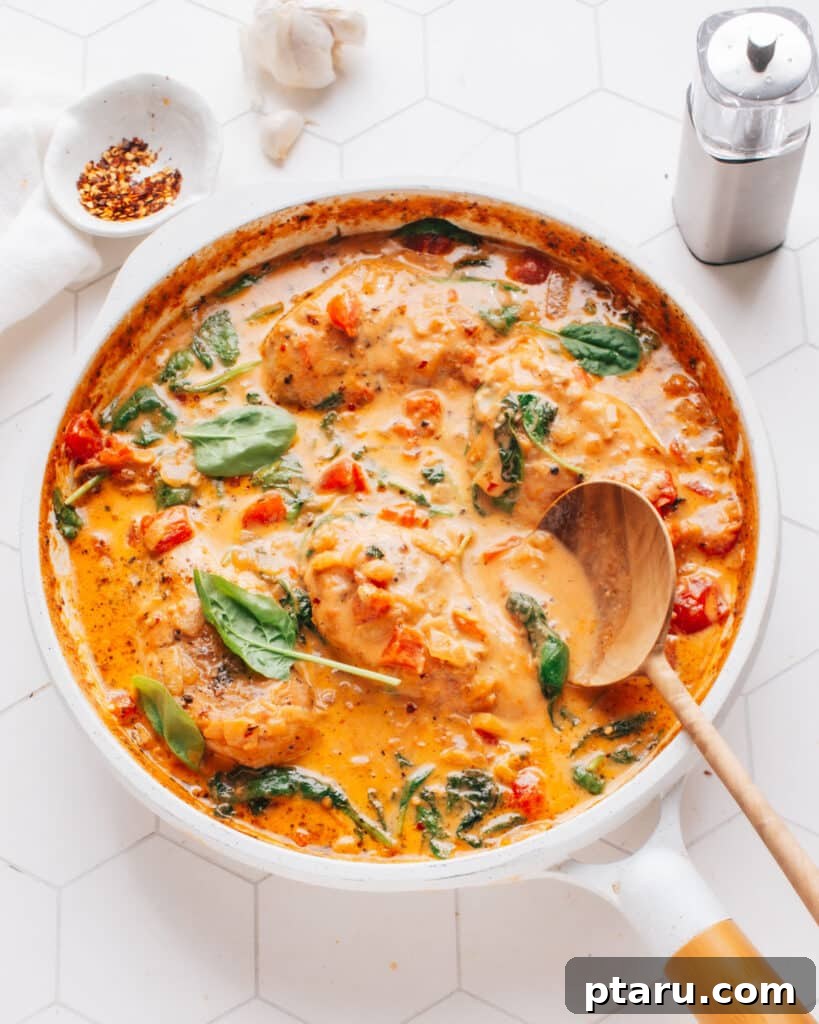
Who doesn’t adore an easy, one-pan dinner recipe, especially when it promises minimal cleanup and maximum flavor? This Tuscan Chicken not only delivers on that promise but elevates your weeknight dining with tender, succulent chicken breasts bathed in a rich, creamy tomato and spinach sauce that’s bursting with aromatic garlic and savory Parmesan. It’s the kind of comforting, satisfying meal that truly brings everyone to the table.
Creamy Tuscan Chicken: An Easy One-Pan Masterpiece
This delightful dish, often simply called Tuscan Chicken, is a creamy, Italian-inspired sensation. It features beautifully seasoned and tender chicken breast enveloped in a luxurious sauce crafted from heavy cream, aromatic garlic, sweet tomatoes (whether fresh, diced, or sun-dried), fresh Parmesan cheese, and vibrant spinach. It’s a harmonious blend of textures and tastes that’s both indulgent and incredibly satisfying.
The popularity of this dish surged, particularly in Italian-American restaurants like Olive Garden, where it’s frequently featured on menus, sometimes under the name Chicken Toscana. This widespread recognition has firmly established Tuscan Chicken as a beloved comfort food, well beyond the borders of Italy, celebrated for its robust flavors and creamy texture.
What Makes Tuscan Chicken So Special?
At its heart, Tuscan Chicken is a celebration of simple, high-quality ingredients coming together to create something extraordinary. The dish typically includes:
- Juicy Chicken Breasts: Seasoned and seared to a golden perfection, then gently simmered in the sauce, allowing them to absorb all the delicious Tuscan flavors.
- Rich Cream Sauce: The backbone of the dish, made with heavy cream, garlic, and often a splash of chicken broth or white wine, enriched with Parmesan.
- Bright Tomatoes: Adding a touch of sweetness and acidity, often using sundried tomatoes for concentrated flavor, or fresh diced/cherry tomatoes for a lighter touch.
- Fresh Spinach: Providing a pop of color and a boost of nutrients, wilting beautifully into the creamy sauce.
- Aromatic Herbs: Italian seasoning and fresh basil enhance the overall Mediterranean profile.
When served with your favorite pasta, fluffy rice, or crusty bread to soak up every last drop of the decadent sauce, it transforms into a comforting and flavorful family favorite that truly rivals any restaurant dish.
The Secret Behind the Irresistible Tuscan Cream Sauce
The magic of Tuscan Chicken largely lies in its incredibly flavorful cream sauce. This luscious base is meticulously crafted from a combination of:
- Heavy Cream: Essential for that rich, velvety texture and indulgent mouthfeel.
- Garlic: Generously minced, providing a pungent, aromatic foundation.
- Tomatoes: Whether diced, sun-dried, or fresh cherry tomatoes, they impart a wonderful balance of sweetness and acidity.
- Chicken Broth: A vital liquid that helps thin the sauce to the perfect consistency while adding another layer of savory depth.
- Parmesan Cheese: Freshly grated Parmesan is non-negotiable here; it melts seamlessly into the sauce, adding a nutty, salty, umami kick and helping to thicken it naturally.
- Italian Seasoning: A blend of dried herbs like oregano, basil, rosemary, and thyme, infusing the sauce with classic Italian aromas.
- Crushed Red Pepper Flakes (Optional): For those who appreciate a gentle warmth and subtle kick, these can be added to taste.
Together, these ingredients simmer down into a savory, creamy, and herbaceous sauce that perfectly complements the chicken.
What to Serve with This Creamy Tuscan Chicken
One of the best things about Creamy Tuscan Chicken is its versatility when it comes to side dishes. The rich, flavorful sauce practically begs for something to soak it up!
- Pasta: For a truly classic and hearty meal, serve individual chicken breasts over your favorite pasta. Think spaghetti, penne, linguine, fettuccine, or even smaller shapes like orzo. The sauce is generous enough to coat about four servings of pasta beautifully.
- Crusty Bread or Garlic Bread: A must-have! A warm, crusty baguette or homemade garlic cheese bread is perfect for mopping up every last bit of that delicious creamy, tomato-y Tuscan garlic sauce.
- Mashed Potatoes: Creamy mashed potatoes are an excellent companion, offering a soft texture that pairs wonderfully with the robust chicken and sauce. Their neutral flavor allows the Tuscan flavors to shine.
- Lighter Vegetable “Starches”: If you’re looking for a lower-carb alternative, consider serving the chicken over cauliflower rice or zucchini noodles (zoodles). These options still provide a base to enjoy the sauce without the added carbs.
- Roasted or Steamed Vegetables: For a balanced meal, include a side of fresh, crisp vegetables. Asparagus, green beans, or broccoli, lightly roasted or steamed, offer a refreshing contrast to the creamy main dish.
- Simple Green Salad: A light, crisp green salad with a simple vinaigrette can cut through the richness of the Tuscan Chicken, providing a refreshing counterpoint to the deep flavors.
With any of these delicious accompaniments, your Tuscan Chicken meal will be complete and utterly satisfying!
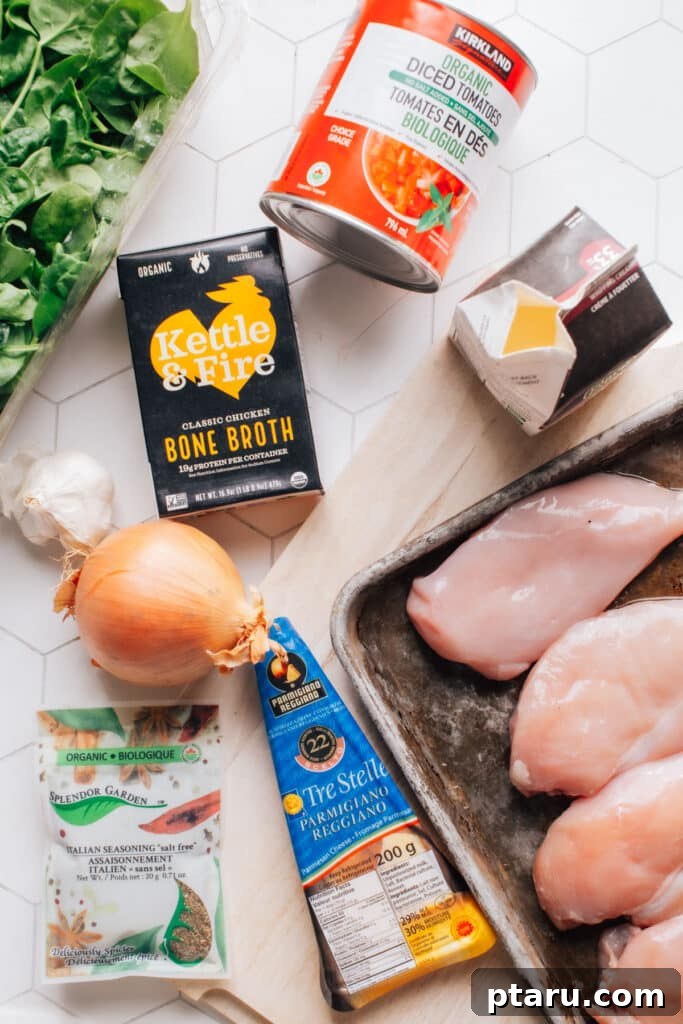
Gathering Your Ingredients for the Best Tuscan Chicken
To whip up this easy yet impressive Tuscan Chicken recipe, you’ll need a handful of fresh and flavorful ingredients. Quality makes a difference here, so choose wisely!
- Chicken Breasts: Boneless, skinless chicken breasts are the star. About 1 to 1 ½ lbs, or 4 pieces, are ideal. Pounding them to an even thickness ensures uniform cooking.
- Kosher Salt and Black Pepper: Your essential seasoning duo for perfectly flavored chicken and a well-balanced sauce.
- Cooking Oil: A high-smoke point oil like avocado oil or olive oil for achieving that perfect golden sear on the chicken.
- Onion and Garlic: Fresh is always best for maximum flavor. Diced yellow onion and minced garlic cloves create the aromatic foundation for the sauce.
- Unsalted Diced Tomatoes: Bring a lovely tangy freshness to the sauce. Feel free to swap them with an equal quantity of fresh cherry tomatoes, halved.
- Chicken Broth: Adds a savory depth and helps achieve the ideal sauce consistency. For an extra layer of complexity, you can substitute ¼ cup of the broth with dry white wine.
- Heavy Cream: Crucial for the signature creamy, indulgent texture of the Tuscan sauce.
- Dried Italian Seasoning (Optional): A blend of classic Italian herbs. While optional, it enhances the overall Mediterranean flavor profile.
- Crushed Red Pepper Flakes (Optional): For those who enjoy a subtle hint of heat, these can be added to taste.
- Fresh Baby Spinach: Adds a vibrant green color, a touch of earthy flavor, and a healthy boost. It wilts quickly into the warm sauce.
- Freshly Grated Parmesan Cheese: This is a key ingredient! Freshly grated Parmesan melts beautifully, thickening the sauce and imparting a rich, nutty, umami flavor that elevates the entire dish. Avoid pre-grated varieties for the best results.
- Fresh Basil Leaves: For garnish, providing a burst of fresh, aromatic flavor and a beautiful visual appeal, making your dish look truly gourmet.
Customizing Your Tuscan Chicken: Endless Possibilities
This simple Tuscan Chicken recipe is wonderfully flexible, making it easy to adapt to your dietary needs, pantry staples, or adventurous culinary mood. Here are a smorgasbord of variations and substitutions to make it just right for you:
- Different Proteins: While chicken breasts are classic, don’t hesitate to experiment!
- Boneless, skinless chicken thighs offer a richer flavor and stay incredibly moist.
- Salmon fillets can be pan-seared and finished in the sauce for a delicious seafood twist.
- For a vegetarian option, try substantial cubes of paneer or firm tofu, offering a unique texture and absorbing the creamy sauce beautifully.
- Fresh Herbs vs. Dried: If you’re not particularly fond of dried basil (often found in Italian seasoning blends), you can omit it entirely. Instead, add a generous handful of freshly chopped basil at the very end of cooking for a vibrant, fragrant finish. Fresh oregano or thyme can also be lovely additions.
- Adjust the Spice Level: The crushed red pepper flakes are entirely optional. If you adore heat, feel free to add a bit more. If you prefer a milder flavor profile, simply skip them.
- Boost Your Veggies: Want to sneak in more greens or other vegetables?
- Stir in some finely chopped kale or arugula with the spinach for added nutrients and a slightly peppery note.
- Sauté sliced mushrooms with the onions and garlic for an earthy depth.
- Add steamed broccoli florets or bell peppers during the last few minutes of simmering.
- Add Sun-Dried Tomatoes: For an intensely sweet and savory depth, stir in ¼ to ½ cup of oil-packed sun-dried tomatoes (drained and chopped) along with the diced tomatoes. Their concentrated flavor is a fantastic addition to the Tuscan sauce.
- Gluten-Free Options: To make the entire meal celiac-friendly, simply serve this delicious chicken over gluten-free pasta or with your favorite gluten-free crusty bread.
Tips for Swapping in Half-and-Half or Milk Without Curdling
While heavy cream provides the richest texture, you can absolutely use half-and-half or whole milk for a lighter sauce. To prevent curdling, which can sometimes happen with lower-fat dairy products, follow these crucial tips:
- Maintain Lower Heat: Milk and half-and-half are more sensitive to high temperatures. Keep your skillet on medium heat at most, and avoid bringing the sauce to a rapid, rolling boil.
- Temper the Dairy: This is a key technique. Before adding the milk or half-and-half directly to the hot pan, gradually whisk in a ladleful or two of the hot liquid from the skillet into the cold dairy in a separate bowl. This slowly raises the temperature of the dairy, minimizing the risk of shock and curdling when it’s fully incorporated.
- Stir Constantly: Keep the sauce moving by stirring frequently as it warms up. This helps distribute heat evenly and prevents the dairy proteins from coagulating.
- Avoid Prolonged Cooking: Add the milk or half-and-half towards the end of the recipe, ideally along with the spinach. Aim for a gentle simmer just long enough to heat through and wilt the spinach, rather than prolonged, vigorous cooking.
- Consider a Stabilizer: If you’re particularly concerned, a small amount of starch can act as a stabilizer. Whisk a teaspoon of flour or cornstarch into the cold milk or half-and-half before adding it to the pan. This will help create a more stable emulsion and further reduce the chances of curdling.
Essential Tools for Your Tuscan Chicken Creation
Before you dive into cooking, make sure you have these basic kitchen tools on hand to make your Tuscan Chicken experience smooth and enjoyable:
- Large Skillet (Cast Iron or Stainless Steel): A sturdy, large skillet is paramount. It allows you to sear the chicken beautifully and then build the entire sauce in the same pan, maximizing flavor from the browned bits and minimizing cleanup.
- Spatula or Wooden Spoon: Indispensable for stirring the sauce, scraping up delicious fond from the bottom of the pan, and ensuring all ingredients are perfectly combined.
- Cheese Grater: For that essential freshly grated Parmesan cheese. A box grater or a microplane will work wonders, producing finely grated cheese that melts into the sauce seamlessly.
- Meat Thermometer (Optional but Recommended): For precise cooking, ensuring your chicken reaches a safe internal temperature of 165ºF (74ºC) without overcooking and drying out.
Step-by-Step: How to Craft Your Creamy Tuscan Chicken
Creating this incredible creamy Tuscan Chicken is surprisingly straightforward. Follow these easy directions to whip up tender chicken breasts in the most delectable, savory Tuscan sauce:
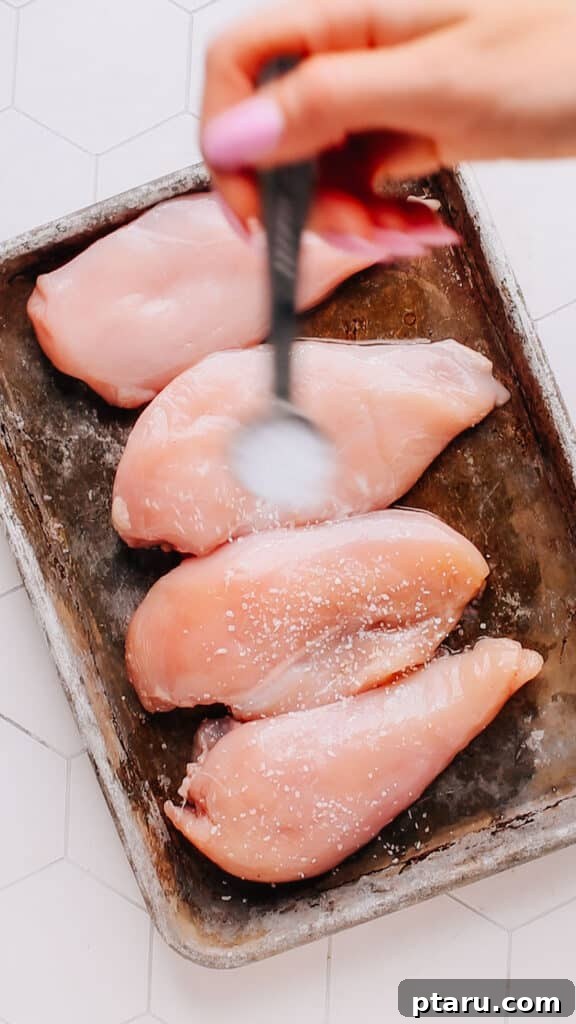
1. Prepare and Sear the Chicken:
- Season Generously: Pat the chicken breasts dry. Season both sides with 1 teaspoon of kosher salt and the black pepper. This initial seasoning is crucial for building flavor.
- Golden Sear: Heat the cooking oil in your large skillet over medium-high heat. Once shimmering, add the seasoned chicken breasts. Sear them until they are beautifully golden brown on both sides, which usually takes about 5 minutes per side. This browning creates a delicious crust and adds depth to the dish.
- Set Aside: Remove the seared chicken from the skillet and set it aside on a plate. It will finish cooking later in the sauce.
2. Build the Flavorful Cream Sauce:
This creamy Parmesan sauce is so delicious, you’ll be tempted to lick the plate clean!
- Sauté Aromatics: In the same skillet (don’t clean it – those browned bits are flavor!), add the chopped onion and the remaining ½ teaspoon of salt. Cook over medium heat until the onion becomes translucent and tender, about 6 minutes, stirring frequently. If the onions start to brown too quickly, reduce the heat to prevent scorching. You want them properly soft, with no raw crunch.
- Infuse with Garlic: Add the minced garlic to the skillet and cook for just 1 minute more until fragrant. Be careful not to burn it.
- Deglaze and Add Liquids: Pour in the chicken broth. Use a wooden spoon or spatula to scrape up all the delicious browned bits (fond) stuck to the bottom of the pan. This process, called deglazing, adds incredible layers of flavor to your sauce.
- Simmer the Sauce Base: Stir in the heavy cream, diced tomatoes, dried Italian seasoning (if using), and crushed red pepper flakes (if using). Bring the mixture to a gentle simmer and let it cook for about 5 minutes, stirring occasionally. This allows the sauce to reduce slightly, thickening up and allowing all the flavors to meld beautifully.
- Incorporate Parmesan: Reduce the heat to low. Stir in the freshly grated Parmesan cheese until it is completely melted and the sauce thickens to your desired consistency. Taste the sauce and add more salt, a pinch at a time, if needed.
3. Assemble and Finish the Tuscan Chicken:
- Return the Chicken: Gently nestle the seared chicken breasts back into the simmering sauce. Ensure they are partially submerged.
- Simmer to Cook Through: Continue to simmer the chicken in the sauce over low heat until it is cooked through and reaches an internal temperature of 165ºF (74ºC). Use a meat thermometer for accuracy to prevent overcooking.
- Add Spinach: Finally, stir in the fresh baby spinach. Cook only until the spinach has just wilted, which happens quickly, preserving its vibrant color and tender texture.
- Garnish and Serve: Remove from heat. Garnish generously with fresh basil leaves just before serving for a burst of fresh flavor and appealing presentation.
Chef’s Secrets: Tips for the Best Tuscan Chicken
Elevate your creamy Tuscan Chicken from good to absolutely unforgettable with these essential expert tips:
- Don’t Skip the Sear: This is perhaps the most crucial step for flavor. Searing the chicken until it’s deeply golden brown on both sides creates an incredible depth of flavor (the Maillard reaction) that will carry through the entire dish. Don’t rush this step!
- Freshly Grated Parmesan is Key: Seriously, this makes a world of difference. Pre-grated Parmesan often contains anti-caking agents that prevent it from melting smoothly and can result in a grainy sauce. Freshly grated Parmesan cheese melts beautifully, creating a silky, rich sauce and imparts a far superior flavor.
- Pound Chicken for Even Cooking: If your chicken breasts are thick, consider pounding them to an even ½-inch thickness. This ensures they cook uniformly and remain tender, preventing dry spots.
- Deglaze the Pan Thoroughly: After searing the chicken and sautéing the onions, when you add the chicken broth, make sure to scrape up all the browned bits (fond) from the bottom of the pan. This fond is packed with flavor and is essential for a rich sauce.
- Don’t Overcook the Spinach: Spinach wilts very quickly. Add it at the very end and cook only until it’s just softened, which takes about a minute or two. Overcooked spinach becomes mushy and loses its vibrant color.
- Taste and Adjust Seasoning: Always taste your sauce before serving and adjust the salt, pepper, or red pepper flakes as needed. Different broths and cheeses can vary in saltiness, so a final adjustment ensures perfect balance.
Perfect Pairings for Your Tuscan Chicken
One of the joys of this flavorful dish is how wonderfully it pairs with a variety of sides, especially starchy options that can soak up every last drop of the yummy creamy, tomato-y Tuscan garlic chicken sauce.
- Classic Pasta: Keep it delightfully Italian! Serve each tender Tuscan chicken breast over your favorite pasta. Think long strands of spaghetti or linguine, tube-shaped penne, or hearty fettuccine. It’s also fantastic with smaller shapes like orzo. There’s enough sauce to generously coat at least four servings of pasta.
- Crusty Bread or Garlic Bread: This is almost a non-negotiable! A warm, crusty baguette is perfect for dipping and scooping up that exquisite sauce. For an extra treat, try making a cheesy garlic bread to complement the meal.
- Creamy Mashed Potatoes: For ultimate comfort, a bed of smooth, fluffy mashed potatoes provides an excellent canvas for the rich sauce and tender chicken.
- Lighter Vegetable “Starch” Options: If you’re looking for lighter alternatives, this dish pairs beautifully with cauliflower rice or zucchini noodles (zoodles). They offer a good base while keeping the meal lower in carbohydrates.
- Fresh Green Salad: A simple, crisp green salad with a light vinaigrette makes for a refreshing contrast, cutting through the richness of the creamy sauce and balancing the meal.
- Roasted or Steamed Vegetables: Asparagus, green beans, or broccoli, lightly steamed or roasted with a touch of olive oil and garlic, provide a healthy and vibrant side dish.
Just add a little side salad, and your elegant yet effortless meal is ready to be savored!
Make Ahead, Storage, and Freezing Tips
Whether you’re planning for future meals or dealing with delicious leftovers, here’s how to handle your Tuscan Chicken:
- Make Ahead: You can certainly get a head start. Cook the chicken and prepare the sauce separately. Store them in airtight containers in the refrigerator. When you’re ready to serve, combine them in a skillet over low heat, allowing the chicken to warm through in the sauce. A splash of extra broth or cream might be needed to revive the sauce’s consistency.
- Storage Tips: Place any leftover Tuscan chicken and sauce in an airtight container and refrigerate promptly. It will stay fresh and delicious for up to 3 days. To reheat, gently warm in a pan on the stovetop over low heat, adding a tablespoon or two of cream or broth if the sauce has thickened too much. Avoid high heat, which can cause the sauce to separate.
Can You Freeze Tuscan Chicken?
The short answer is yes, but with a significant caveat: freezing creamy sauces can be tricky. Dairy-based sauces, particularly those made with heavy cream, have a tendency to separate or become grainy when thawed and reheated. This can affect the smooth, velvety texture that makes Tuscan Chicken so appealing.
For the best quality, it’s usually recommended to consume this dish fresh or within the refrigerated storage period. However, if you absolutely must freeze it, here are some tips:
- Cool Completely: Ensure the dish is cooled to room temperature before freezing.
- Airtight Container: Store it in a freezer-safe, airtight container to prevent freezer burn. It can be frozen for up to 2-3 months.
- Thawing and Reheating: Thaw the chicken and sauce overnight in the refrigerator. When reheating, do so gently over low heat on the stovetop. You will likely need to whisk it vigorously to help emulsify the sauce again, and adding a touch more heavy cream or chicken broth can help bring back its original smooth consistency. Don’t be discouraged if the texture isn’t exactly the same as fresh, but the flavor will still be wonderful.
Frequently Asked Questions (FAQs)
Here are quick answers to some common questions about this delicious Tuscan Chicken recipe:
Generally, no, as long as you follow a few precautions. Keep the heat moderate and avoid bringing the sauce to a rapid boil. Tempering the dairy by slowly introducing some hot sauce to it before adding it to the pan also greatly reduces the risk of curdling. Please refer to the detailed tips in the “Dairy Substitutions” section above for best results.
Tuscan Chicken pairs wonderfully with starchy sides like pasta (spaghetti, penne, orzo), mashed potatoes, or crusty garlic bread to soak up the creamy sauce. For lighter options, consider roasted vegetables (asparagus, green beans) or a fresh green salad.
The dish earns its name from the prominent use of flavors commonly found in Tuscan cuisine, such as garlic, tomatoes, and fresh herbs (like basil and Italian seasoning). While not a traditional recipe from Tuscany itself, it captures the essence of the region’s culinary style.
While deeply inspired by the vibrant flavors of Tuscany, this creamy chicken dish is more accurately described as an Italian-American creation. It’s a testament to how Italian ingredients and cooking styles have influenced and evolved in other culinary traditions, particularly in the United States.
Tuscan Chicken, as we know it today, doesn’t have a long, ancient history rooted in specific Tuscan villages. Instead, it’s a modern fusion dish, likely gaining significant popularity through Italian-American restaurant chains like Olive Garden, which aimed to create accessible and appealing Italian-inspired meals for a broader palate. It blends classic Tuscan ingredients in a rich, creamy format that resonates well with many diners.
Explore More Italian-Inspired Recipes
If you loved this Creamy Tuscan Chicken, you’re sure to enjoy these other delightful Italian-inspired dishes:
- Creamy, Lemony Shrimp Pasta
- Asiago Tortelloni Alfredo with Grilled Chicken
- Lobster Pasta with Cream Sauce
- Easy Seafood Pasta
- Lobster Ravioli Sauce
- Alfredo Sauce with Penne Pasta
- Easy Meat Sauce
- Pizza with Biscuit Dough Crust
- Lazy Lasagna with Just 3 Ingredients
Creamy Tuscan Chicken (Easy 30-Minute Recipe!)
By: Jennifer Pallian BSc, RD
Creamy Tuscan chicken so good, you’ll think it’s from an Italian bistro! Best part is that the recipe is done in 30 Minutes.
Prep Time: 15 minutes
Cook Time: 30 minutes
Servings: 4
Ingredients
- 4 boneless, skinless chicken breasts (1 – 1 ½ lbs total)
- 2 ½ tsp kosher salt, divided use
- ¼ tsp freshly ground black pepper
- 2 tablespoons cooking oil (e.g., avocado oil)
- 2 cups chopped onion (one 10 oz yellow onion)
- 1 tbsp minced garlic (about 3 large cloves)
- 1 ½ cups unsalted diced tomatoes
- 1 cup chicken broth
- 1 cup heavy cream
- 1 tsp dried Italian seasoning (optional)
- ½ tsp crushed red pepper flakes (optional)
- 3 cups fresh spinach
- ½ cup freshly grated Parmesan cheese
- Fresh basil leaves for garnish, if desired
Instructions
- Season the chicken breasts on both sides with 1 tsp of the salt and the black pepper.
- Heat the oil in a large skillet over medium-high heat. Add the chicken breasts and sear until golden brown on both sides, about 5 minutes per side. Remove the chicken from the skillet and set aside.
- In the same skillet, add the onion and ½ tsp salt. Cook until translucent, about 6 minutes, stirring frequently. Reduce the heat if onions start to scorch before they fully soften. Add garlic and cook a minute more until fragrant.
- Pour in the chicken broth, and scrape the bottom of the skillet to deglaze it, lifting off any browned bits stuck to the bottom.
- Add the heavy cream, diced tomatoes, dried Italian seasoning, and crushed red pepper flakes (if using). Stir well and bring the mixture to a gentle simmer. Let the sauce reduce for 5 minutes to thicken it up and allow the flavors to meld.
- Stir in the freshly grated Parmesan cheese until completely melted into the sauce. Taste and add about 1 tsp more salt (add it in pinches and taste) if needed.
- Return the seared chicken to the skillet, nestling it into the sauce. Let it simmer gently in the sauce until cooked through to an internal temperature of 165ºF (74ºC). Add spinach and cook until just wilted.
- Garnish generously with fresh basil leaves just before serving.
Nutrition
Calories: 379kcal | Carbohydrates: 15g | Protein: 8g | Fat: 33g | Saturated Fat: 16g | Polyunsaturated Fat: 3g | Monounsaturated Fat: 11g | Trans Fat: 0.03g | Cholesterol: 81mg | Sodium: 1942mg | Potassium: 496mg | Fiber: 3g | Sugar: 7g | Vitamin A: 3696IU | Vitamin C: 21mg | Calcium: 215mg | Iron: 1mg
Nutrition information is automatically calculated and should only be used as an approximation.
Tried this recipe? Share your thoughts! Leave a comment below.