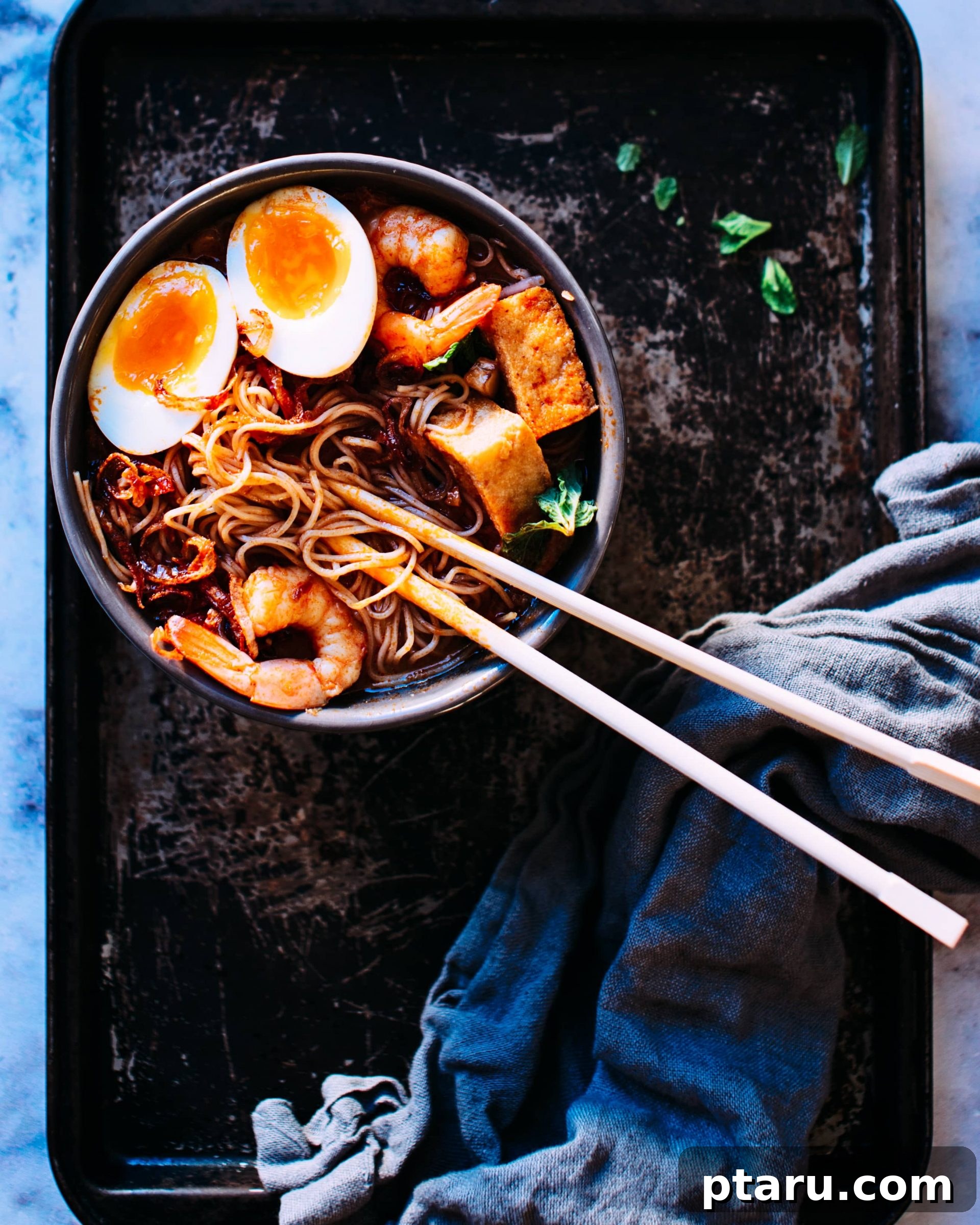
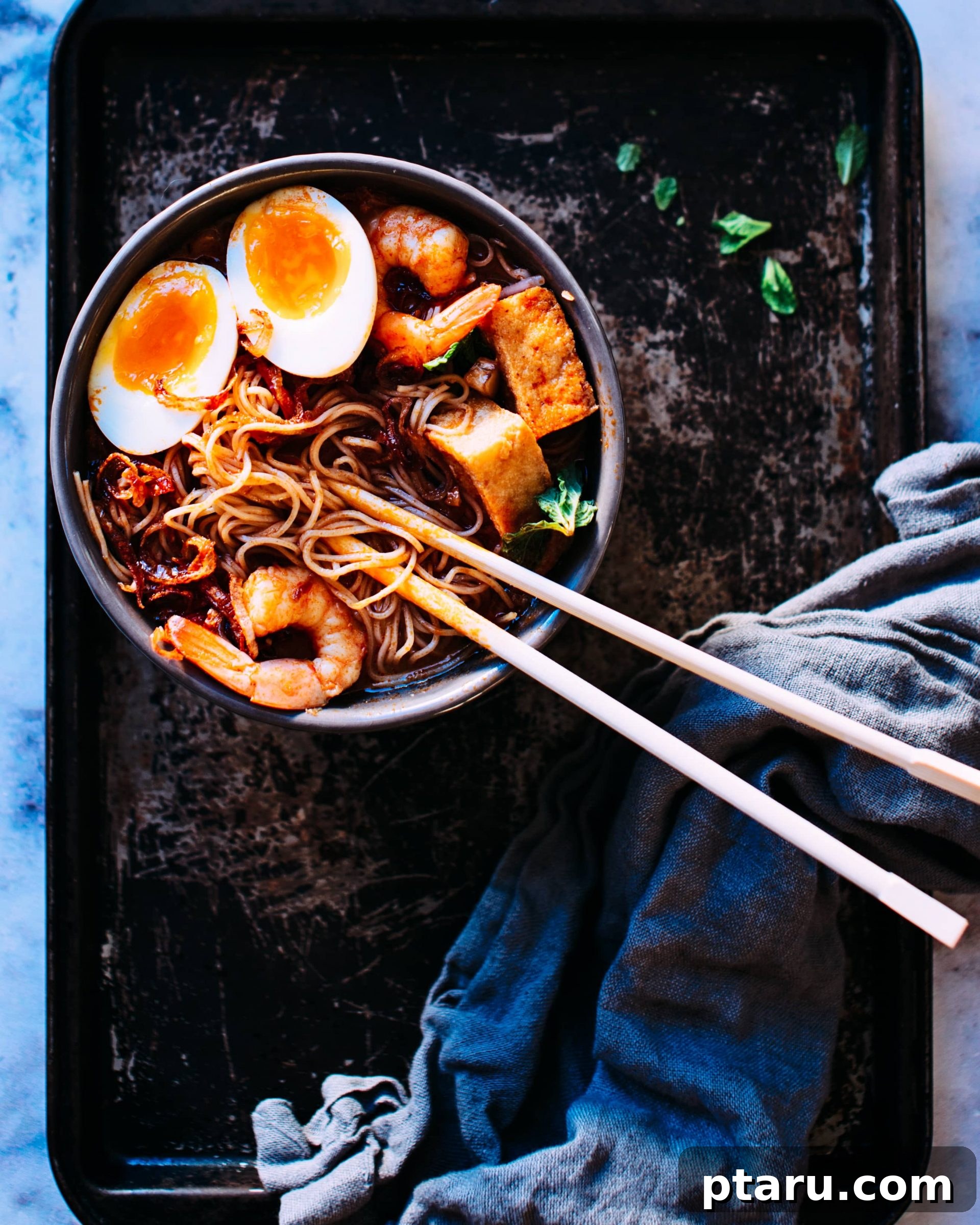
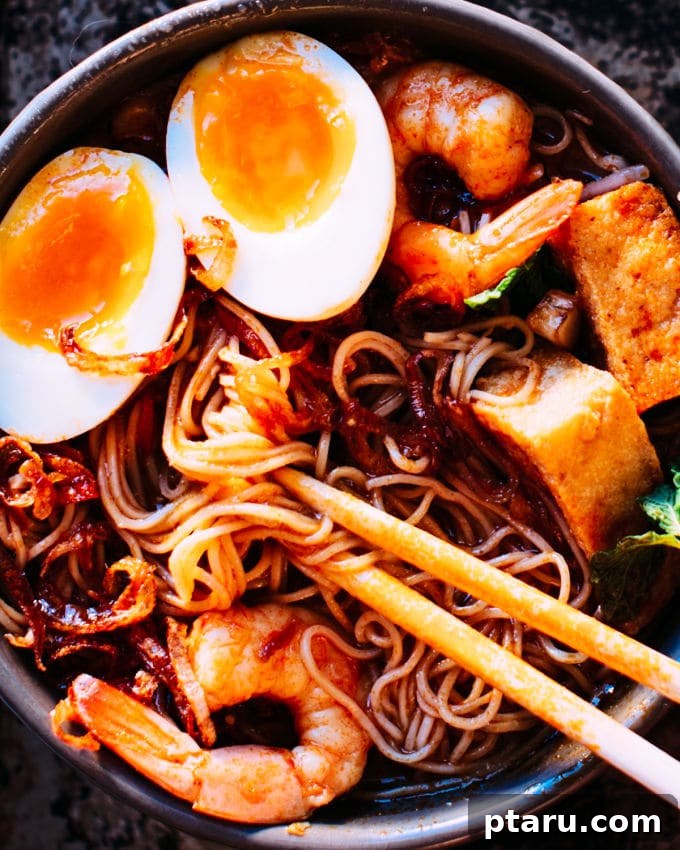
Embark on a culinary adventure with this exquisite Coconut Shrimp Laksa recipe. More than just a soup, Laksa is a rich, spicy coconut curry noodle dish that captivates with its complex flavors and diverse textures. Originating from Southeast Asia, particularly popular in Malaysia and Singapore, this aromatic dish is a symphony of savory, sweet, spicy, and tangy notes, making it a beloved comfort food around the globe. While the broth forms its soulful base, it’s truly the array of glorious toppings that transform each bowl into an unforgettable experience. Think crispy fried shallots, tender soft-boiled eggs, spongy fried tofu, and fresh herbs that provide bursts of flavor and crunch.
This recipe brings you a simplified yet authentic version of Laksa, perfect for a busy weeknight without compromising on the depth of flavor. Get ready to impress your taste buds and loved ones with a bowl of homemade goodness that promises warmth and satisfaction in every slurp.
The Heart of the Broth: A Flavorful and Convenient Base
Traditionally, a homemade laksa spice paste can be quite labor-intensive, requiring a mortar and pestle and a long list of fresh ingredients. However, for those seeking gourmet flavors with weeknight ease, our recipe leverages the incredible depth of store-bought Thai red curry paste. This clever shortcut delivers a remarkably similar flavor profile to traditional laksa pastes, allowing you to whip up an authentic-tasting bowl in a fraction of the time. The fragrant paste, when sautéed, releases its aromatic oils, infusing the coconut milk and chicken broth with a robust, spicy foundation. The addition of brown sugar balances the heat and tang, while smashed lemongrass stalks impart a citrusy, herbaceous aroma that is quintessential to Southeast Asian cuisine.
This streamlined approach doesn’t just save time; it makes the joy of preparing Laksa accessible to everyone, from novice cooks to seasoned chefs. You’ll be amazed at how easily you can create a broth that tastes like it simmered all day long, yet comes together in minutes.
Mastering the Art of Laksa Toppings
While the broth provides the soul, the toppings are undoubtedly the heart of any great Laksa. They add layers of texture, color, and flavor, transforming a simple noodle soup into a customizable feast. We’re talking about the truly essential elements here – each component thoughtfully chosen to complement the rich, spicy broth. Don’t skip these steps, as they are crucial for achieving the full Laksa experience!
Crispy Fried Shallots: A Golden Crunch
If there’s one topping you absolutely cannot miss, it’s the crispy fried shallots. Seriously, these golden, paper-thin rings are so incredibly addictive, you’ll find yourself snacking on them before they even hit the bowl! They provide an unparalleled crunchy texture and a delicate, sweet onion flavor that elevates every spoonful of Laksa. Making them at home is surprisingly simple and far more rewarding than store-bought versions.
To prepare these golden jewels, heat about 2 cups of high-smoke-point oil (like vegetable or canola oil) in a medium saucepan over medium heat. Wait until the oil is shimmering and reaches approximately 350°F (175°C), which usually takes about 5 minutes. Thinly slice your shallots and separate the rings. Carefully add them to the hot oil, ensuring not to overcrowd the pan. Fry the shallots until they turn a beautiful golden brown, typically 3-4 minutes, stirring occasionally. Once golden, quickly remove them with a slotted spoon and drain them on a paper-towel-lined plate. Immediately sprinkle with a pinch of salt while they are still hot. The residual heat will continue to crisp them up. Store any extra in an airtight container at room temperature; they’ll stay crispy for days!
Perfect Soft-Boiled Eggs: Runny Yolk Bliss
A perfectly cooked soft-boiled egg, with its creamy, runny yolk, is a non-negotiable topping for Laksa. The richness of the yolk blends beautifully with the spicy broth, adding another layer of indulgence. Achieving this ideal consistency is all about precision and timing. Bring several inches of water to a rolling boil in a small pot. Gently lower your eggs into the boiling water using a spoon to prevent cracking. Set a timer for exactly 6 minutes for a beautifully jammy yolk. For a slightly runnier yolk, try 5 minutes 30 seconds, or 6 minutes 30 seconds for a firmer, yet still soft, center.
Once the timer goes off, immediately transfer the eggs to an ice bath (a bowl of ice water) or run them under cold tap water. This crucial step stops the cooking process instantly, preventing overcooking and making them easier to peel. Peel them carefully, slice them in half, and they’re ready to crown your Laksa bowl. For more insights on egg perfection, you can explore the differences between Soft-Boiled Eggs Vs. Hard-Boiled Eggs.
Tofu Puffs: Spongy Wonders
For an authentic Laksa experience, store-bought tofu puffs are highly recommended. These airy, golden-brown pillows are incredibly porous and excel at soaking up the fragrant curry broth. When you bite into them, they burst with flavor, releasing a delightful mouthful of spicy coconut goodness. You can usually find them in the refrigerated section of most Asian grocery stores. Simply add them to your simmering soup for a few minutes to warm through and absorb the flavors.
If tofu puffs aren’t available, you can fry your own regular firm or extra-firm tofu. After draining it thoroughly between paper towels for at least 30 minutes to remove excess moisture, cut it into small rectangles. Since your oil might already be hot from frying the shallots, you can use the same oil. Fry the tofu in batches until golden brown on all sides, about 5-6 minutes, turning frequently. While homemade fried tofu won’t have the exact light-as-air, bursty-juicy quality of pre-made puffs, it will still offer a satisfying texture and absorb some of the delicious soup.
Succulent Shrimp and Other Protein Choices
Shrimp is a classic choice for Coconut Laksa, offering a delicate sweetness and tender texture that complements the rich curry. Make sure your shrimp are peeled and deveined, and thawed if using frozen. They cook very quickly, so add them to the simmering soup towards the very end of the cooking process – just until they turn opaque, which usually takes only 2-3 minutes. Overcooked shrimp can become rubbery, so keep a close eye on them.
While shrimp are fantastic, feel free to customize your protein. Sliced chicken breast or thigh, fish cakes, or even firm white fish fillets are excellent alternatives. For a vegetarian or vegan version, simply omit the shrimp and use vegetable broth, focusing on extra tofu and mushrooms.
Fresh Herbs, Greens, and Zesty Limes
To brighten and balance the rich curry, a generous scattering of fresh herbs is essential. Fresh mint and/or cilantro add a fragrant, cooling counterpoint to the spicy broth. Bean sprouts provide a refreshing crunch and a hint of earthy flavor. And don’t forget the lime wedges! A squeeze of fresh lime juice just before serving adds a crucial burst of acidity that awakens all the flavors in the soup, making it even more vibrant and tantalizing.
Choosing Your Laksa Noodles
The type of noodles you choose can significantly impact the texture of your Laksa. Traditionally, a combination of thick vermicelli rice noodles and thin wheat noodles is used, but for simplicity, most egg noodles work wonderfully. They offer a satisfying chewiness that holds up well in the hearty broth.
If you prefer a gluten-free option, rice vermicelli noodles or even wider rice stick noodles are excellent choices. Ensure you cook your chosen noodles according to package directions until they are tender but still have a slight bite (al dente). Drain them well and divide them among serving bowls just before ladling the hot soup over them to prevent them from becoming too soft or clumpy.
Coconut Shrimp Laksa: The Ultimate Recipe
Now that you understand the key components and tips for preparing this sensational dish, it’s time to bring it all together. This recipe is designed for both efficiency and maximum flavor, ensuring a rewarding cooking experience and a delicious meal. Gather your ingredients, prepare your toppings, and get ready to create a masterpiece that will transport your senses to the bustling streets of Southeast Asia.
Print Recipe
Coconut Shrimp Laksa
Jennifer Pallian BSc, RD
20 minutes
25 minutes
45 minutes
6
Ingredients
For the soup:
- ¼ cup vegetable oil
- 5 tbsp Thai red curry paste
- 1 14- oz can coconut milk
- 4 cups chicken broth (1 liter/quart)
- 2 tbsp brown sugar
- 2 stalks lemongrass (use bottom 8″ only, outer stalk removed, cut into a few pieces then smashed with the side of a knife)
- 1 lb shrimp (peeled and deveined, thawed if frozen)
- salt to taste
- 1 lb egg noodles (or a 6-person quantity of noodles of choice; wheat or rice both work)
For toppings (choose your favorites):
- Fried shallots (prepare as described in the post above)
- Soft-boiled eggs (prepare as described in the post above)
- Fried tofu (prepare as described in the post above, or use tofu puffs)
- Lime wedges
- Bean sprouts
- Fresh mint and/or cilantro
- Sautéed greens (such as bok choy or spinach, optional)
Instructions
-
1. Heat vegetable oil in a large pot or Dutch oven over medium heat. When the oil is shimmering hot, whisk in the Thai red curry paste and cook for about one minute until fragrant. Whisk in the coconut milk and bring to a gentle boil, then whisk in the brown sugar and chicken broth. Add the smashed lemongrass stalks. Reduce heat to a simmer and let it cook for 15 minutes, allowing the flavors to meld. Taste and add salt as needed; the amount will depend on the salinity of your chicken broth.
-
2. Meanwhile, bring a separate pot of generously salted water to a rolling boil. Add your chosen noodles and cook them according to the package directions until they are tender but still firm to the bite. Once cooked, drain the noodles thoroughly in a colander.
-
3. Add the peeled and deveined shrimp to the simmering laksa soup. Cook for just 2-3 minutes, or until the shrimp turn opaque and pink. Be careful not to overcook them, as they can become rubbery.
-
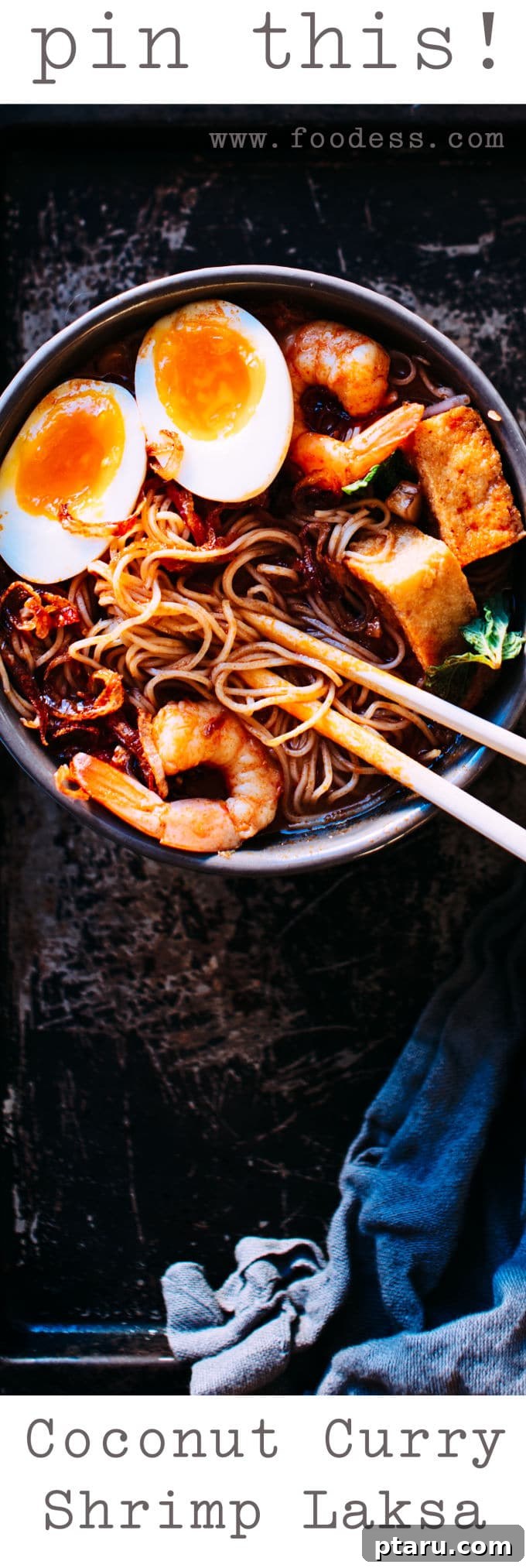
4. To serve, divide the cooked noodles among individual serving bowls. Ladle the hot, flavorful coconut curry soup generously over the noodles and shrimp. Arrange your desired toppings artistically on top, such as crispy fried shallots, soft-boiled egg halves, fried tofu (or tofu puffs), fresh bean sprouts, and sprigs of mint and cilantro. Serve immediately with lime wedges on the side for a squeeze of fresh acidity. Happy slurping!
Explore More Noodle Delights
If you’re a fan of the versatility and comfort that noodles bring to the table, there’s a world of delicious recipes waiting for you. From spicy and savory to rich and comforting, noodles are a staple in countless cuisines. Curious about the differences between common noodle types? See also: Pasta vs. Noodles.
Here are some other fantastic noodle recipes to inspire your next meal:
- Spicy Ramen Recipe – A hearty and flavorful bowl for ramen lovers.
- Pad Woon Sen – A classic Thai glass noodle stir-fry packed with fresh vegetables and protein.
- Dan Dan Noodles – Experience the bold and spicy flavors of this Sichuan favorite.
- Almost Instant Miso Noodle Soup – Quick, comforting, and deeply savory for a busy day.
- Chili Oil Ramen – A simple yet incredibly flavorful ramen dish, highlighted by aromatic chili oil.
- The Best Chow Mein Noodles – Recreate the restaurant favorite at home with this delicious recipe.
- Spinach Gomae Noodles with Sesame Sauce – A refreshing and nutty noodle dish, perfect as a side or light meal.
Conclusion: Savoring Your Homemade Laksa
Crafting your own Coconut Shrimp Laksa at home is a truly rewarding experience. From the moment the aromatic curry paste hits the pan to the final artistic arrangement of toppings, each step contributes to a dish that is as delightful to make as it is to eat. This recipe proves that you don’t need to spend hours in the kitchen to achieve incredibly rich and authentic flavors. With our simplified approach, you can bring the exotic tastes of Southeast Asia right to your dining table, any day of the week.
So, gather your ingredients, follow our guide, and prepare to indulge in a comforting bowl of spicy, creamy, and utterly delicious Laksa. It’s a meal that promises to satisfy your cravings and transport you with every spoonful. Enjoy the process, savor the flavors, and happy cooking!