Irresistible Seared Tuna Poke Bowls with Coconut Rice: Your Ultimate Guide
Transform your kitchen into a tropical escape with these incredibly easy and utterly delicious **Seared Tuna Poke Bowls**. Featuring succulent seared tuna, fragrant coconut rice, and a vibrant medley of fresh toppings, this recipe promises a meal that’s both deeply satisfying and wonderfully nutritious. Forget takeout – your new favorite healthy dinner is just minutes away!

Poke bowls are currently enjoying a well-deserved moment in the culinary spotlight, with dedicated poke restaurants seemingly appearing on every street corner. Yet, the true magic of these vibrant bowls lies in their simplicity and the joy of crafting them in your own home. This comprehensive guide will walk you through creating a masterpiece that’s not only bursting with flavor and texture but also comes together in a flash, making it an ideal choice for a filling and nutrient-packed meal.
Why You’ll Fall in Love with Homemade Tuna Poke Bowls
There’s something undeniably special about a poke bowl. It’s a symphony of fresh ingredients, a delightful interplay of textures, and a burst of vibrant flavors that transport you straight to sun-drenched Hawaiian beaches. These bowls are a beacon of fresh, summery eating, offering a perfect balance of being incredibly filling and exceptionally healthy. What makes them truly special for home cooks is their inherent flexibility and ease of preparation.
My journey to poke bowl obsession began with a deep appreciation for traditional Hawaiian “mixed plate” meals. These generous plates, typically featuring sticky rice, creamy macaroni salad, and perfectly grilled fish or meats, were my go-to order on countless trips to the islands. The comfort and familiarity were always a highlight.
Then, on a recent Hawaiian adventure, everything changed. I stumbled upon a poke bowl, and it was a revelation. It combined everything I loved about the mixed plate concept but elevated it with a dazzling array of fresh components: sticky white rice, succulent raw fish (ahi tuna), the unparalleled sweetness of local pineapple, crisp cucumber, a satisfying crunch from puffed rice, and a delicate sesame dressing. The experience was transformative – so light, so utterly delicious, and packed with an exciting spectrum of textures and flavors that I was instantly hooked. From that moment, poke bowls became my culinary obsession.
Upon returning home, my quest continued. I started ordering them in Vancouver and soon realized the potential for making them myself. While traditional poke often features raw fish, I’ve adapted my homemade version to include perfectly seared tuna. This approach offers a delightful texture, rich flavor, and makes preparing tuna at home a breeze for those who prefer cooked seafood. The foundation of my bowls is a luxurious bed of coconut rice, infused with tropical flavor and an irresistible creaminess. From there, it’s all about creativity – I pile on whatever fresh fruits and vegetables I have on hand, turning each bowl into a unique and personalized culinary adventure.
Homemade poke bowls offer unparalleled control over ingredient quality, portion sizes, and flavor profiles. You can tailor them to your exact preferences, dietary needs, and what’s seasonally available. They are a fantastic way to enjoy a restaurant-quality meal without leaving your kitchen, proving that healthy eating can be both exciting and effortless.
Essential Ingredients for Your Seared Tuna Poke Bowls
Crafting this flavorful and visually stunning poke bowl requires a selection of fresh, high-quality ingredients. Each component plays a crucial role in building the layers of taste and texture that make this dish so extraordinary.
Seared Tuna Poke Bowl with Coconut Rice Ingredients
For the Creamy Coconut Sticky Rice
- Short grain white rice: This is the ideal choice for its ability to absorb liquids and become wonderfully soft and slightly sticky, creating the perfect comforting base for our vibrant toppings.
- Coconut milk: The star ingredient for the rice, imparting a rich, creamy texture and a subtle, sweet tropical aroma that elevates the entire dish.
- Water: Used in combination with coconut milk to achieve the perfect consistency for our rice, ensuring it’s tender but not mushy.
- Coarse salt: A touch of salt balances the sweetness of the coconut milk and enhances the natural flavors of the rice.
For the Zesty Sesame Dressing
- Canola oil: A neutral base that helps emulsify the dressing and carry the flavors without overpowering them.
- Sesame oil: Essential for its distinctive nutty, toasted aroma and deep umami flavor, a hallmark of many Asian-inspired dressings.
- Soy sauce: Provides a savory, salty foundation, adding depth and a rich umami punch to the dressing.
- Rice vinegar: Delivers a bright, tangy acidity that cuts through the richness and balances the overall flavor profile.
- Granulated sugar: A small amount of sugar helps to round out the flavors, balancing the acidity and saltiness for a perfectly harmonious dressing.
For the Fresh Toppings & Seared Tuna
- Fresh ahi tuna steak: For searing, a high-quality fresh tuna steak is key. Look for bright red, firm flesh. If you prefer traditional raw poke, ensure you use certified sushi-grade tuna from a reputable fishmonger.
- Canola oil (for searing): Used to achieve a beautiful, quick sear on the tuna, creating a crisp exterior while keeping the interior tender.
- Salt (for tuna): Simple seasoning before searing brings out the natural flavor of the tuna.
- Chopped avocado: Adds a creamy texture and rich, buttery flavor, plus healthy fats.
- Thawed frozen corn: Provides a pop of sweetness and a pleasant chewiness, adding color and texture.
- Sliced radishes: Offers a crisp texture and a mild peppery bite that contrasts beautifully with the other ingredients.
- Sliced green onion or scallions: Contributes a fresh, mild onion flavor and a vibrant green garnish.
- Cucumber: Crisp, refreshing, and hydrating, cucumber adds a cool counterpoint to the bowl.
- Chopped ripe peach or mango: Introduces a burst of tropical sweetness and juicy freshness, complementing the savory elements.
- Chopped peanuts: Delivers a satisfying crunch and a nutty flavor that adds another layer of complexity.
Creative Variations and Smart Substitutions
One of the best aspects of poke bowls is their incredible versatility. Feel free to customize this recipe to suit your taste, dietary needs, or whatever ingredients you have on hand. Don’t be afraid to experiment!
- Rice options: While coconut rice is a heavenly base, you can easily switch it up. Opt for classic sushi rice for a traditional sticky texture, cauliflower rice for a low-carb alternative, or use brown rice or quinoa to boost fiber and nutrients.
- Protein choices: If pan-seared tuna isn’t quite what you’re craving, consider alternative proteins. My easy Air Fryer Tuna Steak recipe is a fantastic, hands-off option. Salmon (my Air Fryer Frozen Salmon recipe works perfectly here), shrimp, or even plant-based tofu or tempeh can be delicious substitutions, offering different textures and flavor profiles.
- Spicy Dressing: For those who love a kick, elevate your dressing with a bit of heat. My spicy mayo recipe for sushi is an excellent choice, adding a yummy sweet heat with a touch of sriracha. A dash of chili flakes or a finely minced fresh chili can also do the trick.
- Different veggies: Enhance the crunch and nutrient content with other vegetables. Bell peppers (any color), edamame (shelled), shredded carrots, thinly sliced red onion, or even blanched asparagus tips can add wonderful variety.
- Fruit alternatives: If peaches or mangoes aren’t in season or to your liking, pineapple offers a classic tropical sweetness. Strawberries can also provide a unique sweet and slightly tart note. Other options include kiwi or even a hint of starfruit for a gourmet touch.
Essential Tools for Success
Having the right kitchen tools makes preparing this recipe smooth and enjoyable. You likely have most of these on hand already!
- Saucepan: A sturdy saucepan with a tight-fitting lid is essential for cooking the coconut sticky rice to perfection, ensuring even cooking and moisture retention.
- Whisk: A simple whisk is all you need to thoroughly combine your dressing ingredients, creating a smooth and well-emulsified sauce.
- Heavy skillet or grill pan: A cast-iron skillet or a heavy-bottomed grill pan is crucial for achieving a beautiful, quick sear on the tuna steak, locking in its juices and flavor.
- Cutting board: A clean, stable cutting board is necessary for safely slicing and preparing all your tuna and fresh toppings.
- Sharp knife: A good quality, sharp chef’s knife or slicing knife will ensure clean, precise cuts for your tuna and vegetables, making preparation much easier and safer.
- Measuring cups and spoons: For accurate ingredient proportions, especially for the rice and dressing.

How to Make Seared Tuna Poke Bowls: A Step-by-Step Guide
Creating these delightful seared tuna poke bowls with creamy coconut rice is a straightforward and incredibly rewarding process. Follow these simple steps to assemble a delicious, colorful, and satisfying meal that will impress both your family and your taste buds.
Step 1: Prepare the Coconut Sticky Rice
The foundation of a great poke bowl is its rice, and our coconut sticky rice is designed to be both flavorful and perfectly textured.
- Combine Ingredients: In a medium-sized saucepan, combine the short grain white rice, coarse salt, creamy coconut milk, and water. Stir gently to ensure all ingredients are well mixed.
- Cook the Rice: Place the saucepan over medium-high heat and bring the mixture to a rolling boil. Once boiling, immediately reduce the heat to low, cover the saucepan tightly with a lid, and let it simmer for 20-25 minutes. Stir occasionally during the cooking process to prevent the rice from sticking to the bottom of the pan and to ensure even distribution of the coconut milk.
- Check the Consistency: After 20-25 minutes, check the rice. It should be creamy, tender, and most of the liquid should be absorbed. If the liquid has evaporated before the rice is fully softened, stir in an additional 1/2 cup of water, cover again, and continue to cook until the water is absorbed and the rice reaches your desired tenderness. Fluff gently with a fork before serving.
Step 2: Whisk Together the Flavorful Dressing
While your rice is simmering, take a few minutes to prepare the dressing. This zesty and savory sauce will tie all the flavors of your poke bowl together.
- Mix Ingredients: In a small mixing bowl or a measuring cup, combine the canola oil, aromatic sesame oil, savory soy sauce, tangy rice vinegar, and a pinch of granulated sugar.
- Whisk Thoroughly: Use a whisk to vigorously combine all the ingredients until they are well emulsified and the sugar has completely dissolved. The dressing should be smooth and cohesive.
- Set Aside: Cover the dressing and set it aside at room temperature until you are ready to assemble your poke bowls. This allows the flavors to meld beautifully.

Step 3: Prepare the Seared Tuna and Fresh Toppings
With the rice cooking and the dressing ready, focus on the star protein and the vibrant array of toppings.
- Sear the Tuna: Heat 1 tablespoon of canola oil in a large, heavy skillet or grill pan over high heat until it’s shimmering. While the pan heats, generously season both sides of your fresh tuna steak with salt. Carefully place the tuna into the hot pan. Sear the tuna for 1-2 minutes per side for a rare-to-medium-rare doneness, flipping to achieve an even sear on all sides. Adjust cooking time based on your preferred level of doneness.
- Rest and Slice: Once seared, transfer the tuna steak from the pan to a clean cutting board. Allow it to rest for a full 5 minutes. This crucial step helps the juices redistribute, ensuring a tender and flavorful result. After resting, use a sharp knife to cut the tuna into bite-sized cubes or thin slices.
- Prepare Toppings: While the tuna rests, swiftly prepare your chosen toppings. Dice the ripe avocado, ensure your frozen corn is thawed and drained, thinly slice the radishes and green onion, and chop the cucumber and ripe peach or mango into uniform pieces. Have your chopped peanuts ready for a final crunch.
Step 4: Assemble Your Magnificent Poke Bowl
Now for the most exciting part – layering all your delicious components into a beautiful and appetizing poke bowl!
- Layer the Rice: Start by placing a generous serving of your warm or room-temperature coconut sticky rice at the bottom of a medium-sized serving bowl. Create a slight well in the center if desired.
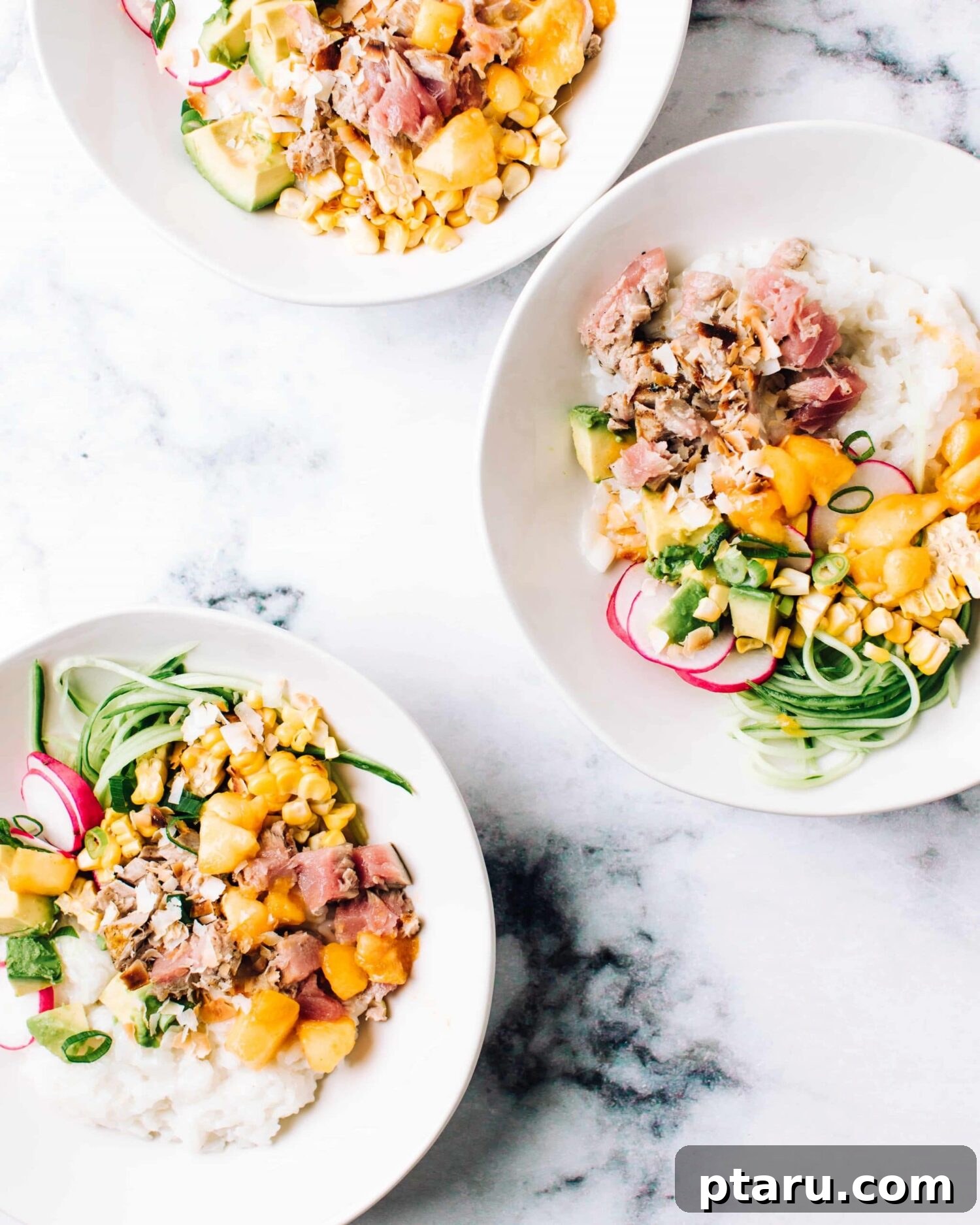
- Add Tuna and Toppings: Artfully arrange the seared tuna pieces over the rice. Then, arrange all your prepared fresh toppings around the tuna, creating a colorful and appealing display. Think about contrasting colors and textures for a visually stunning bowl.
- Drizzle Dressing: Finish your masterpiece with a generous spoonful (or two!) of the prepared sesame dressing, drizzling it evenly over the tuna and toppings. You can add more dressing to taste at the table.
Serve immediately and savor every bite of your homemade seared tuna poke bowl with coconut rice!
Elevating Your Seared Tuna Poke Bowl Experience
While this seared tuna poke bowl is a complete and satisfying meal on its own, there are many ways to enhance your dining experience and tailor it further to your preferences. Presentation, additional toppings, and complementary side dishes can truly transform a simple meal into a memorable culinary event.
Presentation and Serving Suggestions
To serve, simply arrange your beautifully constructed poke bowl on a plate or in a shallow bowl. The key is to showcase the vibrant colors and diverse textures of the ingredients. It’s perfect for a casual weeknight dinner, an impressive lunch for guests, or even a light yet fulfilling weekend meal. The beauty of these bowls is that you can adjust the temperature of the components to your liking: the coconut rice can be served warm or at room temperature, and the seared tuna can be enjoyed hot, cold, or lukewarm, whatever your preference dictates. There’s no judgment here!
Extra Toppings for an Enhanced Experience
Don’t stop at the main toppings! A few extra touches can take your poke bowl from great to extraordinary:
- Toasted sesame seeds: A sprinkle of white or black sesame seeds adds an extra layer of nutty crunch and an elegant finish.
- Crispy nori strips: Thin strips of toasted seaweed (nori) introduce a subtle taste of the sea and a delicate, crisp texture that pairs wonderfully with the tuna.
- Pickled ginger: The tangy, slightly spicy kick of pickled ginger (gari) offers a refreshing palate cleanser between bites, mirroring its role in sushi.
- A dash of wasabi: For those who love a bit of heat and sinus-clearing spice, a small dollop of wasabi paste on the side allows for customizable intensity.
- Sriracha mayo drizzle: If you skipped the spicy dressing, a quick drizzle of sriracha mixed with mayonnaise adds a creamy, spicy element.
- Fried shallots or onions: For an extra layer of savory crunch and depth.
- Edamame beans: Quick to cook and full of protein, these vibrant green beans add a fresh, slightly sweet bite.
Complementary Side Dishes
If you’re looking to create a more substantial meal or a Japanese-inspired spread, consider pairing your poke bowl with these delightful side dishes:
- Warm miso soup: A light, comforting broth made from fermented soybean paste. It’s the perfect soothing complement to the fresh flavors of the poke bowl, warming the palate between bites.
- Steamed edamame: Lightly salted and steamed, these green soybean pods are a healthy, fun, and easy-to-eat snack or side that adds plant-based protein.
- Refreshing seaweed salad: Known as “hiyashi wakame,” this vibrant green salad offers a unique chewy texture and a tangy, sesame-infused dressing that beautifully complements seafood.
- Pan-fried gyoza: Delicious Japanese dumplings filled with vegetables or meat, offering a delightful contrast in texture and a savory, umami-rich flavor that makes for a more filling meal.
- Spring rolls: Fresh or fried spring rolls offer another textural and flavorful contrast, providing a light or crispy accompaniment.
- Cucumber sunomono: A Japanese cucumber salad with a light, sweet, and tangy vinegar dressing, offering a refreshing and crunchy side.

When it comes to toppings, don’t be shy! The goal is to create a delightful mix of flavors and textures. Ideally, aim for a combination that includes:
- Sweet notes: such as juicy mango, ripe peach, or tart pineapple.
- Crunchy elements: like crisp radishes, sweet corn kernels, or refreshing cucumber.
- A touch of spice: from fresh chilies (finely minced) or a hint of sriracha.
- Savory depth: provided by thinly sliced red onion or fresh green onion.
- Nutty goodness: think chopped peanuts, toasted coconut flakes, or a sprinkle of sesame seeds.
As long as you incorporate two or three of these “pillars” of flavor and texture, your poke bowl is guaranteed to be a hit. This customizable nature also makes poke bowls a fantastic, interactive meal for families. Kids often love all the individual components and enjoy the fun of building their own personalized bowls, encouraging them to try new flavors.
Expert Tips for Crafting the Perfect Poke Bowl
Achieving poke bowl perfection at home is easier than you think with a few insider tips and tricks:
Selecting the Best Tuna
For seared tuna, freshness is paramount. Look for tuna steaks that are bright red, firm to the touch, and have no strong fishy odor. If you’re opting for raw tuna (sushi-grade), purchase it from a trusted fishmonger who can confirm its suitability for raw consumption. Ask about sustainable sourcing if that’s important to you.
Perfecting Your Coconut Rice
Rinsing the rice before cooking is crucial. This removes excess starch, preventing the rice from becoming overly gummy. Using a tight-fitting lid during cooking ensures proper steaming and absorption of the coconut milk. Resist the urge to lift the lid too often, as this releases steam and can prolong cooking time. If the rice seems too dry, a splash more water can fix it; if it’s too wet, let it sit, covered, off the heat for a few extra minutes to absorb more moisture.
Achieving the Ideal Tuna Sear
A screaming hot pan is your best friend for searing tuna. This allows you to create a beautiful, caramelized crust quickly while keeping the interior perfectly rare or medium-rare, according to your preference. Don’t overcrowd the pan, as this lowers the temperature and steams the tuna instead of searing it. Work in batches if necessary.
Balancing Flavors and Textures
The magic of a poke bowl lies in its harmonious contrast. Think about how sweet mango interacts with salty soy sauce, or how crunchy radishes complement creamy avocado. Taste your dressing and adjust seasonings (more vinegar for tang, more sugar for sweetness, more soy for umami) to ensure it perfectly complements your chosen toppings. Don’t be afraid to add fresh herbs like cilantro or mint for an extra layer of brightness.
Meal Prep for Convenience
Poke bowls can be excellent for meal prep. Cook the coconut rice and prepare the dressing in advance. Chop all your vegetables and fruits and store them in separate airtight containers. Sear the tuna just before serving for the best texture, or sear it ahead and enjoy it cold. This makes assembling a fresh, healthy meal during a busy week quick and effortless.
Storage and Leftovers
While poke bowls are best enjoyed fresh, you can certainly prepare components ahead of time or store leftovers carefully.
Storing Components Separately
To maximize freshness and prevent sogginess, it’s best to store the cooked coconut rice, seared tuna, dressing, and chopped toppings in separate airtight containers in the refrigerator. The rice will keep for up to 3-4 days, the dressing for up to a week, and the chopped vegetables for 2-3 days.
Tuna Storage
Seared tuna should be consumed within 1-2 days if stored properly in an airtight container in the fridge. For raw, sushi-grade tuna, it’s highly recommended to consume it on the same day it’s purchased and prepared, or within 24 hours at most for optimal safety and quality.
Assembling Leftovers
When ready to enjoy leftovers, simply reheat the rice gently if desired, or serve cold. Reassemble your bowl with the desired components and drizzle with fresh dressing. This method ensures that each ingredient maintains its texture and freshness.
Frequently Asked Questions (FAQ) About Poke Bowls
Here are answers to some common questions about making and enjoying tuna poke bowls:
Q: Can I use raw tuna for this recipe?
A: Yes, absolutely! If you prefer traditional raw poke, ensure you purchase only certified sushi-grade ahi tuna from a reputable fishmonger. This type of tuna is safe for raw consumption. Follow the same preparation steps, but skip the searing. Simply cube the raw tuna and toss it gently with a small amount of the dressing before adding it to your bowl.
Q: What kind of rice is best for poke bowls?
A: Short-grain white rice is traditionally preferred for its sticky texture, which makes it easy to eat with chopsticks. Sushi rice is a type of short-grain rice that works wonderfully. For this recipe, we use short-grain white rice for the coconut rice base. You can also use medium-grain rice. If you’re looking for alternatives, brown rice or quinoa add extra fiber and nutrients, while cauliflower rice is a great low-carb option.
Q: Can I make the poke bowl components ahead of time?
A: Yes, many components can be prepped in advance. The coconut rice can be cooked and stored in the fridge for up to 3-4 days. The dressing can be made and refrigerated for up to a week. Vegetables can be chopped and stored in airtight containers for 2-3 days. For the best flavor and texture, sear the tuna just before serving. However, if meal prepping, seared tuna can be stored for 1-2 days and eaten cold.
Q: How can I make my poke bowl spicier?
A: There are several ways to add heat! You can incorporate a dash of sriracha into the dressing, or mix it with mayonnaise for a creamy spicy mayo. Finely mince a fresh chili pepper (like a jalapeño or serrano) and add it to your toppings. A pinch of red pepper flakes also works well.
Q: Is this recipe healthy?
A: Yes! This seared tuna poke bowl recipe is packed with lean protein from the tuna, healthy fats from avocado and sesame oil, complex carbohydrates from rice (especially if you choose brown rice or quinoa), and a wide array of vitamins and minerals from the fresh fruits and vegetables. It’s a balanced and nutrient-dense meal choice.
Q: Can I use canned tuna?
A: While fresh seared tuna offers the best flavor and texture, if you’re in a pinch or looking for an ultra-easy weekday lunch, canned tuna (packed in water or oil, drained) can be a convenient substitute. It won’t have the same robust texture but will still deliver a delicious and quick meal when combined with the coconut rice, dressing, and fresh toppings.
More Healthy and Delicious Recipes to Explore
If you loved this seared tuna poke bowl, you might enjoy these other wholesome and flavorful recipes:
Asian Pulled Chicken Lettuce Wraps
Hearty Coconut Curried Lentils
Easy Coconut Squash Soup with Turmeric and Ginger
Seared Tuna Poke Bowl with Coconut Rice
An easy & delicious Tuna Poke Bowl recipe served with perfectly seared tuna and fragrant coconut rice, complemented by juicy mango and creamy avocado. It’s filled with vibrant colors and exciting textures, making it both healthy & completely irresistible.
Cook Time: 20 minutes
Total Time: 40 minutes
Servings: 6
Ingredients
For Creamy Coconut Sticky Rice
- 1 ½ cups short grain white rice
- 1 tsp coarse salt
- 3 cups coconut milk
- 2 ½ cups water
For Zesty Sesame Dressing
- ¼ cup canola oil
- 1 tbsp sesame oil
- 1 tbsp soy sauce
- 1 tbsp rice vinegar
- 1 tsp granulated sugar
For Seared Tuna and Fresh Toppings
- 1 tbsp canola oil (for searing)
- 1 fresh ahi tuna steak
- Salt, to taste
- Chopped avocado, as desired
- Thawed frozen corn, as desired
- Sliced radishes, as desired
- Sliced green onion, as desired
- Cucumber, chopped, as desired
- Chopped ripe peach or mango, as desired
- Chopped peanuts, as desired
Instructions
For Coconut Rice
- Combine white rice, coarse salt, coconut milk, and water in a saucepan over medium-high heat.
- Bring to a boil, then reduce heat to low, cover, and cook for 20-25 minutes, stirring occasionally to avoid sticking. Cook until rice is creamy and tender. If liquid evaporates before rice softens, stir in 1/2 cup of water and continue cooking until absorbed.
For Sesame Dressing
- Whisk together canola oil, sesame oil, soy sauce, rice vinegar, and granulated sugar in a bowl or measuring cup until well combined.
For Seared Tuna and Toppings
- Heat 1 tbsp canola oil in a large, heavy skillet or grill pan over high heat. Season tuna steak with salt on both sides, then add to the hot pan. Sear, flipping to cook all sides, 1-2 minutes per side for rare.
- Transfer tuna to a cutting board, rest for 5 minutes, then use a sharp knife to cut it into small pieces.
- Prepare all desired toppings: chop avocado, thaw corn, slice radishes and green onion, chop cucumber and peach or mango, and have peanuts ready.
To Assemble Poke Bowls
- Place a generous serving of coconut rice into each medium bowl.
- Top the rice with the seared tuna pieces and arrange the prepared toppings attractively around the bowl.
- Finish with a big spoonful of the prepared sesame dressing drizzled over the entire bowl. Enjoy immediately!
Pin this recipe for later!