Mastering Veal Scallopini with Lemon Caper Piccata Sauce: An Easy & Elegant Dinner
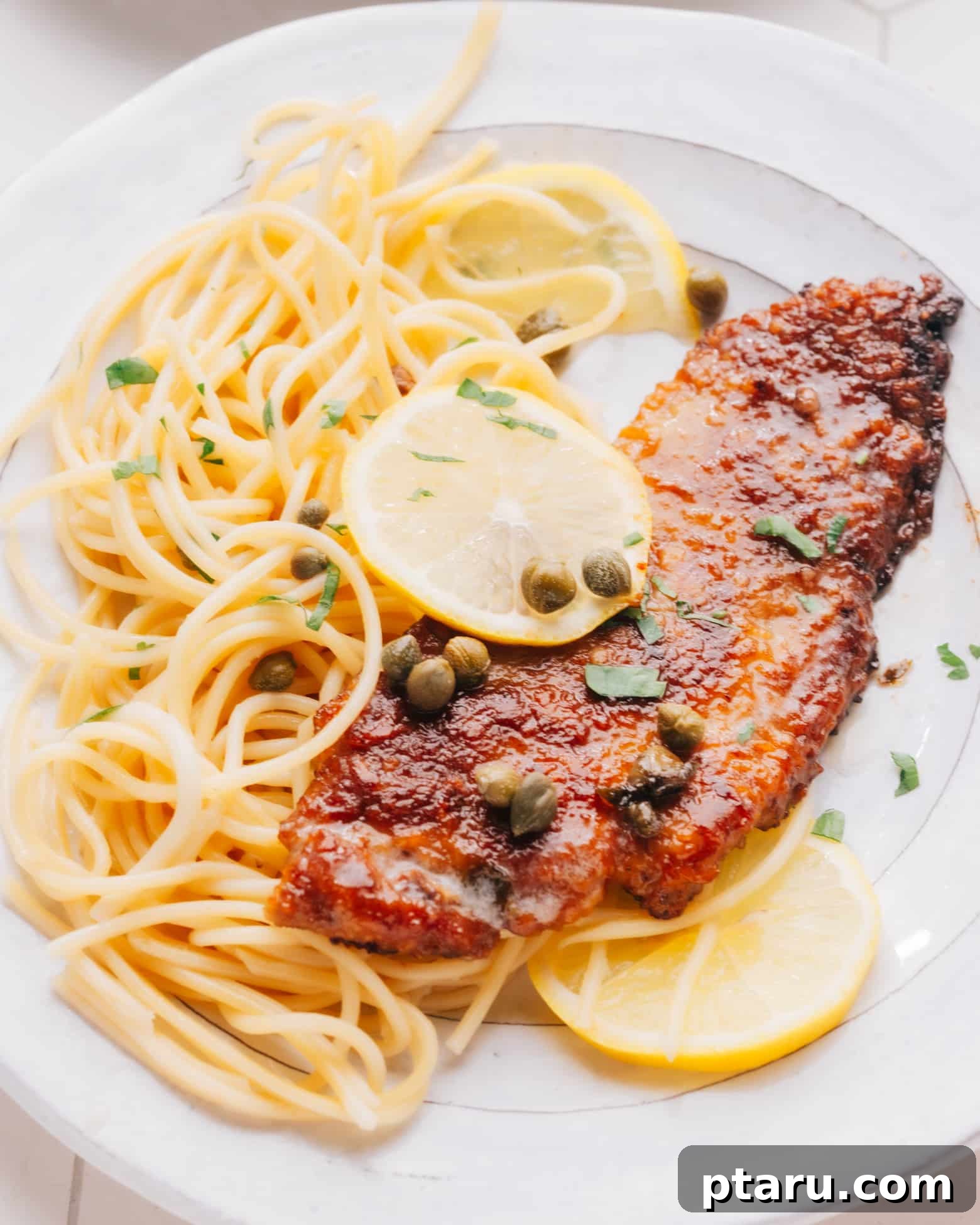
Prepare to elevate your dinner routine with this exquisite Veal Scallopini recipe, featuring impossibly tender veal cutlets lightly dredged in flour and seared to a beautiful golden brown. This classic Italian dish is a marvel of speed and flavor, cooking in mere minutes per side before being enveloped in a luscious, buttery wine sauce infused with bright lemon juice and briny capers. It’s a culinary masterpiece that promises to delight your taste buds and impress your guests, all while being surprisingly simple to prepare.
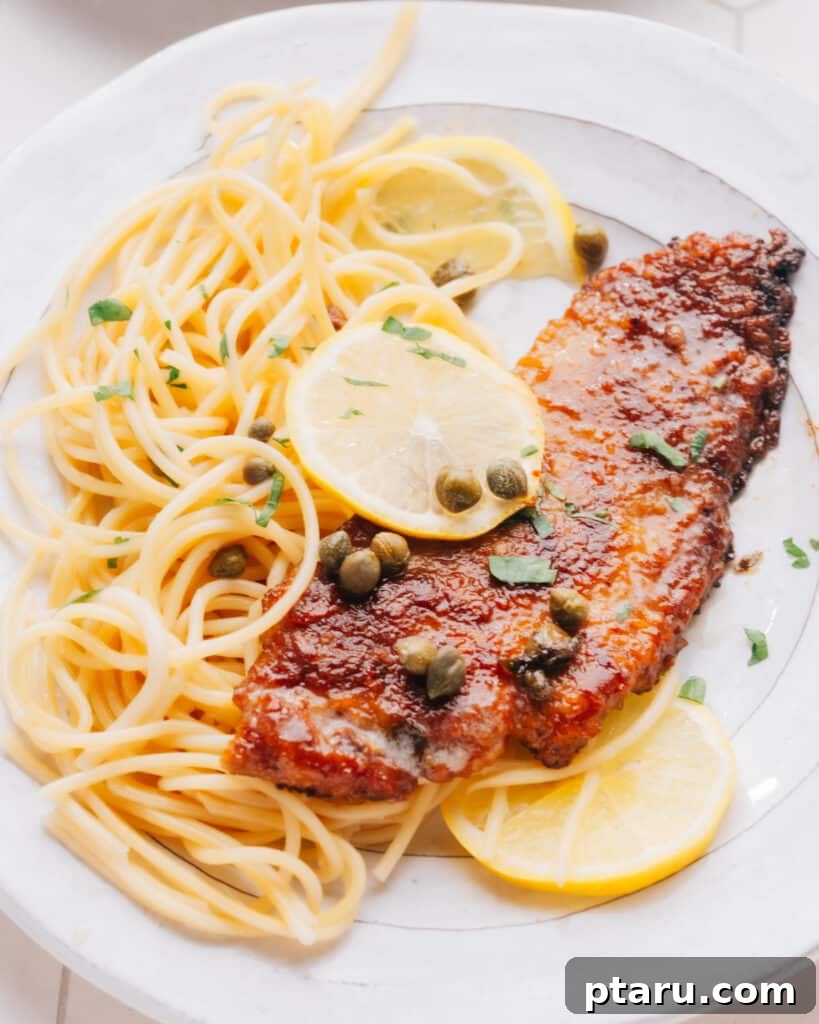
This recipe truly stands out for its perfect blend of speed, flavor, and elegance. The succulent, tender veal pairs wonderfully with its rich yet zesty sauce, making every bite a delight. I especially love serving it alongside a generous pile of spaghetti, allowing the pasta to soak up every last drop of the buttery, bright, and utterly irresistible sauce. This creates a complete and satisfying meal that feels both comforting and sophisticated.
Whether you’re looking for a simple yet impressive dish for a busy weeknight or an elegant option to entertain guests, Veal Scallopini fits the bill perfectly. Its quick cooking time and minimal fuss make it a practical choice, while its refined flavors and beautiful presentation elevate it to a special occasion meal. Once you experience how fast and delicious thinly sliced veal cutlets can be, they are sure to become a cherished addition to your regular culinary repertoire.
What Exactly is Veal Scallopini? Unpacking This Italian Classic
Veal Scallopini is a celebrated dish within Italian cuisine, renowned for its delicate flavor and tender texture. At its core, it features thinly sliced veal, typically pounded even thinner, lightly coated in flour, and then quickly sautéed in a combination of butter and olive oil until golden. Once the veal is perfectly cooked, it’s briefly removed from the pan, and a vibrant, flavorful sauce is crafted using the pan drippings. Common ingredients for this sauce include dry white wine, fresh lemon juice, pungent capers, and sometimes a touch of chicken broth or cream to enrich its consistency. This exquisite sauce is then poured generously over the re-introduced veal cutlets, creating a harmonious blend of flavors and textures.
The beauty of Veal Scallopini lies in the swiftness with which these thin cuts of meat cook, transforming what might seem like a gourmet dish into a convenient option for weeknight dinners, while still retaining its elegance for more formal gatherings. The secret to achieving truly exceptional Scallopini is threefold: starting with high-quality veal, ensuring the slices are consistently thin (often achieved by pounding them), and critically, avoiding overcooking to preserve the veal’s inherent tenderness and juiciness.
The Meaning Behind “Scallopini” in Italian Cuisine
The term “Scaloppine,” from which “Scallopini” derives, literally translates to “small scallops” in Italian. In a culinary context, however, it refers specifically to thin, flattened slices of meat, usually veal, chicken, or pork. This preparation method allows the meat to cook incredibly quickly and absorb the flavors of the accompanying sauce, creating a tender and flavorful result.
Scallopini vs. Veal Piccata: Understanding the Nuance
While often used interchangeably, “Scallopini” is a broader term encompassing any thin, pounded meat cutlets that are sautéed and served with a variety of sauces. “Veal Piccata,” on the other hand, refers to a specific type of Scallopini that is always prepared with a distinct lemon-caper sauce. Thus, this particular recipe for Veal Scallopini, with its bright lemon and caper sauce, is essentially a form of Veal Piccata. While a Scallopini can feature many different sauce profiles, a Piccata is defined by its characteristic tangy and briny lemon-caper combination.
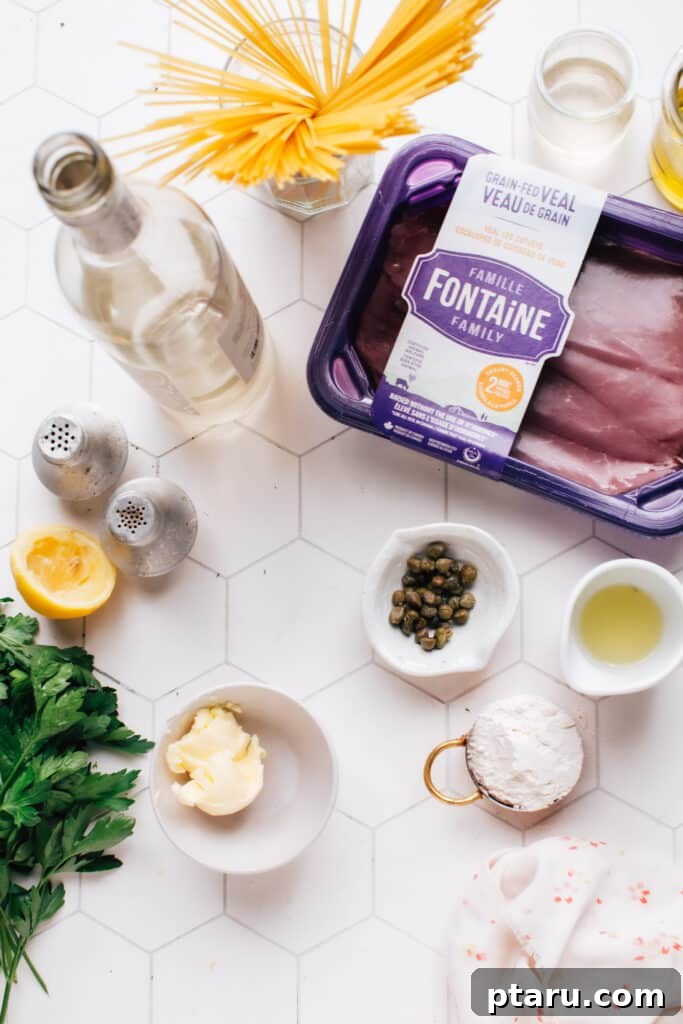
Essential Ingredients for Perfect Veal Scallopini with Lemon Caper Piccata Sauce
Before you begin the exciting culinary journey of making Veal Scallopini, it’s incredibly helpful to understand the role each ingredient plays in developing this dish’s iconic flavor profile. Gathering all your components beforehand ensures a smooth and enjoyable cooking experience, allowing you to focus on technique and timing.
- Veal Cutlets: These are the undeniable stars of our dish. Opt for tender, thinly sliced veal that will provide a juicy, delicate base, allowing the vibrant flavors of the sauce to truly sing. Pounding them even thinner ensures rapid cooking and maximum tenderness.
- Kosher Salt and Pepper: These fundamental seasonings are essential for enhancing the veal’s natural taste and building a foundational layer of flavor before any cooking begins. Do not underestimate their power in bringing out the best in the meat.
- All-Purpose Flour: A modest amount of flour is used to lightly coat the veal cutlets. This coating is crucial for several reasons: it helps create a delicate, golden crust when seared, and it subtly contributes to thickening the final sauce, giving it a luxurious consistency.
- Butter: Butter is a cornerstone of this recipe, imparting a rich, luscious depth to the sauce and contributing significantly to the golden sear of the veal. Its creamy texture and nutty flavor are indispensable.
- Olive Oil: Used in conjunction with butter, high-quality olive oil aids in searing the veal to perfection. It also helps prevent the butter from burning at higher temperatures, providing a balanced and healthier fat for cooking.
- Dry White Wine: This ingredient is not just for flavor; it’s a critical component for deglazing the pan. As it cooks, it adds a sophisticated acidity and a profound depth to the sauce, lifting all those delectable browned bits from the skillet floor.
- Fresh Lemon Juice: The vibrant, zesty tang of fresh lemon juice is what truly brightens the entire dish, cutting through the richness of the butter and veal. It’s a key element of the piccata sauce, providing that essential refreshing kick. (For alternatives, see 7+ Simple Lemon Juice Substitutes That Actually Work).
- Capers: These small, pickled flower buds contribute a distinctive burst of briny, salty, and slightly tangy flavor to the sauce. They are non-negotiable for an authentic piccata experience, adding complexity and a delightful textural contrast.
- Fresh Parsley: More than just a garnish, freshly chopped parsley offers a wonderful, herbaceous note and a burst of vibrant color, visually enhancing the dish while adding a final layer of fresh, clean flavor.
Creative Variations and Smart Substitutions to Customize Your Scallopini
While the classic Veal Scallopini is undeniably delicious, don’t hesitate to personalize this recipe to suit your taste or dietary needs. Here are some excellent ideas to make this dish uniquely your own:
- Poultry or Pork Cutlets: For a lighter or different protein option, thinly pounded chicken breast or pork cutlets make fantastic substitutes for veal. Adjust cooking times slightly as they may differ from veal.
- White Wine Alternatives: If you prefer to cook without alcohol or simply don’t have white wine on hand, an equal amount of good quality chicken stock or vegetable broth can be used. Adding an extra splash of lemon juice will help maintain that desired bright acidity.
- Gluten-Free Flour Options: For those following a gluten-free diet, cornstarch or a gluten-free all-purpose flour blend can be used in place of traditional wheat flour for dredging. This ensures the sauce still thickens and the cutlets achieve a light crust.
- Enhanced Flour Flavorings: To elevate the flavor of your dredged meat, consider whisking in a teaspoon of garlic powder, a quarter teaspoon of black pepper, and/or a teaspoon of onion powder into your flour mixture. While delicious as is, this can add an extra layer of savory depth.
- Alternative Fresh Herbs: Experiment with different fresh herbs to introduce varying aromatic notes. Rosemary, oregano, or fresh thyme can be used instead of parsley for a distinctive herbal twist that complements the rich veal and tangy sauce beautifully.
Kitchen Tools You’ll Need for Effortless Preparation
Having the right kitchen tools on hand makes a world of difference in the efficiency and enjoyment of your cooking process. Before you fire up the stove, ensure you have these essential items ready to go for your Veal Scallopini preparation:
- Large Frying Pan or Skillet: You’ll want your largest and most reliable skillet or frying pan. A wide surface area is crucial for searing the veal slices efficiently without overcrowding, and it will also be used to build the flavorful sauce. A nonstick skillet can be particularly helpful for easy cleanup.
- Wooden Spoon: An indispensable tool for stirring ingredients in the pan and, most importantly, for scraping up those incredibly flavorful browned bits (fond) from the bottom of the skillet during the deglazing process. These bits are key to a rich sauce.
- Meat Mallet or Tenderizer: Essential for pounding the veal cutlets to a uniform thinness. This not only tenderizes the meat but also ensures even and quick cooking, resulting in a more delicate texture. If you don’t have one, the bottom of a heavy pot or a rolling pin can work in a pinch.
- Whisk: Perfect for smoothly combining the sauce ingredients, ensuring a creamy, emulsified texture without any lumps. It’s especially useful when incorporating the butter at the end.
- Tongs: Ideal for easily flipping the delicate veal cutlets during searing, preventing tearing, and ensuring even browning on both sides. They also help in transferring the meat without losing any juices.
- Measuring Cups and Spoons: Accuracy is key in cooking, especially when it comes to sauces. These will ensure you get all your ingredient quantities precisely right for the best flavor balance.
How to Make Veal Scallopini with Lemon Caper Sauce: An Easy Step-by-Step Guide
Get ready to create this spectacular veal dish in record time. With these clear, easy-to-follow steps, you’ll have a gourmet meal on your table without even needing to turn on the oven! The entire process from start to finish is designed for efficiency and maximum flavor.
- Prepare the Veal: Flatten and Season: Begin by placing your veal cutlets between two sheets of plastic wrap or parchment paper. Using a meat mallet, gently pound them until they are uniformly thin, about ¼ inch thick. This crucial step tenderizes the meat and ensures quick, even cooking. Pat both sides of the veal cutlets thoroughly dry with paper towels – this is vital for achieving a good sear. Season generously on both sides with kosher salt and black pepper to build a strong flavor foundation.
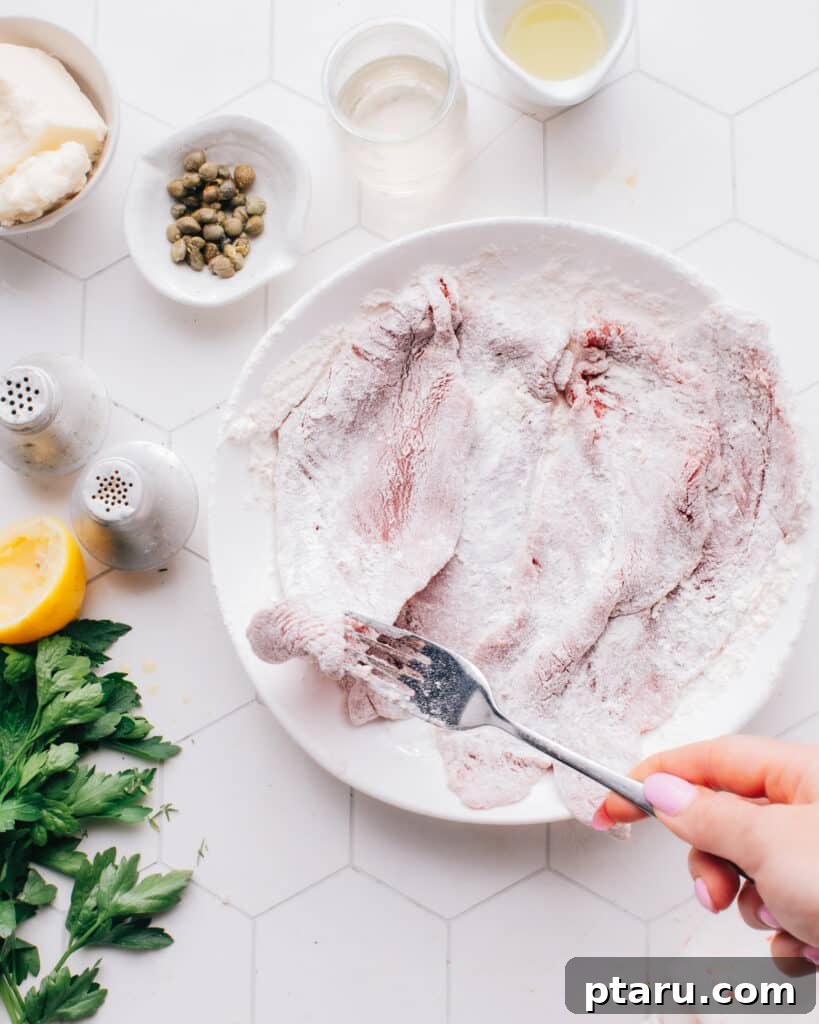
- Dredge in Flour: Pour the all-purpose flour into a shallow dish. Lightly coat each seasoned veal cutlet in the flour, ensuring both sides are covered. Gently shake off any excess flour; a light dusting is all you need. This flour coating contributes to a delicate crust when seared and helps to slightly thicken the subsequent sauce.
- Sear the Veal: Heat 2 tablespoons of butter and the olive oil in your large skillet over medium-high heat until the butter is melted and sizzling, but not browned. Carefully add the floured veal cutlets to the hot pan in a single layer, ensuring not to overcrowd the pan. If necessary, cook the veal in two batches to ensure proper searing rather than steaming. Sear each side for about 2-3 minutes, until beautifully golden brown and cooked through.
- Tent and Set Aside: Once seared, transfer the cooked veal cutlets to a plate and loosely tent them with aluminum foil. This keeps the meat warm and allows the juices to redistribute, ensuring they remain tender and succulent while you prepare the sauce.
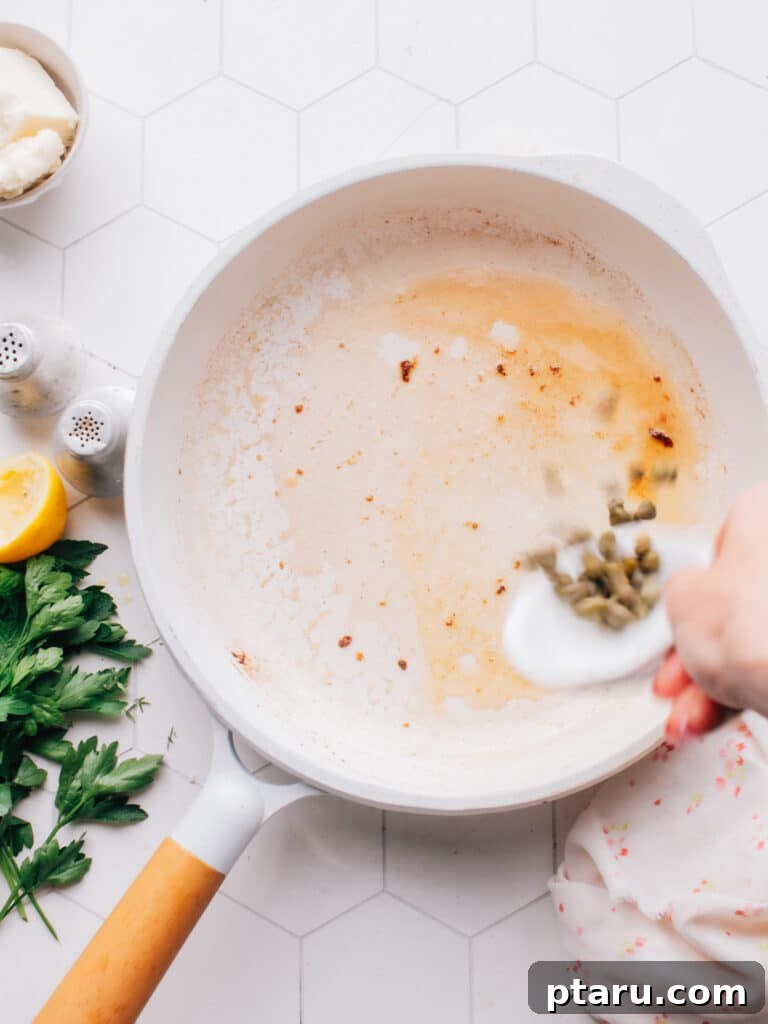
- Sauté and Deglaze the Pan: Return the skillet to the heat. Pour the dry white wine into the pan. Immediately use a wooden spoon to scrape up all the flavorful browned bits (fond) stuck to the bottom of the skillet. This deglazing process releases concentrated flavors that will form the backbone of your sauce. Allow the wine to simmer vigorously and reduce by about half, which should take approximately 2 minutes.
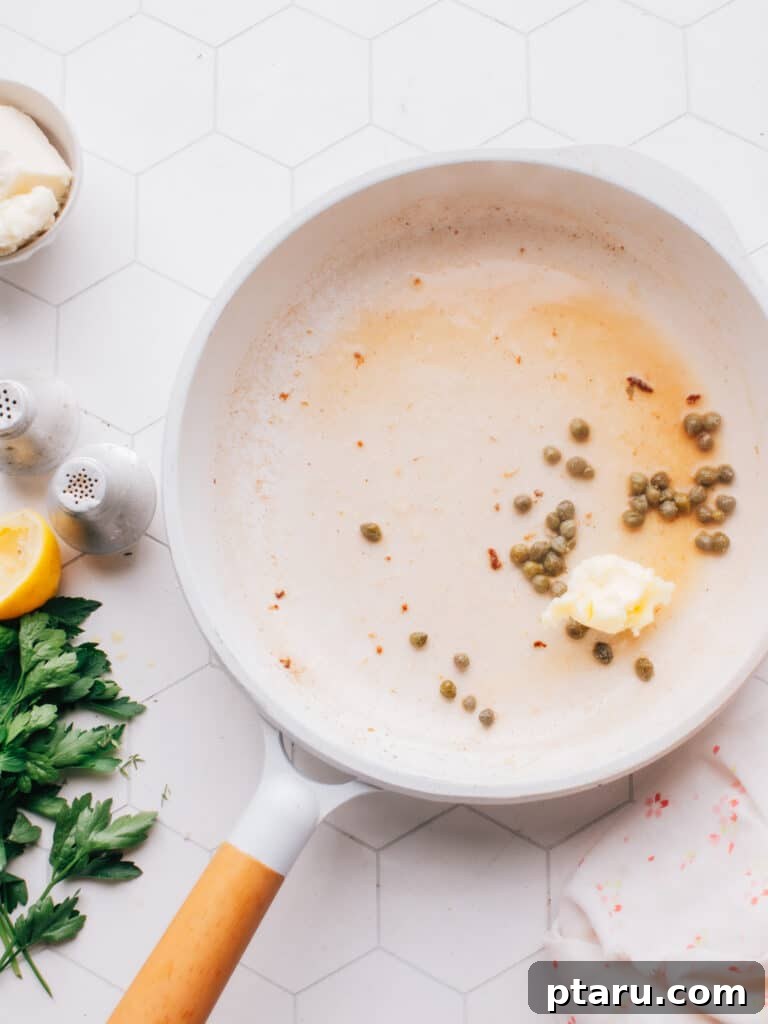
- Build the Lemon Caper Sauce: Add the fresh lemon juice and rinsed, drained capers to the skillet. Continue to simmer for another minute, allowing the flavors to meld and the sauce to slightly thicken. Remove the pan from the heat and whisk in the remaining 2 tablespoons of cold butter, one tablespoon at a time. The butter will emulsify into the hot liquid, creating a wonderfully silky, slightly creamy, and glossy sauce.
- Combine and Simmer Briefly: Gently return the reserved veal cutlets to the pan, nestling them into the rich sauce. Spoon the sauce over the veal to coat each piece. Allow them to simmer in the sauce for just 1-2 minutes, enough time for the veal to heat through and absorb those amazing flavors. The internal temperature of the veal should reach about 145°F (63°C) for medium-rare or 160°F (71°C) for medium.
- Garnish and Serve Immediately: Carefully transfer the cooked veal scallopini to a serving platter. Pour any remaining luscious sauce from the skillet over the top of the cutlets. Finish by sprinkling generously with freshly chopped parsley for a pop of color and an added layer of herbal freshness. Serve your magnificent Veal Scallopini immediately and enjoy!
Storing and Making Ahead: Tips for Convenience and Enjoyment
To keep the deliciousness going or to streamline your meal preparation, here are some helpful tips for making Veal Scallopini ahead of time and properly storing any leftovers:
- Pre-Flatten Veal for Efficiency: To save valuable time on your cooking day, you can pound the veal cutlets to your desired thinness in advance. Place them between sheets of parchment paper, stack them, and store them in an airtight container or a freezer bag in the refrigerator for up to 24 hours. This prepares them for immediate seasoning and searing when you’re ready to cook.
- Freeze Extra Sauce for Future Meals: If you adore the vibrant lemon-caper sauce, consider doubling the batch. The extra sauce can be cooled completely and then frozen in an airtight container for up to 3 months. Thaw it in the refrigerator overnight and gently reheat on the stovetop when you need a quick flavor boost for another meal or to accompany freshly cooked protein.
- Leftovers Are a Treat: Believe it or not, Veal Scallopini can often taste even better the next day as the flavors have more time to meld and deepen. Ensure any leftover veal and sauce are cooled quickly and stored in an airtight container in the refrigerator. Consume within 2-3 days for the best quality and safety.
- Reheat with Care: When reheating, use gentle heat to prevent the veal from drying out. For the stovetop, place the veal and sauce in a skillet over low heat, adding a splash of chicken broth or water if the sauce appears too thick, until warmed through. Alternatively, a quick zap in the microwave on a medium setting can also work, stirring occasionally.
- Repurpose Leftover Veal Creatively: If you find yourself with too much leftover veal, get creative! Slice the tender meat thinly and use it in a gourmet sandwich, perhaps on crusty bread with some of the remaining sauce and a fresh green salad. It also makes a wonderful topping for a light pasta salad or a flavorful addition to a frittata.
Expert Tips for Flawlessly Tender Veal Scallopini Every Time
Achieving perfectly tender and flavorful veal scallopini is an art, but one that is easily mastered with these professional tips and a sprinkle of culinary science. Maximize the tenderness and taste of your veal cutlets with these insights:
- The Importance of Pounding: Flattening the veal is more than just a preparation step; it’s a tenderizing technique. Pounding breaks down the meat fibers, ensuring a melt-in-your-mouth texture. Moreover, uniform thinness allows for incredibly rapid and even cooking, making this dish genuinely weeknight-friendly. Aim for about ¼-inch thickness.
- Mind the Cooking Time: Veal scallopini is inherently very thin, which means it cooks remarkably fast. Overcooking is the arch-nemesis of tender veal. Generally, a quick 2-3 minutes per side in a hot pan is all it takes to cook it perfectly through while maintaining its juiciness.
- The Power of a Hot Pan: Always preheat your skillet over medium-high heat until it’s sufficiently hot before adding the veal. This ensures a rapid sear, creating that desirable golden-brown crust (the Maillard reaction) that locks in the juices and develops deep flavors, without letting the meat linger in the pan too long and dry out.
- Visual Cues for Doneness: Trust your eyes! A beautiful golden-brown crust forming on the exterior of the veal is your primary indicator that it’s cooked and tender. It signifies that the surface has caramelized beautifully, signaling perfect doneness without needing to cut into the meat.
- Batch Cooking for Best Results: Resist the urge to overcrowd the pan. If your skillet isn’t spacious enough to accommodate all the cutlets in a single layer without them touching, it’s always best to cook them in batches. Overcrowding lowers the pan’s temperature and can cause the veal to steam rather than sear, resulting in a pale, tough texture.
- Allow for Resting Time: After searing and removing the veal from the pan, loosely tent it with foil for a few minutes while you finish the sauce. This brief resting period is crucial. It allows the meat’s internal temperature to equalize and its juices to redistribute throughout the cutlet, resulting in a more tender and moist piece of meat.
- Precision with a Meat Thermometer: For those who prefer absolute certainty, a meat thermometer is your best friend. For medium-rare veal, aim for an internal temperature of about 145°F (63°C). For medium doneness, target 160°F (71°C). Remember to check the temperature in the thickest part of the cutlet.
Perfect Pairings: What to Serve with This Exquisite Veal Scallopini Recipe
Now that you’ve masterfully prepared this stunning Veal Scallopini, completing the meal with the perfect accompaniments will make your dining experience truly unforgettable. Here are some inspired ideas to complement the rich flavors and tender texture of your dish:
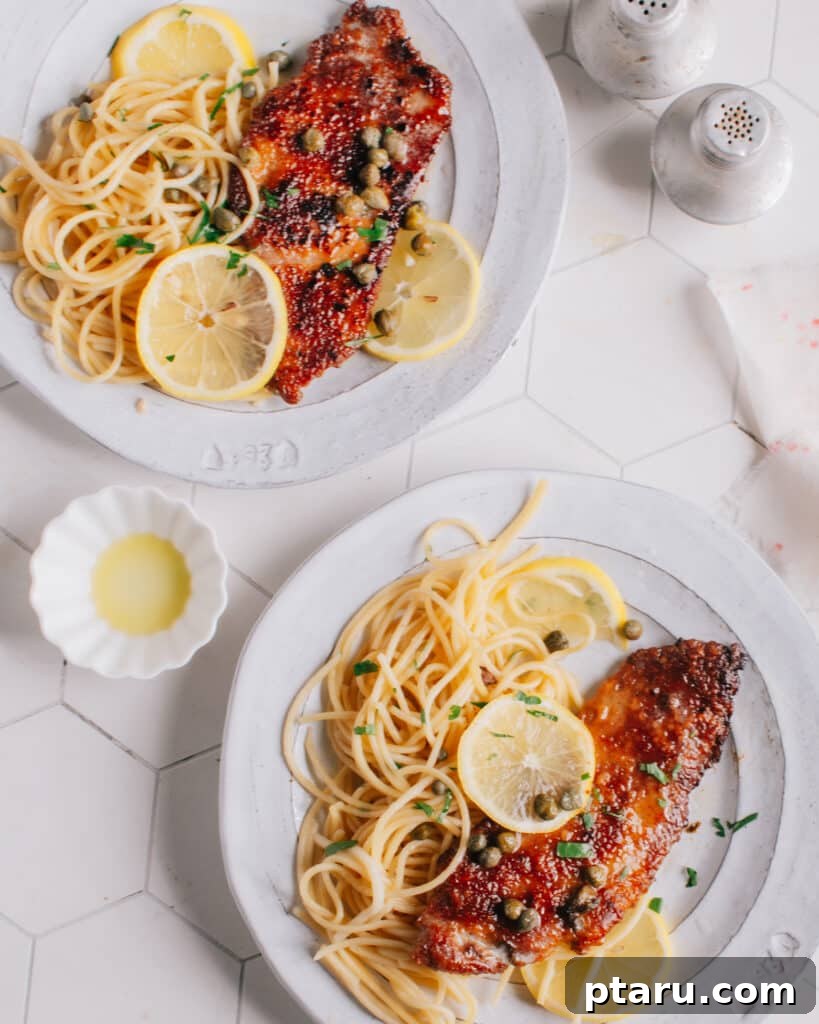
- Pasta Perfection: A classic pairing, serving Veal Scallopini over a bed of al dente linguini, fettuccine, or even simple spaghetti allows the pasta to beautifully absorb every drop of that luscious, buttery lemon-caper sauce. It creates a satisfying and cohesive meal.
- Go Green with Vegetables: Balance the richness of the veal with a vibrant side of green vegetables. Simple steamed green beans, perfectly pan-fried asparagus (learn how here), or sautéed mushrooms are excellent choices. They add freshness, texture, and a healthy component to your plate.
- Crusty Bread for Sopping: Who can resist the urge to mop up every last bit of that delectable sauce? A warm, crusty loaf of artisanal bread is an absolute must-have. I still find myself regularly baking my favorite No-Knead Bread recipe once a week for this very purpose.
- Wine Pairing Harmony: For an elevated dining experience, consider pairing your Veal Scallopini with a glass of the same dry white wine you used in the recipe, such as a crisp Pinot Grigio or Sauvignon Blanc. The complementary flavors will enhance both the food and the drink.
- Comforting Starchy Sides: Beyond pasta, other starchy sides make wonderful companions. Creamy mashed potatoes (find my best recipe here) or simply buttered spaghetti are comforting options. For a less traditional but equally delicious twist, try a light and zesty Couscous with Lemon Dressing.
Personally, I find immense joy in serving this dish generously piled over fresh pasta, adorned with extra fresh lemon slices. It’s a truly special and memorable treat that never fails to impress!
Avoid These 5 Common Mistakes for Flawless Veal Scallopini
Even though Veal Scallopini is a relatively simple dish, there are a few common pitfalls that can hinder its perfection. Being aware of these mistakes will help you achieve an impeccably tender and flavorful result every time:
- Using Wet Veal: Failing to thoroughly pat the veal cutlets dry with paper towels before seasoning and dredging in flour is a significant mistake. Moisture on the meat’s surface prevents it from achieving that crucial golden-brown sear, leading to a less flavorful and potentially less tender outcome.
- Overcrowding the Pan: This is a classic error. Placing too many veal cutlets in the pan at once causes the temperature to drop significantly. Instead of searing, the meat will steam, resulting in a pale, tough texture and a lack of that delicious caramelized crust. Always cook in batches if necessary.
- Skipping the Deglazing Step: Some cooks might be tempted to skip adding wine or broth to the hot pan after searing. However, deglazing is vital; it captures all those browned, caramelized bits (fond) stuck to the bottom of the pan, which are concentrated flavor bombs. Skipping this step means missing out on a significant layer of depth in your sauce.
- Overcooking the Veal: As thinly sliced meat, veal scallopini cooks incredibly quickly. Overcooking is the fastest way to turn delicate veal tough, dry, and chewy. Keep a close eye on it, cooking for only 2-3 minutes per side until just golden and cooked through.
- Ignoring Fresh Ingredients: While convenience is tempting, opting for dried herbs or bottled lemon juice can noticeably compromise the vibrant, fresh flavors that truly make this dish special. Freshly squeezed lemon juice and fresh parsley offer an unparalleled brightness and aromatic quality that dried alternatives simply cannot replicate.
Frequently Asked Questions About Making Veal Scallopini
Here are answers to some common questions about preparing Veal Scallopini, along with a quick recap for those who might be skimming!
Can I use a different type of meat for Scallopini?
Absolutely! While veal is traditional, thinly pounded chicken or pork cutlets are excellent substitutes. Just be aware that cooking times may vary slightly due to differences in meat thickness and type.
What’s the best type of wine to use for this recipe?
A dry white wine is highly recommended. Varieties like Pinot Grigio, Sauvignon Blanc, or an unoaked Chardonnay work beautifully. Choose a wine you enjoy drinking, as its flavor will concentrate in the sauce.
Can I make this dish ahead of time?
Veal Scallopini is best enjoyed fresh to preserve the tenderness of the veal. However, you can certainly pound the veal cutlets ahead of time, and the sauce can be made in advance and gently reheated when you are ready to serve.
Do I have to use capers?
Capers contribute a unique briny, tangy flavor that is characteristic of a piccata sauce. While they add depth, you can omit them if you’re not a fan. The sauce will still be delicious, just with a slightly different flavor profile.
Is it mandatory to use fresh parsley?
Fresh parsley adds a wonderful, vibrant flavor and a beautiful visual appeal to the dish. While dried parsley can be used in a pinch, fresh herbs significantly enhance the overall taste and presentation.
What can I use if I don’t have a meat mallet?
No meat mallet? No problem! The bottom of a heavy skillet, a small pot, or even a rolling pin wrapped in plastic wrap can effectively be used to pound and tenderize the veal cutlets.
What kind of animal is veal?
Veal is the meat from a young calf, typically between a few weeks and a few months old. It is prized for its lean, delicate texture and mild flavor.
Why is it called scallopini?
The name “scallopini” is derived from the Italian word “scaloppine,” which literally means “small scallops.” This refers to the preparation method where meat is cut or pounded into thin, scallop-like slices.
What cut is veal scallopini?
Veal scallopini typically comes from the most tender, lean parts of the calf, such as the leg (top round, cutlets) or the loin. These cuts are ideal for pounding thin and cooking quickly.
What are the different types of scallopini?
While veal is the most traditional, scallopini can also be made with other meats, most commonly chicken (chicken scallopini) or pork (pork scallopini). The primary variations often lie in the choice of protein and the accompanying sauce.
More Italian-Inspired Recipes to Explore
- Tuscan Chicken
- The Ultimate Gnocchi Sauce Recipe
- Asiago Tortelloni Alfredo with Grilled Chicken
- My Best Pizza Sauce + Meat Sauce
- Pizza with Biscuit Dough Crust
- Lobster Ravioli with Lemon Cream Sauce
- Lazy Lasagna with Just 3 Ingredients
- Seafood Pizza
Veal Scallopini with Lemon Caper Piccata Sauce: The Full Recipe
Tender veal cutlets are lightly dredged in flour, seared to a golden brown, and then bathed in a delectable buttery lemon caper piccata sauce. This classic Italian dish is surprisingly easy to make and perfect for any occasion.
By: Jennifer Pallian BSc, RD
Prep Time: 10 minutes
Cook Time: 10 minutes
Servings: 4
Ingredients
- 4 veal cutlets, lightly pounded with a meat mallet
- ½ tsp kosher salt
- ⅛ tsp pepper
- ¼ cup all-purpose flour
- 4 tbsp butter, divided
- 2 tbsp olive oil
- ½ cup dry white wine
- 2 tbsp fresh lemon juice
- 2 tbsp capers, rinsed and drained
- 1 tbsp chopped fresh parsley, for garnish
Instructions
- Season and Dredge Veal: Flatten cutlets with a meat mallet for optimal tenderness. Use paper towel to pat the surface dry on both sides. Season the veal cutlets on both sides with salt and pepper. Dredge the veal lightly in flour, shaking off the excess.
- Sear the Veal: Heat 2 tablespoons of the butter and the olive oil in a large skillet over medium-high heat. Add the veal in a single layer and cook until golden brown, about 2 minutes per side. You may have to work in 2 batches to avoid overcrowding the pan. Transfer the cooked veal to a plate and tent with foil to keep warm.
- Deglaze the Pan: Pour the white wine into the skillet, scraping up any browned bits on the bottom with a wooden spoon. Allow the wine to simmer and reduce by half, about 2 minutes.
- Make the Sauce: Add the lemon juice and capers to the skillet. Simmer for another minute until the sauce has slightly thickened. Stir in the remaining butter until it melts into the sauce, creating a silky texture.
- Return Veal to Pan: Return the veal to the skillet, spooning the sauce over the cutlets. Cook for 1-2 minutes until the veal is heated through. The internal temperature should reach about 145°F (63°C) for medium-rare and 160°F (71°C) for medium.
- Serve: Transfer the veal to a serving platter. Pour any remaining sauce from the skillet over the top. Garnish with the chopped fresh parsley and serve immediately.
Recipe Notes
- Meat Mallet Precision: Using a meat mallet is key for tenderizing and ensuring even cooking. Pound gently to achieve a thin, uniform thickness without tearing the meat.
- The Art of Batch Cooking: To prevent steaming and promote proper searing, always cook veal in batches if your skillet isn’t large enough to accommodate all cutlets in a single layer.
- Selecting Your Wine: Opt for a dry white wine that you genuinely enjoy. Its flavor will intensify as the sauce reduces, so quality matters for the best results.
- Caper Preparation: Remember to rinse and drain your capers before adding them to the sauce. This simple step removes excess saltiness, allowing their unique tangy flavor to shine through.
- Temperature Control is Key: Keep a meat thermometer handy to monitor the veal’s internal temperature. Veal cooks quickly and can dry out if overcooked; aim for your preferred doneness, typically 145-160°F (63-71°C).
- Sauce Consistency: The sauce might appear a bit thin initially, but it will subtly thicken as it stands. The final addition of butter helps emulsify it, creating a rich, velvety finish that perfectly coats the veal.
Nutritional Information (Approximate)
Calories: 414kcal | Carbohydrates: 7g | Protein: 37g | Fat: 24g | Saturated Fat: 10g | Polyunsaturated Fat: 2g | Monounsaturated Fat: 10g | Trans Fat: 0.5g | Cholesterol: 163mg | Sodium: 600mg | Potassium: 659mg | Fiber: 1g | Sugar: 1g | Vitamin A: 356IU | Vitamin C: 3mg | Calcium: 22mg | Iron: 2mg
Nutrition information is automatically calculated and should be used as an approximation only.