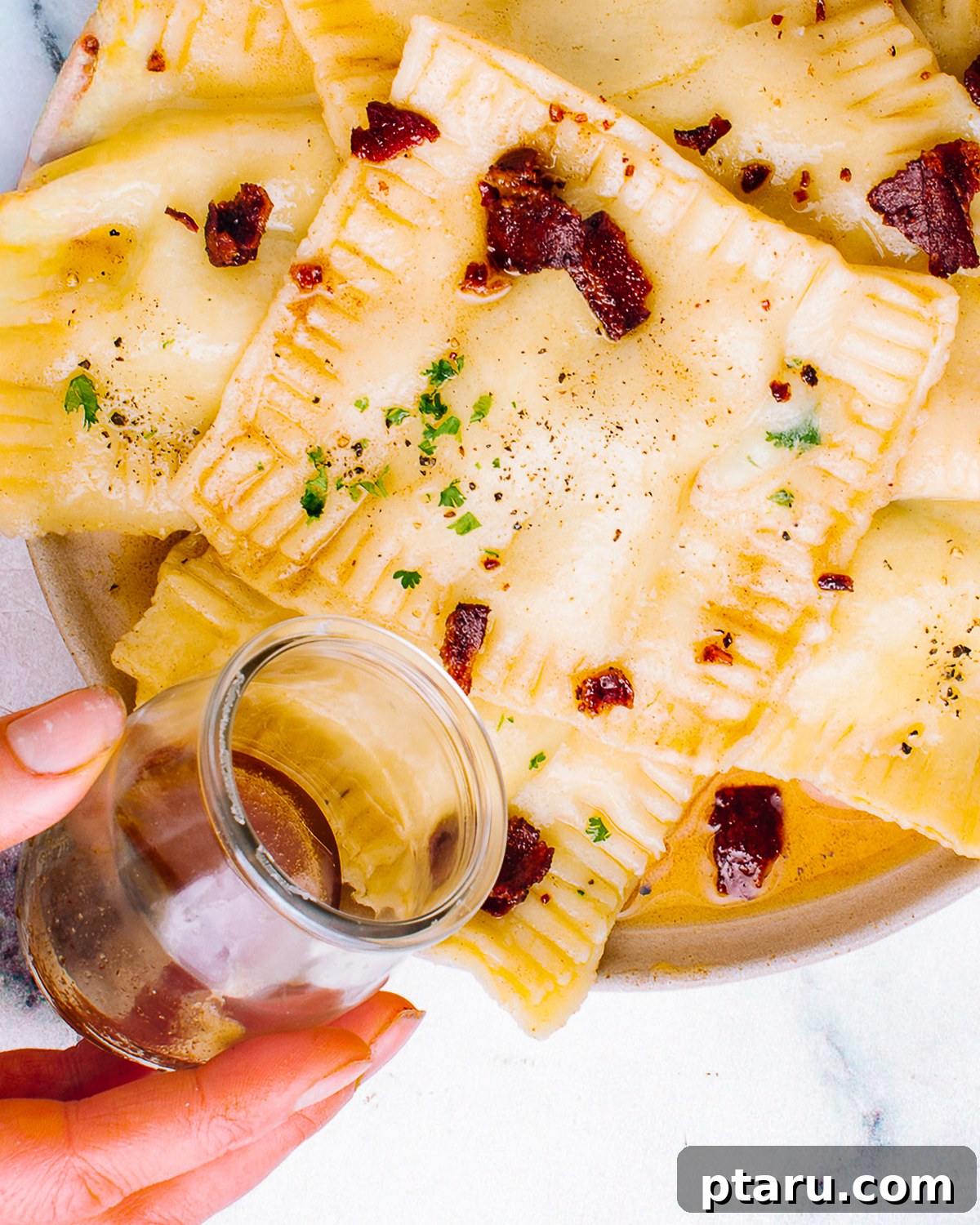
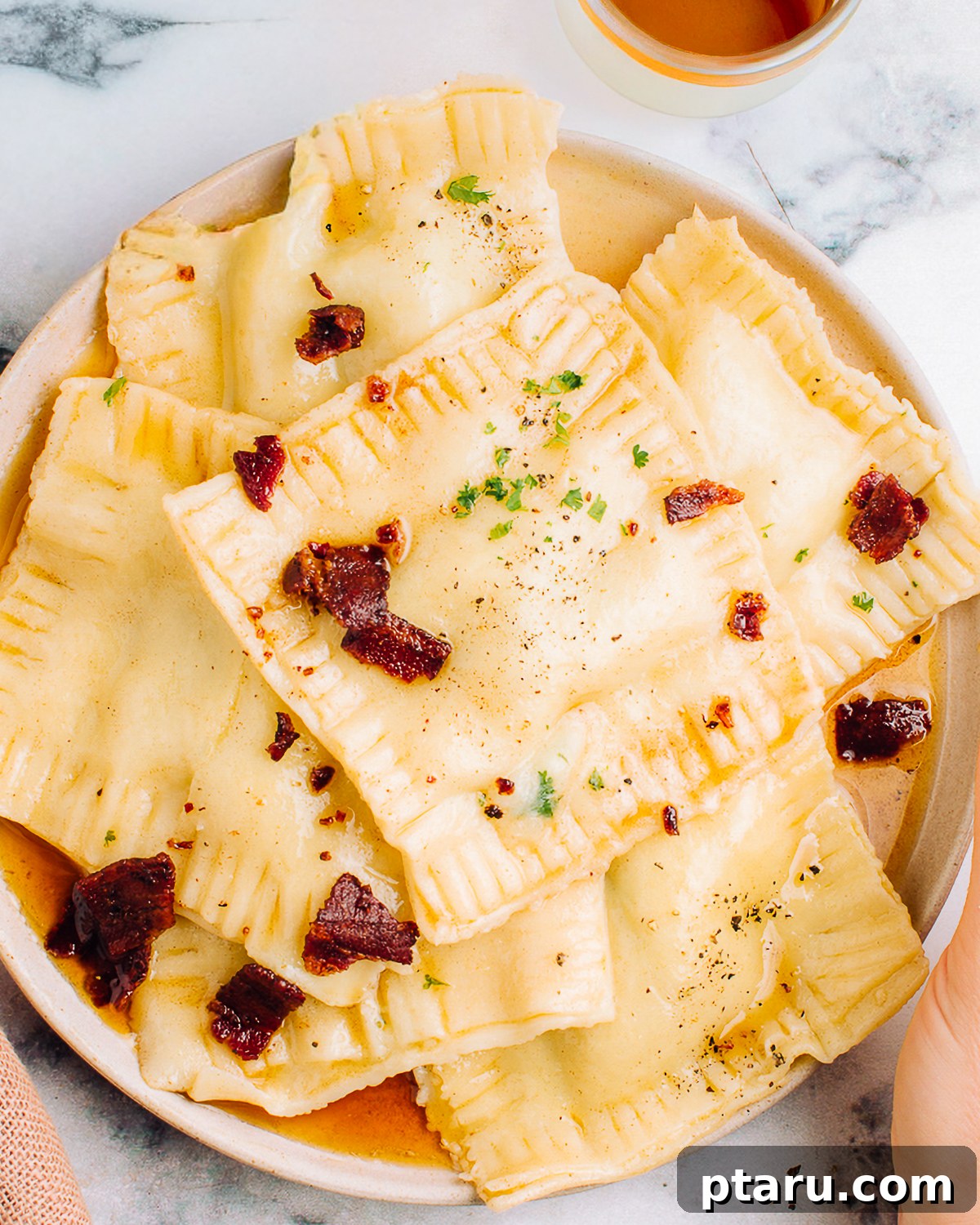
Meet the top sauce for pumpkin ravioli: simple browned butter with crisp fried sage. This classic combination highlights the sweet, nutty notes of pumpkin-filled pasta and adds savory depth without overpowering it. The sauce takes about five minutes to make—often finishing before your pasta water even boils—so it’s an ideal quick, seasonal finish for stuffed ravioli.
Sauce for Pumpkin Ravioli Ingredients
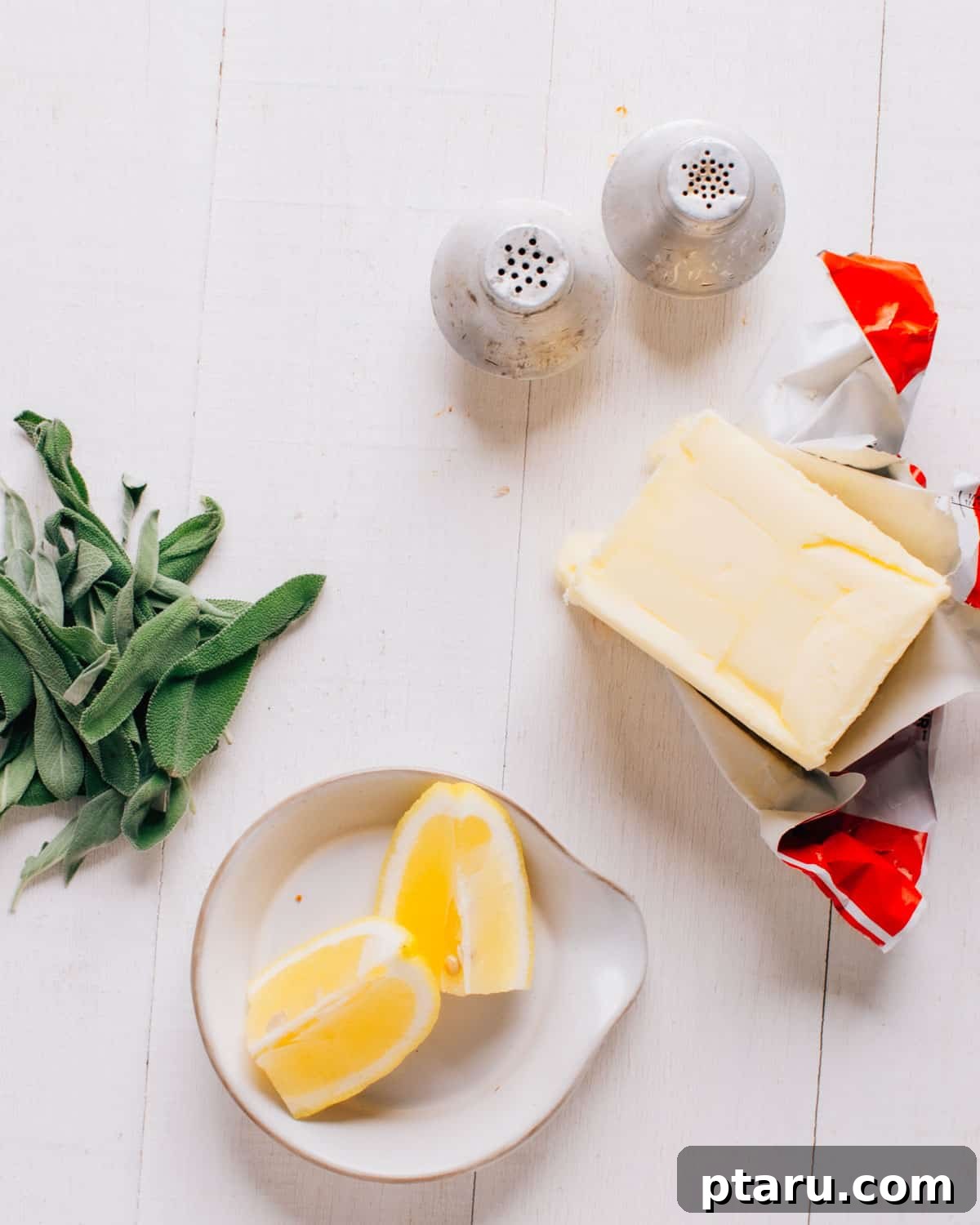
- 1/2 cup salted butter: The milk solids in butter are where the nuttiness comes from when it browns. Use real salted butter rather than oil or margarine; you likely won’t need extra salt.
- 1/3 cup fresh sage leaves, packed: Fresh sage fries crisp in butter and turns savory, which balances the sweet pumpkin filling. Dried sage does not provide the same texture or flavor impact.
- 2 tsp lemon juice: A small splash of acid brightens the sauce and cuts through the richness so the dish doesn’t taste heavy. Add the lemon off the heat.
- Salt and pepper to taste: Mostly pepper. Since the recipe begins with salted butter, taste before adding any additional salt.
For Serving
- 16 oz pumpkin ravioli, cooked: Fresh or frozen—one batch of this sauce will dress a standard 16-ounce package.
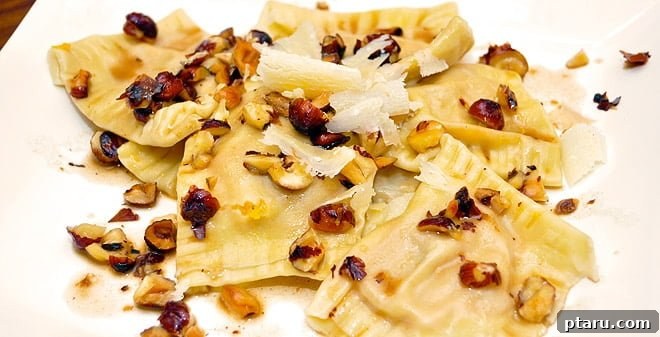
- Chopped bacon or toasted nuts: Optional toppings such as chopped toasted hazelnuts, pecans, or crisp bacon add crunch and a seasonal touch that contrasts with the tender pasta.
Variations and Substitutions
- Unsalted butter: If you prefer unsalted butter, add about 1/4 tsp kosher salt with the sage, then adjust at the end after tasting.
- A spoonful of pasta water: Reserve a little starchy pasta water to loosen and emulsify the butter so it clings to each raviolo.
- Parmigiano-Reggiano: Grated parmesan over the finished dish adds savory, salty depth. For a creamier option, use a cream- and garlic-based sauce instead.
Tools to Have Ready
- A pale saucepan: Stainless or light-colored enamel is best. The change in color of the butter as it browns is an important visual cue, so avoid a dark pan that hides it.
- Tongs: Useful for removing the fragile fried sage leaves while they are still crisp.
- A slotted spoon: Use this to lift cooked ravioli from the water—draining in a colander can cause tearing.
I often use this same brown butter and sage base for other filled pastas like butternut squash ravioli. If you want the pumpkin flavor in the sauce itself, try a creamy pumpkin pasta sauce where the squash is incorporated into the sauce rather than the pasta filling.
How to Make Sauce for Pumpkin Ravioli: An Easy Guide
Start the ravioli in the boiling water first—this sauce is genuinely faster to make than the pasta cooks.
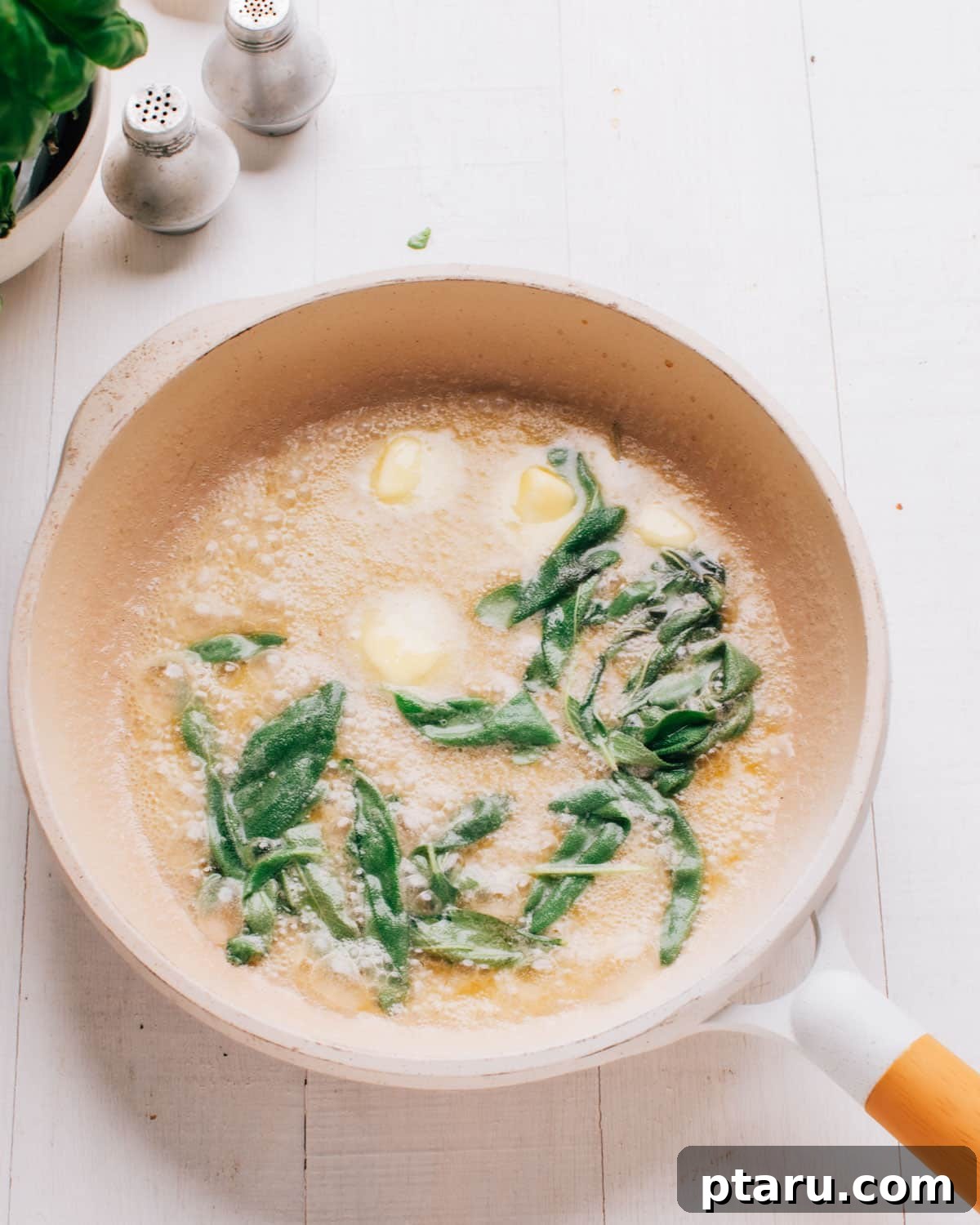
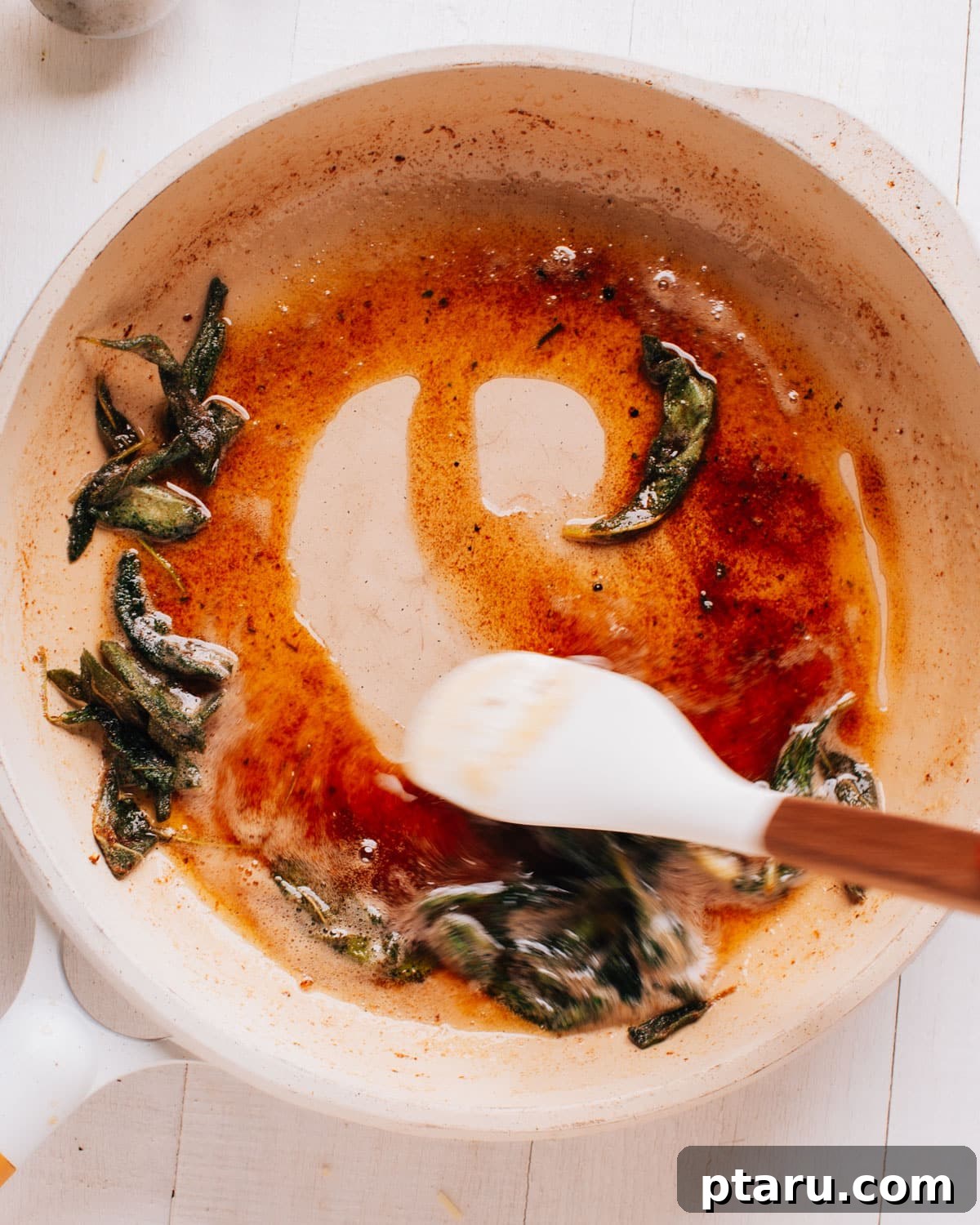
- Melt the butter: Place the butter in a pale saucepan over medium heat and let it melt completely while you stay nearby.
- Fry the sage: When the butter surface foams, add the sage leaves. Cook 3 to 5 minutes until the foaming subsides and brown specks appear on the pan bottom; the butter will develop a nutty aroma.
- Finish off the heat: Remove the pan from the burner, stir in the lemon juice, add freshly ground black pepper, then taste and add salt only if needed.
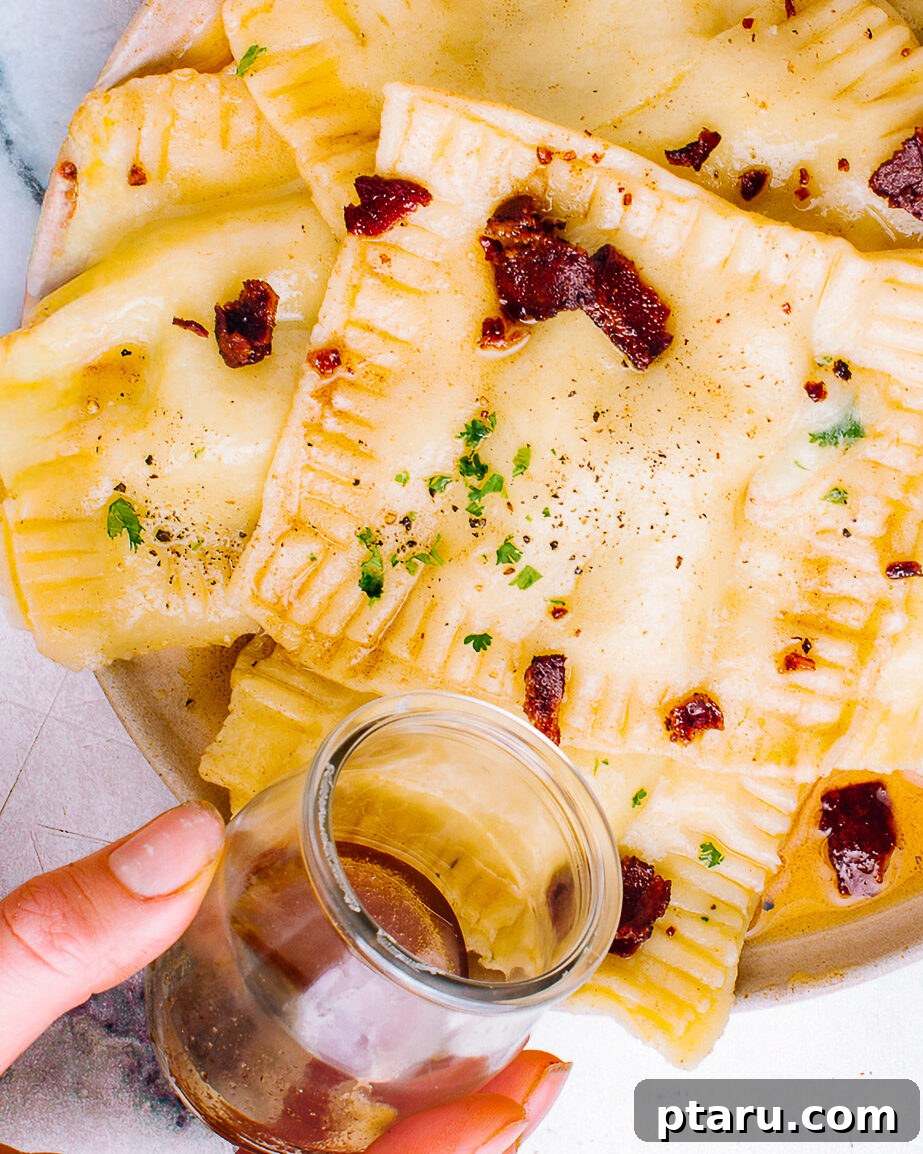
- Toss and serve: Lift the cooked ravioli from the pot directly into the pan with the brown butter, toss gently to coat, and scatter the crisp sage leaves over the top. Serve immediately.
5 Common Mistakes to Avoid
- Boiling the ravioli too hard: Pumpkin filling is moist and can cause parcels to split. Keep the water at a gentle simmer rather than a rolling boil.
- Saucing them straight from the pot: Ravioli hold surface water that will thin the butter. Let them drain a few seconds before tossing in the sauce.
- Skipping the lemon: Store-bought filling tends to be slightly sweet; a little acid prevents the dish from reading like dessert.
- Crowding the pan: Give ravioli space to move so they don’t stick together and tear when you toss them.
- Trusting package timings exactly: Brands and fresh makers vary in size and cooking time. Test a piece before draining to avoid overcooking.
Make Ahead and Storage
You can make the brown butter sage sauce ahead of time. Cook it as directed, cool to room temperature, then store in an airtight container in the refrigerator.
The sauce keeps 3 to 4 days chilled. Because butter absorbs odors, seal it well. Reheat gently over low heat; do not let it boil. The stored sage will soften, so quickly fry a few fresh leaves to restore the crisp garnish if desired.
What to Serve with Pumpkin Ravioli Sauce
One batch of this sauce will generously coat 16 oz of filled pasta or gnocchi, or about 8 oz of dry pasta. Filled pasta is denser, so portions are different by weight.
- Pumpkin ravioli: Fresh or frozen; check a sample to confirm doneness so the ravioli hold together when tossed.
- Gnocchi: The same sauce works beautifully over gnocchi for a softer bite.
- Roasted vegetables: Spoon the warm butter over roasted squash, carrots, or Brussels sprouts at the table for a satisfying side.
- A sharp salad: A green salad with lemon or vinegar in the dressing balances the richness of the butter-based sauce.
If you want a fuller menu, complement the pasta with a crisp, acidic salad and a roasted vegetable side to contrast textures and flavors.
Tips for the Best Pumpkin Ravioli Sauce
- Taste the filling first: Pumpkin ravioli vary from savory to sweet. Tasting the filling helps you decide how much lemon or pepper to add.
- Fry extra sage: Crispy leaves provide contrast to the soft pasta, so plan for more than you think you’ll need.
- Salt at the end: Many store-bought fillings are already seasoned and the butter is salted. Salt the finished dish rather than the pan.
- Keep pasta water handy: A spoonful of starchy cooking water helps the butter cling to the ravioli and to gather into a silky sauce.
Frequently Asked Questions
Quick answers to common questions.
Brown butter with fried sage is the best companion for pumpkin ravioli. Its toasted, savory flavor complements sweet, mild pumpkin without overpowering it.
One batch of this sauce is designed to coat a standard 16-ounce package of ravioli.
Dried sage can season the butter but will not crisp. If using dried, add about 1 tablespoon toward the end of browning. You’ll miss the texture of fried leaves.
The butter is ready when the foaming subsides, the liquid turns amber, brown specks appear on the pan bottom, and the aroma becomes nutty rather than creamy—usually 3 to 5 minutes.
Yes. Cook frozen pumpkin ravioli straight from frozen in well-salted water, lift them out with a slotted spoon, and toss with the warm sauce.
Bitterness indicates the milk solids slipped past toasted into burned. Remove the pan a shade sooner next time and take the sage out as soon as it crisps.
Yes. Refrigerate in an airtight container for 3–4 days. Reheat gently and fry fresh sage leaves to restore crispness.
This sauce suits soft, starchy dishes like gnocchi, tortellini, butternut squash ravioli, or wide noodles. It also works well spooned over roasted squash and vegetables.
Other Pumpkin Recipes You’ll Love
- Creamy pumpkin pasta sauce with crispy sage
- Pumpkin soup with ginger and rice
- Crockpot chicken enchiladas with pumpkin sauce
- Butternut squash ravioli sauce
- Classic brown butter sage sauce
- Pumpkin dessert recipes
#1 Sauce for Pumpkin Ravioli (5-Minute Brown Butter Sage Recipe)
Ingredients
- ½ cup salted butter
- ⅓ cup fresh sage leaves packed
- 2 tsp lemon juice
- salt and pepper to taste
For Serving
- 16 oz pumpkin ravioli cooked
- chopped bacon or toasted nuts optional, for topping
Instructions
-
Set the butter in a saucepan over medium heat and let it melt completely.
-
When the surface foams, add the sage leaves. Cook 3 to 5 minutes until the foaming settles, brown flecks appear, and the butter smells toasty.
-
Remove the pan from the heat, stir in the lemon juice, add black pepper, then taste and add salt only if needed.
-
Lift the cooked pumpkin ravioli from the pot into the sauce, toss gently to coat, scatter the crisp sage leaves on top, and serve right away.
Notes
Serving: Finish with freshly grated parmesan for added savory depth if you like.
Butter: If using unsalted butter, add ¼ tsp kosher salt while the sage cooks and adjust to taste at the end.
Nutrition
| Carbohydrates: 0.5 g
| Protein: 0.3 g
| Fat: 23 g
| Saturated Fat: 15 g
| Sodium: 185 mg
Nutrition information is an estimate and should be used as a guideline only.
Tried this recipe? Leave a comment!