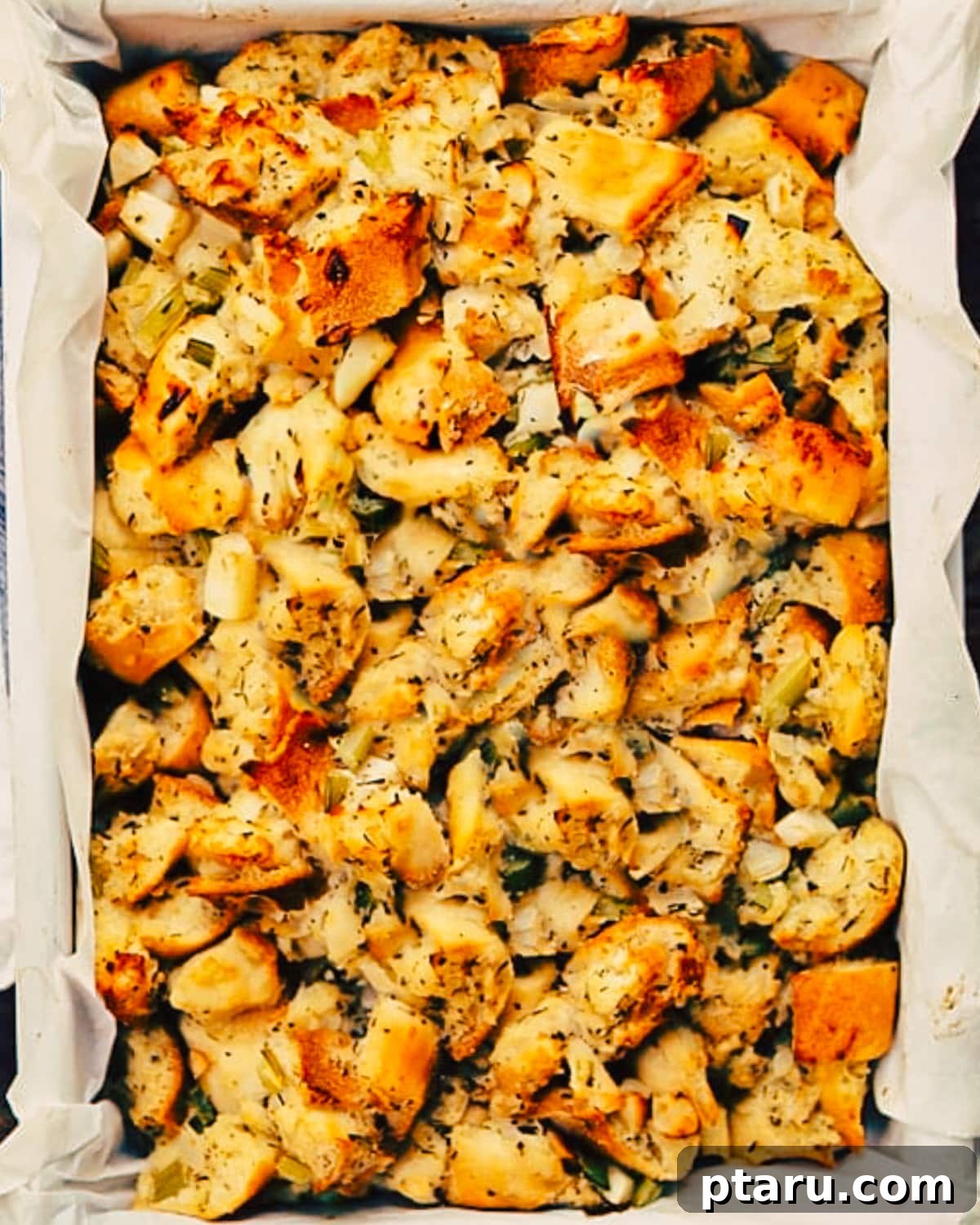
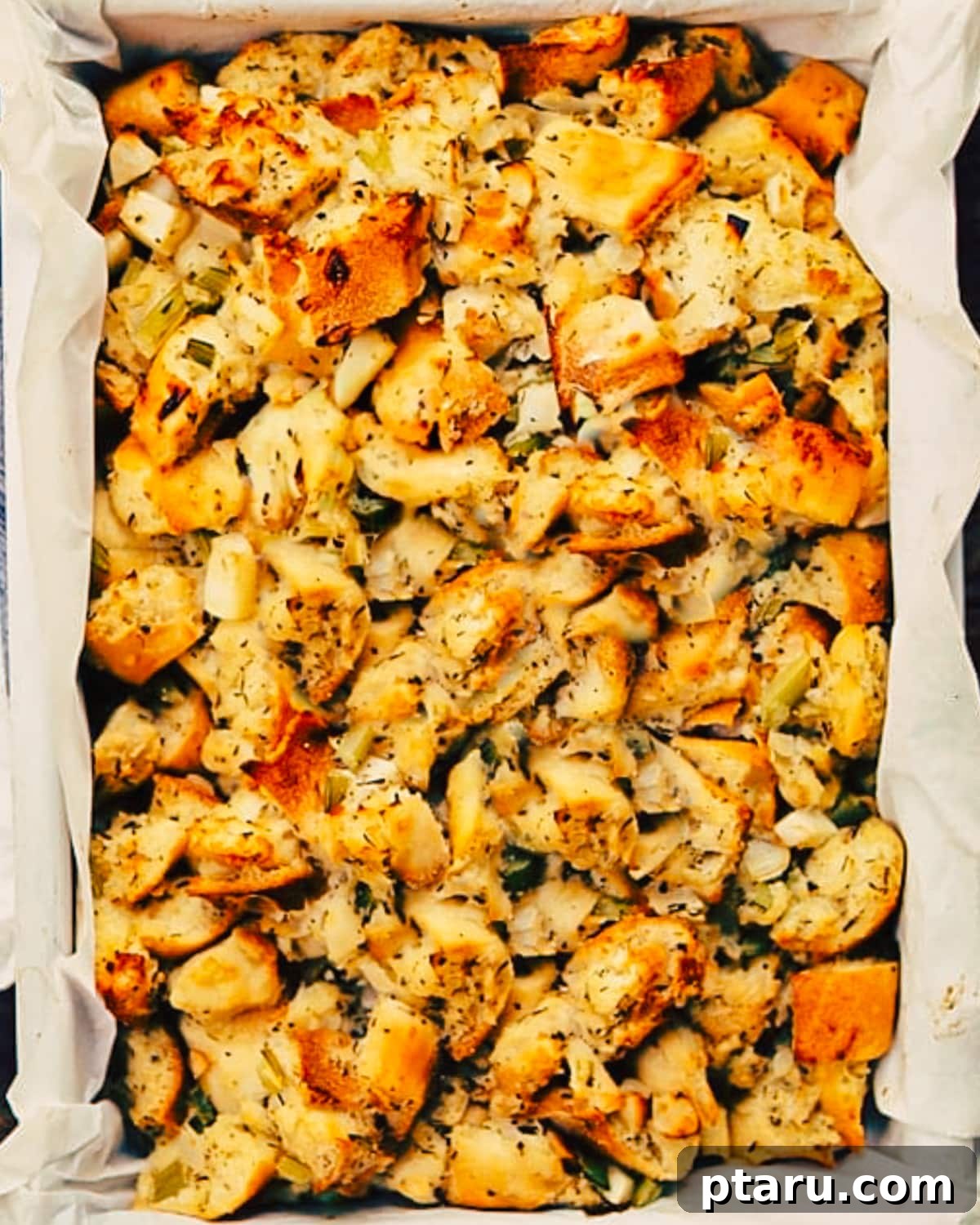
This Turkey Stuffing with Apples and Herbs is more than just a side; it’s a golden, flavorful masterpiece that will elevate your holiday dinner. Baked to perfection with a beautiful blend of sweet apples and aromatic herbs, it offers a harmonious balance that complements any main course. This easy-to-make recipe is a quintessential Thanksgiving side dish, incredibly tasty, and conveniently prepared ahead of time, ensuring a stress-free celebration.
Expert Tips for the Most Flavorful Thanksgiving Stuffing
Crafting the perfect holiday stuffing involves a few key techniques that ensure a delightful texture and rich flavor. Follow these expert tips to achieve a golden, moist, and utterly delicious apple herb stuffing every time.
- Embrace Stale Bread for Superior Texture: The foundation of exceptional stuffing lies in using stale bread. Its drier, firmer texture is crucial because it acts like a sponge, absorbing the savory broth evenly without becoming soggy or mushy. If you only have fresh bread on hand, don’t worry! Simply cube it and spread the pieces on a baking sheet. Dry them out in a low oven (around 300°F or 150°C) for 15-20 minutes until the edges feel slightly firm and dry, but not toasted. This crucial step prevents a dense, wet stuffing and ensures a wonderfully airy and moist interior with perfectly crisp edges.
- Season Generously Before Adding Eggs: One of the most common pitfalls in stuffing recipes is under-seasoning. It’s vital to taste and adjust your seasonings *before* incorporating the eggs. Bread and broth can vary significantly in their salt content, so it’s best to start with a lower amount of salt and gradually add more as needed. Taste a small amount of the bread and vegetable mixture after adding the broth and initial seasonings. The flavor should be vibrant and well-balanced, much like a perfectly seasoned potato chip. If it tastes flat, it needs more salt. This allows you to fine-tune the flavor profile safely before the eggs are added, which would make tasting unsafe.
- Master the Sauté: Don’t Rush the Aromatics: The depth of flavor in this apple herb stuffing comes from properly sautéing the onions, celery, and apples. Resist the urge to rush this step. Cook these vegetables slowly over medium heat in butter until they are deeply softened, translucent, and just beginning to turn lightly golden. This process caramelizes their natural sugars, intensifying their sweetness and creating a rich, savory base for your stuffing. A rushed sauté will result in crunchy, underdeveloped flavors that won’t meld as beautifully with the other ingredients.
- Allow for a Moment of Rest After Baking: Just like a roast turkey, stuffing benefits from a brief resting period after it comes out of the oven. Letting the baked stuffing rest for 5-10 minutes allows the center to fully set, making it easier to scoop and serve cleanly without falling apart. This also gives the flavors a chance to meld and settle, resulting in an even more delicious final product.
- Bake Stuffing Outside the Bird for Safety and Superior Texture: While traditionally cooked inside the turkey, baking stuffing in a separate dish is highly recommended for both food safety and optimal texture. Stuffing cooked inside the bird must reach an internal temperature of 165ºF (74ºC) to be safe, which often leads to overcooking and drying out the turkey breast. When baked separately, your stuffing can achieve that beautiful golden, crispy crust without risking undercooked poultry juices or overcooked turkey meat. This method guarantees a moist, flavorful stuffing every time. For comprehensive guidance on cooking the perfect turkey, explore our detailed guide on How to Cook a Turkey.
- Leverage Focaccia for Unmatched Richness and Moisture: Since this “unstuffed” stuffing doesn’t benefit from turkey drippings, choosing the right bread is key to achieving a rich, moist texture. Stale focaccia is an excellent choice for this purpose. Its inherent olive oil content and airy structure contribute a luxurious richness and superb moisture absorption, preventing the stuffing from drying out. The addition of eggs further enhances this, binding the ingredients and adding another layer of moisture and structure, making it incredibly satisfying without the need for additional drippings.
Essential Ingredients for this Delectable Herb and Apple Stuffing
Creating this easy and delightful Thanksgiving stuffing recipe requires a thoughtful selection of ingredients that come together to produce a symphony of flavors and textures. Here’s a closer look at what you’ll need to make this holiday favorite:
- Stale Bread Cubes: The absolute cornerstone of great stuffing. While stale focaccia is highly recommended for its excellent absorption capabilities and light, airy texture due to its oil content, any good quality stale bread will work beautifully. Consider sourdough, challah, or even a classic white artisan loaf. Remember, if your bread isn’t stale, a quick stint in a low oven will dry it out perfectly, ensuring it can soak up all the delicious broth without turning mushy.
- Aromatic Vegetables: Finely chopped onions and celery are slowly cooked down in butter, forming the aromatic base of this stuffing. Their gentle sweetness and subtle bitterness add essential depth and complexity to the dish as they soften and caramelize.
- Your Favorite Sweet Apple Varieties: The apples are a star here, contributing a wonderful touch of sweetness and a slight tartness that brightens the entire dish. Opt for firm, sweet-tart varieties like Honeycrisp, Braeburn, or Gala. These apples hold their shape beautifully during cooking, remaining juicy and providing delightful textural contrast without becoming overly soft or mealy.
- Fresh Herbs: A trio of classic Thanksgiving herbs infuses this stuffing with irresistible fragrance and flavor. Fresh parsley adds brightness, thyme brings earthy notes, and sage offers that distinctive, warm, savory aroma that defines holiday cooking. Using fresh herbs makes a noticeable difference in the final taste, bringing vibrancy to every bite.
- Essential Spices: A small but crucial amount of kosher salt and freshly ground black pepper is used to balance the sweetness of the apples and the richness of the broth. Proper seasoning is key to unlocking the full potential of all the ingredients, ensuring the stuffing tastes vibrant and well-rounded.
- Savory Broth: Either chicken broth or vegetable broth provides the necessary moisture to bind all the ingredients together, infusing the bread with savory goodness. Using a good quality, flavorful broth is important for the overall taste of the stuffing. If using store-bought, consider a low-sodium option to better control the salt content.
- Binding Eggs: Lightly beaten eggs are incorporated into the mixture to help the stuffing set beautifully. They act as a binder, giving the stuffing structure and allowing it to slice cleanly and hold its shape, rather than crumbling apart, while also adding richness.
For the exact quantities of each ingredient, please refer to the detailed recipe card conveniently located at the bottom of this page.
Optional Add-Ins to Customize Your Stuffing
While this apple herb stuffing is absolutely delicious on its own, there are several fantastic ingredients you can add to further enhance its flavor and texture, tailoring it to your personal preferences or dietary needs:
- Savory Breakfast Sausage: For a heartier, more robust stuffing with a rich, umami depth, consider browning about a pound of breakfast sausage in a large skillet before you start sautéing the vegetables. Drain any excess fat, then crumble the cooked sausage into the bread mixture.
- Earthy Mushrooms: Sautéing sliced mushrooms (such as cremini or button mushrooms) until they are beautifully browned and tender will introduce an extra layer of earthy, savory flavor to your stuffing. Cook them after the onions and celery, or separately, until their moisture has evaporated and they’ve achieved a golden hue.
- Classic Poultry Seasoning: A small pinch of high-quality poultry seasoning, added along with the fresh herbs, can amplify those traditional holiday flavors. It often contains a blend of sage, thyme, rosemary, and other warming spices, perfectly complementing the fresh herb profile.
- Tart Fresh Cranberries: For a delightful pop of color and a tart counterpoint to the sweet apples, sometimes I like to add a couple of handfuls of fresh or frozen cranberries (no need to thaw) to the pan along with the apples. They will soften slightly and burst during baking, adding a beautiful festive touch and bright flavor.
Step-by-Step Guide: How to Make This Irresistible Apple Herb Stuffing
Making this flavorful stuffing is a straightforward process, primarily cooked in a large pot or Dutch oven before being transferred to a casserole dish for baking. Each step is designed to build layers of flavor with minimal effort, resulting in a side dish that tastes like you spent hours in the kitchen.
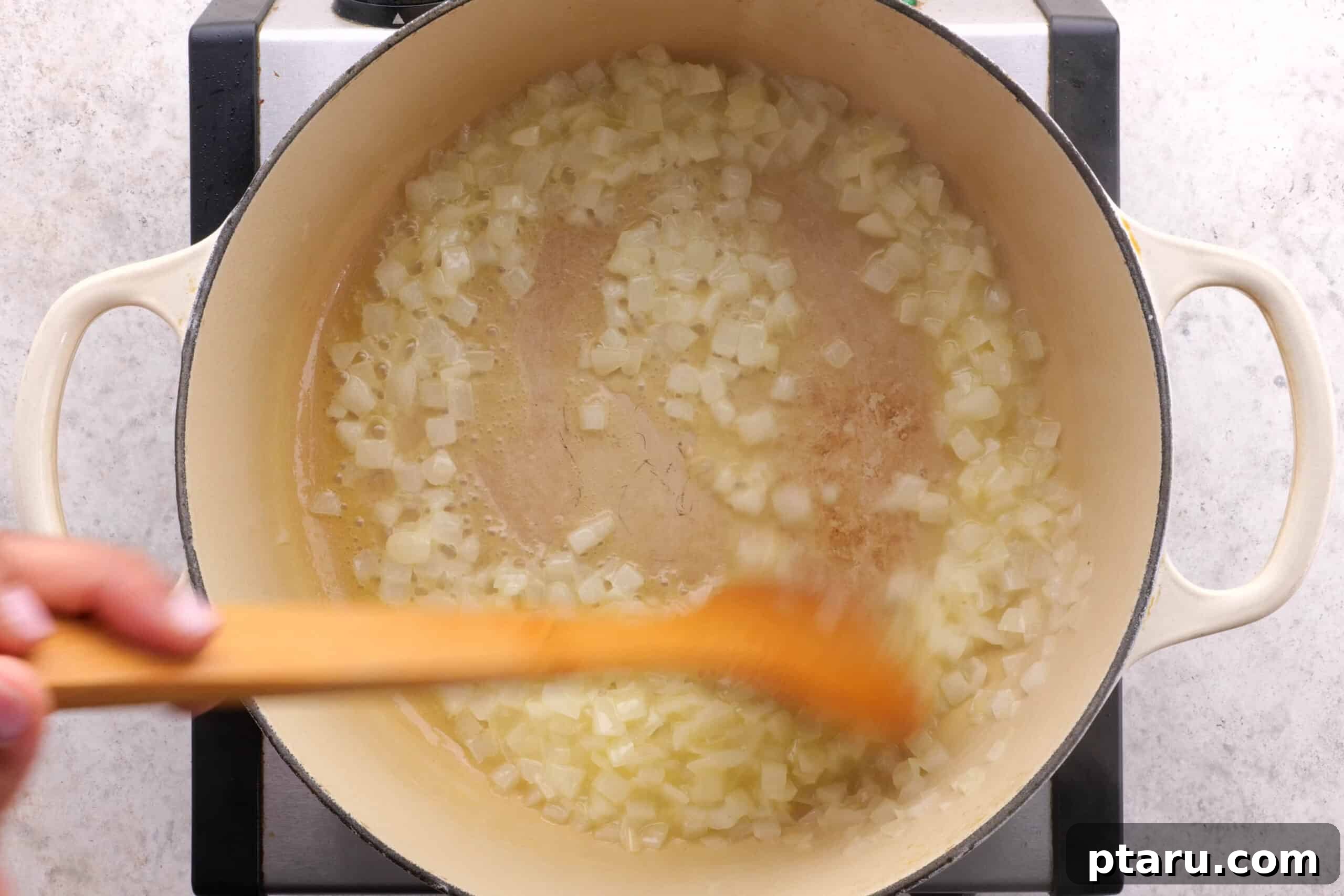
1. Sauté the Vegetables to Develop Flavor
Begin by preheating your oven to 350ºF (175ºC) and melting the unsalted butter in a large stockpot or Dutch oven over medium heat. Once the butter is shimmering, add the finely chopped onions, celery, and apples. Stir in about 1 teaspoon of kosher salt. Cook this mixture gently for approximately 10-12 minutes, stirring occasionally. The goal here is to soften the vegetables and apples thoroughly, allowing their natural sugars to caramelize slightly and their flavors to concentrate. Reduce the heat if you notice them browning too quickly, as we want them soft and translucent, not overly crisp.
2. Combine Bread Cubes with Broth and Herbs
Once your vegetables and apples are perfectly tender and fragrant, remove the pot from the heat. Stir in the dried herbs (sage and thyme), minced fresh parsley, and the stale bread cubes. Gradually pour the chicken or vegetable broth over the mixture, tossing gently to ensure even distribution. The key is to hydrate the bread without turning it into a soggy mass. Stale focaccia is particularly excellent at this stage due to its internal air pockets, which allow for even absorption. Add about 1½ teaspoons more of kosher salt and the ground black pepper. Now is the crucial moment to taste the mixture! Take a small spoonful (it’s safe since the eggs aren’t in yet) and adjust the seasoning. Depending on the salt content of your broth and bread, you might need the remaining ½ teaspoon of salt or even a little more until the flavor is rich and perfectly balanced.
3. Stir In Eggs and Bake to Golden Perfection
Allow the stuffing mixture to cool slightly for a few minutes. This prevents the eggs from scrambling when added. Once slightly cooled, stir in the lightly beaten large eggs until they are well incorporated throughout the mixture. Transfer the prepared stuffing into a buttered 9×13 inch baking dish (or one lined with parchment paper for easy cleanup). Spread it evenly. Bake the stuffing uncovered in your preheated oven for approximately 40 minutes, or until the top is beautifully golden brown, and the center feels set and firm. The edges will develop a delightful crispness as it cooks, offering a wonderful textural contrast to the moist interior.
Make Ahead and Storage Solutions for Convenience
This apple herb stuffing is a fantastic make-ahead dish, allowing you to reduce holiday stress. Proper storage also ensures you can enjoy delicious leftovers long after the main meal.
Storing Leftover Stuffing
- Refrigerator: To store, first allow the stuffing to cool completely at room temperature. Then, transfer it to an airtight container. It will keep beautifully in the refrigerator for up to 4 days, making it perfect for enjoying post-holiday meals.
- Microwave Reheating: For quick reheating, place individual portions in a microwave-safe dish. Warm in short bursts (30-60 seconds) stirring occasionally, until heated through. A splash of broth can help maintain moisture if it seems a bit dry.
- Oven Reheating: For best results and to regain some of that crispy texture, reheat stuffing in the oven. Place it in an oven-safe dish, cover loosely with foil to prevent drying, and add a splash of chicken or vegetable broth to the bottom of the dish. Reheat at 325°F (160°C) for 20-30 minutes, or until warmed through. Remove the foil for the last 5-10 minutes if you desire crispier edges.
Freezing for Future Enjoyment
- Freezing Baked Stuffing: This stuffing freezes exceptionally well. Once completely cooled, divide the baked stuffing into individual portions or larger freezer-safe containers. Wrap tightly with plastic wrap and then aluminum foil to prevent freezer burn. It can be frozen for up to 2 months.
- Thawing Before Reheating: For optimal results, thaw frozen stuffing in the refrigerator overnight. Once thawed, reheat using the oven instructions above. You can also reheat directly from frozen in the oven, though it will take longer (approximately 45-60 minutes covered, then uncovered).
Delightful Serving Ideas for Your Apple Herb Stuffing
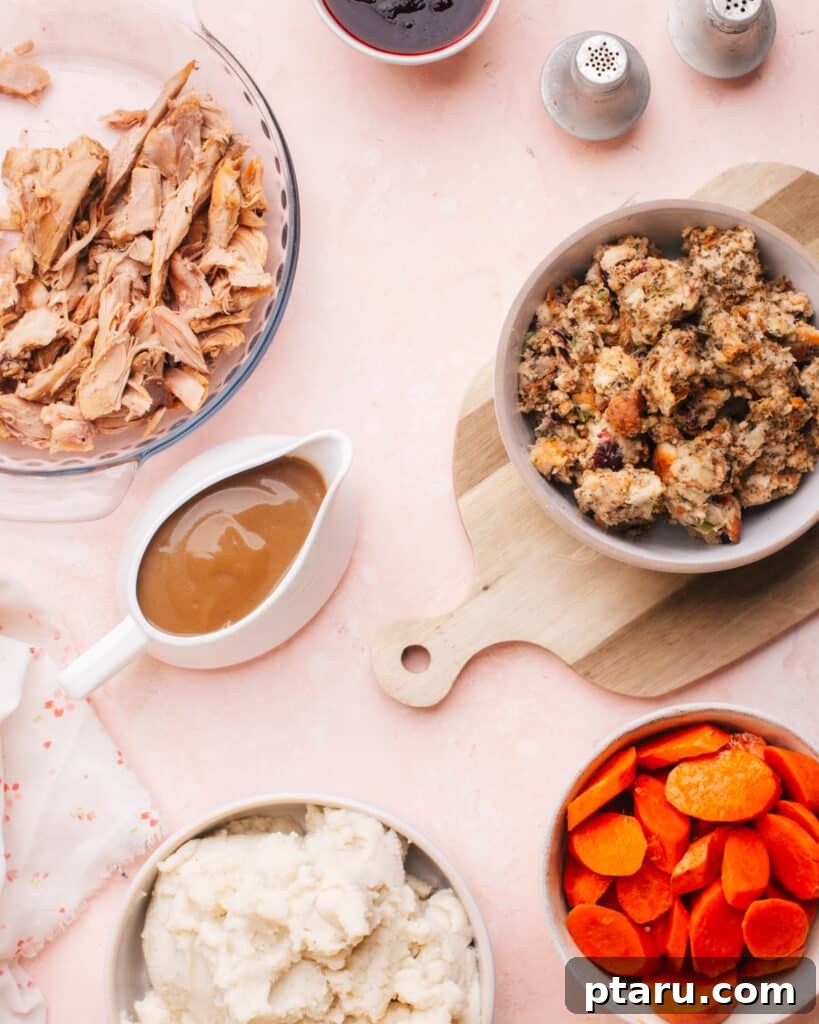
This versatile apple herb stuffing isn’t just for Thanksgiving; its sweet and savory profile makes it an ideal accompaniment for a variety of meals throughout the year. Here are some inspired serving suggestions:
Naturally, this flavorful apple stuffing pairs perfectly with classic holiday roasts. It’s a stellar side for my succulent roast turkey, or for a faster cooking method, my tender spatchcock turkey. Beyond poultry, its robust flavors are equally magnificent alongside a juicy roast pork loin or a perfectly cooked, extra tender eye of round roast beef. The apples and herbs provide a beautiful contrast to the richness of these meats.
To complete your holiday spread, serve this stuffing with essential accompaniments. A luscious brown pepper gravy (or for a richer, more traditional option, my turkey gravy from neck and giblets without drippings) is a must. Creamy mashed potatoes, glazed carrots, and crisp green beans are also classic pairings that create a comforting and complete meal.
Don’t let any leftovers go to waste! Transform them into a delicious breakfast or brunch. Simply crisp leftover stuffing in a hot skillet with a little butter until golden, or for a truly unique experience, press it into a waffle iron for crispy, savory stuffing waffles – perfect with a fried egg on top!
Other Popular Turkey Dinner Recipes to Complete Your Feast:
- Fluffy Cornbread Casserole
- Sweet and Savory Candied Brussels Sprouts with Maple and Bacon
- Aromatic Maple Five Spice Roasted Butternut Squash
- Classic Glazed Carrots
- The Easiest Pumpkin Pie You’ll Ever Make
- Creamy Green Bean Casserole with Crispy Onions
Frequently Asked Questions About Apple Herb Stuffing
Absolutely! To make this stuffing vegetarian, simply substitute chicken broth with an equal amount of high-quality vegetable broth. No other changes are necessary for a delicious meat-free version.
For stuffing, you want apples that are sweet-tart and hold their shape well during cooking. Excellent choices include Honeycrisp, Braeburn, and Gala apples. These varieties will remain slightly firm and juicy, adding a pleasant texture and natural sweetness to the dish without becoming mushy.
Stale focaccia bread is truly ideal for this stuffing, as its rich flavor and porous texture absorb broth evenly, creating a perfect balance of moist interior and crispy exterior. However, any good quality stale bread cubes will work well, especially if dried in a low oven first to ensure optimal broth absorption.
Yes, adding sausage is a fantastic idea for a heartier stuffing! Brown about one pound of breakfast sausage (mild or spicy, depending on your preference) in a large skillet until cooked through and crumbled. Drain any excess fat, then stir the cooked sausage into the stuffing mixture before baking.
To ensure your stuffing is moist but never soggy, follow these key tips: always use stale or oven-dried bread, add the broth slowly and mix gently to avoid over-saturating the bread, and bake the stuffing uncovered. Baking uncovered allows the top and edges to crisp up beautifully, providing a delightful textural contrast.
Once fully cooled, store leftover stuffing in an airtight container in the refrigerator for up to 4 days. For reheating, use either the microwave for speed or the oven (covered with foil and a splash of broth) for a better texture, especially for larger portions.
Pin Recipe
Print Recipe
Turkey Stuffing with Apples (Unstuffed)
Jennifer Pallian BSc, RD
20
40
1
10 servings
Ingredients
- 2 lbs stale focaccia bread, cubed *see note for drying fresh bread
- ½ cup unsalted butter plus more to grease dish if not using parchment
- 2 medium onions finely chopped
- 2 large ribs celery finely chopped
- 2 apples peeled, cored, finely chopped (e.g., Honeycrisp, Braeburn, Gala)
- 2 ½ to 3 tsp kosher salt divided use, to taste
- 1 tbsp dried sage or 3 tbsp minced fresh sage
- 2 tsp dried thyme or 2 tbsp minced fresh thyme
- ¼ cup minced fresh parsley
- 4 cups chicken or vegetable broth
- ½ tsp ground black pepper
- 2 large eggs lightly beaten
Instructions
-
Preheat your oven to 350ºF (175ºC). In a large stockpot or Dutch oven, melt the butter over medium heat. Add the chopped onions, celery, and apples along with 1 teaspoon of the kosher salt. Cook, stirring occasionally, until the vegetables are softened and translucent, about 10-12 minutes. Reduce heat if they begin to brown too quickly.
Remove the pot from heat. Stir in the bread cubes, dried sage, dried thyme, minced fresh parsley, 1½ teaspoons more of kosher salt, and the ground black pepper. Gradually pour in the chicken or vegetable broth, tossing gently to combine and allow the bread to absorb the liquid evenly.
Taste the mixture (it’s safe to taste before eggs are added) and add the remaining ½ teaspoon of salt if needed. The exact amount of salt will depend on your broth and bread. The mixture should taste well-seasoned and vibrant. Let the mixture cool for a few minutes, then stir in the lightly beaten eggs until fully incorporated.
-
Transfer the stuffing mixture to a buttered 9×13 inch baking dish (or one lined with parchment paper). Spread it evenly across the dish.
Bake uncovered for 40 minutes, or until the top is beautifully golden brown and the center is set. Allow to rest for 5-10 minutes before serving.
Notes
If you only have fresh focaccia or other fresh bread, you can easily prepare it for stuffing. Cube the bread and spread it in a single layer on a baking sheet. Dry it out in a low oven at 300°F (150°C) for about 15 to 20 minutes, or until the edges are slightly firm and the cubes feel dry to the touch. This step ensures optimal broth absorption.
Salt content can vary significantly between store-bought bread and broth brands. This recipe instructs you to season the mixture before adding the eggs, allowing you to safely taste and adjust the seasoning. Start with the smaller amount of salt, taste the mixture, and then add more if needed until the flavor feels rich and balanced. If the flavor seems a bit flat, it likely just needs a little extra salt to truly shine (sometimes even more than the initial range mentioned). The goal is a flavor profile that is vibrant and satisfying, much like a perfectly seasoned potato chip.
Nutrition Information (Approximate)
Carbohydrates: 54g |
Protein: 10g |
Fat: 15g |
Saturated Fat: 6g |
Polyunsaturated Fat: 1g |
Monounsaturated Fat: 3g |
Trans Fat: 0.4g |
Cholesterol: 59mg |
Sodium: 1367mg |
Potassium: 138mg |
Fiber: 3g |
Sugar: 7g |
Vitamin A: 541IU |
Vitamin C: 6mg |
Calcium: 32mg |
Iron: 1mg
Nutrition information is automatically calculated and should be used as an approximation.
Tried this recipe? Leave a comment! We’d love to hear from you.