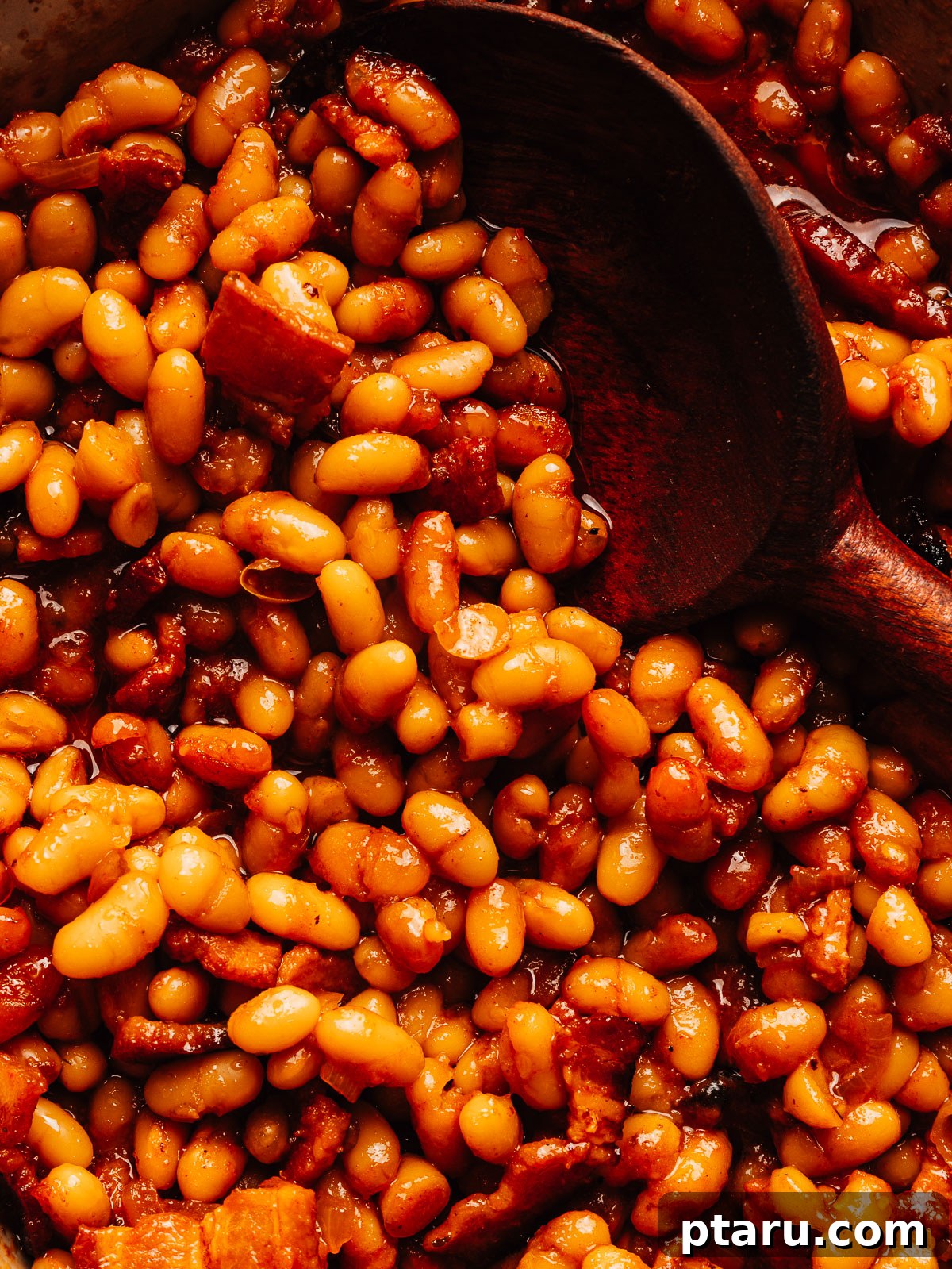
These easy baked beans are thick, smoky, and sweet, finished in a rich Southern-style barbecue sauce that won’t go watery. Using canned beans eliminates any overnight soaking, so the dish comes together quickly without sacrificing depth of flavor.
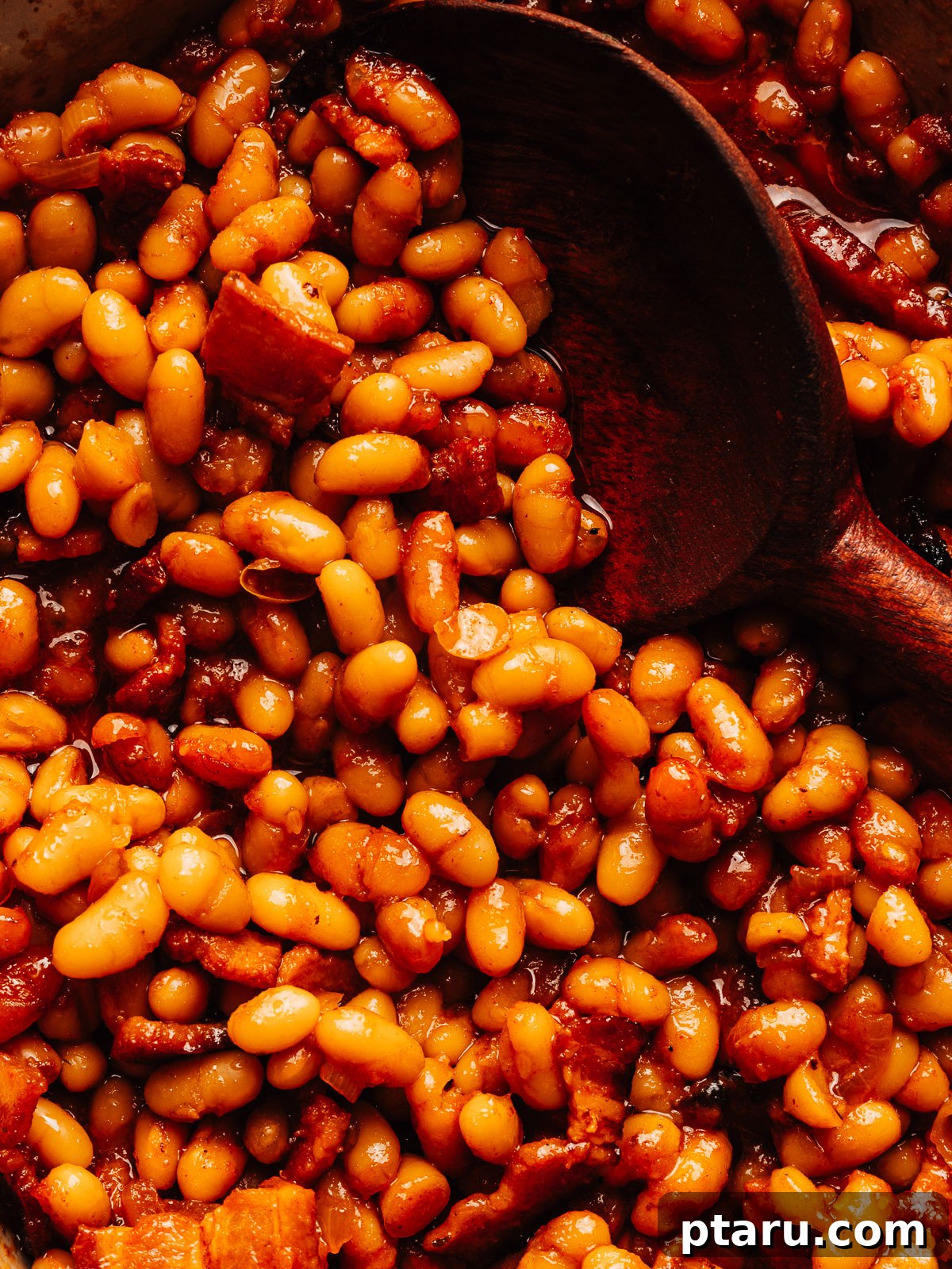
Molasses gives the sauce a dark, slightly bitter backbone that brown sugar alone can’t provide. When cooked long enough, the sugars caramelize and form a glossy, sticky coating that clings to the beans.
I make this dish whenever I serve oven-baked beef ribs and often alongside slow-cooked BBQ chicken. It’s a reliable, crowd-pleasing side for any cookout or weeknight meal.
Southern Baked Beans Ingredients
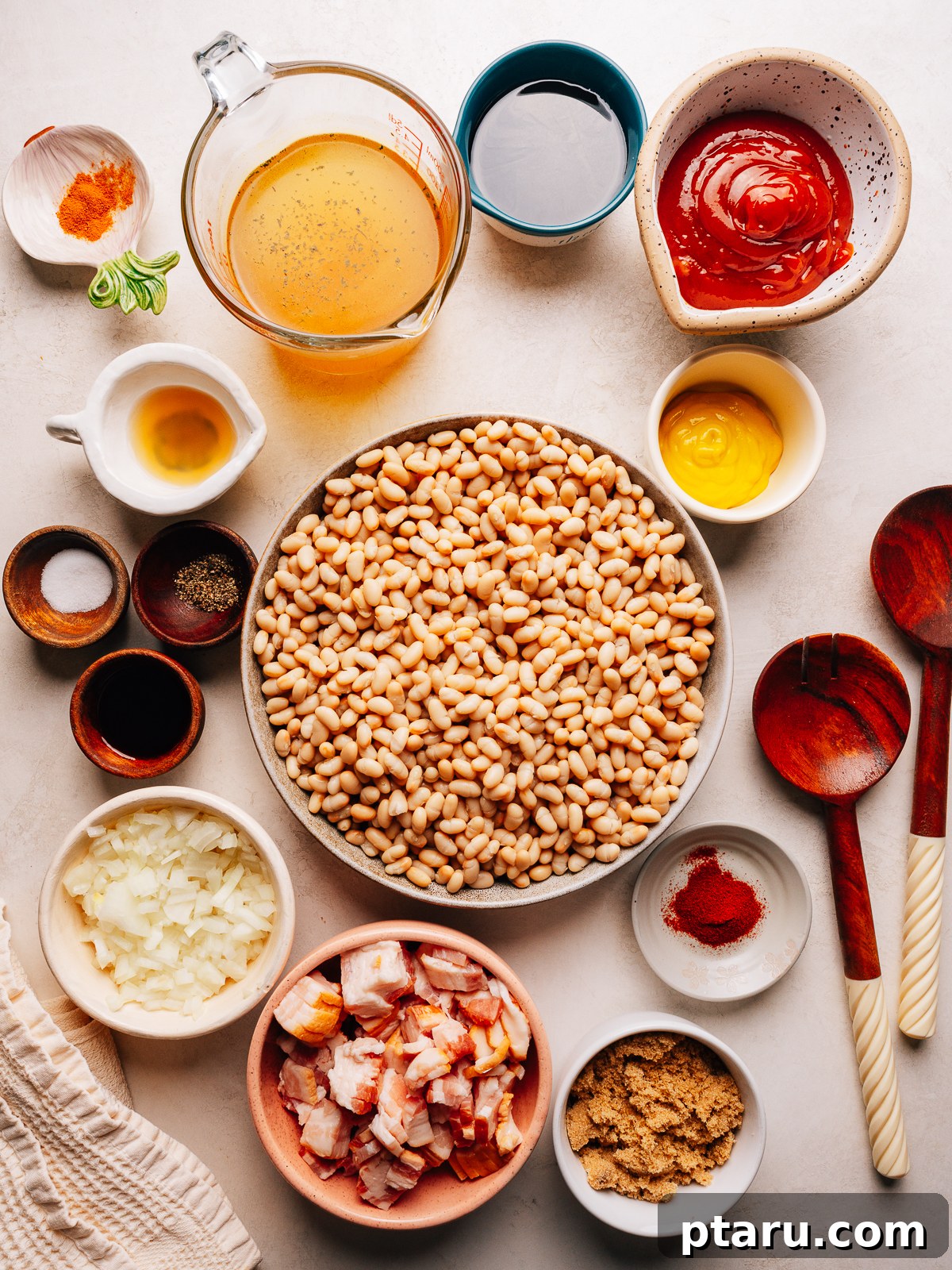
- White beans: canned, drained and rinsed. Navy, pinto, great northern or cannellini beans all work and hold their shape well.
- Thick-cut bacon: chopped and rendered until most of the fat has released but the meat is not crisp.
- Yellow onion: finely chopped and softened in the reserved bacon fat.
- Kosher salt
- Ketchup
- Dark brown sugar: packed.
- Molasses: the signature ingredient that creates classic baked bean flavor.
- Dijon or yellow mustard: balances the sweetness with a sharp note.
- Apple cider vinegar
- Worcestershire sauce
- Smoked paprika: adds smoke without a smoker.
- Freshly ground black pepper
- Cayenne pepper: optional, for added heat.
- Chicken broth: or water plus bouillon if preferred.
Exact ingredient amounts are listed in the recipe card below.
Variations and Substitutions
This recipe adapts well to swaps—tailor it to your taste or needs:
- Vegetarian version: omit the bacon, cook the onion in oil, use vegetable broth, and add more smoked paprika for depth.
- Boston style: increase the molasses and dial back the ketchup for a darker, more pronounced molasses flavor.
- From dried beans: soak and simmer dried beans until tender before using; substitute about 6 cups cooked beans for the canned amount.
- More heat: increase cayenne or stir in chipotle in adobo for smoky spice.
- Slow cooker: build the sauce on the stove, then transfer everything to a slow cooker and cook on low for about 4 hours (the caramelized top will be missing unless you finish under a broiler).
Tools You’ll Need
- Large Dutch oven for rendering bacon and making the sauce.
- 9×13 baking dish to encourage evaporation and build a caramelized top.
- Aluminum foil to cover the dish for the initial baking period.
- Wooden spoon for gentle stirring.
- Colander for draining and rinsing the canned beans.
How to Make Easy Baked Beans
The method is simple: build the sauce in one pot, then finish the beans in a baking dish. Preheat your oven to 325°F (163°C) before you begin.
Render the Bacon
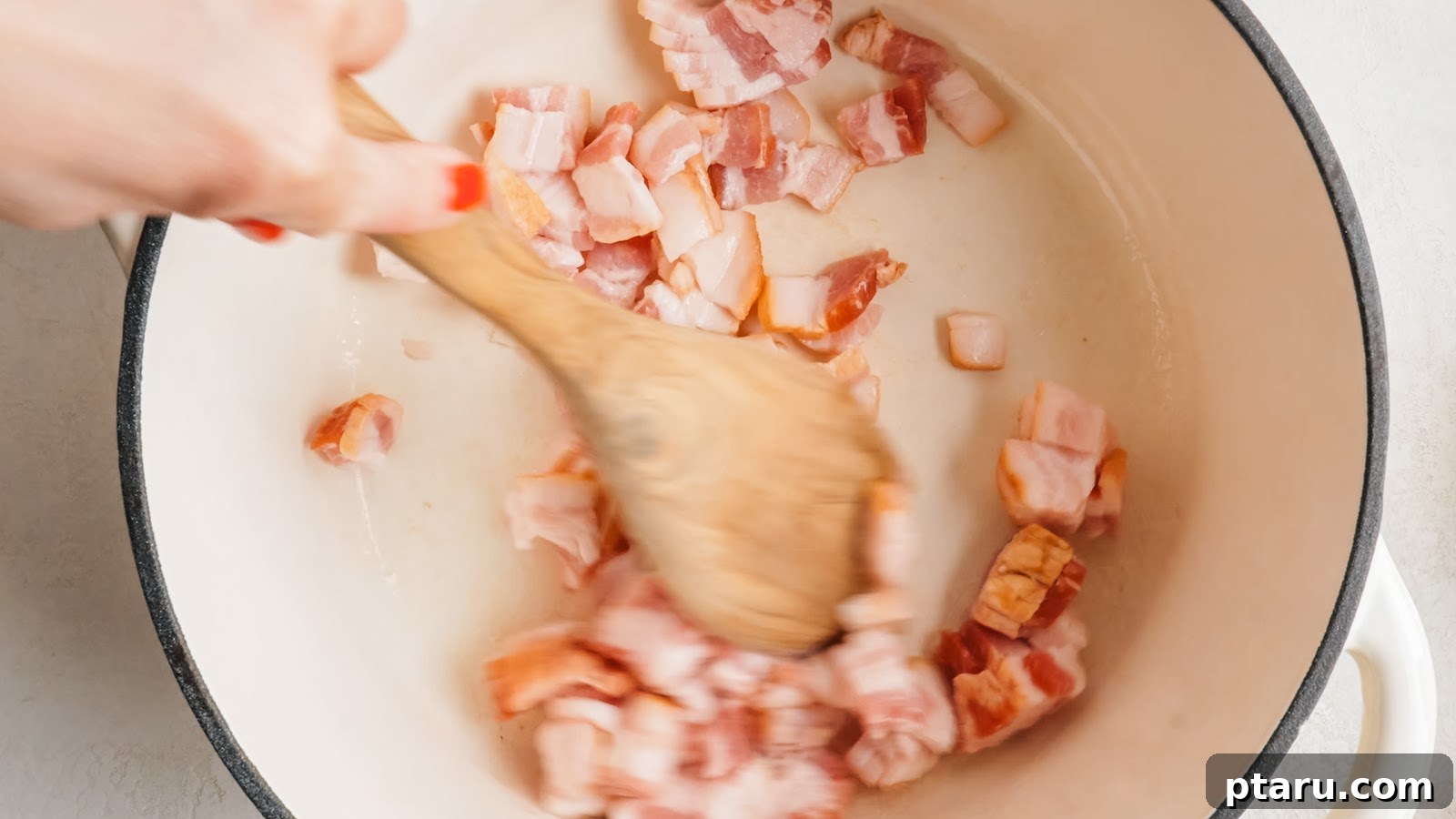
Cook the chopped bacon in a large Dutch oven over medium heat until most of the fat has rendered, about 8 minutes. The bacon should be cooked but not fully crisp. Remove the bacon to a plate, leaving about 2 tablespoons of fat in the pot; discard the excess.
Soften the Onion
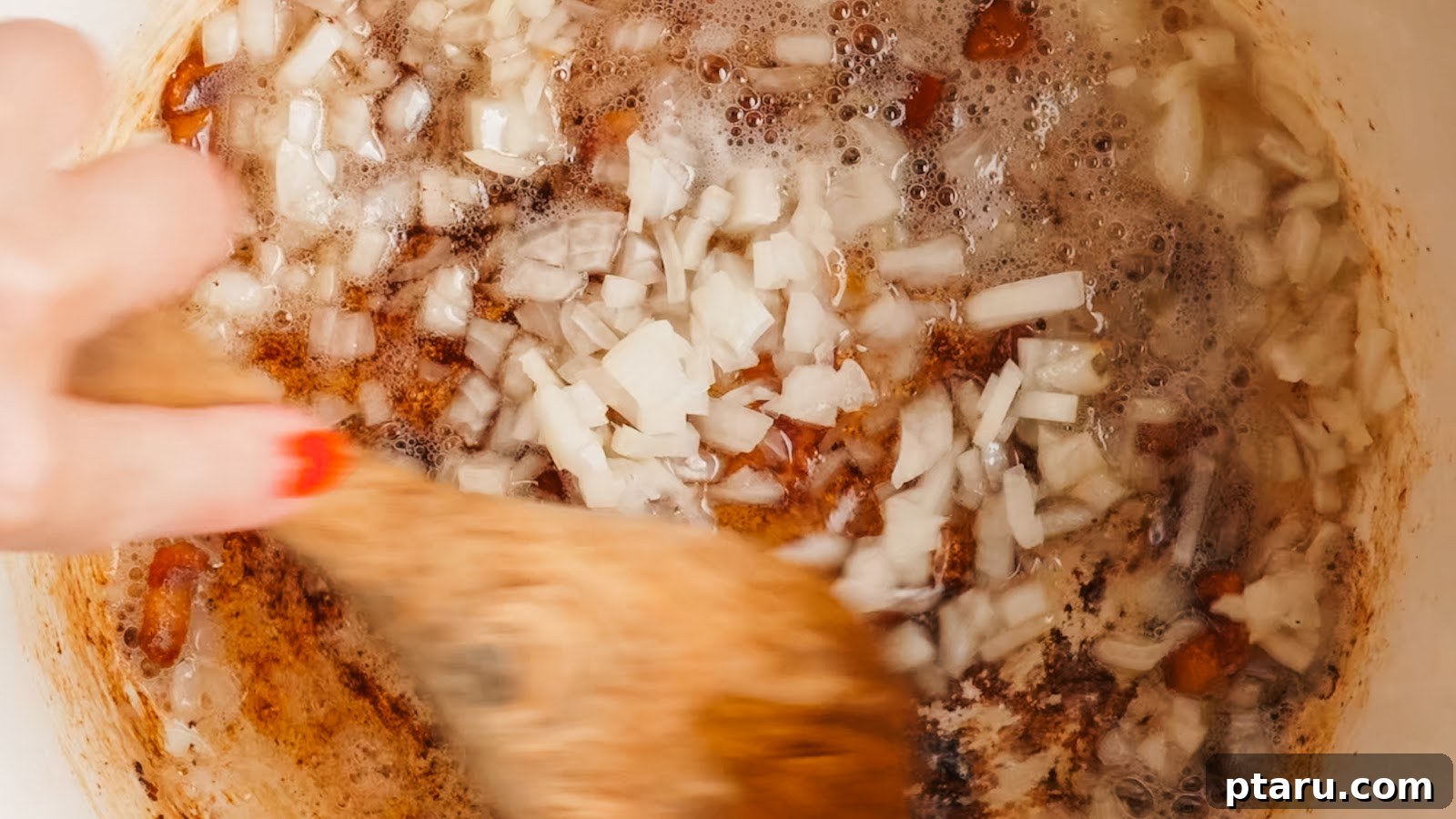
Add the finely chopped onion and 1 teaspoon kosher salt to the reserved bacon fat. Cook about 8 minutes, stirring occasionally, until the onion is softened and lightly golden. Salting early helps the onion brown rather than steam.
Build the Sweet and Smoky Sauce
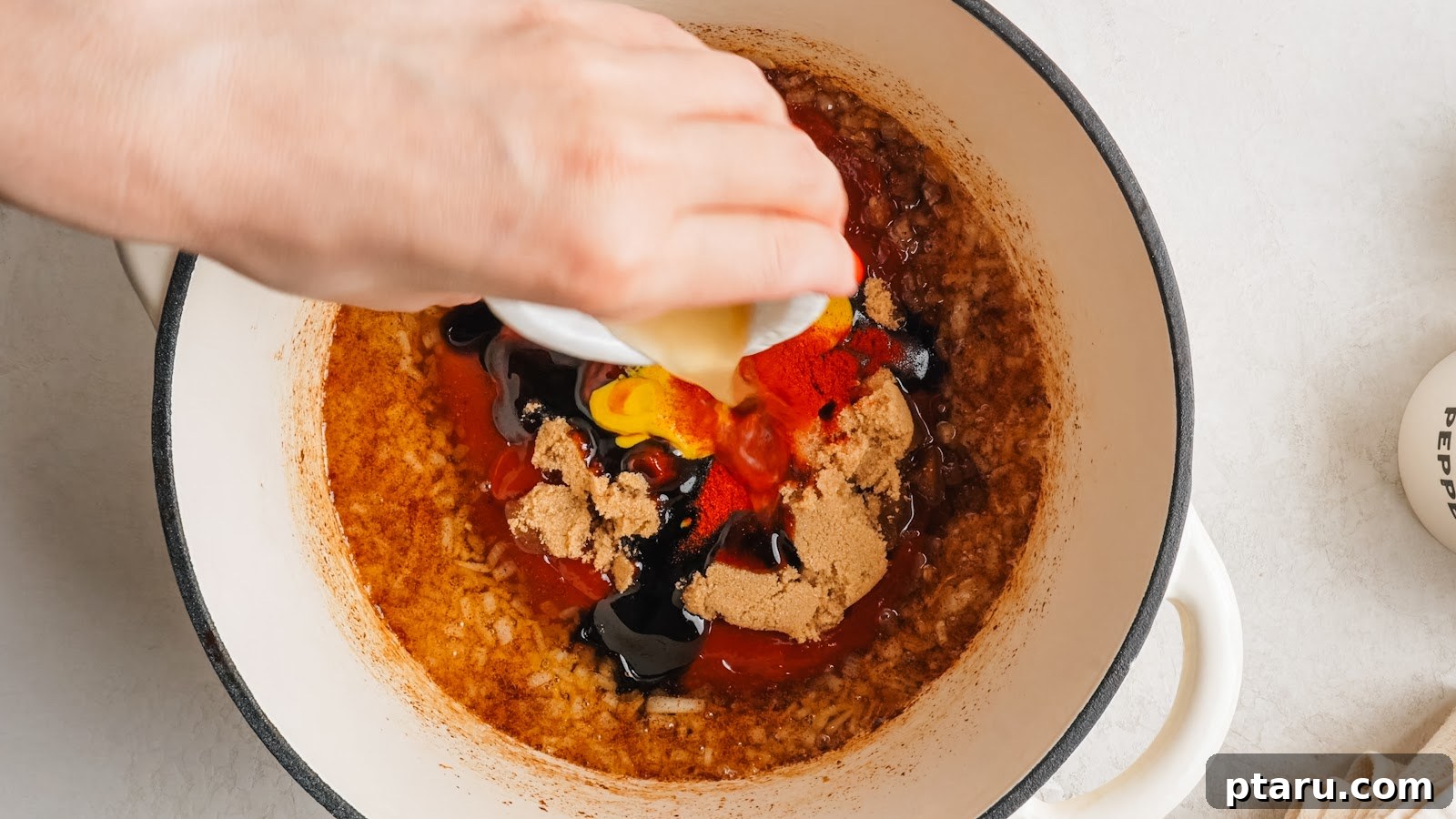
Stir in ketchup, dark brown sugar, molasses, mustard, apple cider vinegar, Worcestershire sauce, smoked paprika, black pepper, cayenne (if using), and chicken broth. Stir until the sauce is smooth and glossy—this mixture is the primary flavor base, so balance is important: the vinegar and mustard cut through the sweetness.
Stir in the Canned Beans
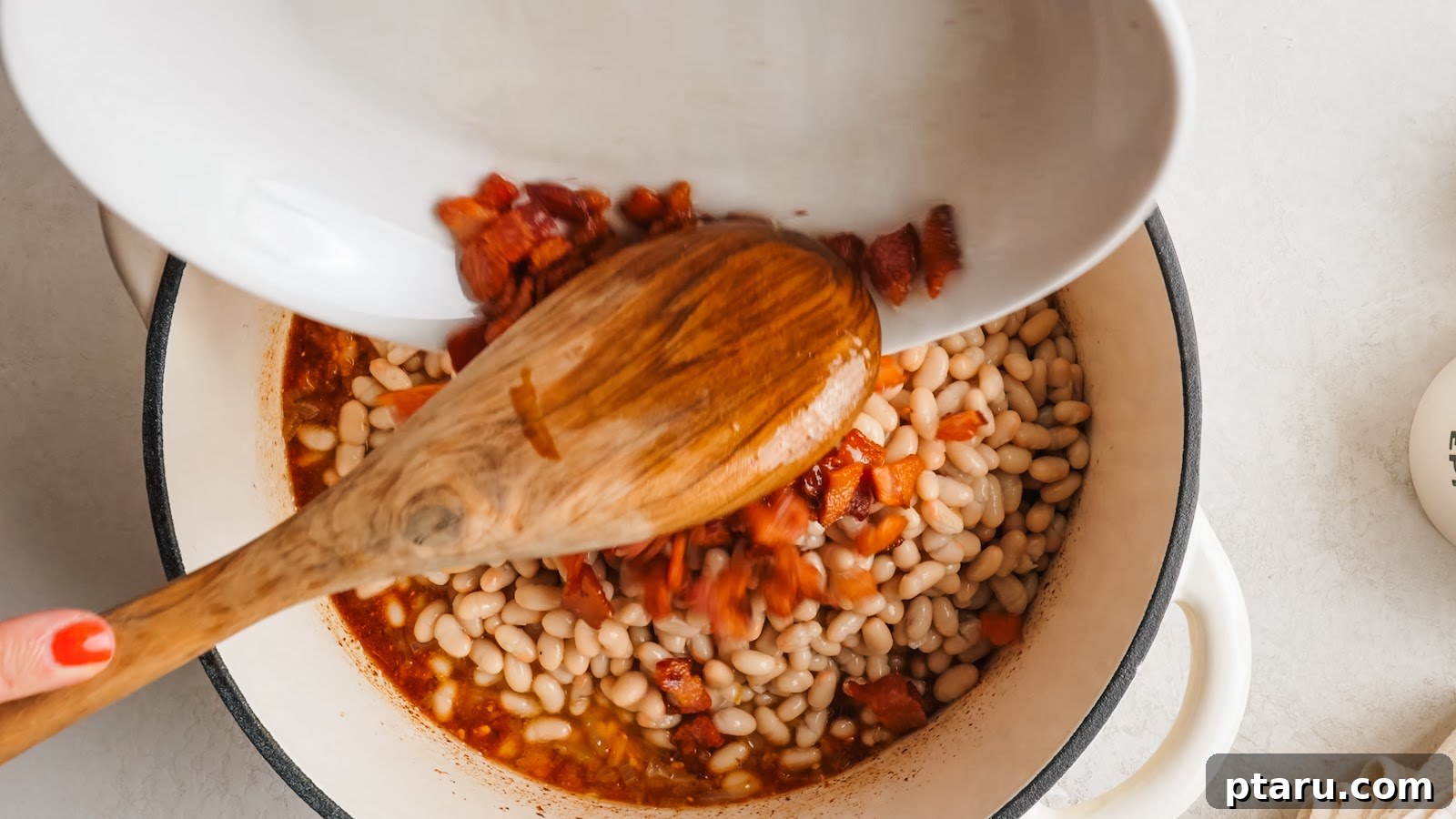
Add drained, rinsed beans and the cooked bacon to the pot. Stir gently to coat the beans without breaking them.
Bake Until Thick and Caramelized
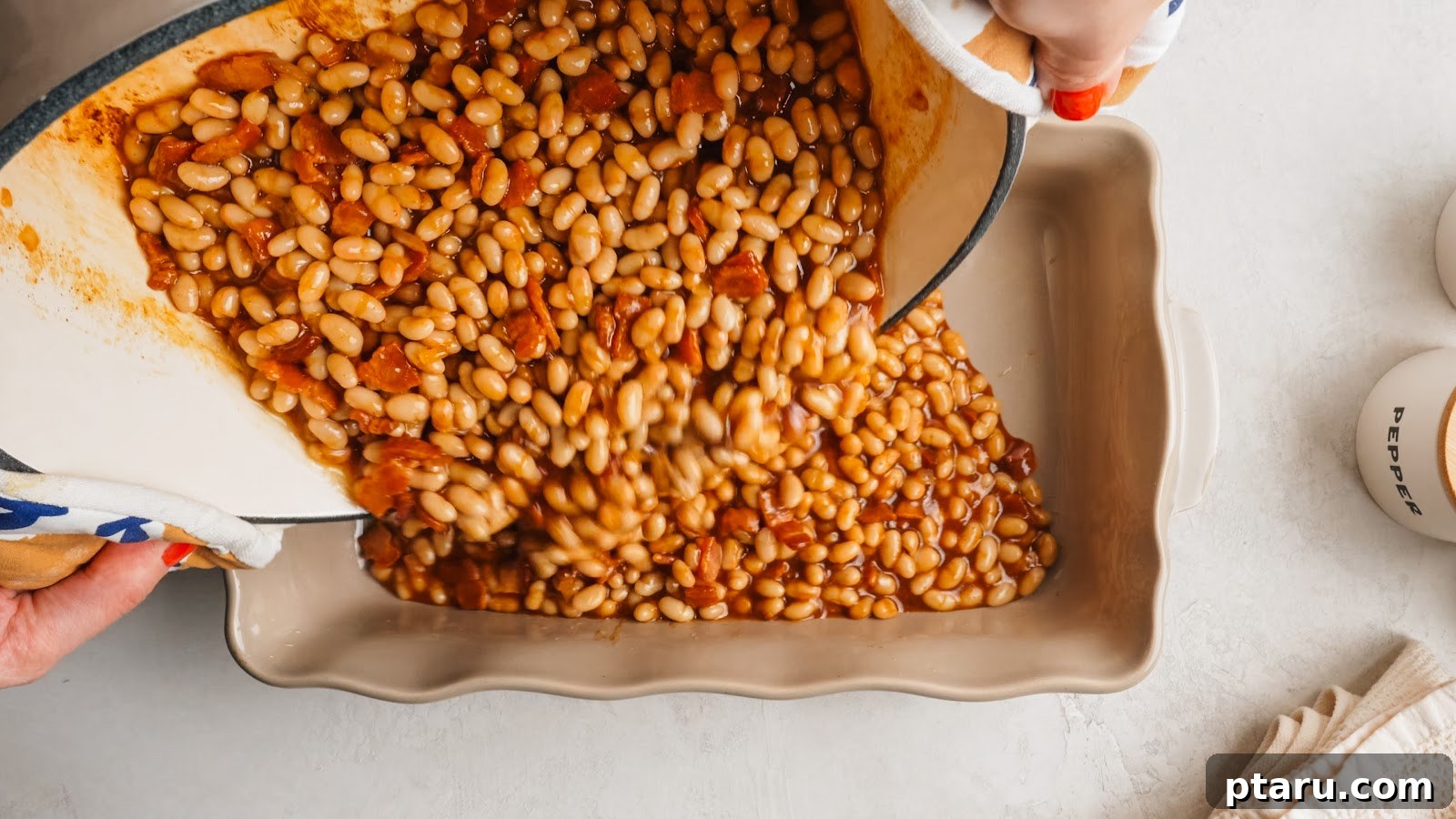
Transfer the mixture to a 9×13-inch baking dish. Cover with foil and bake at 325°F for 45 minutes. Remove the foil and bake an additional 15 minutes to concentrate the sauce and develop color. For a darker, caramelized top, broil for 2–3 minutes at the end—watch carefully to prevent burning. Let the beans rest about 10 minutes before serving; the sauce will thicken as it cools.
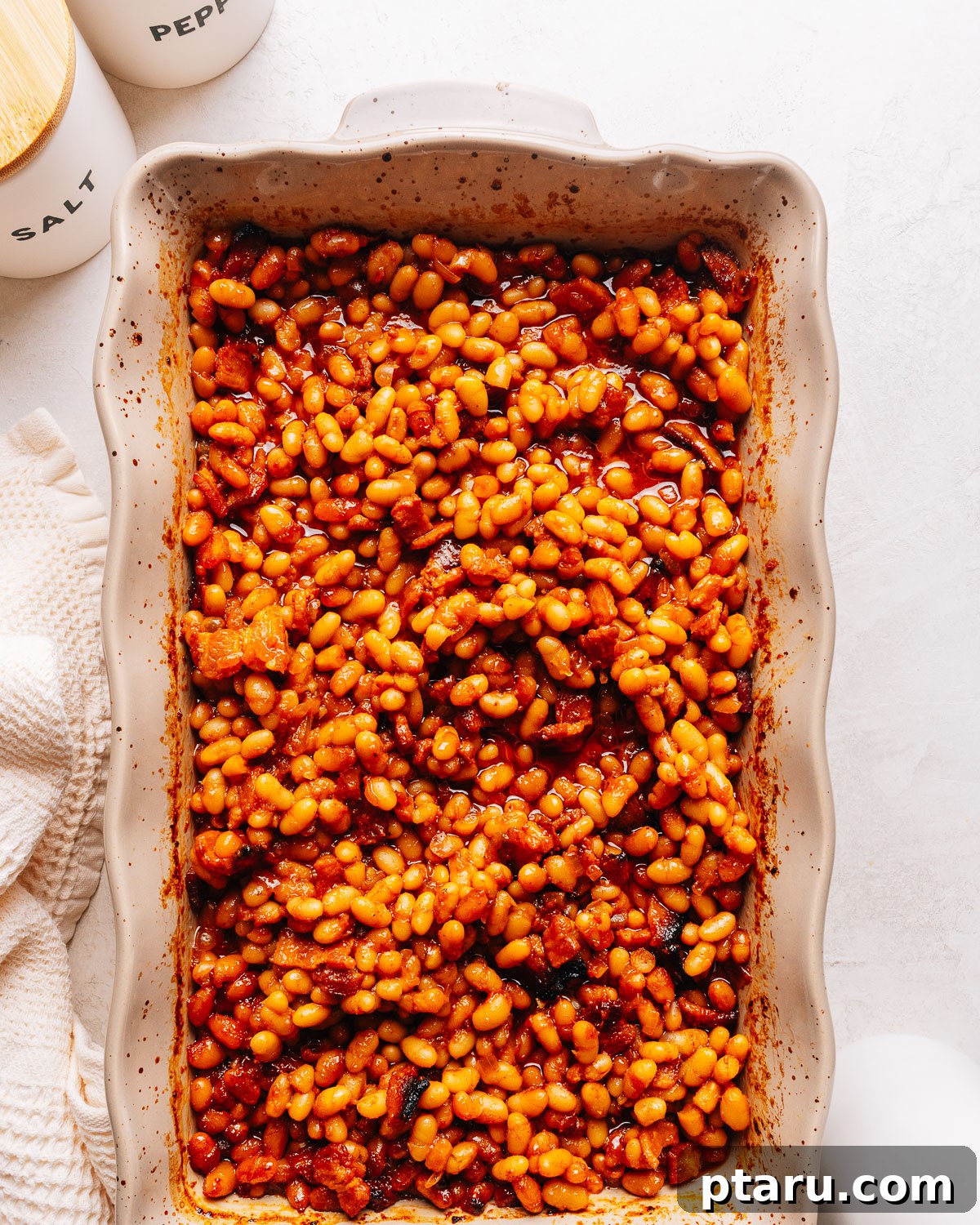
Five Mistakes to Avoid
Common missteps that prevent great baked beans:
- Crisping the bacon too much: it will dry out after a long bake; leave it slightly tender before baking.
- Keeping all the bacon fat: too much fat makes the sauce greasy; reserve about 2 tablespoons in the pot.
- Skipping the molasses: brown sugar alone produces a one-note sweetness—molasses adds necessary depth.
- Baking uncovered the entire time: covering then uncovering lets the beans absorb the sauce while still allowing the top to caramelize.
- Serving immediately: the sauce looks thin hot from the oven; resting for ten minutes lets it set.
Make Ahead and Storage
These beans benefit from being made a day ahead—the flavors deepen overnight.
Storing Leftovers
- Cool first: bring to room temperature before covering.
- Refrigerator: store in an airtight container for up to five days.
- Make ahead: bake fully, chill, then reheat covered before serving.
Freezing
- Freeze flat: portion into freezer bags and lay flat to save space.
- Storage time: up to three months; the sauce retains texture well.
- Thawing: thaw overnight in the refrigerator before reheating.
Reheating
- Oven: reheat covered at 325°F for about 20 minutes.
- Stovetop: warm gently over low heat with a splash of broth or water.
- Microwave: heat in short bursts, stirring between intervals.
What to Serve with These Baked Beans
This pan pairs perfectly with anything from the grill and is an essential side at cookouts. Consider ribs, pulled pork, burgers or grilled chicken. Fresh slaws and simple salads cut through the sauce’s sweetness and add balance.
Toppings and Add-Ins
- Extra crisp bacon: cook separately and sprinkle on top.
- Sliced green onion: for a fresh contrast.
- Pickled jalapeños: add acid and heat.
- Hot sauce drizzle: for more kick if you omitted cayenne.
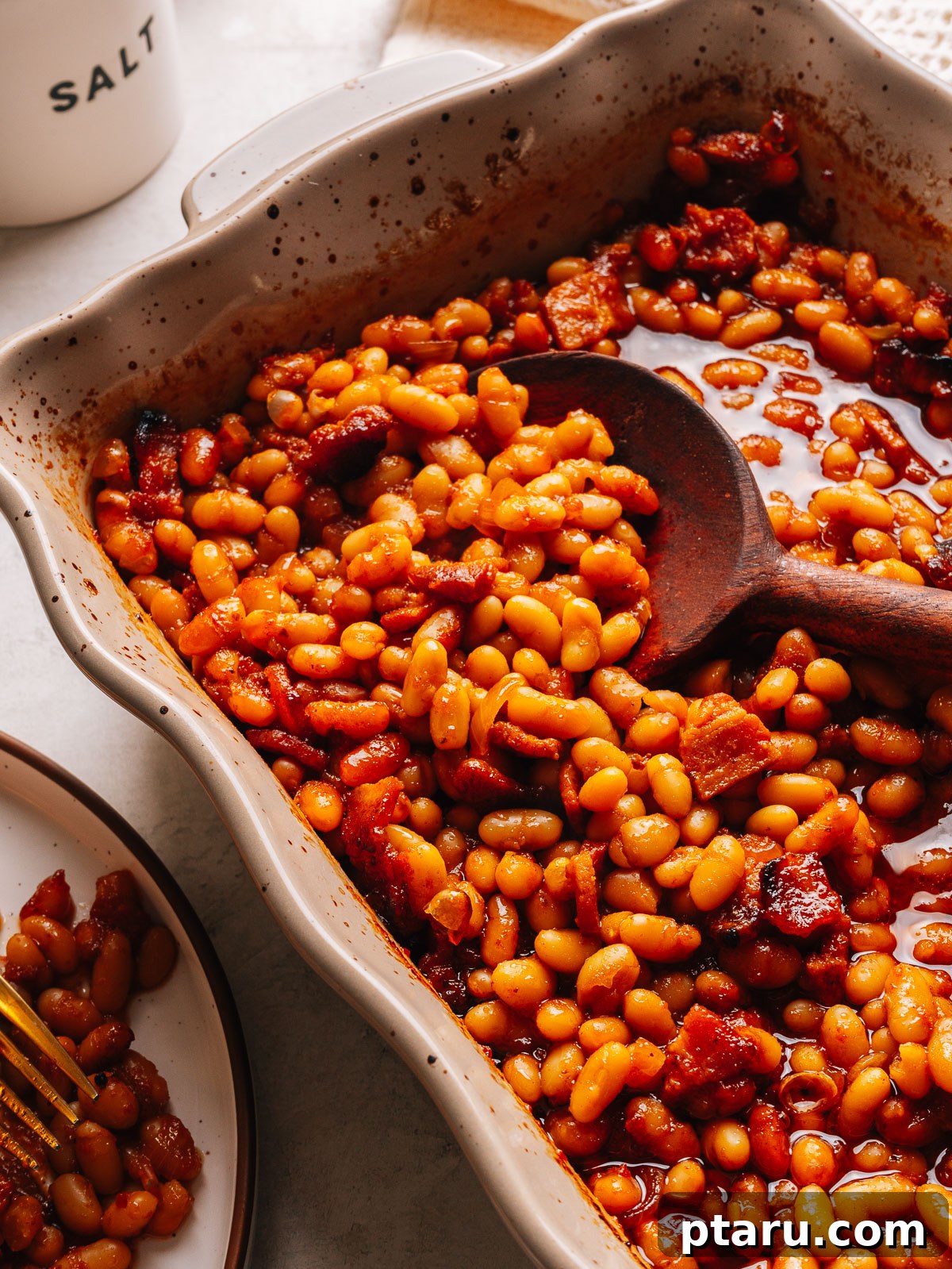
Frequently Asked Questions
Short answers to common questions:
- Can I use canned beans? Yes—this recipe is designed for canned beans. Drain and rinse them well to remove starchy packing liquid that can dull the sauce.
- How about dried beans? Soak and cook dried beans until tender before using; acidic sauces won’t soften undercooked beans.
- What creates the classic baked bean taste? Molasses provides a dark, slightly bitter depth that balances the sugar and gives a traditional flavor.
- Can I use a slow cooker? Yes—render the bacon and build the sauce on the stove, then cook everything on low for about four hours. Finish under a broiler if you want a caramelized top.
- Why are my beans watery? Let them rest off the heat for ten minutes; the sauce thickens as it cools. Using a wide baking dish also helps evaporate extra liquid during baking.
Recipe Card
Ingredients (serves about 10)
- 8 oz thick-cut bacon, chopped
- 1 large yellow onion, finely chopped
- 1 tsp kosher salt
- 1 cup chicken broth (or 1 cup water + 1 tsp bouillon)
- 3/4 cup ketchup
- 1/3 cup dark brown sugar, packed
- 1/4 cup molasses
- 3 tbsp Dijon or yellow mustard
- 2 tbsp apple cider vinegar
- 1 tbsp Worcestershire sauce
- 2 tsp smoked paprika
- 3/4 tsp freshly ground black pepper
- 1/4 tsp cayenne pepper (optional)
- 4 (15 oz) cans navy beans, drained and rinsed
Instructions
- Preheat the oven to 325°F (163°C).
- Cook the bacon in a large Dutch oven over medium heat until most fat is rendered but bacon is not fully crisp, about 8 minutes. Transfer bacon to a plate, leave about 2 tbsp fat in the pot and discard the rest.
- Add the onion and 1 tsp kosher salt to the reserved fat; cook until softened and lightly golden, about 8 minutes.
- Stir in ketchup, brown sugar, molasses, mustard, apple cider vinegar, Worcestershire, smoked paprika, black pepper, cayenne (if using), and chicken broth. Mix until smooth.
- Add the drained beans and cooked bacon; stir gently to coat without breaking the beans.
- Transfer to a 9×13-inch baking dish. Bake covered for 45 minutes, uncover and bake 15 minutes more. For extra caramelization, broil 2–3 minutes—watch carefully.
- Let rest 10 minutes before serving so the sauce thickens.
Notes: You can cook the entire recipe in a Dutch oven, but spreading the beans in a baking dish encourages evaporation and a more caramelized top.