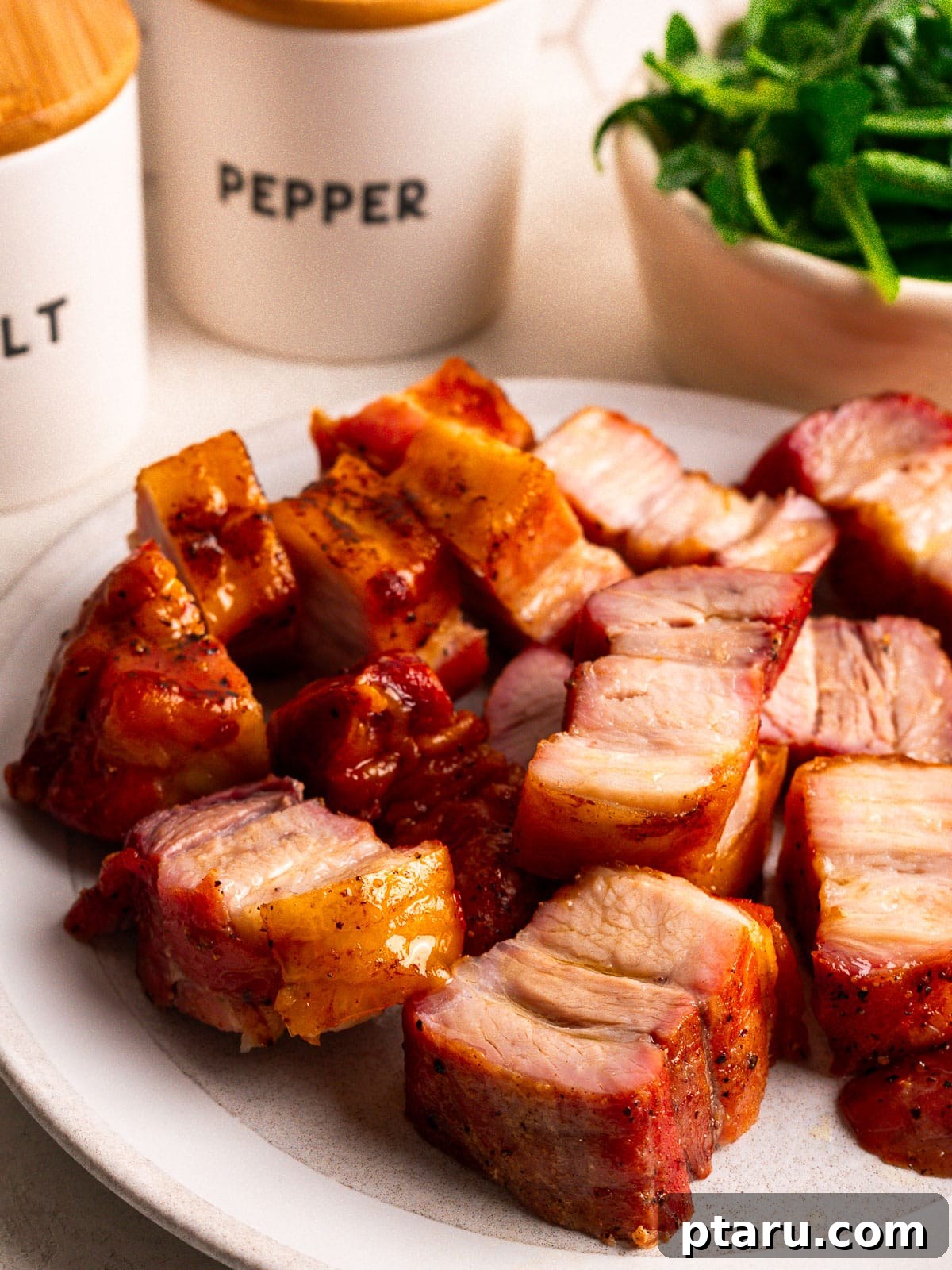
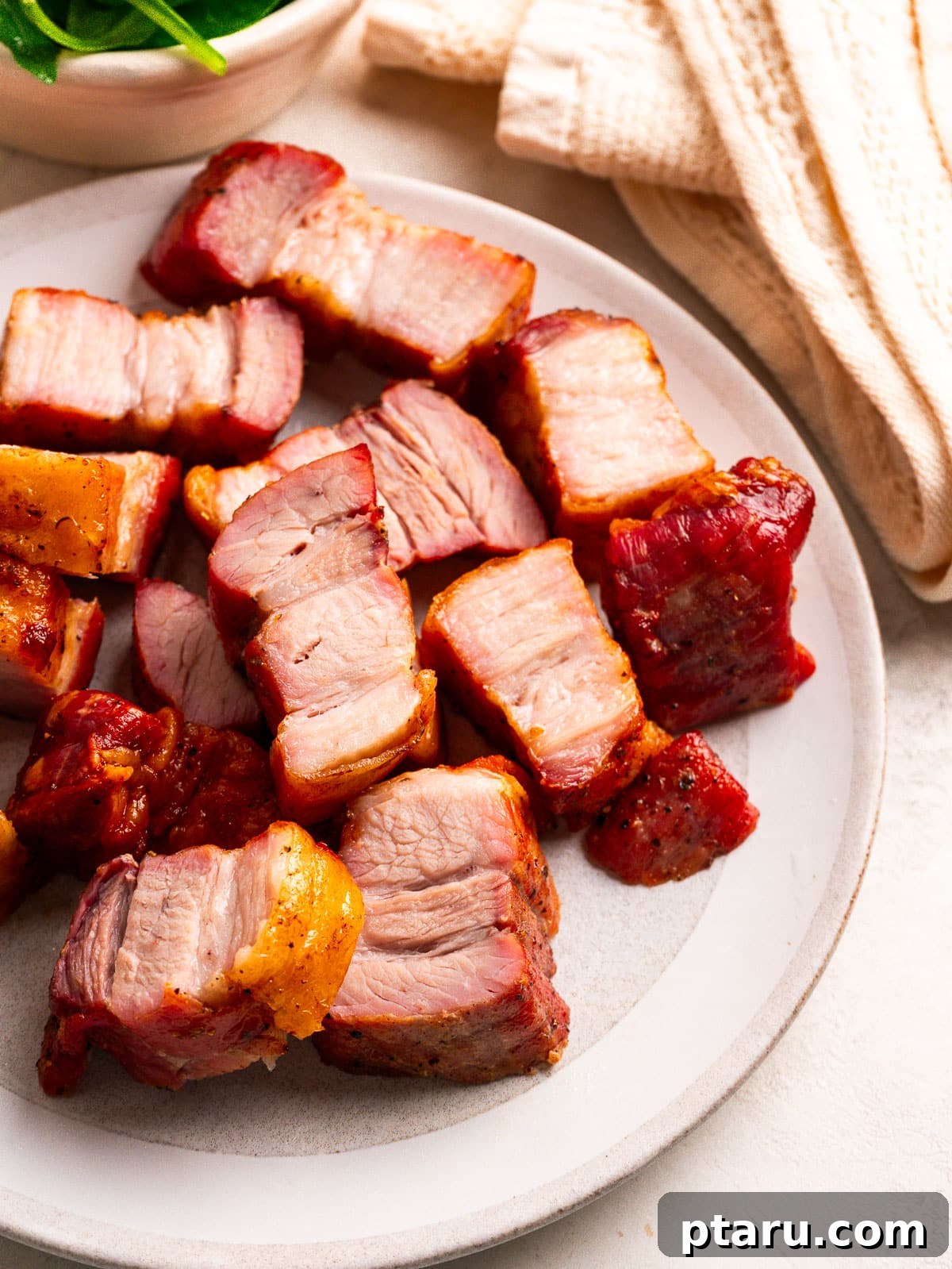
Crispy Pork Belly — a slow-roasted classic with meltingly tender meat and a glassy, shattering crackling every time. This method uses a simple overnight dry-brine on the skin and a two-stage roast to render fat, tenderize the meat, and finish with a high-heat blast for perfect puffed crackling.
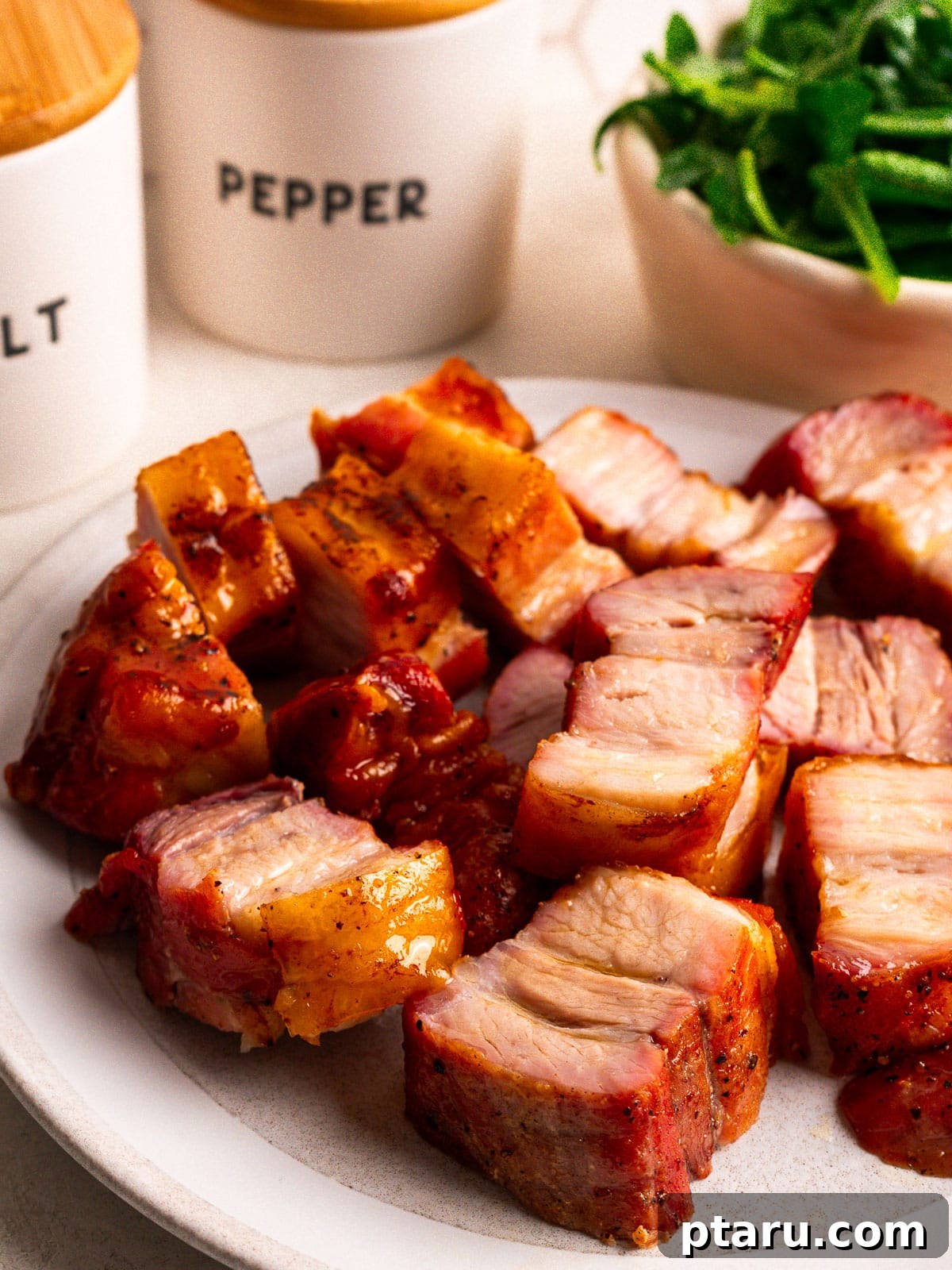
Crispy pork belly quiets a table: the meat falls apart under your fork, and the skin breaks with a satisfying snap. The secret to consistent crackling isn’t just heat — it’s dehydration. Salt draws moisture out of the skin, and leaving it uncovered in the fridge lets that moisture evaporate so the skin can puff and blister under high heat instead of steaming.
Crispy Pork Belly Ingredients
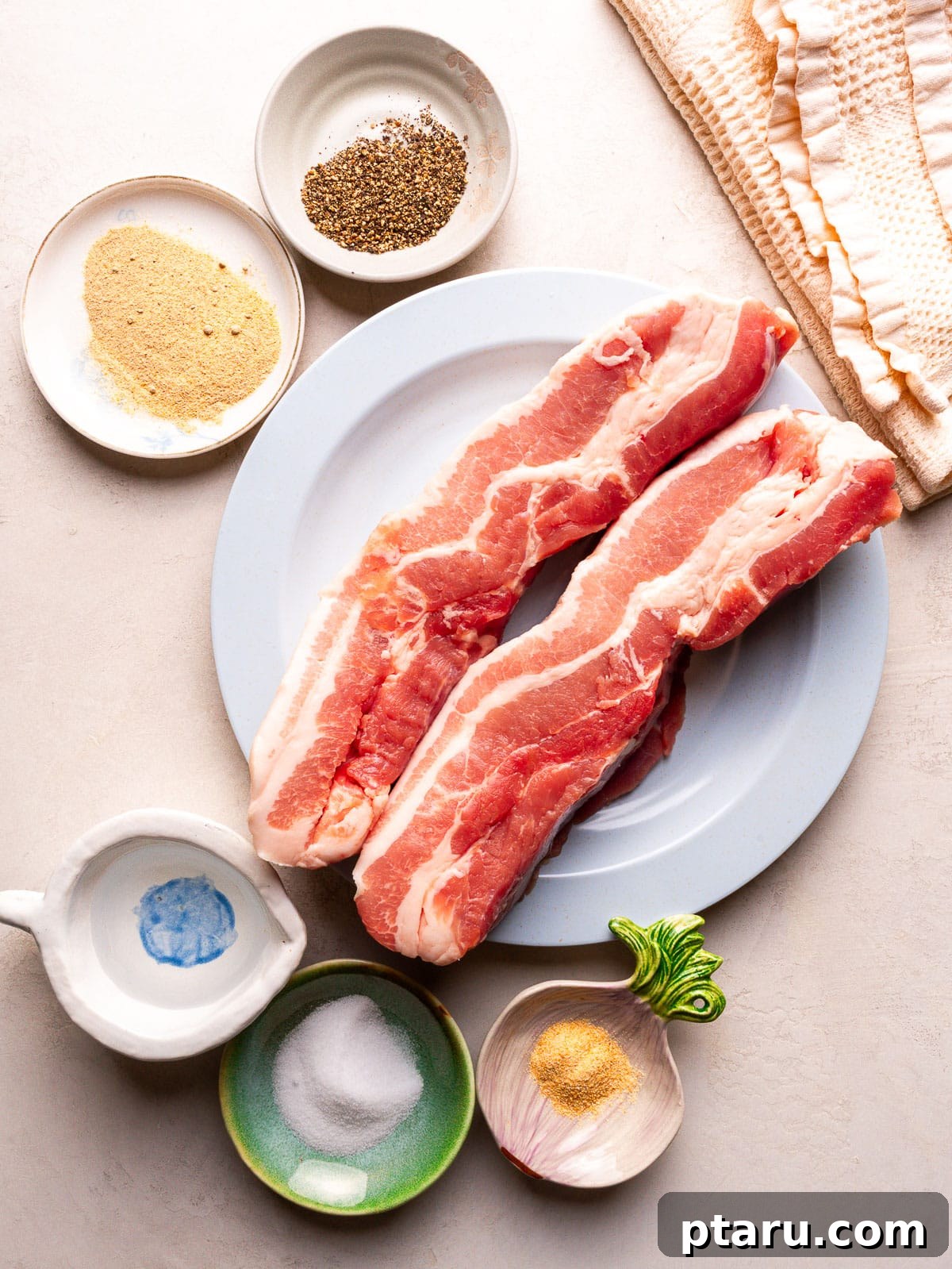
These are the components you need for the roast. Quantities and full recipe details are included in the instructions section below.
- Skin-on pork belly: a flat slab works best (about 2½–3 lb is ideal). Strips are fine if that’s what’s available.
- Kosher salt: used in the meat rub and as a dry-brine for the skin.
- Black pepper
- Garlic powder
- Onion powder
- White vinegar: for wiping the skin to remove surface moisture and oil before salting.
Full measurements appear in the recipe instructions below.
If you enjoy tender pork, try other slow-cooked or braised pork recipes for equally comforting results.
Variations and Substitutions
The seasoning is flexible; the skin must remain bare and dry.
- Chinese style: swap garlic and onion powder for five spice on the meat side.
- Vietnamese style: season the meat simply with salt and pepper and serve with fish sauce and lime.
- Spicy: add cayenne or chili flakes to the meat rub.
- Apple cider vinegar: can replace white vinegar for wiping the skin.
- Smaller slab: a 2 lb piece will be tender closer to 2 hours; start checking early.
Tools You’ll Need
- Roasting pan: deep enough to catch rendered fat.
- Wire rack and rimmed tray: lift the pork so air circulates under it in the fridge and oven.
- Paper towels and a pastry brush: for drying and brushing off salt.
- Aluminum foil: crumpled to prop the slab level if needed.
- Serrated knife: best for slicing without shattering the crackling.
How to Make Crispy Pork Belly: An Easy Guide
Follow these steps for reliably tender meat and glassy crackling. Read through before starting so you can plan the overnight dry-brine.
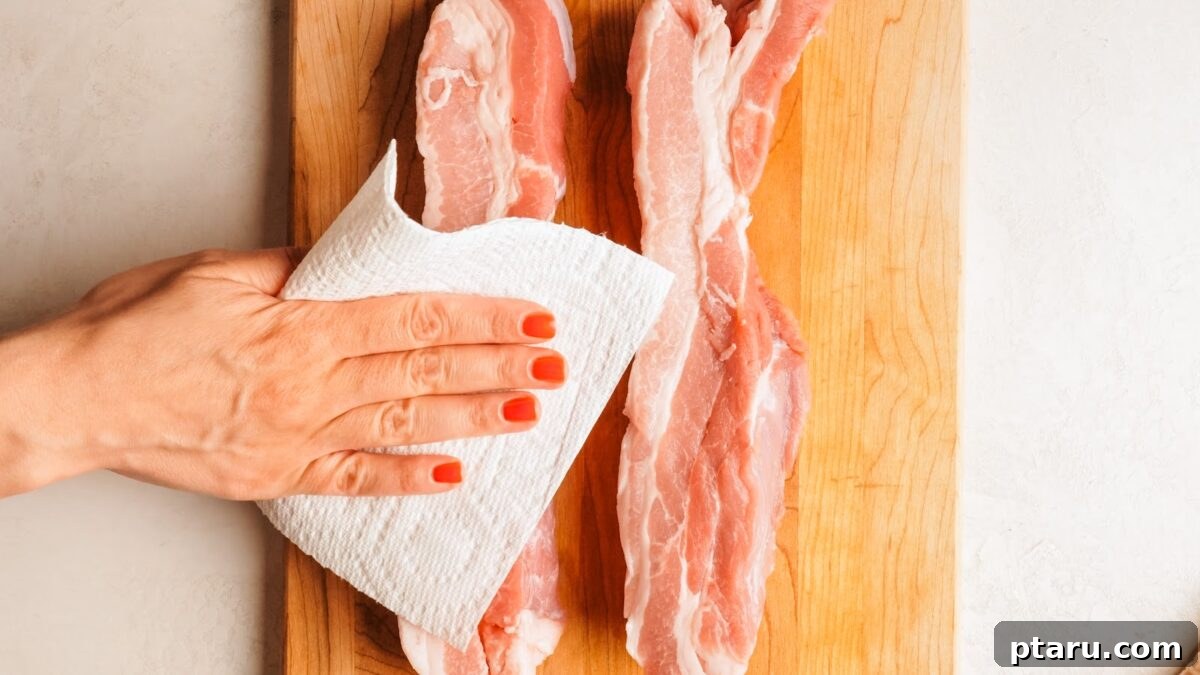
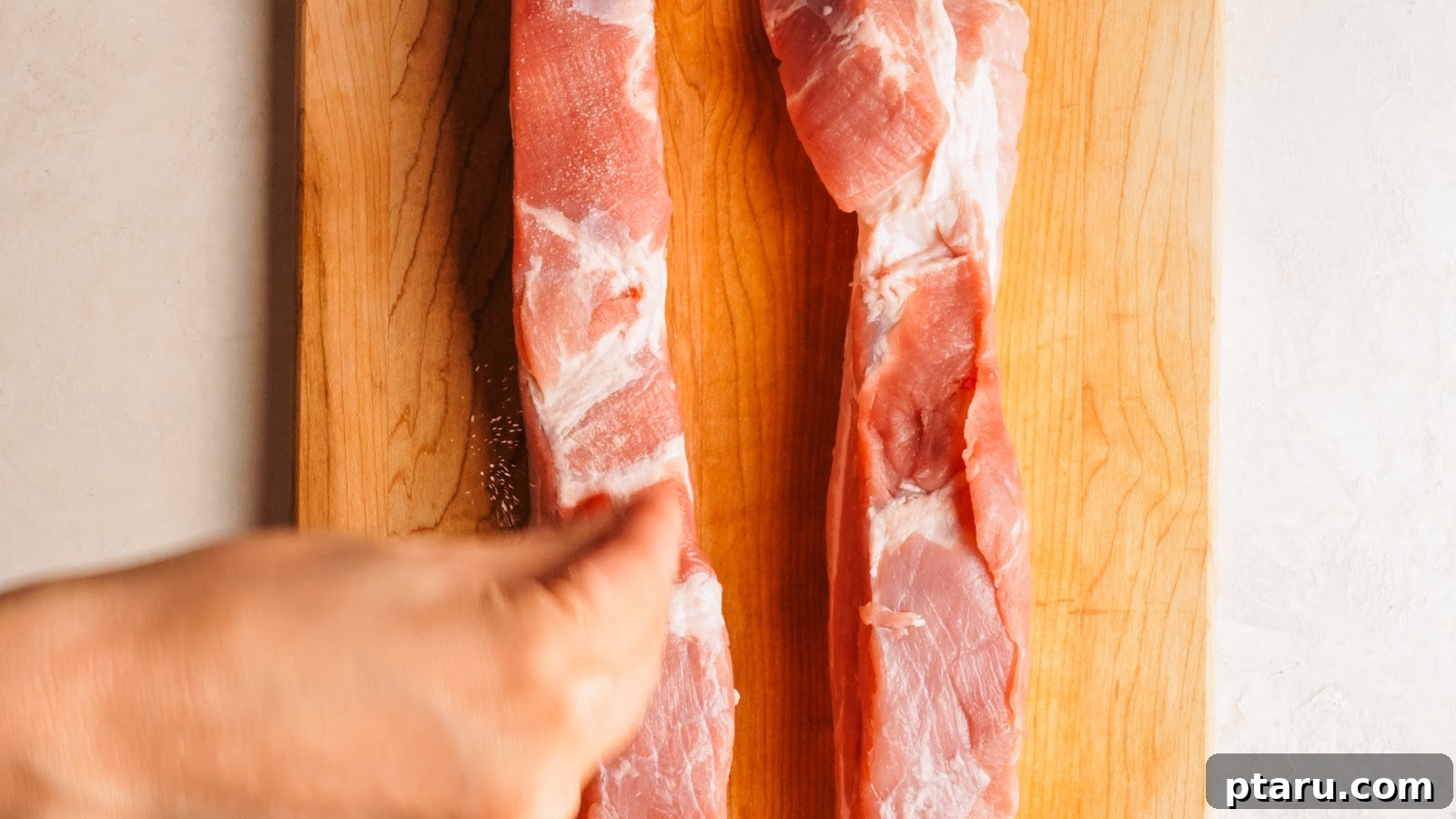
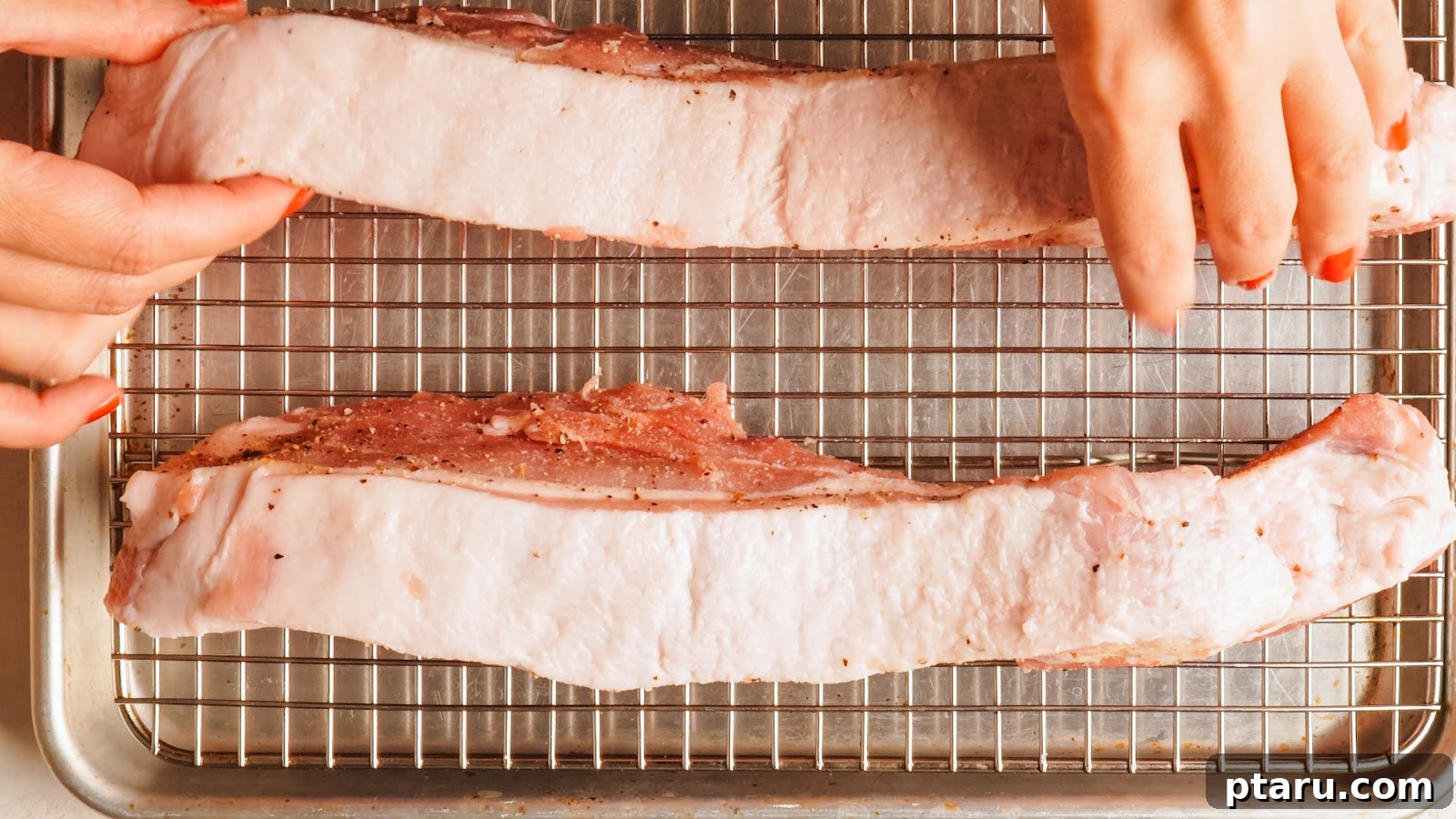
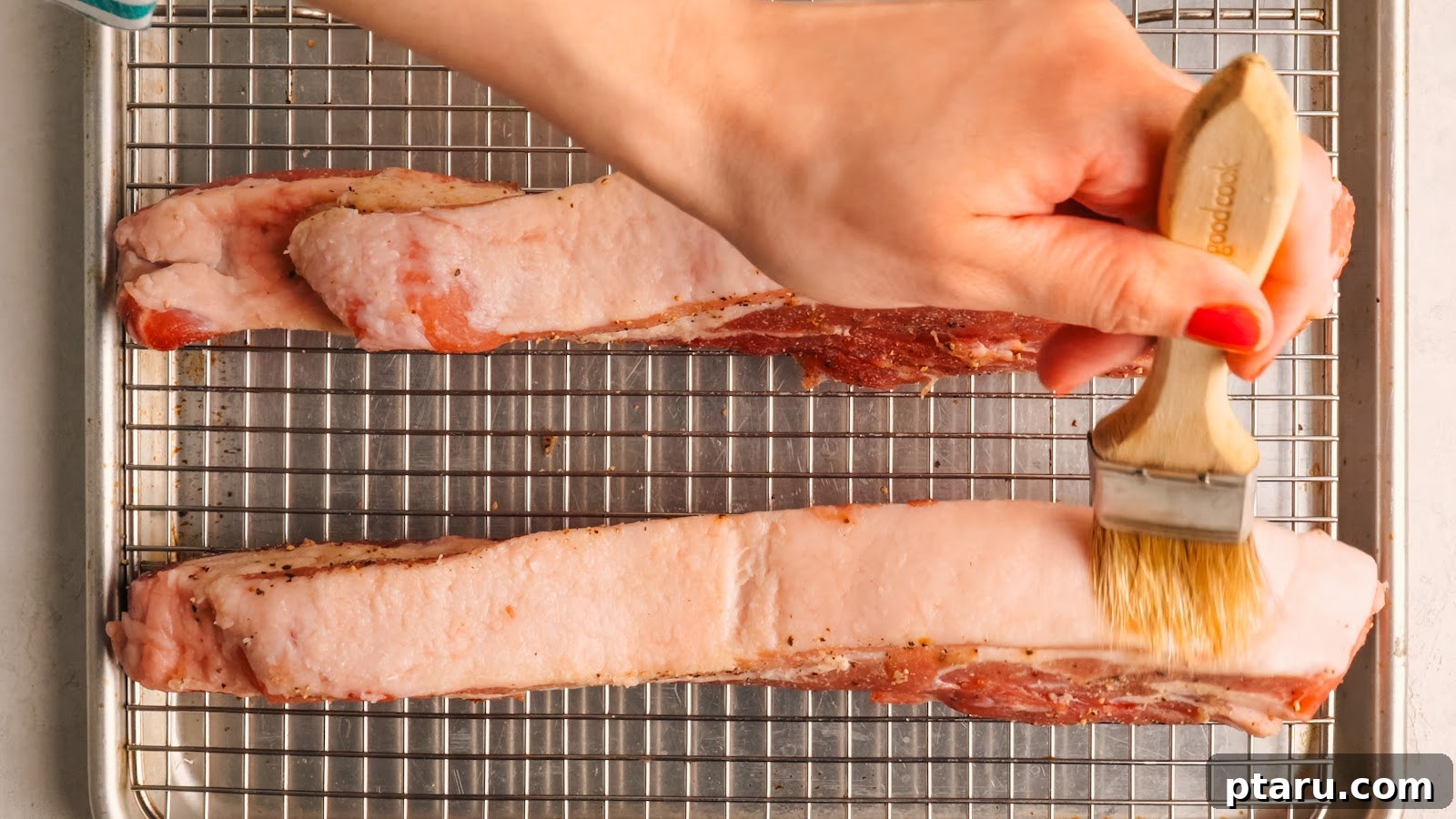
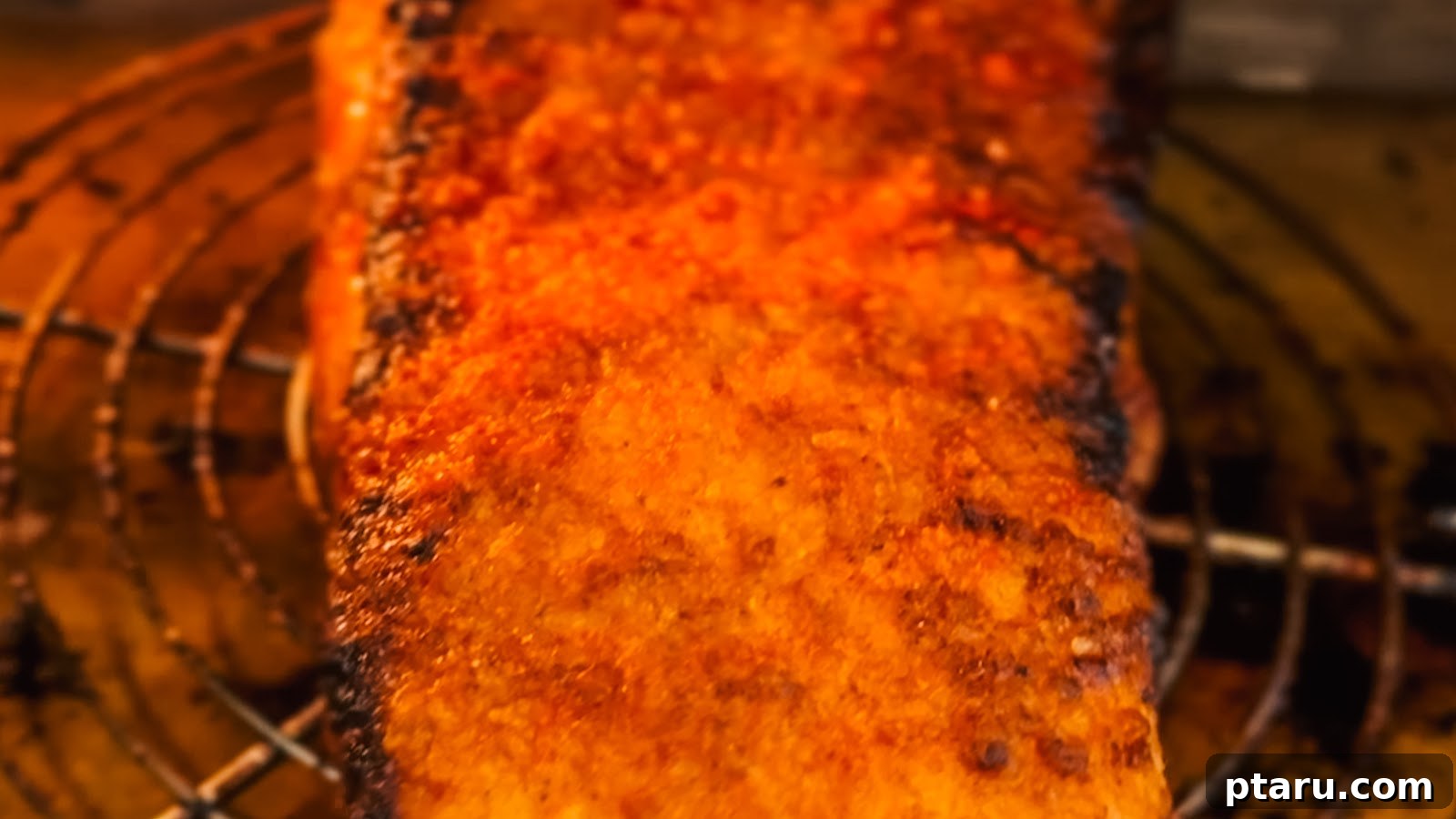
Night Before: Season Meat Side Only
Pat the pork belly bone-dry. Flip meat-side up and rub in 2 tsp kosher salt, 1 tsp black pepper, 1 tsp garlic powder and 1 tsp onion powder across the meat and sides. Be careful to keep all spices off the skin — powders will scorch during the final high-heat blast and ruin the top.
Dry-Brine the Skin Overnight
Flip the slab skin-side up. Wipe the skin with about 1 tablespoon white vinegar to remove surface oil and moisture, then pat dry. Sprinkle 1 tablespoon kosher salt evenly over the skin. Place the pork on a wire rack over a rimmed tray and leave uncovered in the fridge for 12 to 24 hours. This dehydration is the most important step — dry skin puffs and blisters; damp skin steams.
Slow Roast at 300°F
Preheat the oven to 300°F. Brush or wipe off the excess salt from the skin and blot it completely dry. Place the belly skin-side up on a rack in a roasting pan; prop with crumpled foil if it tips. Roast for 2½ to 3 hours until the meat is very tender and the fat has rendered. The skin will look pale and paper-like at this stage — that’s normal.
Finish at High Heat Until the Skin Blisters
Increase the oven temperature to 425°F and roast another 20 to 30 minutes. The skin should puff, blister, and turn amber. Watch closely from minute 20 and rotate the pan if one side browns before the rest. Listen for vigorous sizzling and snapping — like Rice Krispies — which signals the crackling forming. Remove the pork once the surface is fully bubbled and the sizzling calms slightly.
Rest and Slice
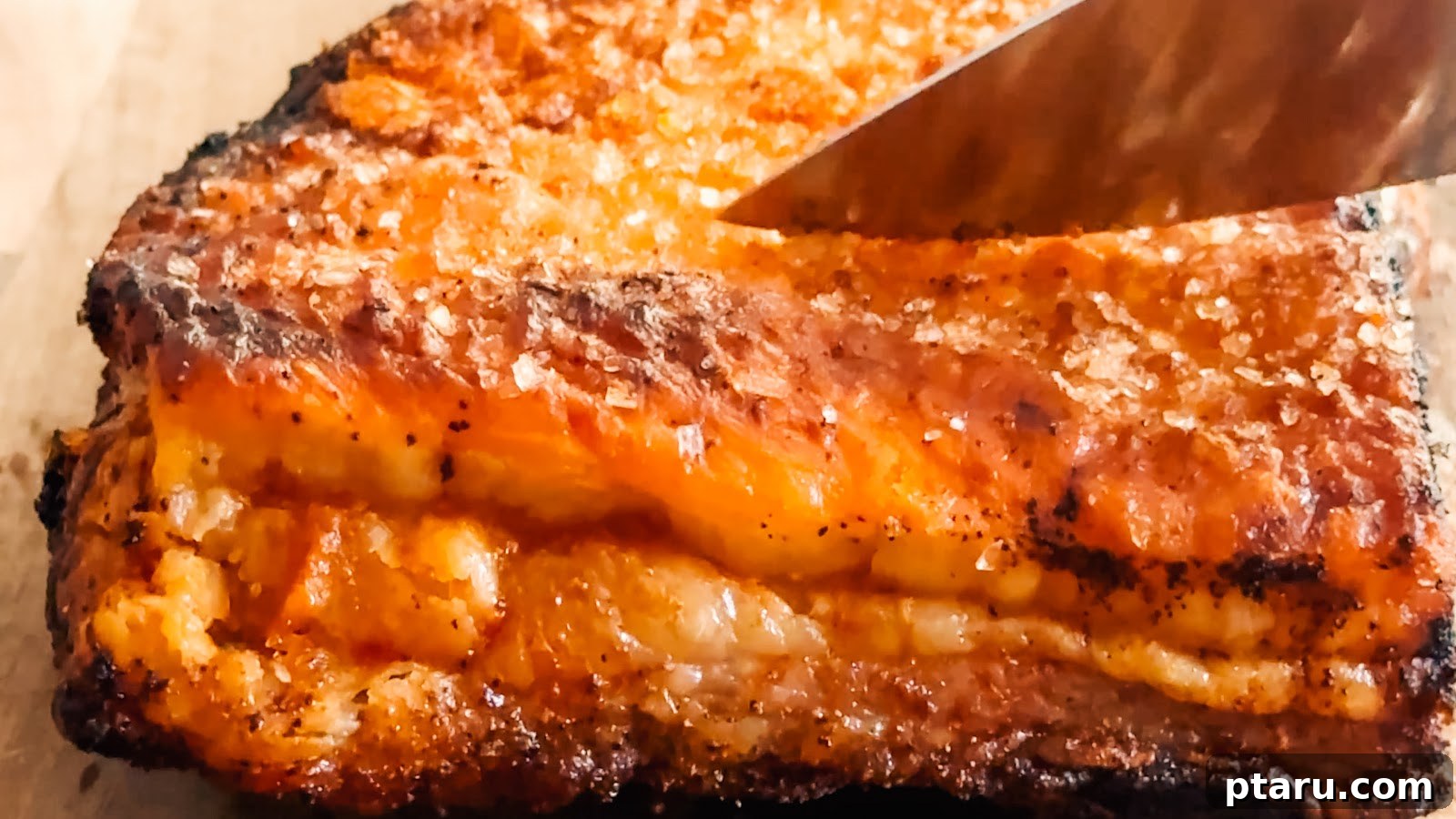
Let the pork rest, uncovered, at room temperature for 15 minutes. Scrape the skin with a knife to ensure it has set into a crisp crust. Slice with a serrated knife, cutting skin-side down and pressing straight through to avoid shattering the crackling into tiny shards.
5 Mistakes to Avoid When Making Roast Pork Belly
Common pitfalls that prevent perfect crackling:
- Getting spices on the skin: powders burn at high heat. Keep the spice rub off the skin.
- Skipping the overnight fridge time: damp skin steams instead of blistering; no shortcut replaces this step.
- Letting the slab tip: rendered fat pools and prevents crisping—prop it level.
- Walking away during the high-heat finish: crackling can go from perfect to burnt quickly; stay nearby.
- Cutting too soon or covering: the skin needs 15 minutes of dry air to set; foil or early slicing softens it.
Make Ahead and Storage
The overnight dry-brine is already a make-ahead step—plan a day in advance.
Storing Leftovers
- Fridge: store up to 4 days.
- Leave uncovered: open-air storage slows softening of the crackling.
- Store whole when possible: a large piece keeps texture better than thin slices.
Freezing
- Not recommended: freezing ruins the glassy texture of crackling. Freeze only the meat if necessary and use it in chopped preparations.
Reheating
- Air fryer: best for restoring snap to the crackling.
- Hot oven: reheat on a rack so air reaches the skin.
- Avoid the microwave: it makes crackling chewy in seconds.
What to Serve with Crispy Pork Belly
This rich roast benefits from acid, freshness and crunch to balance the fat.
Toppings and Add-Ins
- dipping sauces: hot mustard, chili crisp, or a simple soy-and-vinegar sauce
- Quick pickles: thin cucumber or red onion soaked briefly in vinegar
- Fresh herbs: cilantro or scallion to brighten each bite
- Flaky salt: a small pinch on the cut meat just before serving
Side Dishes
- Steamed jasmine rice
- Simple vinegar-dressed salad for a sharp, cooling contrast
- Roasted vegetables tossed with a squeeze of lemon or sharp vinegar to cut richness
Final Tips for the Best Crackling
- Skin must face straight up: tilting lets fat baste the skin and prevents crisping.
- Listen during the finish: aggressive snapping is the best indicator of success.
- Rotate the pan: counter hot spots in a home oven for even color.
- Rest uncovered: keep the crust dry so it stays crisp.
Frequently Asked Questions
Quick answers to common questions about this method:
Pork belly skin stays leathery when it holds moisture. Salt the skin and leave it uncovered in the fridge for 12–24 hours so it dries. Dry skin puffs and blisters under high heat; damp skin steams.
Vinegar removes surface oil and moisture so the salt can draw water out overnight and the skin can dry fully before roasting.
An air fryer is useful for reheating or crisping small pieces, but a 3 lb slab needs hours of slow heat to render fat properly. Use the oven for roasting and an air fryer to revive leftovers.
Use dry heat: an air fryer or a hot oven on a rack. Avoid the microwave, which makes crackling chewy.
Skinless pork belly will be tender and rich, but you lose the crackling. For the signature texture, use skin-on pork belly.
Scoring is optional. This method skips scoring because the overnight dry-brine already dehydrates the surface and promotes even puffing. Scoring can allow fat to reach the surface and create damp spots.
Freezing preserves the meat but destroys the crackling’s structure. If you freeze, plan to use the meat in other dishes; expect the skin to lose its snap.
Names vary by cuisine: roast pork belly with crackling, siu yuk, lechon kawali, and other regional terms describe similar results. This recipe is a slow roast finished with a high-heat blast.
Recipe Card — Crispy Pork Belly (Oven Method)
Ingredients
- 2½–3 lb slab skin-on pork belly
- 2 tsp kosher salt (for the meat)
- 1 tsp black pepper
- 1 tsp garlic powder
- 1 tsp onion powder
- 1 tbsp white vinegar (for wiping the skin)
- 1 tbsp kosher salt (for the skin)
Instructions
- The night before: Pat the belly bone-dry. Flip meat-side up and rub 2 tsp kosher salt, black pepper, garlic powder and onion powder into the meat and sides only. Keep all spices off the skin.
- Flip skin-side up. Wipe the skin with the vinegar and pat dry. Rub 1 tbsp kosher salt evenly over the skin. Place on a rack over a tray and leave uncovered in the fridge for 12–24 hours.
- To roast: Preheat oven to 300°F. Brush off excess salt from the skin and blot dry. Set the belly skin-side up on a rack in a roasting pan. Prop level with foil if it tips.
- Roast 2½–3 hours until the meat is very tender and the fat has rendered. The skin will look pale and papery.
- Increase oven to 425°F and roast 20–30 minutes more until the skin puffs, blisters and turns amber. Watch closely from minute 20 and rotate the pan for even browning. Listen for active sizzling and snapping.
- Remove and let rest uncovered for 15 minutes. Scrape the skin to confirm it has set, then slice with a serrated knife, cutting skin-side down and pressing straight through.
Notes
- Salt then brush: salt draws water out overnight; brushing it off lets the surface dry and puff.
- Keep skin facing up during roasting to avoid fat pooling and soft patches.
- Store leftovers uncovered in the fridge up to 4 days and re-crisp in an air fryer or hot oven.