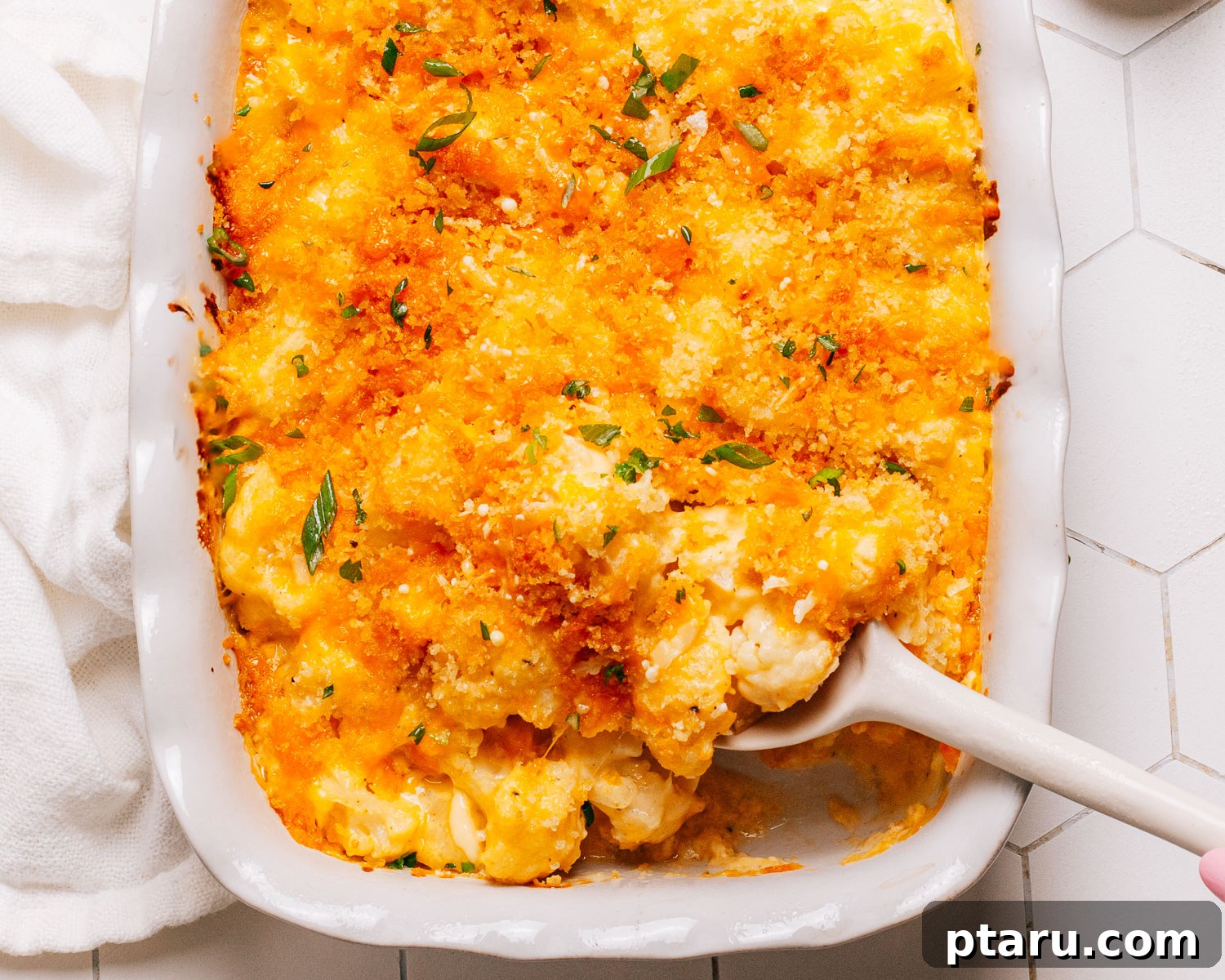
Prepare to fall in love with this incredible Cauliflower Casserole recipe! It’s the kind of dish that transforms humble cauliflower into a luxurious, utterly crave-worthy experience. Imagine tender florets bathed in a rich, velvety cheese sauce, all crowned with a golden, buttery, and irresistibly crispy breadcrumb topping. The best part? This delightful comfort food comes together in just about 30 minutes, making it a perfect addition to your weekly meal rotation or a standout dish for special occasions.
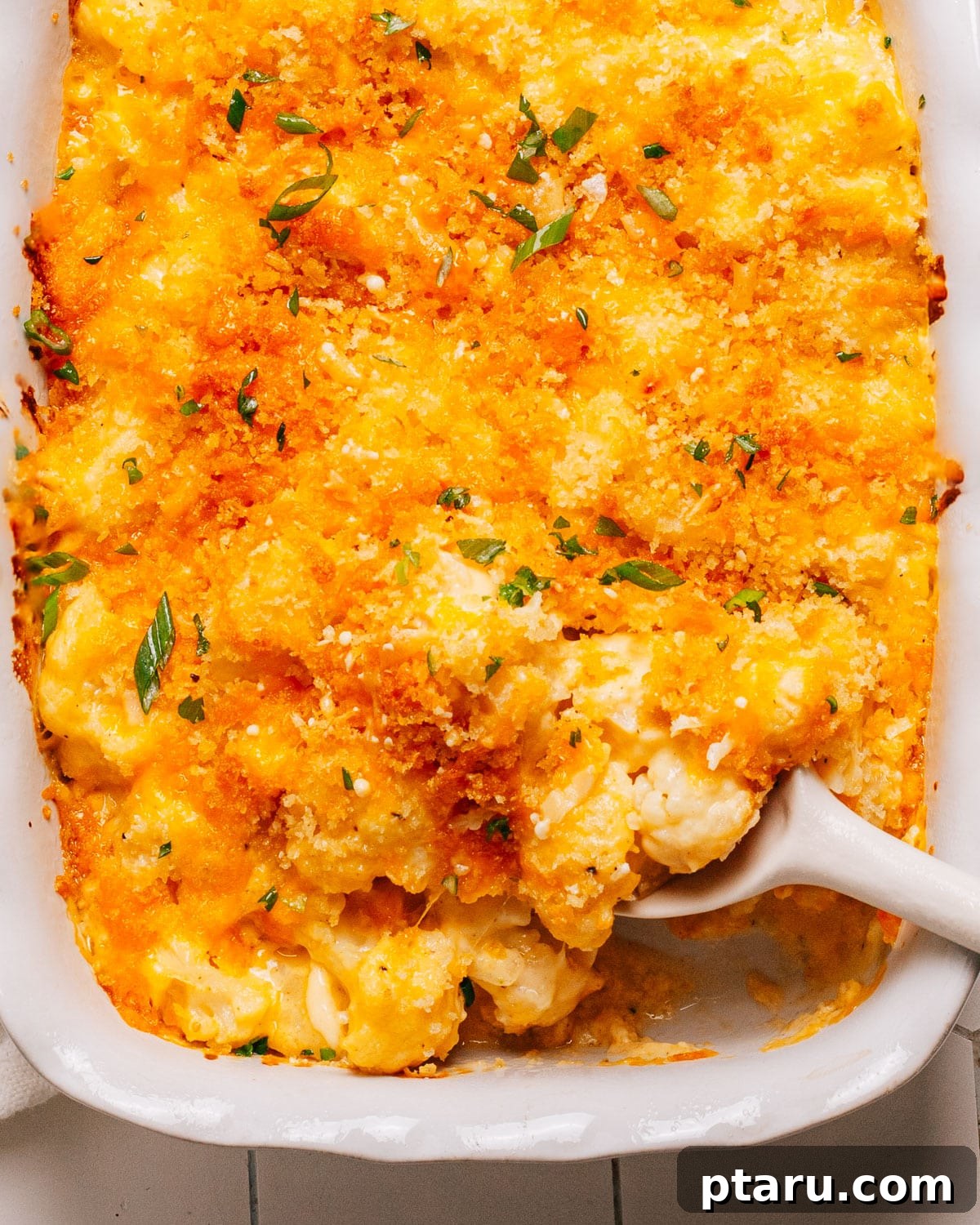
This Cauliflower Casserole stands out as one of the most heartwarming and satisfying vegetable-based winter casserole recipes you’ll ever encounter. Its comforting nature makes it a perfect fit for festive holiday meals, bringing a touch of home-cooked goodness to your spread. But its appeal isn’t limited to special events; it’s also an exceptional side dish for any weeknight dinner when you’re seeking a hearty and flavorful vegetable option.
Beyond being an amazing side, I frequently serve this cauliflower bake as a main dish. It’s a fantastic, veggie-powered alternative to classic baked macaroni and cheese, offering a delicious low-carb option without sacrificing an ounce of flavor or satisfaction. You might be surprised to see even the pickiest eaters (including kids!) devour their cauliflower with unprecedented enthusiasm, asking for seconds!
Why You’ll Love This Cauliflower Casserole
- Effortlessly Delicious: With minimal prep and cook time, you can create a show-stopping dish that tastes like it took hours.
- Family Favorite: This recipe has a knack for converting cauliflower skeptics into enthusiastic fans, making it a hit with both adults and children.
- Versatile Serving: Whether you need a comforting side, a vegetarian main, or a perfect potluck dish, this casserole fits every occasion.
- Customizable: Easily adapt the ingredients to suit dietary needs or simply to experiment with different flavor profiles.
- Perfect Make-Ahead: Assemble it in advance and bake later, reducing stress on busy days or when entertaining.
- Nutrient-Rich: Cauliflower is packed with vitamins and fiber, making this a delicious way to enjoy your vegetables.
Cauliflower Casserole Ingredients
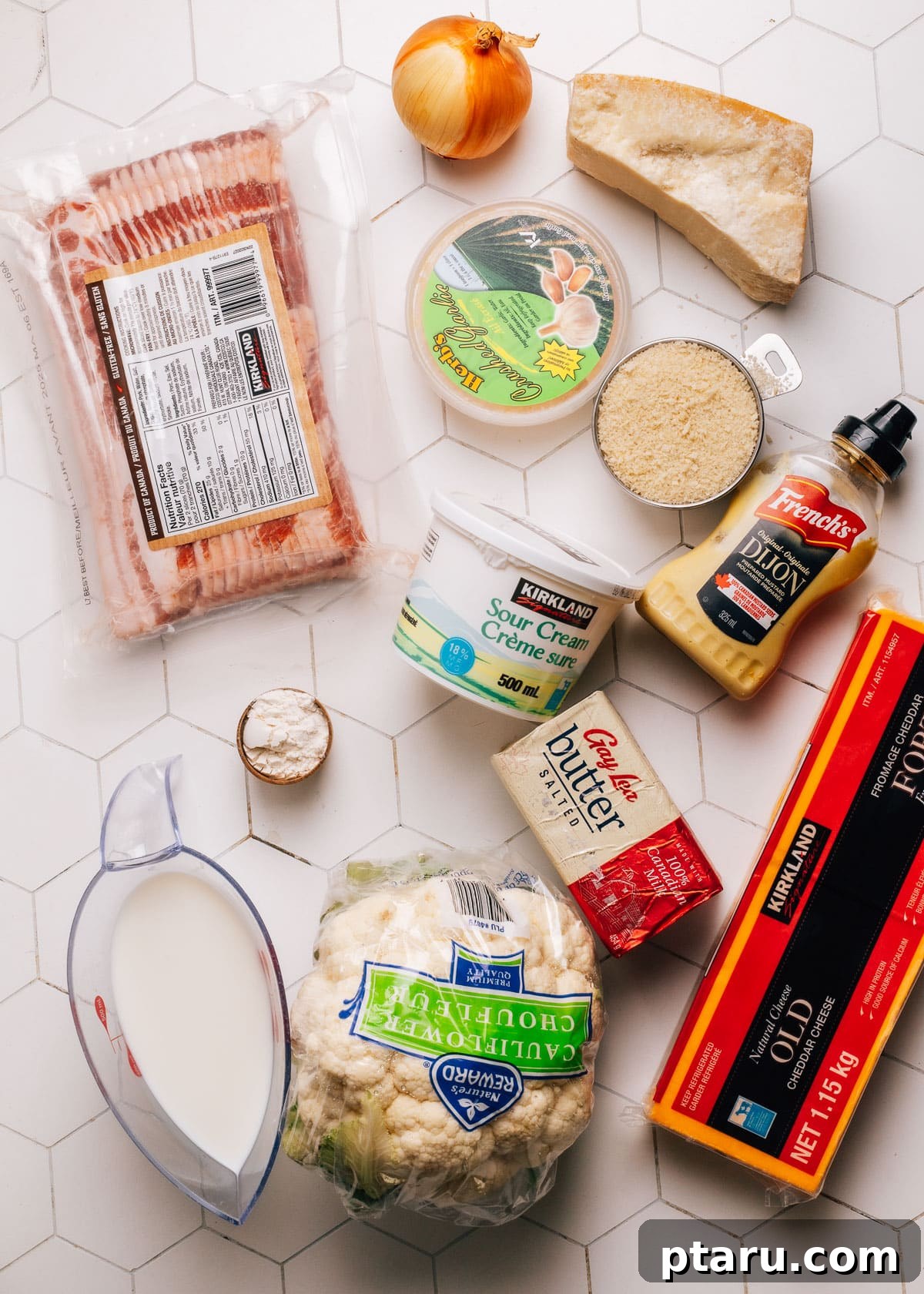
Crafting this irresistible casserole requires a thoughtful blend of fresh produce and creamy, cheesy goodness. Here is a detailed look at everything you’ll need to create this flavor-packed dish:
- Cauliflower: You’ll need about 8 cups of florets, which typically comes from one large head of cauliflower, or approximately 2 pounds. Fresh cauliflower is highly recommended for its ability to maintain a tender yet firm texture after baking, preventing a mushy result. However, if fresh isn’t available, frozen florets (thawed and well-drained) or even cauliflower rice can be used in a pinch for a slightly different texture.
- Butter: Essential for sautéing the aromatics and creating the rich roux for the sauce, providing a foundational creamy flavor.
- Onion: Finely chopped onion adds a savory depth and aromatic sweetness to the cheese sauce, building complexity.
- Garlic: Minced garlic provides a pungent, aromatic kick that complements the cheese and cauliflower beautifully.
- All-purpose flour: This forms the base of our béchamel-style cheese sauce, thickening the milk into a luxurious, smooth consistency.
- Whole milk: The liquid base for the sauce. Whole milk contributes to a richer, creamier texture compared to lower-fat alternatives.
- Sour cream: A secret ingredient for ultimate creaminess and a subtle tangy note that balances the richness of the cheeses, adding a sophisticated flavor profile.
- Cheese: I prefer sharp cheddar cheese for its bold, robust flavor that truly shines through in the casserole. However, feel free to experiment with other varieties that melt well, such as creamy Monterey Jack, mild mozzarella cheese, or a blend of your favorites.
- Parmesan cheese: Freshly grated Parmesan adds a salty, umami depth and a nutty undertone that elevates the overall cheesy flavor.
- Dijon mustard: Just a teaspoon makes a world of difference! Dijon mustard doesn’t make the casserole taste like mustard; instead, it enhances and amplifies the cheesy notes, adding a subtle tang and complexity.
- Kosher salt and black pepper: Fundamental seasonings to bring out all the flavors. Adjust to your taste preferences throughout the cooking process.
- Cayenne pepper: An optional but highly recommended addition for a subtle warmth and a hint of spice. If you prefer flavor without heat, smoked paprika makes an excellent substitute, adding a smoky, earthy dimension.
- Panko breadcrumbs: These Japanese-style breadcrumbs are coarser and lighter than regular breadcrumbs, ensuring an extra crispy, golden-brown topping that contrasts wonderfully with the creamy interior.
- Olive oil: Mixed with the panko, olive oil helps the breadcrumbs toast evenly and become beautifully crisp and golden in the oven.
- Garnishes: For a fresh finish, minced fresh parsley, thinly sliced green onion, or fresh chives are excellent choices. To make it a truly loaded cauliflower casserole recipe, consider adding crumbled, crispy bacon bits just before serving!
Exact ingredient quantities and detailed instructions can be found in the recipe card at the bottom of the article.
Substitutions and Variations to Explore
This cauliflower casserole recipe is wonderfully flexible, allowing you to tailor it to your preferences or what you have on hand. Here are some ideas to get creative:
- Other Vegetables: Don’t limit yourself to just cauliflower! Swap half or all of the cauliflower for broccoli florets for a broccoli-cheddar casserole. Alternatively, sauté some sliced mushrooms, wilt fresh spinach, or add finely chopped red bell pepper to the onion and garlic mixture for added color, texture, and nutrients.
- Cheese Variations: While sharp cheddar is a classic, consider incorporating other flavorful melting cheeses. Gruyère or Fontina can add a sophisticated, nutty flavor. If you don’t have sour cream, a similar amount of softened cream cheese can provide an equally creamy texture, though with a slightly different tang.
- Make it Gluten-Free: Easily adapt this recipe by using a 1-to-1 gluten-free all-purpose flour blend for the sauce. For the topping, swap panko breadcrumbs for your favorite gluten-free breadcrumbs or crushed gluten-free crackers for that satisfying crunch.
- Add Protein: For a heartier meal, stir in cooked, shredded chicken, diced ham, or crispy bacon bits into the casserole mixture before baking.
- Spicy Kick: Increase the amount of cayenne pepper or add a pinch of red pepper flakes for those who enjoy more heat.
Essential Tools to Grab
Having the right kitchen tools on hand will make preparing this casserole a smooth and enjoyable process:
- Large pot: For parboiling the cauliflower florets. A good size ensures even cooking.
- Colander: Essential for draining the cooked cauliflower and allowing it to steam dry, preventing a watery casserole.
- Large bowl: Useful if you prefer to mix the cauliflower and sauce separately before transferring to the baking dish.
- Medium saucepan: For preparing the creamy cheese sauce.
- Whisk: Crucial for whisking the flour into the butter and gradually incorporating the milk, ensuring a smooth, lump-free sauce.
- Wooden spoon or spatula: For sautéing onions and garlic, and for gently folding the cauliflower into the sauce.
- 8×11 or 9×9 inch baking dish: The perfect size to hold this casserole, allowing for even baking and a beautiful presentation.
- Knife and cutting board: For prepping the cauliflower, onion, and garlic.
If you find yourself a passionate admirer of cauliflower, like myself, you’ll be thrilled to explore more of my favorite cauliflower creations. Be sure to try my hearty Potato and Cauliflower Curry recipe(Aloo Gobi), the deliciously crispy Baked Cauliflower Wings, and the comforting and flavorful Curried Cauliflower and Quinoa Soup. Each recipe highlights the incredible versatility of this wonderful vegetable.
How to Make Cauliflower Casserole: An Easy Guide
Creating this savory, creamy, and undeniably delicious cauliflower casserole is simpler than you might think. Follow these easy steps to achieve a satisfying low-carb alternative to traditional gratins, such as au gratin potatoes, in no time.
1. Prepare the Oven and Baking Dish
Begin by preheating your oven to a consistent 400ºF (200ºC). While the oven heats, lightly grease an 8×11 inch or 9×9 inch baking dish. This crucial step prevents the creamy casserole from sticking and ensures easy serving and cleanup.

2. Cook the Cauliflower to Perfection
Carefully cut your large head of cauliflower into bite-sized florets. The goal is to have pieces that are uniform enough to cook evenly. Bring a large pot of generously salted water to a rolling boil. Add the cauliflower florets and cook them for a brief 3 to 4 minutes, just until they are fork-tender but still retain a slight firmness (al dente). It’s crucial not to overcook them, as they will continue to soften during baking. Immediately drain the cauliflower thoroughly in a colander and allow them to steam dry for a few minutes. This step is vital to prevent a watery casserole.
3. Build the Flavorful Sauce Base
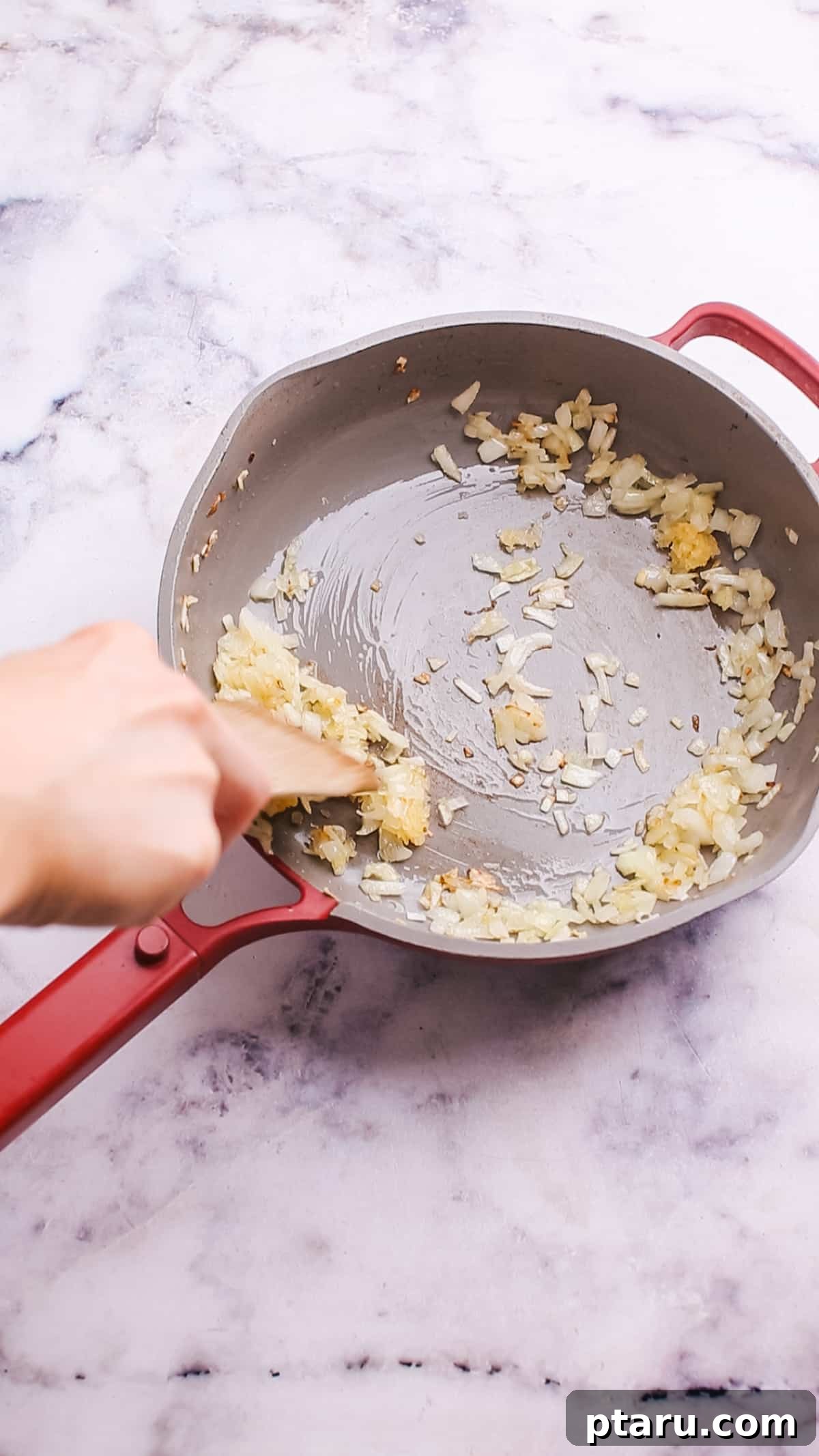
In a medium saucepan, melt the butter over medium heat. Once shimmering, add the finely chopped onion and sauté, stirring occasionally, until the onion becomes softened and translucent, which should take about 5 minutes. Next, stir in the minced garlic and cook for just 1 minute more, until it releases its fragrant aroma. Be careful not to burn the garlic, as this can impart a bitter taste.
4. Thicken the Creamy Sauce
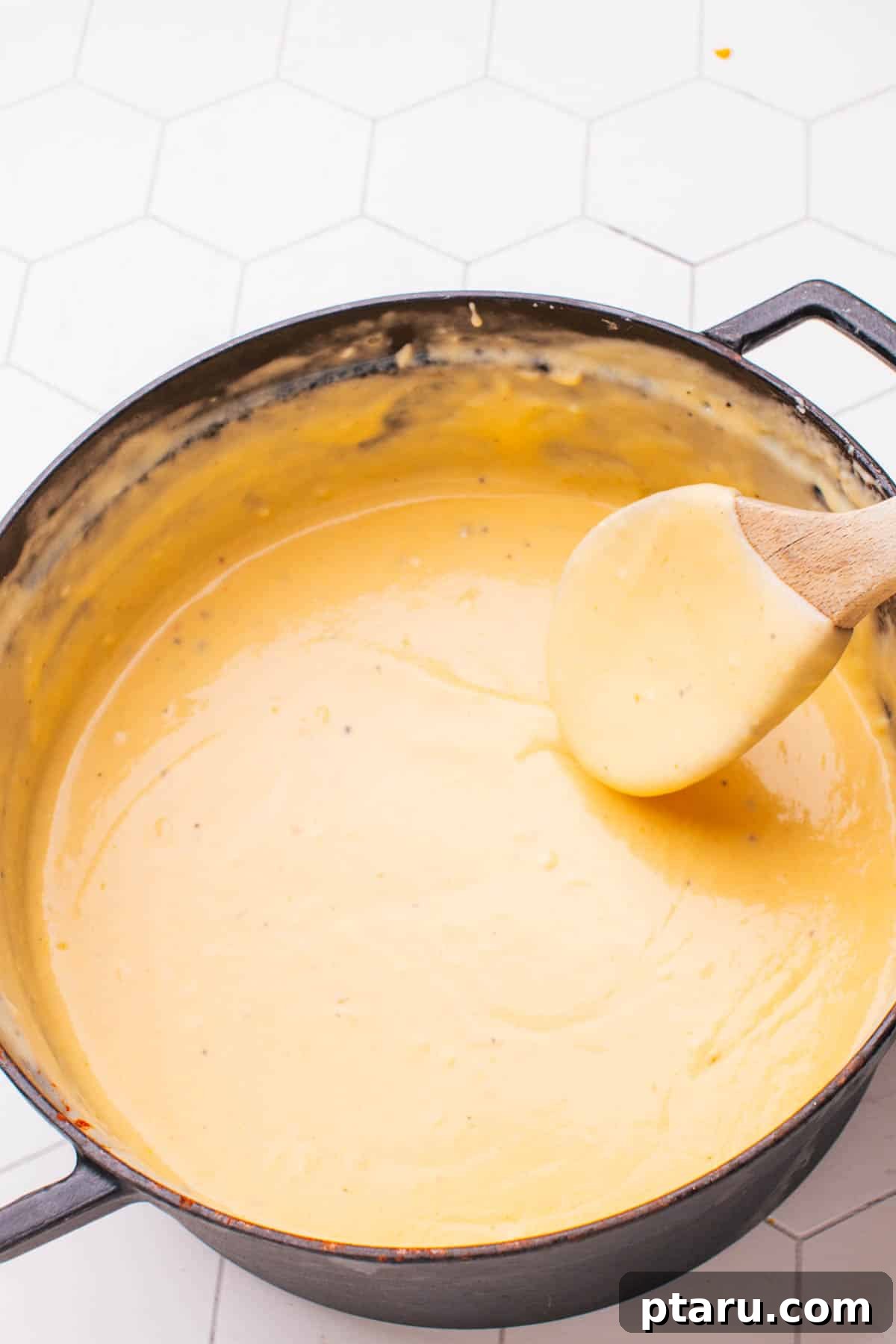
Sprinkle the all-purpose flour evenly over the softened onion and garlic in the saucepan. Whisk constantly for 1 minute, allowing the flour to cook out its raw taste and combine with the butter and aromatics, forming a roux. This is essential for a smooth sauce. Slowly, and while continuously whisking, pour in the whole milk. Continue to cook, whisking frequently, until the sauce thickens to a consistency that coats the back of a spoon, typically taking about 3 to 5 minutes. Patience here will be rewarded with a silky, rich sauce.
5. Combine the Indulgent Sauce Ingredients
Once the sauce has thickened, remove the saucepan from the heat. This prevents the dairy from curdling. Stir in the sour cream, 1 cup of the grated sharp cheddar cheese, the freshly grated Parmesan cheese, Dijon mustard, kosher salt, black pepper, and cayenne pepper (if you’re using it for that optional hint of heat). Stir vigorously until all the cheeses are completely melted and the sauce is smooth and homogeneous. This creates the intensely cheesy and creamy heart of your casserole.
6. Mix Cauliflower and Sauce Together
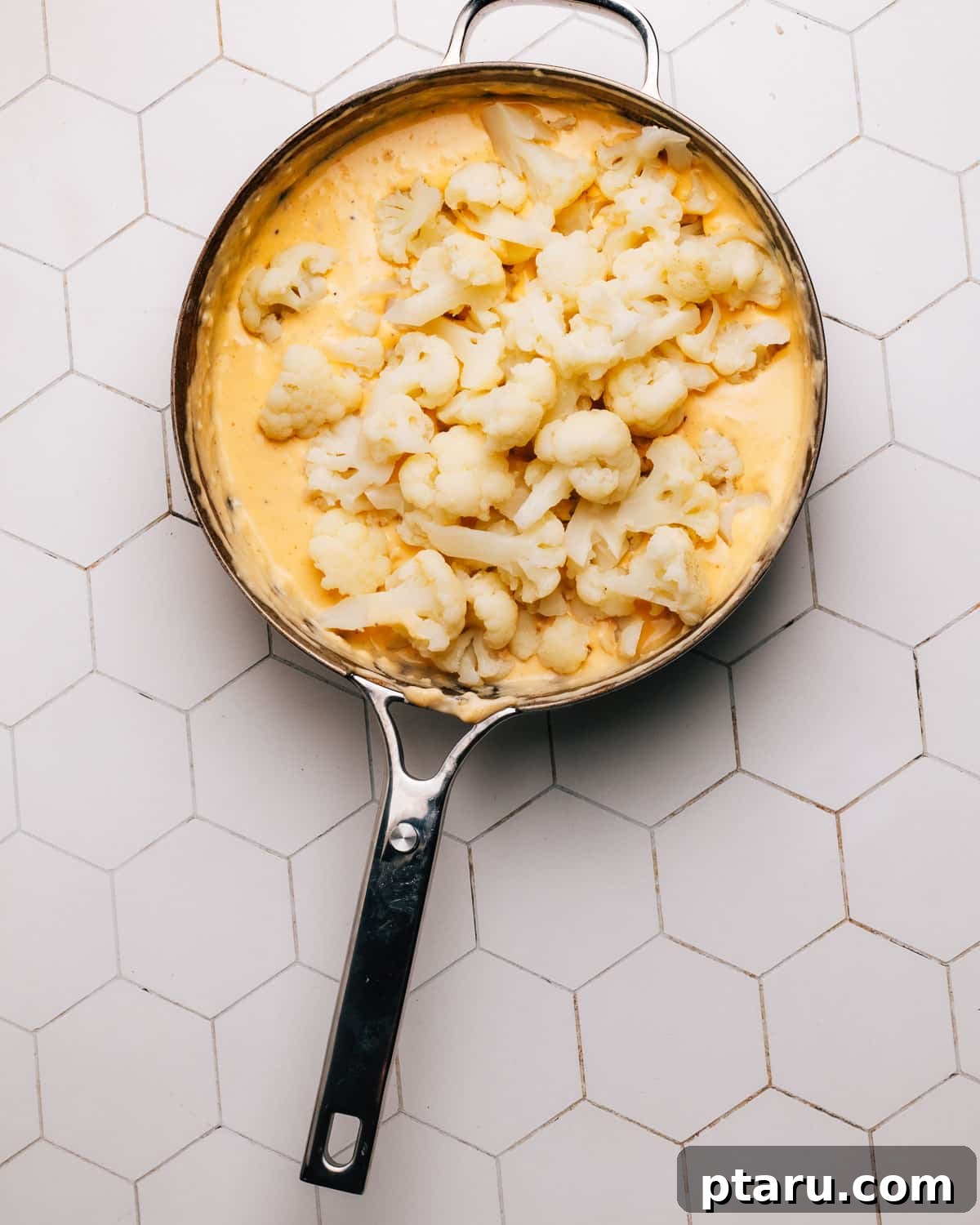
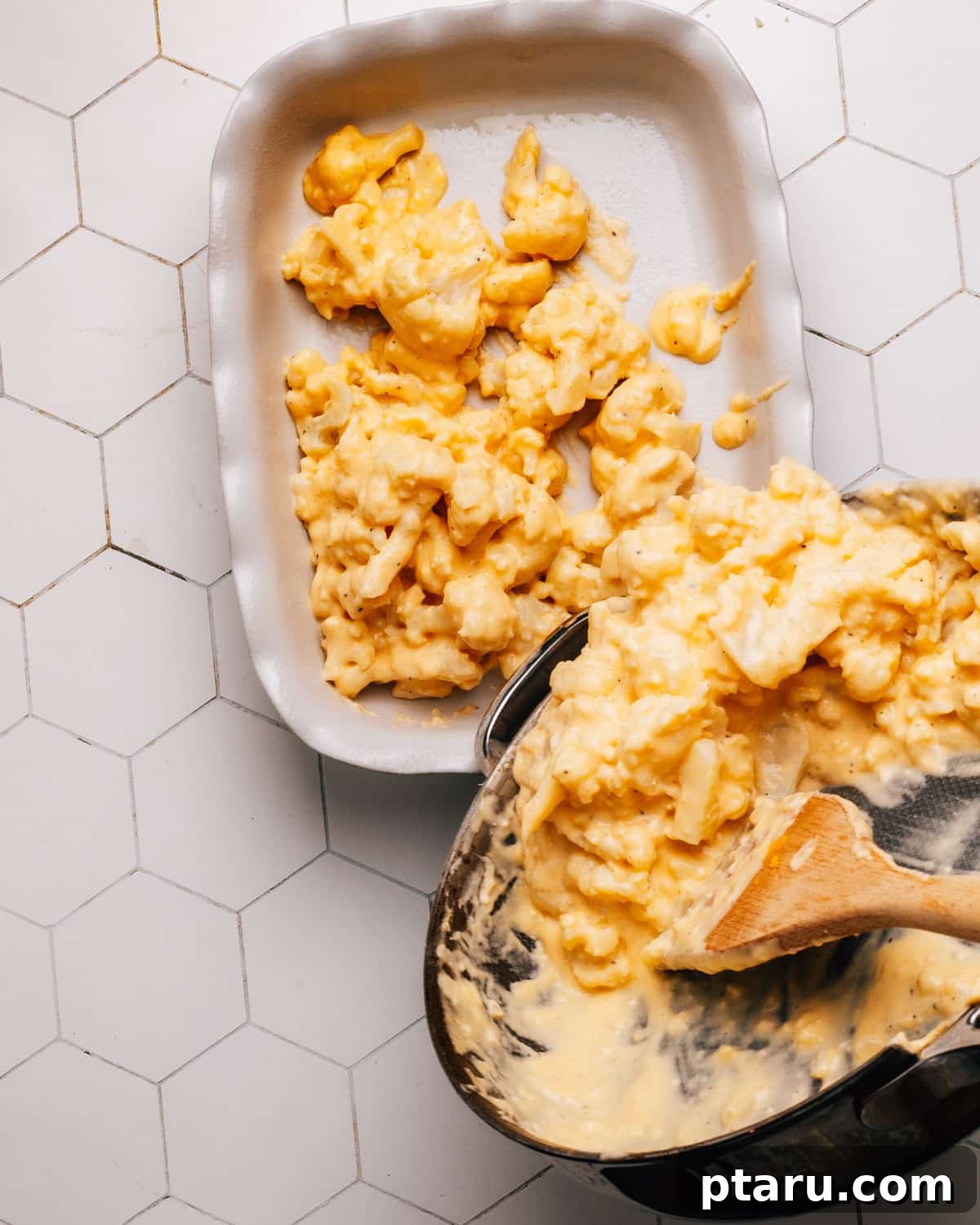
Now it’s time to bring the two main components together. If your saucepan is large enough, you can gently fold the cooked cauliflower florets directly into the cheese sauce until they are thoroughly coated. Alternatively, you can add the parboiled cauliflower to your prepared baking dish, then pour the rich cheese sauce evenly over the top, and gently fold everything together directly in the dish. Taste the mixture and adjust the salt if needed, remembering that cheese already contributes a good amount of salinity.
7. Prepare the Crispy Topping
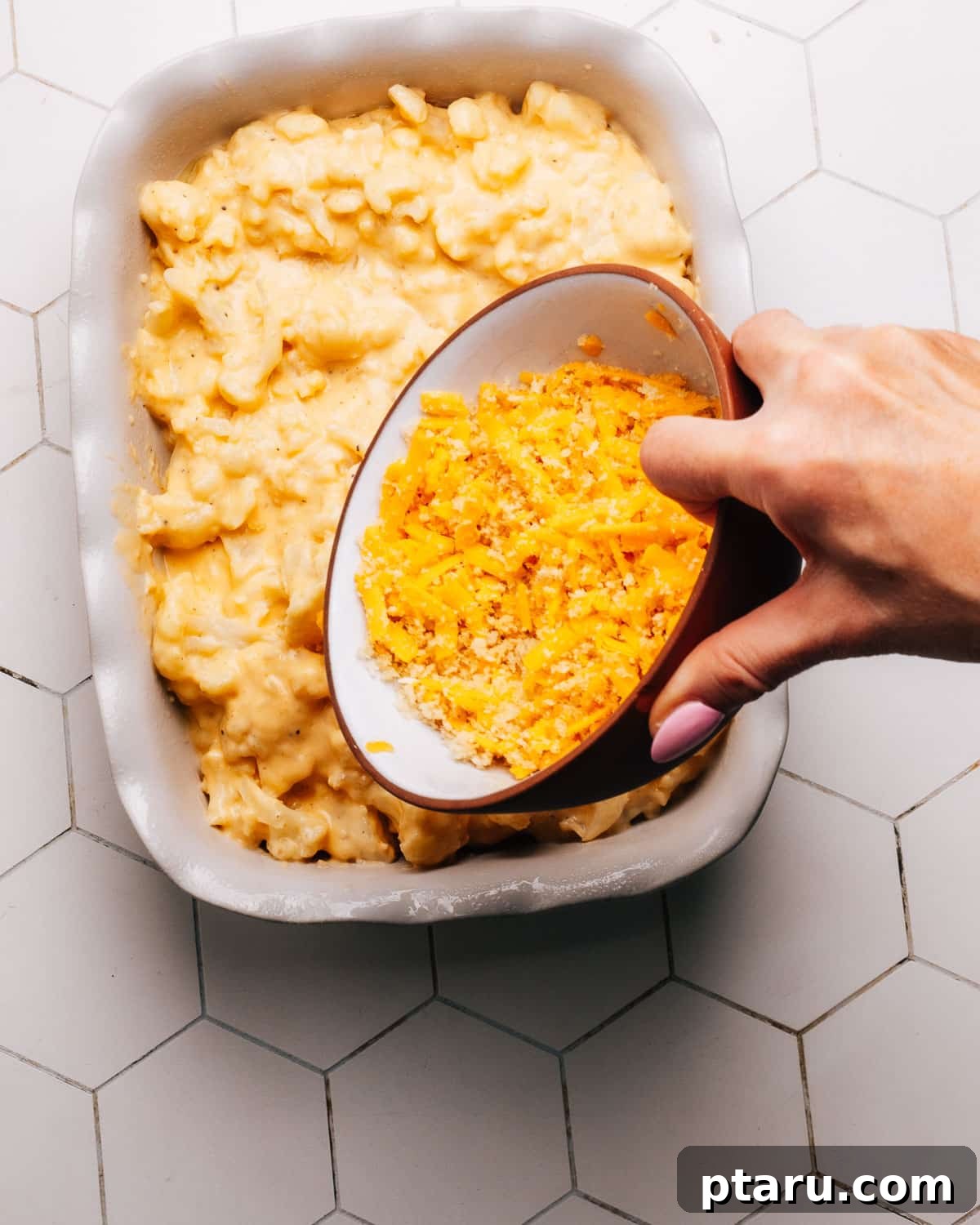
In a small bowl, combine the panko breadcrumbs with the olive oil and the remaining 1 cup of sharp cheddar cheese. Toss them together until the breadcrumbs are lightly coated with oil and mixed with the cheese. This ensures a golden, crispy, and flavorful topping. Sprinkle this mixture evenly over the top of the cauliflower and sauce in the baking dish, creating a beautiful crust that will become irresistible during baking.
8. Bake and Serve Your Masterpiece
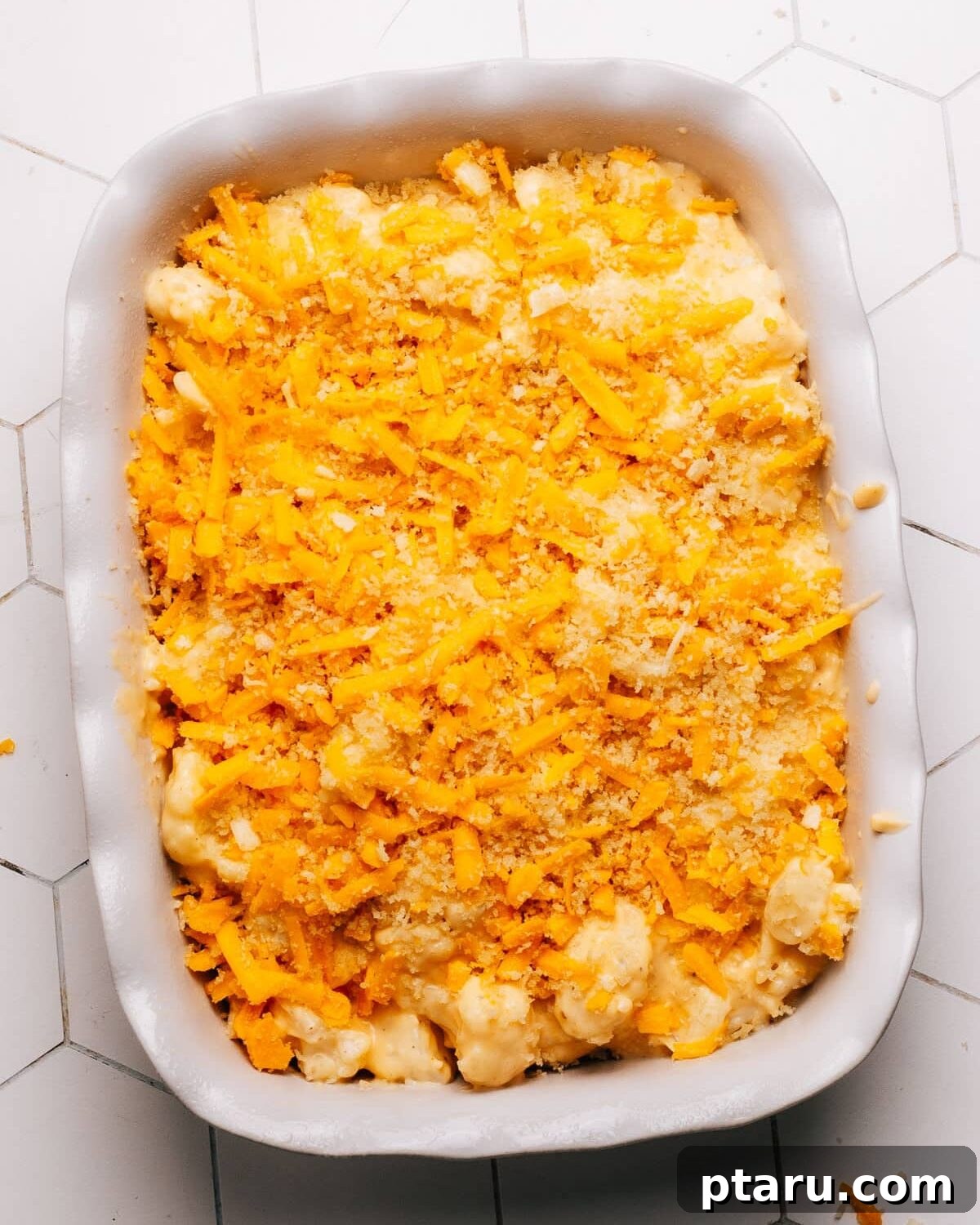
Place the baking dish into your preheated oven and bake for 15 to 20 minutes. The casserole is ready when it’s bubbling around the edges and the breadcrumb topping has turned a beautiful golden brown and is wonderfully crispy. Once out of the oven, let the casserole rest for about 5 minutes before serving. This allows the sauce to set slightly and prevents it from being too runny. For an extra touch of flavor and visual appeal, garnish with crumbled bacon and thinly sliced green onion if desired. Serve warm and enjoy!
3 Common Mistakes When Making Cauliflower Casserole (And How to Avoid Them!)
Even simple recipes can have pitfalls. Here are the most common errors home cooks make with cauliflower casserole and how to ensure your dish is perfect every time:
- Overcooking the cauliflower: One of the biggest culprits for a watery or mushy casserole is overcooked cauliflower. When you parboil the florets, aim for just 3 to 4 minutes until they are fork-tender but still have a slight bite. Immediately drain them and let them steam dry thoroughly in the colander for several minutes. This crucial step removes excess moisture that could otherwise be released into your sauce during baking, leading to a thin, watery bake instead of a creamy one.
- Skipping or rushing the sauce thickening: A thin, unthickened sauce can separate or become oily during baking, resulting in a less appealing texture. It’s essential to whisk the flour and butter together to form a proper roux, then gradually whisk in the milk and simmer until the sauce is visibly thickened and coats the back of a spoon. This typically takes about 3 to 5 minutes of gentle simmering and constant whisking. Don’t rush this step!
- Under seasoning the sauce: A bland sauce will result in a bland casserole. Always taste the cheese sauce *before* combining it with the cauliflower. This is your opportunity to adjust the salt, pepper, and Dijon mustard to achieve a perfectly balanced flavor profile. Remember that the cauliflower itself is quite mild, so the sauce needs to carry the flavor for the entire dish.
Make Ahead and Storage Tips for Convenience
This cauliflower casserole is incredibly convenient because it can be prepared in advance, saving you time and effort on busy days or when entertaining. Here’s how to handle making it ahead and storing leftovers:
Storing Leftovers
- Allow the baked casserole to cool completely before transferring any leftovers to an airtight container. Store it in the refrigerator for up to 4 days. This ensures its freshness and prevents bacterial growth. Reheat individual portions as needed for quick and easy meals.
Freezing for Future Enjoyment
- To freeze the casserole, prepare it up to the point of adding the breadcrumb topping. Cover the unbaked casserole tightly with plastic wrap and then aluminum foil. It can be frozen for up to 2 months. When you’re ready to bake, transfer the frozen casserole to the refrigerator overnight to thaw. Once thawed, add the breadcrumb topping and bake as directed, possibly adding a few extra minutes to the baking time to ensure it’s heated through.
Reheating Instructions
- For individual portions, the microwave is your best friend. Heat on a microwave-safe plate until warmed through, stirring halfway. If reheating the entire casserole, cover it loosely with aluminum foil to protect the crispy topping from burning, and warm it in the oven at 350ºF (175ºC) until it is heated through and bubbling, typically 20-30 minutes for a whole dish.
Other Favorite Side Dish Recipes You’ll Love
Looking for more delicious sides to complete your meal? Here are some highly rated recipes that pair wonderfully with any main course:
- Our crowd-pleasing Green Bean Casserole (with Homemade Crispy Onions!) is a must-try classic with a gourmet twist.
- For a unique sweet and savory delight, try our Candied Brussel Sprouts, featuring maple and bacon.
- Enjoy the ultimate in comfort with our Soft and Tender Cornbread Casserole, perfect alongside chili or roasted meats.
- Brighten up any plate with these Quick and Easy Glazed Carrots, a simple yet elegant vegetable side.
Final Notes, Pro Tips + Science-Based Secrets for the Best Casserole
Achieving a truly exceptional cauliflower casserole involves a few expert insights and techniques:
- Steam Dry the Florets is Key: After draining the parboiled cauliflower, resist the urge to immediately mix them into the sauce. Let them sit in the colander for a few minutes to release any residual steam. This scientific principle ensures that any excess moisture evaporates, preventing a watery sauce and keeping your casserole gloriously creamy, not diluted.
- Grate Your Own Cheese: While pre-shredded cheese offers convenience, it often contains anti-caking agents (like cellulose or potato starch) that can prevent it from melting smoothly and result in a grainy sauce. Freshly grating your own block of cheese will always yield a superior, silkier, and more homogeneous melt, leading to a much smoother and richer sauce.
- The Golden Topping Trick: For an extra level of crunch and a beautifully golden-brown finish on your breadcrumb topping, consider a brief stint under the broiler. After the casserole has baked for the recommended time, place it under the broiler for 1 to 2 minutes. Watch it very closely, as breadcrumbs can go from golden to burnt in a matter of seconds. This intense heat provides that perfect, irresistible crispness.
- Salt the Water Well for Flavor Infusion: Seasoning starts with the cooking water for the cauliflower. If you generously salt the boiling water (like you would for pasta), the cauliflower will absorb some of that seasoning, adding flavor from the inside out. If you forgot to salt the water adequately, you can always add an extra pinch of kosher salt to the cheese sauce to ensure overall balanced seasoning.
- Room Temperature Ingredients for a Smoother Sauce: Bringing dairy ingredients like milk and sour cream to room temperature before adding them to the hot roux can help prevent lumps and ensure a smoother, more emulsified sauce. Cold dairy can sometimes cause the sauce to seize or become lumpy.
FAQs About Cauliflower Casserole
Just skimming this article for quick answers? Here are some of the most common questions about making the perfect cauliflower casserole:
Fresh herbs like thyme, chives, and parsley are fantastic companions to cauliflower. You can either fold finely chopped herbs into the cheese sauce after it has thickened for an infused flavor, or sprinkle them generously over the baked casserole as a vibrant and aromatic garnish just before serving.
Yes, frozen cauliflower florets can certainly be used! To ensure the best results, it’s crucial to thaw them completely first. Once thawed, drain them very well to remove all excess moisture. You might even want to pat them dry with a clean kitchen towel or paper towels. This prevents any additional water from thinning your sauce or making your crispy topping soggy during baking.
Preventing a watery casserole is key to its success. First, avoid overcooking the cauliflower during the parboiling stage; cook it only until it’s just tender-crisp. Second, after draining, let the cauliflower steam dry in a colander for a few minutes to release any lingering moisture. Finally, ensure your cheese sauce is properly thickened until it coats a spoon before combining it with the cauliflower.
Absolutely! This casserole is an excellent make-ahead dish. You can assemble it up to 1 day in advance without adding the breadcrumb topping. Cover the baking dish tightly with plastic wrap and refrigerate it. When you’re ready to bake, remove it from the fridge to come to room temperature for about 20-30 minutes, then add the topping and bake as directed.
Yes, this recipe is inherently low-carb due to the cauliflower replacing traditional starches. To make it strictly keto-friendly, simply omit the all-purpose flour (you can use a small amount of xanthan gum for thickening or just rely on the cheese) and swap the panko breadcrumbs for a keto-friendly topping like crushed pork rinds or a blend of almond flour and Parmesan cheese mixed with butter. Ensure all other ingredients align with your specific dietary guidelines.

Print Recipe
Best Creamy & Cheesy Cauliflower Casserole
Jennifer Pallian BSc, RD
15 minutes
15 minutes
8
Ingredients
-
8 cups cauliflower florets (2 lbs, about 1 large head) -
2 tbsp unsalted butter -
1 cup finely chopped onion -
2 tsp minced garlic -
2 tbsp all-purpose flour -
1 ½ cups whole milk -
½ cup sour cream -
2 cups grated sharp cheddar (divided) -
½ cup freshly grated Parmesan cheese -
1 tsp Dijon mustard -
½ tsp kosher salt (or to taste) -
¼ tsp freshly ground black pepper -
¼ tsp cayenne pepper (optional, or smoked paprika for no heat) -
½ cup panko breadcrumbs -
1 tbsp olive oil -
2 slices cooked bacon (crumbled, optional garnish) -
1 finely sliced green onion (optional garnish)
Instructions
-
Preheat oven to 400ºF (200ºC). Lightly grease an 8×11 or 9×9 inch baking dish to prevent sticking.
-
Bring a large pot of generously salted water to a boil. Add cauliflower florets and cook for 3 to 4 minutes until just tender-crisp. Drain well in a colander and let them steam dry for several minutes.
-
Melt butter in a medium saucepan over medium heat. Add finely chopped onion and cook until softened and translucent, about 5 minutes. Stir in minced garlic and cook for 1 minute until fragrant.
-
Sprinkle in all-purpose flour and cook, whisking constantly, for 1 minute to form a roux. Gradually whisk in the whole milk. Continue to cook, whisking frequently, until the sauce has thickened and coats the back of a spoon, about 3 to 5 minutes.
-
Remove the saucepan from the heat. Stir in sour cream, 1 cup of the grated sharp cheddar cheese, Parmesan cheese, Dijon mustard, kosher salt, black pepper, and cayenne pepper (if using). Stir until all cheeses are melted and the sauce is smooth.
-
Gently fold the parboiled cauliflower into the cheese sauce until well coated. Transfer the mixture to the prepared baking dish. Alternatively, add cauliflower to the dish, pour sauce over, and fold together there. Taste and add a pinch more salt if needed.
-
In a small bowl, combine panko breadcrumbs with olive oil and the remaining 1 cup of sharp cheddar cheese. Toss to combine, then sprinkle evenly over the top of the casserole.
-
Bake for 15 to 20 minutes, or until the casserole is bubbling around the edges and the topping is golden brown and crispy. Let rest for 5 minutes before serving. Garnish with crumbled bacon and finely sliced green onion if desired. Serve warm.
Notes
For the smoothest cheese sauce, always grate your own cheese from a block. Pre-shredded varieties often contain additives that can make the sauce grainy.
To achieve an extra crispy, golden-brown topping, broil the casserole for 1 to 2 minutes at the very end of baking. Keep a close eye on it, as it can brown quickly!
Remember to generously salt the water when cooking the cauliflower to season it from within. If you find the final sauce needs more seasoning, add a small pinch of salt to taste.
Nutrition
Calories:
306
kcal
|
Carbohydrates:
16
g
|
Protein:
14
g
|
Fat:
22
g
|
Saturated Fat:
11
g
|
Polyunsaturated Fat:
1
g
|
Monounsaturated Fat:
6
g
|
Trans Fat:
0.1
g
|
Cholesterol:
58
mg
|
Sodium:
588
mg
|
Potassium:
479
mg
|
Fiber:
3
g
|
Sugar:
6
g
|
Vitamin A:
623
IU
|
Vitamin C:
51
mg
|
Calcium:
369
mg
|
Iron:
1
mg
Nutrition information is automatically calculated, so should only be used as an approximation.