Easy One-Pan Chicken and Rice: Your Ultimate Weeknight Comfort Meal
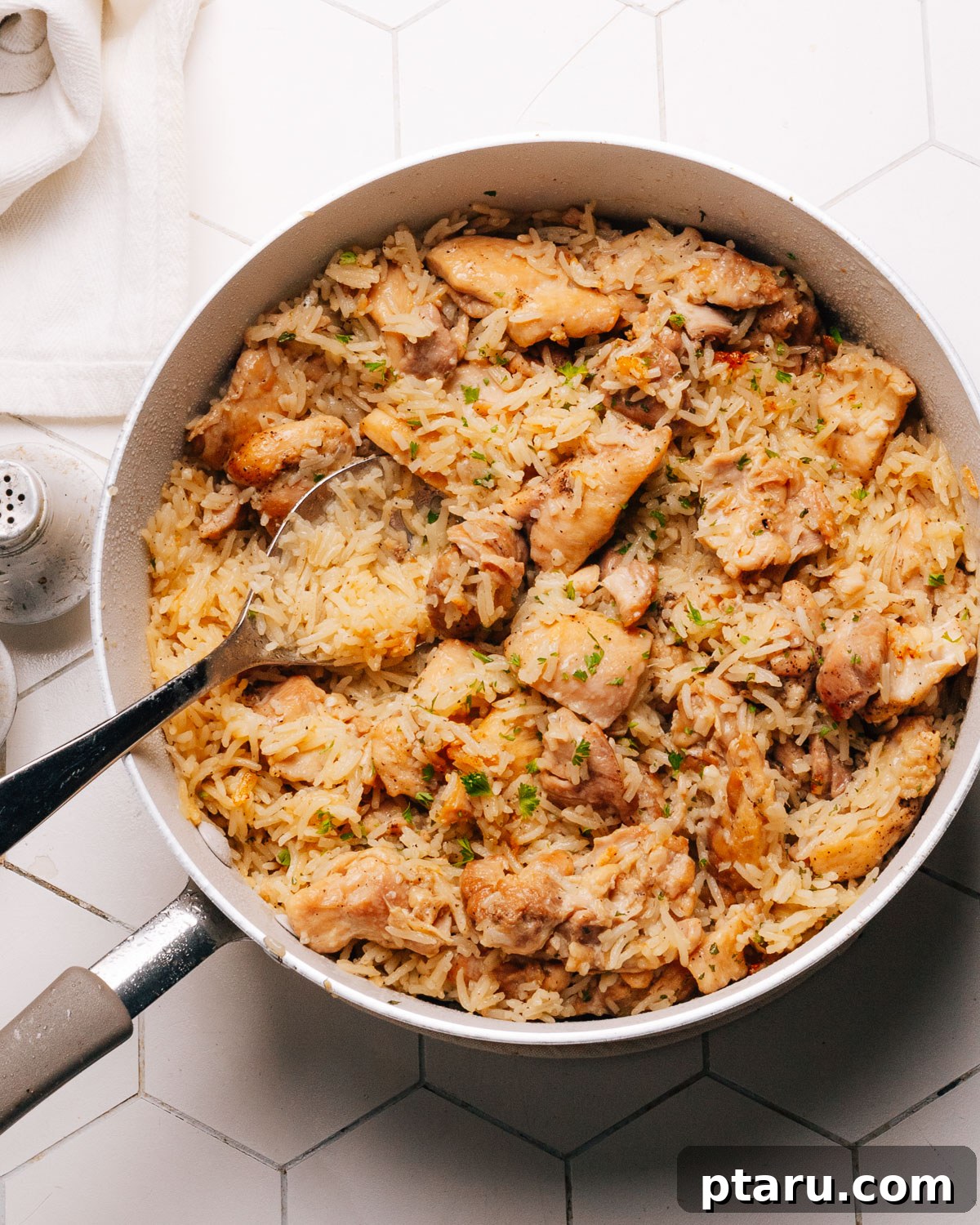
Discover the ultimate in simple, satisfying comfort food with this incredibly easy Chicken and Rice recipe. Featuring tender, flavorful chicken thighs cooked alongside perfectly fluffy long-grain rice in a rich, savory chicken broth, this one-pan wonder is designed to bring warmth and deliciousness to your dinner table. It’s a quick, fuss-free meal that the whole family will genuinely love, making it a staple for busy weeknights or whenever you crave a hearty, homemade dish.
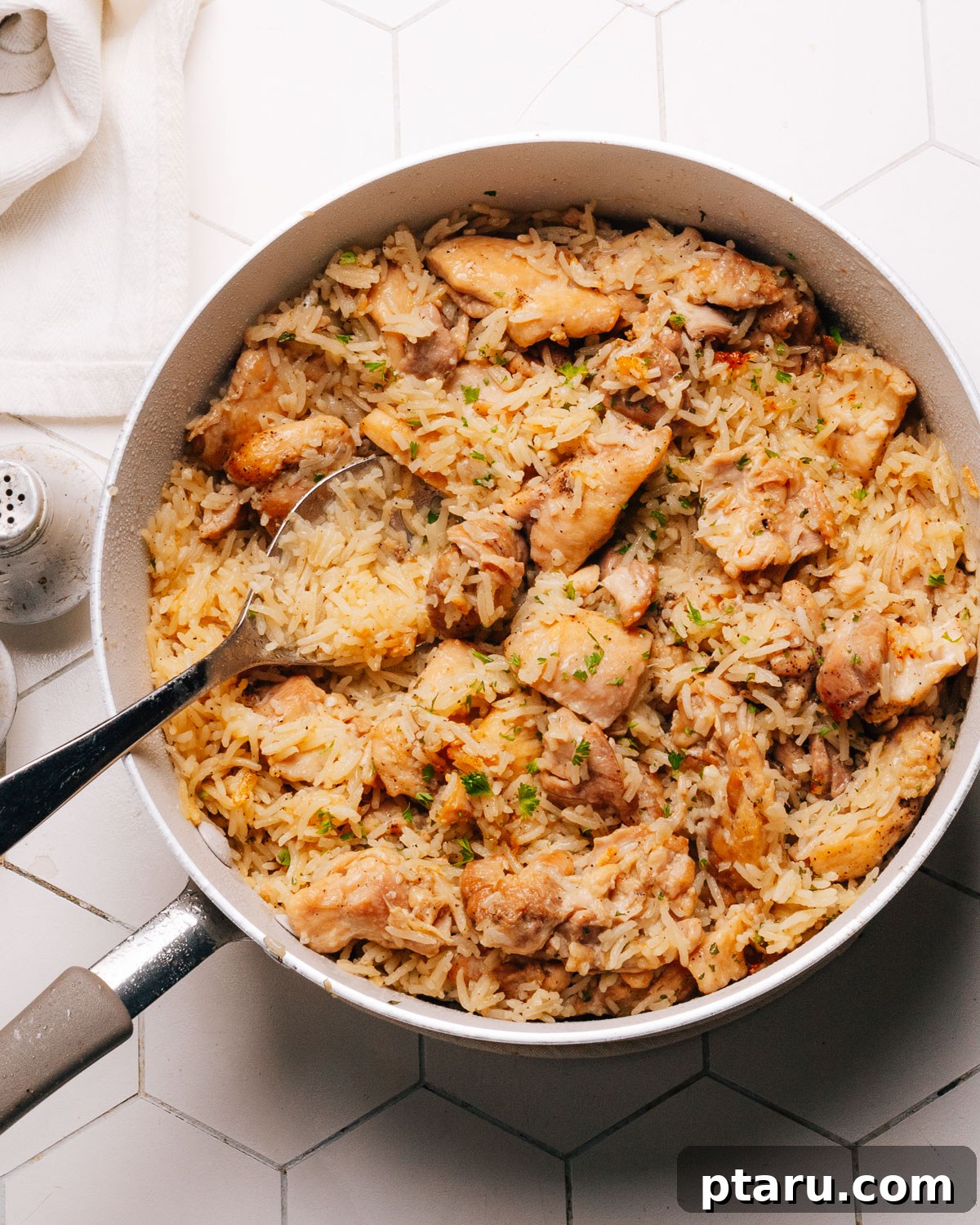
There’s something truly special about classic chicken and rice. It evokes a sense of nostalgia, a warm hug in a bowl, without requiring hours in the kitchen. This old-fashioned, easy chicken and rice dish exemplifies that simple charm. While basic in its approach, it is anything but bland, bursting with deep, satisfying flavors that develop as everything simmers together in one pan. Forget complicated recipes; this is pure, unadulterated goodness.
If you’re a fan of comforting chicken and rice dishes, you’ll also adore some of my other favorites. Be sure to try my Baked Chicken and Rice with Lemon and Mushrooms for a zesty twist, or explore the aromatic spices of my Easy Chicken Biryani. Each offers a unique take on this beloved combination, proving just how versatile chicken and rice can be!
Why This Easy One-Pan Chicken and Rice Will Become Your Go-To Meal
This isn’t just another chicken and rice recipe; it’s a culinary secret weapon for busy households. Here’s why this dish is poised to become a permanent fixture in your weekly rotation:
- Effortless One-Pan Cooking: Say goodbye to mountains of dirty dishes! This entire meal comes together in a single skillet, minimizing cleanup and maximizing your precious free time.
- Unbeatable Comfort Food: There’s a reason chicken and rice is a timeless classic. It’s warm, hearty, and deeply satisfying, offering a taste of home in every bite.
- Rich, Deep Flavors: By searing the chicken and building the flavor base directly in the pan before adding the rice, we lock in incredible savory notes that permeate every grain and piece of chicken.
- Customizable to Your Liking: Whether you prefer dark or white meat, want to load up on vegetables, or crave a touch of spice, this recipe is incredibly adaptable to suit your family’s preferences.
- Perfectly Fluffy Rice Every Time: With the right technique and a little patience, you’ll achieve rice that is tender, separate, and never mushy, complementing the juicy chicken beautifully.
- Budget-Friendly Ingredients: Made with common, affordable pantry staples, this meal is kind to your wallet without compromising on taste or quality.
Essential Ingredients for Your Perfect Chicken and Rice
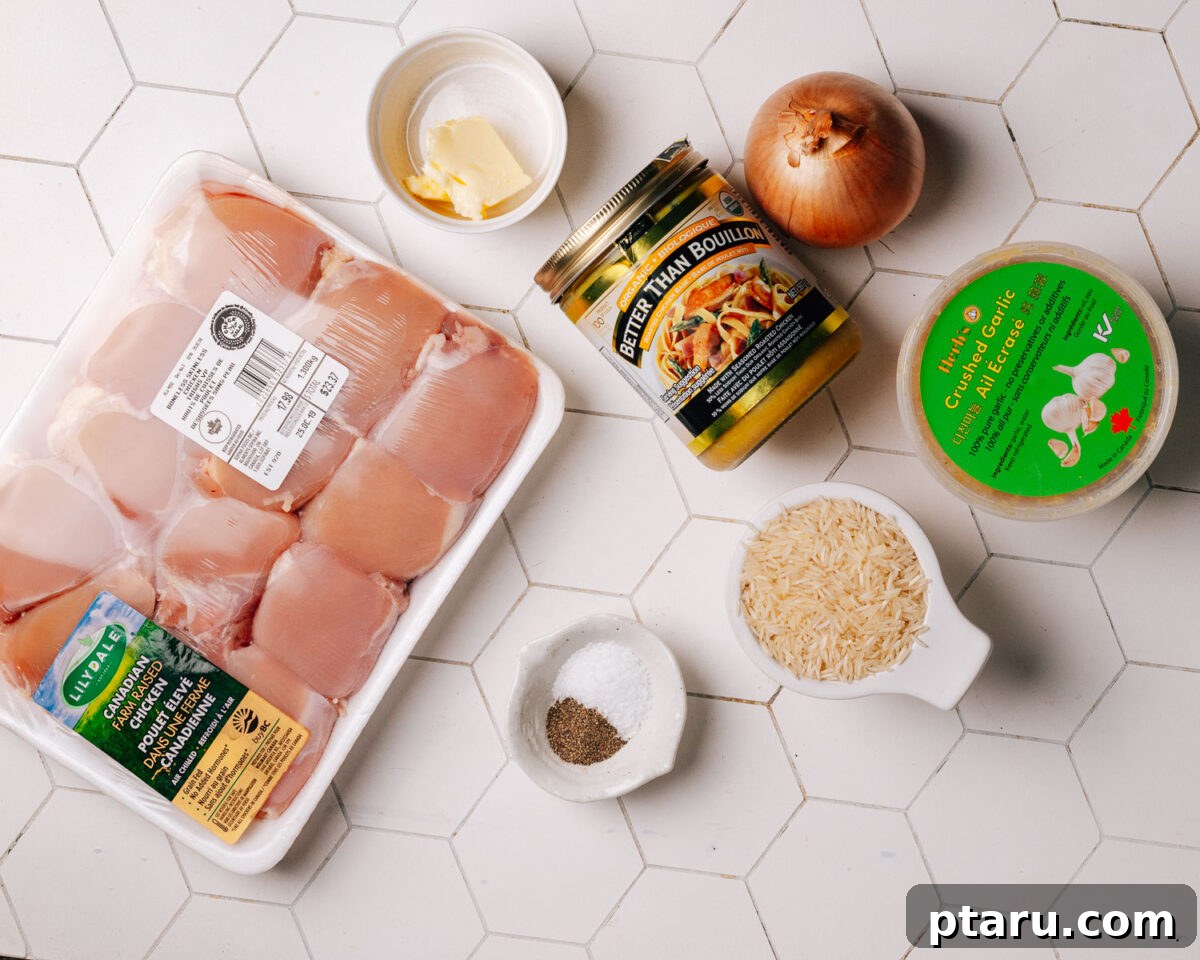
Gathering your ingredients is the first step towards this delightful one-pan dinner. Here’s a detailed look at what you’ll need to create a truly memorable chicken and rice dish:
To Achieve a Perfect Sear on the Chicken
- Olive Oil: Essential for searing the chicken and preventing sticking, olive oil also adds a subtle base flavor.
- Boneless Skinless Chicken Thighs (or Breasts): Thighs offer richer flavor and remain incredibly juicy, but breasts work beautifully if cut into uniform, bite-sized pieces to ensure even cooking.
- Kosher Salt: Used generously to season the chicken, kosher salt helps draw out moisture for a better sear and enhances overall flavor.
- Freshly Ground Black Pepper: A classic seasoning that adds a touch of warmth and aromatic complexity to the chicken.
To Build and Finish the Savory Dish
- Yellow Onion: Finely chopped, onion forms the aromatic foundation of the dish, adding sweetness and depth as it softens and caramelizes.
- Garlic: Minced fresh garlic is highly recommended for its pungent, sweet aroma, which is crucial for building a robust flavor profile. In a pinch, garlic powder can be used, but fresh is always superior for this recipe.
- Unsalted Butter: Used to toast the rice, butter introduces a rich, nutty flavor that elevates the entire dish. If using salted butter, remember to adjust the added salt accordingly.
- Long-Grain White Rice (uncooked): Such as jasmine or basmati rice. Long-grain rice is ideal for achieving a fluffy, separated texture that absorbs the broth’s flavors without becoming mushy. Ensure it is uncooked before adding to the pan.
- Low-Sodium Chicken Broth: The liquid base for cooking the rice and infusing the dish with savory chicken flavor. Using low-sodium allows you to control the seasoning precisely.
- Kosher Salt: Added to the broth to properly season the rice and ensure the entire dish is perfectly balanced.
- Frozen Peas and Carrots or Mixed Vegetables (optional): For a pop of color, added nutrients, and a touch of sweetness, frozen mixed vegetables are a convenient addition. Stir them in at the end for vibrant freshness.
You’ll find precise quantities and step-by-step instructions conveniently listed in the comprehensive recipe card located at the end of this article.
Variations and Substitutions: Customize Your One-Pan Chicken and Rice
One of the best aspects of this easy chicken and rice recipe is its incredible versatility. Feel free to make it your own with these simple swaps and additions:
- Brown Rice: For a heartier, nuttier, and fiber-rich alternative, swap white rice for brown rice. Remember that brown rice requires more liquid and a longer cooking time. Use approximately 2½ cups of chicken broth and simmer for about 45 minutes, or until tender.
- Chicken Breasts: While thighs offer superior juiciness, boneless, skinless chicken breasts can absolutely be used. Cut them into slightly smaller pieces than you would thighs to ensure they cook evenly and remain tender. Check for doneness around the 18-minute mark to avoid overcooking and drying them out.
- More Vegetables: Boost the nutritional content and add vibrant colors with a variety of vegetables. Try adding fresh or frozen green beans, sweet corn, diced bell peppers, or even finely chopped broccoli florets. For a cheesy, comforting twist, explore my skillet Chicken and Rice Broccoli Casserole.
- Spice It Up: Infuse your chicken and rice with exciting new flavors. Stir in 1 teaspoon of smoked paprika for a smoky depth, cumin for an earthy warmth, curry powder for an exotic twist, or Italian seasoning for an aromatic, herbaceous profile to the rice just before adding the broth.
- Creamy Version: For an extra-rich and decadent chicken and rice, stir in ½ cup of heavy cream, sour cream, or even cream cheese at the very end of the cooking process. This adds a luxurious texture and mellows the flavors beautifully.
- Herbaceous Freshness: Finish your dish with a sprinkle of fresh chopped herbs like parsley, cilantro, or chives for a bright, aromatic lift.
Looking for more chicken inspiration? Don’t miss out on my mouth-watering Butter Chicken, the incredibly easy and flavorful Easy Teriyaki Bowl, and my perfectly balanced Honey Mustard Chicken recipes!
Gather Your Tools: Kitchen Essentials for This Recipe
You don’t need a professional chef’s arsenal to whip up this amazing chicken and rice. Just a few basic kitchen tools will set you up for success:
- Large Skillet with a Tight-Fitting Lid: A 12-inch heavy-bottomed skillet is ideal. The heavy bottom ensures even heat distribution, preventing hot spots that can burn the rice, and the lid is absolutely crucial for steaming the rice to tender perfection.
- Sharp Knife: A well-maintained sharp knife is essential for safely and efficiently cutting your chicken into even, bite-sized pieces, promoting uniform cooking.
- Cutting Board: Always use a dedicated cutting board for raw chicken to prevent cross-contamination. Ensure it can be easily sanitized afterward.
- Wooden Spoon or Heat-Resistant Spatula: Perfect for stirring ingredients without scratching the surface of your skillet.
- Measuring Cups and Spoons: For accurate ingredient amounts, especially for the rice and liquid, which are critical for the dish’s texture.
- Instant-Read Thermometer (Optional but recommended): For peace of mind, an instant-read thermometer ensures your chicken reaches the safe internal temperature of 165°F (74°C).
How to Make the Best One-Pan Chicken and Rice: Step-by-Step Guide
This recipe is a true testament to the beauty of one-pan cooking. You’ll build incredible depth of flavor right in the skillet, then let everything simmer together, resulting in a perfectly cooked, intensely satisfying meal. Follow these simple steps for flawless results:
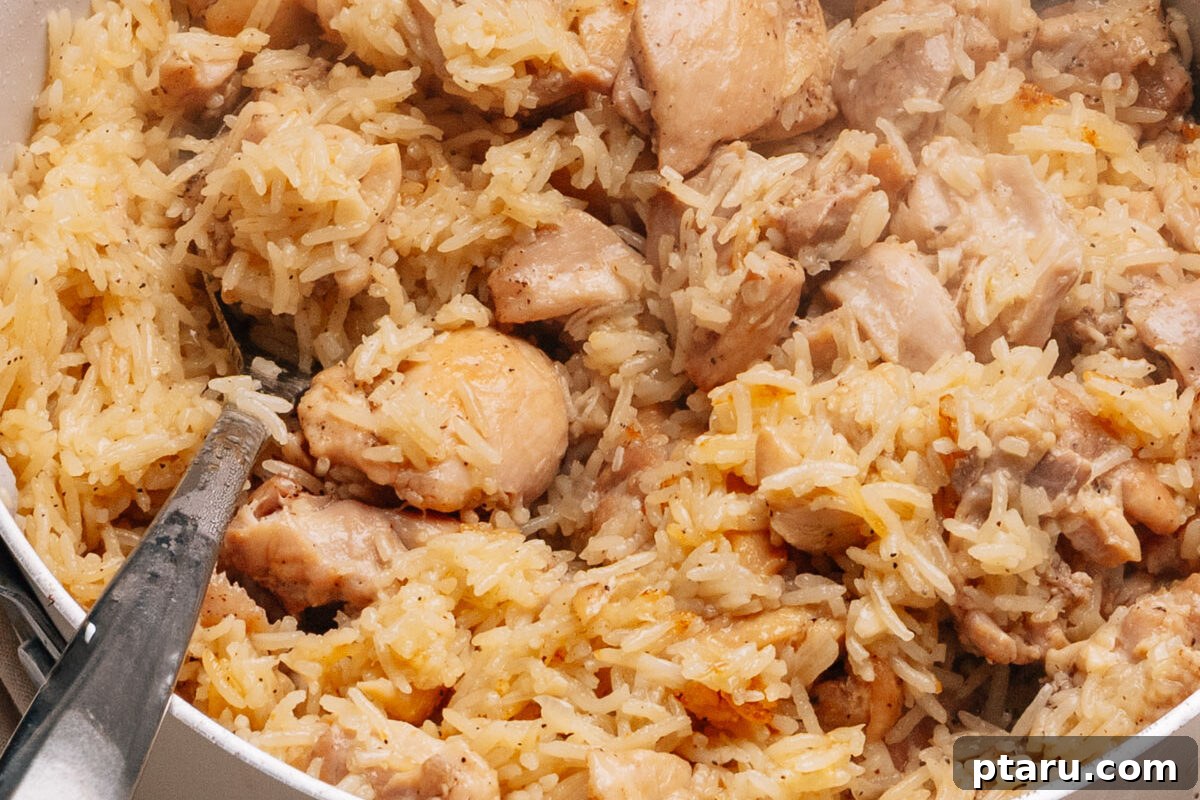
Step 1: Achieve a Golden Sear on the Chicken
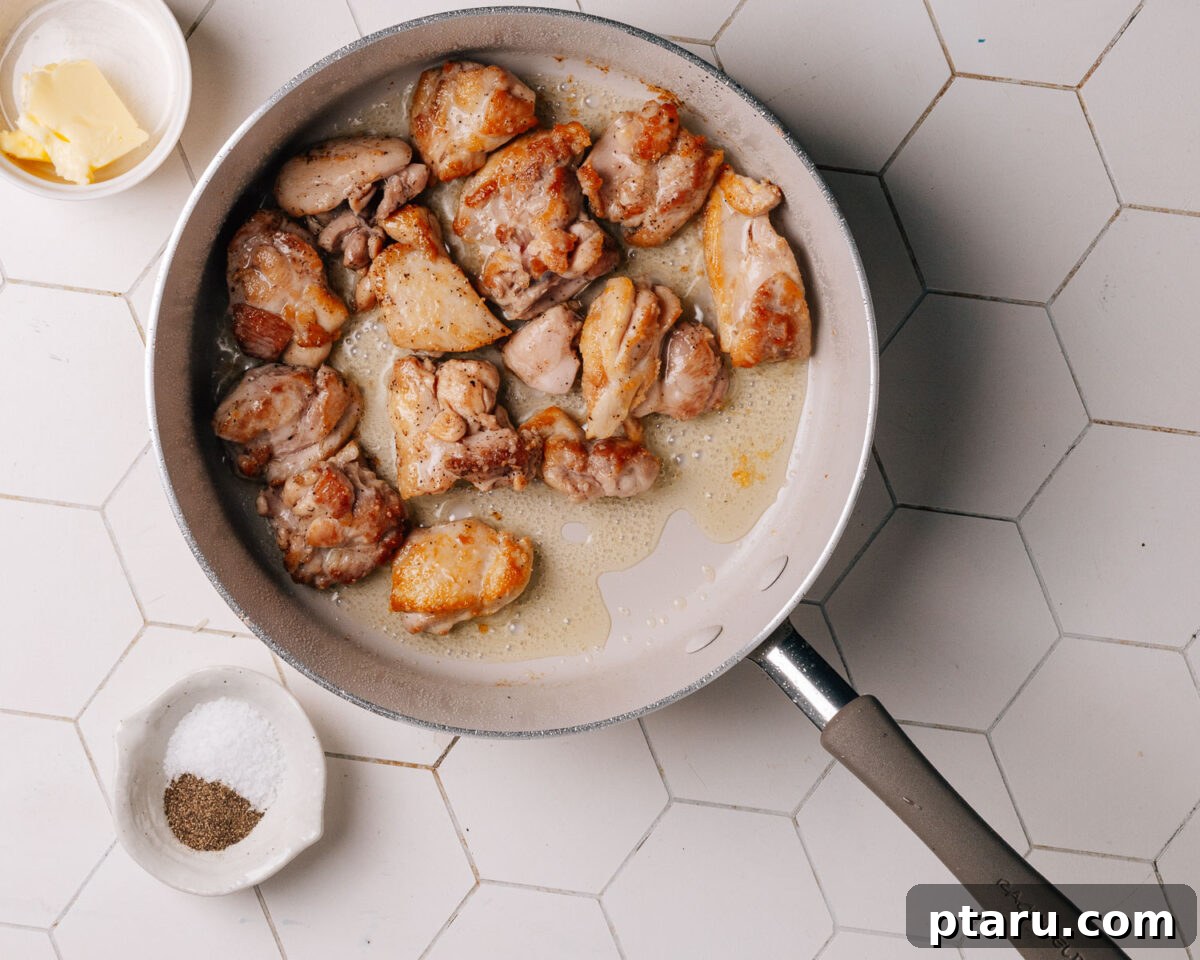
Begin by heating the olive oil in your large, heavy-bottomed skillet over high heat until it shimmers. Pat your chicken pieces very dry with paper towels – this is crucial for a good sear. Season them generously with 2 teaspoons of kosher salt and the black pepper. Add the chicken to the hot pan in a single layer, ensuring not to overcrowd the skillet. Sear both sides until beautifully golden brown, about 2-3 minutes per side, for a total of approximately 5 minutes. The chicken won’t be fully cooked through at this stage, and that’s perfectly fine; we’re building flavor and texture. If your pan is too small, work in two batches to avoid steaming the chicken instead of searing it. Once seared, remove the chicken to a clean plate, reserving any accumulated juices.
Step 2: Build the Rich Flavor Base
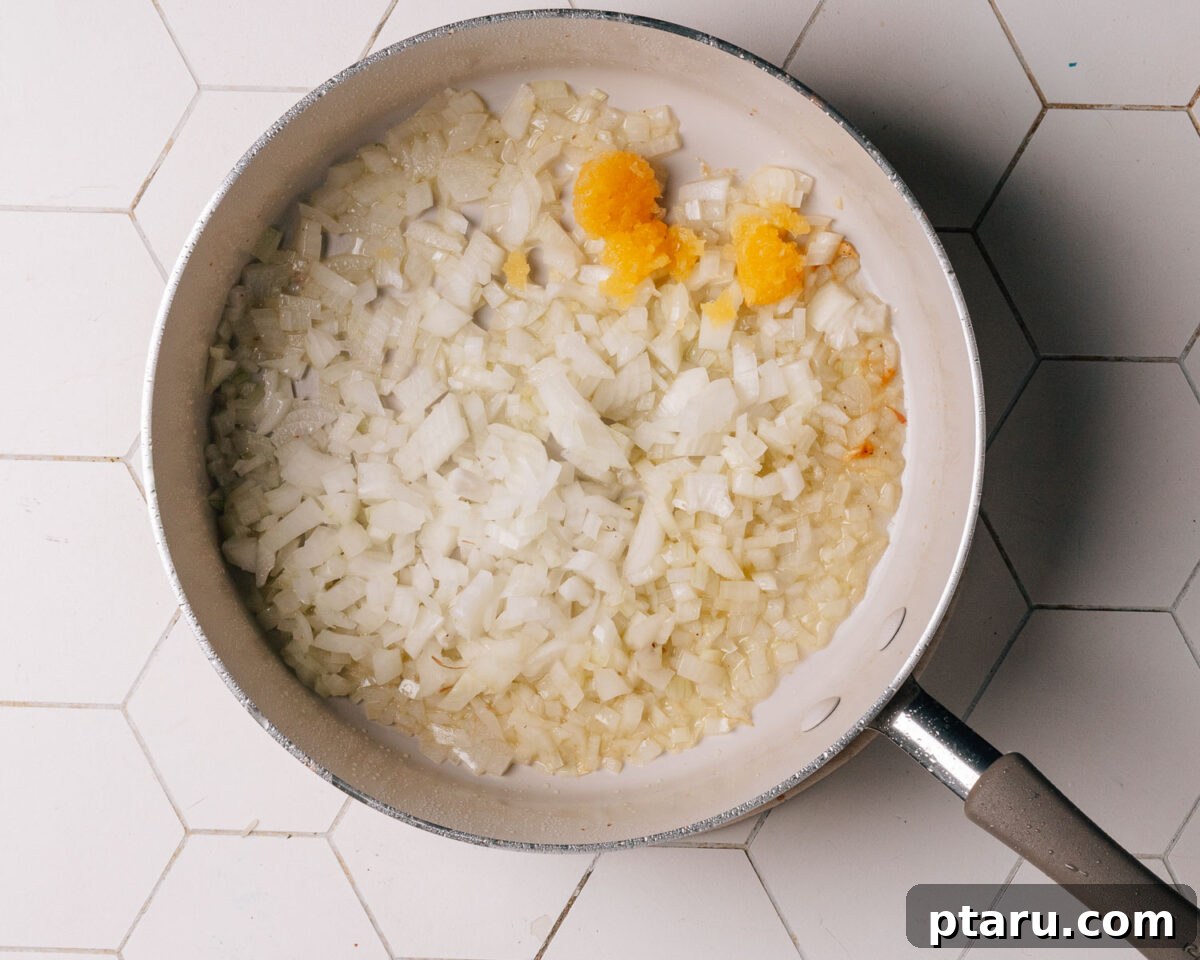
Reduce the heat to medium-high. Do not drain the pan! Those browned bits stuck to the bottom of the skillet (the “fond”) are packed with incredible flavor. Add the finely chopped onion and minced garlic to the same skillet. Cook for about 2 minutes, stirring frequently, until the onion softens and becomes translucent, and the garlic is fragrant. This step not only cooks the aromatics but also helps to deglaze the pan, incorporating all those delicious browned bits into your flavor base.
Step 3: Toast the Rice for Depth
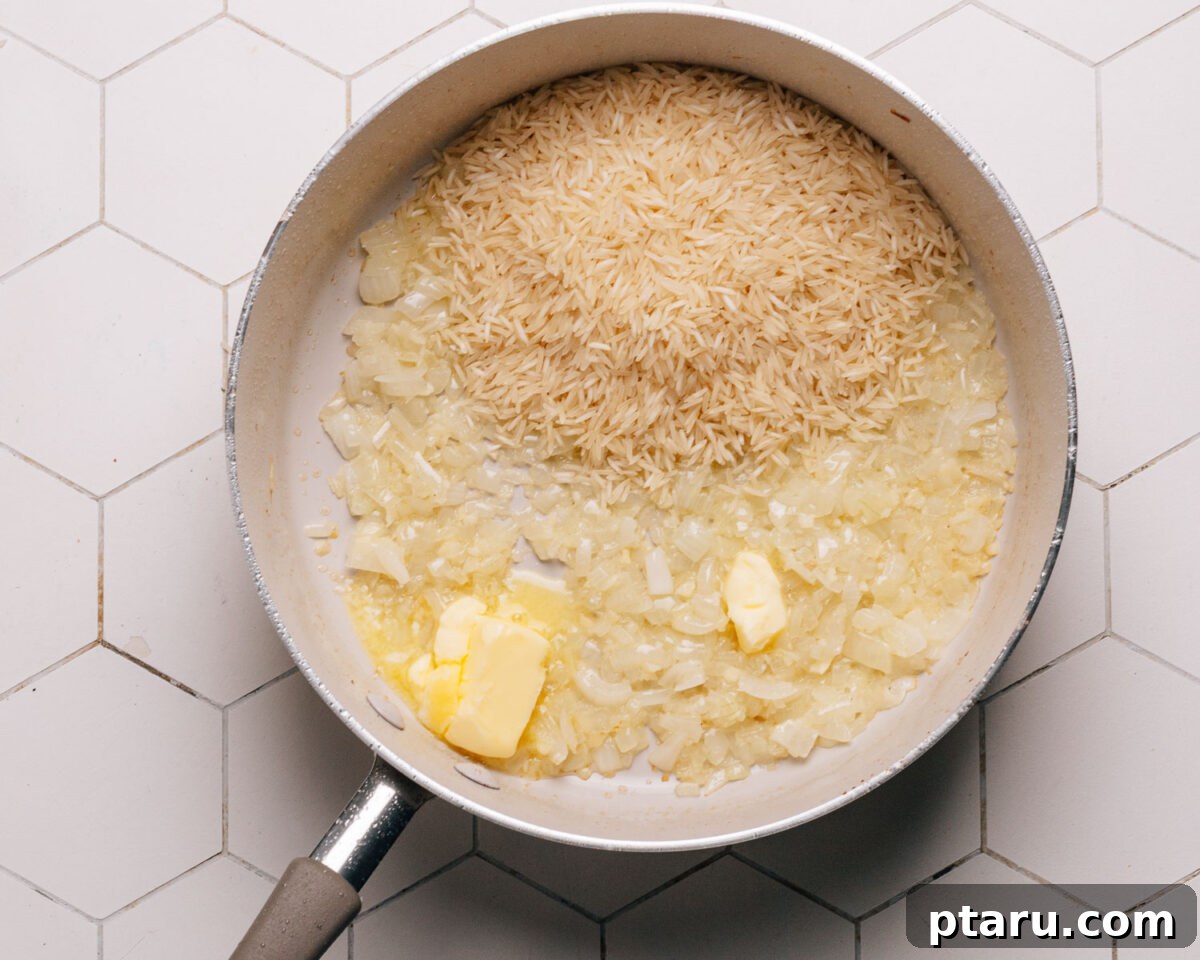
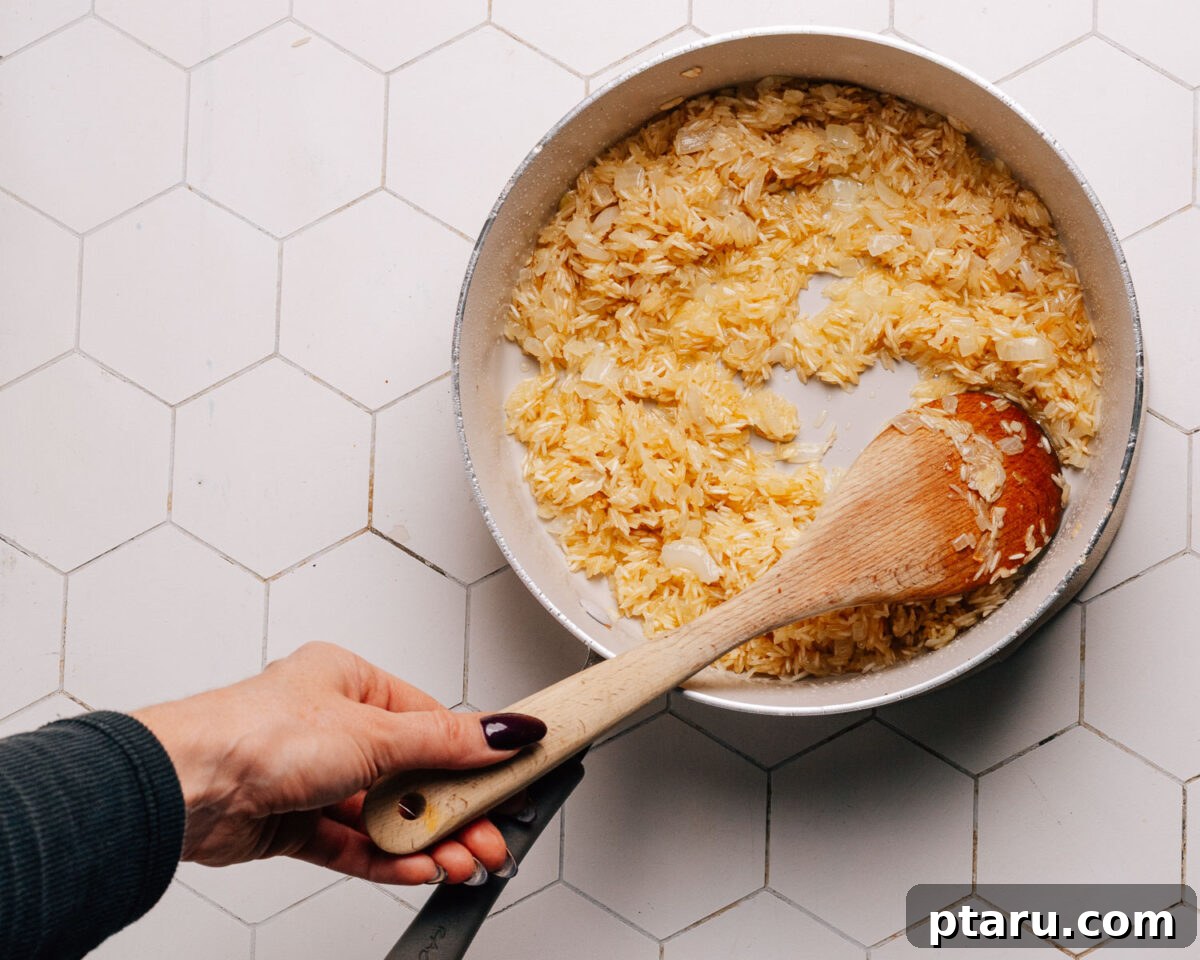
Stir in the unsalted butter until it fully melts, coating the bottom of the pan. Then, add the uncooked long-grain white rice directly into the skillet. Stir constantly for 1 minute, allowing the rice grains to toast gently in the butter and pan drippings. This crucial toasting step imparts a slightly nutty flavor to the rice and helps prevent it from becoming sticky, ensuring a fluffy texture in the finished dish. You’ll notice the edges of the rice grains starting to look slightly translucent – that’s your cue it’s ready.
Step 4: Simmer to Perfection
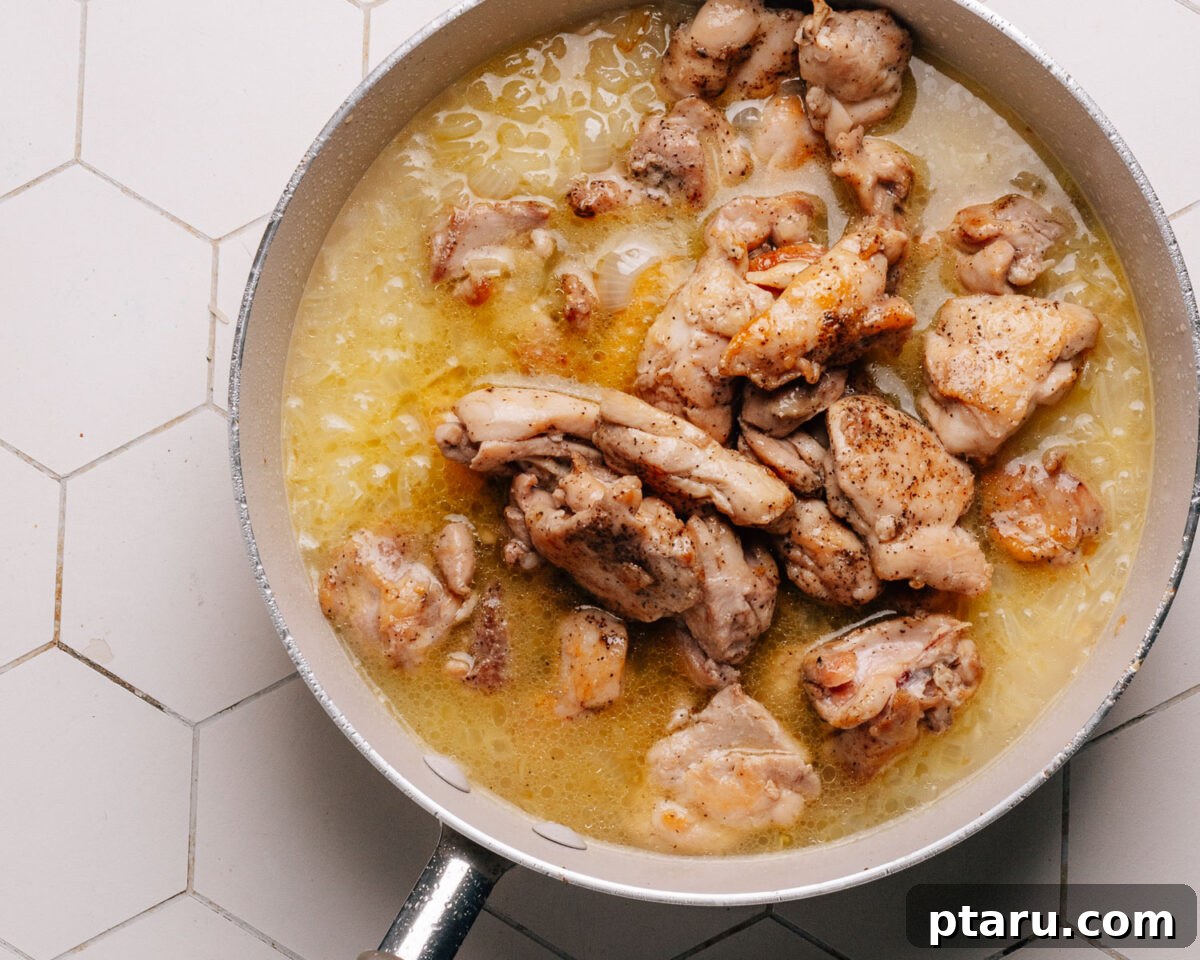
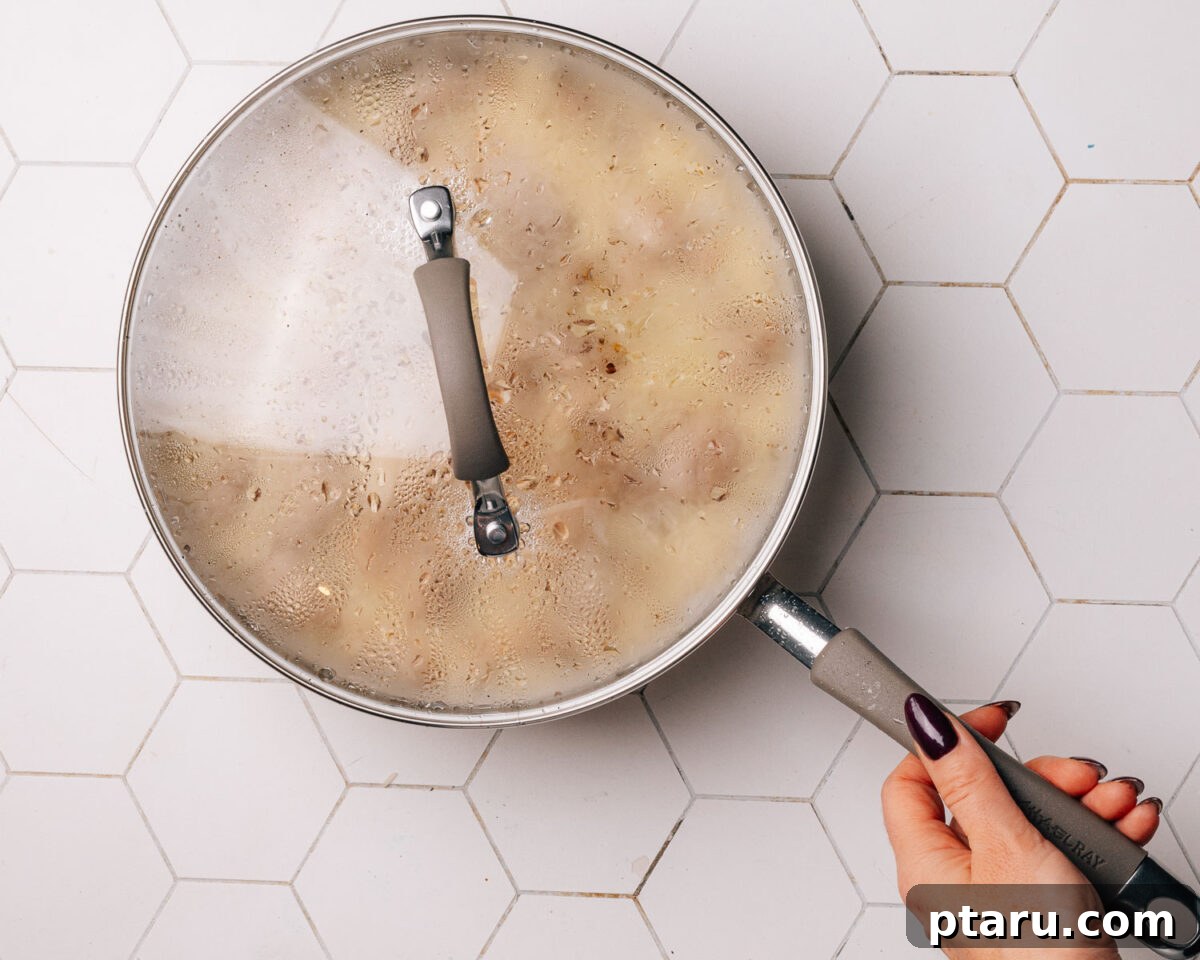
Pour in the chicken broth and add the remaining 1 teaspoon of kosher salt. Stir everything well to combine and bring the liquid to a rolling boil. Carefully return the seared chicken pieces to the skillet, along with any juices that may have accumulated on the plate – these juices add invaluable moisture and flavor. Cover the pan tightly with its lid, reduce the heat to low, and let the mixture simmer gently and undisturbed for 20 minutes. It’s vital to resist the urge to peek during this time, as lifting the lid releases the steam necessary for the rice to cook evenly and become tender.
Step 5: Incorporate Your Vegetables
After 20 minutes, if you’re incorporating frozen peas and carrots or other mixed vegetables, now is the time to add them. Simply scatter them over the cooked chicken and rice. Cover the pan again and let it sit off the heat for another 5 minutes. The residual heat from the dish will gently warm the vegetables through without overcooking them or turning them mushy, keeping them vibrant and tender-crisp.
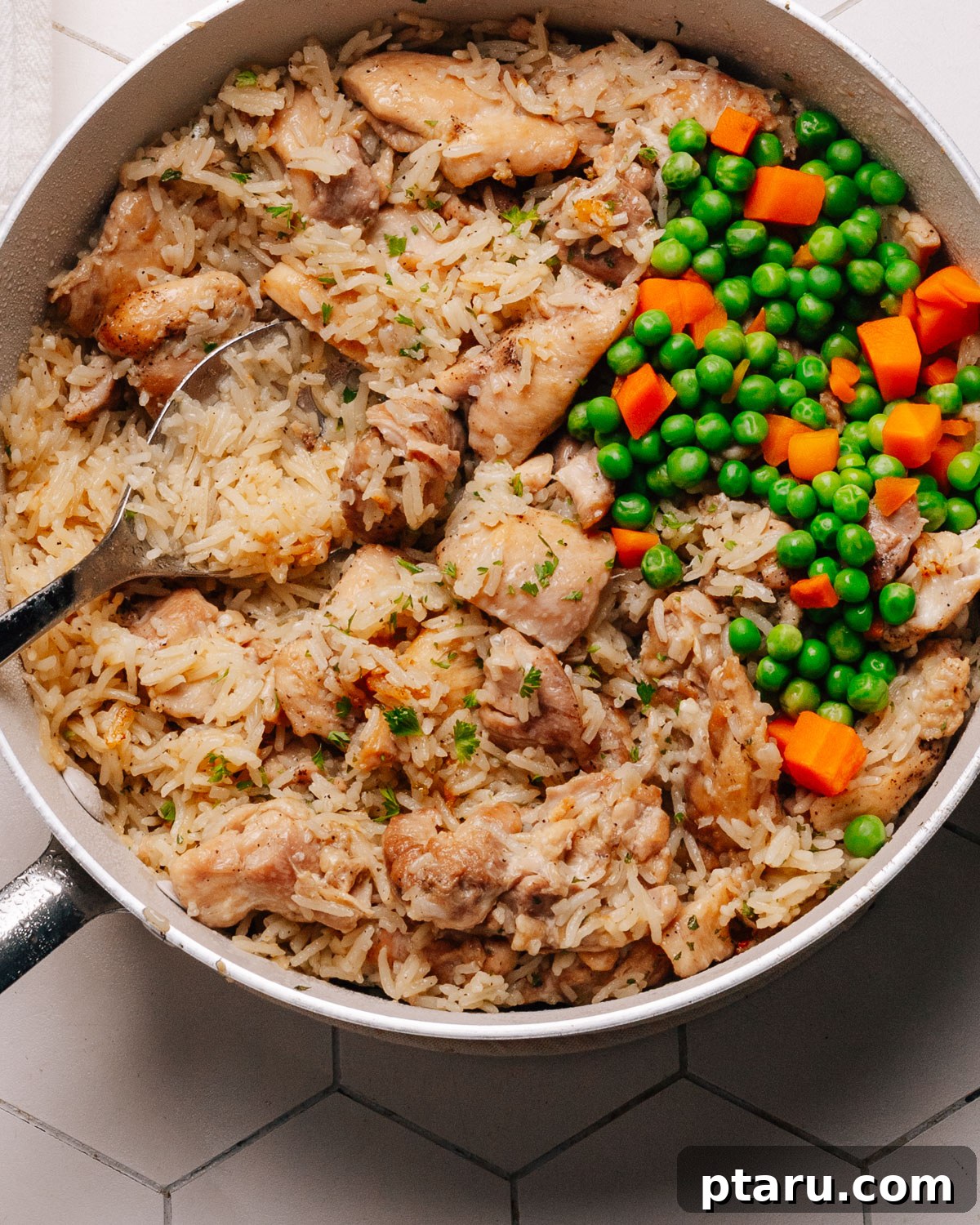
Finally, remove the lid, fluff the chicken and rice gently with a fork to separate the grains, and ensure the chicken is cooked through (reaching an internal temperature of 165°F/74°C). Your incredible one-pan chicken and rice is now ready to be served!
5 Common Mistakes to Avoid for Fluffy Chicken and Rice Every Time
Even simple recipes can have pitfalls. To ensure your chicken and rice turns out perfectly fluffy and flavorful every time, steer clear of these common mix-ups:
- Not searing the chicken properly: Many skip this step or overcrowd the pan. High heat and a single layer are absolutely key to achieving a beautiful golden-brown crust (the Maillard reaction!) on your chicken. Crowding the pan drops the temperature, causing the chicken to steam instead of sear, which means you lose out on a significant layer of delicious, rich flavor and appealing texture.
- Using instant rice: While convenient for some dishes, instant rice is pre-cooked and dehydrated, making it unsuitable for this one-pan method. It will quickly turn to mush when subjected to the simmering time required for the chicken. Always stick with regular long-grain white rice (like jasmine or basmati) for the best fluffy and distinct grain results.
- Lifting the lid too much during simmering: This is perhaps the most common mistake. Every time you peek, precious steam escapes from the pan. The rice relies on this trapped steam to cook evenly and absorb the liquid properly, becoming tender and fluffy. Resist the urge to peek for the full 20 minutes of simmering.
- Skipping the rice toasting step: It might seem like a small detail, but toasting the uncooked rice in butter for just a minute or two adds a wonderful nutty depth of flavor that significantly elevates the dish. It also helps the grains maintain their structure, contributing to a fluffier final texture.
- Not letting it rest: Once the cooking time is up, it’s tempting to dive right in. However, giving the chicken and rice 5-10 minutes to rest, still covered, off the heat, allows the rice to finish absorbing any remaining liquid and steam. This results in perfectly plump, separated grains and a better overall texture, preventing it from being too wet or clumpy.
Make Ahead and Storage Tips for Your Easy Chicken and Rice
This chicken and rice recipe is fantastic for meal prepping! It reheats beautifully, providing delicious and convenient meals for days to come. Here’s how to store and reheat your leftovers:
Storing Leftovers Safely
- Refrigerate Promptly: Allow the dish to cool completely to room temperature (within 1-2 hours) before transferring it to an airtight container. Store it in the refrigerator for up to 4 days.
- Maintain Moisture: As rice sits, it tends to absorb more liquid. When storing, you might notice it becomes a bit drier. This is normal and easily fixed during reheating.
Freezing for Future Meals
- Portion for Convenience: For easy future meals, divide the cooled chicken and rice into single or family-sized portions in freezer-safe containers or heavy-duty freezer bags. Remove as much air as possible before sealing.
- Label and Date: Clearly label each container with the dish name and the date it was prepared. It can be safely frozen for up to 3 months.
- Thaw Safely: For best results and even reheating, always thaw frozen chicken and rice overnight in the refrigerator before reheating.
Reheating for Optimal Taste and Texture
- Microwave Method: For single servings, transfer the chicken and rice to a microwave-safe dish. Add a splash of chicken broth (about 2 tablespoons per serving) to reintroduce moisture. Cover loosely with a microwave-safe lid or damp paper towel and microwave on high for 2-3 minutes, stirring halfway through, until heated through.
- Stovetop Method: For larger portions or if you prefer stovetop reheating, transfer the chicken and rice to a skillet. Add a generous splash of chicken broth (¼ to ½ cup, depending on quantity). Cover the skillet and heat over medium-low, stirring occasionally, until hot and steamy. This method helps to rehydrate the rice and chicken without drying it out.
- Avoid Reheating from Frozen: While technically possible, reheating directly from frozen can lead to uneven heating, with some parts remaining cold while others are hot. Thawing first ensures a more consistent and enjoyable result.
How to Serve Your Delicious One-Pan Chicken and Rice
This easy chicken and rice recipe is a complete and satisfying meal all on its own, offering protein, carbohydrates, and often vegetables in one dish. However, you can elevate the experience even further with a few simple additions or by pairing it with fresh, vibrant side dishes.
Elevate Your Dish with Flavorful Toppings and Add-Ins
A simple garnish or extra touch can transform your chicken and rice:
- Fresh Parsley: A sprinkle of chopped fresh parsley adds a burst of vibrant color and a fresh, herbaceous note that brightens the entire dish.
- A Squeeze of Lemon Juice: A little acidity goes a long way! A squeeze of fresh lemon juice just before serving cuts through the richness and adds a wonderful brightness.
- Grated Parmesan Cheese: For a savory, umami-rich finish, a dusting of freshly grated Parmesan cheese is an irresistible addition that melts beautifully into the warm rice.
- Hot Sauce or Red Pepper Flakes: If you enjoy a kick, a dash of your favorite hot sauce or a sprinkle of red pepper flakes can add a welcome layer of heat.
- Sliced Green Onions (Scallions): These provide a mild onion flavor and a delightful crunch, adding freshness and visual appeal.
- A Dollop of Sour Cream or Greek Yogurt: For a creamy, tangy contrast that can also temper any spice, a spoonful of sour cream or plain Greek yogurt is a fantastic finish.
Perfect Side Dishes to Complement Your Meal
While complete on its own, pairing chicken and rice with a light side can create a more rounded meal:
- Sweet Glazed Carrots: The sweetness and vibrant color of glazed carrots provide a lovely counterpoint to the savory chicken and rice.
- Crispy Air Fryer Broccoli: Quick to make and offering a fantastic texture, air-fried broccoli adds a healthy, green crunch.
- Simple Green Salad: A fresh, crisp green salad with a light vinaigrette (like a store-bought or homemade Italian dressing) offers a refreshing balance.
- Hearty Bread: Serve with a slice of crusty homemade bread or garlic bread to soak up every last bit of the delicious broth.
Expert Tips and Secrets for the Best One-Pan Chicken and Rice Every Time
Achieving restaurant-quality chicken and rice at home is simpler than you think. These insider tips will ensure your dish is consistently perfect:
- Always Pat Chicken Dry: This cannot be stressed enough! Excess moisture on the chicken surface lowers the pan’s temperature and creates steam, which prevents proper browning and that crucial flavor-building sear. Use paper towels to thoroughly pat the chicken dry before seasoning and searing.
- Invest in a Heavy-Bottomed Pan: A good quality, heavy-bottomed skillet (cast iron or thick stainless steel) distributes heat much more evenly than thin pans. This prevents annoying hot spots that can burn the rice at the bottom while leaving the top undercooked, ensuring uniform simmering.
- Season in Layers for Depth: Don’t just season at the end. Salting the chicken before searing and adding salt to the broth with the rice builds layers of flavor throughout the dish, creating a more complex and harmonious taste than a single seasoning application.
- Low and Slow for the Simmer: Once the broth is boiling and the lid is on, immediately reduce the heat to the lowest setting. A gentle simmer is key to allowing the rice to cook gradually and absorb liquid without scorching the bottom of the pan. High heat can lead to burned rice before it’s fully cooked through.
- Fluff with a Fork, Not a Spoon: After cooking and resting, gently fluff the rice with a fork. This separates the individual grains, releases excess steam, and creates that desirable light, airy texture. A spoon can mash the rice, making it clumpy.
- The Importance of Resting: This short resting period (5-10 minutes) after cooking, still covered and off the heat, is essential. It allows the rice grains to fully absorb any remaining surface moisture, firm up slightly, and ensures they are perfectly tender and distinct.
- Don’t Over-Stir the Rice: Once the rice is added and the broth is simmering, avoid excessive stirring. Just a initial stir to combine everything. Too much agitation can release starch, leading to gummy rice.
Frequently Asked Questions About Easy Chicken and Rice
Still have questions about making the perfect chicken and rice? We’ve got answers to some of the most commonly asked queries here:
How do I know when the chicken is fully cooked?
The chicken is fully cooked and safe to eat when it reaches an internal temperature of 165°F (74°C). You can check this with an instant-read thermometer inserted into the thickest part of a chicken piece. Alternatively, you can cut into a larger piece; the meat should be opaque white throughout, with no pink remaining, and the juices should run clear, not pink. After 20 minutes of simmering in this recipe, your bite-sized chicken pieces should be perfectly done.
Is chicken and rice a healthy and balanced meal?
Yes, chicken and rice can be a very healthy and well-balanced meal. Chicken thighs (or breasts) provide lean protein, which is essential for muscle maintenance and satiety. Rice offers complex carbohydrates, a vital source of energy. When you incorporate vegetables like peas and carrots, you further boost the dish’s fiber, vitamin, and mineral content. This combination offers a good balance of macronutrients and keeps you feeling satisfied for hours, making it an excellent choice for a nutritious dinner.
Can raw chicken and rice be cooked together safely in one pot?
Yes, raw chicken and rice can be cooked together safely in one pot. In this specific recipe, we sear the chicken first to develop flavor and texture, then it finishes cooking with the rice. The chicken will reach a safe internal temperature of 165°F (74°C) during the 20-minute simmering period. If you were to skip the searing step and add raw chicken directly with the broth, ensure the chicken is cut into small pieces and cooked through before serving to guarantee food safety.
What are common mistakes people make when preparing chicken and rice?
Common mistakes often include using instant rice, which results in a mushy texture. Another frequent error is lifting the lid too often during simmering, causing steam to escape and leading to undercooked or inconsistent rice. Crowding the pan when searing the chicken prevents proper browning and reduces flavor. Using an incorrect liquid-to-rice ratio can result in either dry or overly wet rice, and skipping the initial sear or the rice toasting step means missing out on crucial flavor development. Finally, not allowing the dish to rest before serving can lead to less fluffy rice.
How can I boost the flavor of my chicken and rice after cooking?
To enhance the flavor of your chicken and rice after it’s cooked, consider these simple additions: a splash of soy sauce (for umami and seasoning), a pinch of onion powder or garlic powder, a spoonful of curry powder, a sprinkle of ranch seasoning, fresh chopped herbs like parsley or cilantro, or a touch of chicken bouillon powder (opt for unsalted if your dish is already well-seasoned) for an extra savory kick.
What type of rice is best for this recipe?
Long-grain white rice, such as jasmine or basmati, is best for this recipe. These varieties cook up fluffy and distinct, absorbing the broth’s flavors beautifully without becoming sticky or clumpy. Avoid short-grain or medium-grain rice, as they tend to release more starch and can result in a gummier texture, and definitely avoid instant rice as it will overcook.
Can I use other parts of the chicken?
While this recipe focuses on boneless, skinless chicken thighs (or breasts for a leaner option), you could potentially use bone-in chicken pieces. However, be aware that bone-in chicken will take longer to cook through, and you would need to adjust the simmering time accordingly. Ensure the internal temperature reaches 165°F (74°C) before serving. For simplicity and quick cooking, boneless cuts are recommended for this one-pan dish.
Recipe Card: Perfectly Fluffy One-Pan Chicken and Rice
This easy Chicken and Rice recipe is a simple-but-flavorful comfort food. Tender chicken thighs cook with fluffy rice in savory chicken broth for a simple weeknight dinner the whole family will love.
Prep Time: 5 minutes
Cook Time: 35 minutes
Servings: 6
Ingredients
To Sear the Chicken
- 2 tbsp olive oil
- 2 lbs boneless skinless chicken thighs or breasts, cut into bite-size pieces
- 2 tsp kosher salt
- ½ tsp black pepper
To Finish the Chicken and Rice
- 1 medium onion, finely chopped
- 2 tsp minced garlic (approx. 2 large cloves)
- 2 tbsp unsalted butter
- 1 cup long-grain white rice, uncooked
- 2 cups chicken broth (low-sodium recommended)
- 1 tsp kosher salt
- 1 cup frozen peas and carrots or mixed vegetables (optional)
Instructions
- Heat olive oil in a large skillet over high heat. Pat chicken dry, then season with 2 tsp salt and pepper. Add chicken to the pan in a single layer and sear on both sides until golden, about 5 minutes total. If your pan isn’t large enough, work in two batches to avoid overcrowding. Remove chicken to a plate.
- Reduce heat to medium-high. In the same skillet (do not drain the pan, as the browned bits add flavor), add the chopped onion and minced garlic. Cook for 2 minutes, stirring often, until the onion is soft and translucent.
- Stir in the unsalted butter until melted. Add the uncooked long-grain rice and stir continuously for 1 minute to toast the rice. This step enhances flavor and helps prevent stickiness.
- Pour in the chicken broth and 1 tsp salt. Stir everything to combine and bring to a boil. Return the seared chicken pieces to the skillet along with any accumulated juices from the plate. Cover the pan tightly with a lid, reduce the heat to low, and simmer undisturbed for 20 minutes, or until the rice is tender and the chicken is fully cooked through (internal temperature of 165°F/74°C). Resist the urge to lift the lid during this time.
- If using frozen peas and carrots or mixed vegetables, add them now by scattering them over the dish. Cover the pan again and let it sit off the heat for an additional 5 minutes. The residual heat will warm the vegetables without overcooking them. Fluff gently with a fork before serving.
Recipe Notes
If you opt to use salted butter instead of unsalted, you may want to slightly reduce the added salt in the recipe, perhaps by about ⅛ teaspoon, to avoid over-salting the dish.
Nutrition Information (Approximate Per Serving)
Calories: 403kcal | Carbohydrates: 32g | Protein: 33g | Fat: 15g | Saturated Fat: 5g | Polyunsaturated Fat: 2g | Monounsaturated Fat: 7g | Trans Fat: 0.2g | Cholesterol: 155mg | Sodium: 1610mg | Potassium: 520mg | Fiber: 2g | Sugar: 1g | Vitamin A: 1718IU | Vitamin C: 5mg | Calcium: 42mg | Iron: 2mg
Nutrition information is automatically calculated and is provided for informational purposes only. It should be used as an approximation and may vary based on specific ingredients and preparation methods.
Tried this recipe? Leave a comment!