Celebrate St. Patrick’s Day with Authentic Irish Soda Bread
As the vibrant hues of emerald green begin to dot our calendars, signaling the joyous arrival of St. Patrick’s Day, there’s no more fitting or heartwarming way to immerse yourself in the spirit of Irish tradition than by baking a timeless culinary classic: authentic Irish Soda Bread. This beloved quick bread, rich in both history and comforting flavor, is far more than just a recipe; it’s a warm embrace of Irish culture, perfect for sharing with family and friends during this festive season and beyond.
Imagine the delightful aroma permeating your kitchen – that comforting, earthy scent of freshly baked bread, promising a truly satisfying treat. Whether you’re planning a grand St. Patrick’s Day feast, hosting a cozy gathering, or simply seeking a comforting staple to brighten your day, Irish Soda Bread truly hits the spot. Its dense yet tender crumb makes it an exceptional accompaniment to a variety of dishes. Consider pairing it with a steaming bowl of hearty Turkey Stew with Dumplings, its robust texture ideal for mopping up every last drop of rich broth. And for the ultimate celebratory touch, a frosty mug of rich Irish stout complements its rustic charm perfectly. A warm, generously buttered slice, artfully studded with sweet currants, transforms any meal into a moment of pure culinary delight.
The Enduring Appeal of Irish Soda Bread: A Culinary Journey Through Time
Irish Soda Bread holds a unique and cherished place in the world of baking as a quintessential “quick bread,” a testament to its ingenious simplicity and remarkable efficiency. In stark contrast to traditional yeast breads that demand considerable time for multiple rising cycles, soda bread ingeniously relies on a swift chemical reaction. This reaction occurs between baking soda (sodium bicarbonate) and an acidic ingredient – most notably buttermilk – to achieve its characteristic lift. This brilliant method allows for a delicious, freshly baked loaf to transition from humble ingredients to a golden-brown masterpiece, often from scratch to oven, in mere minutes, making it an indispensable choice for busy households throughout Irish history.
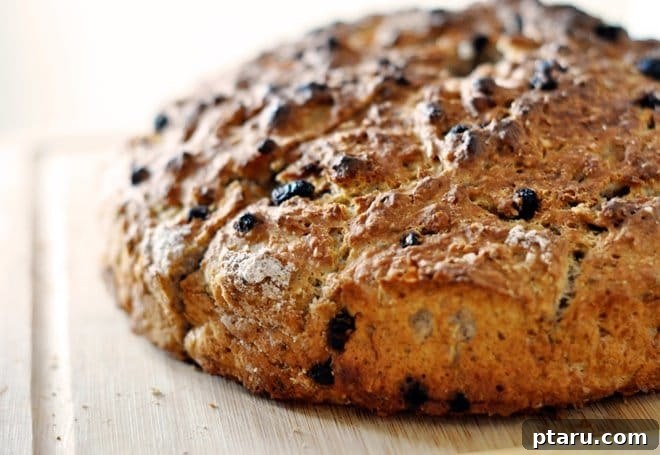
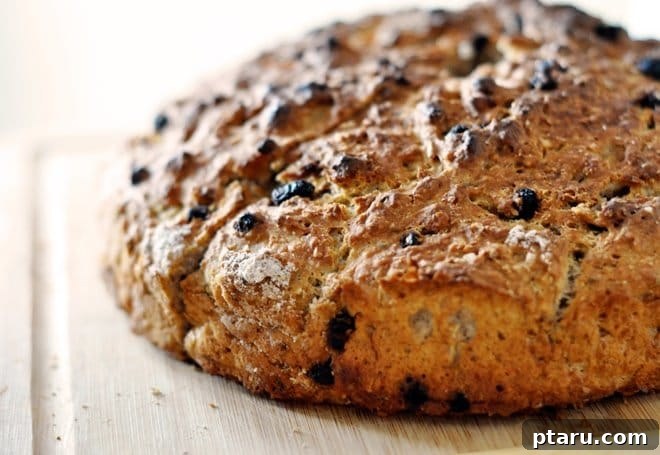
Historically, this humble bread was a true staple in countless Irish homes, particularly during times when access to conventional ovens and commercially produced yeast was limited or simply unavailable. It was frequently baked on a griddle, in a bastible (a cast-iron pot with a lid, similar to a Dutch oven), or even directly over an open fire, methods that inherently contributed to its unique rustic character and wonderfully craggy crust. Its origins as a peasant food, utilizing readily available and inexpensive ingredients like flour, buttermilk, and baking soda, firmly cemented its place in Ireland’s rich culinary heritage. Each carefully crafted loaf not only provides sustenance but also tells a compelling story of resourcefulness, resilience, and the enduring power of simple, honest, and comforting food.
The texture of authentic Irish Soda Bread is famously distinct: delightfully dense yet surprisingly tender, a characteristic directly attributable to the magical properties of buttermilk. Buttermilk serves a dual purpose in this recipe; not only does its acidity react vigorously with the baking soda to provide essential leavening, but it also imparts crucial moisture and a subtle, distinctive tang that profoundly enriches the bread’s overall flavor profile. This delicate balance ensures that the bread remains beautifully moist and palatable, steering clear of any tendency to become dry or crumbly, which can sometimes plague other quick breads.
While numerous delightful variations of Irish Soda Bread exist, the inclusion of caraway seeds remains a classic, albeit optional, touch that harkens back to traditional recipes. Their distinctive, warm, and slightly aromatic flavor, reminiscent of mild anise, adds a profound depth and complexity that beautifully complements the bread’s inherent earthy qualities. However, for those who prefer a less assertive flavor profile, or wish to expand the bread’s versatility for sweeter applications, omitting the caraway seeds is an absolutely permissible choice. A caraway-free loaf, when gently warmed and generously slathered with sweet butter and a dollop of your favorite fruit jam or marmalade, transforms into an exquisite breakfast pastry or an ideal accompaniment to afternoon tea. Personally, I find the herbal complexity and subtle warmth of caraway seeds utterly delightful and always choose to include them, believing they add an indispensable layer of authentic character to this cherished bread.
The Science and Soul of Soda Bread Ingredients: A Closer Look
The profound beauty of Irish Soda Bread lies within its minimalist yet perfectly balanced list of ingredients. Each component, carefully selected, plays a crucial and synergistic role in creating the bread’s distinctive texture, rise, and unmistakable flavor. Understanding their individual contributions elevates the baking process from mere instruction following to an art form.
- All-Purpose Flour: This forms the fundamental foundation of our loaf. While some deeply traditional Irish recipes might advocate for wholemeal flour, using good quality all-purpose flour typically yields a slightly lighter crumb while still retaining that essential characteristic density. For optimal results, always opt for a good quality, unbleached all-purpose flour, as its consistent protein content ensures predictable results.
- Baking Powder: Although baking soda is the primary leavener reacting with the buttermilk, baking powder acts as a crucial secondary leavening agent, providing an extra boost to the rise. Most commercial baking powders are double-acting, meaning they react once when mixed with liquid and again when exposed to heat in the oven, ensuring a robust and even lift without the need for yeast.
- Baking Soda: Truly the star of the show! When baking soda (sodium bicarbonate) is combined with the inherent acidity of buttermilk, it undergoes a chemical reaction that produces carbon dioxide gas. These tiny gas bubbles are trapped within the dough, creating the airy pockets that contribute to the bread’s unique texture. It is paramount to use the precise amount; using too much can impart an unpleasant, slightly soapy or metallic taste, while too little will result in a very flat, dense loaf.
- Salt: An indispensable flavor enhancer, salt is essential for bringing out and balancing all the other flavors within the bread, including the subtle sweetness of the currants. It also plays a vital, albeit subtle, role in regulating the leavening process, contributing to a more controlled and even rise.
- Sugar: A modest amount of sugar serves multiple purposes in this recipe. It significantly contributes to the beautiful golden-brown color of the crust during baking, adds a delicate hint of sweetness that complements the tartness of buttermilk, and critically, tenderizes the crumb, making the bread more palatable and enjoyable without making it overtly sweet.
- Caraway Seeds (Optional): These small, distinctive, and highly aromatic seeds are a beloved traditional addition in many classic Irish soda bread recipes. They impart a unique warm, slightly peppery, and subtly anise-like flavor that adds immense depth and complexity to the bread. If you’re new to caraway, or unsure of your preference, a wonderful approach is to try making half a batch with and half without, allowing you to discover your personal favorite.
- Currants: These small, dried fruits are an absolute joy, adding delightful bursts of concentrated sweetness and essential moisture throughout the bread. If currants are unavailable, plump raisins make an excellent substitute. For an adventurous twist, consider experimenting with other dried fruits such as dried cranberries, chopped apricots, or even a mix of candied peel for a more festive version.
- Buttermilk: This is the critical acidic component that dynamically activates the baking soda, making it indispensable for the bread’s rise. Beyond its leavening role, buttermilk profoundly contributes to the bread’s signature tender texture and imparts its distinctive, slightly tangy flavor. Should you find yourself without buttermilk, a simple and effective substitute can be made by adding one tablespoon of white vinegar or lemon juice to a standard measuring cup, then filling the remainder of the cup with regular milk and allowing it to sit undisturbed for 5-10 minutes until it visibly thickens and slightly curdles.
Crafting Your Loaf: A Step-by-Step Guide to Perfect Irish Soda Bread
The process of making Irish Soda Bread is wonderfully straightforward and forgiving, making it an ideal baking project even for novice bakers. By following these detailed, yet simple steps, you can confidently ensure a delicious, perfectly baked loaf every single time, ready to be enjoyed.
Irish Soda Bread Recipe
- 4 1/4 cups All-Purpose Flour (plus extra for dusting)
- 4 tsp baking powder
- 1/2 tsp baking soda
- 1 tsp salt
- 3 tbsp sugar
- 1 tbsp caraway seeds, optional
- 1 cup currants
- 2 cups buttermilk
Step 1: Prepare Your Dry Ingredients with Precision. In a very large mixing bowl, meticulously combine 4 cups of the all-purpose flour with the baking powder, baking soda, salt, sugar, and the optional caraway seeds. Use a whisk to thoroughly blend these dry ingredients together, ensuring that the leaveners are completely and evenly distributed throughout the flour. This initial step is absolutely crucial for achieving an even and consistent rise in your finished bread. Next, add the full cup of currants. Using your clean fingertips, gently rub the currants into the flour mixture. This technique helps to separate any clumps of dried fruit and lightly coats them with flour, which is a clever trick to prevent them from sinking to the bottom of the loaf during the baking process, ensuring they are evenly distributed throughout.
Step 2: Incorporate the Buttermilk and Gently Form the Dough. Create a pronounced well in the very center of your dry ingredients mixture. Carefully pour in the full 2 cups of buttermilk into this well. Using a sturdy fork or a wooden spoon, begin to mix the ingredients from the center outwards, gradually incorporating the flour into the liquid. Continue mixing only until the mixture just barely comes together to form a shaggy, moist, and slightly sticky dough. It is paramount to be careful not to overmix at this stage; overworking the dough can excessively develop the gluten, which will inevitably lead to a tough, rather than tender, bread. The dough should still appear quite soft and slightly tacky.
Step 3: Perform a Light Kneading and Expert Shaping. Generously sprinkle about 1/4 cup of additional all-purpose flour onto a clean work surface, such as a large board or your countertop. Carefully turn the shaggy dough out onto this floured surface. With lightly floured hands, gently knead the dough for approximately 3 to 5 minutes. The primary objective here is not to develop gluten as you would in a yeast bread, but rather to bring the dough together cohesively, incorporating the flour from the board until it becomes smooth, forms a cohesive round shape, and is noticeably less sticky. Always remember, a light and gentle touch is the absolute key to achieving that wonderfully tender crumb characteristic of Irish Soda Bread. Form the dough into a smooth, uniformly round loaf.
Step 4: Prepare for Baking and Score the Loaf with Purpose. Preheat your oven to a precise 350°F (175°C). Lightly grease a 9-inch round cake pan or, for a more rustic look, a cast-iron skillet. Carefully transfer the perfectly rounded loaf into the prepared pan, gently pressing it to ensure it fills the space evenly. Using a sharp knife or a clean dough scraper, cut a deep cross into the very top of the loaf, ensuring the cut is approximately 1/2 inch deep. This traditional scoring serves multiple crucial purposes: it helps the bread bake more evenly by allowing heat to penetrate the center of the dense loaf, it prevents the crust from cracking in an uneven or unsightly manner, and, charmingly, according to ancient Irish folklore, it is said to release any evil spirits or, perhaps more playfully, to let the fairies out!
Step 5: Bake to Golden Perfection and Test for Doneness. Place the pan containing your scored loaf into your preheated oven. Bake for a duration of 1 hour and 15 minutes (75 minutes), or until the bread achieves a beautiful, deep golden-brown crust and sounds distinctly hollow when tapped firmly on the bottom. To further verify complete doneness, an instant-read thermometer inserted into the very center of the loaf should register an internal temperature between 200°F and 210°F (93°C-99°C). Please note that actual baking time can vary slightly depending on the calibration and specific quirks of your individual oven, so it’s always wise to keep a watchful eye on it during the final stages of baking.
Step 6: Cool Completely for Optimal Texture and Flavor. Once perfectly baked, immediately remove the loaf from the hot pan and carefully transfer it to a wire rack to cool completely. This cooling process is absolutely crucial and should not be rushed! Cooling on a wire rack allows vital air to circulate freely around the entire loaf, which effectively prevents the bottom from becoming soggy due to trapped steam and ensures that you achieve a perfectly crisp and delicious crust all around. Resist the strong temptation to slice into it while it’s still warm, as the bread will continue to cook internally and develop its final, desired texture as it cools. Your patience will undoubtedly be rewarded with the best possible slice of Irish Soda Bread.
Beyond St. Patrick’s Day: Enjoying Your Irish Soda Bread Year-Round
While Irish Soda Bread holds an indispensable and revered place in St. Patrick’s Day celebrations, its inherent versatility and simple, comforting charm make it a truly delightful and welcome addition to your table any time of the year. Its robust yet balanced flavor profile pairs beautifully with an impressive array of both sweet and savory accompaniments, proving its adaptability far beyond a single holiday.
- For a Hearty Breakfast or Brunch: Elevate your morning routine by toasting a thick slice and spreading it generously with creamy butter and your favorite fruit jam or tangy marmalade. It’s equally wonderful when adorned with a drizzle of golden honey or a decadent dollop of clotted cream for an extra special treat.
- With Warming Soups and Stews: As previously highlighted, the bread’s unique dense and hearty texture makes it absolutely perfect for soaking up the rich, flavorful broths of comforting soups and stews. Imagine it alongside a classic potato and leek soup, a robust beef stew, or even a simple vegetable broth.
- As Part of a Cheese Board: Present slices of Irish Soda Bread with a thoughtfully curated selection of Irish cheeses, such as sharp cheddar or nutty Dubliner. For an enhanced experience, pair them with crisp apple slices, tangy chutneys, or a sweet fig spread for a sophisticated and satisfying snack or appetizer.
- A Quintessential Afternoon Tea Companion: Embrace a cherished Irish tradition by enjoying a simple slice with a freshly brewed cup of hot tea. The bread’s subtle sweetness and tender crumb make it an ideal partner for a relaxing afternoon interlude.
- Plain and Simply Perfect: Sometimes, the very best way to appreciate and enjoy Irish Soda Bread is just as it is, unadorned. Savor its subtle flavors, marvel at its unique texture, and appreciate the honest simplicity of this timeless creation.
A Final Toast to Tradition, Joy, and Good Fortune
May your St. Patrick’s Day be abundantly filled with contagious joy, hearty laughter, and the simple, profound pleasures of good company gathered around a festive table. May your cheeks be playfully adorned with shimmering emerald face paint, and your spirited beverages glow with a whimsical touch of vibrant green food coloring, adding to the festive atmosphere. And, most wonderfully, may your home be blessed with the irresistible charm and boundless energy of an Irish Setter, whose adorable antics and unwavering loyalty can brighten even the muddiest of days, reminding us of life’s simple, pure joys!
Baking Irish Soda Bread is a deeply rewarding experience that transcends merely following a recipe; it is a heartfelt connection to a rich cultural heritage, a cherished tradition passed down through countless generations. It is an act of celebrating simplicity, embracing resourcefulness, and savoring the comforting, authentic taste of home. So, gather your high-quality ingredients, preheat your oven with anticipation, and prepare to bake a delectable piece of Ireland right in your own kitchen. May your loaf rise beautifully, and your celebration be truly memorable. Sláinte!