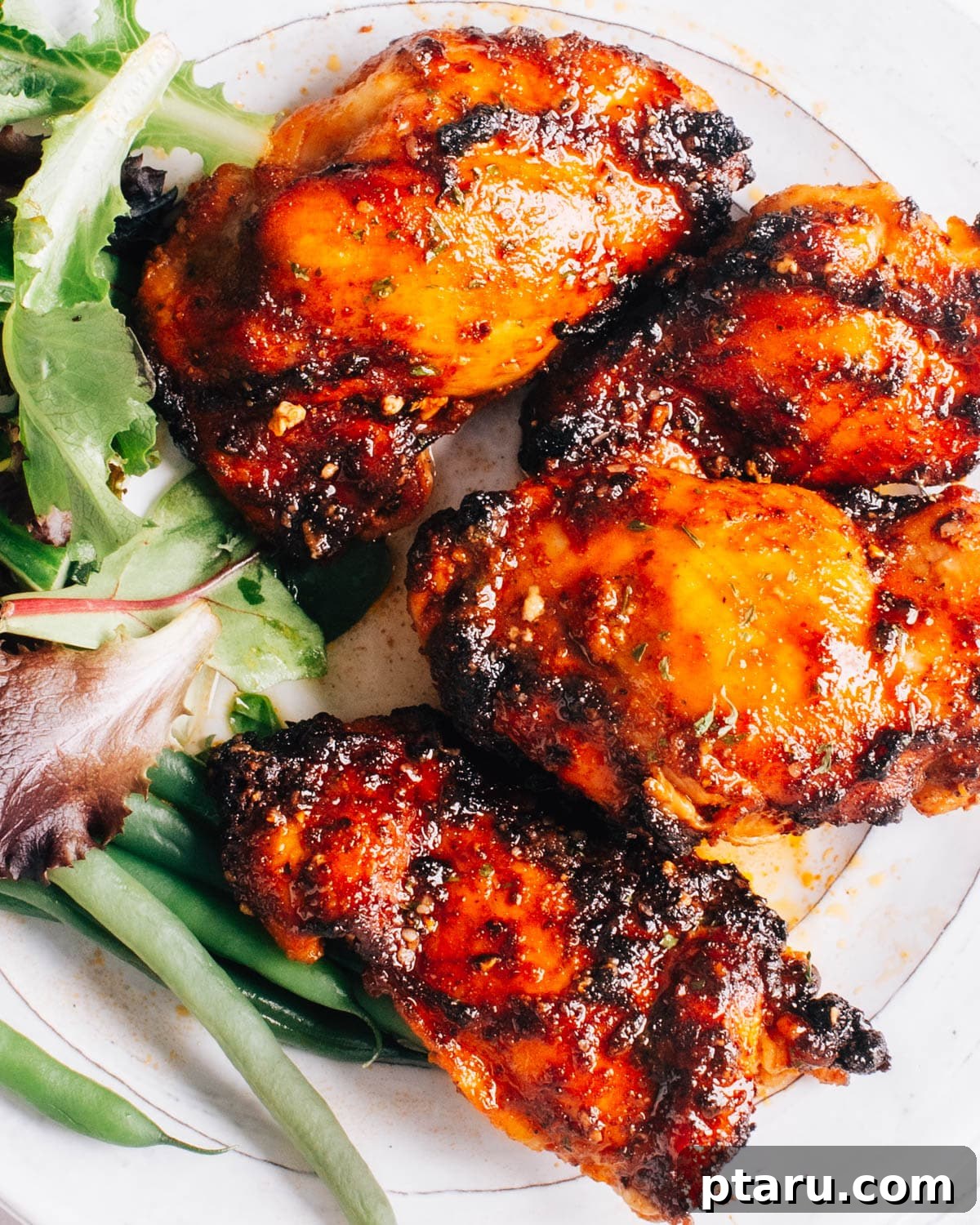
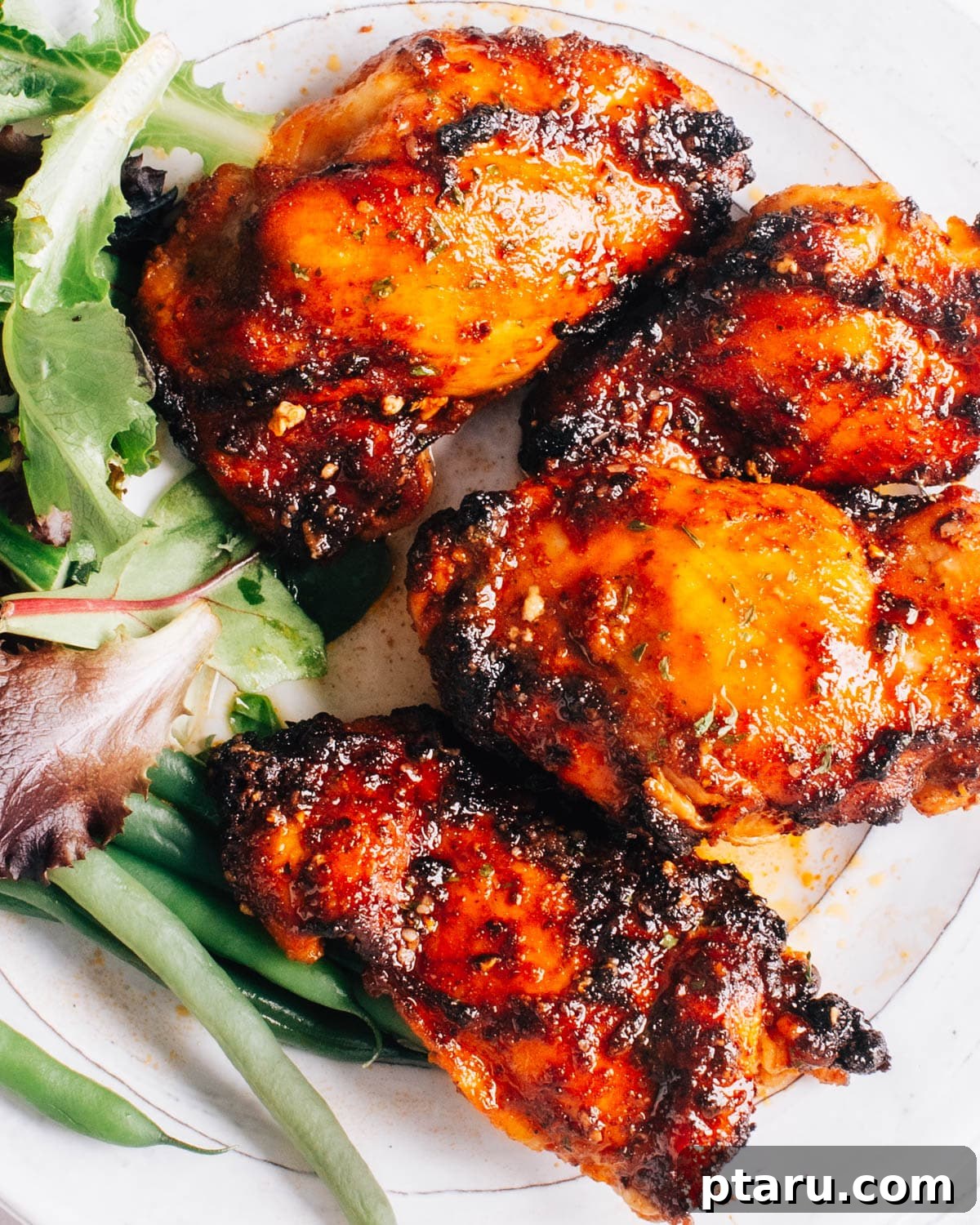
One of my favorite chicken seasoning recipes—simple, versatile and reliably delicious. I keep a jar of it by the stove because it works on every cut of chicken. It combines six common spices with a bit of brown sugar that helps create a beautifully caramelized crust whether you bake, pan-sear, grill or air-fry your chicken.
Chicken Seasoning Recipe Ingredients
Most chicken seasonings are purely savory; this one adds brown sugar. That little bit of sugar caramelizes quickly, giving the exterior a deep color and crisp crust before the meat overcooks. It’s especially helpful on lean cuts like breast, but it’s great on thighs, wings and whole birds too.
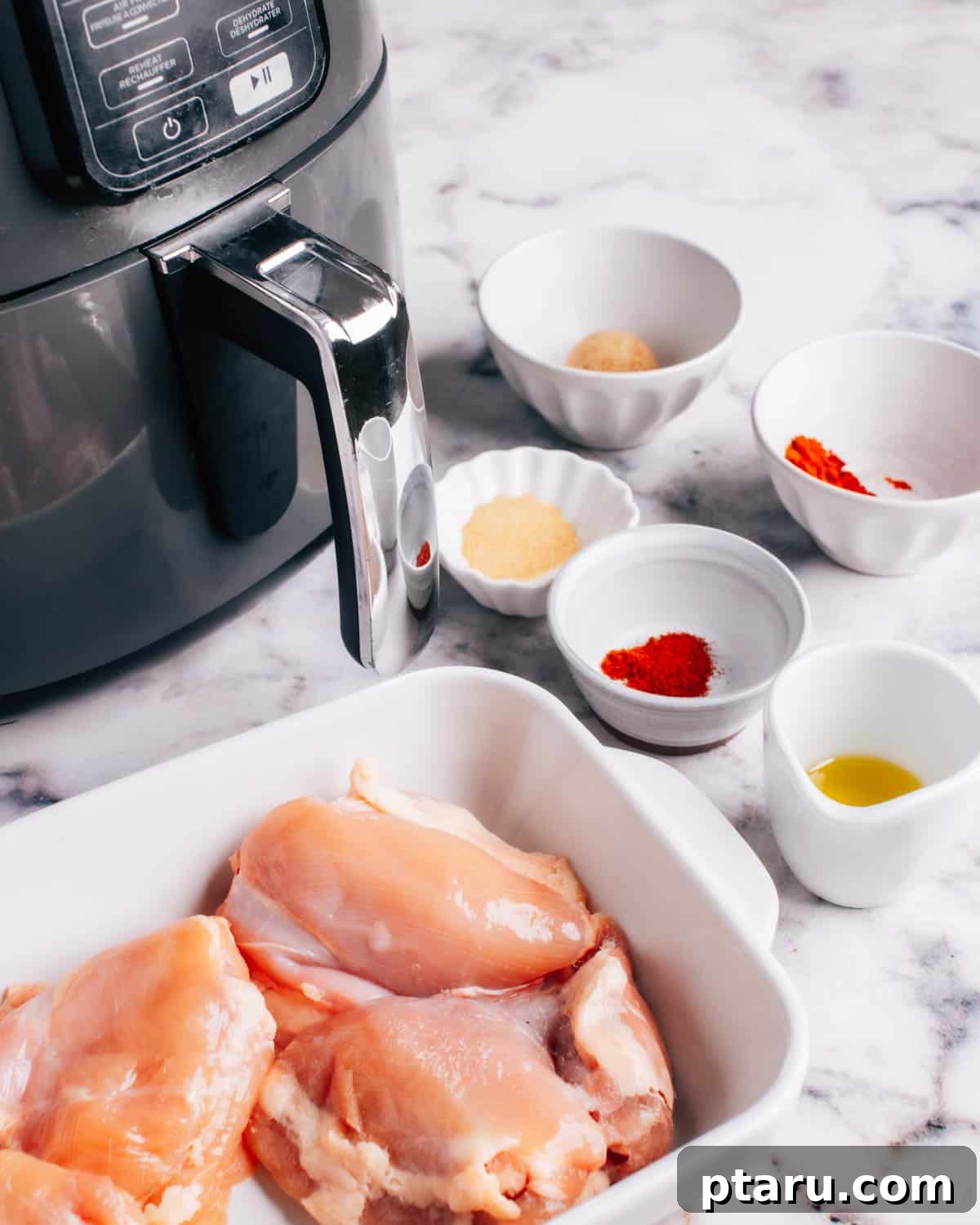
Seven pantry ingredients—most are probably already in your spice drawer.
- Paprika: adds color and a mild, sweet pepper note. Use smoked paprika for a deeper, smokier flavor.
- Garlic powder: provides savory garlic flavor without the risk of scorching at high heat.
- Onion powder: rounds out the blend with a savory base note.
- Brown sugar: caramelizes at a lower temperature than meat browns, helping form a fast, flavorful crust.
- Kosher salt: coarse grains distribute evenly and avoid caking.
- Black pepper: freshly ground black pepper offers the best aroma and bite.
- Cayenne pepper: adds warmth and balances the sugar; use less or omit for a milder mix.
Exact quantities are in the recipe card below.
Variations and Substitutions
Treat this as a base and adapt it to suit your cooking method or flavor preference.
- Smoky: use smoked paprika instead of regular paprika for grilling or a deeper flavor.
- Herby: add a teaspoon of dried thyme or an Italian seasoning blend for roasted chicken.
- No sugar: omit the brown sugar for a purely savory rub; you will notice less browning.
- Mild: skip the cayenne if cooking for children or anyone sensitive to heat.
- Mexican profile: swap in chili powder and cumin for a taco-style seasoning.
- Wet option: if you prefer marinades, use this flavor profile as a guide and combine with oil and an acid.
- Salt-free: omit salt and season the chicken separately when you cook to control sodium.
More Chicken Seasoning Ideas
Keep a few blends on hand and rotate based on what you’re making: a chili-forward mix for Tex-Mex, a smoky rub for grilling, or an herb-forward blend for roasting.
Recommended Tools
No specialty equipment required—just the basics:
- Small bowl for combining the spices.
- Whisk or fork to break up brown sugar clumps.
- Small jar with lid for storage; a 4 oz jar fits a full batch.
- Instant-read thermometer to check doneness and avoid overcooking.
This blend has been my go-to on air fryer thighs and frozen breasts alike. It’s simple, reliable and worth keeping in a jar for busy weeknights.
How to Make Chicken Seasoning: An Easy Guide
Mixing this blend takes about two minutes. The key step is breaking up any clumps of brown sugar so the mix browns evenly.
Measure Everything Into One Bowl
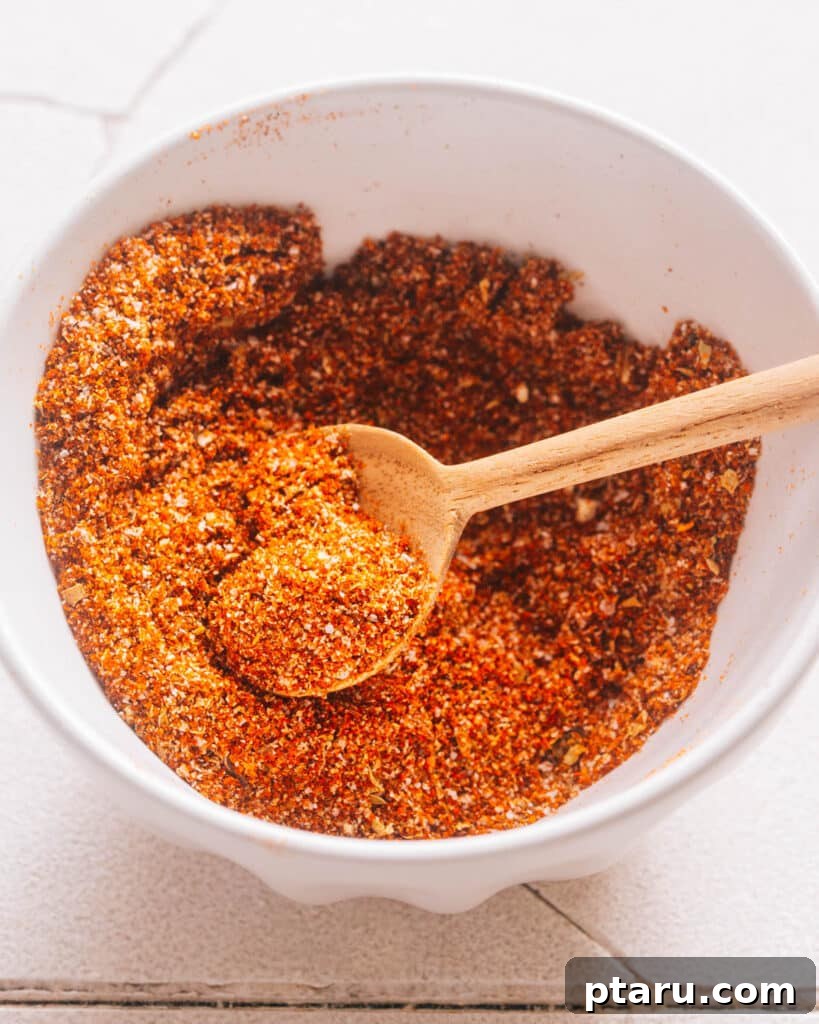
Combine the paprika, garlic powder, onion powder, brown sugar, kosher salt, black pepper and cayenne in a small bowl. The order doesn’t matter.
Break Up the Brown Sugar
Whisk vigorously or rub the mixture between your fingers until no brown sugar clumps remain and the color is even. Any remaining clumps can scorch during cooking and lead to uneven browning.
Store or Use Immediately
Transfer the seasoning to an airtight jar and seal it for storage, or use it right away to season chicken.
5 Common Mistakes to Avoid
Watch for these common errors when using a sugar-containing dry rub:
- Skipping the oil. A light coating of oil helps the rub adhere. Dry spices on dry chicken often fall off during cooking.
- Using fresh garlic at high heat. Fresh garlic can burn and taste bitter. Garlic powder is safer for high-heat methods.
- Seasoning hours ahead. Salt draws moisture to the surface over time. For best texture, season a few minutes before cooking.
- Cooking too hot. Sugar caramelizes quickly and can burn if the heat is too high. Monitor the final minutes closely.
- Guessing doneness. Use a thermometer and pull chicken at 165°F to avoid dryness—especially for breast meat.
Make Ahead and Storage
I keep a jar of this seasoning in the spice drawer for easy use.
Storing the Blend
- Airtight jar: Store in a cool, dark cupboard for up to six months.
- Watch the brown sugar: break up any clumps before using; brown sugar is the ingredient most prone to clumping.
- Away from the stove: avoid heat and steam that encourage clumping.
- Rice trick: a few grains of dry rice in the jar can help absorb moisture and keep the blend free-flowing.
Making a Bigger Batch
- Scale easily: double or triple the recipe—the ratios hold up without adjustment.
Storing Seasoned Chicken
- Do not pre-season and refrigerate for hours: salt draws moisture out and sugar can make the surface wet; season shortly before cooking.
- Cooked leftovers: store in an airtight container and use within 3–4 days.
What to Use Chicken Seasoning On
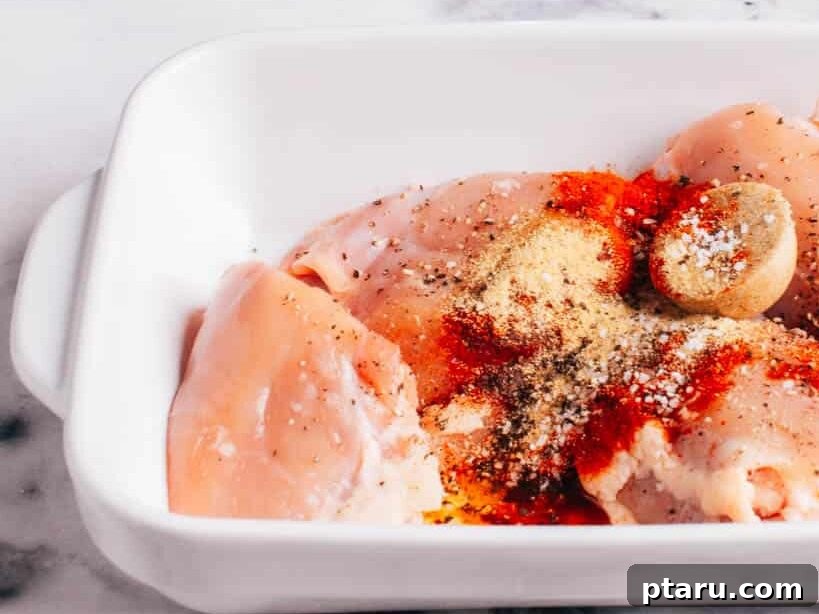
Use about 2 teaspoons of the seasoning per piece. Pat the chicken dry, rub it with a little oil, sprinkle the mix over both sides and press it in.
Chicken Breast
Breast benefits most from the brown sugar because it helps the surface brown before the interior overcooks. Watch the temperature closely and remove at 165°F.
Baking
For baked chicken, use a hot oven and space the pieces apart. Overcrowding causes steaming and prevents a crisp crust.
Pan Searing
Keep the pan at medium-high so the sugar can caramelize without burning. Extremely high heat will take sugar from caramelized to burnt quickly.
Air Fryer and Grill
Both methods work very well. The seasoning crisps nicely in an air fryer and adds great color on the grill as long as you watch for flare-ups.
What to Serve With It
Common side dishes that pair well with this seasoned chicken include mashed potatoes, steamed or roasted rice, air-fried or roasted vegetables, simple salads and glazed carrots. The rub is flexible enough that many sides complement it.
Tips for the Best Chicken Rub
- Start with oil. A thin film helps the spices adhere and brown evenly.
- Sprinkle from above. Holding your hand several inches above the meat helps distribute the rub evenly.
- Press, don’t grind. Press the rub in with a flat palm rather than rubbing vigorously, which can clump the brown sugar.
- Thighs are forgiving. Dark meat tolerates slightly higher temperatures and stays juicier than breast.
- Let it rest. Rest cooked chicken for five minutes before slicing so juices redistribute.
- Use beyond chicken. This blend is excellent on pork chops, turkey and even shrimp.
Frequently Asked Questions
Quick answers to common questions about this seasoning:
Paprika, garlic powder and onion powder form a versatile base. Add salt and pepper for balance and a touch of brown sugar for browning. Cayenne adds warmth without too much heat.
Start with paprika, garlic powder and onion powder. For roasting add thyme or Italian seasoning; for grilling use smoked paprika; for Mexican flavors use chili powder and cumin.
Use about 2 teaspoons per piece. Pat chicken dry, coat lightly with oil, sprinkle the seasoning and press it in. A full batch seasons roughly a dozen pieces.
Brown sugar caramelizes at a lower temperature than the meat browns, creating a flavorful crust before the interior overcooks. Omit it for a purely savory rub if you prefer.
Yes. It works on breasts, thighs, drumsticks, wings and whole chickens. Thighs are more forgiving because of their higher fat content; breast benefits most from the sugar for faster browning.
Stored in an airtight jar in a cool, dark place, it keeps up to six months. Break up any brown sugar clumps before each use; a few grains of rice in the jar can help absorb moisture.
Yes. A rub is a dry spice blend pressed onto meat before cooking. This blend functions as both a seasoning and a traditional rub.
Yes. Omitting salt is fine and lets you salt the chicken separately to taste, or use the blend if you brine first.
Other Chicken Recipes You’ll Love
- Air fryer boneless chicken thighs
- Air fryer frozen chicken breast
- Slow cooker whole chicken
- Grilled boneless chicken thighs
- My favorite chicken marinades
- Pork chop seasoning and dry rub (the blend works on pork too)
#1 Chicken Seasoning (to Use on Everything!)
A seven-ingredient chicken seasoning built on paprika, garlic and onion powder, with a little brown sugar for browning. Works on breast, thighs, wings and a whole bird, in the oven, air fryer, pan or grill.
Prep Time: 2 minutes | Total Time: 2 minutes | Servings: 12
Ingredients
- 1 tbsp paprika or smoked paprika
- 1 tbsp garlic powder
- 1 tbsp onion powder
- 3 tbsp brown sugar
- 1 ½ tsp kosher salt
- 1 ½ tsp black pepper
- ¾ tsp cayenne pepper (optional)
Instructions
- Add paprika, garlic powder, onion powder, brown sugar, kosher salt, black pepper and cayenne to a small bowl.
- Whisk vigorously or rub the mixture between your fingers until all brown sugar clumps are gone and the color is uniform.
- Transfer to an airtight jar and store in a cool, dark cupboard for up to six months. Break up any clumps before each use.
- To use: pat chicken dry, rub lightly with oil, sprinkle about 2 tsp of seasoning per piece over both sides and press it in. Cook to 165°F.
Notes
Makes: about 1/2 cup, enough to season roughly 12 pieces at about 2 tsp each.
Brown sugar clumps: it is the one damp ingredient; break it up before each use. A few grains of dry rice in the jar help absorb moisture.
Smoked paprika: swap for more depth, especially for grilling.
Season just before cooking: salt draws moisture to the surface over time, so avoid seasoning hours ahead.
Cook to 165°F: thighs are forgiving past that, breast is not.
Salt-free version: omit the salt and season the chicken separately to taste.
Nutrition (per serving, approximate)
Calories: 18 kcal | Carbohydrates: 4 g | Protein: 0.3 g | Fat: 0.1 g | Sodium: 245 mg | Sugar: 3 g
Nutrition information is an approximation.
Tried this recipe? Leave a comment and share how you used the blend or any tweaks you made.